
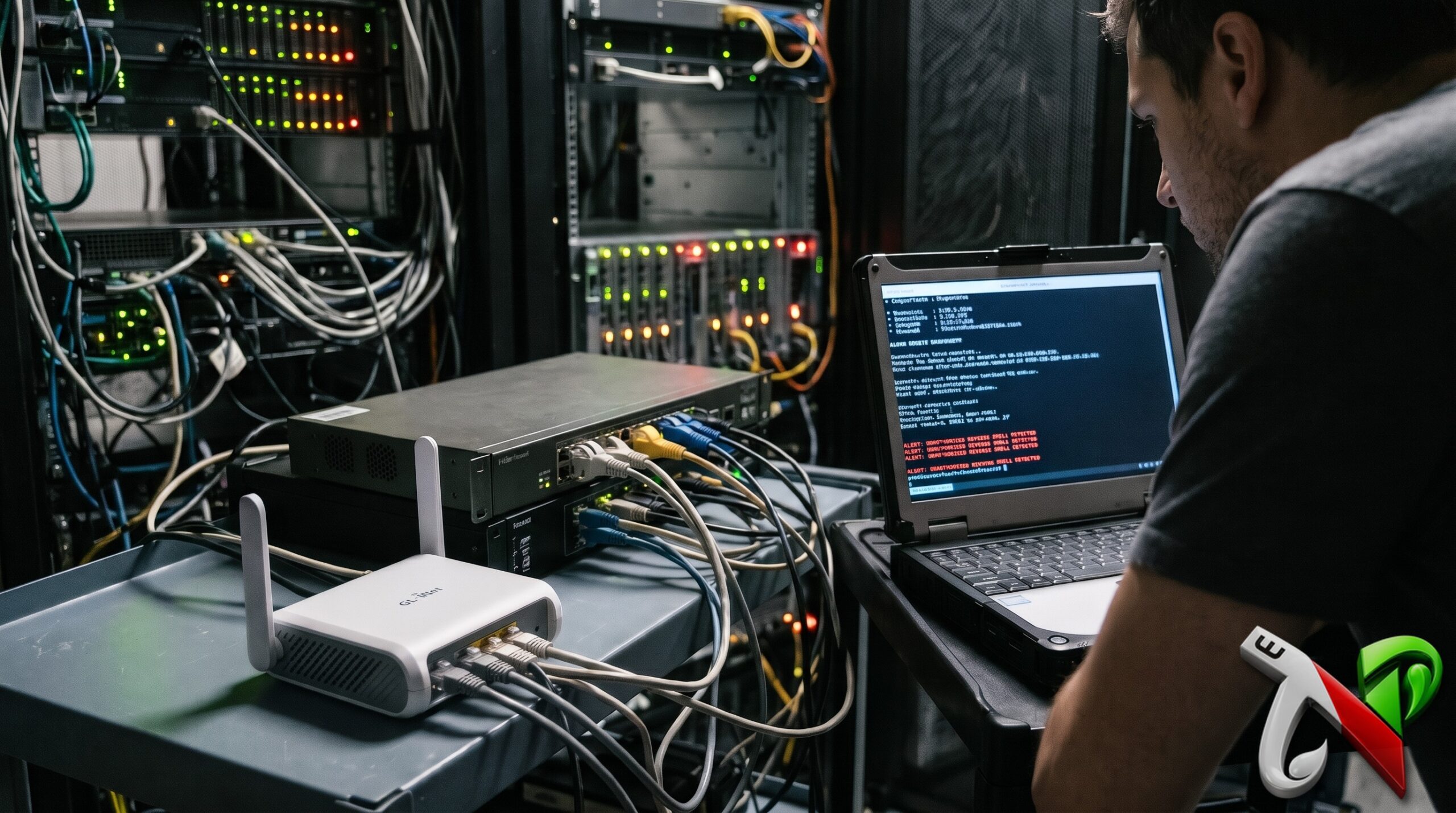
GL.iNet Cloud Flaw Let Attackers Plant Malware on Routers and KVMs
Key points
- GL.iNet confirmed on November 20, 2026 that an unauthorized party exploited a vulnerability in its cloud remote management services to install malicious software on some routers and KVM devices 2.
- The company says it has blocked the attack path, but that does not remove malware from already infected devices, and it has not disclosed how many customers were hit 1.
- The official check looks for a process showing crond -i /tmp/.log, yet forum users warn it may miss other backdoors and reverse shells 1.
- Researchers at RemoteToHome Consulting reported suspicious activity on 152 of the 183 routers they analyzed, though some infections may predate the November attacks 1.
What GL.iNet Confirmed
GL.iNet makes home and travel routers as well as KVM devices that let users control computers remotely. Its GoodCloud platform handles remote management for these products. On November 20, 2026, the company said it had identified a vulnerability in that cloud layer and that an unauthorized party had used it to reach devices and install malicious software 2.
GL.iNet says it fixed the cloud flaw and blocked the access used, so devices can no longer be newly infected this way. It also stresses that these steps do not clean up machines that were already compromised 2. The company has not said how the attackers exploited the platform, how many customers were affected, or whether data was stolen. It is also still investigating whether computers attached to infected KVMs were compromised 1.
Checking and Cleaning Devices
The advisory tells users to look for a running process containing the exact text crond -i /tmp/.log, using the router’s LuCI interface or SSH, or the terminal on a KVM. If it appears, the device should be treated as infected. KVM owners can install a security beta now or perform a factory reset, which cannot be reinfected through the fixed cloud flaw 2. Stable firmware for routers and KVMs is scheduled for November 22, 2026, and the company recommends installing it even if no infection is found 1.
Community members argue the check is too narrow, since it may not catch devices carrying other backdoors or reverse shells. GL.iNet links to a community-built scanner that looks for known malware files, suspicious processes, altered system utilities and persistence settings, and can gather forensic evidence. Its developers caution that it cannot catch everything, and that a fresh firmware install without keeping old settings may be needed because malicious files in configuration directories can survive a normal upgrade 1.
Anyone who suspects compromise is advised to preserve evidence before resetting, avoid restoring possibly infected configurations, and rotate credentials and access keys. For KVM users, the connected computers should be checked for unfamiliar programs, browser extensions, accounts, startup items and odd network activity 1 2.
Inside the Malware
After the disclosure, customers and researchers shared evidence of custom malware built for GL.iNet hardware, plus root-level reverse shells that connected routers to a specific external IP address using the Linux nc utility 1. BleepingComputer analyzed a malicious script named ni.sh and found code that recognizes many GL.iNet models, downloads executables called gl-helper and gb, and sets up persistence through startup scripts and scheduled tasks. It disguises its process as the published indicator and swaps the netstat utility for a script that hides connections to the attacker’s server. It can also install SSH keys, alter file timestamps and fetch commands from a remote server. Chinese-language developer comments suggest a Chinese-speaking author, though that is only an indication 1.
A separate Lua payload from a GL-MT2500 router was launched via a modified startup script and could collect device information and download further programs. Some recovered files carried December 2025 timestamps, which hints at longer-running compromises, though it is unclear whether they are tied to the November attacks 1.
Scale and Open Questions
RemoteToHome Consulting examined 183 routers it owns or manages and found suspicious activity on 152. Of those, 24 had root-level reverse shells, 47 had an older persistent backdoor and 81 showed signs that attacker-supplied commands had run. The firm notes its sample may not reflect other customers and the older backdoors may be unrelated. It also flagged a possible command injection issue in a GoodCloud client handler, but GL.iNet has not confirmed it was used 1.
One KVM owner reported the device downloading the malicious script on November 19, then contacting roughly 1,800 residential IP addresses daily and repeatedly querying the TRON blockchain API. The purpose is unclear, and there is no confirmation of a proxy network or botnet 1. GL.iNet says it will email identified affected customers and update its notice as the investigation continues 2.
Primary sources
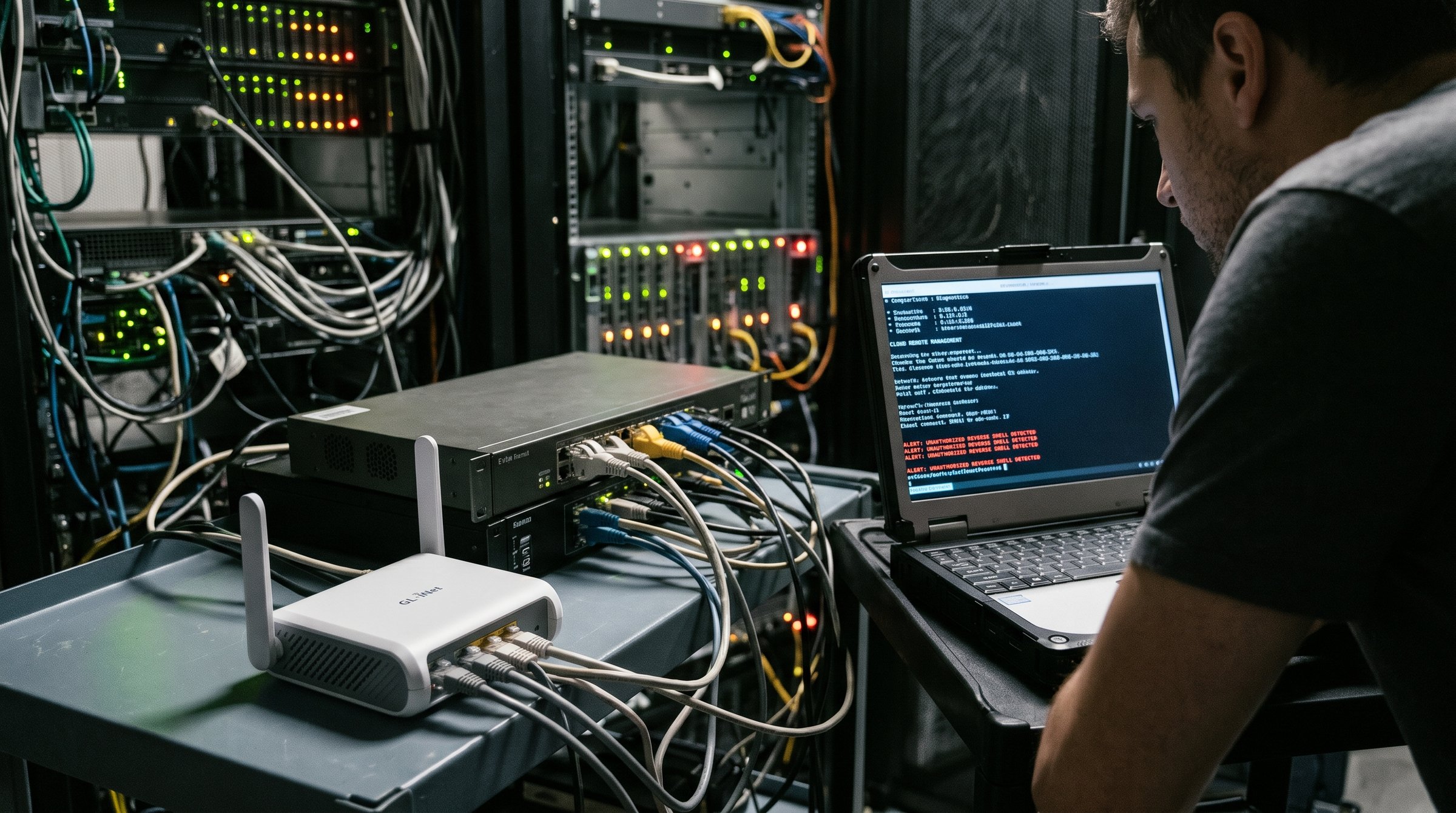 Hackers exploit GL.iNet cloud flaw to infect routers, KVM devices (bleepingcomputer.com) – BleepingComputer's report covers GL.iNet's confirmation that attackers exploited its cloud management flaw to install malware on routers and KVMs. It details the company's remediation, the firmware schedule and KVM version guidance, and the limits of the crond -i /tmp/.log indicator. It also covers the community scanner and its caveats, researcher findings from RemoteToHome (152 of 183 routers showing suspicious activity), reverse shells, the ni.sh script and Lua payload analysis, the attacker infrastructure, and the unexplained peer-to-peer style traffic from a compromised KVM. Published by bleepingcomputer.com.
 GL.iNet Security Notice 2026-11-20 (gl-inet.com) – GL.iNet's own customer advisory states that on November 20, 2026 it identified a cloud vulnerability exploited by an unauthorized party to install malware on some routers and KVMs, and that the attack path is now blocked. It gives step-by-step checks for routers (LuCI or SSH) and KVMs, advice for infected devices, a list of KVM beta firmware versions, plans for stable firmware, customer email notifications, and a note that the investigation, including impact on connected computers, is ongoing. Published by GL.iNet as Security Notice 2026-11-20.
 Powered by News Ranker
