
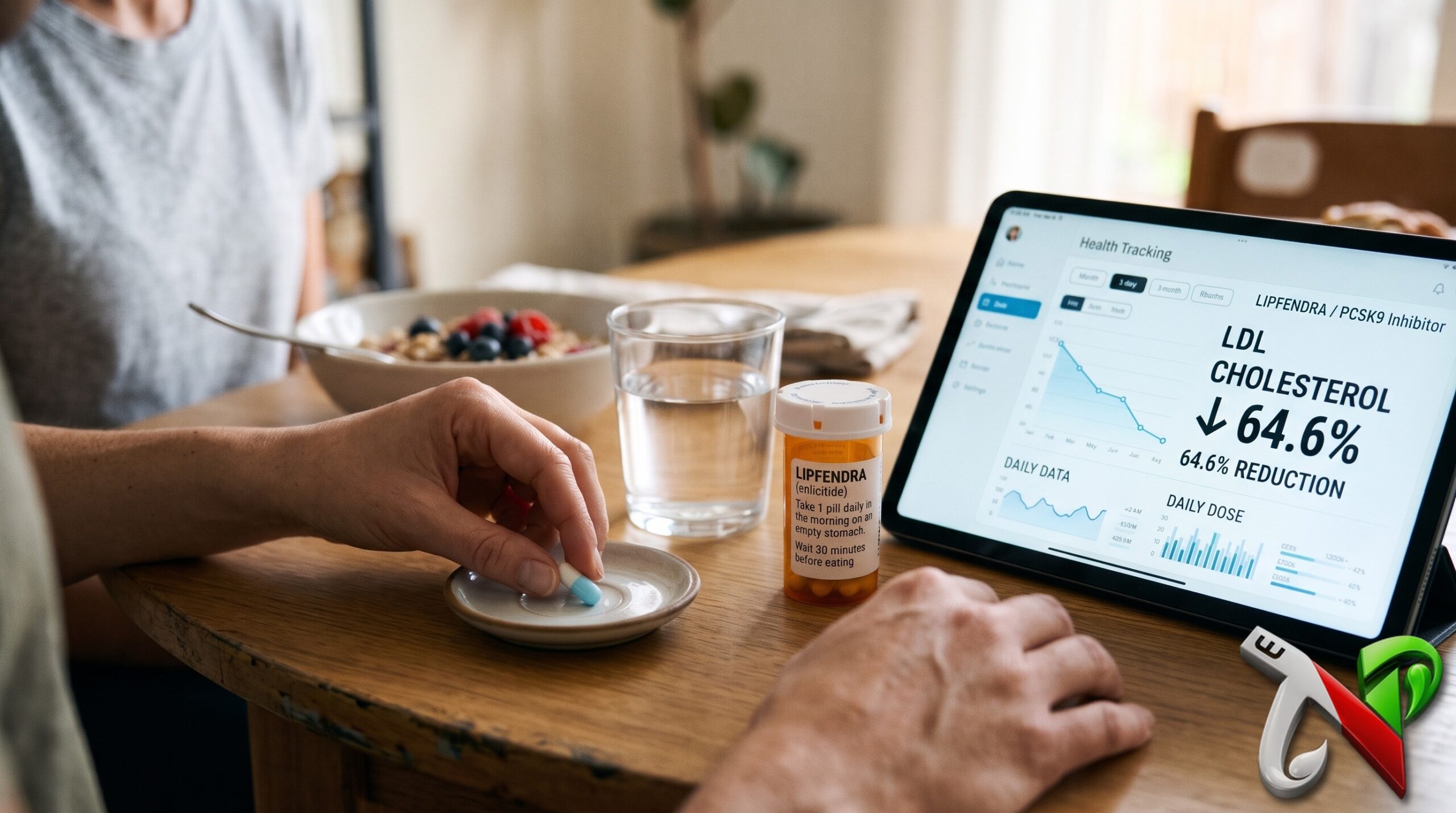
A Daily Pill Takes On Bad Cholesterol: What Lipfendra Changes for Statin Users
Key points
- The FDA approved Lipfendra (enlicitide) on July 16, 2026, as the first oral drug in the PCSK9 inhibitor class, which was previously available only by injection 1.
- A review found LDL cholesterol reductions of 57.1% to 64.6% after 24 weeks, comparable to injectables, versus about 28% for ezetimibe and 6% for bempedoic acid in a head-to-head comparison.
- The pill must be taken in the morning on an empty stomach, with a 30-minute wait before food, and a 30-day supply has a list price of $315 before insurance.
- It is not yet known whether the drug prevents heart attacks and strokes, since a cardiovascular outcomes trial is still ongoing.
A First for Oral PCSK9 Drugs
High cholesterol often does its damage silently, with excess LDL slowly building fatty plaque inside artery walls and raising the odds of heart attack and stroke over decades. Statins help millions of people, but some patients need more help to reach their targets 1.
Lipfendra (enlicitide), approved by the FDA on July 16, 2026, is aimed at that gap. It is the first pill in a powerful class of treatments that until now had to be injected.
How the Pill Works
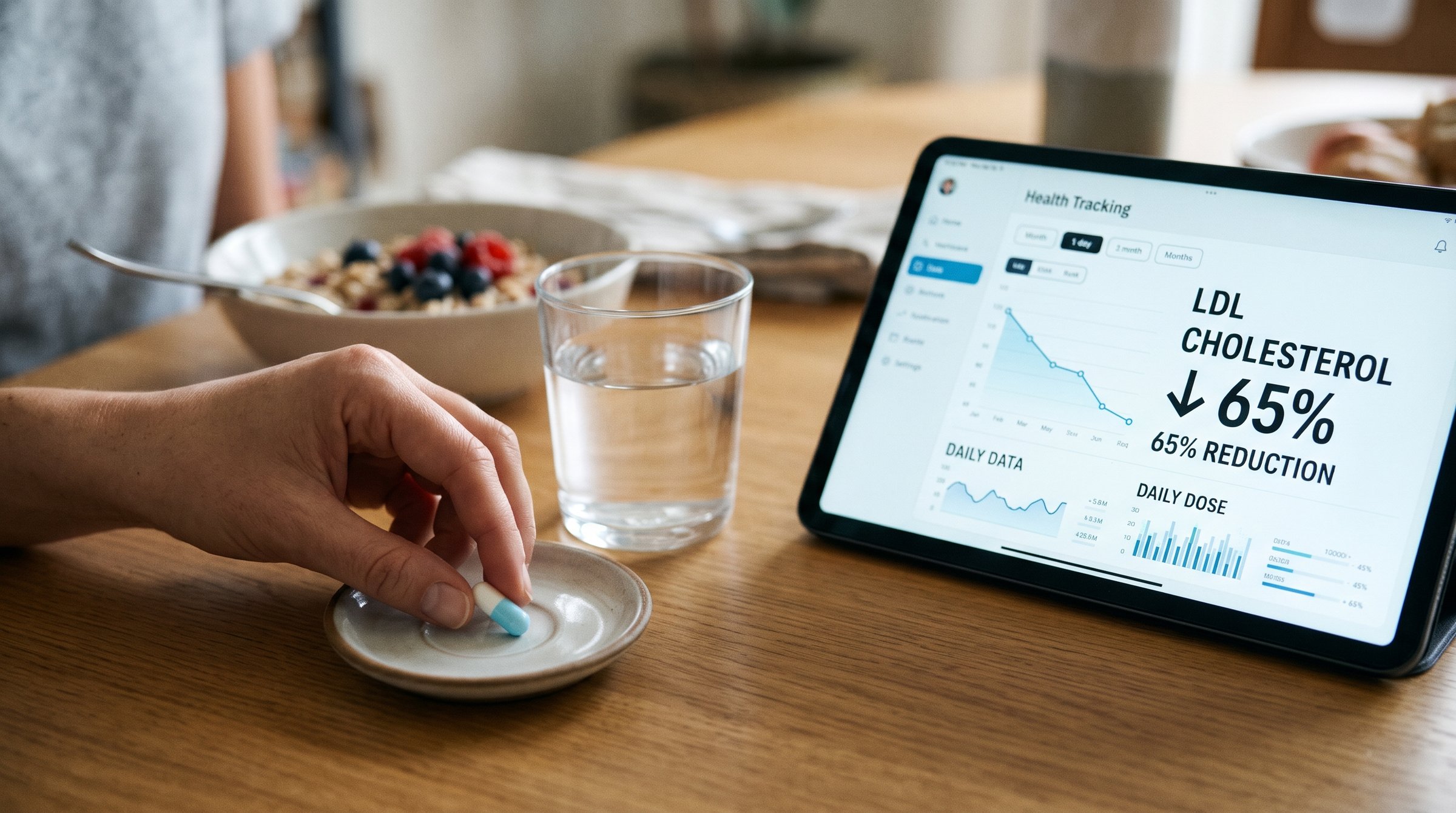
The drug targets PCSK9, a protein that normally promotes the destruction of LDL receptors on liver cells. With fewer receptors, the liver clears less cholesterol from the blood. Blocking PCSK9 keeps more receptors active, so the liver can pull more LDL out of circulation.
The oral route is made possible by a specialized macrocyclic peptide formulation combined with ingredients that boost absorption, which lets the medication survive being swallowed rather than injected.
What the Trial Data Show
A review in Annals of Pharmacotherapy reported LDL reductions of 57.1% to 64.6% after 24 weeks across trials, in line with injectable PCSK9 inhibitors. In a direct comparison among patients already taking statins, enlicitide lowered LDL by roughly 65%, against about 28% for ezetimibe and 6% for bempedoic acid.
On safety, the largest trial saw adverse effects at similar rates in the enlicitide and placebo groups. A separate study in people with inherited high cholesterol, known as heterozygous familial hypercholesterolemia, noted more diarrhea and dizziness with the drug. Longer-term monitoring will be needed to settle its safety profile.
Practical Details and Open Questions
Dosing is strict. Patients take the tablet in the morning on an empty stomach, may have water, black coffee, or plain tea with it, and must wait at least 30 minutes before eating or drinking anything else. A 30-day supply lists at $315, though real costs depend on insurance.
The biggest unanswered question is clinical benefit. Lower LDL is established, but researchers have not yet shown that it translates into fewer heart attacks and strokes. An ongoing cardiovascular outcomes trial is designed to answer that.
Primary sources
 New Once-Daily Pill Slashes Bad Cholesterol by Nearly 65% in Clinical Trial (scitechdaily.com) – A SciTechDaily report on the FDA approval of Lipfendra (enlicitide), the first oral PCSK9 inhibitor, approved July 16, 2026. It explains how the drug blocks PCSK9 so the liver keeps more LDL receptors, and how a macrocyclic peptide formulation with absorption enhancers makes oral dosing possible. It summarizes a review in Annals of Pharmacotherapy showing 57.1% to 64.6% LDL reductions at 24 weeks, about 65% in statin-treated patients versus roughly 28% for ezetimibe and 6% for bempedoic acid. The review searched PubMed, Embase, Web of Science, and Cochrane through July 17, 2026. Safety was similar to placebo in the largest trial, though another study in inherited high cholesterol saw more diarrhea and dizziness. It also covers dosing rules, the $315 list price for 30 days, and the pending cardiovascular outcomes trial. Reference: Lucas, Lussier, Nasuhidehnavi and Clark, Annals of Pharmacotherapy, 14 October 2026, via scitechdaily.com.
 Powered by News Ranker
