

Apple Unleashes M6 and M5 Ultra Chips to Fuel the On-Device AI Revolution
Key points
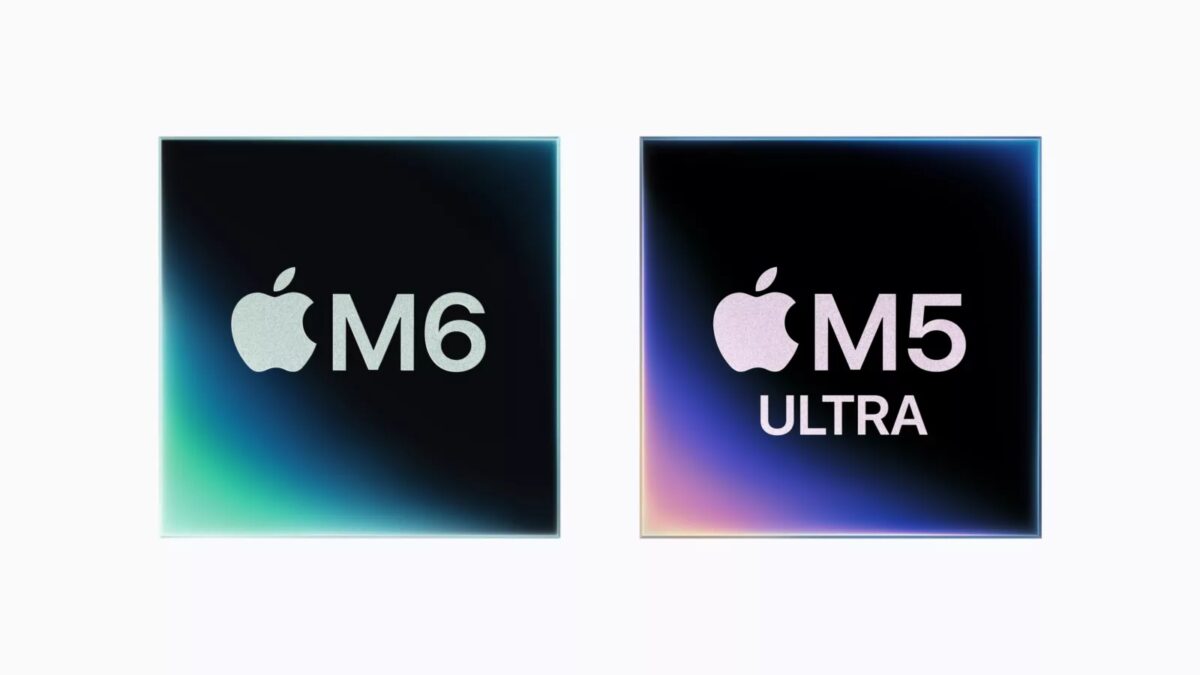
- Apple unveiled the M6 chip – its first built on a cutting-edge 2nm process – alongside the M5 Ultra, a massive quad-die processor designed for high-end professional workflows 1 3.
- The M5 Ultra bridges two dual-die M5 Max chips via UltraFusion technology, supporting up to 512GB of unified memory with 1.2TB/s of bandwidth 3 4.
- The surge in popularity of local autonomous agents like OpenClaw caught Apple by surprise, prompting the company to pivot its Mac mini and Mac Studio lineups toward local AI infrastructure 4.
- Preorders for the updated Mac mini and Mac Studio are open now, with devices shipping starting September 22 1 3.
Architectural Leap: The M6 and M5 Ultra
Apple’s latest silicon drop represents a fundamental structural shift in its hardware roadmap, moving aggressively to support continuous, background AI execution 3. The spotlight is shared by two major processors: the M6, which serves as Apple’s debut on a 2-nanometer (2nm) manufacturing node, and the M5 Ultra, an engineering marvel built for uncompromising desktop performance 1 3. By utilizing an advanced core hierarchy that introduces high-frequency “super cores” alongside traditional performance and efficiency cores, the M6 is optimized for both rapid single-threaded responsiveness and multi-threaded agentic tasks 3 4. Meanwhile, the M5 Ultra scales performance to unprecedented heights by fusing two dual-die M5 Max chips into Apple’s first-ever quad-die system-on-a-chip, achieving inter-die bandwidth exceeding 4.4 terabytes per second 3 4.
Powering Local AI and Agentic Workloads
The sudden craze surrounding autonomous AI assistants – such as the open-source agent OpenClaw, which recently surpassed 3.2 million active users – turned compact desktops into essential local infrastructure 4. Because these agents run best locally and around the clock to protect user privacy and eliminate token subscription fees, developers began stacking Mac minis side by side 3 4. Apple’s new hardware addresses this exact demand by integrating dedicated Neural Accelerators into every GPU core across both the M6 and M5 Ultra families 3 4. This integration supercharges matrix multiplication and local LLM prompt processing, allowing machines to run sophisticated models from Mistral, Gemma, and FLUX entirely on-device 3 4.
Memory, Bandwidth, and Enterprise Scalability
Running massive language models locally requires immense memory capacity and blazing-fast bandwidth to shuttle weights from RAM to compute units without bottlenecking 4. The base M6 scales up to 32GB of unified memory, while the top-tier M5 Ultra configuration reaches a staggering 512GB of unified memory paired with 1.2TB/s of bandwidth – a 50 percent leap over its predecessor 1 3 4. For heavy-duty enterprise environments, desktop units can also leverage Thunderbolt 5 connections to establish Remote Direct Memory Access (RDMA) clusters, linking multiple Mac Studios together to build a shared memory pool for accelerated distributed LLM inference 3.
Pricing, Configurations, and Launch Timeline
The revamped desktop lineup spans a broad pricing and performance spectrum to accommodate everyone from mainstream developers to enterprise research labs 4. The new Mac mini starts at $899 (or $799 for education customers) with the M6 chip, while configurations featuring the M5 Pro start at $1,699 1 3. On the professional side, the Mac Studio with M5 Max begins at $2,499, and the powerhouse M5 Ultra variant starts at $5,499 3. Preorders for the new hardware are open immediately, with official shipping set to begin on September 22, though the maximum 512GB memory tier for the M5 Ultra will follow in late October 1 3.
Companies mentioned: Apple (AAPL $309.90 ▼0.1%) • Mistral
Primary sources
 Apple debuts its ‘most powerful chip ever’ in M5 Ultra and M6 (techcrunch.com) – Announces the M5 Ultra and M6 chips powering new Mac Mini and Mac Studio models, detailing core counts, memory bandwidth, and launch pricing.
 Apple @ Work: Parallels Desktop 27 brings OpenGL 4.3 and AI acceleration to Apple Silicon (9to5mac.com) – Highlights Parallels Desktop 27 updates, bringing Metal-based OpenGL 4.3 support, SME2 instruction backing, and enterprise virtualization features to Apple Silicon.
Further sources
 Apple M5 Ultra and M6 Silicon Explained: 2nm Tech, Quad-Die Chips Promise Macs Massive AI Muscle (pcmag.com) – Provides an in-depth breakdown of Apple's 2nm manufacturing process, super-core architecture, quad-die scaling, and Thunderbolt 5 RDMA clustering capabilities.
 M6 and M5 Ultra: New Apple Chips Promise Stronger Local AI Performance (trendingtopics.eu) – Explores how developer enthusiasm for local AI assistants like OpenClaw drove the demand for on-device Mac mini infrastructure and regional pricing details.
- www.reddit.com (www.reddit.com) – Indicates a network security block encountered while attempting to access a Reddit discussion thread.
- Threads (www.threads.com) – References a social media platform stub with no associated article content.
 Powered by News Ranker