
Amazon Files to Launch 5,105-Satellite Direct-to-Cell Network
Key points
- Amazon’s Kuiper Systems subsidiary filed an application with the FCC to launch and operate a 5,105-satellite direct-to-device constellation across five orbital shells [[1], [3]].
- The proposed network will leverage mobile-satellite spectrum acquired through Amazon’s pending deal to buy Globalstar, supporting voice, messaging, data, and emergency services starting in 2028 [[1], [3], [5]].
- Unlike competitors Starlink and AST SpaceMobile, Amazon is bypassing the FCC’s Supplemental Coverage from Space framework by using dedicated mobile-satellite service frequencies [3].
- The new constellation will operate separately from Amazon Leo’s existing 3,232-satellite Gen1 broadband network, which is already working against its own FCC deployment deadlines [3].
The Blueprint for Orbital Expansion
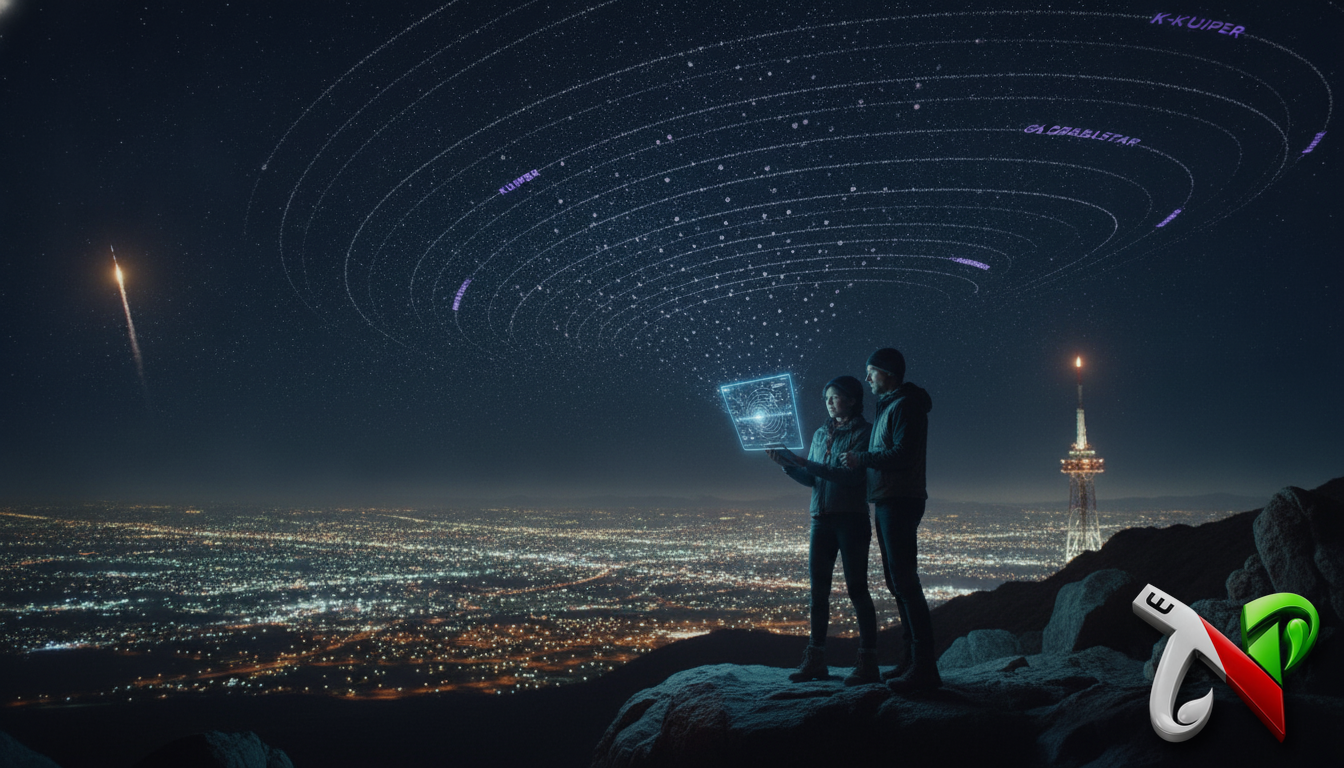
Amazon is deepening its footprint in low Earth orbit with an aggressive new regulatory filing submitted through its Kuiper Systems subsidiary [3]. The proposal outlines a dedicated constellation of 5,105 satellites distributed across five orbital shells, positioned at altitudes ranging from 510 to 580 kilometers [3]. This new infrastructure is designed specifically for direct-to-device communication, aiming to deliver voice, messaging, data, and emergency response capabilities straight to standard cellular devices [[1], [5]].
This constellation will operate entirely apart from Amazon Leo’s initial Gen1 broadband network, which consists of roughly 3,200 satellites intended for fixed terminal connectivity [[1], [3]]. While deployment for the broadband network is already underway with hundreds of spacecraft in orbit, the newly proposed direct-to-cell system has set an ambitious company target to begin launching its first spacecraft in 2028, pending regulatory clearance [[1], [3]].
Leveraging Globalstar and Spectrum Strategy
At the heart of Amazon’s new strategy is its pending acquisition of Globalstar, a major mobile-satellite services provider [[3], [5]]. By tapping into Globalstar’s established mobile-satellite spectrum, specifically utilizing 1610-1618.725 MHz for uplink transmissions and 2483.5-2500 MHz for downlinks, Amazon gains immediate access to frequencies uniquely suited for handheld devices rather than heavy, fixed broadband dishes [3].
This approach marks a distinct regulatory path away from rivals like SpaceX’s Starlink and AST SpaceMobile [3]. Instead of leasing terrestrial cellular spectrum through the FCC’s Supplemental Coverage from Space framework, Amazon is utilizing traditional mobile-satellite service allocations [3]. The architecture also incorporates regenerative payloads with onboard signal processing, digital beamforming, and optical inter-satellite links to maximize orbital performance [3].
Heating Up the Rivalry with SpaceX
Amazon’s latest maneuver sets the stage for an intense clash with SpaceX, which has long commanded a dominant position in both satellite internet and direct-to-cellular connectivity [2]. SpaceX has aggressively built out its Starlink ecosystem and invested heavily in terrestrial spectrum partnerships, such as its collaboration with T-Mobile [[1], [2]]. By integrating the Globalstar network, which already handles emergency connectivity for Apple devices, Amazon is positioning itself as a formidable counterweight in the space-based telecom arena [[1], [2]].
Despite the high ambitions, industry analysts note that direct-to-device satellite connections currently represent a tiny fraction of overall network usage, often limited by bandwidth constraints to text messages and remote emergencies [2]. Furthermore, Amazon faces logistical hurdles, including reliance on external heavy-lift launch providers like Blue Origin, whose heavy rockets have faced recent development setbacks [2]. Nevertheless, Amazon’s immense financial reserves ensure the company has the staying power to fund these massive long-term infrastructure plays [2].
Companies mentioned: Amazon, SpaceX, Apple
Primary sources
- Amazon’s trying to launch a global satellite cellphone network in 2028 (theverge.com) – Amazon filed an FCC application for a 5,105-satellite constellation launching in 2028 to provide direct-to-device voice, data, and emergency services using Globalstar’s spectrum.
- Amazon’s new satellite network for mobile phones could turn up the heat on SpaceX (techcrunch.com) – The filing escalates competition with SpaceX in the satellite-to-mobile market while highlighting Amazon’s financial muscle and reliance on external rocket partners like Blue Origin.
Further sources
- Amazon files for 5,105-satellite direct-to-device network using Globalstar spectrum (mlq.ai) – Technical details reveal that Amazon is bypassing the FCC’s Supplemental Coverage from Space framework by utilizing direct mobile-satellite service frequencies across five specific orbital altitudes.
 Amazon wants to deploy 5,105 satellites for its direct-to-mobile service (engadget.com) – Amazon’s Leo subsidiary continues expanding its broader low Earth orbit infrastructure alongside its newly proposed direct-to-mobile initiative.
- Amazon plans to deploy more than 5,000 satellites for new telecom service (finance.yahoo.com) – The telecommunications platform aims to bridge connectivity gaps in remote areas for consumer, enterprise, and disaster response applications following Amazon’s multi-billion-dollar Globalstar acquisition.
 Powered by News Ranker