
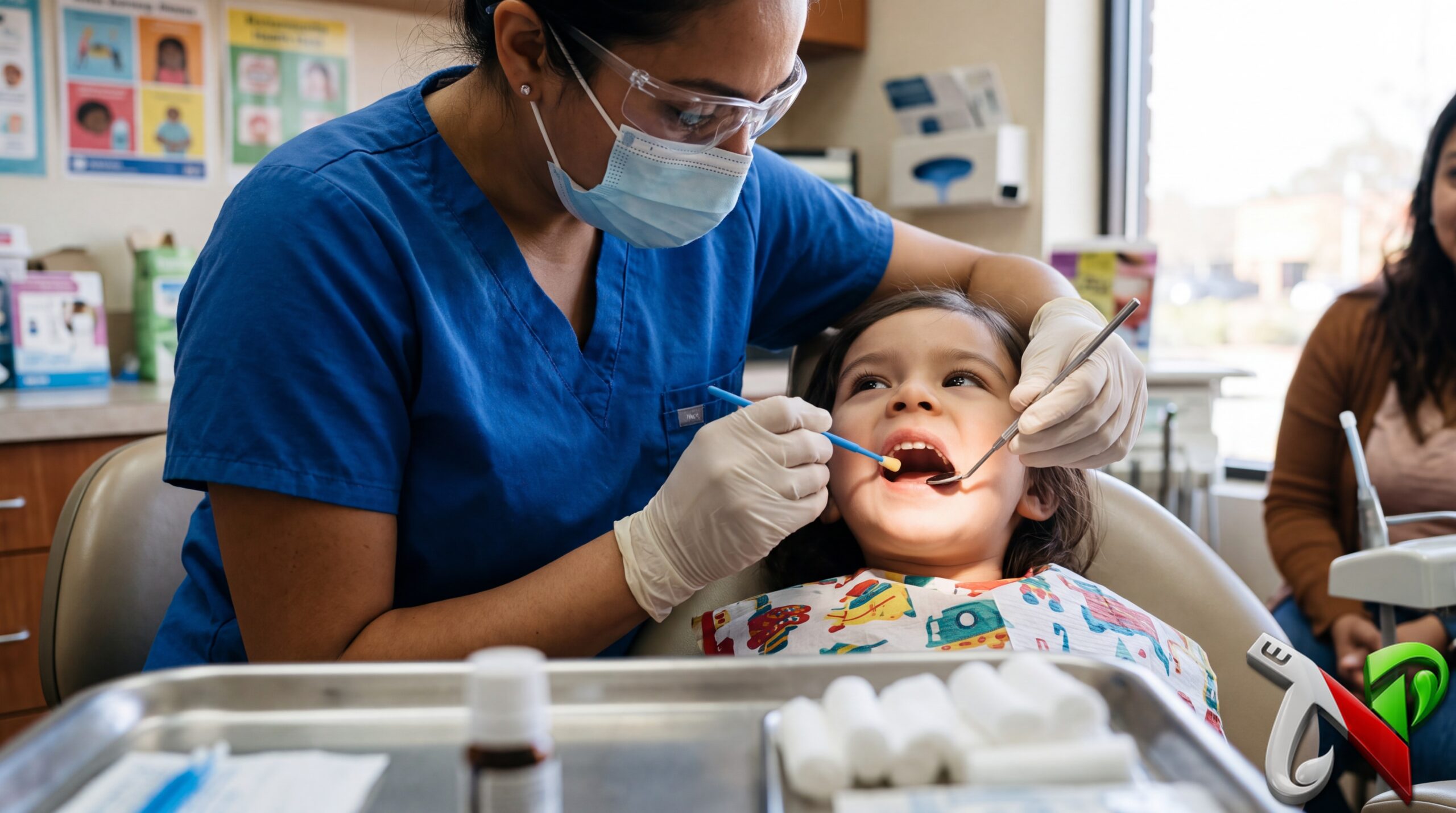
A Painted-On Liquid Stops Childhood Cavities Without the Drill, Large Trial Finds
Key points
- A Phase III trial in JAMA Pediatrics enrolled 830 children under 6 across Michigan, New York, and Iowa, and found that 38% silver diamine fluoride (SDF) arrested decay in more than half of affected baby teeth when applied every six months 1.
- SDF is painted on with a small sponge-tipped applicator in seconds, needing no drilling, injections, or sedation, though it permanently stains treated decay dark.
- The FDA cleared SDF as a device for tooth sensitivity in 2014, and dentists use it off-label for cavities; the new data could support a formal drug application for arresting decay.
- The study, funded with more than $12 million from the National Institute of Dental and Craniofacial Research, began in 2018 and was led by the University of Michigan.
What the Trial Found
A cavity does not always have to mean a drill. A large clinical trial led by the University of Michigan has confirmed that silver diamine fluoride, a clear liquid applied with a tiny sponge-tipped applicator, can stop tooth decay in young children 1. Each tooth takes only seconds to treat, and the process requires no drilling, injections, or sedation.
The Phase III study, published in JAMA Pediatrics, followed 830 children younger than 6. They were recruited through dental clinics, pediatric practices, and Head Start and Early Head Start programs in Michigan, New York, and Iowa. A solution containing 38% SDF, given at six-month intervals, stopped decay in more than half of the affected baby teeth.
Dentists call this arresting decay: the damaged area stops getting worse. Unlike a filling, SDF does not rebuild lost tooth structure. Silver works against decay-associated bacteria, while fluoride strengthens the tooth’s mineral structure. Lead investigator Margherita Fontana, a professor at the University of Michigan School of Dentistry, described it as very effective and safe, even in children as young as 1.
Sparing Kids Pain and Surgery
Tooth decay is the most common chronic disease in children, affecting more than 40% of American kids. Early cavities can be quiet, but untreated decay can bring severe toothaches, infections, trouble eating and sleeping, missed school, and repeated appointments. Each year thousands of young children land in emergency departments, where physicians generally cannot deliver the dental care needed. Some eventually require surgery under general anesthesia.
Conventional treatment is also hard on small patients, since many are too young to sit still or are frightened. SDF sidesteps much of that. Fontana noted that the approach could also help older adults, people with developmental or physical disabilities, those with severe dental anxiety, and patients who struggle to get regular dental care.
There is a real tradeoff. SDF permanently darkens the treated decayed area, which is most visible on front teeth. The staining is mainly cosmetic, but it may sway some families. For many, avoiding pain and invasive procedures may outweigh it. For some children, repeat applications every few months could hold a cavity in check until the baby tooth falls out naturally.
The Road to FDA Approval
SDF is not new. Dentists in many countries have used it for decades. In the United States, the FDA approved it as a medical device for tooth sensitivity in 2014, and clinicians have since used it off-label to stop cavities. What was missing was large-scale evidence from U.S. populations on safety and effectiveness for decay itself, a key step toward approval for that use. This trial was built to fill the gap.
The product tested was Advantage Arrest 38% SDF from Elevate Oral Care, and the manufacturer can use the findings in an FDA application to market SDF as a drug for arresting dental caries. Amr Moursi of New York University College of Dentistry, a co-principal investigator, argued that ending off-label status could increase use by providers, improve insurer payments, and make product quality more consistent.
Reaching Children Earlier
Fontana stressed that clinicians want high-quality evidence before changing practice, and that matters because young children often see pediatricians years before any dentist. Wider acceptance could let medical providers treat cavities early, while a referral to a dental home is arranged, before they become painful, infected, or surgical.
The project began in 2018 and continued through the disruption of COVID-19. It brought together researchers from the University of Michigan, New York University, the University of Iowa, and Indiana University, with more than $12 million from the National Institute of Dental and Craniofacial Research, part of the National Institutes of Health.
Primary sources
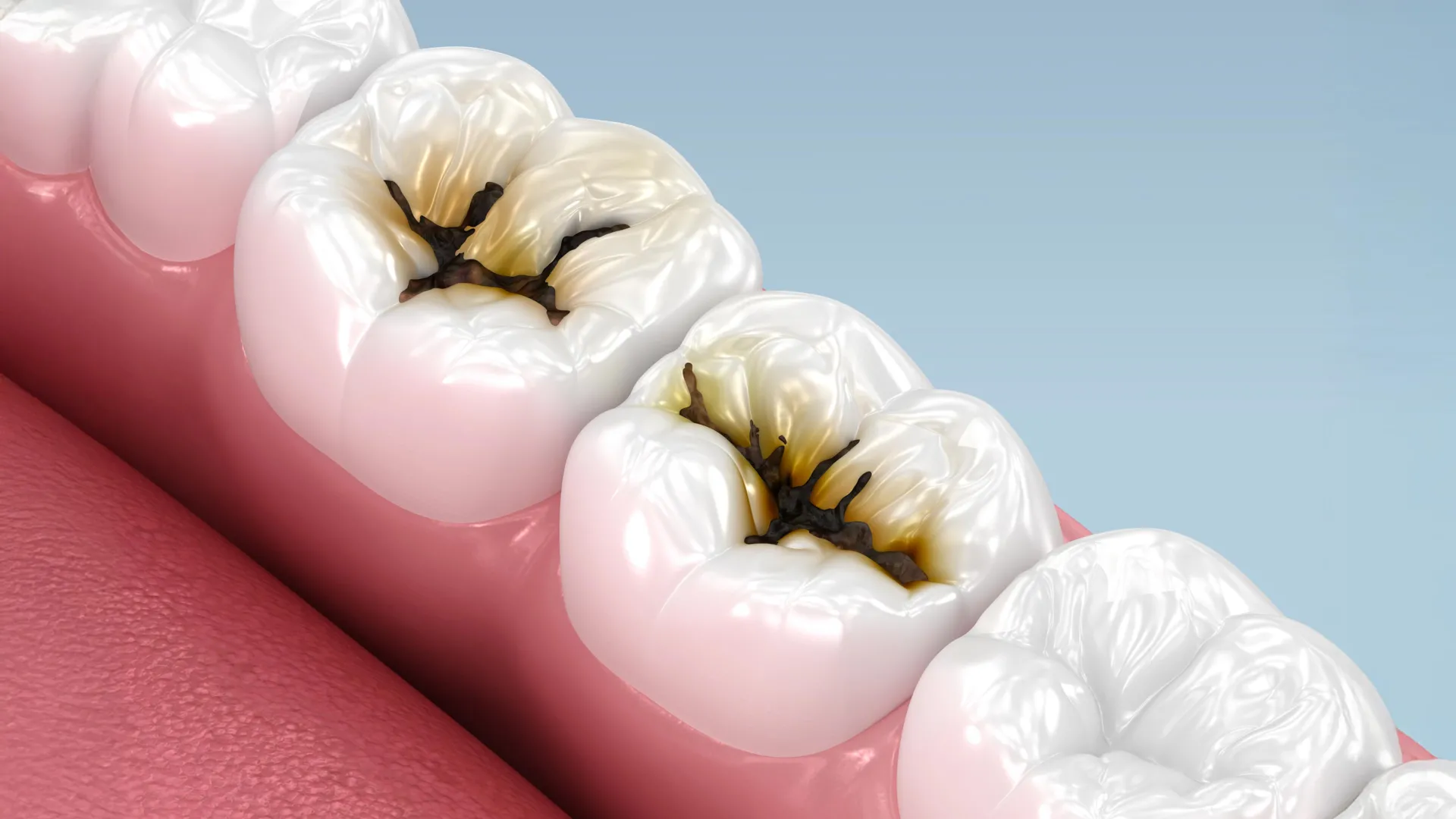 A simple liquid can stop cavities without drilling, major study confirms (sciencedaily.com) – This University of Michigan release, republished by ScienceDaily, reports on a Phase III trial of silver diamine fluoride in 830 children under 6 recruited in Michigan, New York, and Iowa through dental clinics, pediatric practices, and Head Start programs. A 38% SDF solution applied every six months stopped decay in more than half of affected baby teeth. It explains how the treatment works, its permanent dark staining of treated decay, its 2014 FDA clearance as a device for sensitivity with off-label use for cavities, and how the data could support an FDA drug application. It includes comments from lead investigator Margherita Fontana and co-principal investigator Amr Moursi, and notes funding of more than $12 million from the NIDCR. Published October 25, 2026 on sciencedaily.com; original study in JAMA Pediatrics.
 Powered by News Ranker
