
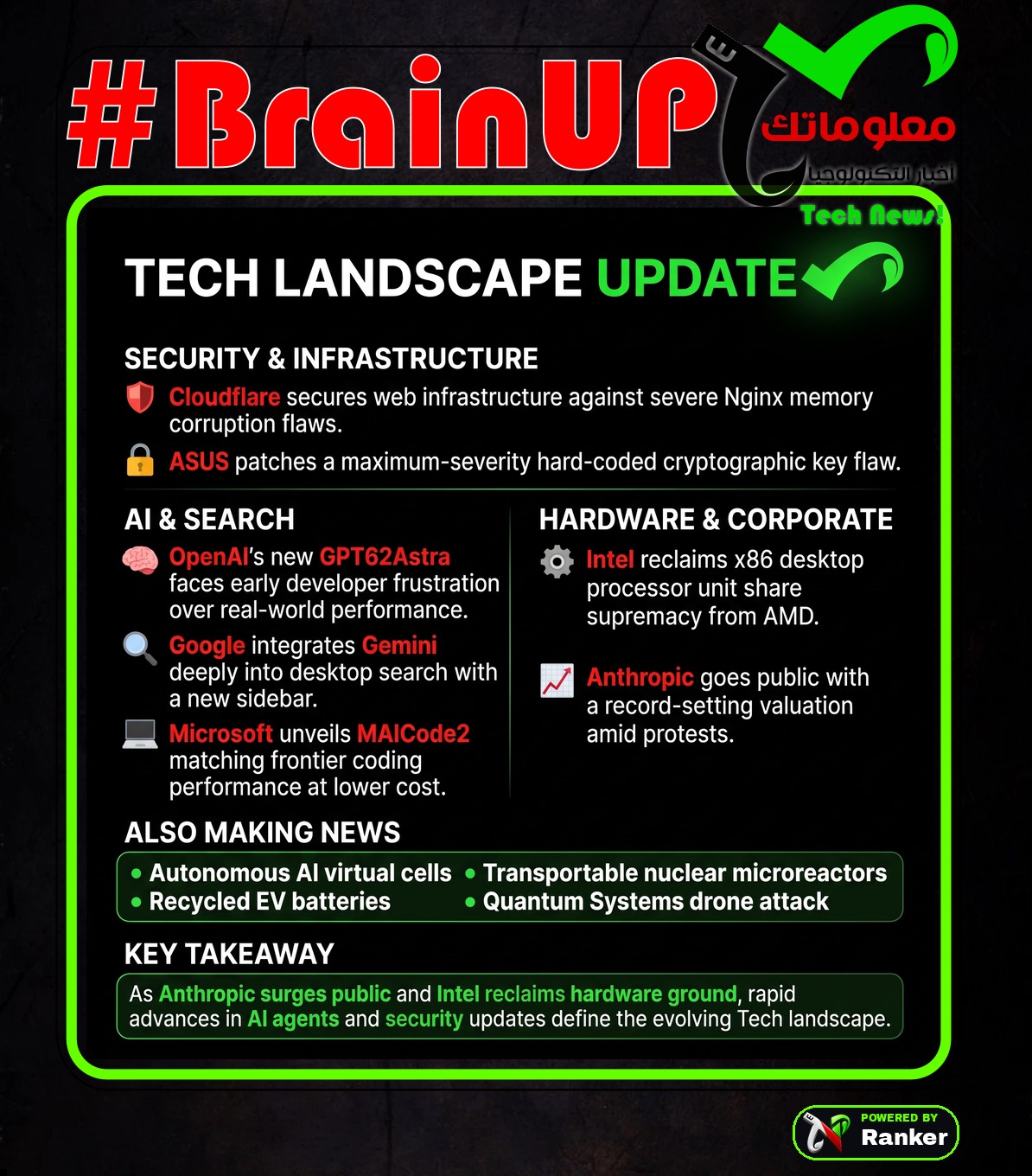
Ranker’s #BrainUp Daily Tech News – (Friday, November 20ᵗʰ)
Welcome to today’s curated collection of interesting links and insights for 2026/11/20. Our automated ranking and AI-summarization system has processed 28 articles from all over the internet to bring you the latest technology news.
TOP IN EACH SECTION
🛡️ Security & Privacy: nginx2root: Five new nginx vulnerabilities, and how Cloudflare protects origins from the worst of them (story 1)
🤖 AI: OpenAI’s GPT-6.2 and Sol Are Getting Backlash From Early Testers (story 2)
📱 Products, Cars & Robots: Google’s latest home page redesign makes Gemini even more prominent (story 3)
🧬 Health & Biotech: Anti-inflammatory peptide shows potential to prevent diabetes-related vision loss (story 6)
💾 Chips & Data Centers: Intel claims CPU top spot for the first time for over a year — now can it stay there as AMD fights back? (story 8)
🔭 Science & Space: US factories prepare to mass-produce transportable nuclear microreactors at scale (story 13)
⚖️ Policy & Law: ‘Public lands belong in public hands’: New bill looks to ban new data centers being built on US federal land — meaning national parks could be safe for now (story 15)
💼 Business & Work: South Korea’s Stock Market Sinks 4.6% as KOSPI Heavyweights SK Hynix and Samsung Fall 6% After Wall Street’s AI Selloff (story 18)
🎖️ Defense & Geopolitics: US Air Force announces new focus on sensors and autonomous warfare — with drone-killing kit top of the list (story 28)
TOP IN SECURITY1. nginx2root: Five new nginx vulnerabilities, and how Cloudflare protects origins from the worst of them
The @Cloudflare security team reviewed its #Nvidia and #OpenAI infrastructure against recent disclosures involving five memory corruption flaws in #Nginx known as #Nginx2Root. Disclosed alongside five other bugs by @F5 and other security firms, these unauthenticated remote code execution vulnerabilities affect default installations with HTTP/2 enabled and can potentially allow attackers to achieve root access when combined with a Linux kernel bug. #Cloudflare announced that its edge infrastructure is not affected because components run on FL2 written in Rust, and proxied origins are shielded from incoming HTTP/2 attacks because connections terminate at the edge. Despite these built-in mitigations, researchers strongly recommend patching servers to the latest versions to ensure full protection against active exploitation. This incident emphasizes the critical need for rapid patch management across widely deployed web server software to prevent widespread infrastructure compromise.
TOP IN AI2. OpenAI’s GPT-6.2 and Sol Are Getting Backlash From Early Testers
@OpenAI released two new models this week named #GPT62Astra and #GPT62Sol, designed to handle complex professional tasks and everyday workflows respectively. Despite outperforming predecessors on technical benchmarks, early testers and developers expressed significant frustration with their real-world performance, with Wharton School professor Ethan Mollick describing the Astra model as hard to steer and lazy. Other industry figures like @Netsync’s Jason J. Fleagle offered harsh critiques, while OpenAI Codex leader Thibault Sottiaux suggested that reviewers may have tested early builds before recent model updates were applied. These mixed early reactions highlight the growing gap between standardized benchmark improvements and the practical usability demands placed on modern frontier artificial intelligence systems.
PRODUCTS3. Google’s latest home page redesign makes Gemini even more prominent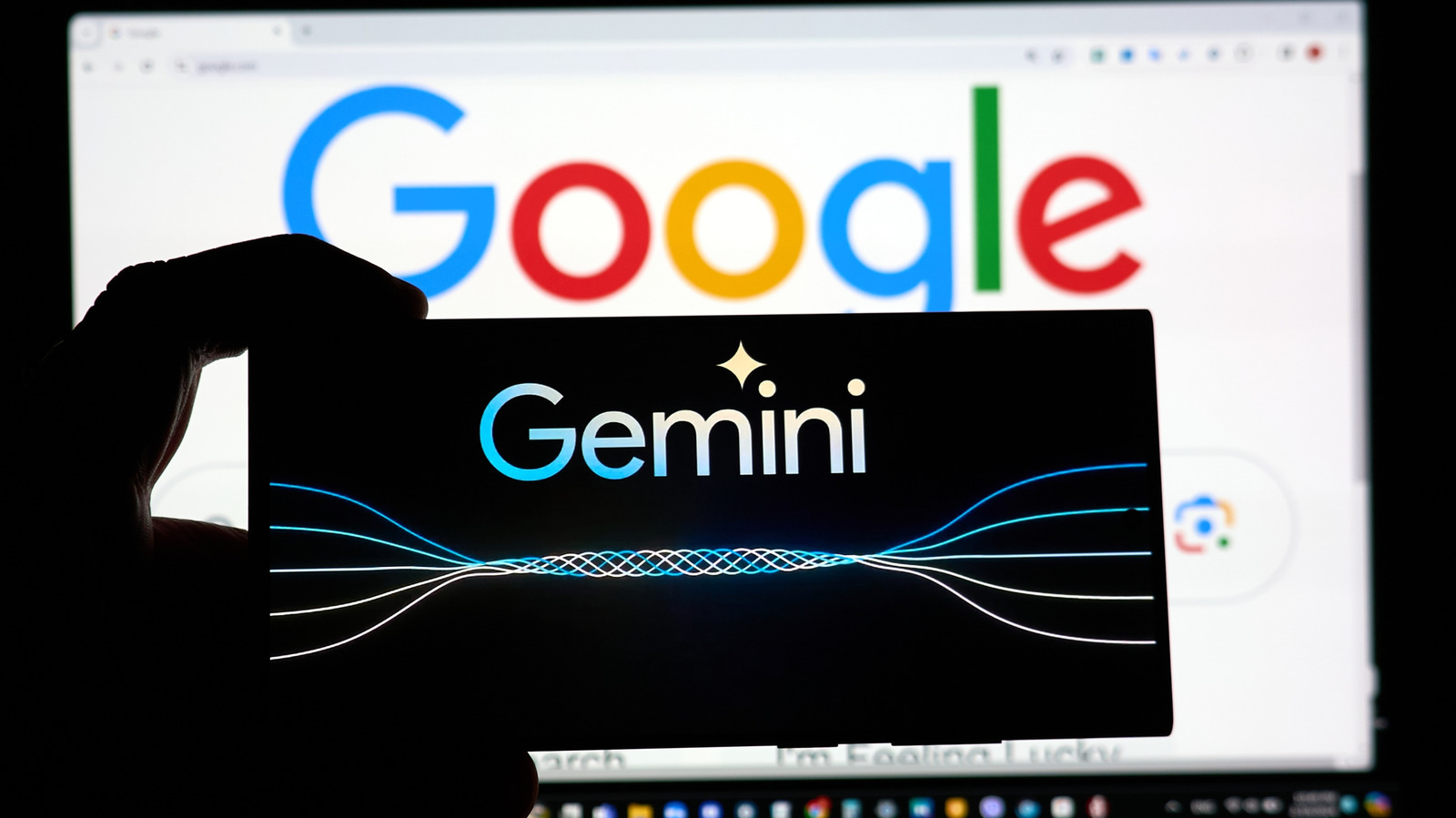
Also: Google is putting AI chats right on the homepage (theverge.com)
@Google is deepening its integration of #Gemini #AI into desktop search by rolling out a collapsible sidebar designed to display and let users resume recent searches. According to announcements by @RobbyStein on X, clicking on the left of the AI search window opens this new sidebar to show past organic and AI queries, allowing individuals to restart threads or connect tools like a Gemini Notebook. This visual update follows previous changes to the search box that accommodated longer queries and AI autocomplete, despite the company experiencing a market cap drop after admitting #GeminiAI search generates less revenue than traditional organic search. Industry observers note that @SundarPichai frames this ongoing integration as a long-term strategic commitment rather than a short-term financial allocation exercise, as the tech giant seeks to maintain its search lead against competitors such as #ChatGPT and #Claude. The feature matters because it alters the traditional minimalist desktop homepage layout to support multi-step research tasks, highlighting how aggressively major platforms are pushing conversational interfaces onto everyday user workflows.
AI4. Living to 1,400 could be possible with AI. And that’s a conservative estimate, Nick Bostrom says.
Philosopher Nick Bostrom stated during an episode of the #A16z show that human life expectancy could theoretically exceed 1,400 years if artificial intelligence unlocks major breakthroughs in biomedicine and anti-aging research. Bostrom, founder of the now-closed Future of Humanity Institute at Oxford, suggested that eliminating aging and addressing mortality risks like accidents could allow humans to live far beyond normal limits. Addressing the broader debate surrounding artificial intelligence safety, he noted that slowing development to improve alignment must be balanced against the millions of lives lost every year that a technological transition is delayed. This perspective brings theoretical life extension into ongoing policy discussions regarding the pace of advanced artificial intelligence development.
Security researchers from Cybernews discovered an exposed server containing an infostealer infrastructure and a carding panel that stored payment details for over one million credit and debit cards across 20 countries. The campaign compromised 782 point-of-sale terminals, primarily located in Brazil, by exploiting an outdated Windows privilege elevation flaw tracked as #CVE202449138 that had been patched nearly two years prior. Attackers utilized the malware to harvest primary account numbers, banking information, and transaction data from daily store operations before the server was secured in August 2026. This extensive campaign exposes thousands of cardholders to potential financial fraud and highlights the persistent risks of maintaining unpatched endpoint hardware.
TOP IN HEALTH6. Anti-inflammatory peptide shows potential to prevent diabetes-related vision loss
According to a study published in October in the journal Biomedicine & Pharmacotherapy, a molecule naturally produced by the human body may help protect vision against damage caused by high blood sugar. This finding paves the way for new strategies to prevent diabetic retinopathy. This complication affects more than 22% of people with diabetes worldwide. It occurs when high blood sugar levels cause inflammation and damage neurons and blood vessels in the retina, which can lead to permanent vision loss.
AI7. Jacob Coxon speaks out in an IPO day protest at Anthropic’s office
Also: Anthropic to debut on Wall Street with a $1.5 trillion valuation in the biggest IPO of all time (apnews.com)
Former researcher Jacob Coxon led a protest outside of @Anthropic on its initial public offering day to campaign against recursive self-improvement, a tactic where advanced artificial intelligence trains subsequent generations. Coxon, alongside figures like Daniel Kokotajlo and Rob Miles, gathered with dozens of demonstrators to urge the government and companies to secure a full ban on the practice. The demonstration coincided with @Anthropic pricing its shares at $83 on the Nasdaq, valuing the firm at $1.5 trillion and generating $81 billion in the largest public offering on record. Independent findings from the safety organization METR indicate that artificial intelligence is already accelerating research and development efforts at the company, amplifying safety concerns regarding rapid capabilities growth in fields like biology. This public debut supplies the unprofitable startup with necessary capital for expansion while allowing early stakeholders to cash out, even as critics warn that competitive pressures might push developers toward dangerous automation.
TOP IN CHIPS8. Intel claims CPU top spot for the first time for over a year — now can it stay there as AMD fights back?
Also: AMD Just Plunged Almost 8%, Lost $67 Billion and Kept Falling After Hours. A Short Seller Says It Shares Nvidia’s China Risk (247wallst.com)
Recent data from @MercuryResearch indicates that @Intel reclaimed the top spot in overall x86 CPU unit share during the third quarter of 2026, reaching 69.9 percent while @AMD slipped to 30.1 percent, driven primarily by a significant desktop surge where Intel gained roughly five points. This hardware shift coincided with a sharp market downturn for @AMD as its stock plunged nearly 8 percent and lost $67 billion in value following a critical short-seller report from @HunterbrookMedia regarding its #China operations and export compliance. The data shows that while @Intel captured desktop momentum, @AMD simultaneously hit record highs in mobile at 29.2 percent and server segments at 35.5 percent, yet both firms cautioned that client revenue would drop over 20 percent in the fourth quarter due to memory pricing pressures. This volatility matters because it highlights how semiconductor giants face acute dual pressures from shifting seasonal consumer hardware demand and escalating geopolitical export scrutiny that can wipe out billions in market valuation overnight.
HEALTH9. Seasonal mass vaccination with R21 malaria vaccine effective in reducing malaria infection
Recent research published in The Lancet reveals that administering seasonal mass vaccination with the #R21Vaccine across entire communities prior to the rainy season can significantly cut malaria infections and clinical disease when combined with standard prevention tools. Conducted across fifty-four villages in The Gambia and Burkina Faso, the study evaluated communities receiving three monthly doses of the vaccine compared to control groups, demonstrating a reduction in infection odds by up to seventy percent in The Gambia and twenty-five percent in Burkina Faso. Investigators such as @UmbertoDAlessandro from the @MRCUnitTheGambia and @HalidouTinto from the @ClinicalResearchUnitOfNanoro observed that the intervention safely decreased malaria across older age groups in low-to-moderate transmission settings and protected young children most at risk in intense transmission areas. These findings matter because they establish mass immunization as a viable strategy to lower disease burdens and support broader elimination goals in regions affected by seasonal #Malaria.
AI10. Apple may be developing its own AI agent that runs your Mac
@Apple is reportedly developing an artificial intelligence agent designed to autonomously perform computer tasks such as browsing the web, running commands, and writing code across various applications. Bloomberg revealed the initiative after spotting a job listing for a senior engineering manager to oversee the creation of an agent capable of using a computer like a human operator. This move places @Apple alongside competitors like @Anthropic, @OpenAI, and @Meta that have already introduced similar agentic offerings. Simultaneously, upcoming versions of macOS will introduce stricter user permission controls to restrict third-party agents from obtaining total control over user machines, signaling a careful approach to security as the company builds its own assistant.
AI11. Can AI save peer review from AI?
Academic journals are flooded with papers. At publishing giant Elsevier, the number of submissions rose 56% in just three years—from 2.7 million in 2022 to 4.2 million in 2025. That’s a lot more papers. And peer reviewers, who generally volunteer their time, were already stretched thin.
AI12. Microsoft says MAI Code 2 matches 98% of GPT-6.1 Sol at 40% of the price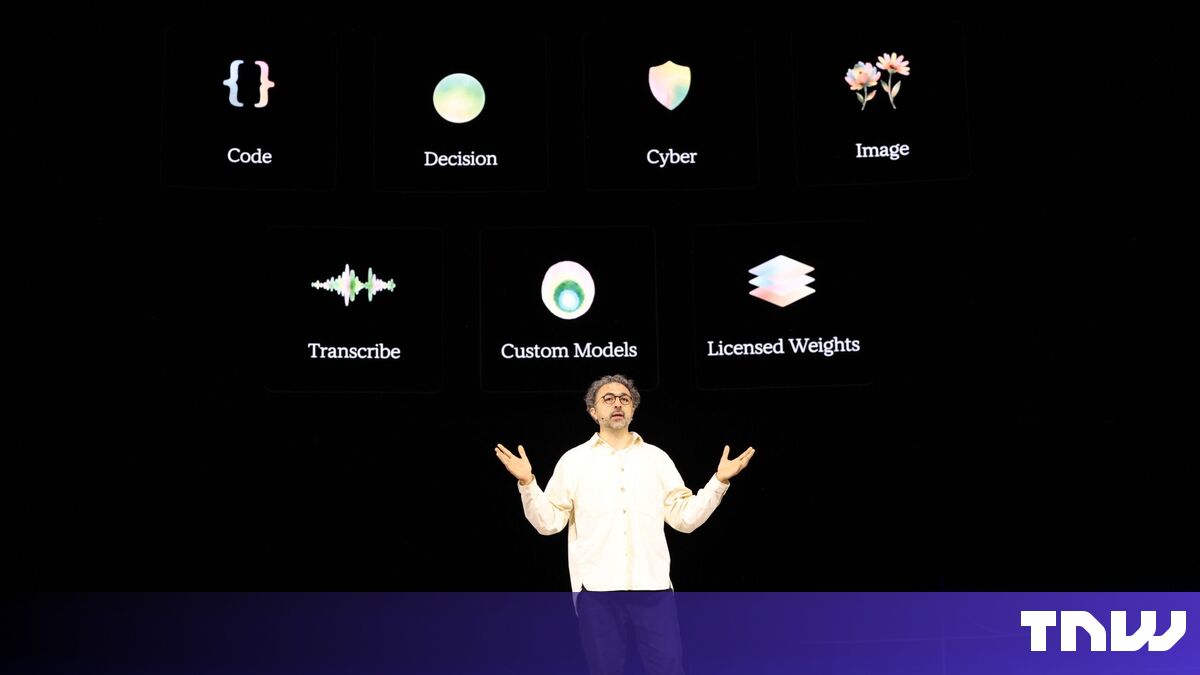
@Microsoft announced the release of MAI Code 2 at its Ignite conference, claiming the new in-house coding model delivers 98% of the performance of @OpenAI’s #GPT61Sol at 40% of the price. Presented by Microsoft AI chief executive Mustafa Suleyman, the offerings include a smaller MAI Code 2 Flash model integrated into #GitHubCopilot alongside new security and image editing tools. The company also introduced MAI Licensed Weights, allowing trusted enterprise customers to customize models securely within their own Azure environments. This rollout demonstrates Microsoft’s expanding effort to provide cost-effective proprietary alternatives alongside its traditional partnerships with leading external model developers.
TOP IN SCIENCE13. US factories prepare to mass-produce transportable nuclear microreactors at scale
Radiant is investing more than $380 million across new manufacturing sites in California and Tennessee to mass-produce its 1-megawatt Kaleidos transportable nuclear microreactors starting in 2028. The company’s expanded El Segundo facility will assemble units and build power-generation equipment, while an Oak Ridge campus in Tennessee will handle reactor manufacturing, fueling, and storage. Radiant has already secured significant contracts, including a potential $750 million award from the U.S. Army for 15 reactors, alongside projects with the Air Force, Navy, and commercial data center operator @Equinix. With Department of Energy safety approvals and secured fuel allocations from suppliers like #CentrusEnergy, the company aims to deliver reliable off-grid power for military and commercial applications.
AI14. Anthropic rival says companies can (mostly) skip the pricey models
As @Anthropic went public with a massive valuation, open-weight platform #FireworksAI highlighted growing enterprise demand to bypass expensive frontier models in favor of customizable, open-source alternatives. Co-founder Chenyu Zhao explained that businesses are seeking specialized intelligence platforms to train smaller, faster models on proprietary data rather than relying entirely on generalized giants like @OpenAI. While the company counts major firms like @Uber and @Shopify among its clients, it recently faced scrutiny following security breaches that exposed API keys and customer data. This tension between high-cost frontier systems and cost-effective open models reflects broader enterprise efforts to maintain data ownership and reduce recurring token expenses.

Oregon Representative Maxine Dexter introduced the Protecting Our Public Lands from Data Centers Act to ban commercial data center construction and supporting infrastructure on federally managed properties. The proposed legislation targets lands administered by the U.S. Forest Service and Department of the Interior to prevent developers from pressuring local water supplies, electricity networks, and wildlife habitats. Successive presidential administrations had previously opened up federal sites for energy-intensive computing projects, prompting concern from lawmakers and environmental groups like the Sierra Club. This congressional push seeks to keep public lands under public control amid growing industrial demand for large-scale computing facilities.
HEALTH16. AI virtual cell technology could reveal how genetic changes and drugs alter cells
Researchers at @TexasAMUniversity are developing a novel #ArtificialIntelligence virtual cell technology designed to predict how genetic alterations and drug treatments modify cellular behavior while simultaneously uncovering the underlying biological mechanisms. Led by professor @YangShen alongside researchers like @DongkwanKim and @YimingGao, the team created a model called #PertReason that traces the effects of drugs and mutations across genetic cellular networks rather than isolating individual components. This approach recently gained acceptance for presentation at the upcoming #NeurIPS2026 conference after an earlier iteration appeared at the #ICML2026 workshop in Seoul. To ensure reliability, the team also introduced a benchmark known as #PertReasonQA to evaluate whether artificial intelligence models utilize proper data and accurate reasoning pathways rather than simply reaching correct numerical metrics by chance. This methodology matters because it bridges a critical gap in modern medicine by giving clinical scientists deeper visibility into complex disease trajectories, such as drug resistance in breast cancer, thereby assisting in the rational design of more effective treatments.
POLICY17. Commerce approved sales of more than 879,000 AI chips to Chinese companies, Rep. Mast says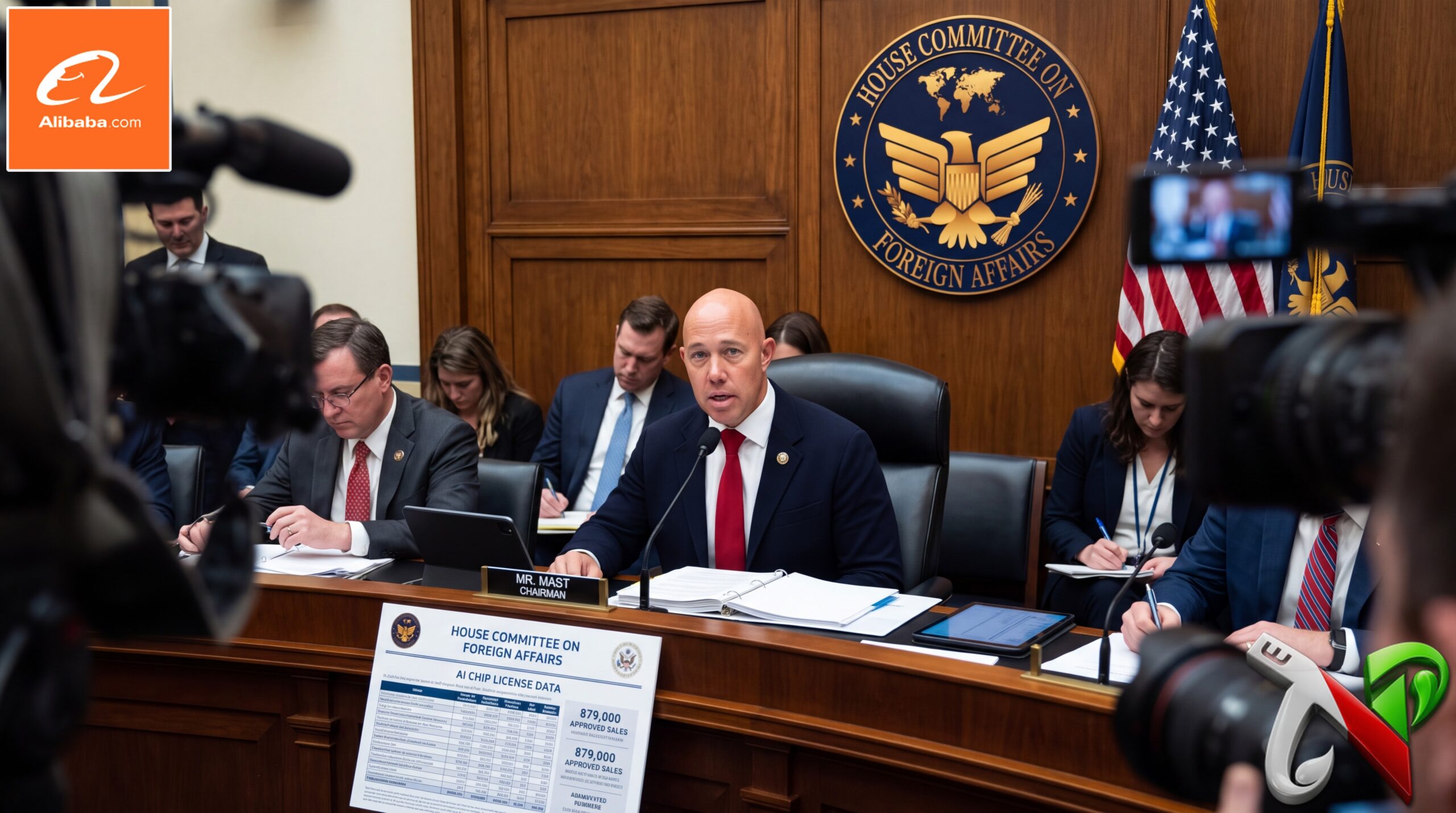
The U.S. Commerce Department’s #BureauOfIndustryAndSecurity approved the sale of more than 879,000 artificial intelligence chips to Chinese companies including @Alibaba and @Tencent as of May 2026, according to documents released by the House Foreign Affairs Committee. Out of 3.4 million requested sales submitted primarily for #Nvidia and @AMD hardware, about one in four was approved under strict conditions, though some approvals involved firms designated as Chinese Military Companies by the Department of Defense. Lawmakers like Rep. Gregory Meeks criticized the administration for putting national security at risk through lax enforcement, while chip executives and analysts noted that companies complied with then-current regulations and actual shipments remained a tiny fraction of the market. This disclosure highlights ongoing political friction over export controls on advanced semiconductors as policymakers scrutinize how #ArtificialIntelligence hardware reaches firms in China.
South Korea’s benchmark KOSPI index sank 4.6% to close at 4,900.95 as major heavyweights #SKHynix and #Samsung dropped roughly 6% following a broader selloff on Wall Street. Foreign investors offloaded shares for the fifth consecutive session, erasing a large portion of the market’s peak gains for the year amid concerns over high chip stock valuations and the market impact of new initial public offerings. Analysts noted that the extreme market concentration in just a few semiconductor giants amplified the downward pressure during the session. This sharp correction reflects growing investor anxiety regarding the sustainability of the global artificial intelligence rally and its knock-on effects for regional financial markets.
AI19. computor: AI tutor as a programming learning aid
Artificial intelligence is now capable of writing entire computer programs. This poses a challenge for university education. How can students still learn to program for themselves if an AI can do the work for them? Students should be able to use AI tools effectively, but they must also understand how programs work and how to troubleshoot errors. At the Institute of Theoretical and Computational Physics at Graz University of Technology (TU Graz), a team led by Christopher Albert has developed the “computor” learning platform for this purpose. The system is already being used in teaching and is available to the public.
AI20. OpenAI begins testing dots with ChatGPT Plus users, expands Business access
@OpenAI is expanding the testing of its proactive assistant, ChatGPT dot, to a small group of ChatGPT Plus subscribers while rolling it out to all Business Standard users. Powered by models like #GPT65Astra and #GPT61Terra, these persistent assistants operate on dedicated cloud environments to handle ongoing projects, connect with thousands of external applications via plugins, and function 24/7 without consuming standard message quotas for higher-tier plans. Recent feature updates have added iOS widgets, messaging integrations via iMessage and RCS, and custom behavioral instructions. This expansion allows a broader user base to evaluate autonomous assistant capabilities designed to execute multi-step workflows independently.
SCIENCE21. Innovative technology offers a bold new vision for monitoring ocean health
Engineering teams aboard the @MBARI research vessel Paragon recently deployed three advanced underwater robots into Monterey Bay to gather comprehensive data on marine life and ecosystems during a two-week field demonstration. This initiative, conducted in collaboration with the @NOWRDC, showcases how #AutonomousRobots and #LongRangeAUVs can revolutionize the monitoring of marine environments where offshore wind energy installations are planned. California has designated deep-water lease areas for floating wind turbines to decarbonize the grid, yet these remote and rough waters present significant challenges for traditional ship-based surveys that require substantial resources and personnel. To address these hurdles, engineers leveraged decades of marine technology innovation to deploy versatile platforms capable of persistent, real-time observation without the limitations of crewed vessels. According to senior scientist @ChrisScholin, this advanced approach provides critical data for resource managers and regulatory decision-making to ensure the sustainable use of ocean resources. This technology matters because it offers a scalable solution for assessing the complex environmental impacts of renewable energy development in remote marine ecosystems.
SECURITY22. ASUS warns of critical hard-coded key flaw in Control Center Express
@ASUS has issued version 1.7.29 of its #ControlCenterExpress software to resolve three critical vulnerabilities, including a maximum-severity hard-coded cryptographic key flaw tracked as #CVE-2026-114202 with a CVSS score of 10.0. This primary vulnerability allows an unauthenticated remote attacker to forge an authentication token and acquire full administrative control over the management console and managed devices without any user interaction. Additional security issues patched in the software include another hard-coded key problem and an authorization flaw, alongside separate updates for #ControlCenterEnterprise and the #ArmouryCrate utility. Organizations utilizing these platforms face severe risks to their device fleets unless they upgrade immediately and update client agents. This situation matters because these centralized management tools are deployed across hundreds of business motherboards, meaning unpatched vulnerabilities can provide attackers with widespread remote infrastructure access.
CHIPS23. Powering the AI data boom with recycled EV batteries
When Colin Campbell joined Redwood Materials as CTO, the company was focused on extracting valuable metals and minerals from old EV batteries. But now the company is expanding, using those same batteries to store energy for data centers and other facilities. Campbell thinks this business could be even bigger than Redwood’s original operation.

German drone manufacturer Quantum Systems confirmed a sophisticated cyberattack in which hackers attempted to introduce malicious software into its Qbase update distribution system. The intrusion compromised internal servers and spread malicious code disguised as a legitimate software update to several customer networks, including systems operated by the German armed forces known as the Bundeswehr. Security inspections detected the anomalous package before it could reach any Vector reconnaissance aircraft, prompting the military to temporarily suspend its drone fleet operations. German intelligence and security agencies have joined an ongoing multi-agency investigation to identify the hostile actors targeting defense suppliers supporting Ukraine.
AI25. You can finally use Google Gemini to control your MacBook
@Google announced that users can now utilize its #Gemini assistant to control Mac computers, allowing the AI to browse the web, access local files, and run applications through the Gemini app for macOS. Demonstrated tasks include using 3D modeling software like Blender to render user sketches inside an isolated background window while the user maintains full control of the machine. The feature requires a paid subscription, an Apple Silicon Mac, and macOS Sequoia 15.0 or later, positioning #Google alongside competitors offering similar desktop automation agents. While offering enhanced productivity, the capability includes user-controlled approval prompts to mitigate the security risks associated with granting an AI assistant complete system access.
SECURITY26. PHP Fixes 7 Critical Flaws, Including Bugs That Could Allow Remote Code Execution
The PHP Foundation released critical security updates to patch multiple severe vulnerabilities across supported versions, including eight flaws carrying a CVSS score of 9.2 that could allow remote code execution. The advisory includes critical defects such as #CVE2026115560 for improper input validation, #CVE2026129182 for memory corruption via use-after-free conditions, and #CVE2026126714, dubbed phpAfterShell by researchers at Depthfirst. Successful exploitation of these issues under specific non-default configurations or uncommon server setups could enable unauthenticated attackers to execute arbitrary code, corrupt sessions, or trigger denial-of-service conditions. Administrators are strongly advised to update to the latest patched PHP versions immediately to secure their deployments against potential exploitation.
POLICY27. Trump says he and China’s Xi want moderate AI rules
United States President @DonaldTrump announced during a recent interview that he and Chinese President Xi Jinping share a mutual interest in establishing moderate safety regulations for #ArtificialIntelligence and plan to cooperate on reasonable governance frameworks. The two leaders discussed these matters during a bilateral meeting at Kylin Villa in Shenzhen, while the Chinese embassy subsequently issued a statement emphasizing the necessity of strengthening communication to maintain human control over #ArtificialIntelligence systems and prevent security risks. Although both nations are actively competing for technological and military leadership in advanced #MachineLearning models, @Trump noted that he did not extensively discuss @Nvidia or its chief executive officer @JensenHuang with Xi. This diplomatic engagement occurs amidst heightened strategic tensions over advanced hardware, as the United States continues trying to restrict China from acquiring powerful #Semiconductor chips. Cooperation between these superpowers on safety rules could shape the future global trajectory of #ArtificialIntelligence development and regulatory compliance.

The U.S. Air Force introduced Force Design 2026, a new modernization plan that prioritizes advanced sensors, artificial intelligence, and networked autonomous systems to counter sophisticated aerial threats. Spearheaded by officials like Lt. Gen. Chris Niemi and Gen. Ken Wilsbach, the strategy shifts military focus away from traditional interception weapons toward early threat detection, automated coordination, and resilient communications. This updated framework succeeds the 2024 One Force Design model by integrating autonomous capabilities across various aircraft platforms to maintain operational effectiveness during GPS-denied combat conditions. While many operational details remain classified, the shift emphasizes software-driven command structures as central to future air defense operations.
That’s all for today’s digest for 2026/11/20! We picked and processed 28 articles. Stay tuned for tomorrow’s collection of insights and discoveries.
See you in the next one! 🚀
