
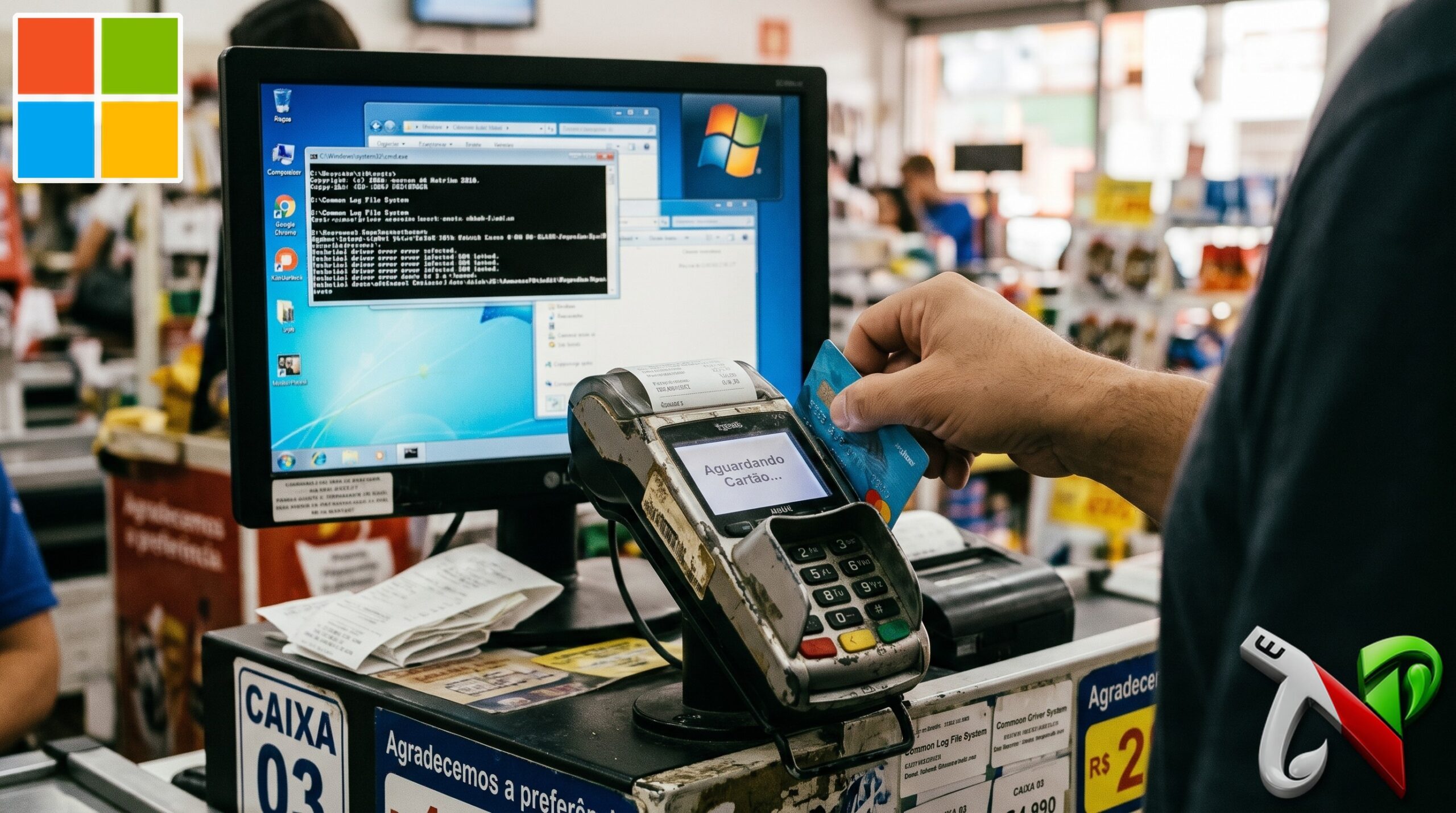
A Two-Year-Old Windows Flaw Let Attackers Siphon Over a Million Cards From 782 Payment Terminals
Key points
- Cybernews researchers found an exposed server holding the full toolkit of a campaign that compromised 782 point-of-sale systems and exposed data from more than one million credit and debit cards 1.
- The malware exploited CVE-2024-49138, a privilege escalation flaw in the Windows Common Log File System driver that was patched almost two years earlier, on terminals running outdated Windows versions.
- Brazil accounted for 677 of the infected terminals, with 22 in the United States and 8 in Russia, and the attackers mainly targeted Brazilian banks.
- The server was locked down on August 31 2026 and reported to the country's CERT on September 8, but cardholders in more than 20 countries still face fraud, account takeover and phishing risks.
An Exposed Server Tells the Story
Researchers at Cybernews stumbled on an exposed server that held the entire infrastructure behind an attack on point-of-sale terminals, the devices merchants use to process card payments in stores 1. Inside were the malware’s source code, a set of exploitation tools, and a carding panel called “VINY JUNIOR TRILHAS” where stolen card data was stored.
The find gave investigators a rare, complete view of how the operation worked, from the entry point to where the loot ended up.
How the Terminals Were Breached
The targets were POS terminals running older versions of Windows and Windows Server. The malware relied on CVE-2024-49138, a privilege elevation bug in the Windows Common Log File System driver. The flaw cannot be used on its own, since an attacker needs initial access first, but once inside it lets them gain higher privileges. Microsoft fixed it almost two years ago, which means the affected merchants ran badly outdated, vulnerable endpoints for a long time.
In total, 782 systems were compromised. Brazil dominated with 677, followed by the United States with 22 and Russia with 8. After gaining control, the attacker installed an infostealer that pulled data as transactions passed through the terminal.
What Was Taken and Who Is Exposed
The stolen records included primary account numbers, validity periods, bank identification numbers, issuing countries and banks, exfiltration dates, and card types and brands. The attacker also logged details about the terminals themselves, such as operating system versions and the country and city of each device. Brazilian banks appeared to be the main focus.
The researchers stressed this was a prolonged campaign, not a quick smash-and-grab, with terminals relaying daily transactions. They warned that at least a million cardholders face possible unauthorized purchases and account takeovers, though the real damage depends on each issuing bank’s fraud detection and protection policies. The server was shut down on August 31 2026, and Cybernews reported it to the country’s Computer Emergency Response Team on September 8.
Why Stolen Cards Still Pay Off
Personal data leaks happen constantly, but card data is rarer and more disruptive, since accounts can be drained. Bank limits, fraud policies and the traceability of most transactions make large-scale spending risky for criminals. That pushes them toward smarter uses: buying bulletproof hosting for malware, purchasing ads on reputable networks to spread malware or ransomware, or buying nearly untraceable redeemable gift cards. Many will simply sell the data on the dark web.
The data can also fuel convincing phishing. A fake alert saying a card is being misused, with a link to block it, could lead a victim to install ransomware, opening the door to extortion of far larger and harder-to-trace sums. The lesson for merchants is blunt: unpatched payment terminals are an open invitation.
Companies mentioned: Microsoft (MSFT $498.30 ▼2.0%)
Primary sources
 Hackers steal over 1 million credit card details across 20 countries — attackers hit old Windows bug to infect over 700 point-of-sale terminals (techradar.com) – This TechRadar report describes a payment-card theft campaign uncovered by Cybernews researchers, who found an exposed server holding the attackers' full toolkit: malware source code, exploitation tools and a carding panel named "VINY JUNIOR TRILHAS". The malware targeted point-of-sale terminals running outdated Windows and Windows Server versions, exploiting CVE-2024-49138, a Common Log File System privilege escalation flaw patched almost two years earlier. In all, 782 systems were compromised, 677 of them in Brazil, 22 in the United States and 8 in Russia. An infostealer harvested card numbers, expiry dates, BINs, issuing banks and countries, card brands, plus terminal OS and location details, with Brazilian banks the main target. The server was locked down on August 31 2026 and reported to the country's CERT on September 8. The article also explains how criminals monetize stolen cards, from hosting and ads to gift cards, resale and phishing-led ransomware. Published by techradar.com, written by freelance journalist Sead.
 Powered by News Ranker
