
Starlink Taps Qualcomm to Build a Nationwide 5G Network Alongside Its Satellites
Key points
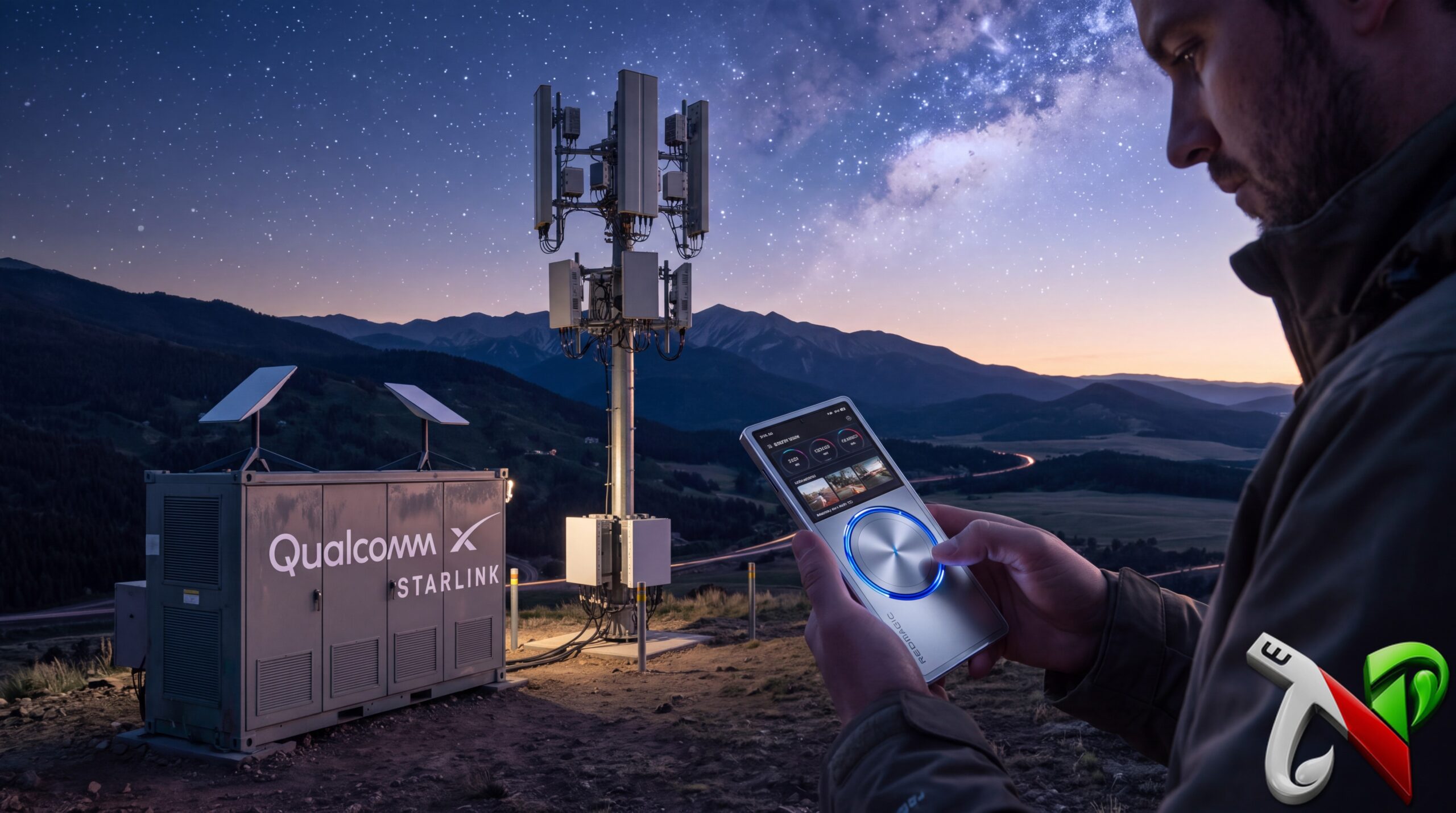
- Qualcomm announced that SpaceX will use its Dragonwing Cellular Infrastructure platforms to build Starlink Mobile, a nationwide terrestrial 5G network in the United States.
- The towers will use Massive MIMO radio units with 64 transmit and 64 receive paths, powered by Dragonwing QRU100 and QDU100 chips designed for better performance per watt.
- Starlink pitches the result as the first fully integrated network combining satellite and ground coverage, rolled out across multiple bands in several waves.
- The rollout will not happen overnight, but Qualcomm says the work could also pave the way for AI-native 6G.
A Tower Strategy From Space
Dropped calls in a dead zone or a far corner of the house are an annoyance most people have simply learned to tolerate. SpaceX is now betting it can change that. Qualcomm has announced that SpaceX will build Starlink Mobile, a nationwide terrestrial 5G network in the United States, on its Dragonwing Cellular Infrastructure platforms 1.
In plain terms, Qualcomm’s technology will run the cell towers on the ground, complementing the satellites Starlink is already known for. Michael Nicolls, Senior Vice President of Starlink, argued that calls dropping at home or on the move should not still be a problem. Starlink’s answer is what it calls the first fully integrated nationwide network, blending satellite and ground coverage.
Inside the Qualcomm Hardware
The towers will use Massive MIMO radio units with 64 transmit and 64 receive paths, essentially a site with many antennas working in concert. The design aims to improve coverage, capacity and spectrum efficiency, so the network can carry more traffic on the same airwaves.
Two Dragonwing chips split the work. The QRU100 handles processing for the radio units, while the QDU100 manages the fast, time-sensitive processing behind the scenes. Both are built for better performance per watt, and that energy efficiency should make deploying at scale more affordable. Nicolls said Qualcomm’s expertise will help Starlink speed up development of its end-to-end base station architecture.

What Comes Next for Users
For people in areas with patchy coverage, the promise is appealing, but patience is required. Starlink plans to deploy across multiple bands in several rollout waves, so improvements will arrive gradually rather than all at once.
Qualcomm’s Durga Malladi framed the deal as both a 5G step today and a possible foundation for AI-native 6G in the coming years. If the satellite-plus-tower approach works as pitched, it could finally take the dropped call off the list of everyday frustrations.

Companies mentioned: Qualcomm (QCOM $173.19 ▲5.3%) • SpaceX
Primary sources
 Starlink is building a nationwide 5G network with Qualcomm to put an end to dropped calls (digitaltrends.com) – Digital Trends reports that Qualcomm has announced SpaceX will use its Dragonwing Cellular Infrastructure platforms to build Starlink Mobile, a nationwide terrestrial 5G network in the US. The article explains that Qualcomm technology will power Starlink's ground-based cell towers, with Starlink's Michael Nicolls saying the goal is a fully integrated satellite and terrestrial network that ends dropped calls. It details the hardware: Massive MIMO radio units with 64 transmit and 64 receive paths, the Dragonwing QRU100 for radio unit processing and the QDU100 for time-sensitive processing, both aimed at better performance per watt and cheaper large-scale deployment. Qualcomm's Durga Malladi says the partnership advances 5G now and could lead to AI-native 6G. Deployment will span multiple bands in several waves. Published by digitaltrends.com.
 Powered by News Ranker
