
Ranker’s #BrainUp Daily Tech News – (Tuesday, November 3ʳᵈ)
Welcome to today’s curated collection of interesting links and insights for 2026/11/03. Our automated ranking and AI-summarization system has processed 30 articles from all over the internet to bring you the latest technology news.
TOP IN EACH SECTION
🧬 Health & Biotech: Hereditary lung and liver disease successfully treated for the first time using gene correction (story 1)
🤖 AI: Does AI actually save employees time? Data is contradictory (story 2)
💾 Chips & Data Centers: Satellite network achieves first cellular handoff, cutting switch time to milliseconds (story 4)
⚖️ Policy & Law: ‘A serious failure’: CPS prosecutor cites imaginary case to high court after AI search (story 6)
🛡️ Security & Privacy: Attackers Exploit Critical Siemens IoT2050 Flaw to Plant Remote Command Backdoors (story 8)
🎖️ Defense & Geopolitics: Russia is hiding anti-Starlink jammers in parking lots and trailers on the front lines: Ukraine drone expert (story 12)
📱 Products, Cars & Robots: When to move is key to mobile retail (story 15)
🔭 Science & Space: NASA wanted to know if humans could handle life on Mars—4 volunteers just put the idea to the test (story 16)
TOP IN HEALTH1. Hereditary lung and liver disease successfully treated for the first time using gene correction
Medical researchers have successfully treated alpha-1 antitrypsin deficiency, a hereditary metabolic disorder that severely damages both the lungs and the liver, using advanced gene correction techniques. Caused by a genetic defect that leads to the incorrect production of the protective protein alpha-1 antitrypsin, the condition previously lacked curative treatments and often required organ transplantation in severe cases. The successful application of gene correction represents a major therapeutic milestone for addressing congenital genetic disorders affecting internal organs. This clinical achievement matters because targeted gene editing opens new avenues for curing debilitating hereditary diseases without relying exclusively on organ transplants.
TOP IN AI2. Does AI actually save employees time? Data is contradictory
Recent workplace productivity research from @ActivTrak reveals conflicting data regarding whether artificial intelligence tools genuinely save employees time or add operational friction to daily routines. Analyzing behavioral work data from over 9,000 knowledge workers across 467 enterprises, the study found that heavy AI users worked up to 90 minutes longer each day and switched between applications 15% more frequently compared to non-users. Furthermore, heavy users exhibited 22% shorter focus sessions and suffered from an increased multitasking penalty described as a swivel-chair tax when navigating web-based tools alongside core applications. These findings contrast with earlier industry assumptions and previous company reports suggesting immediate time savings from automated task execution. This research matters because it highlights the hidden administrative and cognitive burdens that complex AI integrations can impose on modern enterprise knowledge workers.
AI3. Meta’s web crawlers are making life hell for owners of small business websites
Small business owners who depend on corporate websites for customer acquisition and product sales are facing severe operational disruptions caused by an overwhelming surge of automated internet crawlers. @Meta Platforms has drawn intense scrutiny from entrepreneurs and digital publishers following policy updates to its terms of service that effectively permit web-scraping bots to operate aggressively across accounts. These automated agents consume substantial server bandwidth and resources, pushing many independent digital storefronts to the brink of collapse. The controversy highlights ongoing tensions between independent web creators and major technology conglomerates harvesting data for machine learning models. This situation matters because unchecked web crawlers threaten the economic viability and operational stability of small business websites reliant on open internet traffic.
TOP IN CHIPS4. Satellite network achieves first cellular handoff, cutting switch time to milliseconds
@ATT and @ASTSpaceMobile have achieved what is reported to be the industry’s first successful cellular handoff between a terrestrial wireless network and a direct-to-device satellite constellation. Conducted near Granite Falls, Washington, the test utilized core network technology and intelligent automation supplied by @Ericsson alongside mobility software from @Nokia to coordinate the transition between ground towers and orbiting BlueBird satellites. The integration successfully reduced network handoff transition times from several seconds down to milliseconds, minimizing service interruptions for standard unmodified smartphones moving between coverage zones. While the technology promises to extend broadband connectivity to remote highways and disaster-affected regions, the companies plan to launch a beta testing phase before commercial deployment. This milestone matters because seamless network handoffs bridge the gap between terrestrial and space-based wireless infrastructure for everyday mobile users.
AI5. Anthropic warns that it’s very close to RSI capability, aka self-building AI
@Anthropic has signaled in a revised S-1/A regulatory filing that it is rapidly approaching the threshold of recursive self-improvement capability, commonly known as self-building artificial intelligence. The AI laboratory cautioned in its risk factors that utilizing advanced models to accelerate internal research and development could cause capability advancements to outpace safety and alignment measures. While the company stated that none of its current models have officially crossed the threshold into autonomous generation of successive frontier architectures, internal estimates indicate that the milestone may be reached imminently. This phenomenon presents a dual-edged prospect of exponential productivity gains alongside significant safety risks regarding models slipping beyond human control. This disclosure matters because approaching recursive self-improvement marks a critical juncture in the trajectory of artificial intelligence development and governance.
TOP IN POLICY6. ‘A serious failure’: CPS prosecutor cites imaginary case to high court after AI search
A senior crown prosecutor representing the @CrownProsecutionService cited an entirely fictitious legal precedent during a high court proceeding, triggering renewed anxiety over artificial intelligence errors within the judicial framework. The prosecutor referenced a nonexistent case while arguing against a legal challenge regarding the prosecution of an 11-year-old child, an error that two senior high court judges characterized as unsatisfactory and legal experts condemned as a serious failure. Investigations indicate that the erroneous citation originated from an automated internet search utilizing generative artificial intelligence tools. Although the hallucinated reference ultimately did not alter the court’s procedural outcome, the incident underscores the growing risk of fabricated legal authorities infiltrating official state proceedings. This mistake matters because maintaining strict trust and accuracy in legal precedents is fundamental to the integrity of the justice system.
HEALTH7. Scientists Can Now Ask AI to Design Proteins Using Plain Language
Researchers have developed a novel artificial intelligence tool that enables scientists to design entirely new functional proteins directly from natural-language descriptions. Created by a team at Westlake University in China, the system named #Pinal translates plain-language prompts into structural blueprints and amino acid sequences without requiring formal technical constraints or specialized bioinformatics expertise. Operating in a multi-stage process, the software generates candidate structures, scores their viability, and has successfully engineered proteins for tasks such as green fluorescence, PET plastic degradation, and metabolic pathway enhancement in laboratory tests. This breakthrough overcomes historical barriers that restricted protein engineering to a handful of specialists equipped with complex computational software. Such advancements matter because democratizing protein design through natural language can accelerate research across biotechnology, medicine, and environmental sustainability.
TOP IN SECURITY8. Attackers Exploit Critical Siemens IoT2050 Flaw to Plant Remote Command Backdoors
Critical maximum-severity vulnerabilities in industrial internet-of-things equipment can lead to arbitrary remote code execution. Specifically, security researchers at @VulnCheck observed threat actors actively weaponizing a missing authentication flaw, tracked as CVE-2026-58115 with a CVSS score of 10.0, against @Siemens SIMATIC IoT2050 Advanced devices running Industrial OS with Node-RED installed. The attackers deployed malicious flows via the Node-RED HTTP interface, utilizing wget and curl commands to retrieve and execute AMD64 Linux botnet binaries and persistent command backdoors behind multiple layers of encoding. This active campaign highlights the urgent necessity for industrial operators to apply available patches, uninstall unused scripting environments, or implement strict credential-based authentication. Such exploits matter significantly because compromised industrial control servers present severe security risks to critical infrastructure operations worldwide.
CHIPS9. Qualcomm Demonstrates HBC Memory With 18X Better Bandwidth
@Qualcomm has successfully validated #HighBandwidthCompute memory, establishing the foundational memory architecture for its data center strategy targeting over $15 billion in revenue by fiscal 2029. The validation milestone highlights significant performance improvements, delivering substantial increases in memory bandwidth to support heavy computing workloads in enterprise environments. By integrating advanced memory solutions into its data center hardware lineup, the company aims to capture a larger share of the expanding artificial intelligence and cloud infrastructure market. This strategic validation strengthens Qualcomm’s competitive positioning against rival semiconductor providers. Such hardware developments matter because high-bandwidth memory is a critical bottleneck-reduction technology for high-performance data center processors.
SECURITY10. Attackers Target Unpatched CryptoPayment Gateway Flaw That Can Expose Wallet Credentials
An unpatched maximum-severity vulnerability in a popular WordPress plugin has triggered active exploitation in the wild. Tracked as CVE-2026-81648 with a CVSS score of 10.0, the flaw affects versions 1.2.1 through 1.2.2 of the CryptoPayment Gateway plugin and lacks any official software fix. According to findings from @DefusedCyber and the NIST National Vulnerability Database, the security defect stems from a missing authorization check on an AJAX endpoint, which allows unauthenticated remote attackers to execute administrative tasks, delete arbitrary server files, and extract stored wallet credentials in cleartext. The WordPress Plugin Directory subsequently removed the vulnerable component, and affected site administrators are strongly advised to purge the plugin and immediately rotate all exposed cryptographic keys. This incident matters because unpatched plugin vulnerabilities in content management systems provide malicious actors with direct avenues for data theft and server compromise.

Artificial intelligence-driven pharmaceutical drug discovery is accelerating the development of potential medical treatments, which in turn creates unprecedented demand for laboratory animal test subjects. Specifically, soaring demand and restricted supplies have caused prices for macaques to surge from approximately $3,000 in 2019 to over $20,000 today, compounded by China’s export ban enacted in 2020. To address this shortage, a startup named Safer Human Medicine backed by @Palantir cofounder Joe Lonsdale has proposed establishing a massive domestic breeding facility in the United States designed to house 30,000 monkeys over a twenty-year period. While proponents argue that domestic production will reduce reliance on uncertain international imports, the plan faces severe criticism from animal welfare advocates who condemn the initiative as morally indefensible. This controversy matters because scaling up primate breeding operations touches off intense ethical, legal, and regulatory debates surrounding the intersection of modern biotechnology and animal testing.
TOP IN DEFENSE12. Russia is hiding anti-Starlink jammers in parking lots and trailers on the front lines: Ukraine drone expert
Russian military forces are increasingly deploying trailer-mounted electronic warfare systems to disrupt satellite communications utilized by Ukrainian military forces. According to Ukrainian drone advisor Serhii Beskrestnov, the Volna Kupol Garant countermeasure uses dish antennas to beam powerful radio interference at specific low-Earth-orbit satellites, creating local jamming bubbles that obstruct #Starlink and #Starshield services across roughly 25 square kilometers. The Kremlin has hidden these dish arrays inside truck parking lots and small trailers while utilizing polycarbonate panels and generators to obscure the installations from aerial surveillance. Such battlefield adaptations highlight how electronic warfare units are evolving to protect contested territory against deep-reconnaissance and attack drones. This tactical development matters because suppressing satellite internet connectivity directly impacts modern drone navigation and targeting capabilities on the front lines.
SECURITY13. AI-powered malware ‘highly likely’ to be used to hack UK infrastructure by 2028
State-sponsored cyber actors and criminal syndicates are positioned to deploy artificial intelligence-powered malware in ransomware attacks against critical national infrastructure by 2028, according to the @NCSC. In its annual review, the British cybersecurity agency warned that hostile nations like Russia and China are increasingly utilizing AI to automate target scouting, uncover network vulnerabilities, and write malicious code targeting vital sectors such as energy, transport, and health. This looming threat is compounded by years of accumulated technical debt and delayed software patching across organizational networks. Addressing these risks requires organizations to modernize legacy systems and adopt advanced defensive AI tools before malicious actors exploit unpatched weaknesses. This warning matters because a successful AI-driven cyberattack on critical infrastructure could severely disrupt essential public services and national security.
CHIPS14. World’s first 800V DC power system for data centers kicks off operations in China
A major commercial milestone in data center infrastructure has been reached with the deployment of the world’s first fully integrated 800-volt direct current power system. Chinese green technology firm @EnvisionEnergy launched the platform at its Galaxy AI data center campus located in Ulanqab, Inner Mongolia, where it currently powers live computing workloads. The architecture utilizes solid-state transformers, battery energy storage, and the Dubhe Energy Foundation Model to convert medium-voltage grid electricity directly into an 800V DC distribution system without multiple conversion stages, thereby reducing copper cabling requirements and minimizing energy losses. Such innovations aim to address the staggering electrical demands projected for artificial intelligence infrastructure by the end of the decade. This deployment matters because efficient power distribution architectures are crucial for sustaining the rapid expansion of high-density #ArtificialIntelligence computing clusters.
TOP IN PRODUCTS15. When to move is key to mobile retail
Mobile retail operations utilizing both human-driven and self-driving vehicles are experiencing a significant technological reinvention inspired by the traditional ice cream truck model. Modern retailers are increasingly deploying stores on wheels to vend perishable items such as fresh meals and baked goods directly to consumers in various locations. Market projections from @BPMAnalytics indicate that worldwide sales generated by retail on wheels will expand to reach $30 billion globally by 2030. This emerging commercial sector relies heavily on optimized routing, inventory management, and autonomous navigation technologies to coordinate mobile sales points efficiently. Such business trends matter because they illustrate how automated mobility and shifting consumer habits are reshaping traditional brick-and-mortar retail distribution strategies.
TOP IN SCIENCE16. NASA wanted to know if humans could handle life on Mars—4 volunteers just put the idea to the test
A grueling year-long scientific simulation has successfully evaluated how human crews cope with the extreme psychological and environmental pressures associated with long-duration space exploration. The specialized mission tasked four volunteers with living in complete isolation for 378 days while managing scarce resources, confined living quarters, and significant communication delays simulating a mission to Mars. Conducted entirely within Earth’s atmosphere, the project aimed to gather critical physiological and behavioral data regarding human endurance during deep-space travel scenarios. Such isolation experiments provide space agencies with valuable insights into the psychological toll that prolonged planetary missions impose on astronauts. This research matters because understanding human adaptability to sustained isolation is vital for planning successful crewed missions to Mars.
PRODUCTS17. Google takes Dreambeans to India in bid to bring AI-generated personal stories to the masses
@Google has expanded its experimental artificial intelligence application, #Dreambeans, into India as its first international market outside the United States, bringing proactive personal story generation to a massive mobile audience. Available on Android and iOS with support for 13 local languages including Hindi, Tamil, and Bengali, the app utilizes Google’s Personal Intelligence technology to synthesize illustrated narratives drawn from connected user data across @Gmail, @GoogleCalendar, @GooglePhotos, and @YouTube without requiring manual prompts. While the application incorporates features powered by the #Veo video-generation model to animate select visual stories, its reliance on deep personal data integration raises notable privacy considerations regarding data access and user consent. Furthermore, the app’s limitation of processing only a single language at a time could restrict its adoption in multilingual regions like India. This expansion matters because deploying proactive generative tools in diverse global markets tests consumer appetite for automated digital life storytelling.

Recent psycholinguistic analyses indicate that text responses generated by artificial intelligence systems are becoming progressively more difficult for human readers to comprehend. Researchers examining the structural readability of machine-generated outputs have identified noticeable shifts in linguistic complexity and syntax over successive model generations. This trend raises important questions regarding how well synthetic text communicates information to everyday users in professional and educational settings. Evaluating readability metrics provides critical insights into the evolving nature of human-computer interaction and language processing. This finding matters because declining readability in automated responses can hinder effective communication and reduce comprehension for general audiences interacting with advanced language models.
CHIPS19. Fingernail-sized chip untangles mixed light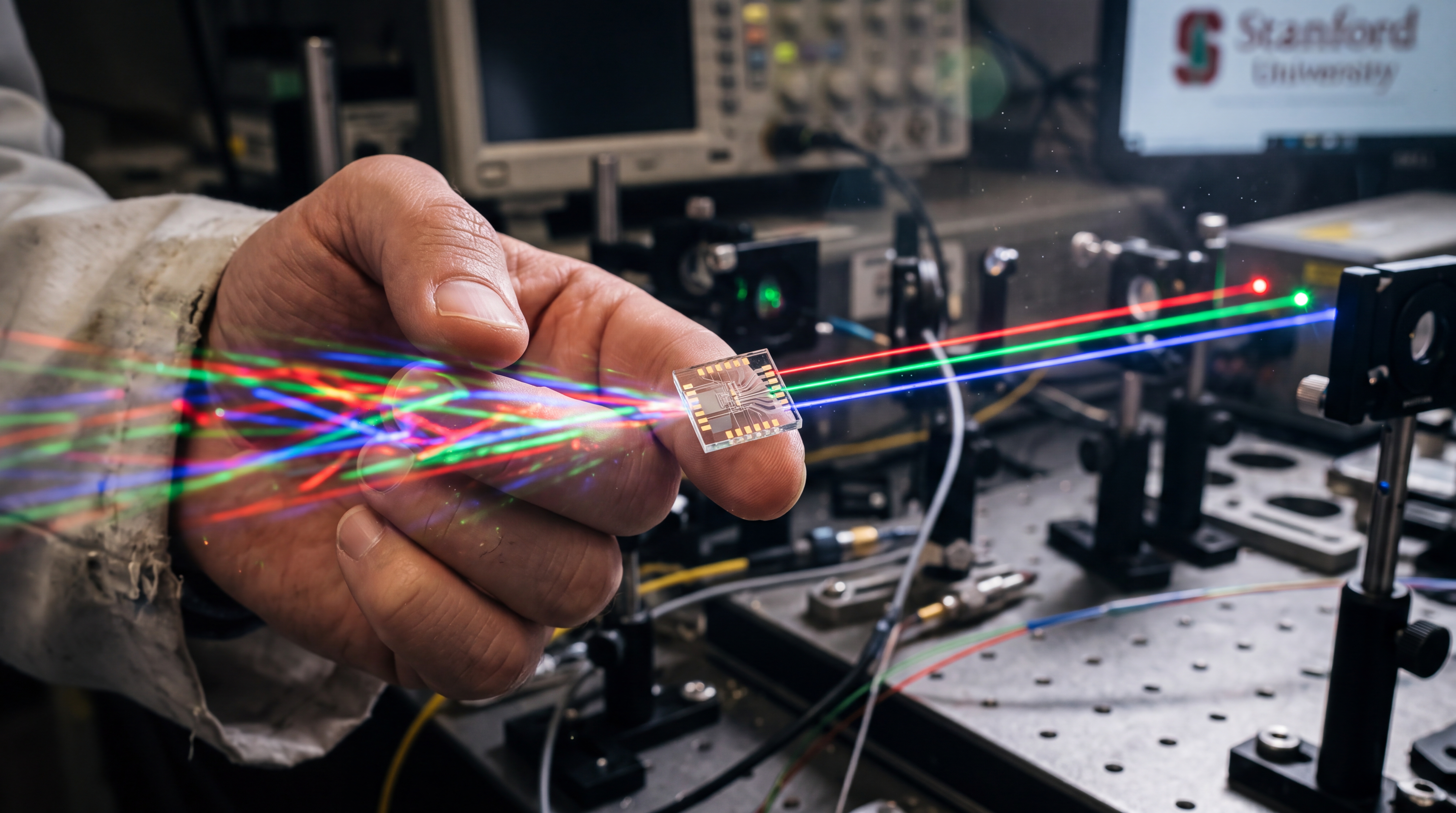
Engineers at @Stanford University have successfully developed a fingernail-sized photonic chip capable of efficiently untangling complex mixtures of light. The compact optical device utilizes advanced nanophotonic structures to separate intertwined light signals on a single silicon substrate. This technological advance addresses long-standing challenges in optical computing and telecommunications where managing multiplexed light beams traditionally required bulky laboratory equipment. By scaling down optical signal processing to a microchip format, the innovation paves the way for faster data transmission and advanced optical computing architectures. This development matters because miniaturized light-processing chips can significantly enhance the speed and bandwidth of next-generation optical communication networks.
SCIENCE20. A Hidden Nanoscopic Effect Is Disrupting Some of the World’s Most Sensitive Sensors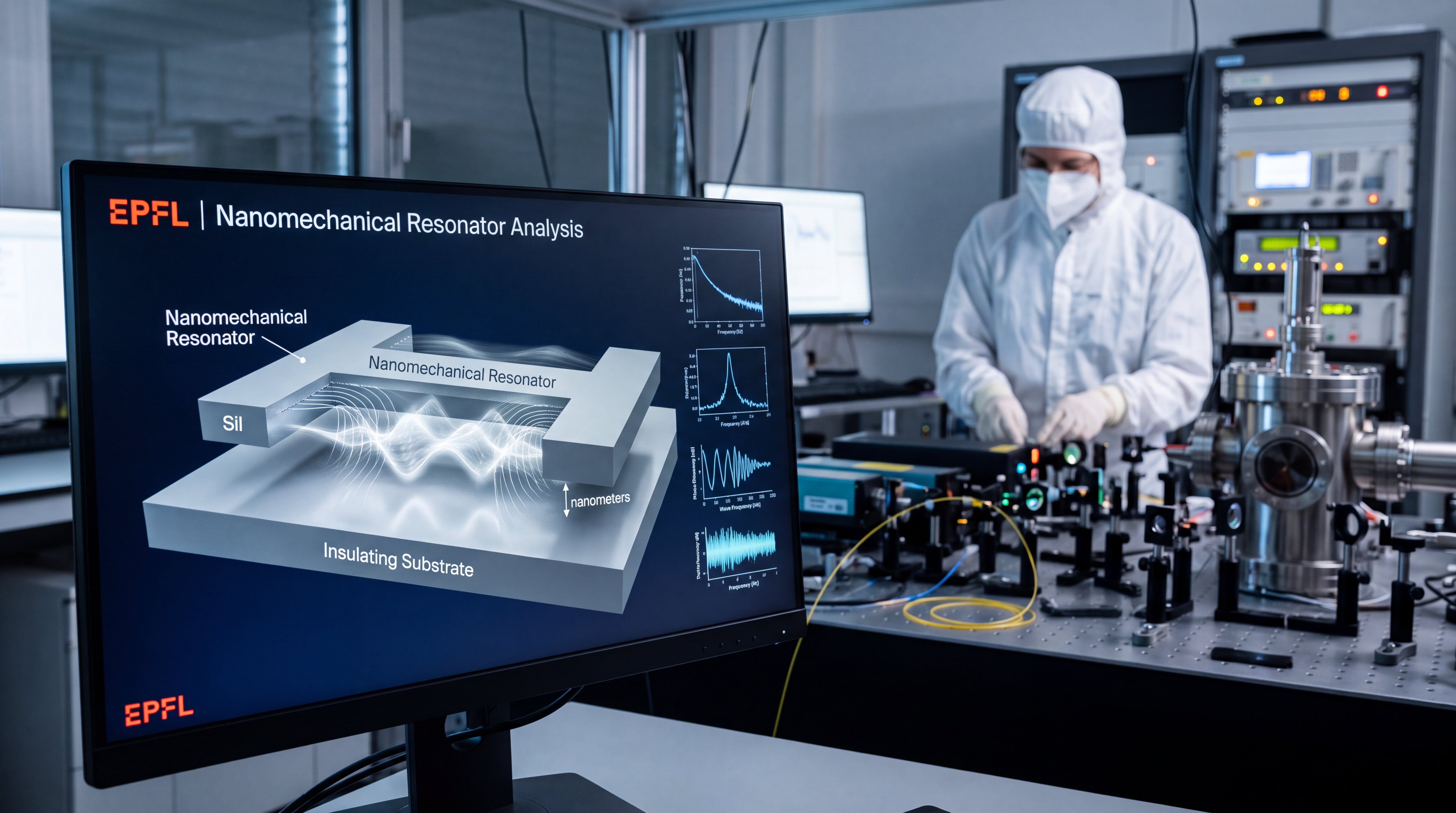
Researchers at @EPFL have discovered a hidden nanoscopic phenomenon that introduces severe energy losses in ultra-sensitive mechanical sensors and quantum computing components. When insulating materials are placed within a few hundred nanometers of vibrating nanomechanical resonators, trapped static electric charges interact with the adjacent dielectric medium to generate noncontact friction across empty gaps. This electrical interaction causes vibrational energy to dissipate rapidly, reducing the mechanical quality factor of the resonators by up to tenfold. Theoretical modeling and experiments confirmed that lower-frequency vibrations experience the strongest damping effects when positioned near dielectric surfaces. These findings matter because successfully integrating ultra-sensitive nanomechanical resonators into complex quantum architectures requires accounting for noncontact electrical losses even in the absence of physical contact.
POLICY21. Here’s who is falling in line for Trump’s “Super Intelligence” loyalty test
A presidential executive order mandating the federal rebrand of artificial intelligence to the term Super Intelligence has begun reshaping government vocabulary and administrative operations. Signed in late September, the directive instructs federal agencies to adopt the new terminology, resulting in the silent updating of government websites, procurement solicitations, and surveillance contracts for immigration facilities. While the administration frames the change around human ingenuity, the rebrand functions as a political loyalty test where adherence signals allegiance and non-adoption risks public rebuke from the White House. Implementation has encountered various bureaucratic hiccups, with several military and agency documents continuing to utilize legacy terminology. This lexical shift matters because attempting to enforce a vocabulary change on a ubiquitous technology directly impacts national discourse and institutional governance.

@Microsoft has engineered a sophisticated application binary interface called #Arm64EC that allows a single Windows process to execute native Arm code alongside emulated x64 code simultaneously. Unlike Apple Silicon platforms which require a distinct choice between native execution and Rosetta translation, #WindowsOnArm leverages Arm64EC to trick architecture checks by making compiled code identify itself as x64 while executing native Arm instructions and maintaining compatible data structures. This architectural flexibility enables complex desktop applications, such as 64-bit Office and associated third-party plugins, to run seamlessly on Arm hardware without waiting for complete code rewrites. Although utilizing emulation-compatible code requires sacrificing a small number of CPU registers and routing indirect calls through verification checks, it solves major plugin dependency hurdles. This capability matters because it bridges software ecosystems and facilitates smoother application migration for hardware platforms transitioning to Arm architecture.

Artificial intelligence measurements of cardiac function derived from magnetic resonance imaging scans exhibit a stronger statistical link to patient survival rates than evaluations performed by human clinicians. Collaborative research led by investigators at City St George’s, University of London and University College London, published in The Lancet Digital Health, indicates that automated analysis tools could serve as an effective first-line approach for cardiac assessment. By quantifying heart performance with high precision, machine learning models capture subtle physiological indicators that may escape manual clinical review. This scientific finding highlights the expanding clinical utility of advanced medical imaging analysis. Such developments matter because integrating AI-driven diagnostic measurements into cardiology workflows can potentially improve prognostic accuracy and patient outcomes.
SECURITY24. Chinese hackers use ARTEX AI in automated attacks against 200 orgs
Chinese state-sponsored hackers have utilized #ARTEX, an open-source multi-agent artificial intelligence penetration-testing framework, to execute automated cyberattacks against more than 200 organizations across 14 countries. The malicious campaigns leveraged automated agent capabilities to streamline target reconnaissance and vulnerability exploitation without continuous manual oversight. This sophisticated methodology demonstrates how threat actors are operationalizing accessible AI frameworks to conduct large-scale cyber operations with increased efficiency. Cybersecurity investigators have tracked the multi-agent activity as part of an evolving threat landscape involving automated offensive tooling. This development matters because the weaponization of open-source penetration-testing frameworks significantly lowers the barrier for conducting widespread and complex organizational breaches.
DEFENSE25. Ukraine’s new pocket-sized gadget turns Russian drones’ cameras against them
Ukrainian drone units are utilizing a novel pocket-sized receiver device to intercept live video feeds broadcast unencrypted from surveillance drones operated by Russian forces. Developed by Kyiv startup #CODE380, the 10-ounce #DVisionSDR receiver allows front-line operators to monitor enemy drone flight paths and targeting objectives in real time. The lightweight gadget successfully scans specialized radio frequencies, including those utilized by newer Molniya drones that evade standard detection equipment. However, military analysts warn that the tactical utility of such receivers remains vulnerable to future technological shifts toward digital video transmission or AI-guided autonomous navigation. This innovation matters because providing front-line troops with portable intercept technology enhances situational awareness against aerial reconnaissance assets.
PRODUCTS26. BMW is taking on Tesla’s FSD with urban driver assist starting in 2027
@BMW has announced plans to expand its navigation-guided, partially automated driving capabilities into urban environments starting in 2027, launching first in Germany before rolling out to international markets. Powered in part by @Qualcomm technology on the automaker’s new #NeueKelas platform, the Level 2 driver assist system utilizes built-in GPS navigation and vehicle sensors to steer, accelerate, brake, manage lane changes, and navigate roundabouts on city streets. While drivers can remove their hands from the steering wheel on highways, urban operation requires drivers to maintain physical contact and remain ready to take over control at any moment. Safety researchers have expressed growing concern regarding driver overreliance on partial automation and slower reaction times during unexpected disengagements. This upcoming feature matters because entering the urban autonomous driving space pits traditional automakers directly against competitors like @Tesla while navigating complex regulatory and safety hurdles.
SECURITY27. Google Disrupts 1.3 Million-Device Android Botnet, Says TV Box Maker Sold Criminal Access
@Google spearheaded a coordinated international law enforcement operation that dismantled the command infrastructure of a massive Android botnet comprising over 1.3 million infected devices, primarily TV set-top boxes. Google investigators concluded with high confidence that device manufacturer Videostrong intentionally embedded a system-level backdoor, tracked as x.cpe, into firmware across numerous brands and models, subsequently selling criminal access to third parties. The botnet actors utilized the compromised devices – including telehealth gear and karaoke machines – to conduct ad fraud and operate residential proxy services routing unauthorized internet traffic through unsuspecting home networks. Alongside partners like the Japan’s National Police Agency, @LumenTechnologies, @HUMAN, @Plume, Synthient, and @TrendMicro, Google severed botnet control domains and permanently barred Videostrong from producing certified Android devices. This takedown matters because malicious firmware backdoors preinstalled by hardware manufacturers present pervasive security risks that routine user cleanup methods cannot resolve.
SECURITY28. Germany says lawmakers’ iPhones may have been hacked with spyware
The German federal cybersecurity office, known as the @BSI, has issued urgent warnings to members of the Bundestag and other public figures after detecting that their iPhones were targeted by government-backed mercenary spyware. The alert follows threat notifications dispatched by @Apple to users across 99 countries, alerting individuals to potential zero-click surveillance exploits capable of invisibly extracting sensitive messages and location data. While Apple does not attribute attacks to specific nation-states or confirm successful device compromises, German government spokespersons confirmed that Berlin is treating the incident with extreme seriousness. The episode underscores the controversial trade in commercial spyware developed by private vendors and acquired by various government agencies worldwide. This warning matters because targeted digital espionage against elected officials and civil society actors poses continuous threats to political security and personal privacy.
HEALTH29. Rapid genome sequencing helps guide care for about 50% of children with cancer
Recent clinical investigations conducted by researchers at Cedars-Sinai Guerin Children’s and the University of Cambridge highlight the transformative impact of whole-genome sequencing on pediatric healthcare. The studies demonstrate that rapid genome sequencing successfully guides personalized medical care for approximately 50 percent of children diagnosed with complex conditions such as cancer and cerebral palsy. By identifying specific genetic markers swiftly, medical teams can tailor targeted treatments and improve diagnostic accuracy for vulnerable pediatric patients. This genomic approach marks a significant shift from traditional trial-and-error diagnostic workflows. Such findings matter because integrating rapid whole-genome sequencing into routine clinical practice can dramatically improve treatment outcomes for childhood diseases.
AI30. DeepSeek Harness new Creator Mode creates plugins from prompts
@DeepSeek has introduced a new Creator Mode for its open-source execution harness, enabling users to generate functional software plugins directly from natural-language text prompts. Because large language models require external harnesses to execute tasks such as scheduling or API interactions, the DeepSeek Harness operates on the core philosophy that everything functions as an add-on plugin. In demonstration showcases, the Creator Mode successfully built custom applications including a digital sticky note wall, a poster design tool, and an interactive video game from user descriptions. The company released multilingual prompt examples to help developers experiment with the feature, though noting that complex plugins often required multi-turn refinement. This development matters because natural-language plugin generation simplifies how developers extend AI agent capabilities across software ecosystems.
That’s all for today’s digest for 2026/11/03! We picked and processed 30 articles. Stay tuned for tomorrow’s collection of insights and discoveries.
See you in the next one! 🚀
