
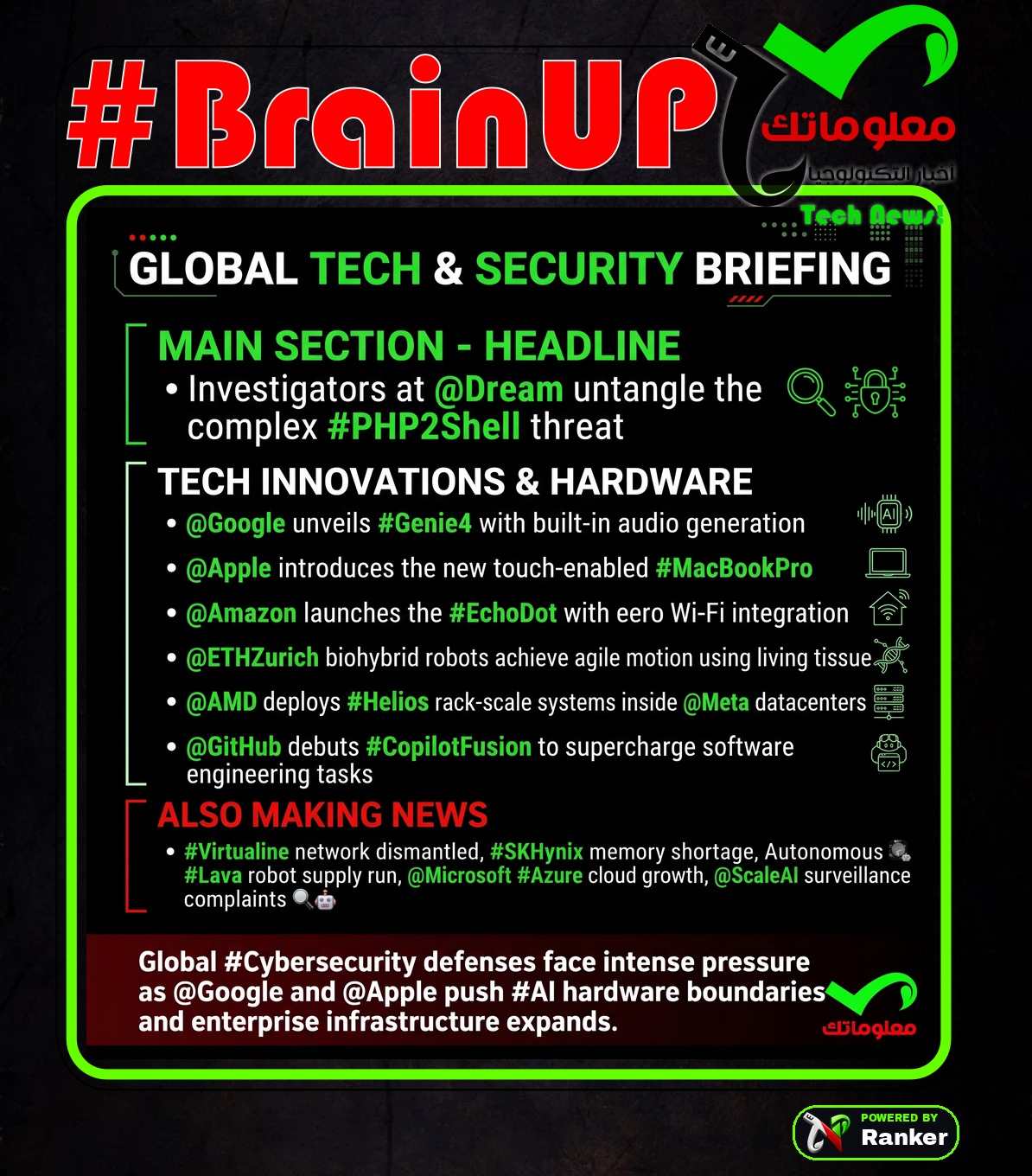
Ranker’s #BrainUp Daily Tech News – (Thursday, October 29ᵗʰ)
Welcome to today’s curated collection of interesting links and insights for 2026/10/29. Our automated ranking and AI-summarization system has processed 34 articles from all over the internet to bring you the latest technology news.
1. PHP2Shell Attack Roots 25 Servers, Breaches U.S. Government-Affiliated Network
Cybersecurity researchers at firm Dream disclosed details of an artificial intelligence-assisted attack by a suspected China-nexus threat actor that exploited the PHP2Shell vulnerabilities and a Linux kernel flaw to compromise 25 servers. Executed on October 25, 2026, the attack chain combined unauthenticated remote code execution flaws in PHP – tracked as CVE-2026-109618 and CVE-2026-109619 with CVSS scores of 9.2 – with the Fragnesia local privilege escalation vulnerability to achieve root access on firewalls and network devices across the U.S., Japan, Taiwan, and South Korea. Artifacts recovered from the attack infrastructure revealed custom exploit scripts alongside the installation of @Anthropic’s Claude Code and API keys for offensive security scanning tools powered by large language models from #DeepSeek and #Kimi. The attacker utilized the #FOFA search engine to identify internet-facing firewalls, filtered targets running specific PHP versions, and automatically deployed web shells that successfully breached three systems within a U.S. government-affiliated environment. This incident illustrates how threat actors are increasingly leveraging artificial intelligence tools to automate vulnerability scanning, target filtering, and custom exploit development.
2. Police seize Virtualine bulletproof service tied to ransowmare, cybercrime
Law enforcement agencies in the United States have officially seized the primary domain associated with #Virtualine, a notorious #BulletproofHosting service that was heavily advertised across various dark web and cybercrime forums. According to official reports, the illicit infrastructure was routinely utilized by malicious actors to facilitate severe illegal operations, including high-profile #Ransomware attacks and widespread digital extortion schemes. The takedown disrupts a crucial piece of technical plumbing that allowed threat actors to operate with relative impunity while evading traditional investigative tracking by global security researchers and police departments. By dismantling the primary access points for this infrastructure, authorities have dealt a notable operational blow to the underlying networks that support modern financially motivated cyber threats. This action highlights the ongoing international cooperation required to target the specialized hosting providers that form the backbone of the contemporary cybercrime economy.
3. Google’s next Genie AI model generates more realistic experiences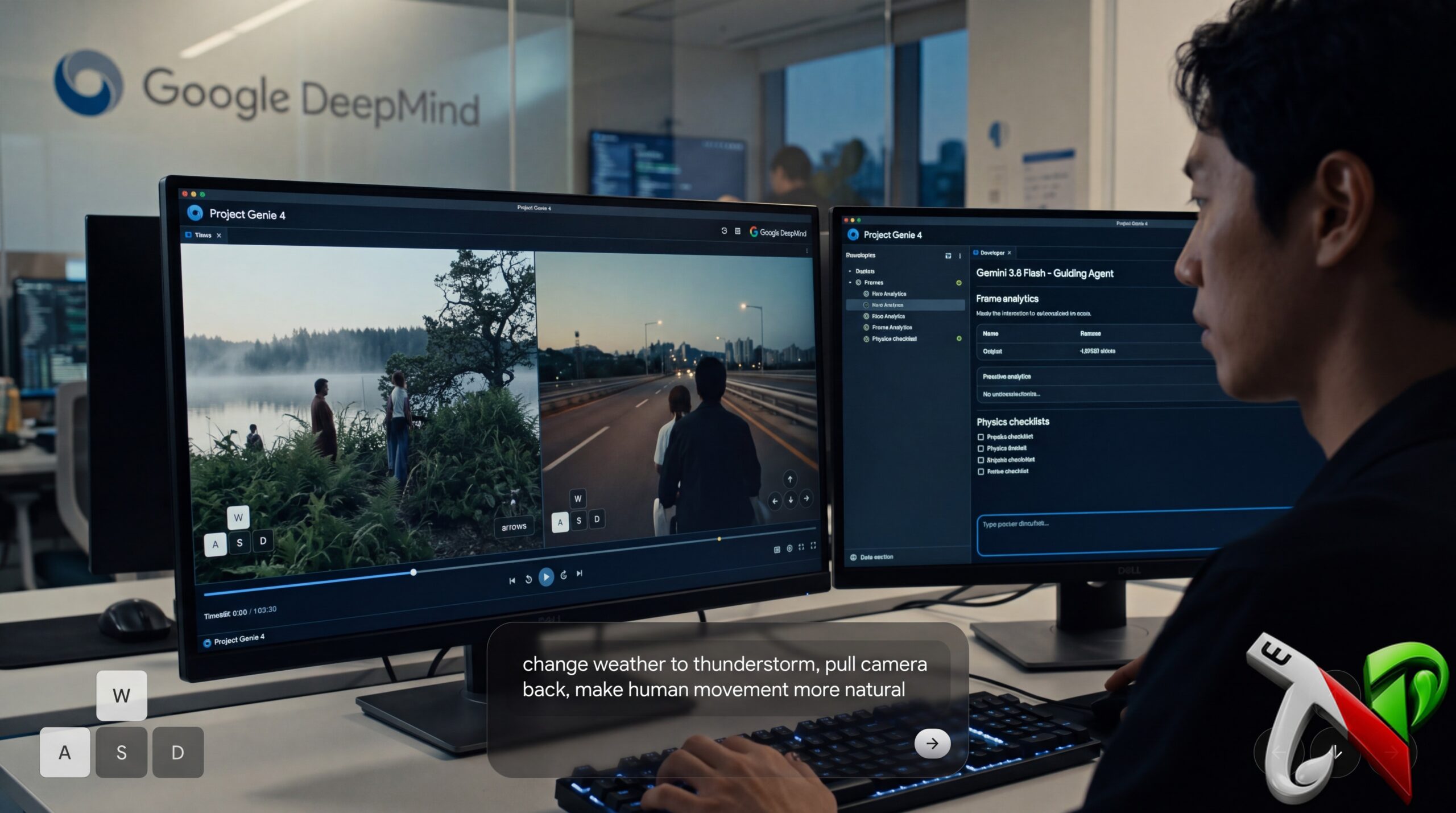
@Google announced its new Genie 4 world model, designed to generate interactive simulated experiences using artificial intelligence. The updated model introduces four primary enhancements over its predecessor: improved visual realism, real-time natural language updating, built-in audio generation, and the integration of #Gemini38Flash to power underlying simulations while extending maximum experience lengths to two minutes. @Google is pitching Genie 4 as a practical tool for filmmaker pre-visualization, game prototyping, and robotic training scenario generation, though the company cautions that object permanence can degrade over longer runs. The model is launching initially as a research preview for trusted testers and will soon become available to Google AI Ultra subscribers through Project Genie. This release matters because it demonstrates rapid advancements in generative world models capable of creating immersive, dynamic interactive environments on demand.
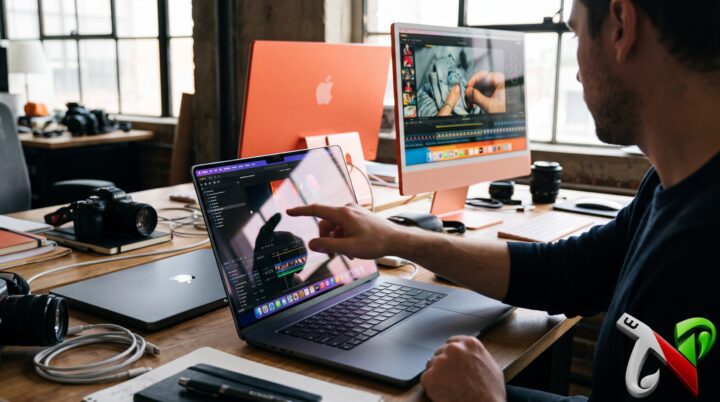
@Apple has officially reversed its long-standing policy against touchscreens on desktop and laptop computers by introducing the new #MacBookPro featuring a #PROLED XDR Display at its Pro and Tell event in Los Angeles, alongside separate updates to the #iMac and a standard 14-inch #MacBookPro. The newly redesigned touch-enabled laptops rely on #M5Pro and #M5Max silicon rather than #M6 chips, utilizing a tandem #OLED panel with integrated touch sensors, a 10 to 120Hz adaptive refresh rate, up to 2,000 nits of peak brightness, a 10,000,000:1 contrast ratio, and a #DynamicIsland replacing the traditional notch. According to statements from @Apple executives including @JohnySrouji and @JohnTernus, the company overcame previous ergonomic and software concerns by building touch sensors directly into the display panel, reinforcing the hinge, and designing #macOS to expand controls when a user’s finger approaches the screen, while carefully framing touch as a secondary input method suited for tasks like 3D manipulation and timeline scrubbing in applications such as #DaVinciResolve and #LogicPro. Pre-orders for the touchscreen models began on October 28 with shipping scheduled for November 6, featuring base prices of $2,899 for the 14-inch version and $3,399 for the 16-inch version, while fully maxed-out configurations with 16TB of storage can reach $14,549. This product launch marks a monumental shift in personal computing philosophy for @Apple after a decade of insisting that vertical touch interfaces are fundamentally awkward, demonstrating how advancements in custom silicon and display engineering can eventually force a complete redesign of industry conventions.
5. Amazon announced five new Alexa devices, including 16-inch Echo Show
@Amazon announced a broad hardware lineup featuring five new @Alexa devices, highlighted by a next-generation Echo Dot, an Echo Studio with a home camera, an Echo Time bedside clock, and an Alexa Photo Frame. The new Echo Dot incorporates a built-in smart home hub, an eero Wi-Fi extender providing up to 1,000 square feet of additional network coverage, and custom AZ3 silicon with an artificial intelligence accelerator for on-device conversational processing. Meanwhile, the upgraded Echo Studio adds room-mapping capabilities and a live-view camera that enables visual intelligence features, such as recognizing household objects and displaying context-aware assistance. The Echo Time introduces camera-free sleep-sensing technology to monitor lighter sleep phases and gradually brighten the display to mimic a natural sunrise, while the Alexa Photo Frame automatically syncs with @Amazon Photos. This release illustrates @Amazon’s strategy to embed local artificial intelligence accelerators and ambient computing features deeper into everyday household hardware.
Researchers at the @ETHZurich Soft Robotics Lab have developed centimeter-scale living muscle actuators grown from mouse cells that significantly improve robot dexterity and motion. By securing tissue to artificial scaffolds using specialized mounting grooves, the team increased movement capability tenfold compared to previous iterations, enabling small biohybrid robots to walk, grasp, jump, and swim. The study highlights that interaction dynamics between the living tissue and the artificial scaffold are just as critical as the volume of muscle used, while introducing a natural variability that contrasts with traditional manufactured components. Although these biohybrid systems currently require immersion in a nutrient solution to keep the muscle tissue alive, they offer promising applications for environmental exploration and medicine. This breakthrough matters because it demonstrates a novel method of building robots with natural biological materials rather than relying entirely on rigid electronics.
7. Your blood pressure could be dangerous even when your numbers look normal
Researchers at the @UniversityOfVirginia School of Medicine have discovered a small population of nerve cells in the brainstem that prevents dangerous blood pressure fluctuations even when average readings appear normal. Rapid blood pressure changes can independently increase the risk of heart disease, stroke, and brain injury, and investigators found that losing just a few hundred of these adrenergic neurons leads to severe instability. While previously linked to multiple system atrophy, these brain cell disruptions may also explain unstable blood pressure in other medical conditions where standard clinical measurements seem healthy. The findings, published in #CirculationResearch and funded by the #NationalInstitutesOfHealth, suggest that clinical evaluations should focus on moment-to-moment stability rather than just lowering average numbers. This discovery matters because it reveals a hidden source of cardiovascular risk that could eventually lead to targeted treatments protecting both the heart and brain.
8. Claudes new smart reports tell bosses when workers are off-topic
@Anthropic announced new smart reporting tools for its paid @Claude Enterprise plans that provide employers with detailed analytics on how teams utilize the AI assistant. Managers can generate up to 10 reports per month to view interactive graphs, read conversation transcripts grouped into workstreams, track spending, and identify obstacles or sessions flagged as off-topic. While @Anthropic explicitly states that smart reports are designed for planning investments rather than evaluating individual employee performance or making employment decisions, the feature arrives amid growing anxiety over workplace monitoring. Recent surveys indicate that many U.S. managers frequently use artificial intelligence for layoff evaluations, leaving employees apprehensive about tools that track personal productivity and token usage. This release matters because expanding automated surveillance capabilities within enterprise software risks eroding worker trust regardless of official policy restrictions.
9. Hackers expose the identities of more than 40,000 DHS employees
A hacktivist group calling itself the Department of Peace breached the personnel files of the U.S. Department of @HomelandSecurity, publishing the names, phone numbers, and addresses of more than 40,000 agents and contractors online. The attackers reportedly exploited the department’s single sign-on system before distributing the material to the transparency nonprofit @DistributedDenialOfSecrets, which hosted the database under the name Icepick. Cybersecurity experts note that more than 21,000 of the affected records belong to employees with @CustomsAndBorderProtection, while another 10,000 involve personnel from @ImmigrationAndCustomsEnforcement and its investigative unit. While the @DHS acknowledged it is actively working to address the potential breach, activists defend the publication as a crucial step toward government oversight. This incident represents an unprecedented intelligence leak that exposes sensitive personnel details for roughly a fifth of the agency’s total workforce.
10. DeepSeek and Moonshot Reportedly Copied OpenAI’s GPT-6 Astra
Chinese artificial intelligence start-ups @DeepSeek and @MoonshotAi reportedly trained their latest systems on large volumes of output from @OpenAi and its #Gpt6Astra model through a process known as distillation. According to a report by @TheInformation citing sources with direct knowledge, the practice shifted toward #Gpt6Astra after @Anthropic blocked similar access to its #Claude models by implementing stricter identity checks and architectural defenses. The affected releases include @MoonshotAi and its #KimiK31Pro model alongside an updated version of @DeepSeek and its #V41Flash variant, although the companies involved did not immediately comment on the allegations. This development mirrors earlier accusations from @Anthropic, which previously claimed in threat intelligence reports that multiple Chinese laboratories funneled millions of requests through fraudulent accounts to harvest training data. These events highlight escalating tensions over data acquisition practices, as Western regulators cite distillation to justify strict export controls while critics note broader industry controversies regarding copyright and training material origins.
11. Even Experts Fall Under AI’s Often-Imperfect Spell
A recent evaluation conducted by @Anthropic involving fifty professional analysts reveals that domain experts frequently defer underdetermined decisions to an artificial intelligence agent without recognizing their own reliance. Specifically, the study observed these professionals utilizing #ClaudeCode while managing complex problem-solving scenarios, noting a distinct tendency to accept machine suggestions even when faced with uncertainty. This behavioral pattern highlights how advanced automated assistants can subtly influence expert judgment, causing highly trained individuals to over-trust imperfect software outputs. Analyzing this psychological tendency is critical because as #ArtificialIntelligence tools become more deeply embedded in professional workflows, unintentional human over-reliance poses significant risks to quality control and independent decision-making.
12. Bluesky Is Blocking Links to a Major Leak of DHS Employee Records

@Bluesky is blocking user access to links pointing to a newly leaked archive of personal records for over 41,000 @DHS employees and contractors, labeling the URLs as malicious. The dataset, published by the transparency nonprofit @DistributedDenialOfSecrets and dubbed Icepick, contains names, contact information, and internal group memberships, though @Bluesky stated it chose to block the links rather than remove individual posts to avoid restricting broader commentary. The platform enforces a decentralized moderation approach built on an open protocol, which allows independent developers to build alternative apps that bypass these specific blocks. While @Bluesky defends the action as a violation of its community guidelines against sharing unauthorized personal contact data, the move echoes past controversies where tech platforms restricted access to high-profile document leaks. This situation highlights the ongoing friction decentralized social networks face when balancing user safety guidelines against government transparency reporting.

South Korean controller designer @FADU unveiled its new File-Semantic SSD at the OCP Global Summit, aiming to remove the host CPU bottleneck in AI storage. The FS-SSD runs path lookup, permission checks, and file-to-flash mapping directly in firmware using a file layer based on F2FS, while tunneling NFSv3 requests inside standard #NVMe commands. According to vendor figures not yet independently verified, host file systems and block layers consume roughly 30% of CPU cycles in random-read workloads, a penalty @FADU hopes to eliminate. Partner samples of the drive are not expected until Q3 2027, with PCIe 6.0 results promised earlier by Q1 2027. This hardware-level shift matters because removing host-side file systems could drastically accelerate data pipelines for #GPUs and #DPUs as artificial intelligence workloads scale.
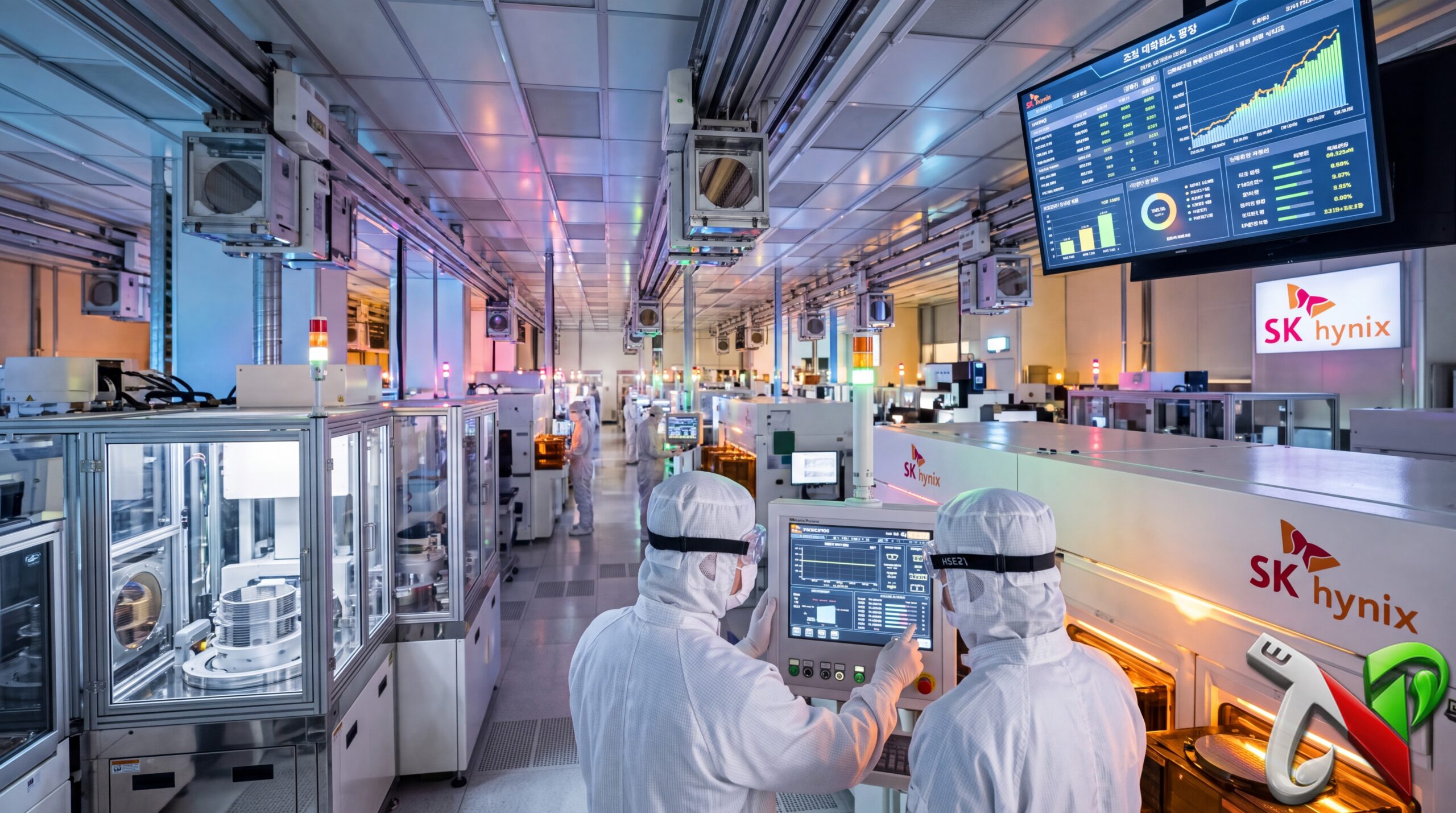
@SKHynix warned that the global memory shortage could persist through 2030, reporting record quarterly revenue of 104.6 trillion Korean won ($78.1 billion) and an operating profit of 83.3 trillion won ($62.1 billion). Driven by soaring demand for high-bandwidth memory (#HBM) used alongside artificial intelligence accelerators, the South Korean chipmaker has secured long-term agreements covering more than 50% of its production capacity for 2027 and 2028. To support this growth, the company plans to increase its capital spending to at least 40 trillion won ($30 billion) this year. Furthermore, @SKHynix announced plans to return 100 trillion won ($75 billion) in total to shareholders, largely funded by investment gains from its stake in Kioxia. This strong financial performance lifted chip stocks across Asia, though broader industry shares remain sensitive to market volatility and concerns over slowing infrastructure spending.
15. ULA’s Vulcan rocket is set to return to flight on Friday the 13th
@UnitedLaunchAlliance announced plans to launch its Vulcan rocket on November 13, resuming flight operations nine months after a solid rocket booster anomaly grounded the vehicle. The return-to-flight mission will deploy 40 satellites for @Amazon’s Leo broadband constellation from Cape Canaveral Space Force Station in Florida, pending range approval. This launch is vital for @UnitedLaunchAlliance because its primary customer, the U.S. Space Force, suspended flights following nozzle failures on two of its first four missions, including a flight in February. Engineers have since identified potential contributors to the anomaly and implemented design and process improvements to the booster nozzles. Successfully flying this improved design will provide critical flight data to validate the modifications and restore confidence for national security launches scheduled through the early 2030s.
A Ukrainian military unit from the 2nd Corps of the National Guard announced that an unmanned ground robot successfully completed a 12-mile supply run autonomously under combat conditions. The logistics mission, executed by the Lava Unmanned Systems Regiment, covered 20 kilometers with the robot operating independently for 93% of the journey and requiring human operator intervention for only 1.4 kilometers. Prior to departure, a companion robot equipped with LiDAR technology mapped the route in 3D, allowing onboard cameras and artificial intelligence navigation to handle obstacle detection and pathfinding. Battalion commander #AndriiKopach noted that this technology transforms human operators from drivers into dispatchers who monitor movement rather than managing every second of vehicle control. This development matters because increasing reliance on autonomous ground systems can reduce battlefield risks for human troops while mitigating operational disruptions caused by vulnerabilities in satellite internet links like #Starlink.
17. Wiz’s CTO on PHP2Shell and the coming ‘vulnpocalypse’
@Wiz Chief Technology Officer #TomerSchwartz discussed the recent fallout from critical PHP vulnerabilities on an episode of TechCrunch’s Equity podcast. Last week, two severe bugs in the open-source language powering roughly 70% of websites forced organizations to scramble patches and temporarily take systems offline. During the interview, #Schwartz detailed what the emergency response looked like from the inside alongside contributions from @OpenAI, research group Calif, and the PHP development team. The discussion also addressed secure development practices for early-stage startups and why traditional manual patching methods fail to scale. This conversation matters because the integration of artificial intelligence into cyber operations threatens to accelerate the discovery and exploitation of novel vulnerabilities, ushering in a more challenging security landscape.
18. New system gives users more control over their online experience
Researchers at @MIT have developed Social.Wiki, a decentralized web platform that allows users to easily modify social applications and choose which community-made edits to display. Built on top of a decentralized web framework called Graffiti, the system features an edit button on every web application that lets individuals manually alter source code or prompt an AI assistant to make changes. The platform handles all back-end server and database management while incorporating a data guard to protect user information from buggy or malicious applications. Through user tests and case studies, the team demonstrated that individuals with no coding expertise can successfully build personalized tools, such as collaborative art canvases and custom rideshare apps. This project matters because it imagines an alternative web where small groups can customize their digital environments without getting cut off from their broader social connections.
19. AMD to invest $1bn in Meta as its Helios racks start running there
@AMD announced a $1 billion equity investment in @Meta alongside the commercial deployment of its Helios rack-scale systems inside @Meta datacenters. The funding builds upon a broader $35 billion share sale launched by @Meta to finance its massive artificial intelligence infrastructure spending, complementing a separate $3 billion investment pledge from @Nvidia. #LisaSu, chair and CEO of @AMD, noted that the integration of Helios systems featuring 72 GPUs per rack marks a new scale in the partnership. Additionally, @Meta utilizes @AMD #EPYC processors to power personal AI agents like Muse while preparing to adopt future custom #InstinctGPUs. This deal reflects an accelerating trend where major silicon vendors take direct equity stakes in the cloud hyperscalers purchasing their high-performance computing hardware.
20. Apple and OpenAI trade secrets lawsuit now has an official trial date
Judge Edward Davila formally established a trial date of July 19, 2027, for @Apple’s trade secrets misappropriation lawsuit against @OpenAI, two former employees, and io Products. Filed in July, the lawsuit accuses the defendants of improperly accessing and using confidential information regarding #Apple’s products and technologies to advance @OpenAI’s hardware development efforts. Ahead of the official trial, #Apple recently secured two procedural victories granting the company access to additional documents and information through expedited discovery. The court-ordered schedule also mandates that lead attorneys from both sides meet by June 1, 2027, to discuss potential settlement negotiations. While settlement discussions are a standard procedural step in federal civil litigation, this scheduling order sets a firm timeline for resolving high-stakes intellectual property claims between major technology competitors.
21. Microsoft reveals strong cloud growth amid financial reporting overhaul
@Microsoft reported $92.3 billion in revenue and $33.6 billion in net income for the first quarter of its 2027 fiscal year, marking a 19 percent increase in revenue year-over-year. Alongside these results, the company overhauled its financial reporting structure by consolidating its business segments into two main categories: Agents and Infra, and Devices and Consumer. The Agents and Infra segment generated $76.8 billion, driven by a 48 percent surge in #Azure revenue to $33.17 billion, while the Devices and Consumer segment fell three percent due to declining Windows OEM and Xbox hardware sales. CEO #SatyaNadella emphasized an ongoing hybrid artificial intelligence push aimed at turning every personal computer into a secure agent box capable of running local frontier models. This financial reorganization and strong cloud performance highlight @Microsoft shifting its primary growth engine toward cloud infrastructure and enterprise artificial intelligence services.
22. Volt Typhoon hides zero-day attacks using ‘Silent Train’ framework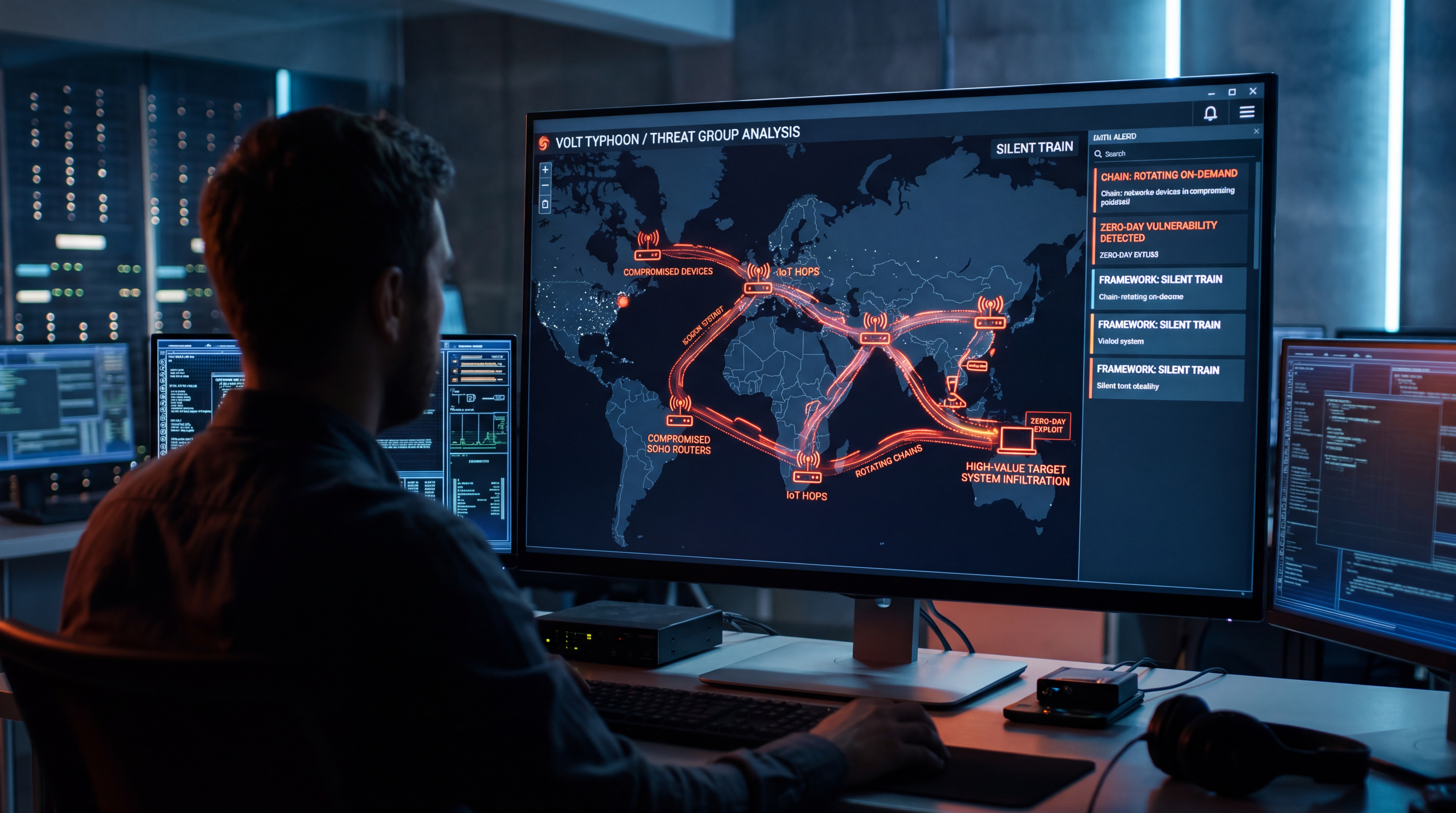
Chinese state-sponsored threat group Volt Typhoon has been observed deploying a sophisticated operational framework named Silent Train that utilizes rotating chains of compromised connected devices to obscure zero-day attacks targeting high-value infrastructure networks. […]
23. Sony ISP subsidiary data breach exposes 2.5 million customer records
@SonyNetworkCommunications has acknowledged a significant cybersecurity incident affecting its subsidiary, leaking approximately 2.5 million records containing sensitive personal information belonging to current and former customers. According to the disclosures, the exposed dataset includes user names, addresses, email addresses, phone numbers, and birth dates, stemming from an unauthorized access event on the company’s #CloudService infrastructure. Security investigators discovered the vulnerability after noticing suspicious data exfiltration, prompting the firm to launch a forensic investigation alongside external cybersecurity experts and notify affected individuals. This breach highlights the persistent vulnerabilities in enterprise data management systems where vast repositories of consumer information remain vulnerable to sophisticated cyber attacks. The incident poses severe privacy and identity theft risks for the impacted users, while also threatening to damage the corporate reputation of @Sony regarding its #DataSecurity practices.
24. Google’s Flashy New Model Gets Outshone By Its Financial Troubles
@Google reported a negative free cash flow of $9.07 billion for the third quarter, worsening from the negative $5.9 billion recorded in July, as heavy capital expenditures on artificial intelligence infrastructure weighed down its financial results. Quarterly revenue reached $127.58 billion, missing market expectations, while long-term debt climbed to $125.1 billion and future purchase commitments approached $1 trillion. Chief Financial Officer #AnatAshkenazi stated that the company expects to spend between $195 billion and $205 billion this fiscal year primarily on AI systems, projecting strong long-term returns on invested capital despite near-term pressure on cash flows. Concurrently, @Google debuted a new frontier model named Carbon, which CEO #SundarPichai highlighted as its strongest model yet featuring advanced cybersecurity capabilities. Despite these technological milestones, investors reacted negatively to the deepening cash burn, sending shares down roughly 11% in after-hours trading amid growing market debates over artificial intelligence return on investment.
25. China’s CXMT will make AI memory despite yields as low as 20%, Reuters says
China’s largest memory chipmaker, CXMT, plans to begin limited production of HBM3E high-bandwidth memory despite manufacturing yields ranging between 20% and 30%. According to industry sources cited by Reuters, CXMT has already shipped samples to several domestic AI chip designers and aims to start production within the next two months. In contrast, global market leader @SKHynix achieves yields around 70% for its advanced memory products, leaving CXMT facing high costs from discarded or reworked silicon. U.S. export controls implemented in December 2024 restricted shipments of advanced memory to China, prompting local firms to seek alternatives through expensive unofficial channels. This push highlights China’s urgency to build a domestic supply of advanced memory chips despite performance lags and production inefficiencies as local tech companies race to develop independent artificial intelligence hardware.
26. Japan Airlines warns of data breach as country grapples with multiple cyber incidents
Japan Airlines announced that an IT service provider suffered a data breach exposing the personal reservation records of over 90,000 customers. The airline stated that Amadeus IT Group, which manages its flight reservation and ticketing systems, confirmed unauthorized access to customer names, reservation codes, and flight information, while passport numbers and contact details were leaked for roughly 2,000 passengers. This incident compounds a wave of recent high-profile cyberattacks in Japan, including data breaches affecting @Sony Network Communications, Burger King Japan, and Capcom. In response to the growing threat of civil damages and data misuse, Prime Minister @SanaeTakaichi held an emergency cabinet meeting to formulate defensive countermeasures. Furthermore, Japanese Defense Minister #ShinjiroKoizumi and U.S. Defense Secretary @PeteHegseth agreed during a meeting in the Philippines to strengthen bilateral cooperation against malicious cyber activities threatening national security.
27. This company wants to use AI to reverse aging — here’s how
Artificial intelligence is increasingly transforming regenerative medicine by streamlining complex biological processes and personalizing treatments. In this episode of Adventures in AI, #DrewTaylor, founder of @AcornBiolabs, discussed how machine learning models can predict stem cell performance from a single image. These computational tools help design customized therapeutic plans tailored to an individual’s unique biological makeup. Such advancements illustrate the growing intersection of artificial intelligence and cellular biology in modern healthcare. This trend matters because predictive modeling could eventually accelerate the development of regenerative therapies designed to reverse physical aging.
28. GitHub launches Copilot Fusion as agents start 40% of pull requests
@GitHub launched Copilot Fusion at its GitHub Universe conference, a unified system that automatically selects and mixes artificial intelligence models to handle reasoning, code generation, and debugging for software development tasks. According to Microsoft executive #JayParikh, a variant called Fusion Max achieved performance scores close to Anthropic’s Claude Opus 5.5 Max while operating at half the cost and 40% less time per task. Concurrently, the platform’s annual Octoverse report revealed that developers pushed code 17.9 billion times over the past year, with autonomous agents initiating more than 40% of all pull requests by September. @GitHub also introduced the GitHub Copilot app to manage parallel agent sessions across repositories with seamless continuity between local editors and the cloud. This evolution highlights a massive shift in software engineering, where AI agents are rapidly moving from simple autocomplete tools to autonomous participants managing a significant portion of the development life cycle.
29. Against all expectations, researchers control the magnetic core of a single atom
Researchers at Delft University of Technology in the Netherlands have successfully controlled the nuclear spin of a single atom using radio waves, overcoming a long-standing physical assumption that nuclear magnetism could not be manipulated directly. Until now, physicists believed that manipulating individual nuclear spins in this manner was impossible. This breakthrough discovery, published in the journal #NatureCommunications, could open up entirely new avenues for storing and reading quantum information at the atomic scale. This development matters because enhanced control over single-atom magnetism provides fundamental building blocks for advancing future quantum computing technologies.
30. European digital rights nonprofit noyb sues Scale AI for ‘invasive’ worker surveillance
The European digital rights advocacy group noyb filed five complaints in France, Italy, the Netherlands, and Austria against @ScaleAI, alleging that its worker surveillance practices violate the European Union’s General Data Protection Regulation. The complaints focus on the Outlier platform, which connects technology companies like @Google, @Meta, and @OpenAI with over 900,000 freelance workers to generate artificial intelligence training data. According to noyb, the platform embeds numerous third-party trackers that record keystrokes, mouse clicks, and visited web pages every few seconds, data that can allegedly be targeted for advertising. Additionally, the nonprofit claims @ScaleAI illegally mandates invasive biometric verification through identity service Persona as a condition of employment without providing a valid legal basis. While a @ScaleAI spokesperson disputed the allegations regarding third-party trackers and asserted that its biometric checks combat fraud, noyb is urging European regulators to investigate the platform and issue fines.
31. Russia now requires Apple to store user communications and hand them over if requested
@Apple and @Microsoft have been added to Russia’s state surveillance registry, officially known as the organizers of information dissemination registry maintained by communications regulator #Roskomnadzor. This designation subjects both companies to Russian regulations requiring them to store local users’ correspondence, audio and video messages, and communication metadata for three years. Furthermore, listed entities must hand over stored user communications to Russian security agencies upon request, with non-compliance risking heavy fines and restricted service access. They join a growing list of foreign tech platforms on the registry, including @WhatsApp, @Telegram, @GoogleMeet, and #Cloudflare. Neither @Apple nor @Microsoft has publicly commented on their inclusion or indicated whether they intend to comply with the mandate.

To provide the best experiences, we use technologies like cookies to store and/or access device information. Consenting to these technologies will allow us to process data such as browsing behavior or unique IDs on this site. Not consenting or withdrawing consent, may adversely affect certain features and functions.
The technical storage or access is strictly necessary for the legitimate purpose of enabling the use of a specific service explicitly requested by the subscriber or user, or for the sole purpose of carrying out the transmission of a communication over an electronic communications network.
The technical storage or access is necessary for the legitimate purpose of storing preferences that are not requested by the subscriber or user.
The technical storage or access that is used exclusively for statistical purposes.
The technical storage or access that is used exclusively for anonymous statistical purposes. Without a subpoena, voluntary compliance on the part of your Internet Service Provider, or additional records from a third party, information stored or retrieved for this purpose alone cannot usually be used to identify you.
The technical storage or access is required to create user profiles to send advertising, or to track the user on a website or across several websites for similar marketing purposes.
33. China Is So Desperate for AI Memory That It’s Producing Chips With a 70% Failure Rate
China’s largest dynamic random-access memory manufacturer, ChangXin Memory Technologies, is pushing forward with plans to produce advanced HBM3E memory chips despite experiencing manufacturing failure rates as high as 70 to 80 percent. Reuters reported that CXMT has already sampled its high-bandwidth memory chips to domestic artificial intelligence processors designers, aiming for limited production within two months. However, only 20% to 30% of the produced wafers meet required specifications, forcing the company to discard or rework the vast majority of its output and driving up production costs. This aggressive manufacturing push stems from severe supply chain pressures caused by U.S. export controls restricting China’s access to advanced foreign semiconductor technology and high-performance memory. Consequently, Chinese firms are forced to navigate extremely low yields and expensive unofficial supply channels to secure the critical memory components needed for domestic artificial intelligence hardware development.
34. iOS 27.2 Rolls Out With Siri AI Upgrades, Apple Pencil Support for Duo, More
@Apple released its iOS 27.2 software update featuring incremental upgrades headlined by significant Siri artificial intelligence enhancements and new device support. Siri AI on compatible iPhones can now recall past conversation context, parse photo attachments and calendar events in Messages, and retrieve improved results from Safari history, alongside expanded language support for French, Japanese, Korean, Portuguese, and Spanish. However, Siri AI remains unavailable in the European Union while @Apple engages in regulatory discussions. Other notable additions include a context-aware Suggestions feature in Messages, enhanced caption editing in Shared Albums, and the automatic application of invisible Synth ID watermarks to images generated via Apple’s Image Playground. The update also brings Apple Pencil support to the iPhone Duo foldable phone, alongside various bug fixes across health, shortcuts, and app tracking tools.
That’s all for today’s digest for 2026/10/29! We picked and processed 34 articles. Stay tuned for tomorrow’s collection of insights and discoveries.
See you in the next one! 🚀
