
Orbital Data Centers Got a License, Not a Reality Check
Key points
- The FCC's November 25, 2026 grant for SpaceX's Starmind constellation authorizes only backup and emergency Ka-band telemetry, tracking and command radio for 1,000,000 satellites, while the agency dismissed environmental and optical-astronomy objections as outside its authority (Baumgartner, 2026b; Kolodny & Palmer, 2026).
- The single decision that most shapes Starmind's atmospheric footprint, whether satellites above 600 km may be parked in graveyard or heliocentric orbits instead of reentering, was deferred because SpaceX had not supplied enough information (Baumgartner, 2026b; Korosec, 2026).
- A preprint modeling the plan projects 70- to 150-fold increases in launch emissions and reentry nitrogen oxides and at least 5,000 Starship launches a year, yet its authors could not estimate metal pollution because satellite composition was never disclosed, the same gap the FCC used to call reentry pollution speculative (Kwan, 2026; Marais & Barker, 2026; Pegoraro, 2026).
- The logistics strain belief: one estimate runs from 17,500 to 77,000 launches costing $1.45 trillion to $9.8 trillion, and an orbital-recycling founder puts the practical ceiling for low Earth orbit near 240,000 satellites unless a single operator controls them all (Pegoraro, 2026; Pultarova, 2026).
- The ruling works as a template, not an exception: the FCC says it will decide other orbital data center proposals expeditiously, including Blue Origin's 51,600-satellite plan and filings for 88,000, 100,000 and 20,000 more (Baumgartner, 2026a; Kolodny & Palmer, 2026; Lawler, 2026).
- The firmest check left is the deployment schedule, which voids the license unless SpaceX has one satellite operating by November 2033, 100,000 by 2035, 500,000 by 2038 and the full million by 2040 (Baumgartner, 2026b).
What Is an Orbital Data Center?
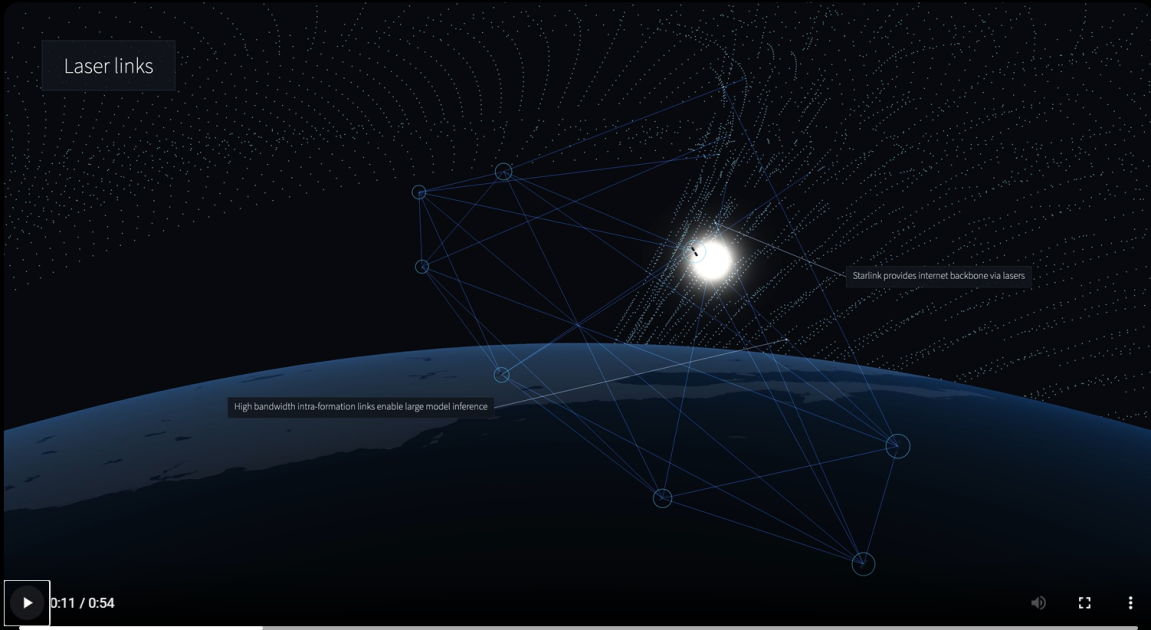
An orbital data center, also called a space-based data center, a data center in space or, in the regulator’s own phrasing, an orbital compute module, is a satellite whose main job is computing rather than relaying signals. Instead of beaming internet service to a dish, each spacecraft carries AI processors, solar arrays to power them and radiators to dump their heat, crunching data in orbit and sending only the results back to Earth (SpaceX, 2002; Tauber, 2026). SpaceX’s version, branded Starmind, would route those results over laser links into its Starlink network, which then delivers them to ground stations (Fcc, 2026b; SpaceX, 2002).
It is not simply a bigger communications megaconstellation, although it borrows that architecture, and it is not necessarily one giant station either. SpaceX proposes huge numbers of individual satellites, called AI1, averaging 175kW of compute with solar wings spanning 246 feet (Pegoraro, 2026). A European feasibility study instead imagined gigawatt-scale structures with arrays hundreds of meters across, assembled in orbit (Pultarova, 2026). Early real-world examples are modest: a startup flew an Nvidia H100 GPU in orbit, and a Google prototype has already run an AI model in space (Pultarova, 2026; Tauber, 2026). The pitch behind all of it is the same: terrestrial AI is straining power grids, water supplies and local patience, and orbit promises sunlight and a cold vacuum instead (Pultarova, 2026; SpaceX, 2002).
A License for a Backup Radio
Read the actual grant and its scope is strikingly narrow. The FCC classified Starmind under the Space Operation Service and authorized radiofrequency communications for backup and emergency telemetry, tracking and command, using 18.8 to 19.3 GHz downlink and 28.6 to 29.1 GHz uplink, on an unprotected, non-interference basis (Baumgartner, 2026b). That is the limit of the agency’s reach: under the Communications Act it licenses the radio links between space and earth stations, not computing, chips or orbital architecture (Fcc, 2026a). SpaceX itself told the agency it does not plan to use the Ka-band at all except for limited emergencies, since the satellites will talk through optical links (Baumgartner, 2026b).
So the thing formally licensed is a contingency channel its owner hopes rarely to switch on. The public framing was far grander. The FCC’s announcement called it the first authorization in U.S. history for a constellation of data centers in space, tied it to America’s development of super intelligence and said it moves humanity toward a Kardashev II civilization that harnesses the sun’s full output (Baumgartner, 2026a). That cosmic language came straight from SpaceX’s application and was repeated in the agency’s own February acceptance notice (Fcc, 2026b), a borrowing critics found telling (Lawler, 2026).
The grant also cleared a stack of waivers. SpaceX asked to skip the processing round that normally invites competing applicants, the surety bond meant to deter spectrum warehousing, and the deployment milestones (Fcc, 2026b). All were granted, though SpaceX withdrew its request for a total milestone exemption and accepted the new schedule adopted in the FCC’s Space Modernization rules (Baumgartner, 2026b). Commenters argued that combining these waivers stripped away every guardrail on an untested technology; the bureau answered that it has waived the same rules repeatedly for novel systems, citing Reflect Orbital and others (Fcc, 2026a).
The Questions Handed Elsewhere
The most consequential part of the order is what it declines to decide. The Space Bureau explicitly set aside environmental concerns and impacts on optical astronomy as topics over which the Commission has no authority (Baumgartner, 2026b; Kolodny & Palmer, 2026). Air pollution from launches was pointed toward the Federal Aviation Administration, and the possibility of spent satellites turning into metal dust during reentry was waved off as speculative and unsupported by the record (Pegoraro, 2026). Worries about orbital congestion met a flat procedural answer: FCC rules set no cap on the number of satellites in similar orbits, and the bureau would not invent one in a licensing case (Fcc, 2026a). Claims from radio astronomers that the satellites could reflect radio waves were rejected for lacking specific technical support (Fcc, 2026a).
None of this was improvised. In September the FCC had already exempted megaconstellation filings from environmental review, and while the FAA can still assess individual launches, those reviews do not capture the cumulative effects of building, running and disposing of an entire constellation (Kwan, 2026). Atmospheric chemistry, launch licensing, debris, ozone and climate sit with separate agencies holding separate mandates, and no single institution is positioned to judge the combined effect (Edison, 2026). Opponents argued the National Environmental Policy Act required a review regardless, calling the holiday-week approval reckless (Kolodny & Palmer, 2026; Pegoraro, 2026).
Put together, the pattern is clear. Every agency holds one slice of the problem, the licensing agency holds the thinnest slice, and the whole receives no owner at all. A million-satellite project became legally real without anyone being responsible for asking whether it is safe in aggregate.
Speculative by Design
The FCC’s dismissal of reentry pollution as speculative deserves scrutiny, because the record is thin for a reason. University College London researchers Eloise Marais and Connor Barker tried to quantify the plan’s atmospheric footprint and found that the basic inputs were missing from SpaceX’s filing (Marais & Barker, 2026). Their preprint, not yet peer reviewed, estimates that launch emissions and reentry nitrogen oxides would rise 70- to 150-fold over current levels, and that the mass of material reentering would climb 200- to 280-fold (Marais & Barker, 2026).
The assumptions behind those figures are worth stating plainly. The team modeled Starship Block 4 lifting at least 200 metric tons per flight, which implies at least 5,000 launches a year, about 14 a day, against roughly 330 orbital launches worldwide in 2025 (Kwan, 2026; Tangermann, 2026). They put reentry nitrogen oxides at 233,000 to 507,000 metric tons annually, comparable to some European countries’ emissions, and estimated around 60,000 metric tons of vented methane a year if test-flight venting practices continue (Kwan, 2026). Reentry nitrogen oxides would exceed the natural influx from meteors at least sixfold, and launchpad emissions would surpass other controlled U.S. sources (Marais & Barker, 2026).
The striking gap is metals. Aluminum and other particles from burning satellites can accelerate ozone-destroying chemistry and form high-altitude hazes, but the researchers could not calculate those emissions because SpaceX has not disclosed even the broad material makeup of its satellites (Kwan, 2026; Marais & Barker, 2026). To fill other gaps they leaned on space shuttle data, Wikipedia, enthusiast forums and an independent satellite catalog (Kwan, 2026). That is the circularity at the heart of the ruling: the environmental harm was judged unsupported by a record that the applicant controlled and left empty.
The Deferred Decision on Disposal
One open item quietly governs most of the atmospheric math. FCC rules require satellites ending their missions below 2,000 km to reenter within five years; SpaceX asked for flexibility to send satellites operating above 600 km into disposal orbits or even around the sun (Baumgartner, 2026b; Korosec, 2026). The bureau deferred that request because SpaceX had not supplied enough information, and required a modification application with a full debris plan before any Starmind satellite flies above 600 km (Baumgartner, 2026b). The authorized shells run from 500 to 1,002 km, so a large share of the constellation sits behind that unresolved question (Baumgartner, 2026b).
Both outcomes carry real consequences, and neither has been assessed. The pollution estimates already assume SpaceX parks 80 percent of its satellites in higher graveyard orbits (Kwan, 2026); if the waiver is refused, far more mass comes down through the atmosphere. If it is granted, a population of large dead objects accumulates for the long term. At the replacement rates involved, critics estimate one old unit reentering roughly every three minutes (Edison, 2026; Pultarova, 2026).
Ground risk is contested too. Coverage of the order says SpaceX committed to designs that fully burn up (Baumgartner, 2026c), yet SpaceX has separately said up to five percent of some satellites’ mass could survive reentry, and with each data-center satellite reported at four tonnes, an independent extrapolation suggests hundreds of satellites dropping fragments every five years (Lawler, 2026). Each individual casualty risk is small; the problem is rolling those dice a million times.
Physics Does Not Take Waivers
The engineering case for orbital compute rests on two claims that look shakier under examination. The first is cooling. SpaceX says heat radiates freely into vacuum and that its satellites cut cooling overhead by an order of magnitude (SpaceX, 2002). Engineers counter that vacuum removes convection, leaving only radiation, which is far less efficient; equipment in a permanently sunlit orbit would never drop below 80 °C, too hot for long-term electronics, and needs very large radiators (Pultarova, 2026). An astrophysicist critic likened space to a thermos that traps heat (Grantham-philips, 2026). A pumped-fluid radiator system already exists for big telecom satellites, and one European study still judged gigawatt orbital facilities feasible before 2050, so the problem is hard rather than impossible (Pultarova, 2026).
The second claim is constant sunlight. SpaceX pitches sun-synchronous orbit as always sunny (SpaceX, 2002), but because of Earth’s axial tilt, continuous illumination in those terminator orbits only holds above about 1,400 km, forcing a trade between uninterrupted power and low latency (Lawler, 2026). Starmind’s authorized altitudes top out at 1,002 km (Baumgartner, 2026b).
Then there is radiation. Charged particles cause bit flips, cumulative degradation and permanent atomic damage, and memory and storage are as exposed as processors (Pultarova, 2026). Nvidia, whose Vera Rubin NVL72 system will underpin the first-generation Starmind satellite (investor.nvidia.com, 2026), says its commercial hardware gains radiation resilience at the system level through shielding and error correction rather than hardened silicon (Pultarova, 2026). Repairs remain an open question, and a severe solar storm could kill electronics outright (Pultarova, 2026). In an unrelated reminder of how fragile that environment is, a 1962 high-altitude nuclear test created an artificial radiation belt that disabled seven satellites within months, and disabled, unmaneuverable spacecraft can seed the debris cascade known as Kessler syndrome (da Costa, 2026).
The Arithmetic of a Million
Scale is where ambition and evidence diverge most sharply. Counts of today’s Starlink fleet vary by source, from 9,643 operational satellites (Pegoraro, 2026) to just over 11,000 (Lawler, 2026; Rabie, 2026), but on any count the 100,000 satellites required by 2035 would be roughly nine times the current network (Tauber, 2026), and the full constellation would multiply the number of satellites in Earth orbit by about 50 (Rabie, 2026) or, measured against low Earth orbit, by about 100 (Aas, 2026).
Getting them up is a staggering logistics problem. One published calculation ranged from 17,500 Starship launches costing $1.45 trillion in an optimistic case to 77,000 launches and $9.8 trillion in a pessimistic one, over five years (Pegoraro, 2026). Starship has reached orbit only twice so far, though SpaceX recently caught and recovered the upper stage (Baumgartner, 2026c; Kwan, 2026). SpaceX says its Gigasat Factory in Bastrop, Texas, could start producing AI satellites as soon as late 2027 (SpaceX, 2002; Tauber, 2026), and Elon Musk predicted deployment starting in late 2027 with significant scale in 2028 (Baumgartner, 2026c). Amazon, in its petition to deny, said the job would take centuries and called the plan a lofty ambition rather than a real plan (Kolodny & Palmer, 2026; Korosec, 2026).
Orbit itself may not fit the plan. One orbital-recycling founder estimates that each shell holds four to five thousand satellites with safe spacing, giving low Earth orbit a ceiling near 240,000, and argues a million is only possible if one operator controls everything (Pultarova, 2026). The schedule compounds the strain: even hitting 500,000 by 2038 would leave two years to launch another half million (Tauber, 2026).
The Night Sky as Collateral
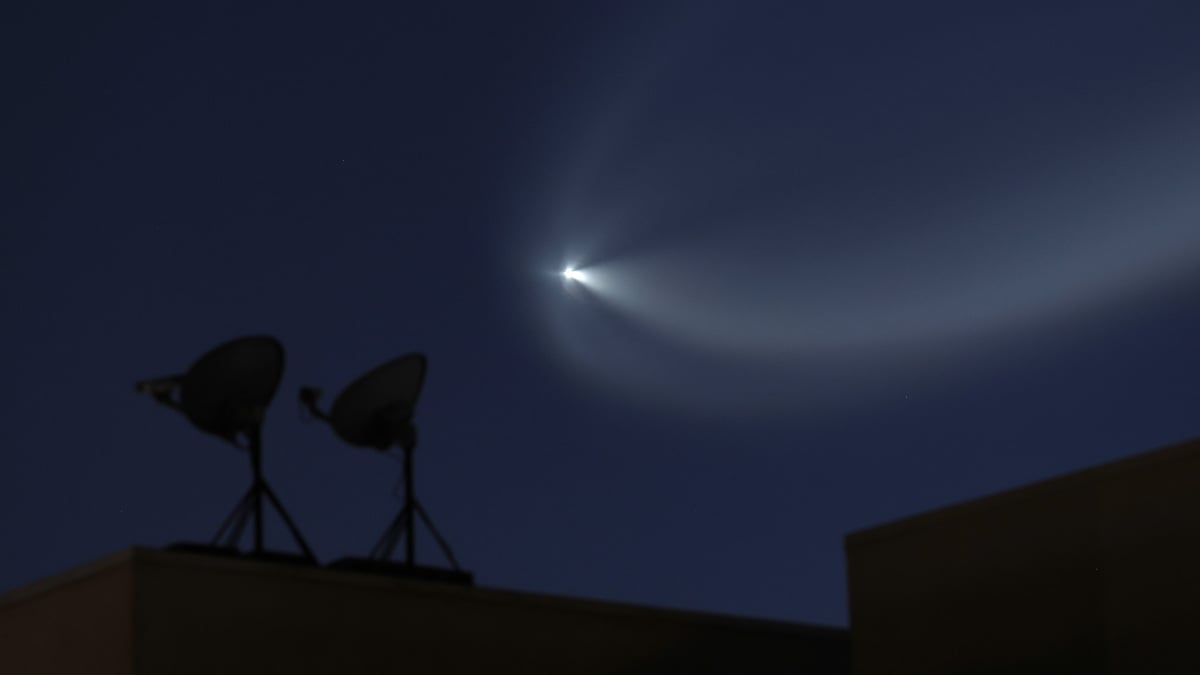
Astronomers mobilized early. Nearly 1,500 public comments were filed on the SpaceX application, and the American Astronomical Society warned that the satellites would be larger, and therefore brighter, than Starlink and visible for longer because of their higher altitudes (Aas, 2026). Its preliminary simulations suggest tens of thousands could be visible to the naked eye worldwide if the full constellation flies (Tauber, 2026). The track record is not reassuring: at one California observatory, Starlink streaks appeared in 18 percent of twilight images in August 2021, up from under half a percent in late 2019, and newer Starlink designs remain brighter than the target SpaceX agreed to pursue (Tauber, 2026).
The agency’s answer was inconsistent in emphasis. The order states that its rules do not address optical astronomy (Pegoraro, 2026), while coverage of the ruling notes the FCC also treated SpaceX’s commitment to work with the National Science Foundation as sufficient (Tauber, 2026). The society said it was disheartened and dismayed, arguing the decision undercuts decades of federal investment in observatories (Grantham-philips, 2026). Researchers who once predicted that one in fifteen visible points in the sky would soon be a moving satellite now say that estimate was too conservative (Lawler, 2026).
A Template for Everyone Else
Starmind is not a one-off. The FCC says it is reviewing more orbital data center proposals and intends to decide each expeditiously (Baumgartner, 2026a), and its chairman framed the approval as covering SpaceX and competitor constellations alike (X (formerly Twitter), 2026a). Blue Origin filed in March for up to 51,600 satellites under Project Sunrise (Kolodny & Palmer, 2026); its application remains pending review (fccprod.servicenowservices.com, 2016). Other filings seek 88,000 satellites for Starcloud, 100,000 for Orbital Compute and 20,000 for Cowboy Space, all aimed at the same narrow band of sun-synchronous orbits (Lawler, 2026). Google is testing its Project Suncatcher hardware in orbit (Tauber, 2026), with a dedicated heavy-lift launch planned for 2029 (Roth, 2026). In a related development, Blue Origin’s New Glenn, which is set to fly that mission, remains grounded after a test-stand explosion and is expected back in early 2027 (Jewett, 2026).
Because the Starmind order declined to set any limit on satellite numbers (Fcc, 2026a) and leaned on prior waivers such as Reflect Orbital’s (Fcc, 2026a), each grant becomes precedent for the next, a dynamic one critic calls a licensing assembly line (Lawler, 2026). The commercial pull is real: SpaceX’s AI segment reported $7.6 billion in quarterly revenue, up from $813 million, much of it from renting compute to rivals (McIntyre, 2026). The approval landed the same day SpaceX pledged shares to American children’s accounts (Khollam, 2026; X (formerly Twitter), 2026b). Separately, SpaceX is weighing ground stations and data centers in Bulgaria (Novinite, 2026) and its spectrum appetite extends to the upper C-band auction scheduled for April 2027 (PhoneArena, 2026), reminders that orbital compute still depends on earthly infrastructure and airwaves.
What Real Oversight Would Require
The order is not empty of conditions. SpaceX must file semi-annual reports on conjunction events, satellites removed or screened, reentries, total deployment and Ka-band use, and must coordinate with federal systems before transmitting (Baumgartner, 2026b). The milestone schedule is the sharpest tool: miss November 2033, 2035, 2038 or 2040 and the authorization becomes void (Baumgartner, 2026b). Those are meaningful guardrails, but they measure activity after launch rather than consequences before it.
The missing piece is disclosure. The modeling team says regulators should demand rocket specifications, reentry masses, heat-shield materials, satellite composition and propulsion details (Marais & Barker, 2026), and stresses that broad percentages, not blueprints, would suffice (Kwan, 2026). An outside expert suggests trusted intermediaries could hold proprietary data while enabling independent assessment (Kwan, 2026), and others argue for a genuine cumulative review across agencies (Edison, 2026).
There is time. SpaceX has seven years to orbit its first operational satellite (Korosec, 2026). That window could be used to build the review the license skipped. The researchers’ core argument is that uncertainty itself is the reason for caution: once mass is in orbit it stays, and the effects may only show up later (Kwan, 2026). A licence for a backup radio should not be mistaken for a verdict on whether a million orbital data centers belong in the sky.
Companies mentioned: SpaceX • Nvidia (NVDA $149.30 ▼3.9%) • Google (GOOGL $273.10 ▼2.1%)
References
- Aas. (2026, March 6). Action Alert: Provide Input to the FCC on Proposed Satellite Systems. https://aas.org/action-alert-provide-input-fcc-proposed-satellite-systems
- Baumgartner, J. (2026a, November 25). here. Contentstack. https://eu-assets.contentstack.com/v3/assets/blt23eb5bbc4124baa6/blt3284fad4ee39d97e/6b071287af911015536d731d/FCC_Authorizes_1_Million_Satellites_for_Data_Centers_in_Space_PR_11-25-2026.pdf
- Baumgartner, J. (2026b, November 25). report and order. Contentstack. https://eu-assets.contentstack.com/v3/assets/blt23eb5bbc4124baa6/bltf4cdf2af47159e12/6b071c5f5506bb38bca5b0ec/FCC_report_and_order_on_SpaceX_Starmind_AI_constellation_11-25-2026.pdf
- Baumgartner, J. (2026c, November 25). SpaceX OK’d to deploy up to 1M AI satellites, complete constellation by 2040. Light Reading. https://www.lightreading.com/satellite/spacex-ok-d-to-deploy-up-to-1m-ai-satellites-complete-constellation-by-2040
- da Costa, C. (2026, November 25). Scientists Warn a Nuclear Blast in Space Could Damage Satellites for Years. Gadget Review. https://www.gadgetreview.com/scientists-warn-a-nuclear-blast-in-space-could-damage-satellites-for-years
- Edison, R. (2026, November 23). Scientists Warn That Putting 1 Million SpaceX Data Centers in Orbit Could Devastate the Environment. Gadget Review. https://www.gadgetreview.com/scientists-warn-that-putting-1-million-spacex-data-centers-in-orbit-could-devastate-the-environment
- Fcc. (2026a). DA 26 1273A1. https://docs.fcc.gov/public/attachments/DA-26-1273A1.pdf
- Fcc. (2026b). DA 26-113: Space Bureau Accepts for Filing SpaceX’s Orbital Data Center Application (released February 4, 2026). https://docs.fcc.gov/public/attachments/DA-26-113A1.pdf
- fccprod.servicenowservices.com. (2016, August 1). Filing Documents Table – page 0. https://fccprod.servicenowservices.com/icfs?id=ibfs_application_summary&number=SAT-LOA-20260310-00118
- Grantham-philips, W. (2026, November 26). FCC says SpaceX can deploy 1 million satellites for data centers in space. Scientists are skeptical – Oregon Public Broadcasting. Opb. https://www.opb.org/article/2026/11/25/fcc-says-spacex-can-deploy-1-million-satellites-for-data-centers-in-space-scientists-are-skeptical/
- investor.nvidia.com. (2026, August 24). SpaceXAI Adopts NVIDIA Vera CPU to Accelerate Agentic AI at Massive Scale. https://investor.nvidia.com/news/press-release-details/2026/SpaceXAI-Adopts-NVIDIA-Vera-CPU-to-Accelerate-Agentic-AI-at-Massive-Scale/default.aspx
- Jewett, R. (2026, November 25). EnduroSat Buys 2 Dedicated Launches from Blue Origin. Via Satellite. https://www.satellitetoday.com/launch/2026/11/25/endurosat-buys-2-dedicated-launches-from-blue-origin/
- Khollam, A. (2026, November 25). SpaceX wins FCC approval for one million satellites to build data centers in space. Interesting Engineering. https://interestingengineering.com/space/spacex-million-satellites-data-centers-fcc
- Kolodny, L., & Palmer, A. (2026, November 25). SpaceX wins FCC approval to deploy 1M orbital data center satellites. CNBC. https://www.cnbc.com/2026/11/25/spacex-fcc-satellite-approval.html
- Korosec, K. (2026, November 25). FCC approves SpaceX plan to put AI data centers in space. TechCrunch. https://techcrunch.com/2026/11/25/fcc-approves-spacex-plan-to-put-ai-data-centers-in-space/
- Kwan, J. (2026, November 18). How bad would SpaceX’s million AI satellites be for Earth’s atmosphere? Scientific American. https://www.scientificamerican.com/article/how-bad-would-spacexs-million-ai-satellites-be-for-earths-atmosphere/
- Lawler, S. (2026, October 21). Corporate ‘orbital data centre’ proposals are dangerous for humanity. The Conversation. https://doi.org/10.64628/aam.padarpuuj
- Marais, E. A., & Barker, C. R. (2026, October 30). A million data centre satellites will usher in a new era of space pollution. Essopenarchive. https://doi.org/10.22541/essoar.15011354/v1
- McIntyre, D. A. (2026, November 25). No One Will Ever Compete With SpaceX’s Space. 24/7 Wall Street. https://247wallst.com/investing/2026/11/25/no-one-will-ever-compete-with-spacexs-space/
- Novinite. (2026, November 26). SpaceX Considers Bulgaria for Regional Starlink and Data Center Hub – Novinite.com – Sofia News Agency. https://www.novinite.com/articles/241646/SpaceX+Considers+Bulgaria+for+Regional+Starlink+and+Data+Center+Hub
- Pegoraro, R. (2026, November 26). FCC Green-Lights SpaceX Scheme for One Million Data Centers in Orbit. PCMAG. https://www.pcmag.com/news/fcc-green-lights-spacex-scheme-for-one-million-data-centers-in-orbit
- PhoneArena. (2026, November 25). AT&T vs. T-Mobile vs. Verizon vs. SpaceX — there’s one consumers want (or need) to prevail. https://www.phonearena.com/news/at-t-t-mobile-verizon-spacex-upper-c-band-auction_id185116
- Pultarova, T. (2026, April 3). Four things we’d need to put data centers in space. MIT Technology Review. https://www.technologyreview.com/2026/04/03/1135073/four-things-wed-need-to-put-data-centers-in-space/
- Rabie, P. (2026, November 25). Feds Approve SpaceX’s AI Data Center Satellites—All 1 Million of Them. Gizmodo. https://gizmodo.com/feds-approve-spacexs-ai-data-center-satellites-all-1-million-of-them-2000845526
- Roth, E. (2026, November 25). FCC signs off on SpaceX’s plan to put up to 1 million data center satellites into space. The Verge. https://www.theverge.com/science/1042278/spacex-fcc-starmind-ai-space-data-centers
- SpaceX. (2002, January 1). SpaceX. https://www.spacex.com/spacexsi/starmind
- Tangermann, V. (2026, November 22). Putting One Million SpaceX Data Centers in Space Would Be an Environmental Catastrophe, Scientists Warn. Futurism. https://futurism.com/science-energy/one-million-spacex-data-centers-environmental-catastrophe
- Tauber, O. (2026, November 25). FCC clears SpaceX to put up to 1 million AI satellites in orbit. Mashable. https://mashable.com/tech/spacex-starmind-fcc-approval-ai-data-centers-space
- X (formerly Twitter). (2026a, November 25). FCC approves SpaceX plan to put AI data centers in space. https://x.com/elonmusk/status/2125630856140308743?a=sc_15etovBwewXmpe3I&s=20
- X (formerly Twitter). (2026b, November 25). SpaceX is committing one share to millions of American children. https://x.com/SpaceX/status/2125671356339499494
 Powered by News Ranker
