Welcome to today’s curated collection of interesting links and insights from 2025/12/26. Our AI-powered system has processed and summarized 10 URLs to bring you the key takeaways.
As previously aired🔴LIVE on Clubhouse, Chatter Social, and TikTok.
Also available as a #Podcast on Apple 📻, Spotify🛜, Anghami and Amazon🎧 or anywhere else you listen to podcasts.
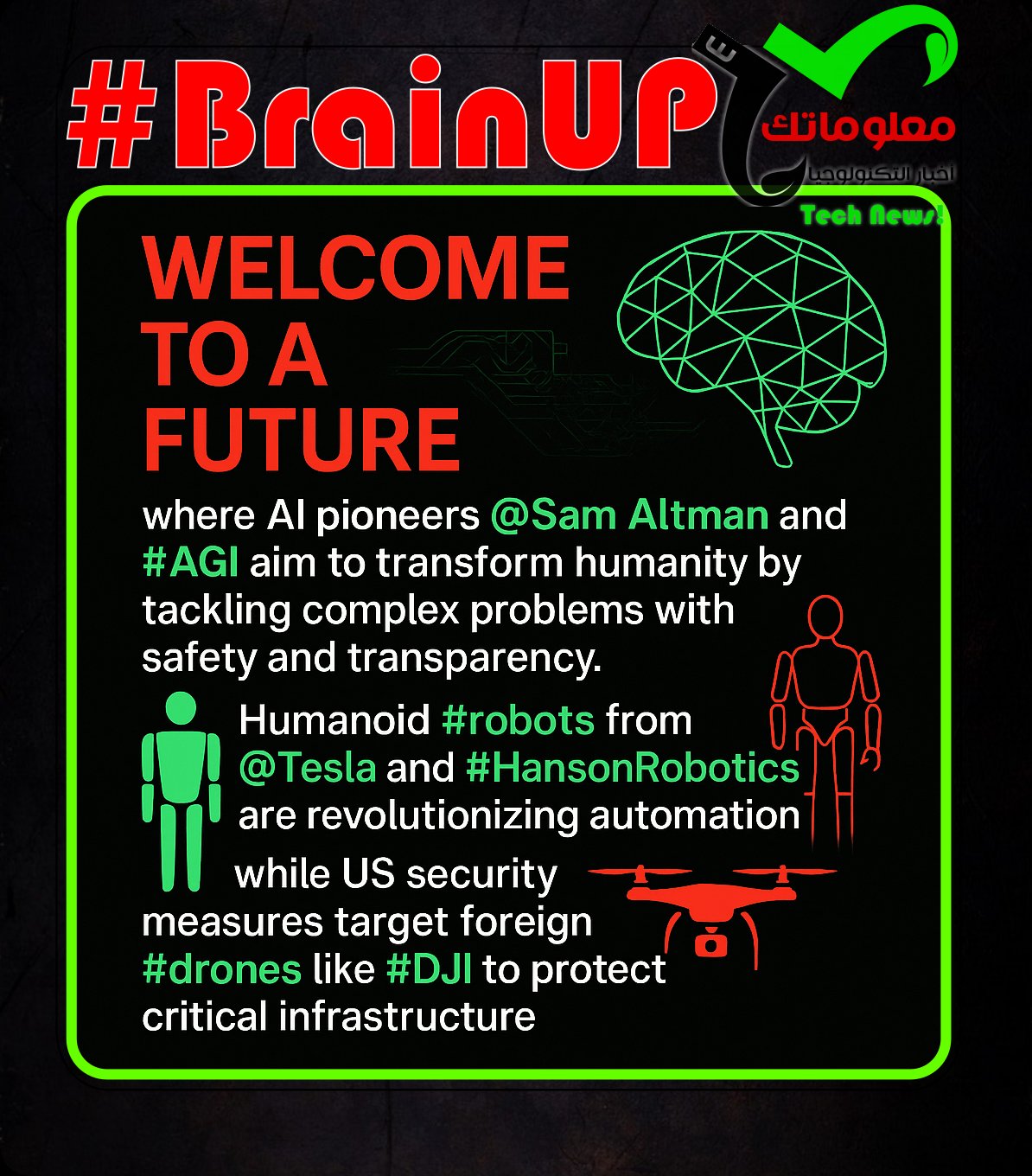
1. OpenAI CEO Sam Altman says company aims to build artificial general intelligence that can help humanity
OpenAI CEO @Sam Altman emphasized the company’s mission to develop #ArtificialGeneralIntelligence (AGI) that benefits all of humanity by enhancing productivity and solving complex problems. Altman highlighted the importance of safety protocols, responsible deployment, and collaboration with global regulators to ensure AGI technology is used ethically and equitably. The CEO underlined that OpenAI’s goal is not merely to create powerful AI but to address existential risks and maximize positive social outcomes. He also mentioned ongoing efforts to improve the transparency of AI systems and to make their capabilities accessible to as many people as possible. Altman called for a balanced approach balancing innovation with caution, reflecting broader concerns in the tech community about AI’s rapid advancement.
Source: https://www.yahoo.com/news/articles/openai-ceo-sam-altman-says-142824605.html
2. Humanoid robots investment surge, driven by major tech firms and breakthroughs
An escalating wave of investment in humanoid #robotics is transforming the landscape of automation and artificial intelligence. This surge gained momentum around late 2025, spearheaded by tech giants like @Tesla and @Hanson Robotics, whose recent innovations have dramatically improved robot mobility, sensory perception, and human-like interaction. Market analysts attribute this uptick to breakthroughs in machine learning algorithms and advanced materials, enabling robots to perform complex tasks in environments previously thought too dynamic or delicate for automation. The integration of #AI with sophisticated hardware opens new possibilities from manufacturing to healthcare, fostering broad enthusiasm and substantial funding inflows. Moreover, this boom is expected to redefine workforce dynamics and prompt regulatory discussions about the ethical deployment of humanoid robots.
Source: https://www.theregister.com/2025/12/25/humanoid_robots_investment_surge/
3. US adds DJI, other foreign drones to national security list
The US government has officially placed the Chinese drone manufacturer #DJI and other foreign drone companies on a national security list, emphasizing growing concerns over data privacy and potential espionage risks. As national security issues increasingly influence technology regulations, @Reuters reports that this move is part of broader efforts to monitor and restrict foreign technologies deemed a threat to the country’s critical infrastructure. This action restricts the sale and distribution of DJI products within the US market, reflecting heightened tensions between the United States and China in the #aerospace and defense sectors. The designation of drones under the new list aims to curb the use of potentially compromised technology, reinforcing national safety protocols. Such governmental policies showcase the intersection of technology, geopolitics, and security in an era where digital intelligence plays a crucial role.
Source: https://www.reuters.com/business/aerospace-defense/us-adds-dji-other-foreign-drones-national-security-list-2025-12-22/
4. What the Linux desktop really needs
The conversation around the Linux desktop centers on the diverse and fragmented ecosystem that challenges mainstream adoption. Many users and developers acknowledge that the Linux desktop requires improved usability and coherence to compete with giants like @Microsoft and @Apple. Key technologies such as #Wayland and #Flatpak symbolize efforts toward modernizing Linux desktop environments, offering better graphics handling and software distribution respectively. However, the lack of a unified approach among different distributions weakens Linux’s ability to present a consistent experience. Addressing these issues involves not only technical advancements but also fostering collaboration and shared vision within the community to accelerate progress and enhance Linux desktop’s appeal to broader audiences.
Source: https://www.theregister.com/2025/12/22/what_linux_desktop_really_needs/
5. Google is allowing users to change their Gmail address as per official Google support doc, experimental Gmail feature rolling out in India first, no official announcement yet
Google has begun testing a groundbreaking feature that allows users to change their Gmail address, marking a significant shift in the platform’s user flexibility. According to an official Google support document, accessible recently, users in India are the first wave to receive this experimental capability, without a formal public announcement from Google. This advancement addresses long-standing user frustrations regarding the permanence of Gmail usernames, providing a new level of customization and control. The feature integrates seamlessly with Google’s broader #Workspace ecosystem, enhancing productivity and offering users a refreshed approach to email management. Industry experts suggest that if successful, this feature could redefine email usage standards globally, reflecting Google’s commitment to evolving user needs under the leadership of @SundarPichai.
Source: https://www.tomshardware.com/software/google-workspace/google-is-allowing-users-to-change-their-gmail-address-as-per-official-google-support-doc-experimental-gmail-feature-rolling-out-in-india-first-no-official-announcement-yet
6. Unix V4 Recovered From Randomly Found Tape at University of Utah: Only Known Copy of First OS Version With Kernel and Core Utilities Written in C
A rare discovery was made when a copy of Unix Version 4 (V4), known for being the first operating system version with its kernel and core utilities written in #CProgrammingLanguage, was unearthed from an old tape found at the University of Utah. The significance of this find is immense as Unix V4 represents a pivotal milestone in the development of modern operating systems, with its architecture influencing countless successors. @DennisRitchie, the co-creator of Unix and the C language, revolutionized OS design by transitioning away from assembly language, making Unix V4 an iconic piece of computing history. This version’s recovery offers researchers and tech enthusiasts the opportunity to analyze early OS design in more detail and understand foundational software engineering principles that shaped contemporary systems. Furthermore, this rediscovery underscores the importance of digital preservation efforts for early software artifacts that might otherwise be lost to time.
Source: https://www.tomshardware.com/software/linux/unix-v4-recovered-from-randomly-found-tape-at-university-of-utah-only-known-copy-of-first-os-version-with-kernel-and-core-utilities-written-in-c
7. Tubi Is Fox’s Big Bet on Free Streaming
Tubi represents @Fox’s strategic move into the rapidly expanding #ad-supported streaming market, aiming to capture audiences who prefer free content over subscription models. The platform offers a wide range of movies and TV shows without charging users, instead generating revenue through targeted advertising. This approach allows Fox to tap into broader demographics, especially cost-conscious viewers who are increasing in number amid economic uncertainties. Tubi leverages its extensive content library and the technical infrastructure inherited from Fox to compete with both subscription giants and other free streaming services. This move highlights a growing trend in the #streaming industry where free, ad-supported models are gaining prominence alongside traditional subscription services.
Source: https://www.cnbc.com/2025/12/24/tubi-fox-streaming-free.html
8. Robotaxi bottleneck is EV charging infrastructure, not automation
The expansion of the #robotaxi industry faces a critical challenge not from the complexity of #automation technology but from insufficient electric vehicle (#EV) charging infrastructure. @BusinessInsider highlights that while advancements in self-driving systems have reached significant milestones, the practical deployment of robotaxis is constrained by the availability and speed of EV chargers. Without a robust network of fast chargers, robotaxi fleets will face downtime, limiting operational efficiency and profitability. This bottleneck underscores the need for greater investment in #charging stations, especially ultra-fast chargers compatible with autonomous vehicles. Industry leaders emphasize that resolving this infrastructure limitation is essential to unlocking the potential of robotaxis and realizing their promise in urban mobility.
Source: https://www.businessinsider.com/robotaxi-bottleneck-ev-charging-infrastructure-automation-2025-12
9. New documents reveal details of Jeffrey Epstein’s network and crimes
Newly unredacted court documents have shed light on the extent of #JeffreyEpstein’s criminal activities and the network surrounding him. These files reveal the names of individuals previously kept confidential, providing a clearer picture of those allegedly involved or connected to Epstein’s operations. The unredacted details highlight patterns of abuse and the mechanisms Epstein used to recruit and exploit victims, emphasizing the systematic nature of his criminal enterprise. Legal experts and victim advocates, such as @GloriaAllred, assert that these revelations could lead to renewed investigations and bring fresh scrutiny to suspects long shielded by secrecy. The extensive release of information underscores the #justice system’s ongoing efforts to ensure accountability in complex cases involving powerful figures.
Source: https://www.cbc.ca/news/world/epstein-files-unredacting-9.7027723
10. Japan trials 100-kilowatt laser weapon it can cut through metal and drones mid-flight
Japan is testing a 100-kilowatt #laser weapon capable of cutting through metal and destroying drones mid-flight, marking a significant advancement in defense technology. The high-energy laser system is designed for deployment on vehicles, enhancing mobile defense capabilities against aerial threats like drones. This technology exemplifies the shift towards directed energy weapons, which provide precise, rapid-response options without the logistical burdens of traditional munitions. Experts like @DefenseAnalyst emphasize that such lasers could transform battlefield dynamics by offering continuous firepower at lower costs and reduced collateral damage. Furthermore, Japan’s investment signals a strategic move to protect its airspace amid rising regional tensions, leveraging state-of-the-art #laser technology to bolster national security.
Source: https://www.livescience.com/technology/engineering/japan-trials-100-kilowatt-laser-weapon-it-can-cut-through-metal-and-drones-mid-flight
That’s all for today’s digest from 2025/12/26! We found and processed 10 URLs. Stay tuned for tomorrow’s collection of insights and discoveries.
Thanks Patricia Zougheib and Dr Badawi for curating the links
See you in the next one! 🚀