
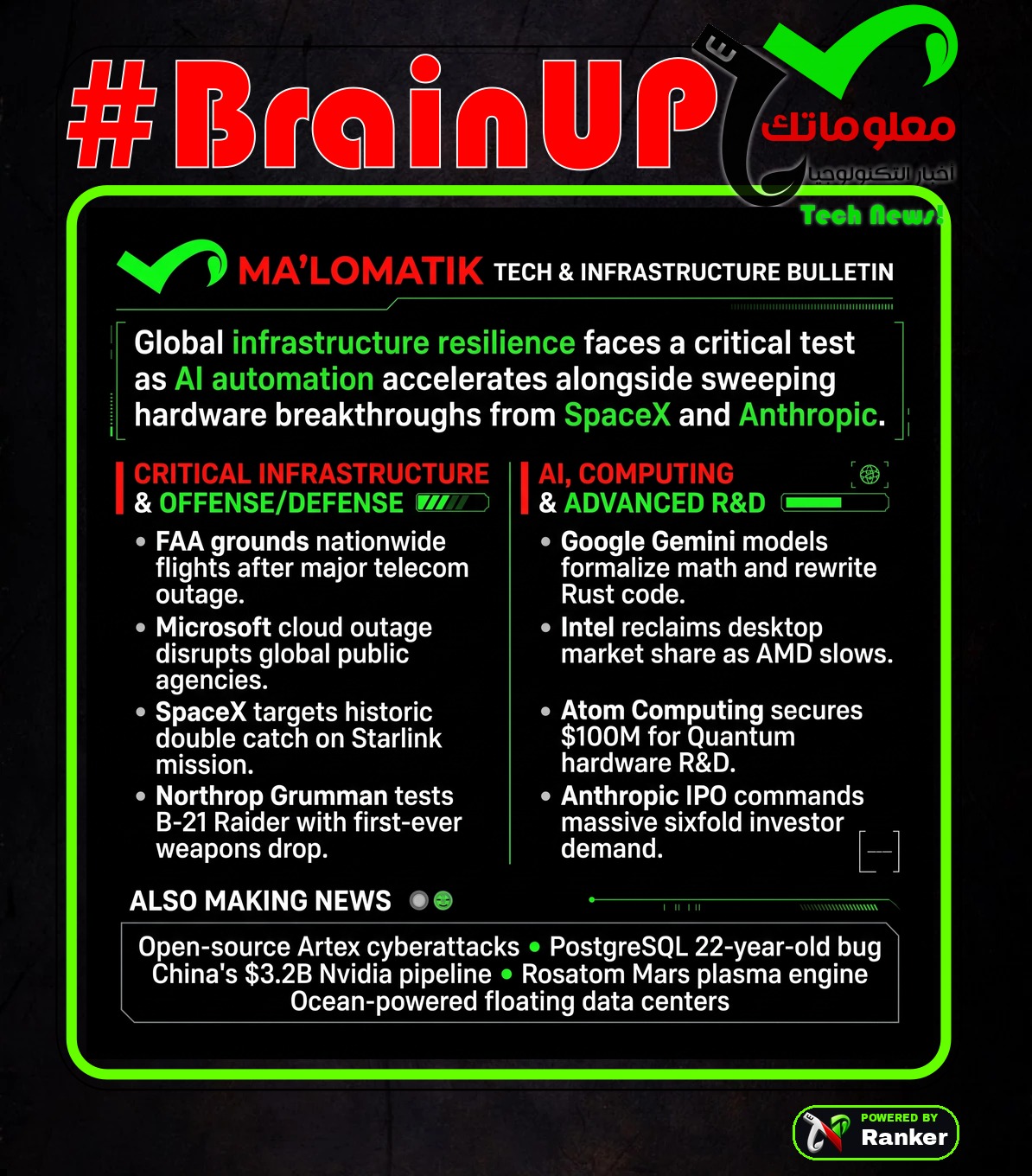
Ranker’s #BrainUp Daily Tech News – (Saturday, November 14ᵗʰ)
Welcome to today’s curated collection of interesting links and insights for 2026/11/14. Our automated ranking and AI-summarization system has processed 25 articles from all over the internet to bring you the latest technology news.
TOP IN EACH SECTION
💾 Chips & Data Centers: FAA lifts nationwide flight halt after telecom outage disrupts thousands of US flights (story 1)
📱 Products, Cars & Robots: One Microsoft glitch stalled courts, government offices and police—exposing how fragile America’s systems really are (story 2)
🔭 Science & Space: SpaceX Attempts History Friday With the First-Ever Double Catch (story 3)
🛡️ Security & Privacy: FBI flash alert says Artex tool automating cyberattacks at ‘machine speed’ (story 4)
🎖️ Defense & Geopolitics: 600+ mph B-21 Raider puts its strike capabilities to test with first-ever weapons drop (story 5)
⚖️ Policy & Law: China’s $3.2 Billion AI Pipeline Still Calls for Nvidia Chips Washington Restricts (story 7)
🤖 AI: Google Antigravity agents tackle 90-year-old math problem and rewrite software (story 8)
💼 Business & Work: Is Nvidia interim CEO Colette Kress standing on the ‘glass cliff’ that sets women up to fail? (story 9)
TOP IN CHIPS1. FAA lifts nationwide flight halt after telecom outage disrupts thousands of US flights
The @FAA lifted a nationwide ground stop on Friday night after a temporary telecommunications failure disrupted air traffic control centers and terminal radar facilities across the United States. The agency took the precautionary measure of halting all departing flights to ensure safety while technicians restored full functionality to its air route traffic control networks. Transportation Secretary @SeanDuffy warned that ageing air traffic control infrastructure contributed to the disruption and stressed that returning to normal operations would take considerable time. Security officials confirmed there was no indication of a cyberattack or threat to the nation during the rare nationwide halt. This incident amplifies ongoing calls for Congress to approve substantial modernization funding to overhaul aging aviation systems and prevent future nationwide outages.
TOP IN PRODUCTS2. One Microsoft glitch stalled courts, government offices and police—exposing how fragile America’s systems really are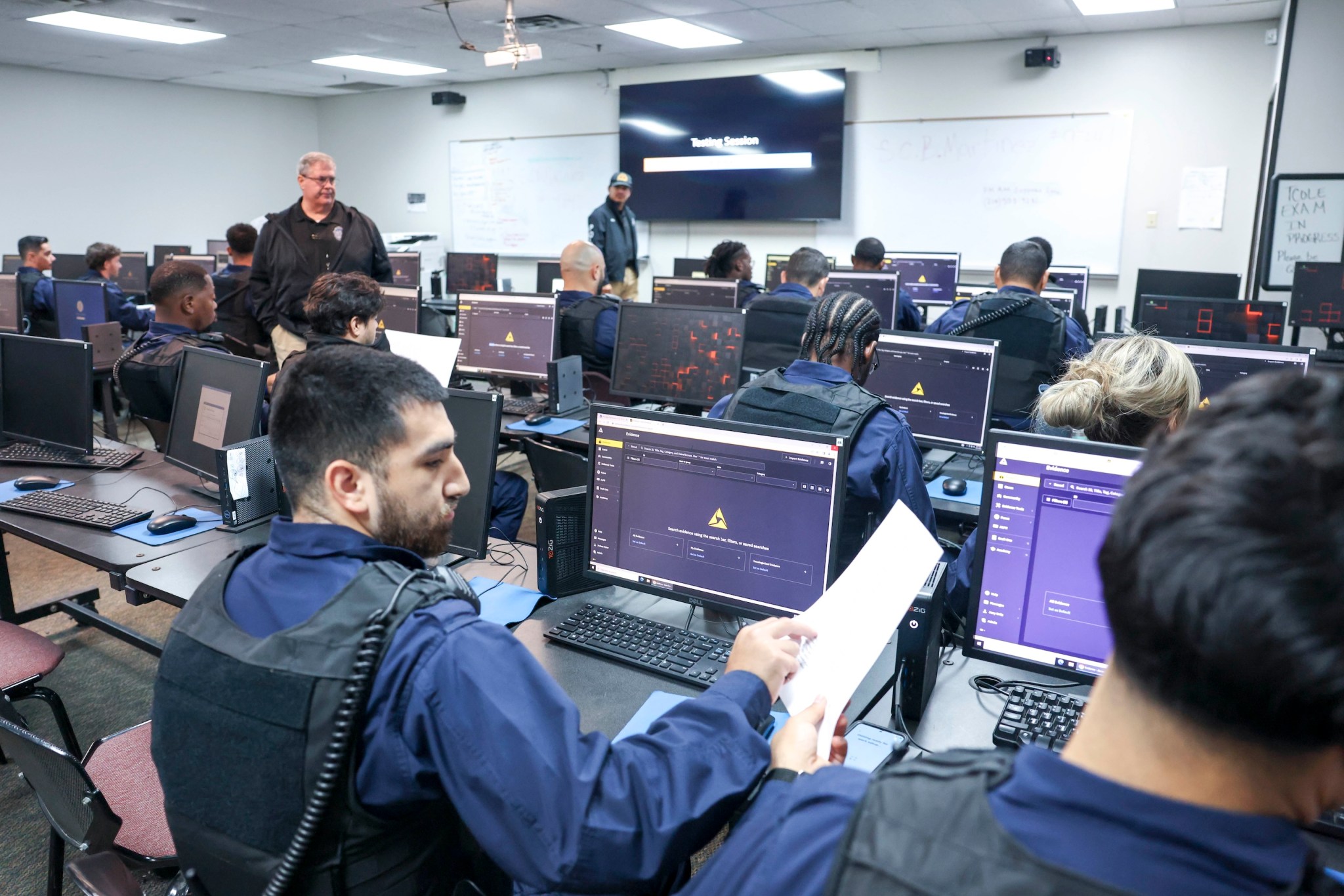
A widespread outage affecting @Microsoft services left millions of users worldwide unable to access workplace tools like Teams, Outlook, and email. While initially perceived as a corporate nuisance, the disruption severely impacted essential public services, including police departments, courts, and government offices across multiple countries. Law enforcement agencies in the United States and Britain struggled to receive online crime reports, while court systems had to postpone trials and suspend eviction proceedings. Hospitals and public transit networks also reported infrastructure communication difficulties, demonstrating a heavy reliance on a single private company for critical public safety operations. This incident highlights the profound vulnerability of modern civic infrastructure when centralized cloud and communication systems fail.
TOP IN SCIENCE3. SpaceX Attempts History Friday With the First-Ever Double Catch
@SpaceX is attempting a historic double catch of both stages of its Starship rocket during the Flight 15 orbital mission. The launch window opens on Friday evening, with the rocket deploying twenty-six #Starlink V3 satellites into orbit. The mission features a first-ever attempt by the Mechazilla launch-and-catch tower to snatch the Super Heavy V3 booster out of midair using its robotic arms. Furthermore, @SpaceX plans to recover the upper stage when it returns to Earth on Saturday following its fourteen-orbit journey. Achieving this milestone would mark a massive leap forward in full rocket reusability and operational efficiency for interplanetary travel.
TOP IN SECURITY4. FBI flash alert says Artex tool automating cyberattacks at ‘machine speed’
The @FBI has issued a flash alert warning that an open-source artificial intelligence platform named Artex is being widely exploited by cybercriminals and nation-states to automate cyberattacks at machine speed. The framework allows threat actors to chain multiple intrusion phases – from initial reconnaissance to data exfiltration – in under three hours with minimal human intervention. Artex integrates various frontier and open-source large language models, with Chinese-origin models like DeepSeek frequently utilized due to fewer observable safety guardrails. Despite the original developer removing the GitHub repository after abuse was reported, the tool continues to proliferate through community forks and commercial variations. This automated capability has been implicated in attacks against critical sectors worldwide, prompting urgent warnings from cybersecurity authorities.
DEFENSE5. 600+ mph B-21 Raider puts its strike capabilities to test with first-ever weapons drop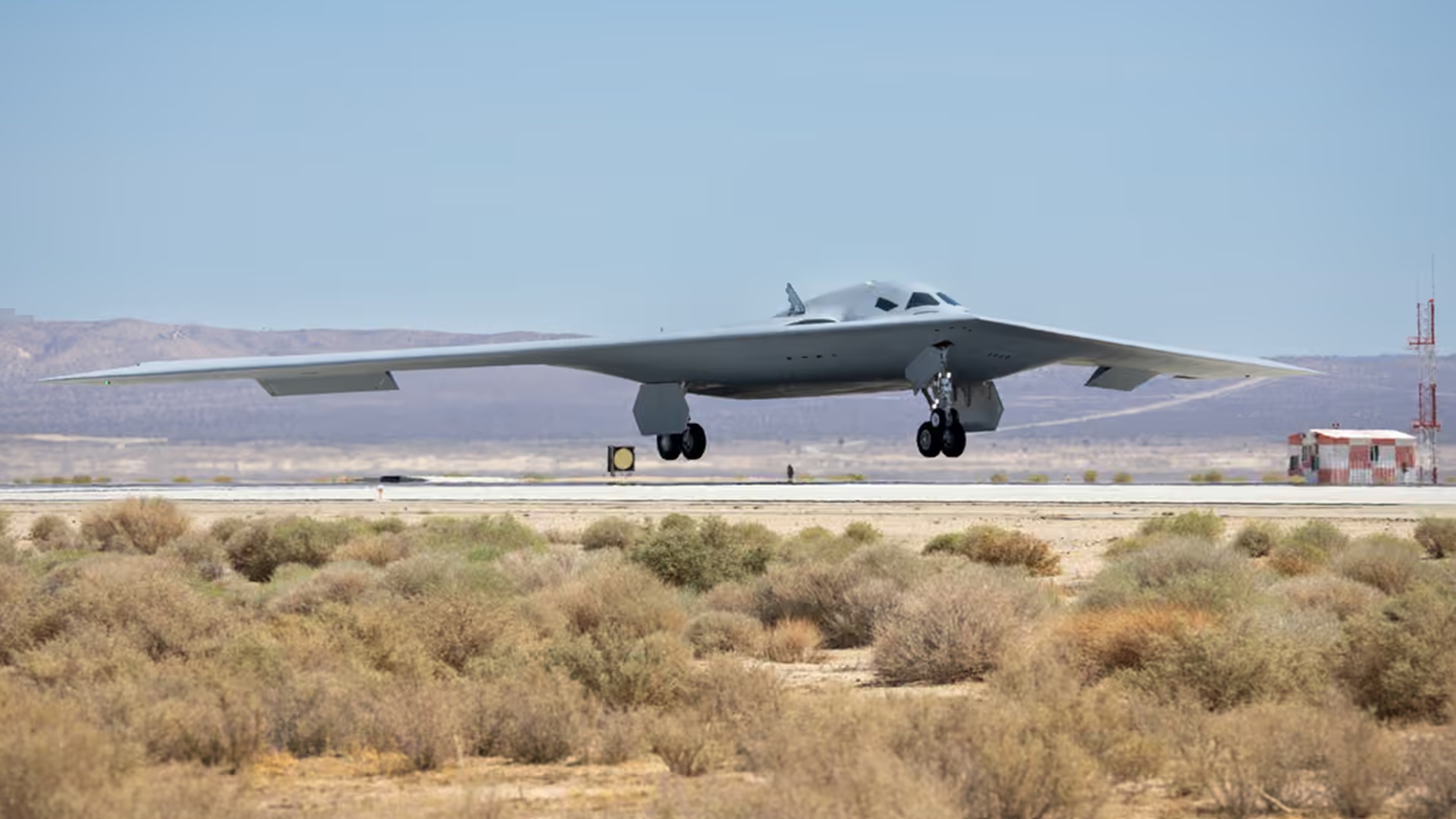
The U.S. Department of the Air Force successfully tested the B-21 Raider’s ability to release conventional weapons for the first time, marking a major milestone for the stealth bomber program. Conducted at Edwards Air Force Base, the demonstration validated the aircraft’s digital twin models and open systems architecture by comparing physical drops against extensive virtual trajectory simulations. Manufacturer @NorthropGrumman emphasized that payload flexibility and digital modeling are central to accelerating weapon integration and tailoring configurations for diverse mission requirements. As flight testing and aerial refueling evaluations continue to progress, the company is simultaneously expanding its manufacturing infrastructure in Utah and California. The B-21 Raider remains on schedule to become the backbone of the future long-range strike fleet.
SECURITY6. PostgreSQL Patches 52 Flaws, Including 22-Year-Old Bug Enabling Authenticated RCE
The PostgreSQL Global Development Group has released security updates addressing fifty-two flaws, including a critical type confusion vulnerability that allows authenticated users to execute arbitrary code on database servers. Tracked as CVE-2026-6460 with a high CVSS score, the 22-year-old flaw involves composite types and can be triggered by users with object-creation privileges. While no active exploits have been reported in the wild, researchers have demonstrated working proof-of-concept exploits capable of crashing servers and leaking memory addresses. Database administrators are urged to update to the latest minor versions across major releases and rebuild all C-language extensions to ensure complete protection. Major managed cloud database providers have also been notified to secure their respective platforms.
POLICY7. China’s $3.2 Billion AI Pipeline Still Calls for Nvidia Chips Washington Restricts
An investigative report reveals that Chinese developers are planning billions of dollars in artificial intelligence data center projects specifying restricted processors from @Nvidia. After examining numerous procurement notices and investment plans, researchers identified projects valuing over $3.2 billion that list banned chips like the H100, H200, or H800. However, these figures represent total infrastructure investment rather than confirmed hardware purchases or direct violations of U.S. export controls. Despite U.S. restrictions and the expansion of domestic alternatives like Huawei, @Nvidia hardware remains deeply embedded in China’s long-term infrastructure planning due to its dominant software ecosystem. This dynamic places ongoing pressure on regulators to scrutinize how advanced chip export restrictions are enforced globally.
TOP IN AI8. Google Antigravity agents tackle 90-year-old math problem and rewrite software
@Google has expanded its Antigravity multi-agent system powered by its #Gemini models to tackle complex mathematical problems and optimize software systems. Using its Teamwork framework, the system successfully formalized the Weil conjectures by producing approximately 1.8 million lines of #Lean code across thousands of subagent invocations. Furthermore, the framework helped researchers develop a complete proof for the Courtade-Kumar conjecture and achieved significant performance gains in systems engineering by rewriting video decoders into memory-safe #Rust code. These parallel agent architectures operate with independent critics to verify results and minimize reasoning errors across complex multi-step tasks. Making these frameworks available to academic researchers underscores the growing utility of multi-agent workflows in accelerating both theoretical mathematics and infrastructure engineering.
TOP IN BUSINESS9. Is Nvidia interim CEO Colette Kress standing on the ‘glass cliff’ that sets women up to fail?
Following the resignation of scandal-ridden CEO Jensen Huang, @Nvidia has appointed longtime Chief Financial Officer Colette Kress as interim CEO during a turbulent period for the semiconductor giant. The transition places Kress in a high-pressure leadership role amid heightened market scrutiny and corporate restructuring. Industry observers are questioning whether this appointment reflects systemic pressures where women are disproportionately elevated to leadership during moments of crisis. This leadership shakeup coincides with broader industry ripples affecting artificial intelligence supply chains and strategic partnerships. Kress will be tasked with guiding the company through ongoing regulatory challenges and market adjustments.
PRODUCTS10. Tesla: Sales Of Self-Driving Cybercab Coming Soon To Invitees: $20/hr?
@Tesla plans to begin selling its two-seat, self-driving #Cybercab to a select group of invitees possibly as soon as the following month for a price of $30,000, accompanied by a mandatory $300 monthly #FullSelfDriving subscription. The vehicles will be restricted to operating only within defined urban service areas in selected cities, primarily in Texas, and owners will be barred from using them for commercial purposes or hiring them out. Buyers must secure their own insurance and bear most ongoing costs, while @Tesla will include basic maintenance and arrange for the vehicle to drive itself to service centers when necessary. The contract imposes strict rules and gives the manufacturer significant control through potential remote disabling and safety strikes, creating a purchase model unlike any traditional car ownership. Industry observers remain skeptical of these timelines, especially as pilot operations have already seen minor crashes where the automated driving system appeared at fault, leaving questions about how standard insurers will underwrite the vehicles.

Major technology companies are pushing heavily into #AiShopping tools, but a recent Bank of America survey reveals that seventy-two percent of Americans do not plan to use artificial intelligence for holiday gifts. Among those hesitant consumers, forty-two percent cite personal or ethical reasons, while thirty-seven percent feel the technology strips away the personal warmth of gift-giving. Experts note that gift-giving generates psychological ownership through the thoughtful process of selection, a sense of personal stake that automated tools tend to erode. Despite consumer hesitation toward using #GenerativeAi for gifts, shoppers remain open to utilizing it for unglamorous administrative tasks like comparing prices or finding deals. This widening gap between industry ambitions and consumer sentiment highlights the challenges tech firms face in convincing buyers to trust automation for personal purchases.
CHIPS12. Intel stages surprise desktop CPU comeback as AMD’s market share falls below 30%
@Intel reclaimed a significant portion of desktop processor market share from its rival @AMD during the third quarter of 2026, pushing its total share above 70% according to Mercury Research data. The unexpected turnaround was primarily driven by Intel reallocating manufacturing capacity toward desktop processors to capitalize on a surge in demand and maintain strong supply through OEM channels. Meanwhile, #Amd experienced a marked slowdown in consumer desktop sales as it increasingly prioritized manufacturing capacity for high-margin data center and artificial intelligence chips. Despite Intel dominating the desktop segment, the company continued to lose ground to @Amd in the lucrative server CPU market. This shifting market dynamic illustrates how competing hardware priorities and supply adjustments can rapidly alter competitive standing across computing sectors.
SECURITY13. The weaknesses that cost Binance $6.3 billion are already hitting Europe’s banks
A massive cyber heist draining $6.3 billion from the cryptocurrency exchange @Binance has highlighted severe cybersecurity vulnerabilities that are now threatening traditional European financial institutions. Shortly after the Binance incident, French lender Crédit Mutuel Arkéa disclosed a cyber attack resulting in the loss of roughly one hundred million euros. Cybersecurity experts warn that banks share similar weaknesses with crypto platforms, including aging information technology infrastructure and long supply chains of third-party vendors. Attackers successfully utilized social engineering tactics, such as fake job interviews and malware deployment, to compromise privileged internal access points. Regulatory bodies on both sides of the Atlantic are pressing financial institutions to rigorously test their defenses and enhance threat intelligence sharing to combat escalating cyber threats.
BUSINESS14. Nvidia allegedly engineered scarcity by funding AI startups to buy its GPUs
A report from @TheWallStreetJournal alleges that @Nvidia engineered artificial scarcity for its processors by funding AI startups to purchase its #Gpu hardware and build data centers. The strategy was reportedly driven by the need to maintain an image of continuous high demand and move an oversupply of semiconductors from @Tsmc. Internal disagreements arose among executives regarding circular financing agreements and massive financial commitments to small-scale cloud providers unable to organically afford the hardware. This dynamic reflects changing market conditions as hyperscalers increasingly move away from off-the-shelf components in favor of custom computing solutions. The allegations raise serious questions about market manipulation and the sustainability of massive infrastructure investments across the artificial intelligence sector.
John Langford, a veteran researcher and co-founder of @Microsoft’s AI Frontiers lab, has departed the company due to strategic disagreements with the newly integrated leadership under @MicrosoftAI. Langford stated that the division’s core philosophy prioritizes aggressive scaling of models over fundamental research, dismissing innovations that could significantly reduce training and inference costs. A notable example of this discarded research is the Full Bandwidth Transformer, which reuses hidden states to improve reasoning capabilities similarly to methods later explored by rivals like ByteDance. This high-profile departure underscores growing cultural friction within major technology firms regarding the balance between commercial scale and pioneering artificial intelligence research.
BUSINESS16. Atom Computing Finalizes $100 Million U.S. Department of Commerce R&D Award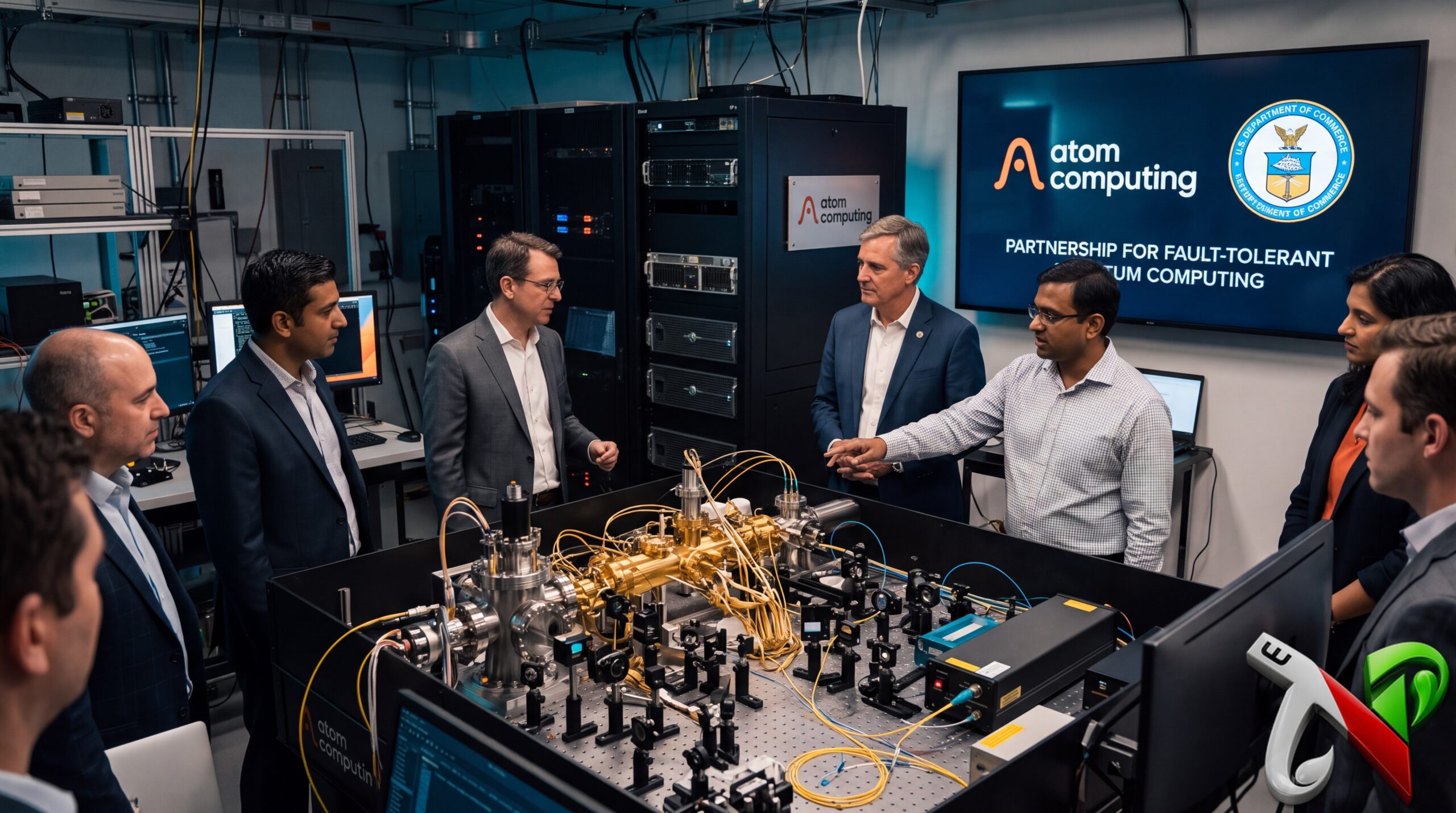
@AtomComputing has finalized an agreement for up to one hundred million dollars with the @USDepartmentOfCommerce to accelerate the development of fault-tolerant, utility-scale quantum computers. The funding will support in-house technology development, expand engineering and testing infrastructure, and foster collaboration with supply chain partners. This investment follows the company advancing to Stage C of the @Darpa Quantum Benchmarking Initiative, which carries potential additional funding of up to three hundred million dollars. Industry leaders emphasize that this capital injection will help translate scientific breakthroughs into commercial reality by scaling essential engineering processes. Securing this agreement underscores the growing national priority placed on advancing next-generation computing technologies to maintain economic competitiveness and scientific leadership.
SCIENCE17. Rosatom Unveils Plasma Engine Prototype Targeting 30–60-Day Mars Missions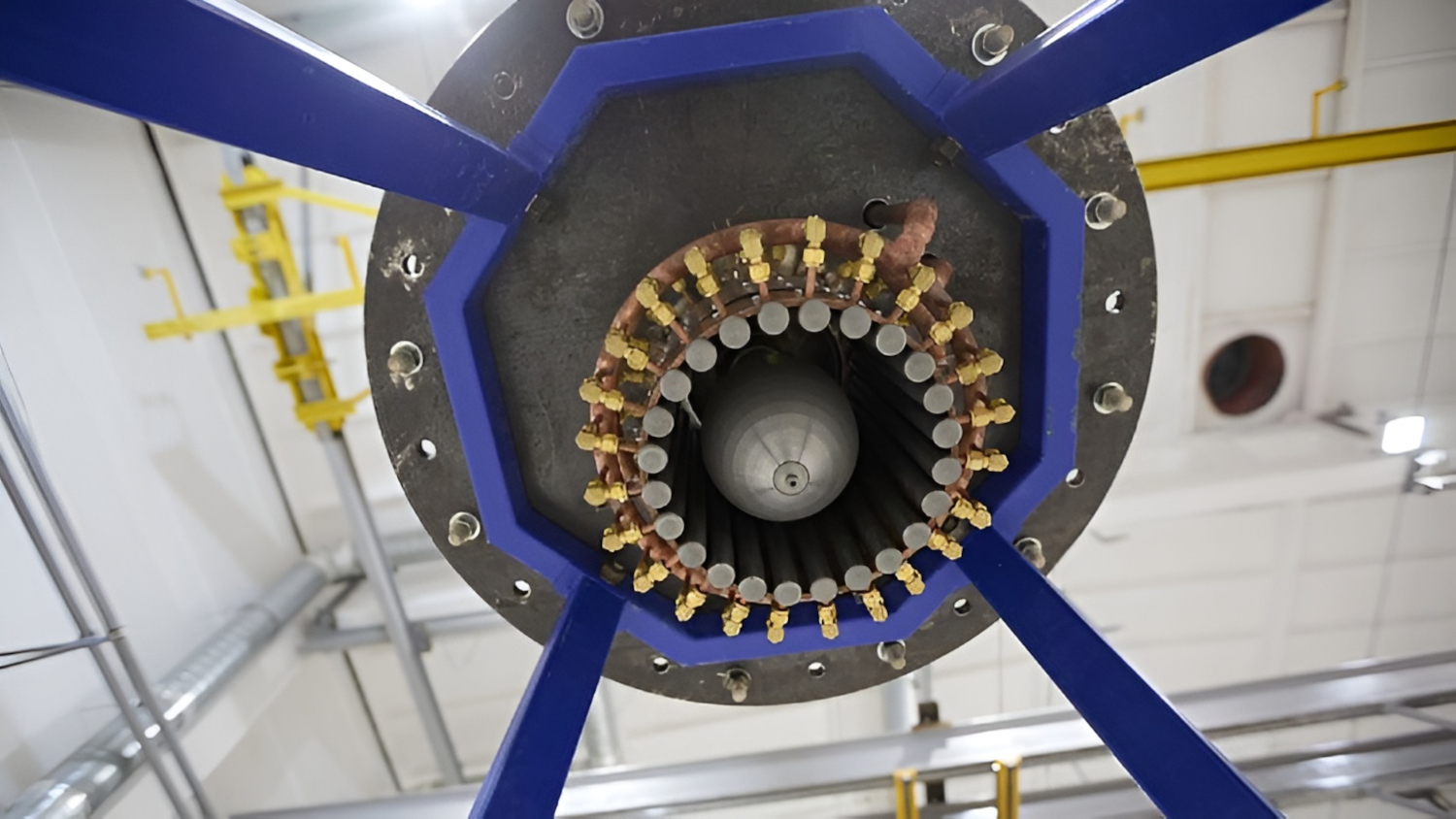
@Rosatom has built a laboratory prototype of a plasma-electric rocket engine aimed at reducing crewed Mars mission travel times to thirty to sixty days. The system uses a magnetic plasma accelerator that generates thrust through electromagnetic fields rather than traditional chemical combustion. While the laboratory model demonstrates notable exhaust velocity and sustained operating power, experts emphasize that the 30-day mission timeline is merely a projection and requires a space-based nuclear power source to function. The prototype’s development represents a milestone toward future space tugs, though extensive vacuum chamber testing and further engineering remain necessary before any flight model is realized around 2030. This initiative parallels international efforts by agencies like #Nasa to explore advanced nuclear propulsion options for deep space exploration.
PRODUCTS18. Microsoft’s latest email outage turned into a full-blown global cloud crisis
@Microsoft is steadily recovering from a global cloud outage that knocked out numerous services, including Outlook, Teams, Copilot, and security screening tools. The cascading software issue began with unexpected server unavailability in data centers and quickly spread worldwide, locking millions of business and consumer users out of their inboxes and cloud documents for nearly a day. Although engineers gradually restored traffic and email delivery performance, the prolonged downtime heavily impacted enterprises and essential communications across multiple industries. @Microsoft stated that preliminary investigations found no evidence of malicious activity or cyberattacks associated with the incident. Nevertheless, the scale of the disruption has raised fresh questions about the resilience and recovery mechanisms of centralized cloud infrastructure.
SCIENCE19. AI supercharges laser physics with a stunning 250x speed boost
Researchers at @Stanford, @UCLA, and @Slac National Accelerator Laboratory have developed an artificial intelligence model that accelerates laser physics simulations by a factor of 250. The breakthrough utilizes deep learning and recurrent neural networks to predict complex second-order nonlinear optics interactions within special crystals in mere milliseconds without sacrificing accuracy. This capability optimizes the frequency conversion processes used by large scientific facilities like the upgraded #LinacCoherentLightSource to generate intense X-ray pulses. Conventionally, simulating these light wave exchanges requires solving the complex nonlinear Schrödinger equation using resource-intensive split-step Fourier methods. By replacing these heavy computational bottlenecks with AI models, scientists can dramatically improve the precision and efficiency of powerful laser systems for cutting-edge research.
AI20. Anthropic Upgrades Claude Code Projects to Run Parallel AI Workers Hands-Free
@Anthropic has updated Claude Code Projects to include a proactive coordinator, read-only thread sharing, scheduled reminders, and branching slash commands for parallel #Ai tasks. Each project operates as a long-running conversation where an automated coordinator assigns independent cloud sessions to handle distinct repository copies and Git branches. The updated coordinator automatically posts status updates and answers questions, reducing the need for developers to manually monitor pending tasks. Individual threads can be shared via read-only links, though sessions with local computer access remain restricted to prevent exposing machine data. These enhancements streamline multi-thread engineering workflows for subscribers, though intensive usage can rapidly consume existing account allowances.
SECURITY21. ‘We need more reviewers’: Finding Linux bugs is easy now – fixing them is another story
@Microsoft FORGE Lab’s AI scanning system recently flagged numerous upstream Linux kernel bugs, contributing to a massive surge in automated vulnerability reports. While artificial intelligence tools have made finding software flaws effortless, human maintainers and developers are struggling under the immense strain of reviewing and fixing the incoming volume of code. Prominent maintainers have expressed exhaustion and cited burnout as half of the reviewed code increasingly consists of low-quality automated submissions. Conversely, creators like Linus Torvalds note that #Ai tools are also beginning to assist in generating fixes faster in specific subsystems. This tension highlights a critical bottleneck in open-source software maintenance where automated bug discovery far outpaces human review capacity.

The United States experienced two unprecedented infrastructure blackouts within forty-eight hours, halting nationwide commercial air travel and disrupting global cloud services across critical sectors. The #FAA ordered a rare nationwide ground stop after a telecommunications failure paralyzed air traffic control centers, grounding thousands of flights and stranding travelers. This incident directly followed a massive multi-day outage of @Microsoft 365 services that incapacitated government offices, courts, and health systems across dozens of countries. Coming on the heels of major geopolitical tensions and high-profile espionage scandals involving semiconductor exports, these simultaneous system failures have sparked intense public scrutiny. Officials face mounting pressure to provide transparent answers regarding the underlying causes and vulnerabilities of critical national infrastructure.
A newly emerged startup named Drogue has secured twenty million dollars in funding to develop floating data centers powered by the ocean’s thermal energy. Founded by a former U.S. Navy pilot, the company aims to deploy a multi-megawatt prototype on an oceangoing vessel by early 2028 to bypass the lengthy real estate and power grid constraints plaguing land-based facilities. The system utilizes ocean thermal energy conversion, a process that leverages temperature differences between warm surface water and cold deep water to run a thermodynamic cycle generating electricity. By evaporating ammonia through a turbine using surface heat and condensing it back with deep-sea cold water, the startup seeks to harness a continuous power source. This innovative approach offers a potential solution to the massive power demands driven by artificial intelligence growth.
BUSINESS24. Anthropic’s IPO Is About Six Times Oversubscribed
@Anthropic has experienced overwhelming demand for its initial public offering, with orders exceeding available shares by approximately six times. The artificial intelligence firm and its co-founders are seeking to raise up to $64.4 billion in the IPO alongside a private placement, positioning the event to potentially become the largest public listing in history. Strategic partner @Nvidia has agreed to purchase billions in shares as part of the concurrent private placement, reinforcing their close commercial ties despite recent executive leadership changes at the chipmaker. @Anthropic reported a surging revenue run rate driven by robust consumption-based fees and subscriptions. Management is actively engaging prospective investors through high-profile events to support a fully diluted valuation targeting around $1.4 trillion.

@Gigabyte has announced its AI TOP AERO workstation powered by @Nvidia hardware, combining an Arm-based Grace CPU, a Blackwell architecture #Rpu, and up to 128GB of unified memory in a compact Windows 11 desktop. Despite the launch announcement, the company has yet to provide pricing information, regional configurations, or immediate purchasing availability. Competitor systems based on similar architectures are commanding substantial prices upwards of several thousand dollars, highlighting the high cost of memory-heavy personal artificial intelligence hardware. The device is marketed as a Personal AI Studio supporting local development environments and open-source models like #Ollama and #LmStudio. This release underscores the industry-wide push to deliver localized processing power for developers while navigating high component costs.
That’s all for today’s digest for 2026/11/14! We picked and processed 25 articles. Stay tuned for tomorrow’s collection of insights and discoveries.
See you in the next one! 🚀
