
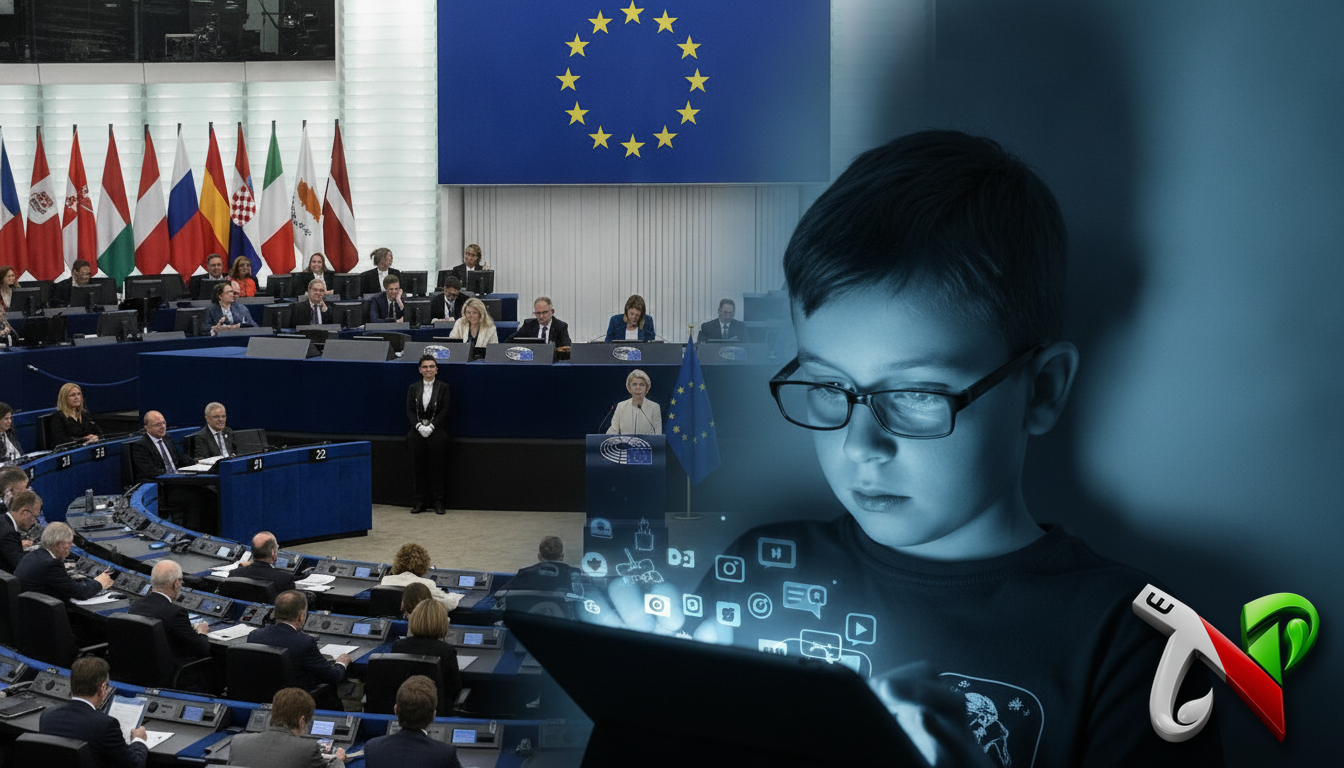
Europe Unveils Sweeping EU Kids Act to Restrict Minors Online
Key points
- European Commission President Ursula von der Leyen announced the EU Kids Act proposal, which places strict age limits and safety mandates across social media, video-sharing platforms, online games, and AI companions 1.
- Children under three would be barred entirely from covered digital services, while kids aged three to 13 would require supervised, child-friendly accounts 1.
- Users between 13 and 15 could access social media platforms only through restricted mini accounts set up and overseen by parents 1.
- Platforms would be forced to ban addictive features like infinite scrolling and artificial notifications while implementing robust, EU-wide age-verification tools 1.
The Proposed EU Kids Act
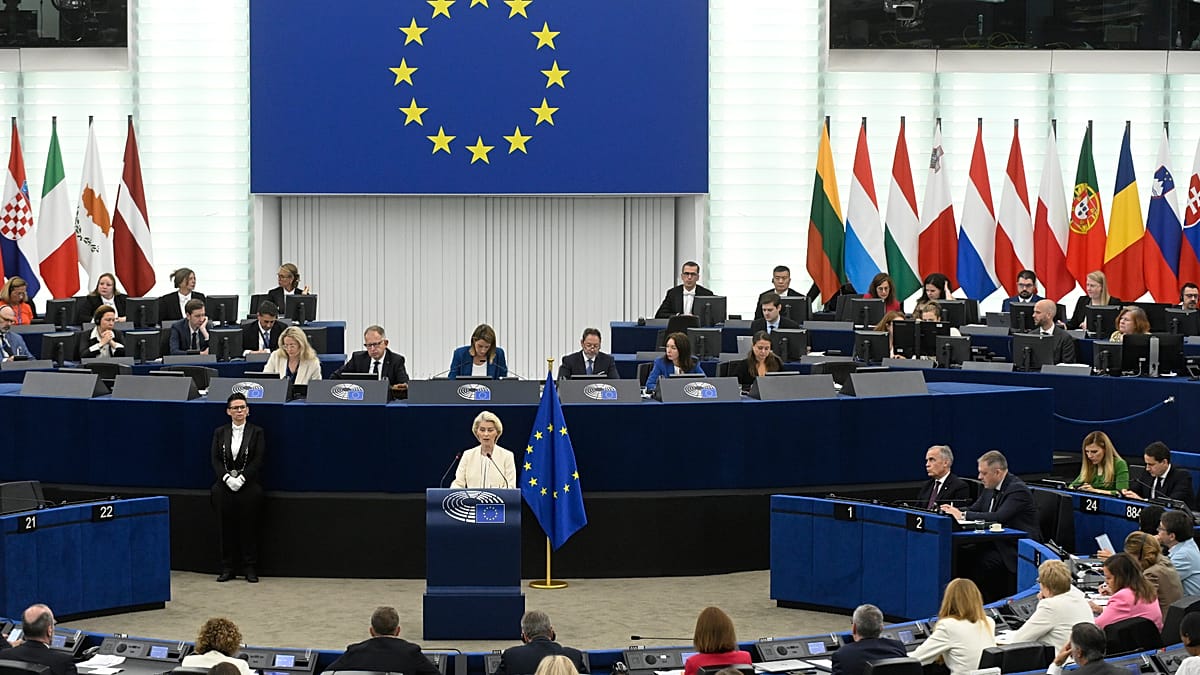
The European Commission has unveiled the details of its ambitious new legislative proposal, known as the EU Kids Act, designed to reshape how minors interact with digital platforms 1. European Commission President Ursula von der Leyen announced the sweeping regulatory push during her State of the Union address, arguing that societies do not need to accept addictive features, exploitative design choices, or the exposure of children to extreme online material 1. The framework targets not only traditional social media networks like Instagram, TikTok, and YouTube, but also extends its reach to video-sharing services, online video games, and AI-powered chatbots and companions 1.
This broad scope reflects growing concern among regulators that children are vulnerable to manipulation across a wide spectrum of digital environments 2. Officials noted that while international efforts to implement online age restrictions have produced mixed results, the European Union is determined to set clear boundaries and place the primary responsibility for child safety squarely on the shoulders of tech companies rather than individual families 2.
Graduated Age Restrictions
The core of the legislative proposal relies on a tiered, graduated age framework that adapts as children grow older 1. Children under the age of three are barred entirely from high-risk digital services and platforms 1. For children between three and 13 years old, access is restricted to specially designated, child-friendly services operated under strict adult supervision and parental controls 1.
As children reach their teen years, the rules shift into a transitional phase. Minors aged 13 to under 15 are permitted to use introductory or mini accounts on social media and video-sharing platforms, but these accounts must be set up, supervised, and managed by parents with active time restrictions and limited feature sets 1. Once individuals turn 15, they gain the ability to open accounts independently without direct parental consent, though safety-by-design protections and guardrails against adult content remain legally mandated until they reach adulthood at 18 1.
Safety By Design Mandates
Beyond simple age gating, the legislation introduces stringent safety-by-design requirements that force technology providers to alter how their services operate 1. Companies will be legally barred from utilizing manipulative design tactics such as infinite scrolling, artificial notification loops, and engagement-driven reward mechanisms that encourage compulsive usage 1. Furthermore, recommender systems and algorithms will be required to avoid driving users down extreme content rabbit holes 1.
Default settings for minors must prioritize privacy, automatically setting accounts to private modes and blocking contact from unknown users 1. To ensure these rules are effectively enforced, digital platforms will be required to integrate reliable, EU-wide age-verification solutions that check whether a user meets the required age threshold without compromising personal privacy 1. Systems deemed to pose systemic risks under existing digital regulations will even need explicit authorization from the Commission prior to launching new child-facing features 1.
Primary sources
 EU moves toward restricting social media access for under-15s (euronews.com) – A primary announcement and detailed leak breakdown of the European Commission's upcoming EU Kids Act, outlining proposed age restrictions, safety-by-design rules for tech platforms, and enforcement mechanisms presented by President Ursula von der Leyen. Published by Euronews.
 EU Plans to Ban AI Chatbots, Social Media for All Under-15s (pcmag.com) – A primary-leaning secondary news report detailing the European Union's plans to restrict children's access to AI chatbots, social media, and video games, providing expert commentary and broader context on the motivations behind the regulatory push. Written by tech journalist Jon Martindale and published on PCMag.
 Powered by News Ranker