
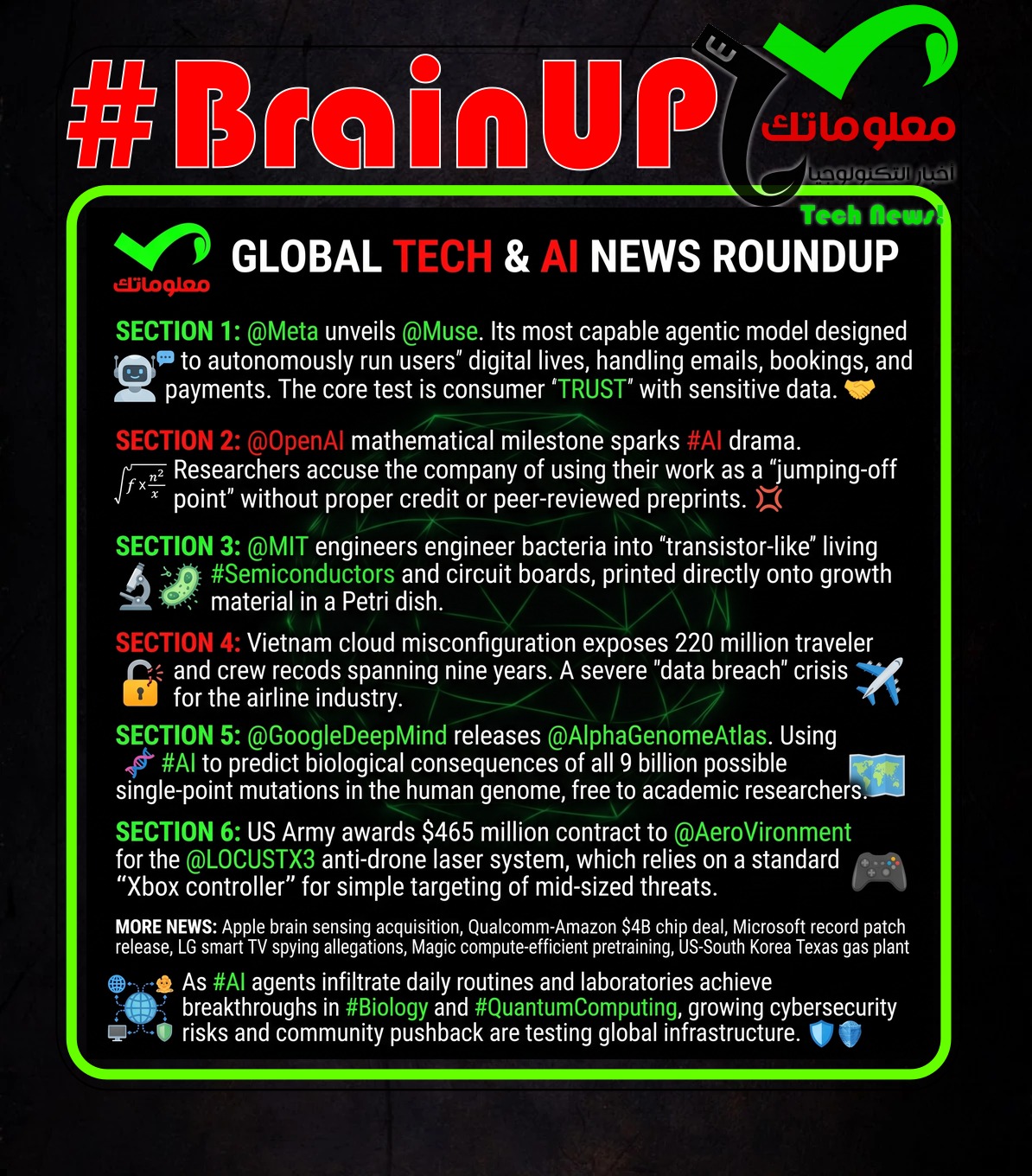
Ranker’s #BrainUp Daily Tech News – (Wednesday, September 9ᵗʰ)
Welcome to today’s curated collection of interesting links and insights for 2026/09/09. Our automated ranking and AI-summarization system has processed 40 articles from all over the internet to bring you the latest technology news.
1. Apple’s latest acquisition is about technology that sounds futuristic – 9to5Mac
Apple’s latest acquisition is about technology that sounds futuristic 9to5Mac Apple Acquires Startup Working on ‘Breakthrough Sensing Technology’ MacRumors Apple acquires brain imaging firm for health and accessibility features AppleInsider Apple buys company trying to turn your thoughts and emotions into data, read as easily as your heart rate stuff.tv Apple Acquires Brain-Sensing Chip Developer…
2. Meta wants its new AI agent to run your digital life
Muse can use your email, payment information, and online accounts to complete tasks autonomously. First, Meta has to convince users to trust it. Meta has unveiled its new personal AI agent, Muse, which it says can actively perform tasks on behalf of its users. Announced by CEO Mark Zuckerberg via Instagram on Tuesday, the agent can send emails, book travel, fill out web forms, and negotiate on a user’s behalf. It runs on Muse Spark, which Meta describes as its most capable model built for agentic work. View this post on Instagram
3. What OpenAI’s latest controversy tells us about the future of math
OpenAI’s latest mathematical milestone has quickly become mired in controversy. Today, the company announced that its agents have solved one of the Millennium Prize Problems, some of the most important open problems in mathematics. Under normal circumstances, that solution would be a huge feather in OpenAI’s cap. But the announcement has been overshadowed by accusations that OpenAI used NYU mathematician Tristan Buckmaster’s and Anthropic employee Levent Alpöge’s AI-assisted work on the problem as a jumping-off point and failed to credit them. OpenAI has denied the accusations.
4. MIT Engineers Create a Living Circuit Board From Bacteria
MIT researchers have engineered bacteria to behave like transistors, making it possible to build living “circuit boards” that can be printed onto growth material in a Petri dish. In conventional electronics, transistors act as switches that control whether electrical current flows. In the biological system developed at MIT, engineered bacteria perform a similar role by […]
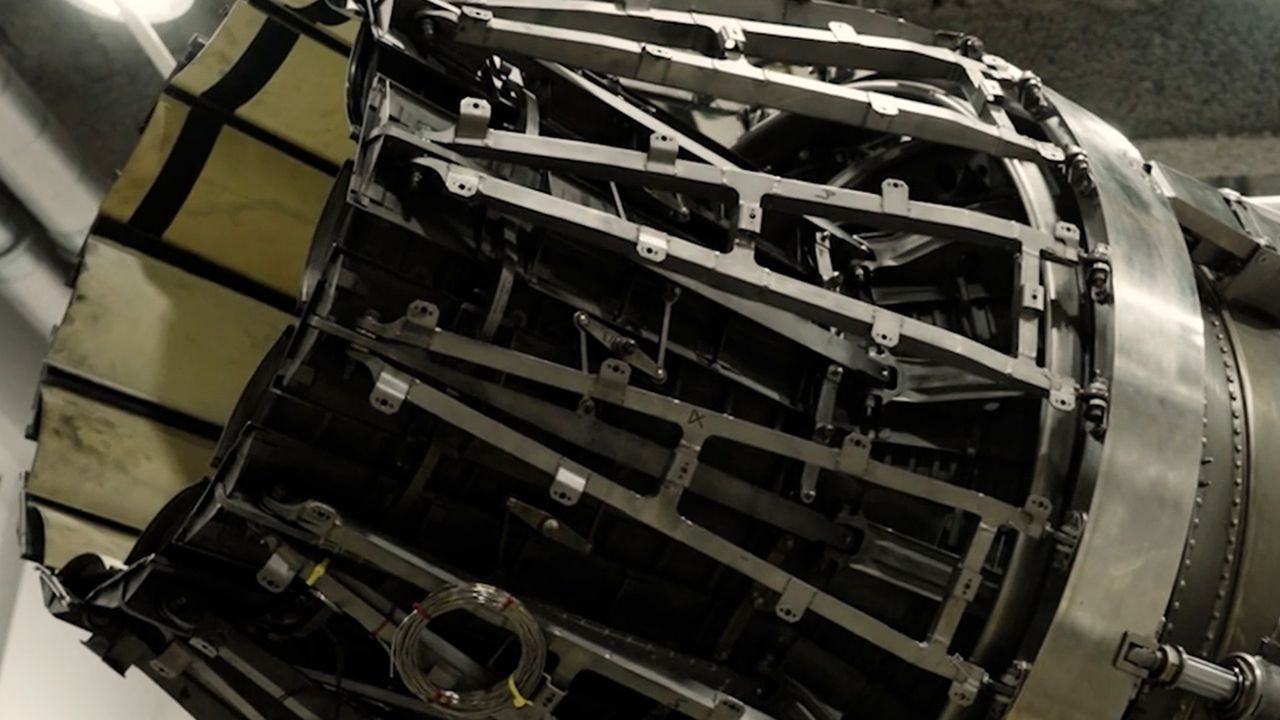
The AVEN thrust-vectoring nozzle has been added to the X-BAT AI-piloted fighter with vertical take-off capabilities Thrust-vectoring allows a plane’s exhaust to be redirected, instead of relying purely on manipulating airflow across the wings for movement The engine was first trialed on an F-16 fighter in the 1990s Shield AI has revealed the X-BAT AI-piloted fighter jet relies on a jet engine variation first developed over 35 years ago and tested on a General Dynamics F-16 in the 1990s. The AVEN – Axisymmetric Vectoring Exhaust Nozzle – essentially replicates the actions of a wing, but instead of manipulating airflow across the airfoil, it directs the exhaust, in a process labeled “thrust-vectoring.”

Researchers have developed a method for extrapolating sea surface temperatures from sparse data that is significantly more accurate than other commonly used computational methods and slightly more accurate than the best-performing AI model, while taking a fraction of the time to train. The work has implications for both short-term weather forecasting and longer-term climate predictions.

Kinryū Labs found misconfigured APIS database in Vietnam exposing 220M passenger and crew records Data included PII, travel details, seat assignments, and baggage references from 2017–2026 Archive locked and there is no evidence yet of dark web sale Millions of travellers have had their sensitive information exposed on the internet, thanks to a “series of misconfigurations” discovered in a cloud database, experts have warned.
8. Physics-based AI unlocks first global predictions of carbon cycling in ocean sediments
Researchers at The University of Manchester have developed a new physics-based artificial intelligence approach that, for the first time, enables accurate global-scale predictions of how dissolved organic carbon moves between seawater and marine sediments, a crucial but previously unquantifiable component of the planet’s carbon cycle.

Ocean color remote sensing is a vital tool for monitoring global ocean carbon sinks and primary productivity. However, the on-orbit calibration accuracy of satellite sensors is insufficient, and weak marine signals account for only approximately 10% of the signals received by satellites, leading to significant uncertainties in ocean color remote-sensing applications.
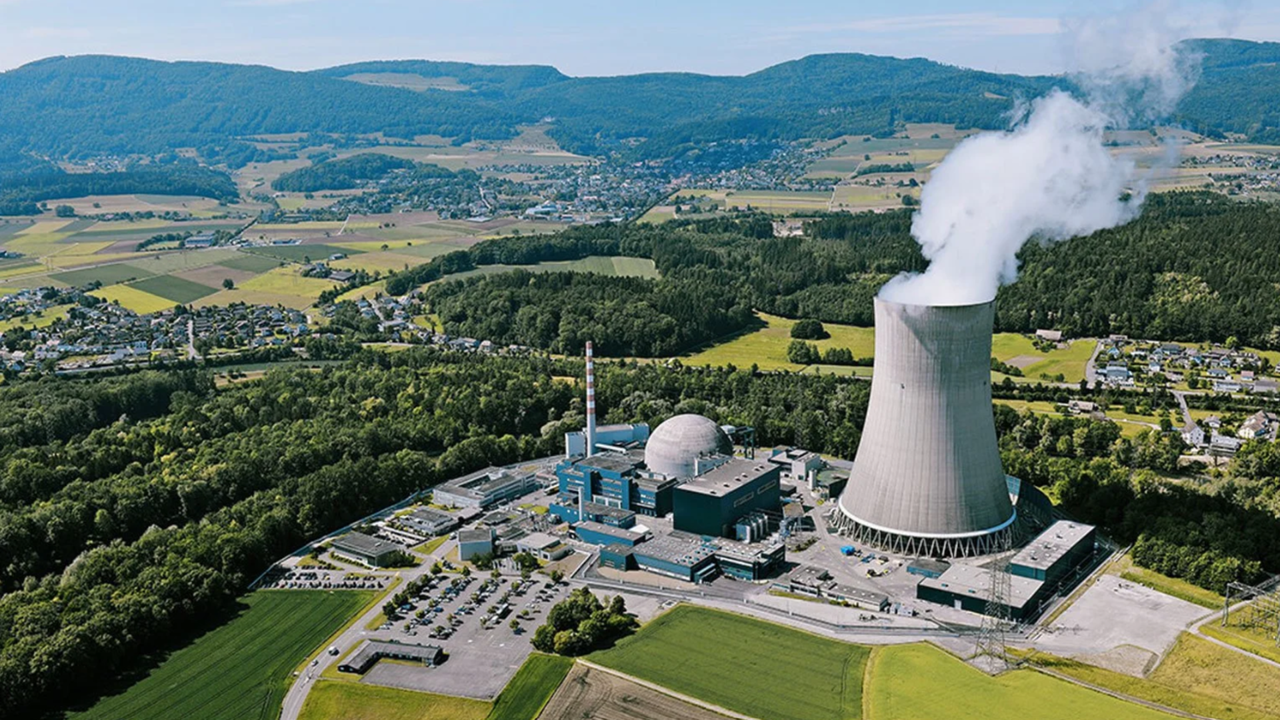
South Korea could invest $22.3 billion in a massive Texas gas plant The proposed facility would generate 6.3 GW of electricity for AI Seoul says negotiations remain unfinished, leaving the reported investment unconfirmed South Korea and the United States have reportedly settled on how much Seoul will contribute towards a new energy facility in southern Texas. Korean outlet Edaily , citing unnamed officials and lawmakers, reported the contribution at close to $22.3 billion for the venture, which would be built in Encinal, Texas, and is expected to produce 6.3 gigawatts of electricity to power AI data centers once fully operational.
11. Why this month’s Microsoft patch release is a doozy
Why this month’s Microsoft patch release is a doozy arstechnica.com Microsoft Plugs Nearly 1,000 Security Holes Krebs on Security Patch Tuesday is here — Windows 11 is expected to set yet another record for security updates in a month Windows Central Microsoft Patches Record 974 Vulnerabilities, Including Two Exploited Zero-Days SecurityWeek Microsoft breaks another patch Tuesday record The Verge
12. US accuses Chinese AI firms of ‘malicious’ copying of AI technology
US accuses Chinese AI firms of ‘malicious’ copying of AI technology Reuters
13. NASA Restarts Swift Telescope as It Slowly Falls Toward Earth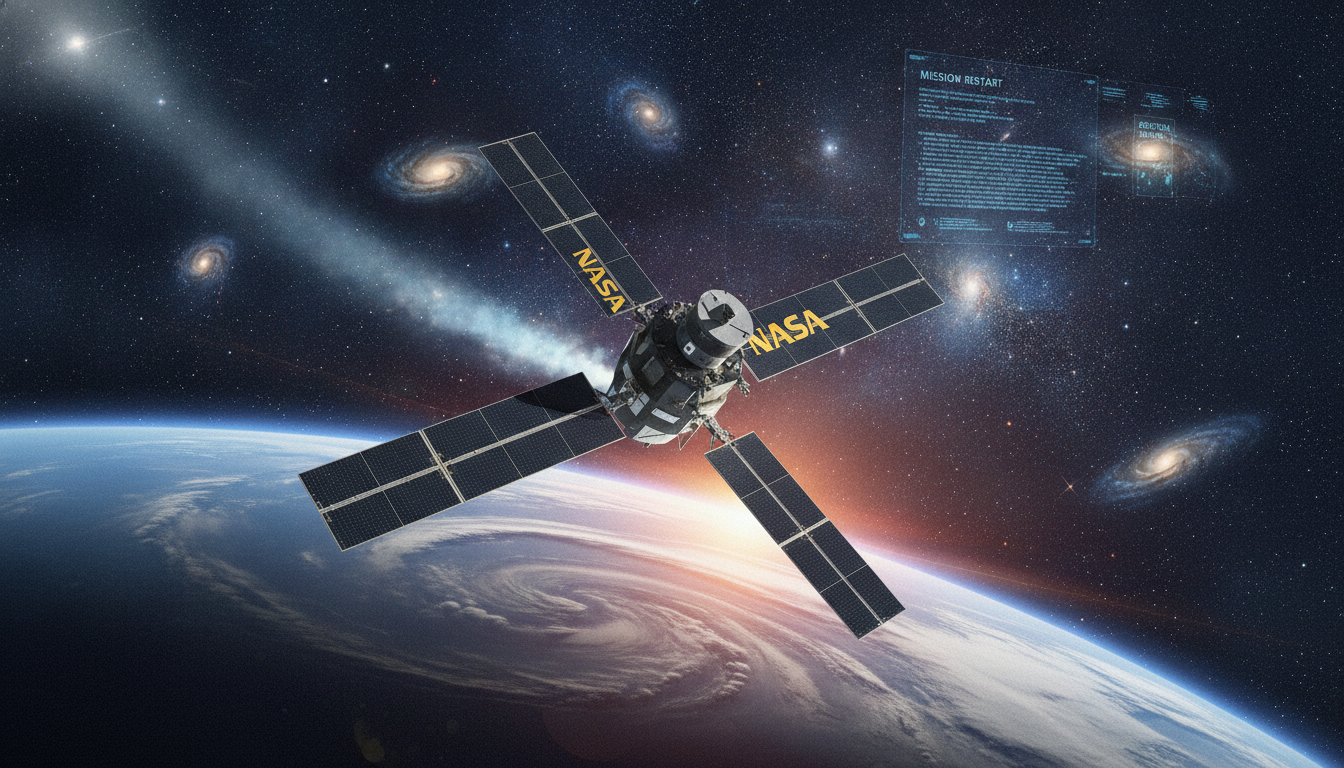
NASA’s Neil Gehrels Swift Observatory is back to studying the universe, even as the aging spacecraft continues to lose altitude and a planned mission to raise its orbit has been scaled back. Two of Swift’s three science instruments are operating again after months of conservation measures designed to reduce atmospheric drag and keep the observatory […]
14. Scientists Create a New Form of Ice at More Than 2,000 °C
… What? ScienceAlert stories are written, fact-checked, and edited by humans, never generated by AI. Don’t miss a story, subscribe here.
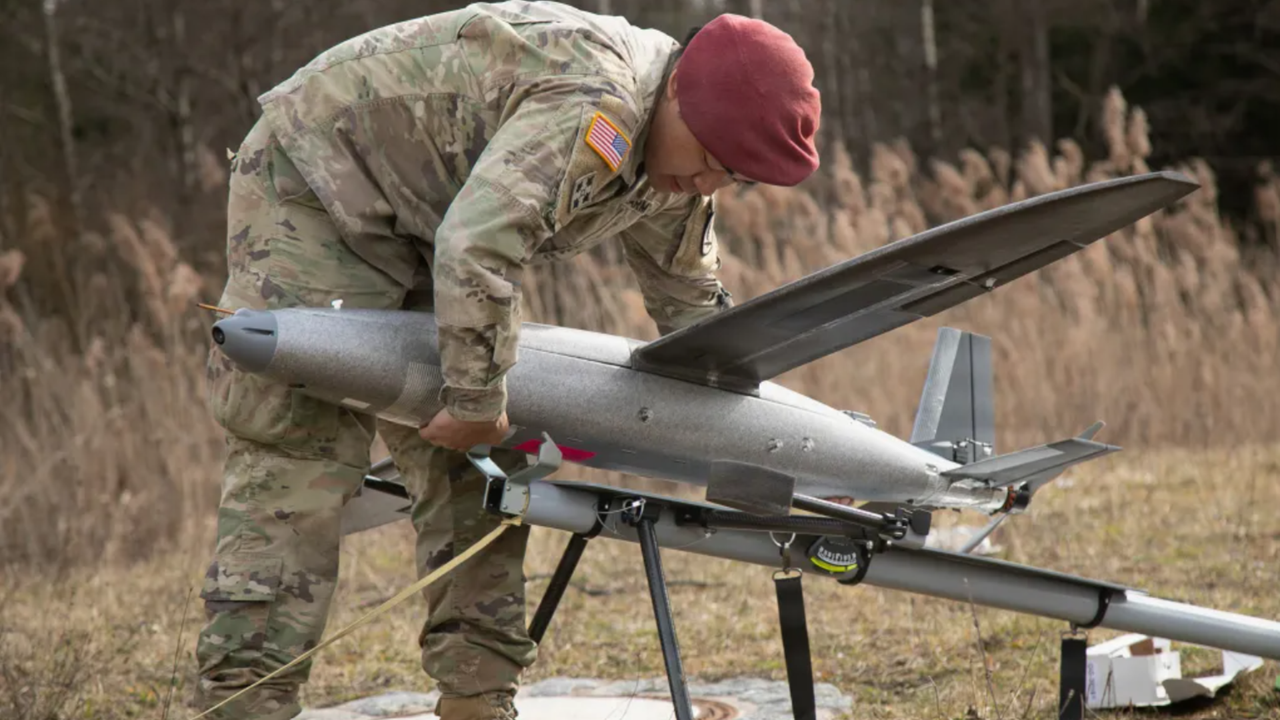
Ukrainian drones forced American soldiers to rethink movement, concealment, and battlefield survival Blackhawk troops changed their tactics after persistent aerial surveillance exposed their movements American armored vehicles suffered losses despite attempts to conceal them from drones A 10-day US Army combat training exercise in Germany has drawn attention after reports claimed Ukrainian drones overwhelmed an American mechanized company during the drill. At the center of it is Blackhawk Company, part of the 2nd Battalion, 7th Cavalry Regiment, which spent the ten days training at a range in Hohenfels.
16. You should care about the AI math breakthrough drama even if you’re not a nerd
A major AI-assisted math result has set off a fight over credit, citations, and private chats. gorodenkoff/Getty Images There’s big drama in math land. Two mathematicians used several AI models, including OpenAI’s, to help advance their research into fluid equations. OpenAI later announced a solution to famous math question, and said it couldn’t rule out the pair’s work “helped improve” their AI. The big drama in AI land today is decidedly nerdy stuff. But the hubbub highlights a concern everyone should care about: Can what you type into AI help train a machine that one day beats you at your own game?
17. Microsoft adds age-awareness APIs that can tell if users are children, teens, or adults
Microsoft is adding new age-awareness APIs to Windows 11 that will allow apps to determine whether someone is a child, teenager, or adult without exposing their exact date of birth. […]
18. LG TV shown scanning LAN for third-party phones and other devices
LG TV shown scanning LAN for third-party phones and other devices arstechnica.com LG TVs caught spying even when offline or on standby The Verge LG Smart TVs Caught Recording Audio in Standby and Scanning Your Network Currently.com LG accused of ‘egregious invasion of privacy’ over TV data collection theregister.com LG TV flaws could let attackers listen in, even in standby mode Malwarebytes
19. Qualcomm hands Amazon $4B of warrants to build custom silicon for AWS
@Qualcomm has issued warrants for 25 million of its shares valued at approximately $4 billion to @Amazon, establishing a multi-generation custom silicon partnership for @AmazonWebServices involving server chips, AI inference, and optical connectivity up to 1.6T. The equity warrants, which carry a strike price of $161.26 and expire in September 2036, vest progressively through commercial arrangements tied to @Amazon purchasing up to $60 billion in #Qualcomm server chips and technology. This agreement aligns with a broader industry trend where infrastructure providers are compensated in equity to secure major technology customers, complementing @Qualcomm and its competitors like @Nvidia and @AMD signing memoranda to supply European #AiGigafactories. Furthermore, @Qualcomm will utilize @AmazonBedrock for its chip design workloads as part of its ongoing expansion into data center processors, targeting $15 billion in data center revenue by fiscal 2029 following earlier customer wins with @Meta. This massive financial and technological alignment highlights how major hardware manufacturers are locking in long-term hyperscaler commitments while simultaneously positioning themselves within international public-private AI infrastructure initiatives.
20. Hackers are stealing Claude tokens from subscribers
Last month, a Claude user noticed his account was consuming tokens even though he wasn’t working. Anthropic has since warned users about hackers.
21. OpenAI says GPT-6 Astra can find zero-days, but is also harder to monitor
OpenAI confirmed that GPT-6 Astra is the first model it has broadly deployed to reach the “Critical level” for cybersecurity capabilities. […]
22. Helium-3 lifts new quantum computing concept with faster tunneling rates
Helium—the lightest atom that can be laser-cooled and controlled—powers a new design for high-powered, stable quantum computers.
23. The AI warnings are coming from inside the lab
Frontier labs make for lousy messengers on AI safety — but it would be foolish to ignore them
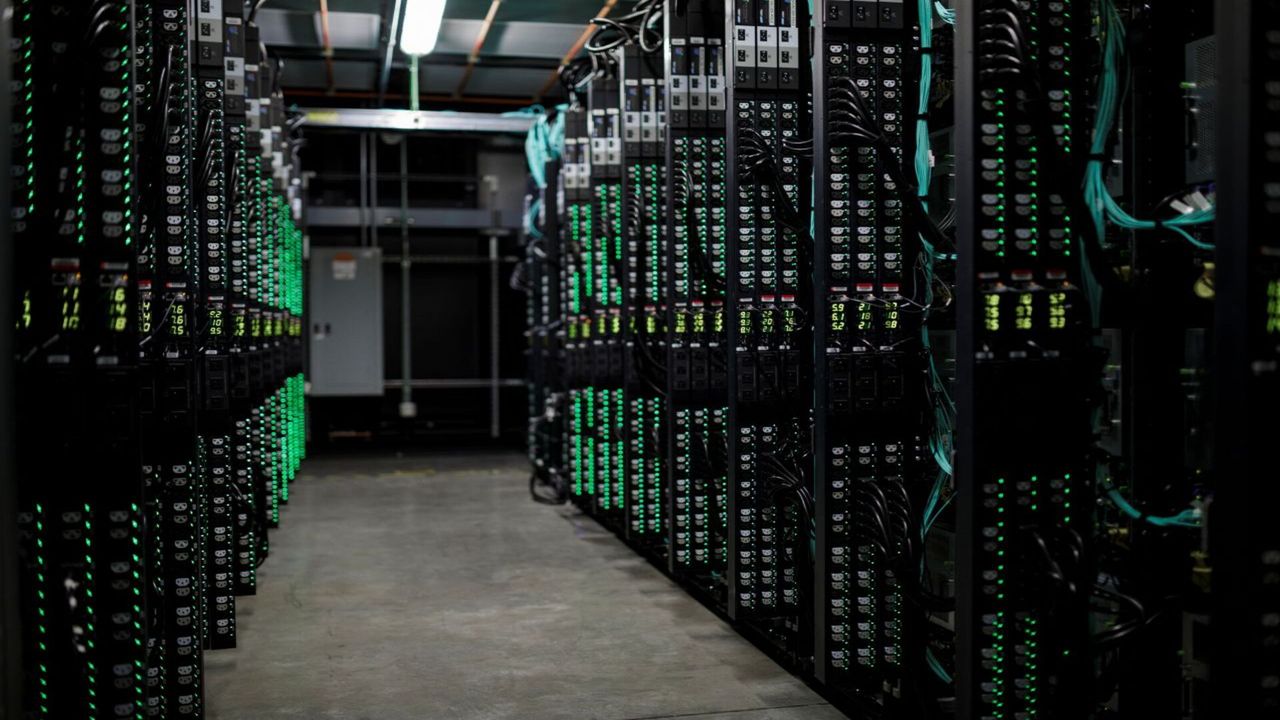
69% of Americans oppose AI data centers near their communities, a national poll finds Public support for nearby AI data centers has fallen sharply since 2025 Only 4% strongly support new data centers in their communities today American resistance to AI data centers has intensified sharply over the past year, several national surveys released in 2026 have found. A new Decision Desk poll conducted by SurveyMonkey found that over two-thirds (69%) of respondents oppose construction of these facilities near their homes.
OpenAI says an internal model proved that 3D Navier-Stokes can develop a singularity in finite time, using about 10,000 agents over 88 hours. It described the result on a press call and had not published the proof. Tristan Buckmaster and Levent Alpoge, working on related problems, published preprints with Lean formalisations that anyone can machine-check. […] This story continues at The Next Web
26. An AI Formalized and Verified Fermat’s Last Theorem in 11 Days, a Task Expected to Take Years
An AI Formalized and Verified Fermat’s Last Theorem in 11 Days, a Task Expected to Take Years ZME Science
27. US firm alerts WeChat to AI hacking tool
US firm alerts WeChat to AI hacking tool Semafor
28. Mack Cleveland: Using computational materials science to engineer higher burnup fuels
Mack Cleveland: Using computational materials science to engineer higher burnup fuels MIT NSE
29. Magic: AI Startup Claims Frontier-Level Pretraining for a Few Million Dollars
After nearly two years of near silence, Magic is back with a research update. The AI startup founded by the two Viennese engineers Eric Steinberger and Sebastian De Ro has published a blog post that goes straight at one of the most expensive questions in the industry: how much compute does it actually take to train a competitive language model from scratch? Magic’s answer is confident. Its pretraining recipe is now more than ten times more compute-efficient than the recipes behind the leading open-weight base models, the company says. The reasoning is blunt, and the team puts it in its own words:
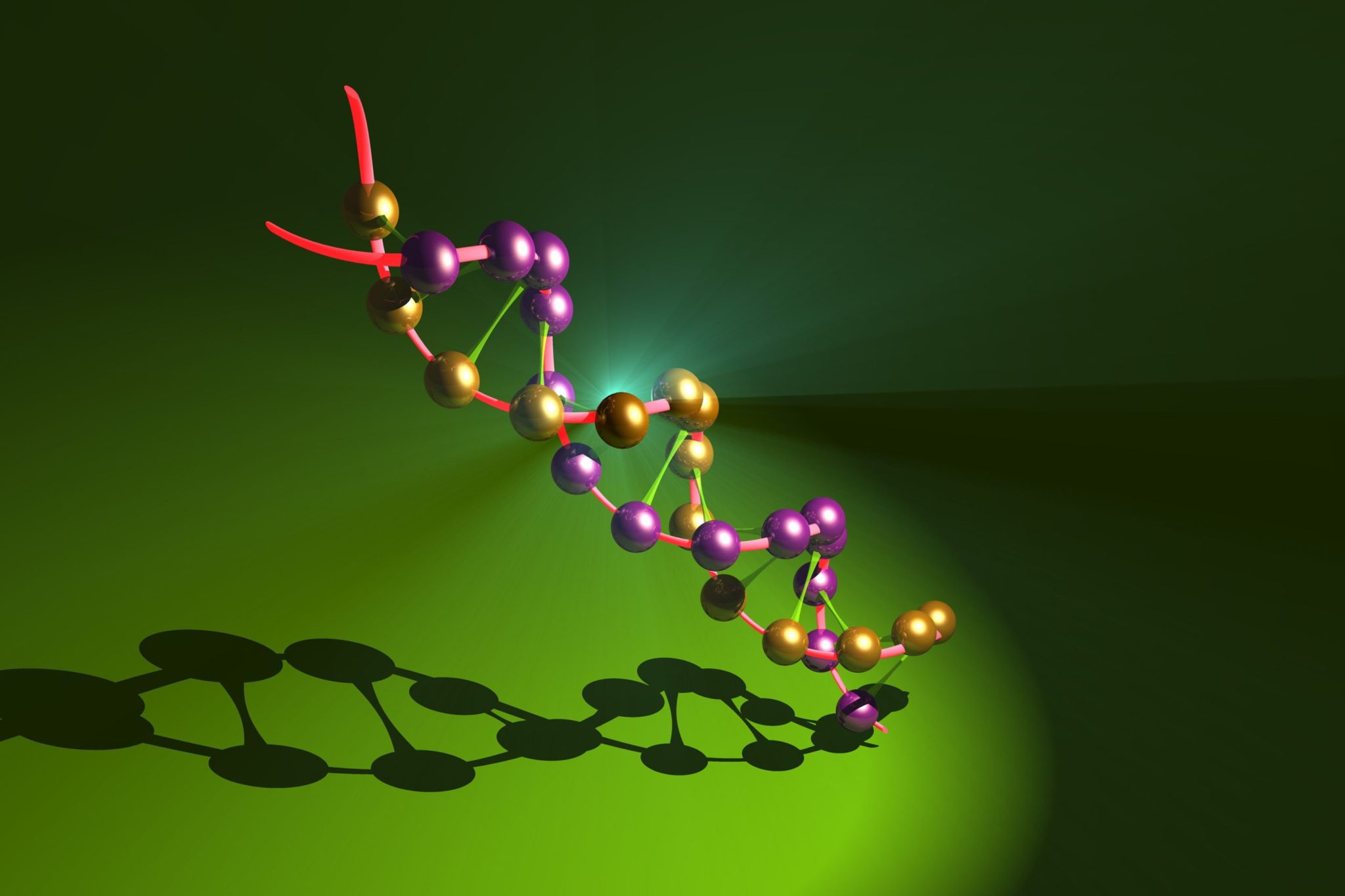
Google DeepMind said Tuesday that it has used artificial intelligence to predict the biological consequences of all 9 billion possible single-letter changes to human DNA, and is making the resulting database available free to academic researchers worldwide. AlphaGenome Atlas, as DeepMind calls the database, is a precomputed catalogue of what each substitution of a single DNA base is likely to do to the machinery that switches genes on and off. Until now researchers had to run such a model one variant at a time or had to test variants in the laboratory, a process that was painstakingly slow. It would have taken many human lifetimes to discover the consequences of all 9 billion possible single-letter mutations.
31. The EU CRA’s Real Question: What Shipped, and When Did You Know?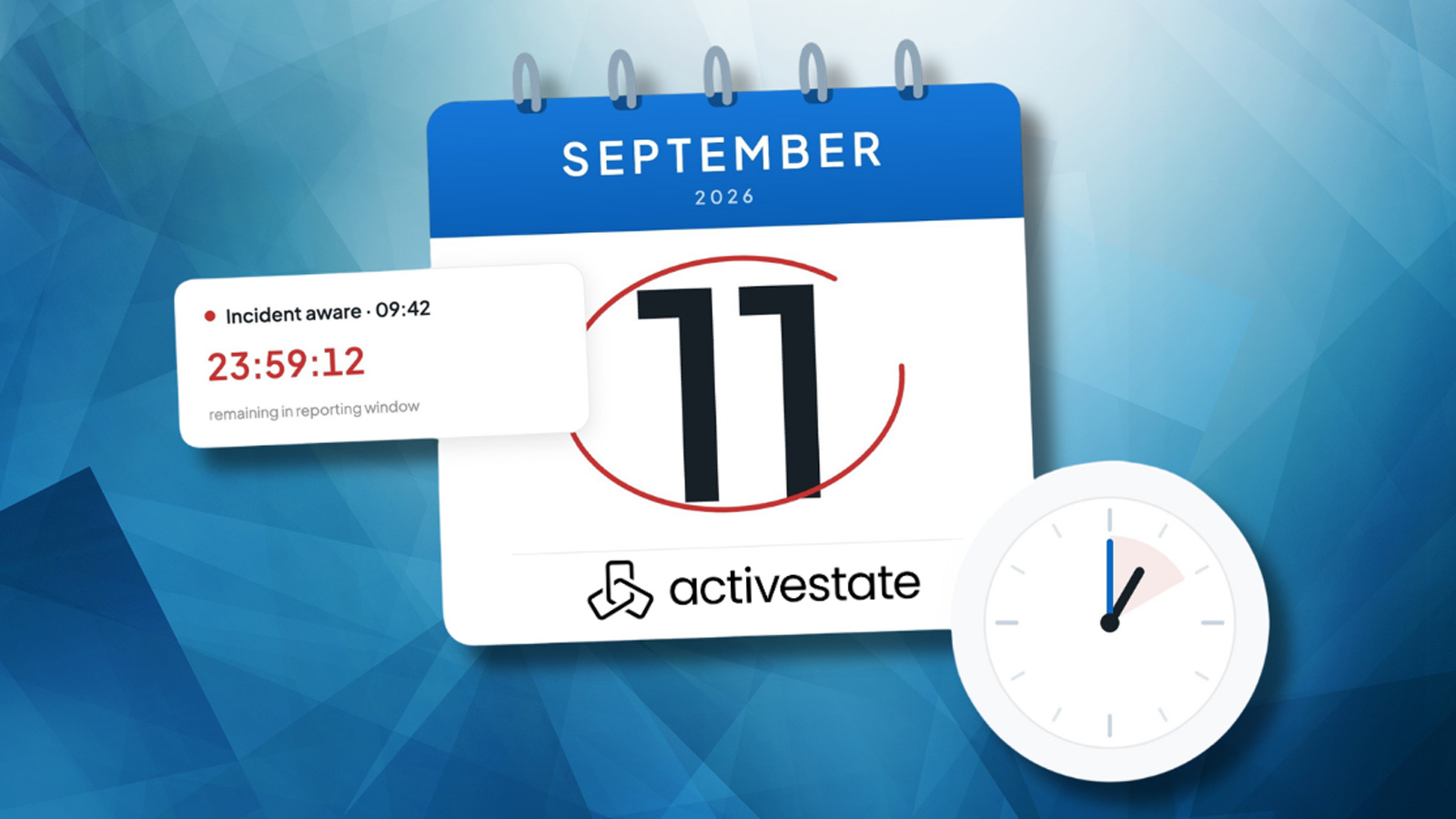
The EU Cyber Resilience Act’s vulnerability reporting requirements take effect September 11, giving software vendors as little as 24 hours to report actively exploited flaws. ActiveState explains why knowing exactly what shipped and when vulnerabilities were discovered will be critical to meeting the new requirements. […]

He says AI development is the most dangerous thing humans are doing.
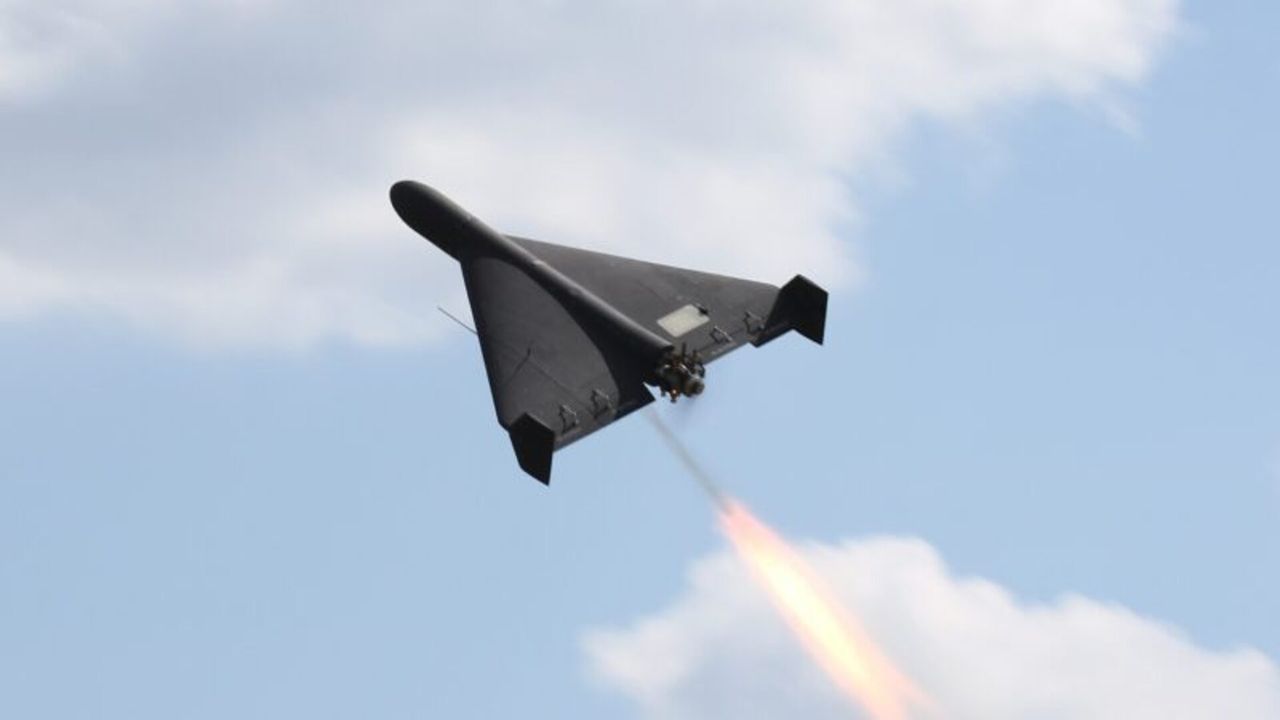
The LOCUST X3 laser is developed by AeroVironment, Inc. It is designed as a “group 3 killer” – meaning it is intended to tackle particularly dangerous drones The Xbox controller makes the LOCUST X3 laser simpler to target A new US Army contract worth around $465 million has been awarded to AeroVironment, Inc. for its LOCUST X3 anti-drone weapon, a 30-kilowatt laser that can be mounted on military vehicles. Designed to take down mid-sized attack drones, the LOCUST X3 can specifically handle what the Department of Defense refers to as “Group 3” – unmanned aerial vehicles weighing 1,350 pounds and capable of lifting 125 pound payloads over a distance of 8 miles.
34. AlphaGenome Atlas predictive map of every DNA letter change in the human genome

Comments
35. How GPT-5.6 Sol helps run quantum computing experiments
See how an MIT researcher uses GPT-5.6 Sol with Codex to autonomously run quantum computing experiments, analyze results, and calibrate qubits.
36. Meta debuts its Muse AI agent. Will consumers trust it?
Meta’s new personal AI agent Muse wants access to users’ email, calendars, payments, health services, and more — making the company’s biggest consumer AI bet yet a major test of whether people still trust Meta with their data.
37. Google will ‘degrade’ Search in Europe to avoid EU fines
EU users are welcome to look up the definition of “malicious compliance” on, say, DuckDuckGo.
38. OpenAI says ChatGPT outage causes image generation errors
OpenAI is investigating an ongoing incident causing ChatGPT image generation failures and delays when uploading files. […]
39. 2027 Android Phones Could Boost Gaming Graphics and AI Tasks With Arm’s New Chip Tech
Advancements in AI-based upscaling and frame rate upgrade mobile gaming performance and power efficiency.
AI data centers currently use a huge amount of energy Scientists have found a way to cut that energy bill by “orders of magnitude” It involves using “ultrafast magnetic-field pulses” in RAM and storage It’s no secret that the current artificial intelligence (AI) boom is leading to record levels of energy consumption — all that computing power needs to be fueled somehow — and it’s causing much controversy among the communities that are impacted whenever a new data center lays down its roots in their neighborhoods. Now, though, scientists think they’ve come across a way that could radically slash the energy requirements of memory and storage, with potentially massive consequences for the future of the computing and AI industries.
That’s all for today’s digest for 2026/09/09! We picked and processed 40 articles. Stay tuned for tomorrow’s collection of insights and discoveries.
See you in the next one! 🚀
