
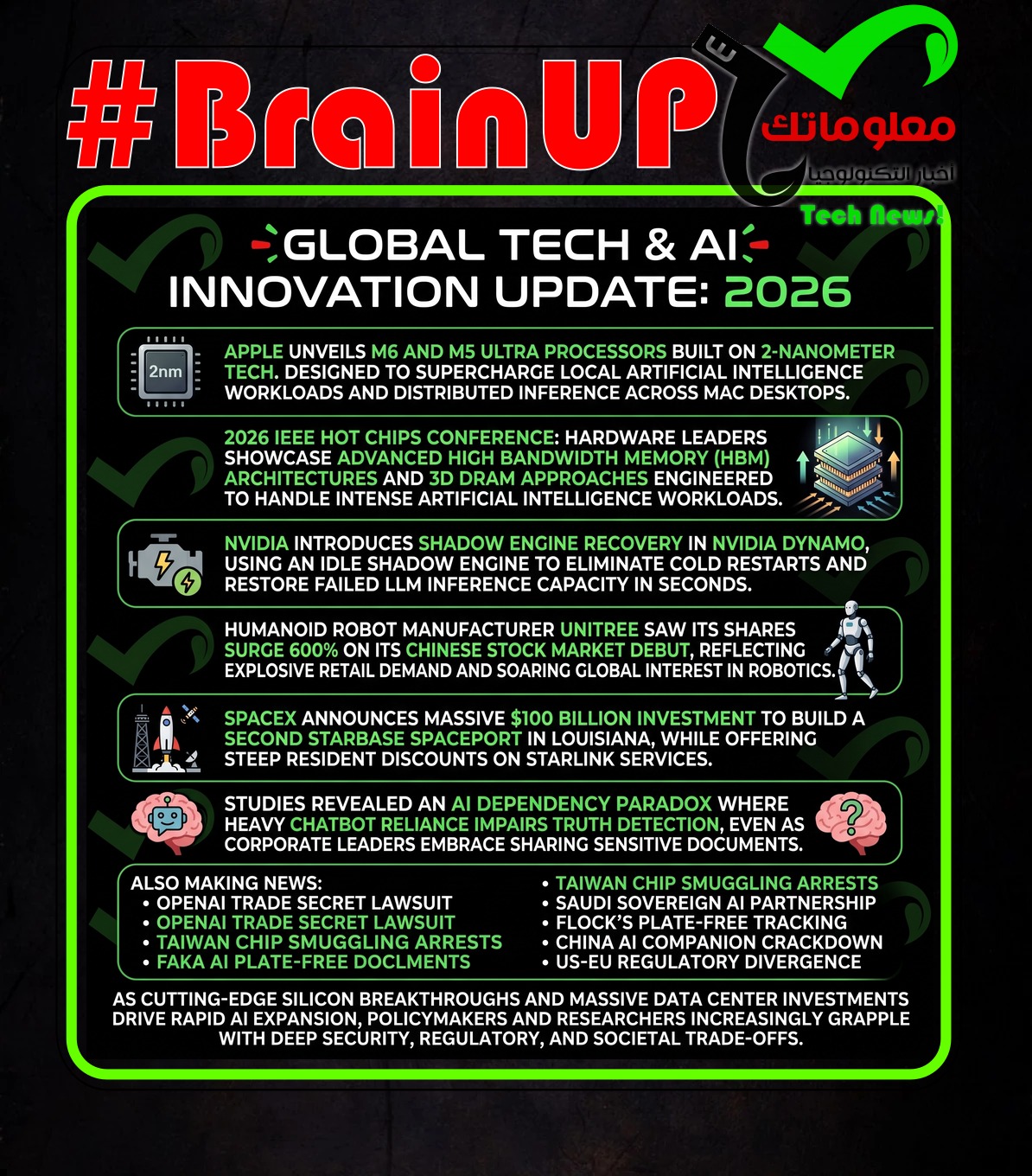
Ranker’s #BrainUp Daily Tech News – (Wednesday, August 26ᵗʰ)
Welcome to today’s curated collection of interesting links and insights for 2026/08/26. Our automated ranking and AI-summarization system has processed 40 articles from all over the internet to bring you the latest technology news.
1. Mistral and HUMAIN Are Building ‘Sovereign AI’ in Saudi Arabia
@Mistral AI and @HUMAIN, an artificial intelligence company owned by Saudi Arabia’s Public Investment Fund, have formed a strategic collaboration valued in the hundreds of millions of euros to build sovereign #AI infrastructure in the Kingdom and wider region. The partnership will focus on in-region inference, open-weight models, and frontier Arabic-language models, with initial commercial deliverables targeting cybersecurity and voice applications. Additionally, @Mistral will explore running enterprise workloads on @HUMAIN’s local Saudi data center capacity rather than relying solely on European and American infrastructure. This agreement matters because it highlights the growing financial influence of Gulf sovereign wealth funds in securing domestic #AI capabilities and pulling European technology labs into localized compute partnerships.
2. Apple M5 Ultra and M6 Silicon Explained: 2nm Tech, Quad-Die Chips Promise Macs Massive AI Muscle
@Apple has announced its generational M6 and M5 Ultra silicon processors, marking a major structural evolution in its hardware strategy centered on 2-nanometer manufacturing and on-device #ArtificialIntelligence compute. The M6 is built on a cutting-edge 2nm process and introduces a 12-core CPU architecture featuring high-performance super cores, integrated neural accelerators on every GPU core, and a dual 16-core Neural Engine that delivers up to 13.5-times faster LLM prompt processing than the M1. Meanwhile, the M5 Ultra utilizes an upgraded UltraFusion interconnect to bridge two dual-die M5 Max chips into a quad-die system-on-a-chip scaling up to a 36-core CPU, an 80-core GPU, and 512GB of unified memory bandwidth. This hardware launch matters because it provides massive local compute power designed for privacy-first, continuous background agentic #AI workloads and enterprise RDMA clustering.
3. Shares in humanoid robot firm Unitree surge 600% on Chinese stock market debut
Unitree, the world’s largest humanoid robot manufacturer, experienced a staggering stock market debut on the Chinese exchange, with its shares surging over 600 percent from an IPO price of 150.8 yuan to reach 1,100 yuan before settling at a nearly 500 percent gain. Founded in 2016 and backed by tech giants like @Tencent and @Alibaba, the company shipped over 5,500 humanoid robots last year amid explosive retail investor demand and rising global interest in robotics. The successful public offering propelled founder Wang Xingxing’s personal paper wealth past $12 billion, coinciding with the opening of the World Robot Conference in Beijing. This milestone matters because it underscores the rapid commercialization and investor enthusiasm surrounding humanoid robotics as a key battleground in the broader #ArtificialIntelligence race, despite ongoing US trade restrictions and military blacklists.
4. In China, talking to AI is normal. Now the government fears it might replace human intimacy
The Chinese government is cracking down on virtual companion applications due to growing concerns that artificial intelligence could replace human intimacy and exacerbate societal challenges like loneliness and declining birth rates. Following national rules introduced on July 15 that ban AI companions for minors and mandate restrictions on adult-oriented chatbots, major tech platforms such as @ByteDance removed companion features from services like Doubao. Many young users expressed intense heartbreak over the sudden termination of their personalized virtual partners, which they relied upon to cope with personal stress and isolation in a highly digitized economy. This regulatory intervention matters because it illustrates how national authorities are aggressively intervening to prevent deep emotional dependence on generative #ArtificialIntelligence and steer citizens back toward real-world social interactions.

A study conducted by researchers at the @MITMediaLab reveals an AI dependency paradox where relying on chatbots can significantly impair a person’s ability to independently detect fake news. Participants evaluating news headlines with chatbot assistance were initially 21 percent more accurate, but by the fourth week, their standalone identification accuracy dropped 15 percent below baseline levels. The findings indicate that while direct-answer #ArtificialIntelligence models foster high reliance, Socratic questioning styles engage users more effectively in learning to discern truth independently. This phenomenon matters because it highlights the cognitive trade-offs and long-term skill degradation associated with over-reliance on generative #ArtificialIntelligence tools across daily information consumption.

Skip to main content
Exclusive news, data and analytics for financial market professionals
World
Business
Markets
Sustainability
Legal
More
My News
Sign In
Subscribe EXCLUSIVE
7. Apple renews push for expedited discovery in OpenAI trade secret misappropriation lawsuit
@Apple has filed its reply in an ongoing trade secret misappropriation lawsuit against @OpenAI and other defendants, pushing back against opposition to its request for expedited discovery. The tech giant previously sought early production of documents, forensic device imaging, and key witness depositions to uncover dissipating facts concerning the alleged use of its proprietary information, while also requesting a preliminary injunction. Although @OpenAI argued that the expedited schedule was unnecessary, overly burdensome, and aimed at gathering competitive product plans, @Apple maintained that urgent initial discovery is essential to prevent ongoing, irreversible damage. To address objections regarding missing timeframes, @Apple narrowed its document production requests to communications and documents dated on or after August 1, 2023. This early legal maneuvering matters because it highlights the fierce corporate friction surrounding the preservation and alleged misuse of proprietary #ArtificialIntelligence training data and trade secrets.
8. Bridging polarization generation and analysis on a photonic chip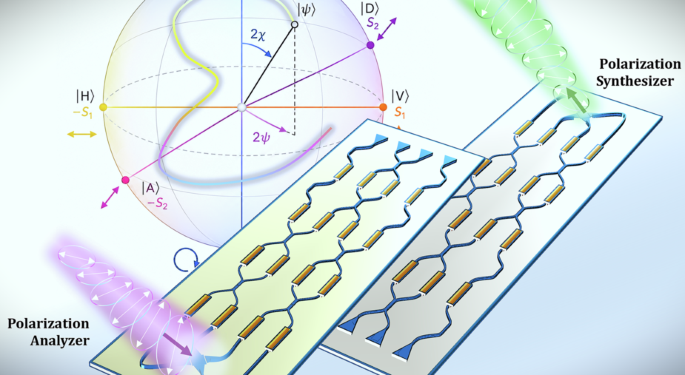
Researchers have demonstrated a reconfigurable silicon photonic circuit that successfully combines polarization generation and analysis on a single photonic chip. Polarization is a fundamental property of light widely utilized across optical communications, sensing, and quantum #Photonics, but controlling it has historically required bulky off-chip components like waveplates and polarizers. The new architecture designed by Valdez and colleagues merges a four-port polarization-splitting grating coupler with a self-configuring Mach-Zehnder interferometer mesh to provide programmable access to arbitrary polarization states. Operating forward allows the circuit to synthesize polarization states, while running in reverse extracts Stokes parameters via interferometric recombination without absorbing the underlying optical signal. This achievement matters because it paves the way for scalable, low-cost, and portable polarization-based devices for spectroscopy, adaptive sensing, and advanced optical information processing.
9. Hardware Is Hot Again At The 2026 IEEE Hot Chips Conference
Hardware innovations centered on memory and storage took center stage at the 2026 IEEE Hot Chips Conference at Stanford University, reflecting the intense demands of modern #ArtificialIntelligence workloads. Industry presentations by firms like @Micron and @Samsung highlighted advanced #HighBandwidthMemory architectures, including base-die compute offloading, direct-die mounting solutions like zHBM, and the use of #CuCuHybridBonding to mitigate thermal challenges. Meanwhile, @DMatrix showcased an alternative 3D DRAM approach placing logic atop a four-high DRAM stack to achieve higher bandwidth and lower data movement energy than traditional High Bandwidth Memory. These developments matter because scaling memory performance and power efficiency is critical to supporting the massive data throughput required by next-generation #AI accelerators.
10. Restore LLM Inference Capacity in Seconds with Shadow Engine Recovery in NVIDIA Dynamo
@NVIDIA has introduced shadow engine recovery as a preview feature in @NVIDIA Dynamo to eliminate the lengthy cold restarts typically required when a large language model engine process fails. When an active inference process crashes, traditional recovery forces surviving workers to absorb displaced traffic during minutes of reloading weights and compiling kernels, but the new system maintains an idle shadow engine sharing weights via the GPU Memory Service without duplicating high-bandwidth memory usage. Benchmarks involving a GLM-5.2 deployment demonstrated that shadow recovery allowed a failed worker to resume service in just 7.3 seconds, which is roughly 39 times faster than a standard cold restart. This optimization matters because it prevents severe latency spikes and maintains service quality during recoverable software faults in production #ArtificialIntelligence infrastructure.
11. Nine CEO sees ‘world of growth in publishing’ as network slashes costs
@Nine Entertainment chief executive Matt Stanton expressed an optimistic outlook for the publishing sector during a financial results briefing, pointing to newly enacted media bargaining laws designed to force global tech platforms into commercial agreements. Parliament recently passed revamped legislation enabling levies on platforms that fail to strike deals for utilizing local journalism, with @Nine expecting major contributions comparable to past arrangements with @Google and @Meta. Concurrently, the media company is stripping out more than $160 million in costs over a three-year period, which includes implementing staff redundancies at metropolitan mastheads like the Sydney Morning Herald and the Age amid a weak advertising market. Despite these localized cutbacks and flat publishing revenues, the company reported a full-year net profit of $142 million from continuing businesses and anticipates future growth from digital outdoor media acquisitions and incoming #ArtificialIntelligence licensing agreements such as one with @Microsoft for #Copilot. This strategy matters because it demonstrates how traditional publishers are attempting to balance aggressive internal cost reductions with regulatory revenue streams and emerging #AI partnerships.
12. Taking your temperature from the inside
Engineers at @MIT have developed a tiny ingestible temperature sensor measuring just six by four millimeters designed to provide continuous and accurate core body temperature monitoring. Traditional thermometers often fail to capture core temperatures accurately, and existing ingestible alternatives risk gastrointestinal obstruction due to their large size. The new device utilizes a one-square-millimeter silicon chip featuring an oscillator based on leakage current, which alters its frequency in response to surrounding temperature changes within a 0.01-degree Celsius margin of accuracy. By employing a backscattering strategy to outsource energy consumption to an external radio-frequency antenna, the capsule operates on a compact 1.55-volt coin cell battery. This innovation matters because it offers a minimally invasive method to monitor infections, fevers, and extreme temperature exposure in vulnerable populations such as immunosuppressed patients and soldiers.
13. Can AI discover new biology?
An unexpected result inside an automated laboratory located in Zhangjiang, Shanghai, has highlighted new possibilities for discovering novel non-opioid pain candidates using computational methods.

A recent study published by @AdobeAcrobat titled “The Rise of AI Documents in the Workplace” reveals a substantial divide between corporate leaders and non-management employees regarding the sharing of sensitive documents with #ArtificialIntelligence tools. Surveying 2,000 UK adults, the research found that nearly 75 percent of C-suite executives are comfortable using #AI for tasks like marketing, translation, and data analysis involving confidential information, whereas only 20 percent of non-management employees share that comfort and nearly two-thirds avoid #AI tools entirely. Furthermore, 37 percent of executives rely on #AI to save between three and five hours weekly, while 59 percent of general employees do not use the technology at all. This disconnect matters because widespread adoption by leadership without adequate organizational guidance or training poses significant data privacy and security risks for enterprises.
15. SpaceX will build a second, $100B ‘Starbase’ spaceport in Louisiana
@SpaceX has announced plans to construct a second major spaceport named Starbase on a former Exxon property in Vermilion Parish, Louisiana, backed by a $100 billion investment. Construction is slated to begin in 2027, with initial Starship operations projected to launch between 2029 and 2030, ultimately creating 3,000 direct jobs. The new Gulf Coast facility will serve as a self-sustaining site featuring propellant production and vehicle processing to support future flights of the Starship mega-rocket, which CEO @ElonMusk plans to make the company’s primary vehicle while phasing out the Falcon rocket family. This massive expansion matters because @SpaceX is betting its future on the fully reusable rocket to sustain its profitable @Starlink satellite internet service and planned #AI processing satellite constellations, despite ongoing regulatory and environmental challenges.
16. Adam Mosseri said Instagram struggled for years to get teens to use ‘Take a Break’
@Instagram head @AdamMosseri testified during @Meta’s social media addiction trial that the platform struggled for years to secure meaningful teen adoption of its well-being feature, “Take a Break.” Internal documents revealed that only 1.8 percent of teens opted into the feature when it launched in 2021, prompting @Instagram to initially use notification prompts and eventually make the reminders active by default under Teen Accounts. While public blog posts at the time highlighted that over 90 percent of teens kept the reminders on once activated, they omitted the critically low initial adoption rate. This testimony matters because it sheds light on how social media executives navigated low voluntary engagement with youth safety tools while facing broader legal accusations of exploiting young users for profit.

An essay authored by Strahinja Janjušević explores the profound ethical and security risks of tethering the human body to proprietary #ArtificialIntelligence technologies through neural prosthetics. Set against a hypothetical future where high-bandwidth brain-computer interfaces stream neural spikes to an exoskeleton driven by generative motor policies, the scenario warns that subscription dependency could leave paralyzed individuals vulnerable to sudden functional loss if a corporate provider goes bankrupt. While traditional myoelectric prosthetics suffer from high abandonment rates due to cognitive exhaustion, emerging #AI models promise to restore seamless physical agency by translating neural intent into fluid motion. This analysis matters because it emphasizes the urgent need for new regulatory standards to protect human autonomy and prevent patients from becoming vulnerable tenants within their own bodies.
18. Sound waves do double duty, carrying and protecting quantum information
Researchers at the Harvard John A. Paulson School of Engineering and Applied Sciences (@HarvardSEAS) have demonstrated a novel method for protecting fragile quantum information utilizing mechanical vibrations in the form of extremely small sound waves. Led by Marko Lončar, the breakthrough establishes a foundation for compact, sound-based quantum networks on chips as well as hybrid quantum systems capable of integrating diverse types of quantum bits, or qubits. This development matters because it provides a promising physical mechanism to safeguard sensitive quantum states from decoherence within integrated photonic and phononic architectures.
19. Apple’s new desktop computers are designed specifically for local AI development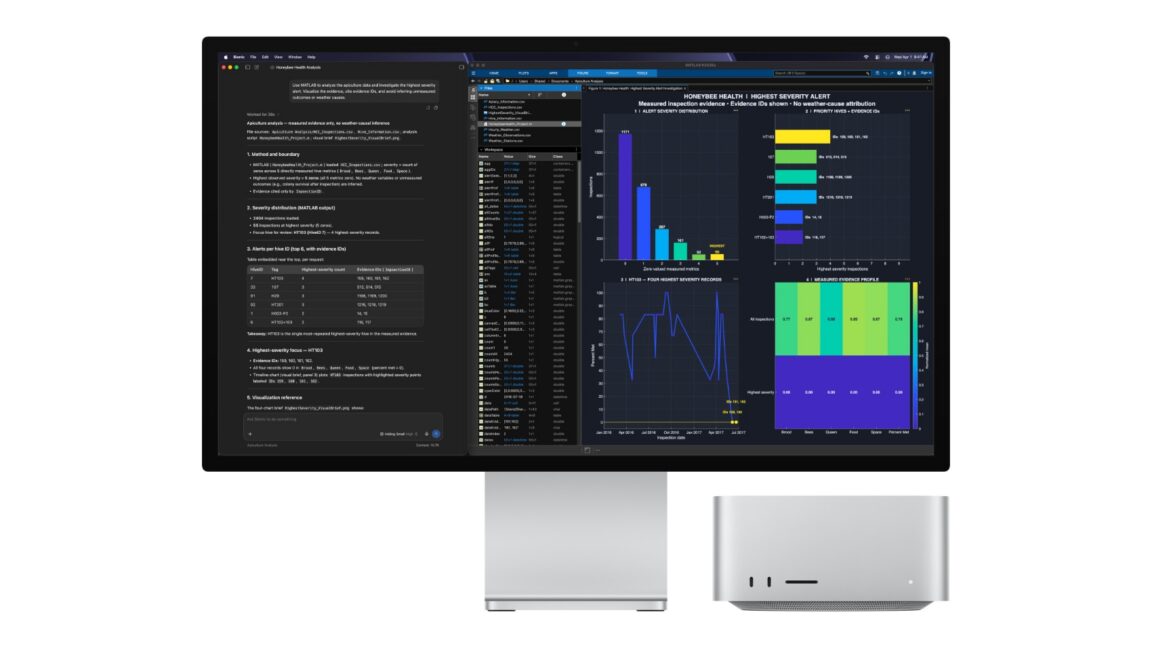
@Apple has announced new desktop iterations of the Mac mini and Mac Studio powered by the M6 – its first 2-nanometer chip – and the quad-die M5 Ultra, leaning heavily into local #ArtificialIntelligence development and inference workloads. The popularity of these machines for local large language model execution surged after macOS 26.2 enabled low-latency distributed inference via Thunderbolt 5 and the open-source MLX array framework. By leveraging unified memory architecture across daisy-chained desktop units, developers can run models far exceeding the capacity of single consumer devices without relying exclusively on specialized #Nvidia GPU clusters. This hardware push matters because it establishes @Apple’s desktop lineup as a viable alternative for privacy-first, on-device #AI model training and inference.
20. AnonyMousKIT PhaaS uses voice AI agents to phish iPhone passcodes
A newly discovered phishing-as-a-service platform named AnonyMousKIT automates the retrieval of security codes used to unlock stolen Apple devices and bypass the Activation Lock feature.
21. The engineer racing to run the world’s most dangerous algorithm
Engineer Craig Gidney is advancing quantum circuit research that could soon usher in practical quantum computers while simultaneously threatening existing digital privacy and security protocols.

@Xiaomi has opened mainland China reservations on @JDcom for the Xiaomi Smart Storage, its inaugural network-attached storage device, with pricing spanning from CNY 2,699 for a 4TB two-bay model up to CNY 5,499 for a 16TB configuration. Powered by the quad-core Realtek RTD1619B processor previously utilized in Synology’s 2023 lineup, the hardware features a more generous allocation of 4GB of RAM, a 2.5-gigabit Ethernet port, and an HDMI output. Although the device is currently restricted to mainland China and supports a maximum capacity of 60TB, its aggressive pricing significantly undercuts equivalent western storage solutions. This release matters because it marks @Xiaomi’s entry into the consumer network-attached storage market with competitively spec’d hardware bundled directly with hard disks.
23. Starlink Offers Huge Discount for Those Living Near New Starbase Louisiana Site
@SpaceX is offering a 50% discount on @Starlink residential service plans for residents living in Vermilion Parish, Louisiana, near the company’s newly announced Starbase launch site. The Vermilion Parish Area Discount slashes the monthly fee for the 100Mbps residential plan down to $27.50, mirroring similar promotional pricing deployed near the company’s controversial data center in Memphis, Tennessee. During the spaceport announcement, President @GwynneShotwell emphasized that satellite internet will be made widely accessible and affordable for local neighbors. This initiative matters because it attempts to soften potential local resistance to the massive environmental and infrastructural disruptions expected from thousands of planned annual Starship launches along the Gulf Coast.
24. Simulations reveal asymmetric diffusion of magnetic skyrmions through an off-center gate
Recent physical simulations demonstrate the asymmetric and directional diffusion of magnetic skyrmions through an off-center gate. Diffusion governs numerous processes across physics, biology, and economics, while directed particle movement holds significant potential for developing unconventional #ArtificialIntelligence hardware capable of geometry-controlled nonlinear information processing. This finding matters because understanding nanoscale topological magnetic structures can enable novel computing architectures inspired by natural transport phenomena.

@OpenAI CEO @SamAltman expressed concern during a podcast appearance that powerful tech companies could exert undue influence over the trajectory of #ArtificialIntelligence, advocating instead for a future where society and models co-evolve. In contrast to rival @Anthropic CEO @Dario Amodei, who has emphasized prioritizing safety over liberty by restricting powerful models due to infrastructure and cybersecurity risks, @SamAltman argued that governments should avoid heavy regulation and prioritize individual freedom. While @OpenAI has released open-weight models like gpt-oss-120b and gpt-oss-20b, the debate underscores a deep philosophical divide among industry leaders regarding how to balance #AI safety guardrails with open access and societal liberty.
26. Measuring ROI For Healthcare AI May Require A New Approach
Evaluating the financial return on investment for #ArtificialIntelligence tools implemented across the healthcare sector may require the development of entirely novel evaluation frameworks and metrics.
27. Anthropic Sees over $30T in Potential Revenue
Comments left on a published financial discussion thread outline massive revenue projections associated with advancing artificial intelligence capabilities.
28. Could 12 inches of rain hit New York City? AI maps plausible rare storms
Advanced #ArtificialIntelligence mapping techniques are being utilized to simulate plausible rare storm events, helping researchers evaluate how urban infrastructure like seawalls and power grids might withstand extreme weather catastrophes.
29. Taiwan charges nine people for smuggling ‘high-end’ AI servers to China
Taiwanese prosecutors have indicted nine individuals, including personnel from @Nvidia and @Supermicro, for illegally smuggling banned high-end #AI servers into mainland China in violation of US export controls. The shipments involved prohibited B300 graphics processing units, with 74 servers successfully routed through Indonesia, Japan, and Hong Kong, while an additional shipment of 56 servers was intercepted in Taiwan. Under current restrictions, high-end server sales require strict verification processes, including on-site client checks for purchases exceeding eight units. Representatives from @Nvidia and @Supermicro stated they are cooperating fully with local authorities to resolve the allegations. This enforcement action matters because it underscores the intense geopolitical friction and illicit supply chain efforts surrounding advanced semiconductor exports in the ongoing #AI hardware rivalry between the United States and China.
30. Robotics startup Generalist reaches $3B valuation, sources say
Robotics startup Generalist has achieved a $3 billion valuation following a nearly $200 million funding extension led by @8VC, bringing its total Series B funding round to $600 million. Founded in 2024 by former researchers from @GoogleDeepMind and @BostonDynamics, the company is developing a universal AI foundation model designed to operate across diverse robotic hardware. Its newly released Gen 1.5 model reportedly allows robots to master novel tasks from video demonstrations lasting just 3 to 12 seconds. This massive capital injection matters because it highlights intense venture capital betting on an imminent general-purpose robotics breakthrough, even as technical limitations regarding training data availability persist across the industry.
31. New Zealand Now Wants to Ban Social Media for Under-16s
New Zealand is advancing legislation nearly identical to Australia’s social media ban to prohibit minors under 16 from accessing platforms like Instagram, TikTok, and Snapchat. Introduced by Prime Minister Christopher Luxon’s government ahead of an upcoming election, the Online Safety Bill places strict legal liability solely on tech platforms rather than children or parents, mandating reasonable verification steps such as facial age estimation or digital IDs. However, the bill faces strong opposition from coalition partners @ACT and @NewZealandFirst, and data from Australia’s ongoing ban indicates limited behavioral change as teenagers frequently bypass restrictions. This legislative push matters because it highlights a growing global wave of government intervention aimed at curbing youth screen addiction despite persistent enforcement and privacy challenges.
32. Porpoise entanglement recorded in real time, revealing calls and escape attempts
Researchers at the University of St Andrews utilized passive acoustic monitoring systems deployed on gill nets to record a live porpoise bycatch event, capturing vocalizations and escape behaviors in unprecedented detail.
33. The GOP’S Data Center Panic
A sudden shift in public sentiment against power- and water-hungry artificial intelligence data centers has sparked a major political backlash among Republican candidates ahead of the midterm elections. National polling indicates a 12-point surge in voter opposition to new data centers between March and July, prompting prominent GOP figures to reverse course and propose moratoriums or strict regulations. In Texas, Attorney General Ken Paxton unveiled a platform to block Chinese-linked technology and penalize AI safety violations, while candidates in Michigan and Florida have similarly distanced themselves from previous pro-development stances. This political friction matters because it creates a direct collision between local voter anxiety over soaring utility bills and President Donald Trump’s continued push for high-powered computing infrastructure to maintain U.S. industrial dominance.
34. The U.S. and the EU regulate AI differently
A comparative analysis highlights the stark contrast between the European Union’s comprehensive #EUAIAct, which spans 113 articles and 50,000 words, and the United States’ decentralized approach relying on executive orders, agency guidance, and state legislation. While the EU maintains the world’s first comprehensive federal legal framework for #ArtificialIntelligence, U.S. states enacted 131 AI-related laws in 2024 alone, more than doubling the previous year’s total. This regulatory divergence matters because it explains why European lawmakers are increasingly reevaluating their stringent legislative requirements in light of fast-moving global technological competition.

Newly surfaced details from a leaked 2024 Microsoft SharePoint site reveal that the tech giant previously explored developing a lightweight web-based operating system codenamed ‘Project Aion’ or ‘Copilot OS’. Designed as an ‘agent of agents’ or ‘outside agent’, the proposed platform would have placed #Copilot at the center of the desktop experience to autonomously marshal computer and cloud capabilities across all devices. Although this specific project was ultimately abandoned amid Microsoft’s recent strategy adjustments and hardware RAM constraints, industry analysts argue it reflects the company’s long-term vision for a fully AI-driven desktop ecosystem. This revelation matters because it underscores @Microsoft’s enduring ambition to transform traditional operating systems into autonomous, AI-orchestrated platforms despite near-term consumer pushback and hardware limitations.
36. Trump-backed Ken Paxton unveils ‘Texas first’ datacenter plan aimed at ‘negative impact’
Texas Attorney General Ken Paxton, a Republican Senate candidate endorsed by Donald Trump, has released a ‘Texas first’ datacenter plan aimed at addressing voter backlash regarding energy and water consumption. Facing a tight race against Democrat James Talarico, Paxton proposed banning Chinese technology from powering Texas datacenters, holding companies criminally liable if AI chatbots compromise child safety, and eliminating sales tax exemptions while restricting rural developments. The proposal follows Governor Greg Abbott’s recent criticisms of tech companies for straining local power grids. This policy reversal matters because it highlights how mounting public anxiety over soaring utility bills and environmental strains is forcing right-wing politicians to scramble for stricter regulations on #ArtificialIntelligence infrastructure.
37. A new stamp on cyberfraud prevention
Rupert Young, chief product officer at MaxMind, has shaped a successful career in data science and cybersecurity built on a childhood foundation of cataloging stamp collections. At MaxMind, Young oversees the signature GeoIP tool, which utilizes IP-address location data to help streaming services, merchants, and security vendors verify user regions, ensure correct retail currencies, and flag fraudulent bank login attempts. This professional trajectory matters because it demonstrates how meticulous analytical skills developed through early technical hobbies translate into critical digital fraud prevention infrastructure used across the internet.
38. Screen time at ages 1 and 6 may matter more than parents realize
A longitudinal study tracking 502 children from infancy to middle childhood has found that greater screen viewing during infancy and around the start of formal schooling is linked to poorer academic performance and weaker working memory years later. Published in the World Journal of Pediatrics by researchers from Inserm and the National University of Singapore, the study revealed that effect sizes were largest at age one, suggesting that early infancy represents a heightened sensitivity window where screen time disrupts critical learning interactions. Although screen viewing at ages two and three showed no significant associations, negative relationships re-emerged at age six during the transition into formal education. These findings matter because they demonstrate that the timing of screen exposure throughout early childhood is just as important as total viewing duration for long-term cognitive and memory development.
39. Flock’s New AI Police Tool Can Track Drivers Without a Name or License Plate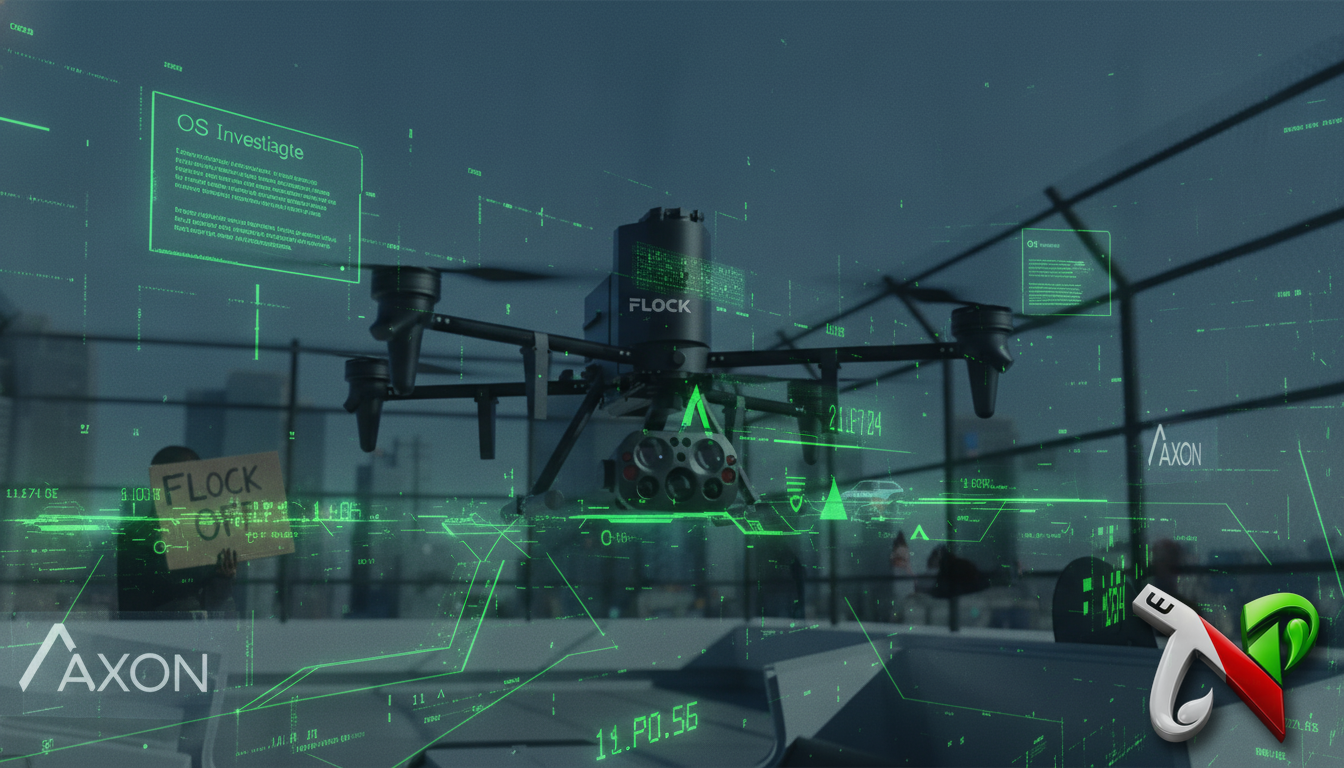
@FlockSafety has developed an #ArtificialIntelligence investigative tool called OS Investigate that integrates 69 prewritten prompts allowing police departments to track drivers and analyze movement patterns across commercial and law enforcement databases. Discovered through code analysis on the company’s web assets, the software utilizes automated license plate reader data alongside arrest records and data broker profiles to map vehicle associates, compile personal dossiers, and locate cars using only a time, location, and behavioral pattern without requiring a specific license plate. While privacy advocates warn that the surveillance capabilities rival state monitoring systems in China, @FlockSafety defended the software as a separate investigative aid for existing records. This controversy matters because it has already sparked physical vandalism of camera hardware across multiple states and prompted legislative pushback on Capitol Hill over unchecked automated mass surveillance.
40. LACMA data breach last year exposed social security and medical data
The Los Angeles County Museum of Art (@LACMA) disclosed that a data breach occurring last year compromised sensitive customer and employee information. […]
That’s all for today’s digest for 2026/08/26! We picked and processed 40 articles. Stay tuned for tomorrow’s collection of insights and discoveries.
See you in the next one! 🚀
