

MIT Engineers Print Living “Circuit Boards” Using Bacterial Transistors
Key points
- Researchers at MIT developed biological transistors using a plant-associated bacterium called Pantoea agglomerans 1.
- By printing bacterial colonies about 5 millimeters apart on agar plates, the team successfully "wired" living circuit boards that can perform complex logic operations 1.
- The largest built circuit, which adds two inputs together, links 24 separate bacterial colonies together 1.
- Funded in part by DARPA and IARPA, the technology could eventually be applied to plant leaves or roots to detect environmental stressors like drought or pests 1.
Bacterial Computing
In a major leap forward for synthetic biology, researchers at the Massachusetts Institute of Technology have successfully engineered living bacteria that function as transistors 1. Traditional synthetic biology often struggles with complexity because packing multiple circuits into a single cell overburdens its protein production machinery and risks cross-talk between transcription factors. To bypass these limitations, the MIT team took a modular approach, designing individual cells to act as distinct transistors and relay components that can be combined on a growth medium 1.
Published in Nature Chemical Biology, the research relies on a bacterium known as Pantoea agglomerans, a microbe that naturally thrives on plant surfaces 1. By harnessing these cells, the investigators created two primary transistor types controlled by specific molecules, alongside three bacterial strains that act as relays to pass signals down the line 1. This toolbox provides the fundamental building blocks needed to construct versatile biological circuits.
Printing Living Circuits
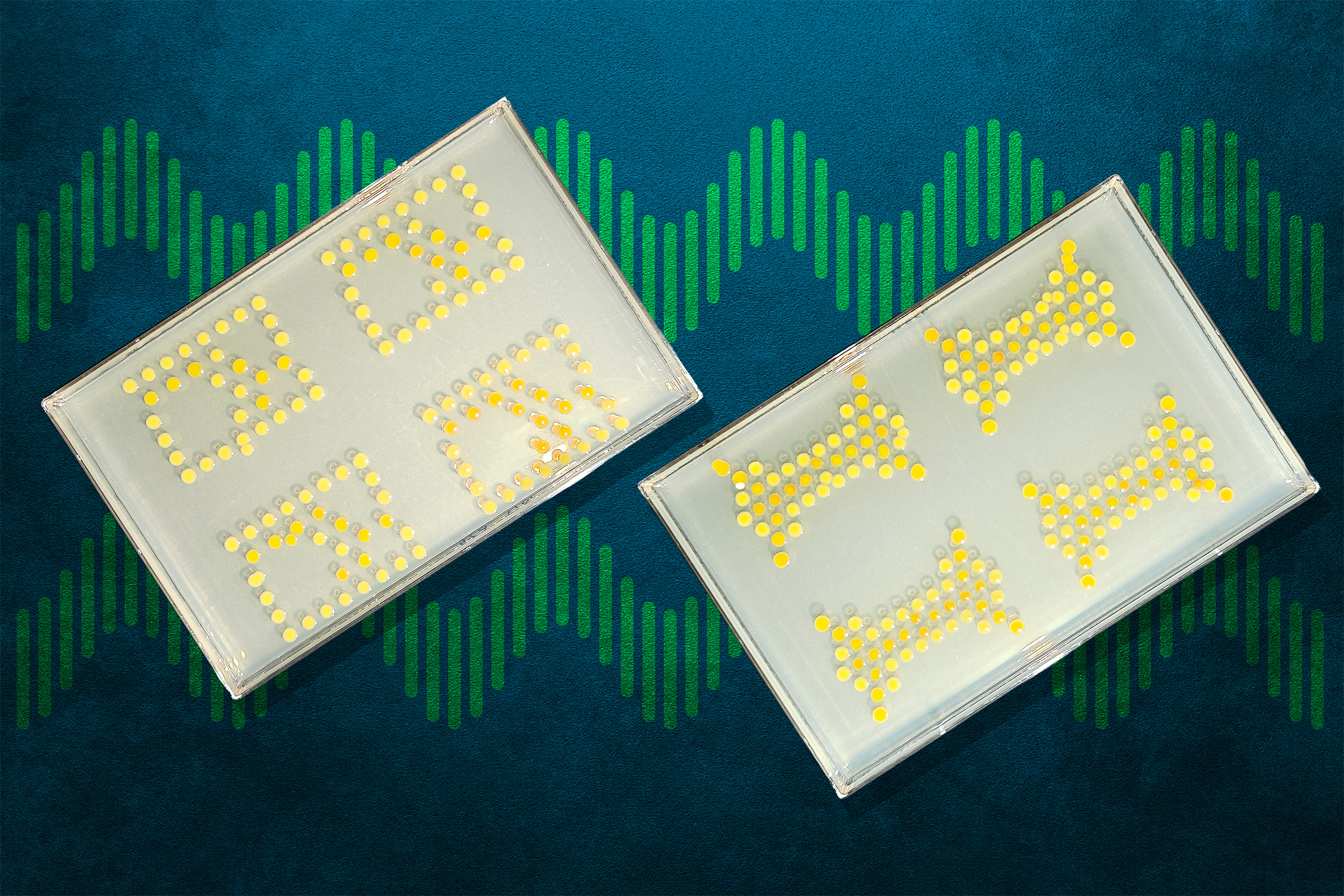
Rather than soldering copper wires on a silicon wafer, the research team prints colonies of these engineered bacteria onto Petri dishes containing agar 1. Each colony is spaced roughly five millimeters apart from its nearest neighbor, a precise physical arrangement that ensures chemical signals travel strictly to the intended recipient and maintain a unidirectional flow of information 1.
This spatial arrangement allows the bacterial colonies to communicate by passing small molecules from one component to the next, mirroring the flow of current in traditional electronics. Using this technique, the researchers assembled complex configurations – including the largest circuit in the study, which links 24 bacterial colonies together to add two inputs 1. These living circuits can execute various logic operations, function as demultiplexers, and process multiple signals simultaneously 1.
From Lab to Agriculture
While biological computation operates on a drastically different timescale than silicon processors – taking about eight hours to complete a calculation – the speed is more than adequate for environmental and agricultural applications 1. Senior author Christopher Voigt notes that the goal is not to rival consumer electronics, but rather to embed computational intelligence directly into living systems 1.
Backed by funding from DARPA and IARPA, the team envisions coating plant leaves or roots with these programmable microbes 1. Such living coats could autonomously sense environmental threats, such as an oncoming drought or a pest attack, and respond by synthesizing targeted defenses like natural fungicides 1.
Primary sources
 MIT engineers connect bacteria to create living transistors (news.mit.edu) – This primary report details MIT's engineering of Pantoea agglomerans bacteria into living transistors and relays, which can be printed on agar plates to build complex biological circuits for potential agricultural applications.
 Powered by News Ranker