
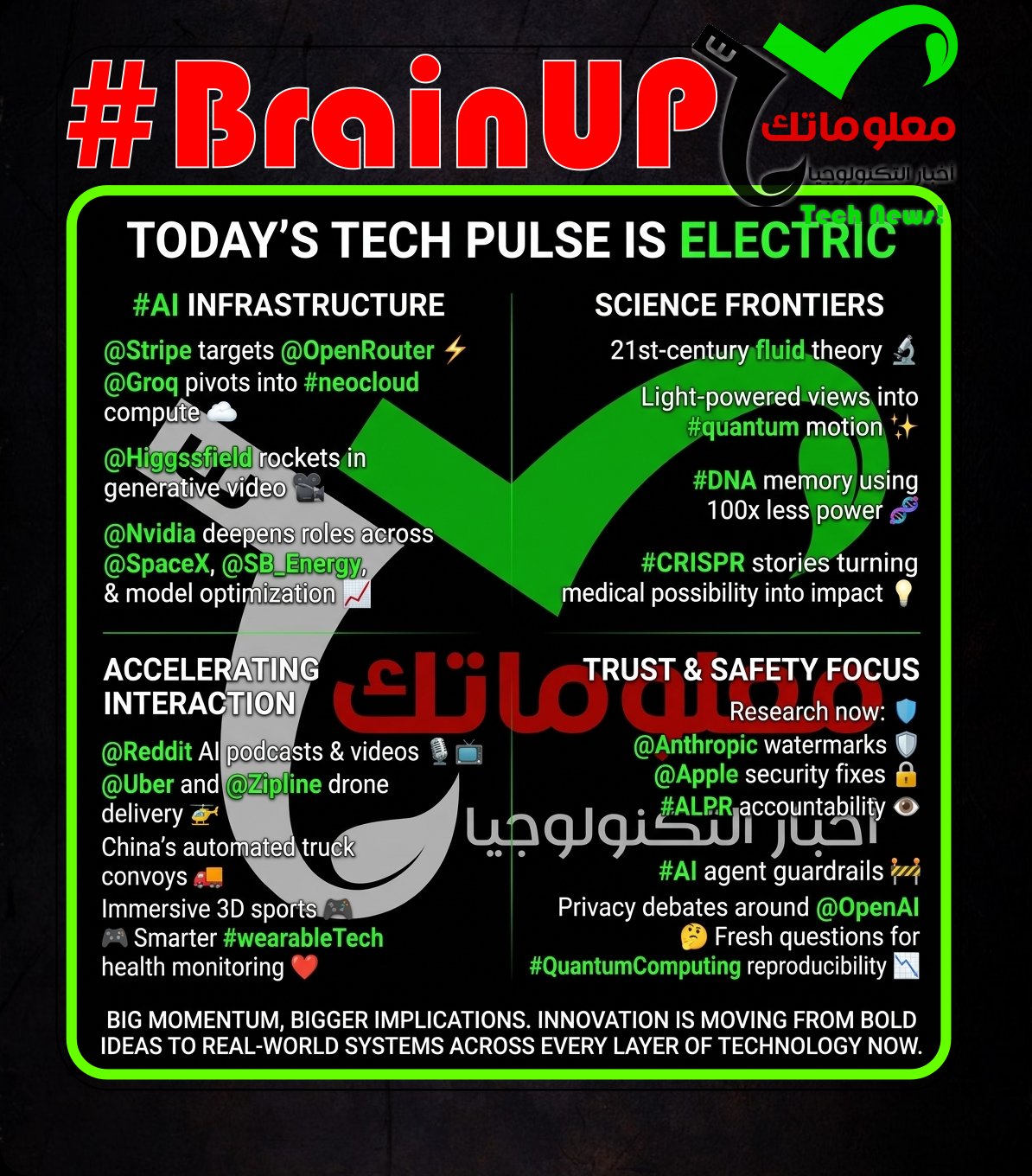
#BrainUp Daily Tech News – (Tuesday, August 18ᵗʰ)
Welcome to today’s curated collection of interesting links and insights for 2026/08/18. Our Hand-picked, AI-optimized system has processed and summarized 36 articles from all over the internet to bring you the latest technology news.
As previously aired🔴LIVE on Clubhouse, Chatter Social, Instagram, Twitch, X, YouTube, and TikTok.
Also available as a #Podcast on Apple 📻, Spotify🛜, Anghami, and Amazon🎧 or anywhere else you listen to podcasts.
1. Theory of Fluids Enters the 21st Century | Quanta Magazine

For more than a century, fluid behavior was described mainly by the 19th-century #NavierStokes equations, but modern physicists have now rebuilt fluid theory from the ground up to include the microscopic constituents of matter. The article traces how @Leonhard Euler’s 1750s equations captured ideal, nonviscous flow, and how @Claude-Louis Navier and @George Gabriel Stokes extended them in the early 1800s to model viscosity, mixing, and friction, enabling applications from aircraft design and hurricane forecasts to climate and astrophysical flows. Yet the classical framework treats fluids as perfectly continuous at any zoom level, conflicting with the reality that fluids are made of molecules and atoms, a gap that the broader 20th-century microscopic revolution in physics largely left untouched. After a 20-year effort, researchers have introduced a new symmetry-based definition of what it means to be a #fluid, showing that #NavierStokes follows from underlying #symmetries and using that origin story to move beyond the classical equations to predict additional behaviors tied to microscopic motion. The path to this update, the piece notes, was sparked by ideas coming from work on the largest scales, including insights from researchers studying black holes and the universe.
2. Stripe Acquires OpenRouter for Over $7 Billion
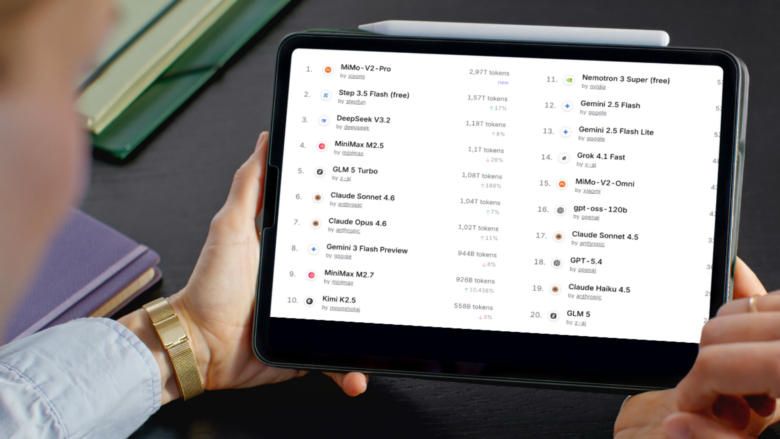
According to @Bloomberg, payment provider @Stripe is set to acquire OpenRouter for more than $7 billion, signaling a strategic push into #AI infrastructure and #AI operations. OpenRouter is a US startup that provides a routing layer enabling companies to switch between different #AI models to optimize cost, latency, and output quality, helping teams avoid locking into a single provider. The reported price would far exceed OpenRouter’s most recent funding valuation of about $1.3 billion from last May, reflecting how fast the market is shifting from individual models toward operational cost management. In enterprise settings, OpenRouter’s model switching supports varied use cases like summarization, classification, and code generation, distributing requests across models without forcing customers to redevelop applications, while @Stripe could pair this technical control with usage-based billing, reporting, and its existing developer channels. The deal underscores a growing focus on measurable costs, robust decision logic, and flexible infrastructure that makes provider switches or model upgrades easier for product teams.
3. Groq raises $350M to fuel its pivot from AI chips to neocloud | TechCrunch

Groq raised $350 million to accelerate its shift from building its own AI chips to becoming a #neocloud that provides #Nvidia GPU compute and AI infrastructure services, aiming to be a leading #AI inference cloud. The round was led by Disruptive with planned participation from @Nvidia, valuing Groq at $3.5 billion, lower than its $6.9 billion valuation last September, which followed a $20 billion licensing deal after @Nvidia hired founder @Jonathan Ross and other key talent. Groq says it does not view the change as a down round, but as a reset for the post-licensing version of the company, after it moved away from its LPU (language processing unit) chip effort targeting #inference. The company plans to expand its data center footprint from 54 megawatts to over 200 megawatts in 2027, and says it now operates 13 data centers across multiple regions serving more than 6 million developers and customers seeking medium and large Nvidia-accelerated clusters for training and inference. The article notes that while inference demand is rising, it remains uncertain whether neocloud economics can deliver strong long-term returns given heavy capex and hardware depreciation concerns seen in peers like CoreWeave, and Groq’s pivot deepens its reliance on Nvidia’s broader AI infrastructure ecosystem.
4. Higgsfield raises $400M Series B, quadrupling its valuation in 8 months to $5.4B | TechCrunch

Higgsfield, founded in 2023 by former @Snap executive Alex Mashrabov, raised a $400 million Series B valuing the #AI image and #video creation company at $5.4 billion, quadrupling its valuation from $1.3 billion just eight months earlier. The company says it has $700 million in annualized revenue, 30 million users across 200 countries, and is working with 390 of the Fortune 500, with tools including Cinema Studio for directing AI films and Marketing Studio for advertising teams, after showcasing AI-generated movies at Cannes and in New York. Mashrabov said enterprise adoption of video AI is expected to become deeply embedded in everyday marketing and creative workflows, and the new funding will support hiring, product development, and especially compute, since video is highly compute-intensive. He argued that securing reliable compute capacity is necessary to stay competitive with rivals like Synthesia and Runway. DST Global led the round, joined by investors including Goldman Sachs Alternatives, Valor Capital, and Tribe Capital.
5. Light Reveals the Hidden Quantum Motion Inside an Exotic Crystal
Researchers at the University of Basel and the Technical University of Munich showed that optical measurements can reveal the hidden collective motion and #quantum dynamics of electrons in a #Wigner crystal, an electron lattice that emerges from strong electron-electron interactions rather than the host material’s structure. In experiments led by @Tomasz Smoleński, they studied a single atomic layer of tungsten diselenide cooled to a few degrees above absolute zero, shone light on it, and analyzed reflected signals that displayed previously unseen optical features tied to collective electron behavior, reported in Nature Physics. The signals arise when optically generated #excitons interact with the ordered electrons to form hybrid quasiparticles called #Wigner crystal polarons, which act as a sensitive probe, and the measurements indicate that the strength of electron interactions affects the optical signatures. A theoretical model led by @Michael Knap explains how exciton coupling to the crystal’s collective electron motion produces these features, which carry information about both electron arrangement and many-body quantum dynamics. The work points to atomically thin materials as platforms where light can access otherwise hard-to-measure internal dynamics of ordered, strongly correlated electronic states.
6. Reddit’s AI is turning posts into podcasts and short videos

Reddit is experimenting with turning text threads into audio and short video formats, using #AI voices to read the main post and selected comments while highlighting the text on screen and labeling it as a “Real conversation voiced by AI.” An example shown is an eight-year-old r/boardgames post that now offers a “Read” or “Play” toggle, with a three-minute video of AI voices reading responses. Reddit links the test to its broader push for a modernized video experience, and CEO @Steve Huffman has said the company is exploring ways to let people listen to posts in the background, noting that AI-voiced Reddit reading videos are already a popular emerging content type. A spokesperson says this is an early, limited experiment with Reddit manually selecting which posts are converted, currently live on the web and rolling out to iOS and Android starting Tuesday. While it may make Reddit easier to consume for people unfamiliar with forums, it could also introduce issues such as mispronunciations or incorrectly citing comments.
7. Claude to start watermarking AI-generated text – but will it make quality worse?

@Anthropic says it will update @Claude to add a detectable #watermark to AI generated text, aiming to comply with an #EU regulation that requires watermarking starting in December. The company says it will do this by subtly changing the model’s small, random word choices so the pattern can be decoded by Anthropic and others with a key, while remaining undetectable to average readers. Tech blogger @John Gruber argues this will constrain the model and force worse, less precise wording even if factual accuracy stays similar. But @Steven Murdoch of @University College London says the change likely will not be noticeable because LLMs already rely on randomness to avoid repetitive loops, and the update mainly makes that randomness statistically predictable rather than eliminating it. The rule applies to AI companies operating in the EU and is intended to make AI authored text easier to identify, which could hinder people from passing it off as human written.
8. This AI startup is using self-driving car technology to bring 3D video to live sports
The AI startup is leveraging technology initially developed for self-driving cars to transform live sports broadcasting by creating immersive 3D video experiences. By integrating advanced sensor data and machine learning algorithms, the company captures live events from multiple angles, enabling viewers to engage with dynamic, three-dimensional footage. This approach enhances the realism and interactivity of sports broadcasts, offering fans a more engaging way to experience games remotely. Utilizing innovations from the autonomous vehicle sector illustrates how cross-industry technology adoption can revolutionize media consumption. This breakthrough has significant potential to reshape the future of live sports viewing by making it more immersive and personalized.
9. Nvidia discloses $21B stake in SpaceX

@Nvidia disclosed it owns nearly 123 million shares of @SpaceX, valued at almost $21 billion at the end of June, highlighting how the chipmaker is using its financial power to deepen ties with major AI customers. The SEC filing follows @Elon Musk saying on SpaceX’s first public earnings call that the company will build its data centers exclusively on Nvidia’s #VeraRubin architecture, and it comes after SpaceX shares fell since its June IPO, which would put Nvidia’s stake at about $17 billion now. The disclosure is described as a major payoff from Nvidia’s January investment in #xAI, completed shortly before Musk combined the AI lab with SpaceX, and it underscores what the article calls complex, often circular financial links across the AI industry. Nvidia has committed over $100 billion to AI companies in two years, invested in firms like CoreWeave, Thinking Machines, Safe Superintelligence, and Cursor, and also outlined a plan to assemble more than $500 billion from investors including Apollo Global, Blackstone, BlackRock, Brookfield, Goldman Sachs, and KKR to help finance customers with loans partially guaranteed by chip value. This financing and procurement web is positioned as accelerating AI infrastructure buildout while binding the industry more tightly to Nvidia, as SpaceX targets computing capacity growth from 2GW by end of this year to closer to 10GW by end of 2027, and other shareholders like @Google hold large stakes as well.

The post explains how NVIDIA built the Nemotron 3.5 Lightning NVFP4 checkpoint to reduce memory and increase throughput while preserving accuracy, using #Quantization-Aware Distillation (#QAD) with NVIDIA #Model Optimizer. It describes a two-stage pipeline where Stage 1 applies #Post-Training Quantization (#PTQ) to convert a BF16 teacher into a W4A16/NVFP4 quantized student, then Stage 2 distills the frozen BF16 teacher into the student using a KL divergence loss on logits while simulating quantization in the student’s forward pass. Reported results across multiple Lightning checkpoints show QAD recovers accuracy lost from aggressive quantization and consistently outperforms PTQ, including on agentic and coding benchmarks, enabling more aggressive settings that PTQ alone would degrade. The resulting NVFP4 model is cited as compressing from 66 GB to 22 GB and unlocking up to 4x higher throughput compared with the full-precision checkpoint. The article ties these steps to reproducible, end-to-end workflows using NVIDIA Model Optimizer and Megatron-Bridge for recipe selection, training configuration, and checkpoint export to support efficient LLM deployment.
Doberman is an open-source, local-first runtime guard for AI coding agents that sits on the tool-execution path and turns each tool call into an auditable decision to prevent unsafe or unintended actions like deleting repos, leaking API keys, or data exfiltration via #prompt_injection. It gates actions through a transparent #MCP proxy or host hook and issues exactly one enforced verdict before execution: PASS for routine work, AUTH to pause for one-tap human approval, or BLOCK to stop dangerous calls so they never run. The project argues that most “guardrails” are advisory because they only inspect prompts, while Doberman enforces control at the moment before a real tool call (files, shell, MCP servers, APIs) executes, so the model cannot talk its way past the decision. It provides two guarantees, fail closed (errors, uncertainty, or unanswered approvals time out and deny, with deadlines logged as timeouts) and raise-only learning (policies can auto-tighten but never silently loosen, and any permanent weakening requires explicit, possession-factor-gated, audited human approval). It supports Claude Code, Codex, OpenClaw, and any #MCP-compatible agent, includes quick start and benchmarking guidance, and maintains a tested parity matrix that maps which protections are proven on each host.
12. Update your Mac: Screen Share vulnerability gives attackers full control of your computer

@Apple released a critical macOS security update to fix a #ScreenShare vulnerability that could let attackers take over a targeted Mac. @ArsTechnica reported the issue stems from an authentication bug that can allow an unauthorized party to control a user’s keyboard and mouse when Screen Share is enabled, and @Apple warned it could allow network attackers to access a Mac without valid credentials, tracked as CVE-2026-65400. The Netherlands National Cyber Security Centre said the flaw involves insufficient state management during authentication, and that when Screen Share is active the macOS firewall can expose port 5900, enabling unauthorized access through abnormal authentication attempts. NCSC also reported the exploit has been seen in the wild, including cases where attackers gained root access and installed a Monero crypto miner, and one researcher found about 40,000 internet-reachable Macs with Screen Share enabled. The patch was released for macOS Tahoe, Sequoia, and Sonoma, and users are urged to install the latest update.
13. AI agents evolve behavior based on majority rule dynamics
Researchers have discovered that AI agents can adapt their behavior effectively by applying majority rule dynamics, a mechanism where agents conform to the most common behavior in a group. Experimental results showed that when groups of AI agents followed this rule, they tended to reach consensus faster and more robustly compared to other social decision-making mechanisms. This approach allows AI systems to self-organize and coordinate without centralized control, improving their performance in tasks requiring cooperation. The study links principles from #socialpsychology and #complexsystems to enhance multi-agent AI behavior. These findings support the development of scalable, decentralized AI systems that mimic natural social behaviors for better coordination in dynamic environments.
14. Scientists turn DNA into a memory device that uses 100x less power
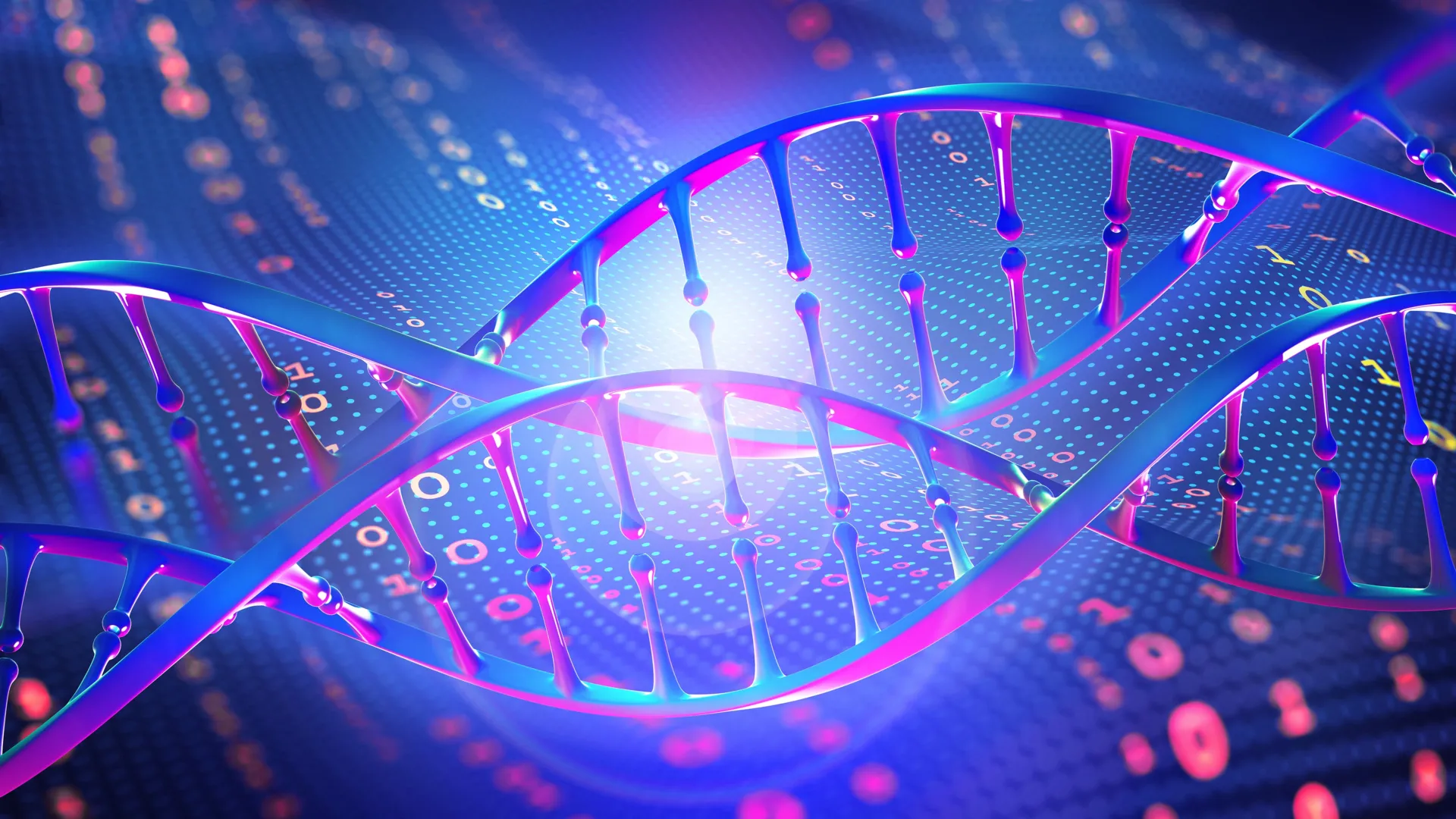
Penn State researchers report a bio-hybrid #memory device that integrates synthetic DNA with a crystalline perovskite semiconductor to enable ultra-low-power data storage and processing in the same location, with the aim of improving energy efficiency for #AI and next-generation computing. They note DNA’s extreme data density, citing that a single gram can hold about 215 million gigabytes, and describe using commercially available, chemically engineered short DNA sequences tailored for electronic requirements alongside perovskite materials already used in technologies like solar cells, lasers, and data storage. The team built a #memristor, a memory resistor that retains a record of prior electrical activity and can preserve information even when power is removed, resembling neuron-like behavior where storage and computation co-locate. By bridging biological and electronic materials through a new materials platform, the approach is positioned as a path toward high-storage, low-energy devices that could reduce the cost and inefficiency of future AI-scale systems.
15. Tracked by an AirTag: Inside Amazon’s Secret Pipeline That Reportedly Destroys Physical Books

An Apple AirTag planted by 404 Media in a bulk shipment of about 1,000 used books reportedly traced a hidden Amazon workflow in which physical books are bought, #destructively scanned, and then destroyed to generate #AI training data. The tag’s route led from a bookseller through processing and into Amazon’s Las Vegas facility VGT3, where workers described a standard process of slicing off bindings, scanning loose pages, and discarding the remains, while Amazon’s public statement only said it buys books through commercial channels to improve products and services. The article argues printed, pre-2022 books are especially valuable because they are likely free of synthetic, AI-generated text, reducing contamination risks such as model collapse, and cites ISBNdb’s briefly posted, later removed marketing claim that “the world’s best AI training data is sitting on a shelf.” It links this approach to similar large-scale practices described in @Anthropic internal “Project Panama” documents disclosed in 2026 litigation, involving millions of books scanned and discarded. It also notes a June 2025 federal ruling that treated destructive book scanning as transformative fair use, which the article says helps enable largely unregulated AI training from physical books.
16. Musk’s Texas chip project has county backing, but permits and plans remain incomplete

SpaceX has secured Grimes County support for a proposed, multi-phase “Terafab” complex near Gibbons Creek Reservoir in Texas, but public records still leave major uncertainties about the project’s final size, construction sequencing, and #permitting status. The signed county tax-abatement agreement describes a vertically integrated #semiconductor manufacturing and advanced-computing fabrication facility that could include #AI infrastructure and natural-gas-fired power plants, and it ties the effort to @Elon Musk’s plan to produce chips for Tesla vehicles and humanoid robots, SpaceX’s Starlink network, and proposed space-based computing systems. Under the deal, SpaceX must invest at least $5 billion by December 31, 2030 and create 1,800 full-time-equivalent jobs by December 31, 2035, while receiving a 100% county property-tax abatement for 2027 through 2036 and paying $10 million upfront plus $20 million annually from 2027 to 2036. The agreement also sets obligations around reporting and local hiring preference, on-site security and emergency services, road-damage repairs, and water and pollution controls including using reservoir water, on-site wastewater treatment, reuse and conservation, and compliance with state and federal laws. Even as Musk has suggested an eventual footprint that could exceed 100 million square feet and potentially become the world’s largest building, the county contract primarily locks in minimum investment and job targets rather than guaranteeing full build-out, while residents have raised concerns about secrecy, property values, traffic, water, pollution, power generation, and impacts on the area’s rural character.
17. Apple will comply with ‘fairer’ App Tracking Transparency rules in the EU

@Apple has agreed to change how #AppTrackingTransparency works across the EU after Germany’s antitrust regulator found the framework treated third party apps less favorably than Apple’s own. The remedy requires consent pop ups shown to outside developers to be visually and linguistically neutral, removing wording and symbols that regulators said nudged users toward refusing, and it lets developers combine Apple’s mandatory tracking request with their own data protection prompt instead of forcing two separate prompts. Apple has four months to implement the changes, and compliance will be monitored for seven years. The dispute centers on the claim that Apple applied strict permission prompts to third parties while not showing the same prompt in its own iPhone apps, which Apple said was because it does not perform the kind of tracking #ATT targets, though its growing ad business fueled skepticism. Apple said the required changes are minor and that it is making them at the FCO’s request to continue offering ATT in Europe while keeping users in control of whether apps can track them across other companies’ apps and websites.
18. Anthropic explains how Claude’s invisible text watermarks will work

@Anthropic says it will add invisible watermarks to #Claude-generated text, using a version of #SynthID-Text from @Google #DeepMind, to comply with the #EU AI Act transparency rules. The method embeds a detectable pattern by steering low-impact word choices based on a secret key and the preceding words, rather than relying on an arbitrary random number generator, so the text reads the same but can be identified by someone with the key. Anthropic says the watermarking will not raise prices or have any practical impact on the quality or content of Claude’s outputs, and it is also adding #C2PA support for Claude-processed images. The article notes that other AI developers are also affected by the EU requirements, with Google’s Gemini supporting SynthID-Text since 2024, while @OpenAI has not detailed text watermarking plans for #ChatGPT in its compliance roadmap but will be subject to the law.
19. Apple: DOJ’s latest challenge in antitrust case ‘fails at every level’ – 9to5Mac

In Apple’s antitrust fight with the #DOJ, the company is urging special discovery master @Jose Linares to deny the government’s motion to reconsider an order that lets Apple seek documents from 14 U.S. federal agencies. Apple argues the records could help show the government chose Apple products for their privacy features, supporting its claim that the challenged conduct has legitimate justifications rather than being anticompetitive. The #DOJ contends Linares used the wrong standard by treating agencies like parties instead of protected non parties, and says Apple’s requests are unduly burdensome and only marginally relevant because agencies are not ordinary consumers, citing 13 declarations. Apple counters that the motion is improper re litigation, that the “new evidence” was always available, and that the declarations still do not show undue burden, concluding the motion “fails at every level.” With no further briefing allowed under Linares’ timeline, he will either uphold the original discovery order or grant reconsideration.
20. China Tests New Way to Automate Trucking: One Driver Leading a Convoy
China is pioneering a convoy system where a single truck driver leads multiple automated trucks, aiming to increase efficiency and reduce labor costs in trucking. This approach involves a lead vehicle operated by a driver and a string of following trucks that use autonomous technology to maintain consistent speeds and safe distances. The system leverages #automated driving and #vehicle platooning technologies to optimize highway transport and decrease fuel consumption. By automating convoy operations, China anticipates improvements in road safety and logistics productivity, aligning with broader goals of smart transportation development. This innovation exemplifies a strategic step towards integrating human oversight with autonomous vehicle capabilities to enhance freight movement.
21. Uber adds Zipline drones to its Eats delivery network | TechCrunch

Uber is investing in and partnering with Zipline to add #droneDelivery to Uber Eats, aiming to reach one million drone deliveries per day by the end of 2029. The companies say the first Zipline deliveries will launch on Uber Eats by the end of 2026, starting in Zipline’s existing markets and expanding into “dozens of U.S. cities,” though the investment amount was not disclosed. Uber is pursuing a platform strategy similar to its #autonomousVehicles approach, bringing multiple partners onto its network and backing providers financially, after selling internal efforts like Uber Elevate and Uber Autonomous Technologies Group and committing over $10 billion to autonomous vehicle providers. Uber expects Zipline’s drones to fulfill Eats orders within five to 10 minutes, and @DaraKhosrowshahi said “quick commerce” could drive the next phase of Eats growth, while Zipline, fresh off an extended Series H that brought in $800 million and valued it at $7.6 billion, framed the tie-up as part of a broader transportation shift. The deal reflects Uber’s push to keep expanding Uber Eats using #autonomous technologies even as some partnerships can be contentious, as seen in its clash with @Waymo and their expected split when contracts expire in 2028.

The article argues that modern autoscaling approaches built for human-driven traffic break under #agentic traffic, requiring a mindset shift and new scaling patterns. It contrasts human traffic, which is diurnal, forecastable, slowly ramping, statistically smoothed, and bounded in retries, with agent traffic that arrives in orchestrated bursts with near-instant onset, correlated fan-out, relentless retry storms without explicit budgets, and failure modes that self-amplify. It also notes that for agents, request count is decoupled from cost because a single heavy reasoning chain can consume outsized compute, and agents may tolerate higher latency, which creates exploitable slack. Because agentic traffic violates these assumptions simultaneously, the author says the solution is not incremental improvements to on-demand instances or #serverless, but moving intelligence to a different point in the system. The piece frames this shift by introducing the evolution of scaling, beginning with Generation 1, anticipation via on-demand capacity planning for known events.
23. Anomalous quantum oscillations reveal new physics in unconventional materials
Anomalous quantum oscillations have been observed in unconventional materials, revealing new physics beyond traditional theories. Researchers detected unusual patterns in the magnetic oscillations of certain quantum materials, which deviate from classical predictions based on known electronic structures. This discovery suggests the presence of previously unidentified quantum states or interactions, challenging existing models of electron behavior in these systems. The findings highlight the importance of exploring novel materials to uncover hidden quantum phenomena and could advance the development of future quantum technologies. Understanding these anomalies contributes to deeper insights into complex quantum matter and their potential applications.
24. Ukrainian drone that smashed TU-95 bomber is based on a smuggled UAV China refused to sell

A Ukrainian #UAV strike that damaged a Russian Tu-95 bomber is tied to Ukraine’s domestically built MICH 2000 drone, a clone inspired by China’s ZTK-150 after China stopped selling the platform in 2023. The article says drones hit Russia’s Engels-2 air base on July 16, 2026, targeting a Tu-95 and four Tu-22Ms, and an @SBU assessment reported the Tu-95 suffered critical damage with its tail section torn off. It describes a failed 2023 attempt to buy ZTK-150s or even the underlying technology, followed by intermediaries allegedly exporting eight drones via a jurisdiction without export restrictions and providing pilot training while also photographing the ZTK-150 production setup. Ukraine’s MICH 2000 is reported to cost about $48,000 versus $50,000 for a ZTK-150, and to be customized with mission-specific warheads, fuel tanks, electronic countermeasures, and communications options including analog, digital, and #Starlink. Reportedly produced at roughly 6,000 units per year with a possible rise to 10,000, the MICH 2000 is positioned as a leading tool for continued Ukrainian drone strikes against Russian targets.

After decades of living with #sickle cell disease, Victoria Gray’s story is framed as an example of how #CRISPR-based gene editing could offer people like her a renewed chance at life. Diagnosed at 3 months old in 1985 after severe pain led doctors to blood tests, she was told she might only live to age 7, in an era when many children with sickle cell died young due to infections or organ failure. The article explains that sickle cell disease misshapes red blood cells, blocks oxygen flow, can cause organ damage and unbearable pain, and often requires regular blood transfusions, affecting about 100,000 Americans, more than 90% of whom are Black, and an estimated 8 million people globally. It connects Gray’s experience to the origins of #CRISPR-Cas9 at UC Berkeley, where @Jennifer Doudna’s lab studied bacterial defenses and, through collaboration with @Emmanuelle Charpentier, helped show the system could be used to edit DNA in plant, animal, and human cells. Together, these details link a personal life shaped by chronic disease to a major scientific breakthrough that the piece suggests opened a pathway to new therapeutic possibilities.

A single #ALPR hit from a Flock Safety camera became the core justification for arresting 23-year-old Lindsey Brooke Isaacs for a fatal hit-and-run, even as multiple contradictions were apparent from the start. After an Oct 4, 2025 crash on I-4 near DeBary, Florida that killed Joaquin Deno, Flagler County deputy administrator Jorge Salinas, and Nancy Salinas, the camera flagged a black Dodge Durango registered to Isaacs about three miles from the scene, while a 911 caller described a maroon Durango with a partial plate that did not match hers and forensic evidence showed maroon paint transfer. Isaacs’ black Durango reportedly had no crash-consistent damage, and her attorney’s time-distance analysis argued her vehicle could not have been at the crash site when the collision occurred, yet these points were ignored in what the article characterizes as investigative tunnel vision. On April 17, 2026, Florida Highway Patrol arrested her on eight felonies including three counts of vehicular homicide, exposing her to a potential life sentence, and she spent 13 days in jail before prosecutors acknowledged they lacked sufficient evidence. The case highlights an unresolved question raised by the article: whether a #ALPR hit alone should constitute probable cause, and how reliance on such technology can steer investigations toward a “guilty until proven innocent” dynamic.
27. Wearable sensors and AI enable continuous blood pressure monitoring
Wearable sensors combined with AI technologies are revolutionizing continuous blood pressure monitoring by providing accurate, non-invasive measurements. Researchers have developed advanced wearable devices that track blood pressure throughout daily activities, addressing challenges of traditional cuff-based methods that are intermittent and cumbersome. These innovations leverage machine learning algorithms to analyze sensor data and predict blood pressure variations in real time, offering potential improvements in hypertension management and cardiovascular risk assessment. As continuous monitoring becomes more accessible and reliable, patients and clinicians can benefit from timely, personalized health insights that improve treatment outcomes and preventive care. The integration of #wearableTech and #AI in healthcare marks a significant advancement in chronic disease monitoring and management.
NVIDIA has ensured that SB Energy’s Ports Pike Technology Campus in Ohio will exclusively host NVIDIA AI compute infrastructure, signaling a significant commitment to expanding AI capabilities in the region. This partnership leverages the campus’s state-of-the-art facilities to support high-performance computing essential for AI development. It demonstrates NVIDIA’s strategic investment to enhance local tech ecosystems and accelerate AI innovation through dedicated resources. The initiative reinforces the company’s leadership in providing cutting-edge #AI infrastructure while promoting regional economic growth. This exclusive hosting agreement highlights NVIDIA’s role in driving advancements in AI technologies by situating critical compute power in a key technological hub.
29. ‘We Should Be Furious’: UK Navy Drones Caught Beaming ‘Heartbeat’ Data To China – SlashGear
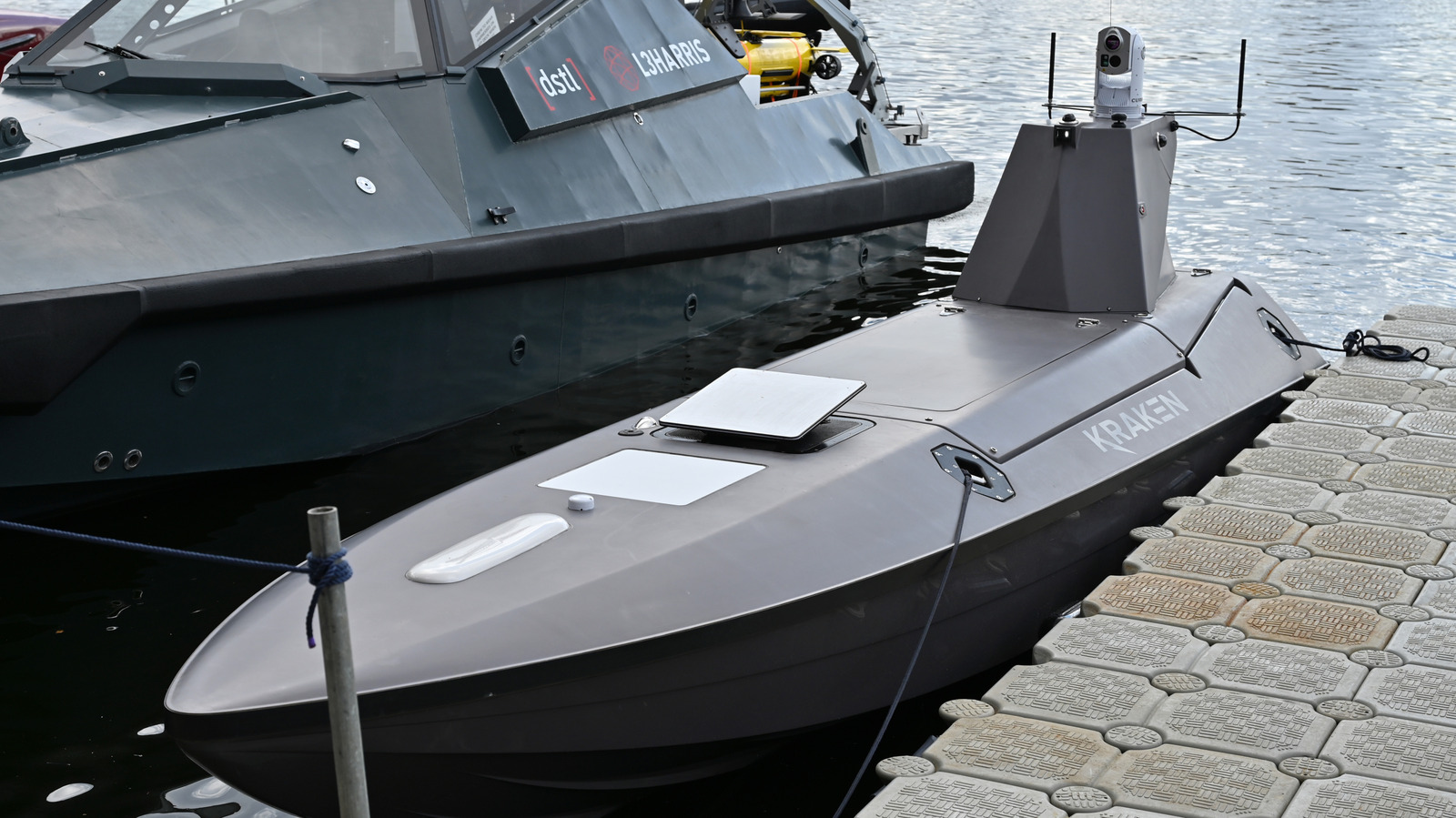
The @Royal Navy disabled wireless connectivity on some K3 Scout uncrewed surface vessels after discovering that third party camera components were sending automated #heartbeat communications to an IP address in China. An audit found the signals reported system status, indicating when the platforms were online and in use, but concluded no sensitive data was transferred to Chinese servers. Kraken Technology Group, the developer of the K3 Scout, said the cameras were NDAA compliant, contained a small number of non U.K. sourced components, and that audits by Kraken and the @Royal Navy identified and closed potential vulnerabilities. The incident raises broader concerns because the U.K. has a multi billion pound drone program and U.S. Special Operations Command has also purchased the K3 Scout, while it remained unclear what actions the U.S. would take as no statement had been issued.
30. AI context layers expose more agent failures | VentureBeat

VB Pulse data indicates enterprises frequently see AI agents deliver confident but wrong answers due to missing or inconsistent business context, and those running a governed #AI context layer report the problem more often, not less. In a July 2026 survey of 101 enterprises, 68% traced a confident wrong answer to context issues in the past six months, with 37% saying it happened more than once, up from 57% and 31% in June; enterprises with a governed layer reported recurring wrong answers at 50% versus 21% without one. How agents receive context varies widely: 31% primarily use document retrieval, 13% rely on long-context loading, and 5% provide no structured context, and even retrieval can fail because semantic similarity can mask opposite meanings, as described by @Srijith Rajamohan. Procurement priorities have shifted toward governance features like access control and permissions, both at 24%, while retrieval accuracy lags at 15%, even though response correctness remains the top success metric at 38%. Adoption is still in flux, with 32% running a governed context layer in production and 31% piloting or building one, suggesting organizations trying to standardize #context are also surfacing more failures that were previously hidden or untracked.
31. Quantum computing may be facing a replication crisis | New Scientist

A large review suggests #quantum computing research is facing a #replication crisis because results reported in many papers cannot be reproduced on independent machines. @Wolfgang Mauerer and colleagues assessed reproducibility using criteria including whether papers provided runnable code, adequate documentation, hardware information, and whether programs executed without errors, first manually on 127 papers and then via automation on 4966 papers. In the manual sample, only 24.4% provided code that could be attempted, and 64.5% of that code failed to run, while the automated scan found only 26.8% of nearly 5000 papers gave enough information to even try replication. The findings are worse than typical standards in traditional computer science and appear not to have improved compared with a smaller study from several years earlier, which the authors partly attribute to the unusual variability and rapid evolution of current quantum hardware, including cloud-accessed devices. Because practical value claims for #quantum computers must work across different machines to become routine, limited reproducibility may undermine confidence in some recent reported achievements.
The article highlights the influence of iconic jazz musicians who shaped the #jazz genre through innovation and artistry. Musicians like @Louis Armstrong and @Miles Davis are discussed for their pioneering contributions that transformed jazz styles and popularized the genre worldwide. Their unique approaches to improvisation and musical expression helped establish jazz as a significant cultural movement. The article emphasizes how these artists’ legacies continue to inspire contemporary musicians and maintain jazz’s relevance. This historical perspective underscores the lasting impact of these figures on music and culture.
33. Pokemon Center Data Breach Exposes Customer Info, Cancels Some Orders
Pokemon Center suffered a data breach that exposed customer information and led to the cancellation of some orders. The attack primarily affected customer accounts, exposing names, addresses, email addresses, and order histories. As a result, the company took immediate action to investigate the breach, cancel potentially compromised orders, and enhance security measures. This incident highlights the vulnerability of e-commerce platforms to cyberattacks and the importance of timely response to protect user data. Customers affected by the breach were notified to monitor their accounts and take precautions against potential fraud.
34. GPU Offload in Rust: Portable, Safe, and Fast

This paper presents a zero-overhead, multi-vendor #GPU offload compilation framework integrated into the Rust compiler (#rustc) and #LLVM backends, aiming to reconcile high performance with Rust’s compile-time memory safety for GPU execution. It leverages Rust’s type and ownership systems plus strict aliasing guarantees (#noalias) to manage and optimize data transfers via LLVM’s #Offload infrastructure. The authors detail cross-vendor host/device ABI lowering mismatches and introduce a two-pass compilation pipeline designed to safely support both manual and compiler-generated memory movements. Evaluation on #RAJAPerf reports that the rustc-based approach can generate competitive LLVM IR for GPU kernels, delivering solid kernel performance relative to native, hand-optimized #CUDA and #HIP C++ baselines. Overall, the work frames a path to portable GPU programming in Rust without relying on vendor-locked DSLs or pervasive unsafe raw pointers.
35. New ChatGPT Feature Collects Every Keystroke You Make

OpenAI is introducing #ComputerHistory in the ChatGPT macOS desktop app, an opt-in feature that records your on-computer “events” and “interactions,” including clicks and keystrokes, so an AI agent can learn your workflow, resume tasks, and suggest automations. OpenAI’s Ari Weinstein says it can “learn from everything you do on your computer,” and a demo with @Dominik Kundel shows ChatGPT recalling the last Google Doc viewed and checking Slack messages based on earlier context. The company says it ignores incognito or private tabs, allows app blacklisting, and lets users inspect and delete items from an AI “memory” database, but critics argue it still grants sweeping access and could expose information about other people in private chats. The feature is compared to #WindowsRecall, and while OpenAI says it does not take screenshots, it acknowledges the history files can contain sensitive information and are not encrypted, so other programs running under the same macOS user may access them. Overall, the tool is pitched as productivity automation, but its broad tracking and unencrypted local data intensify privacy and security concerns.
36. Researchers advance red blood cell generation for therapeutic use
A team of scientists has made significant progress in developing methods for generating red blood cells (RBCs) that could be used therapeutically. The generation of lab-grown RBCs aims to address blood shortages and improve treatments for anemia and other blood disorders. Researchers have enhanced protocols to increase the efficiency and quality of in vitro produced RBCs, ensuring they function comparably to natural cells in oxygen transport. This advancement may lead to a reliable, scalable source of RBCs for transfusions, reducing dependency on donor blood supplies and mitigating risks associated with blood transfusions. These findings offer promise for future clinical applications and pave the way for improved patient care in hematology.
That’s all for today’s digest for 2026/08/18! We picked, and processed 36 Articles. Stay tuned for tomorrow’s collection of insights and discoveries.
Thanks, Patricia Zougheib and Dr Badawi, for curating the links
See you in the next one! 🚀
