
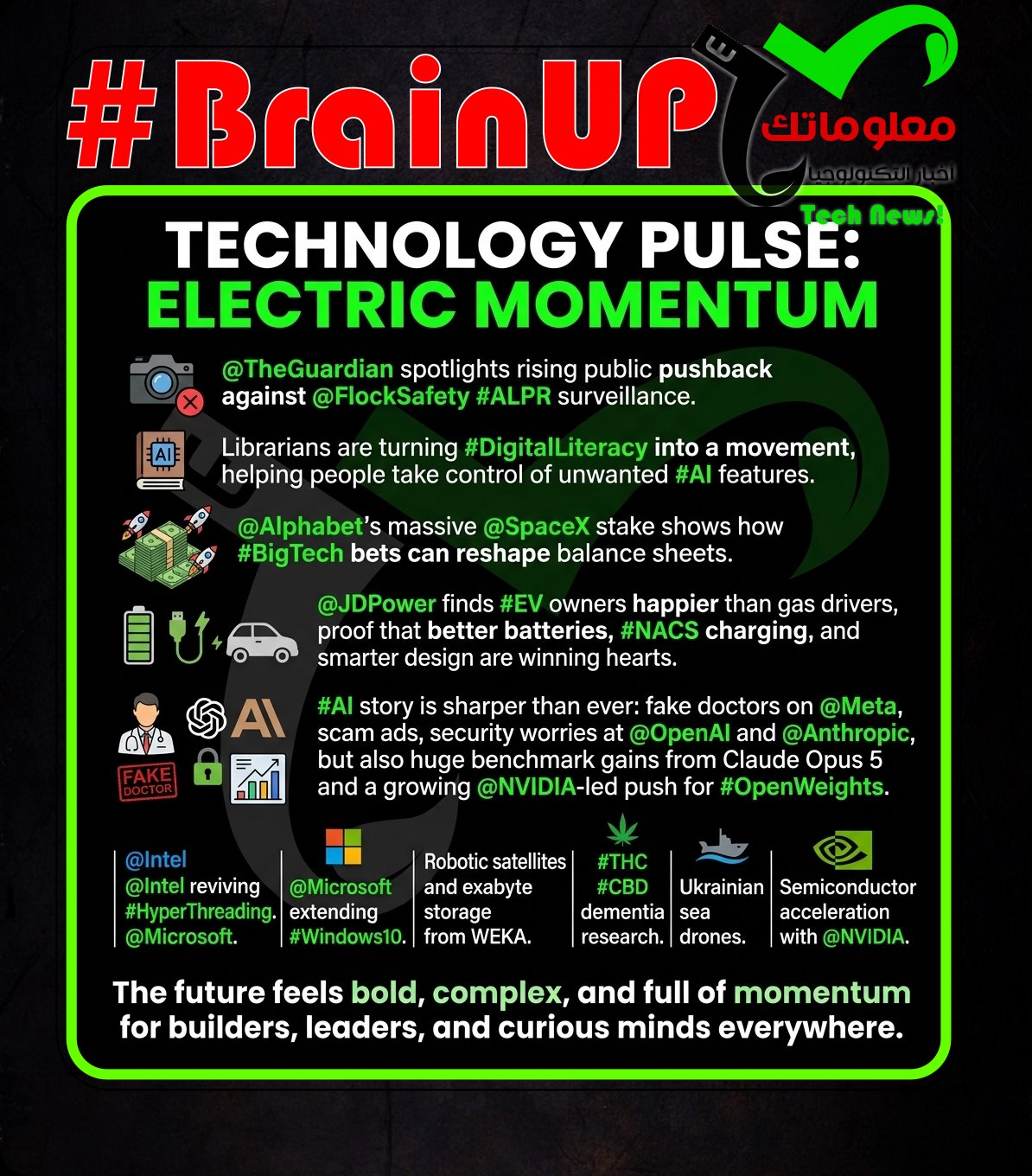
#BrainUp Daily Tech News – (Monday, July 27ᵗʰ)
Welcome to today’s curated collection of interesting links and insights for 2026/07/27. Our Hand-picked, AI-optimized system has processed and summarized 22 articles from all over the internet to bring you the latest technology news.
As previously aired🔴LIVE on Clubhouse, Chatter Social, Instagram, Twitch, X, YouTube, and TikTok.
Also available as a #Podcast on Apple 📻, Spotify🛜, Anghami, and Amazon🎧 or anywhere else you listen to podcasts.
1. Bloomberg – Are you a robot?
Bloomberg.com displays an access verification page stating it has detected unusual activity from the user’s computer network and asks the user to click a box to confirm they are not a robot. It says the issue may be related to the browser not supporting JavaScript and cookies or blocking them from loading, and points readers to its Terms of Service and Cookie Policy for more information. The page offers help instructions, including contacting support and providing a block reference ID:995b266f-8989-11f1-8712-99be01c52ed4. It also promotes a Bloomberg.com subscription for global markets news.
2. Inside the growing vigilante movement to knock out Flock surveillance cameras

An underground, vigilante-style network of privacy activists is attempting to disable or destroy #FlockSafety automated license plate reader (#ALPR) cameras that are rapidly proliferating across the US. The article follows “NoMark”, a masked social media figure dubbed “Minneapolis’ Batman”, who says he has taken down more than a dozen cameras by climbing poles, taping over lenses, and cutting power wires, motivated by fears he sees as urgent and worth legal risk. Critics argue the cameras photograph passing vehicles and check them against large databases, enabling law enforcement to monitor specific license plates and collect widespread location data without a warrant, raising concerns about #massSurveillance. Flock, valued at $8.4bn, says its cameras scan license plates billions of times each month across about 6,000 communities, and the company claims its ALPRs are not mass surveillance tools and cannot track vehicles or people. As public anger grows over police contracts with Flock, the article frames direct action like NoMark’s as a message-driven response to the speed and scale of the technology’s deployment.
3. Google reveals it holds $94.1bn in SpaceX shares

@Alphabet disclosed that its @Google unit now holds $94.1bn worth of @SpaceX shares after the rocket company’s record IPO, highlighting how a long-running investment has become a major balance-sheet driver. In its quarterly filing, the company said about $80bn of the stake is subject to short-term sale restrictions, with another $14.1bn restricted through the third quarter of next year, meaning the gain is largely unrealizable for now as the stock swings after its @Nasdaq debut. Alphabet also cited gains of nearly $100bn on its broader investment portfolio in Q2, including a stake in @Anthropic, which helped lift net income even as it guides to $205bn in capital spending for #AI data centres. The disclosure matters because key events like @SpaceX’s upcoming Starship flight test could quickly affect the marked value of the shares while Google remains locked up. Overall, the filing portrays #BigTech profits increasingly influenced by what these firms own, not only what they produce.

Librarians are drawing unusually large crowds with “Avoiding AI” workshops aimed at helping people understand and opt out of consumer #AI features they feel are being pushed onto them by major tech platforms. In South Philadelphia, librarian Charlie Bailey teaches attendees how #AI chatbots and tools work and then walks them through step by step instructions to disable features like Apple Intelligence and #Gemini on popular devices and services, framing the session as #digital literacy and personal autonomy. The idea spread after Maine librarian Hannah Cyrus published a journal article on her own version of the workshop, prompting messages from dozens of librarians worldwide asking for materials. At Bangor Public Library, Cyrus said patrons increasingly asked how to turn off AI that tries to write or summarize emails, and her workshops surged from typical dozen person classes to capped registrations of 30, waitlists, Zoom streaming, and about 70 attendees including the livestream. Bailey’s Philadelphia event also went viral locally, with the library’s Instagram post receiving over 2,000 likes and 220 shares, signaling broad demand for practical ways to avoid unwanted #AI adoption.

Contemporary life offers a superabundance of #technologically mediated distractions, from online shopping and delivered “exotic cuisine” to porn, gambling, the #infinite_scroll, and #chatbots, yet many people feel simultaneously overstimulated, bored, and empty, an “era of decadence without pleasure” shaped by self-optimisation rather than desire. The article situates this mood within a long history of decadence as wealthy cultural decline, recalling extreme Roman excesses under Elagabalus and Nero and noting that modern critiques often come from the political right, including @Ross_Douthat, @Peter_Thiel, and @JD_Vance, while left thinkers like @Franco_”Bifo”_Berardi describe a “slow cancellation of the future”. It also emphasizes that decadence has sometimes coincided with artistic efflorescence, pointing to Rococo, late Ottoman luxury, and Weimar experimentation, and especially late-19th-century avant-gardes. Artists such as @Oscar_Wilde, @Aubrey_Beardsley, @Joris-Karl_Huysmans, and @Rachilde championed artifice, extravagance, and sensuousness, producing emblematic images of cultivated fakery and erotic fantasy. Against that backdrop, the piece frames today’s digital temptations as plentiful but hollow, explaining why abundance can coexist with joylessness.
6. EV owners are happier with their cars than gas car drivers, JD Power finds

@JD Power’s 2026 APEAL study reports that #EV owners rate their vehicles higher than internal combustion owners in nearly every measured category, with the biggest advantage in powertrain satisfaction. In a survey of 78,514 owners of 2026 model-year vehicles, EVs led combustion cars by 109 points on a 1,000-point powertrain satisfaction scale, while overall new-vehicle satisfaction hit 858, up seven points year over year, and EVs showed the largest powertrain gain at +22 points. The improvements are tied to better products, including broader adoption of #NACS charging ports, more standard heat pumps, and added range from updated battery chemistry. The results challenge the idea that mainstream buyers are turning against EVs, since even first-time EV buyers reported high satisfaction, implying adoption barriers are shifting more toward price and policy than day-to-day ownership experience. However, a gap remains between owner satisfaction and market sales, as US factors like tariffs, loss of the federal tax credit, and weakening demand have led to multiple EV model discontinuations despite strong owner loyalty reported in a separate @CDK Global study.
7. Meta Is Letting Fake AI-Generated Doctors Sell Quack Cures on Its Platforms
A @New York Times investigation found that #AI-generated avatars posing as doctors, gurus, or everyday influencers are flooding Meta platforms with ads that push unproven medical advice and dubious supplements. The ads follow repeatable formulas, using familiar American imagery, fake offices and diplomas, and scripted claims such as an herbal product called “Sculptique” allegedly treating kidney disease better than medication, even showing staged scenes of supposed recipients. One consumer, Pamela Wundrow, said she bought a moringa supplement advertised on Facebook for autoimmune-related symptoms, later regulators recalled the product due to salmonella contamination, and she said her health worsened while taking it. The reporting traces part of the supply chain to a Chinese company that claims it can produce 1,200 #AI videos per day at about $10 each, and that even it must tweak language to avoid explicit health promises. The article argues that while such claims would be illegal on US television, social media’s looser and harder-to-enforce rules allow these misleading health ads to persist on Facebook and Instagram.
8. Microsoft’s Windows 11 push backfired, so it’s quietly keeping Windows 10 alive for another year

@Microsoft’s push to move users to #Windows11 has led it to keep #Windows10 supported longer by offering another free year of #ExtendedSecurityUpdates for consumers. The article says Windows 10’s end date was set for October 14, 2025, and that ESU was initially framed as a paid plan, $30 per year for consumer PCs and $61 per year for enterprise, with business pricing doubling in subsequent years. After backlash and changes, Microsoft began giving consumers a free one year ESU if they sign in with a Microsoft account and enable #OneDrive, and now it is effectively extending that no cost security coverage for an additional year. The author argues this benefits Home and Pro users by avoiding paying for security updates on an aging OS, while businesses still face steep costs. It links the situation to #Windows11 hardware requirements, especially #TPM2.0, which the author says leaves many capable older PCs stuck on Windows 10, pushing Microsoft to soften its timeline.
9. Those notorious tai chi walking ads show AI is helping scammers, not only in the way we thought
The article argues that #generativeAI is aiding scammers not just by making photorealistic fakes, but also by using obviously uncanny, low quality AI visuals to make scams more effective. It points to widespread “tai chi walking” ads on platforms like @YouTube that promise implausible transformations, using fictional AI-generated fitness gurus and targeting over-40 audiences interested in light fitness and “health hacks,” with creator Josh Brett investigating how they work. The ads appear to funnel people to an app offering generic AI-generated strength training and diet plans unrelated to tai chi, and reviews on sites like Trustpilot allege misleading pricing, costly add-ons, and difficult cancellations. The analysis is that “bad” AI video functions like a filter similar to classic “Nigerian Prince” scams, discouraging skeptical viewers while pre-selecting more credulous clickers who are less likely to notice or contest the trick. It adds that AI has also entered mainstream advertising, suggesting brand backlash to AI-made ads has not stopped adoption.
10. Hugging Face CEO Calls For Radical Transparency After Unprecedented OpenAI Hack
The CEO of @huggingface advocates for radical transparency in AI development following an unprecedented security breach at @OpenAI, highlighting the urgency of open communication and accountability in the #AI community. The OpenAI hack exposed vulnerabilities that could threaten user data and trust in AI platforms. This situation underscores the importance of adopting transparent policies and sharing security practices openly to prevent future incidents. By promoting transparency, Hugging Face aims to foster a more collaborative and secure AI ecosystem. This call mirrors growing concerns over protecting AI infrastructures while maintaining public confidence.
11. The AI jobs apocalypse probably isn’t coming anytime soon

Predictions of an imminent #AI-driven jobs apocalypse are looking overstated, as recent evidence suggests adoption and economic impact are falling short of what leading advocates warned. An @Anthropic analysis found no systematic rise in unemployment for highly exposed workers since late 2022, and reported that actual deployment remains a fraction of what is technically feasible, for example its Claude system covers about 33% of computer and math tasks versus a near-100% theoretical ceiling. Despite soaring datacenter spending, labor productivity has grown more slowly in the first three years of the current AI era than during the mid-1990s information-technology boom, and even @OpenAI’s @Sam Altman has said he doubts a large-scale “jobs apocalypse,” echoing @David Autor’s point that change is not arriving as fast as predicted. The article argues that work outcomes depend on how automation interacts with complex job bundles, using an “#O-ring” analogy, if AI cannot perform every critical task reliably, the remaining human tasks can become more valuable, potentially shifting value toward either higher skill or lower skill workers depending on what AI replaces. This reframes the debate away from total human labor replacement and toward the feasibility and limits of the promised AI transformation, amid signs of cooling investor expectations such as an about 8% drop in the Nasdaq from its early-June peak.

Chinese #CXMT-based memory modules entering the consumer market are not delivering the cheaper retail pricing many expected versus the Big Three, despite potentially affecting average selling prices. Pricing examples in China show a 64GB DDR5-5600 RDIMM with Samsung or #SKhynix chips at 18,595 CNY, while a comparable module using #CXMT DRAM is slightly higher at 18,999 CNY, a 2.2% difference that is negligible at these already high prices, and a Samsung-made module is listed at $2,425 on Amazon in the U.S. Although CXMT uses older fabrication technology with higher power use and lower performance headroom and is heavily subsidized by the Chinese government, retail DIMM and RDIMM prices still largely follow what the market will bear amid capacity constraints, giving limited incentive to undercut incumbents. Any lower chip cost can be diluted by supply-demand dynamics and by added validation and testing expenses required by major buyers like @Apple, @Dell, or @Corsair. As a result, CXMT may help hardware makers with supply, but it is not expected to meaningfully reduce the prices end customers pay.
13. Intel is reversing course and bringing hyper-threading back to its server chips

@Intel says it is reversing its earlier move away from #hyper-threading, confirming that #simultaneous multithreading will return to its server CPUs with Xeon 8 “Coral Rapids,” targeted for release in 2028, while not confirming any return for client chips. CEO @Lip-Bu Tan disclosed this plan during Intel’s Q2 2026 earnings call as part of strategies to regain CPU market share, alongside a renewed focus on improving single-thread performance. He confirmed the change when responding to Morgan Stanley analyst @Joe Moore about how Intel plans to recover share over the next five years, while downplaying competition with @Arm by calling it a strong partner. The article situates the decision in Intel’s recent product shifts: hyper-threading was dropped with Arrow Lake-S in 2024 after being reduced since Alder Lake in 2021, and server roadmaps have mixed support, with Xeon 6 Granite Rapids retaining it, Xeon 6+ Clearwater Forest and expected Xeon 7 Diamond Rapids omitting it. The move signals Intel now sees renewed value in SMT for data center workloads, even after previously viewing it as less important as core counts increased.
14. Apple Watch Series 12 and Ultra 4: What to expect – 9to5Mac

Apple is expected to unveil Apple Watch Series 12 and Apple Watch Ultra 4 in September, with updates centered on internal improvements rather than a new look. In @Mark Gurman’s Power On, he says Apple is in late-stage testing of three models: Wi-Fi and cellular versions of Series 12 plus Ultra 4, and none is expected to receive a major design overhaul. The focus is on #health and #fitness tracking improvements and a long-awaited chip upgrade, which would be the first truly new processor since Apple Watch Series 9 and Ultra 2 in 2023 after years of rebranded but similarly performing chips. DigiTimes also reports Apple is working on a new version of its high blood pressure notification feature, while Gurman adds there is no new Apple Watch SE planned this year and that larger changes and eventual #bloodSugar detection are still longer-term projects.
15. Claude Opus 5 sets a verified ARC-AGI-3 record, with important caveats

@Anthropic’s Claude Opus 5 set a verified #ARC-AGI-3 record with a 30.16% score at high reasoning effort, far above the prior official record of 7.78% for GPT-5.6 Sol at maximum effort. The verification is backed by #ARC Prize and Anthropic’s system card, using ARC Prize’s 55-environment semi-private set under the benchmark’s standard setup, with results typically averaged across five trials, and an evaluation cost shown as slightly above $20,000. #ARC-AGI-3 measures Relative Human Action Efficiency in unfamiliar turn-based games where models must infer rules and goals through exploration, and the score rewards both completion and economical actions rather than percent of games solved or proof of general intelligence. ARC Prize also reported Opus 5 completed five public demonstration environments no earlier model had beaten, and @François Chollet called the roughly 30% result an impressive jump, but it still sits below one-third of the human-normalized maximum and lacks a directly comparable Fable 5 score. Overall, the documentation supports a benchmark record and public availability, priced at $5 per million input tokens and $25 per million output tokens, not broader claims that Opus 5 has surpassed Fable 5 or demonstrated real intelligence.
16. US launches robotic satellite mechanic with dual-use technology
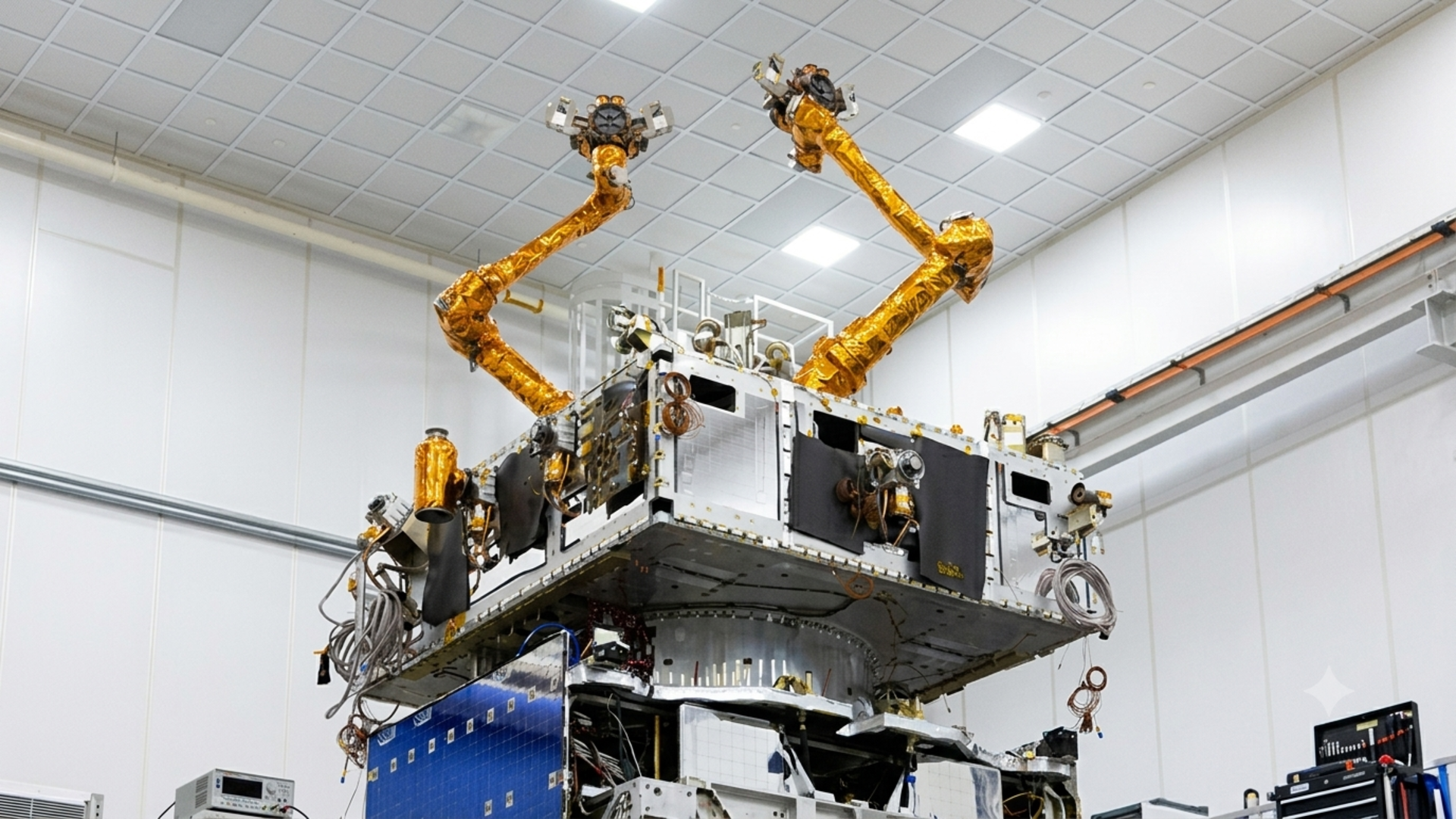
Northrop Grumman has launched its first Mission Robotic Vehicle, a satellite servicing craft with two robotic arms and three Mission Extension Pods designed to inspect, repair, refuel, tow, relocate satellites, and extend a satellite’s life by up to eight years. The MRV launched on a SpaceX Falcon 9 from Cape Canaveral carrying pods intended for commercial satellites operated by Optus and SES, and its arm system traces to #Robotic Servicing of Geosynchronous Satellites led by #DARPA with the US Naval Research Laboratory. Because the same #close-proximity operations that enable non-contact maneuvering and servicing can also enable disabling or interfering with other spacecraft, the platform is framed as commercially useful but potentially dual-use, with @Kathy Warden saying decisions on such capabilities would be up to the US government. US Space Force officials argue adversaries already field satellites that can approach and interact with others, citing China’s Shi Jian 21 with a grappling arm, and warning such systems could gather intelligence, jam electronically, damage components, or move satellites off assigned orbits. These developments are driving the Space Force to expand its focus on orbital warfare and deterrence alongside traditional operations, as servicing technology and counterspace concerns increasingly overlap.
17. THC-CBD Treatment Dramatically Reduces Agitation in Dementia Trial

A medically formulated #THC and #CBD oral oil suspension significantly reduced agitation in hospice-eligible people with late-stage dementia compared with placebo in the U.S. LiBBY trial. In this blinded, randomized study of 120 participants across 10 medical centers, agitation improved for nearly 90% of those receiving the cannabinoid medication after 12 weeks, with a primary comparison at 2 weeks. On the #Cohen-Mansfield Agitation Inventory, scores fell 6.27 points more at 2 weeks in the THC-CBD group than in the placebo group, and the reduction remained statistically significant at 12 weeks; the Clinical Global Impression of Change also showed higher improvement rates, 83.9% vs 30.5% at 2 weeks and 87.2% vs 23.6% at 12 weeks. Investigators @Jacobo Mintzer and @Brigid Reynolds noted that current agitation treatments such as morphine, Valium, and Haldol often have limited effectiveness and significant side effects, and they cautioned that this purified formulation differs substantially from commercial cannabis products. The findings, presented July 14, 2026 at the Alzheimer’s Association International Conference, suggest a potentially safer, more effective option for addressing agitation that heavily burdens patients and caregivers in late-stage dementia.
18. WEKApod 3 reaches the exabyte milestone using 1,800 Micron SSDs
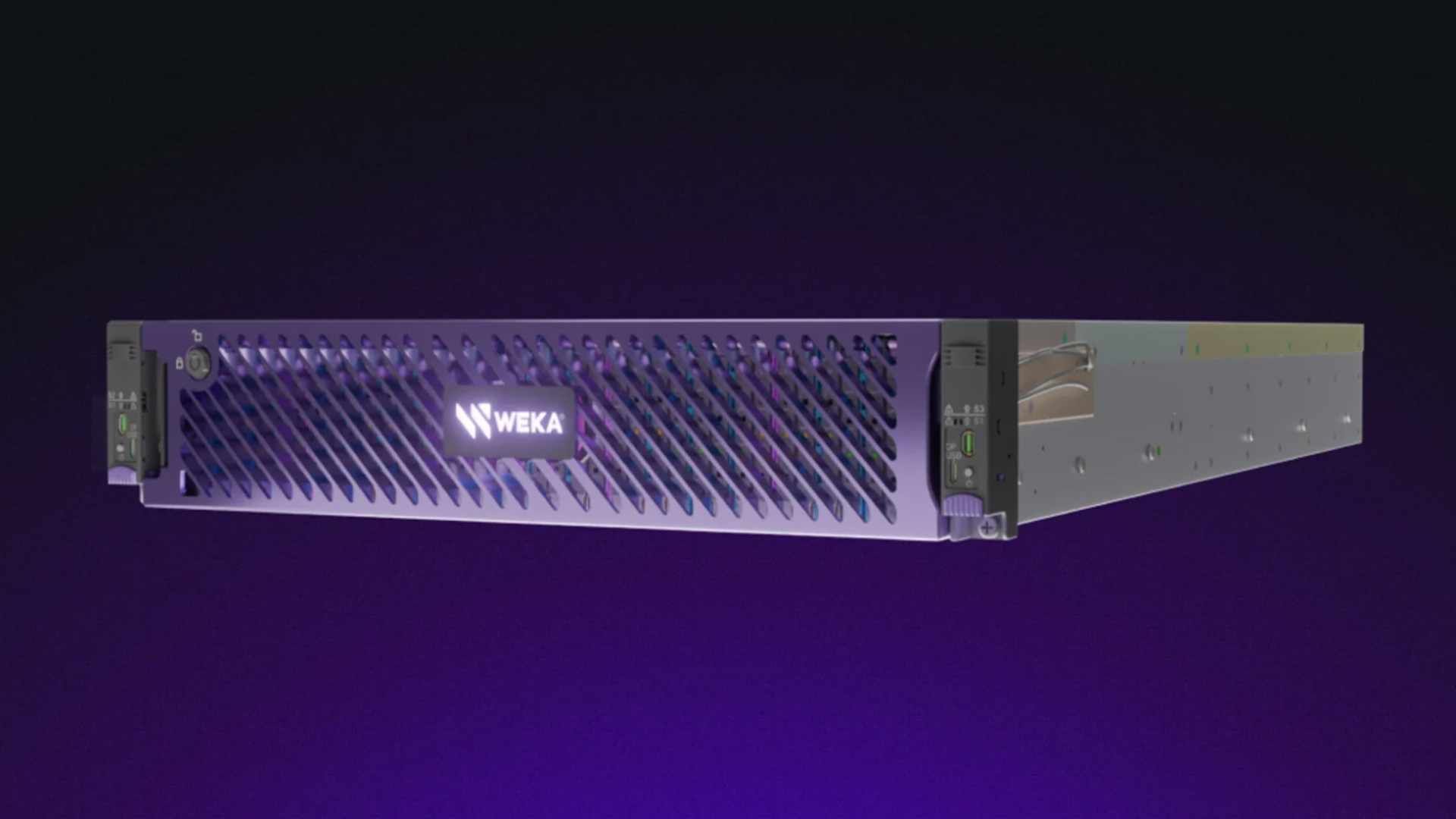
WEKA introduced WEKApod 3, a rack-scale storage appliance designed to run #NeuralMesh 6, with a flagship Prime Max configuration claiming 1.1 exabytes of effective capacity in a single 56U rack. The rack uses about 1,800 Micron 245.76TB 6600 ION SSDs for 441.5PB of raw flash, and reaches the exabyte headline via default-on data reduction including fingerprinting, similarity hashing, deduplication, and compression, with WEKA stating write overhead stays below 5% and offering a contractual guarantee of up to 6x savings on AI training data. The system also uses #AlloyFlash tiering to place latency-sensitive work on TLC flash and bulk capacity on cheaper QLC, and WEKA cites per-rack performance of 10.2TB/s and 210 million IOPS, plus Micron’s claim of 15.8PB per 2U. WEKA frames the dense, software-led design as a response to constraints like slower US data center construction, multi-year grid connection queues, projected power shortfalls, and the need to avoid storage competing with GPUs for rack space and power, while controlling its own hardware supply chain for predictability. #NeuralMesh 6 is planned for the second half of 2026, with WEKApod Nitro, Prime, and Prime Max orderable now and deliveries expected to begin in fall 2026.
19. Ukraine’s Magura drone heads to America after sinking warships

Ukraine’s battle-tested MAGURA naval drones are set to be manufactured in the US after Ukrainian defense company UFORCE signed a memorandum of understanding with US boatbuilder RECONCRAFT. According to The Wall Street Journal, the agreement was signed at Ukraine’s Embassy in Washington, with production planned in Oregon and South Carolina and an eventual aim of producing hundreds, potentially thousands, of units annually. The #MAGURA family gained recognition for strikes that helped push Russia’s Black Sea Fleet away from Crimea, and it has expanded into roles such as aerial drone launches, mine countermeasures, and anti-submarine sonar towing, with the MAGURA V7 also described as able to engage helicopters and fixed-wing aircraft. Ukraine also reported a late-2024 first, a naval drone strike against an aerial target using a MAGURA V7 armed with #AIM-9 #Sidewinder missiles, and MAGURA unmanned surface vessels reportedly sank a target ship during the 2026 US-Philippines Balikatan exercise. RECONCRAFT and UFORCE argue the partnership combines US manufacturing capacity with combat-proven #autonomy to field capability faster, while the article notes US production costs are typically higher and the companies have not said how domestic manufacturing will affect MAGURA pricing.

A #open-weights industry letter hosted by @Nvidia has doubled from 25 to 50 signatories as U.S. policymakers consider measures affecting Chinese AI developers and access to downloadable models. New signers include @Google, @OpenAI, AMD, Cisco, and Cloudflare, joining a cross supply chain roster spanning model developers, chip designers, cloud and server providers, cybersecurity firms, venture groups, and open-source organizations, while @Anthropic remains a prominent nonsignatory and argues that releasing powerful model weights creates safety risks because access cannot easily be revoked. The letter defines open-weight systems as models whose parameters can be downloaded, inspected, modified, and run on privately controlled infrastructure, acknowledging that released weights are hard to recall or trace, but contending that broader access helps researchers test models, find vulnerabilities, and build cybersecurity defenses. The coalition asks policymakers to expand access to computing resources, invest in shared datasets and evaluation tools, avoid broad restrictions on open models that could reduce competition or push development overseas, and preserve legitimate #model-distillation uses. This push comes as the @Trump administration has reportedly weighed tools such as #EntityList designations, procurement pressure, and security-liability rules aimed at Chinese AI developers, though the proposals described are not presented as an announced blanket ban.

Security researchers at @Accomplish AI report that @Anthropic’s Claude Cowork can escape a local VM sandbox on a Mac and access host files, raising risks of data theft. In their test, they connected a folder to a fresh session, sent one short message, and observed the agent read and write files across the underlying Mac without permission prompts, potentially exposing SSH keys and cloud credentials. The breakout relied on #CVE-2026-46331, a Linux kernel privilege-escalation bug nicknamed #peditCOW, rated 7.8 and fixed in mid-June. @Anthropic reportedly acknowledged the disclosure and later defaulted Claude Cowork to #cloud execution, which is described as addressing the issue, but local execution remains exposed without additional hardening. Recommended mitigations include disabling unprivileged user namespaces, adjusting #seccomp permissions, preventing module autoloading, and restricting host-to-VM sharing to only required folders, ideally read-only, with tighter systemd protections.

Applied Materials and @NVIDIA describe an end-to-end digital development model to accelerate semiconductor innovation from atomic-scale #materials modeling through #process engineering to factory optimization as AI-driven compute demand raises performance targets and amplifies the cost of delays. The approach combines Applied Materials platforms such as Ginestra with @NVIDIA #CUDA-X libraries and tools including cuDSS, cuEST, PhysicsNeMo, and Omniverse to speed materials simulation, density functional theory workflows, multiphysics chamber modeling, and AI-enabled digital twins, with reported gains up to 55x in quantum chemistry and up to 35x in chamber simulation time. By expanding the design space with GPU-accelerated simulations, speeding chamber and recipe development with physics-based modeling, and predicting fab performance using AI-driven digital twins, the model creates a continuous flow of insights from atoms to fabs. This integrated workflow is positioned to reduce reliance on slow, costly physical experimentation while enabling faster iteration on material property performance relationships, process recipes, and fab-wide operational strategies. The post frames this collaboration as a way to meet system-level thermal and power constraints and to drive faster progress in advanced devices where geometric scaling is slowing and materials innovations in thin films and interfaces are increasingly decisive.
That’s all for today’s digest for 2026/07/27! We picked, and processed 22 Articles. Stay tuned for tomorrow’s collection of insights and discoveries.
Thanks, Patricia Zougheib and Dr Badawi, for curating the links
See you in the next one! 🚀
