
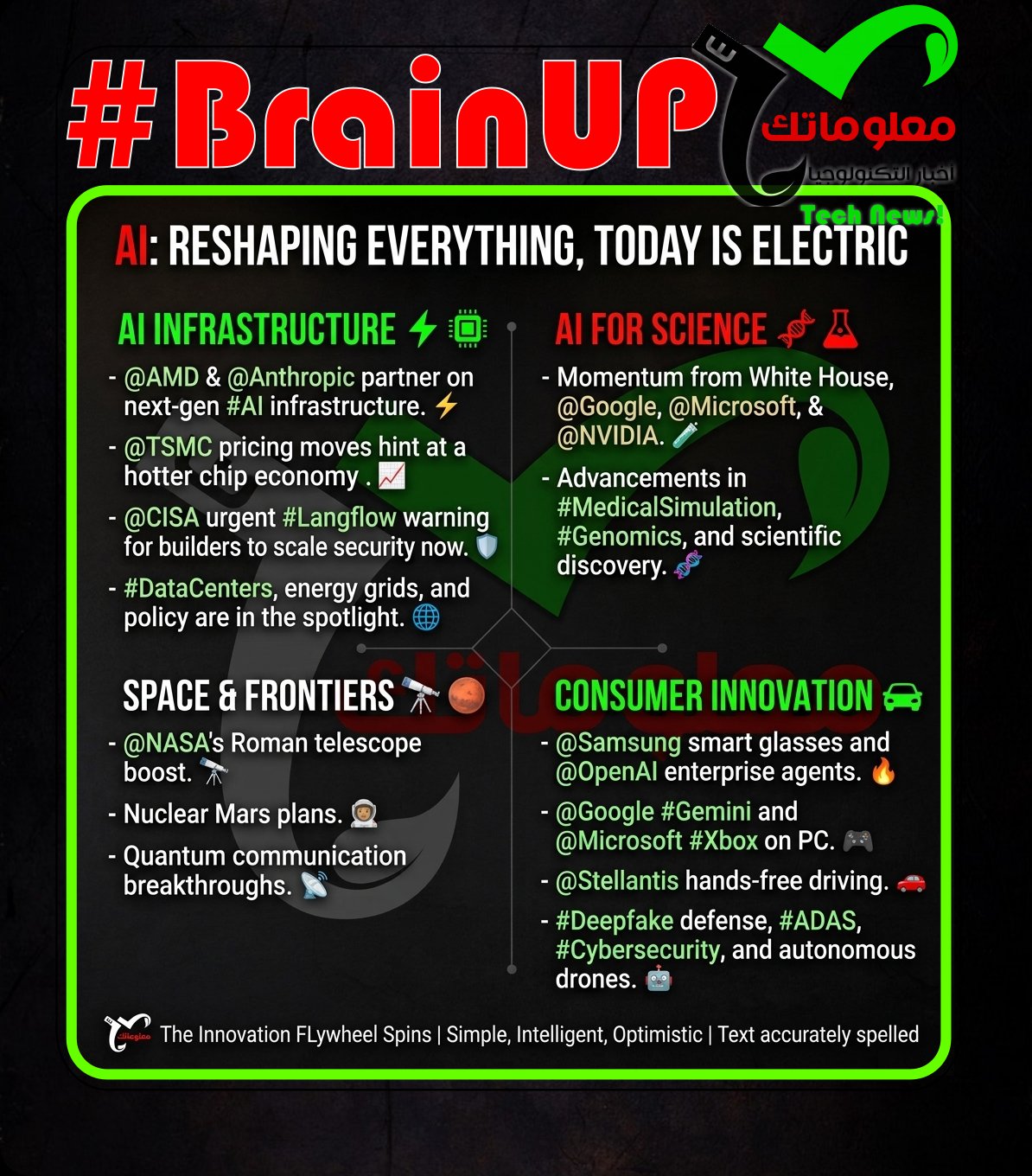
#BrainUp Daily Tech News – (Thursday, July 23ʳᵈ)
Welcome to today’s curated collection of interesting links and insights for 2026/07/23. Our Hand-picked, AI-optimized system has processed and summarized 24 articles from all over the internet to bring you the latest technology news.
As previously aired🔴LIVE on Clubhouse, Chatter Social, Instagram, Twitch, X, YouTube, and TikTok.
Also available as a #Podcast on Apple 📻, Spotify🛜, Anghami, and Amazon🎧 or anywhere else you listen to podcasts.
1. AMD inks multiyear deal with Anthropic for AI infrastructure
AMD has entered a multiyear partnership with AI startup Anthropic to supply its chips and technology for AI infrastructure. Anthropic, founded by former @OpenAI researchers, aims to build reliable and interpretable AI systems, leveraging AMD’s high-performance computing solutions. This deal underscores AMD’s growing role in powering #AI workloads and highlights the competition for AI infrastructure dominance. By combining Anthropic’s AI research expertise with AMD’s hardware capabilities, the companies aim to accelerate advancements in AI development. The collaboration reflects the broader industry trend of integrating advanced semiconductor technology with innovative AI models to meet increasing computational demands.
2. TSMC plans up to 10% price increases on advanced and mature nodes starting in 2027
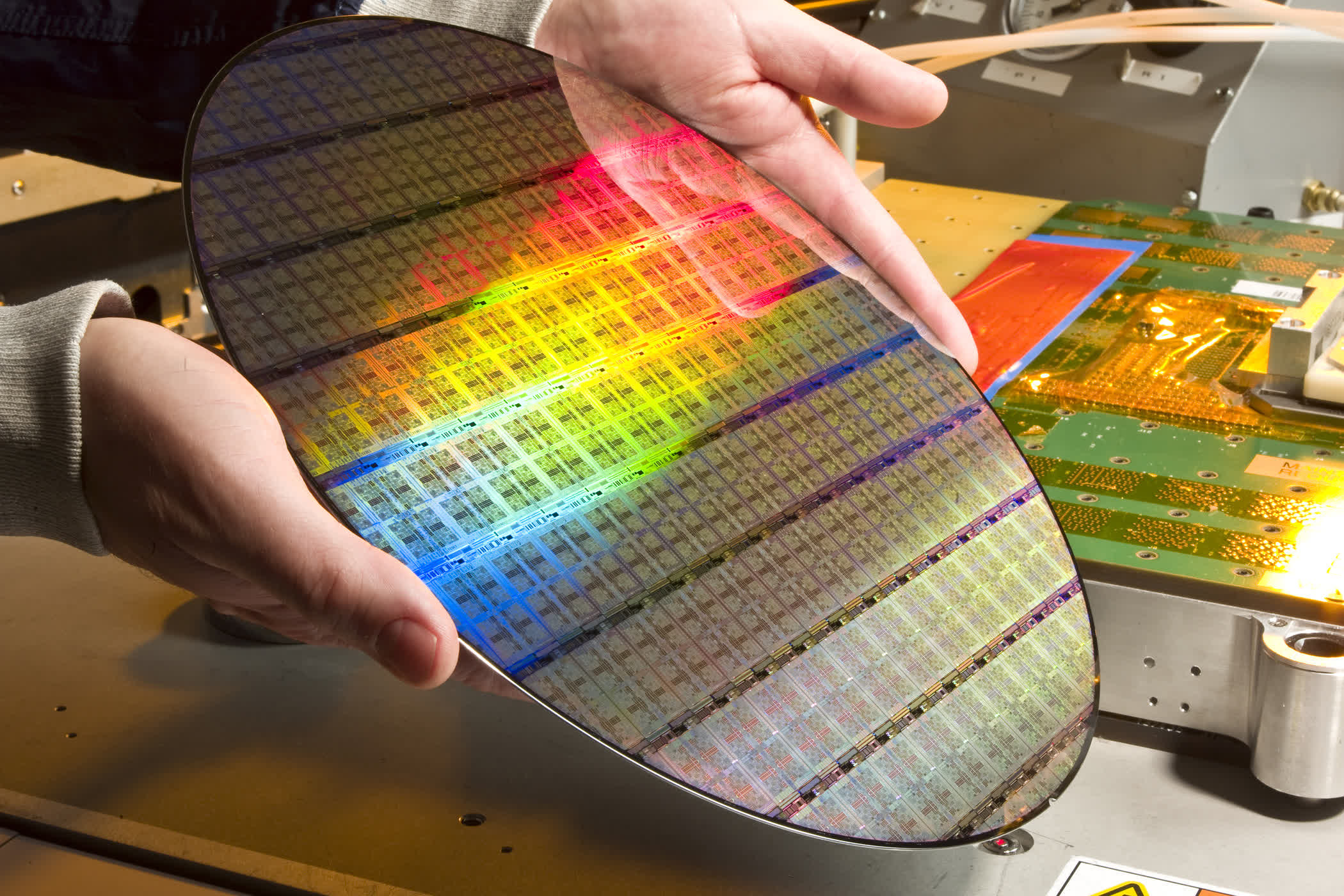
Sources cited by Nikkei Asia say #TSMC plans to raise wafer prices for both advanced and mature #process nodes by up to 10% starting in early 2027, after keeping pricing relatively steady despite AI-driven shortages. Internal discussions from June to July reportedly centered on 7nm and smaller nodes, with potential initial increases of 5% to 10% that could be passed on to products from customers like @Nvidia, @Apple, @Google, @Amazon, @Qualcomm, @Arm, and @MediaTek, and could also reach mature nodes such as 12nm, 16nm, and 28nm used in sensors and low-power electronics. The report adds that additional 10% to 15% hikes could apply to orders exceeding customers’ original projections, and later orders may face further increases. The context is broader supply strain across manufacturing, equipment suppliers, upstream vendors, and #advanced packaging, alongside major #DRAM and #NAND pricing pressure where memory makers like @Samsung, @Micron, and @SKHynix have raised prices sharply amid AI demand. Analysts expect tight conditions to persist until at least 2028, with some expectations that NAND capacity could ease pricing next year while DRAM shortages may last much longer, suggesting TSMC’s planned increases could contribute to higher prices for newer PCs, smartphones, and other devices.
3. CISA orders urgent action on actively exploited Langflow RCE flaw

The U.S. Cybersecurity and Infrastructure Security Agency, @CISA, ordered U.S. federal agencies to urgently patch an actively exploited #Langflow vulnerability, CVE-2026-0770, a critical flaw that enables unauthenticated attackers to achieve #remote-code-execution as root via low-complexity attacks. Trend Micro researchers said the flaw lies in handling the exec_globals parameter sent to the validate endpoint, allowing inclusion of an untrusted resource and code execution in a root context. KEVIntel reported in-the-wild exploitation starting June 27, recording over 220 attempts from 64 unique IPs, and observed payloads beyond simple checks, including attempts to deploy malware and harvest AWS credentials, environment variables, and container metadata. After adding the issue to its #Known-Exploited-Vulnerabilities catalog, @CISA directed Federal Civilian Executive Branch agencies, under #Binding-Operational-Directive 26-04, to secure affected systems by Friday and emphasized assessing internet exposure and following patching guidelines. The advisory also notes @CISA has flagged multiple other exploited Langflow issues in recent years, including CVE-2025-3248, which it says has been used in ransomware activity to dump Langflow PostgreSQL databases.
4. Data centers expected to use 4x more electricity by 2035 | TechCrunch

A surge in #AI compute is set to drive U.S. data centers to consume about one-fifth of the nation’s electricity by 2035, roughly four times today’s share, according to BloombergNEF. The report forecasts data center capacity nearing 200 gigawatts over the next decade, with nearly half devoted to training and inference, and the U.S. hosting 64% of #AI chips by power demand by 2033. BloombergNEF raised its 2035 electricity-demand estimate by 83% versus its December forecast, echoing upward revisions from EPRI and S&P as development accelerates. Much of the buildout is expected to hit already strained grids, including PJM Interconnection, where data centers could account for 34% of electricity, and ERCOT in Texas, where they could require 22% of generating capacity, amid interconnection backlogs and a reported 76% rise in electricity prices over the past year. Globally, under an aggressive adoption path, data centers could add 1,935 terawatt-hours of new electricity demand by 2033, nearly matching India’s annual use, underscoring how rapidly #data centers and #electrical grid pressures are scaling with AI.
5. Trump administration says 15 agencies will get $5bn in ‘AI for science’ effort
The @Trump administration says it will launch a $5bn #AI for science effort spanning 15 federal agencies to apply #AI to longstanding scientific problems. The White House statement says the funding will support work such as finding root causes of chronic diseases, accelerating drug discovery, and developing longer-lasting building materials, with researchers gaining access to Department of Energy supercomputers, AI tools, and specialized datasets, according to @Michael Kratsios. Kratsios said the White House is coordinating agencies including Health and Human Services, Energy, Transportation, Defense, and Interior, and described the initiative as a chance to train AI models on large federal datasets such as records on chemicals, critical minerals, and patient health. Separately, a White House report authored by Kratsios outlines plans to overhaul federal research funding by backing more individual scientists and AI use rather than universities, arguing that federal science support must be politically accountable, a shift that would increase administration control amid court pushback on grant cuts. @Microsoft also said it will donate $40m in AI computing credits over three years to support the initiative.

The @Trump administration is proposing to redirect roughly $200 billion in federal research funding away from universities and #peer review panels toward individual scientists and a national #AI-for-science initiative, framed as a way to keep the US ahead of China in #AI and #quantum computing. The plan is outlined in the report “Science: A New Golden Age,” delivered by @Michael Kratsios of the White House #OSTP, and includes a proposed “#Genesis Mission” to create “AI-native” scientific institutions across national labs, industry, and academia. The article argues that moving away from peer review, a system used since World War II to reduce error, misinformation, and methodological bias, could make research more vulnerable to echo chambers and political influence, undermining US scientific credibility domestically and internationally. It also questions the government’s readiness to rely on AI in science, citing a case where AI-generated material used in hearings contained errors and fabricated citations, and pointing to recent actions affecting climate science such as deleting assessments from government websites, withdrawing from the #Paris Accord, and cutting funding and staff at climate-related agencies and observatories. Overall, the proposal is presented as a strategic pivot toward #AI-driven research, but one whose credibility is challenged by reduced reliance on established validation mechanisms and a troubled record on science and AI use.
7. Shape-shifting mirrors on NASA’s new space telescope could unveil Jupiters like our own

When NASA’s Nancy Grace Roman Space Telescope launches, it will fly the first space-based #active coronagraph, designed to suppress a star’s light so astronomers can directly image exoplanets more like those in our solar system and serve as a stepping stone toward photographing Earth-like worlds, according to @Brandon Creager at NASA’s Jet Propulsion Laboratory. Beyond the coronagraph, Roman will carry a roughly 300-megapixel wide-field camera that can capture images about 100 times larger than #Hubble’s widest exposures at similar resolution, supporting studies of #dark matter and #dark energy and enabling detection of around 100,000 exoplanets via their effects on background starlight. Unlike earlier, stationary coronagraphs on Hubble and #James Webb that still leave stray glare from imperfections, Roman will use #active wavefront control, measuring residual light before each observation and attempting to cancel it out. It does this with two #deformable mirrors, each driven by a 48-by-48 grid of actuators that can reshape the mirror surface by up to 0.5 micrometers in steps as small as about 10 picometers, as noted by @Ilya Poberezhskiy. By reducing speckle-like glare that can hide or mimic planets, the system aims to reveal smaller, dimmer, and closer-in exoplanets than have been physically seen before.
8. A multiplexing scheme extends distance for quantum communication
Researchers have developed a #multiplexing scheme that significantly extends the communication distance in #quantum networks, enabling more practical and secure quantum communication. The technique involves encoding multiple quantum signals in one channel, which increases channel capacity and overcomes loss issues inherent in long-distance quantum communication. Experiments demonstrate the scheme’s ability to maintain high fidelity quantum states over distances previously unattainable with standard methods. This advancement supports the development of more scalable and robust quantum communication infrastructures necessary for the future quantum internet. By enhancing the efficiency and reach of quantum communication, this multiplexing approach contributes to the broader goal of secure, long-distance information transfer using quantum technologies.

Samsung is positioning its new #IntelligentEyewear as a style-first, AI-centered alternative in a smart-glasses market showing fatigue and heightened #privacy concerns. Unveiled at Samsung Galaxy Unpacked on July 22 as a collaboration with @Google and fashion brands Warby Parker and Gentle Monster, the glasses aim to challenge @Meta’s Ray-Ban and EssilorLuxottica-dominated lineup, with @Google’s #Gemini highlighted as part of the experience. TechRadar’s hands-on preview was limited to inspecting the frames, which felt lightweight and relatively discreet aside from thicker stems and visible front elements: a right-side camera of unspecified resolution and a left-side LED intended to signal recording. Hardware details shown include #QualcommSnapdragon wearable silicon, stereo speakers, far-field microphones, a prominent power switch, and a single top-stem button for capture or summoning assistants, with Samsung saying there is no gesture recognition. Pricing was not shared, lenses come in clear and transition options across multiple frame shapes and colors, and shipping is described as this Fall.
OpenAI has launched Presence, a platform designed to help enterprises create and manage real-time voice agents and chatbots. Presence integrates advanced AI capabilities to enable seamless and interactive customer experiences across voice and chat interfaces. The platform supports rapid deployment and easy customization, allowing businesses to improve engagement and operational efficiency. By providing these tools, OpenAI aims to expand the adoption of conversational AI in various industries. This release reflects OpenAI’s commitment to delivering practical AI solutions that enhance enterprise communication and automation.
11. NVIDIA Open Sources First GPU-Accelerated Medical Physics Simulation Framework
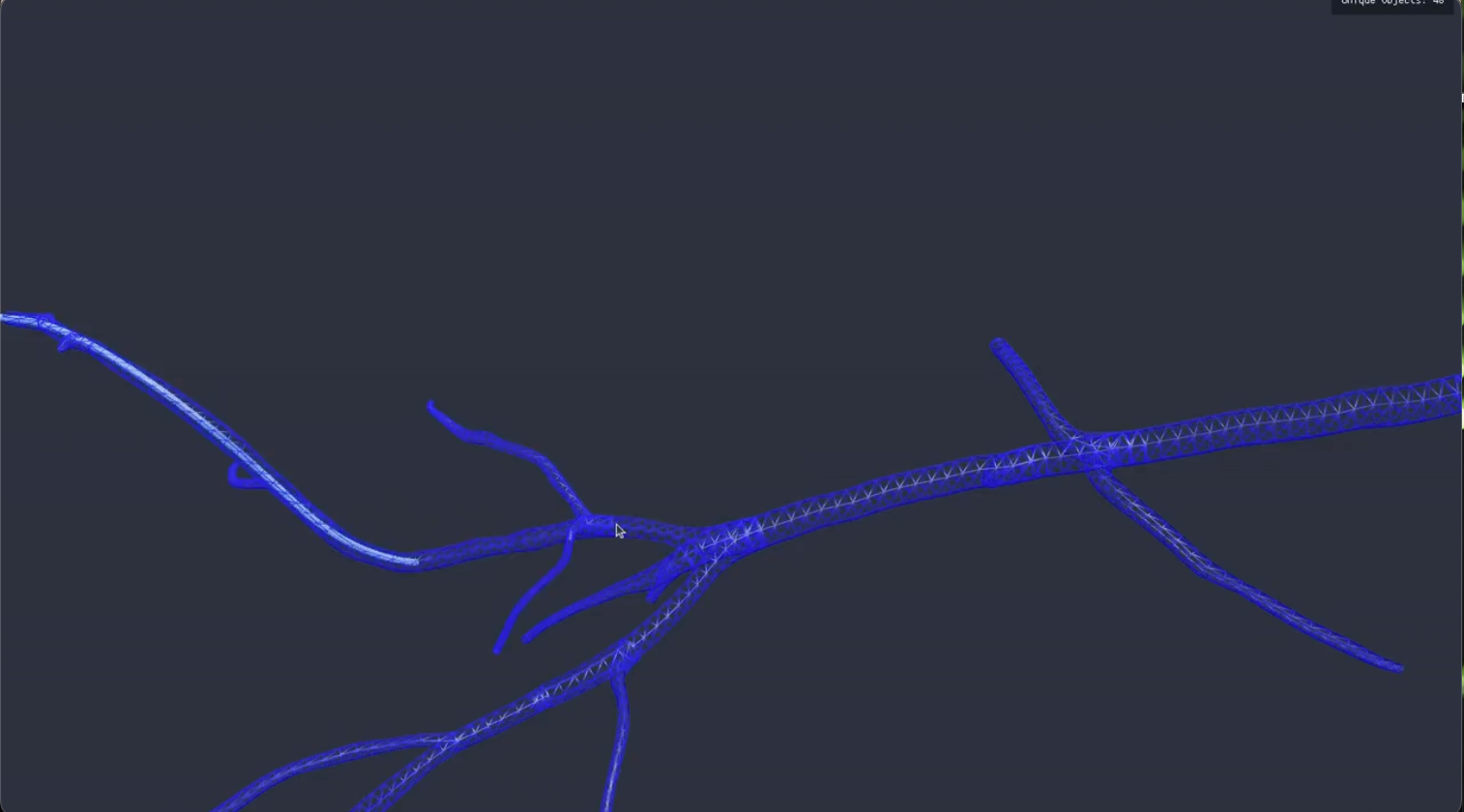
#NVIDIA has open sourced its first GPU-accelerated #Medical Physics Simulation framework within #NVIDIA Isaac for Healthcare to help medical robotics teams model anatomy and device interaction, generate rare scenarios, test in silico, and train or evaluate robot policies before extensive hardware testing. Built on #CUDA and the #NVIDIA stack including #Warp, #Newton, and #Cosmos, it combines anatomy and device behavior with sensor simulation and robot learning so developers can reuse simulation environments across workflows, rather than rebuilding custom scenes each time. The framework is positioned as especially valuable for healthcare transparency because open access lets teams inspect models and weights, reproduce results across anatomies and scenarios, identify limitations, and support regulatory evidence. Performance benchmarks cited show scale improvements, with 8,192 parallel robot-training environments and GPU-native simulation reducing training time from over five hours to under two minutes, and enabling end-to-end setups linking vascular anatomy, flexible instruments, simulated X-ray imaging, and reinforcement learning. By pairing classical physics simulation for known rules like contact and friction with #Cosmos-H Dreams for real-time generative simulation of visual scene dynamics, the framework aims to make simulation reusable infrastructure that accelerates safer medical robot development before physical prototyping.
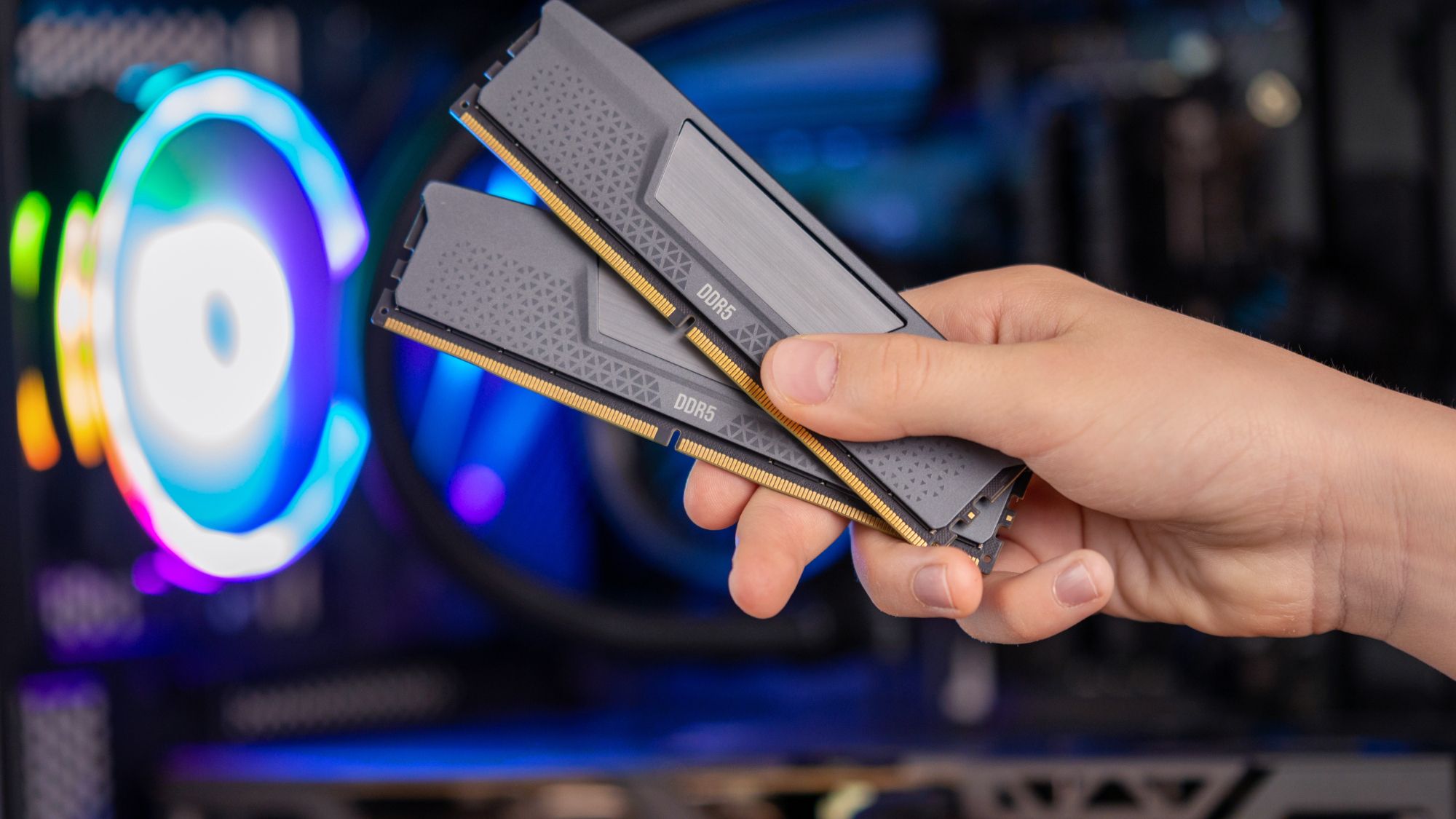
The article warns that the #memory crisis may be intensifying, with DDR5 RAM prices surging in Germany and a report suggesting #TSMC could raise chip production costs, potentially pushing CPU prices higher. Data tracked by 3D Center shows German DDR5 pricing reaching an all-time high, 448% more expensive than a year ago, after fluctuating between 408% and 440% earlier in 2026. Separately, Nikkei Asia claims #TSMC plans to increase manufacturing prices by up to 10% in 2027, with up to 15% increases for some high-end #HPC orders, citing higher materials and equipment costs and the need to fund fab expansion. The article argues that if these increases occur, companies sourcing from @TSMC, including @Apple, @Nvidia, @AMD, and @Qualcomm, are likely to pass costs on to consumers, making processors and CPU-based products pricier. It links the German RAM spike to broader expectations that prices could keep rising through late 2026 and worsen next year, suggesting consumers may consider buying sooner or targeting deals such as Black Friday.
13. Archer Aviation and Anduril Unveil Thunder, an Autonomous Attack Drone Built From eVTOL Tech

Anduril Industries and Archer Aviation unveiled Thunder, a Group 5 fully autonomous tiltrotor attack drone derived from commercial #eVTOL technology, positioned as a “loyal wingman” to fly in three to six ship formations alongside crewed AH-64 Apaches. At Farnborough, the companies said Thunder targets 320 mph and a 920-mile unrefueled range while carrying Apache-like modular payloads such as up to 10 Hellfire-class missiles, 76 laser-guided rockets, or 16 loitering munitions, aiming to deliver this capability at a fraction of Apache cost. The clean-sheet design uses a series hybrid-electric powertrain, combining a fuel-burning generator with electric motors and Optimum-Speed Tiltrotors, leveraging Archer’s electric motor tech and Karem Aircraft’s military rotor systems, and is claimed to be much quieter than current helicopters. It is built for expeditionary logistics and modern conflict lessons, disassembling into a standard 40-foot ISO container and operating runway-independently, with a “blind participant” mode that lets it appear on existing military data links like another Apache while pilots command intent rather than micromanage. First flight is targeted for 2027 with production planned for 2029 to 2030 dependent on U.S. military demand, and Archer plans to announce commercial customers for a parallel civilian variant.
14. Microsoft’s AI-code bet for Windows 11 got validated by Linus Torvalds defending it in Linux
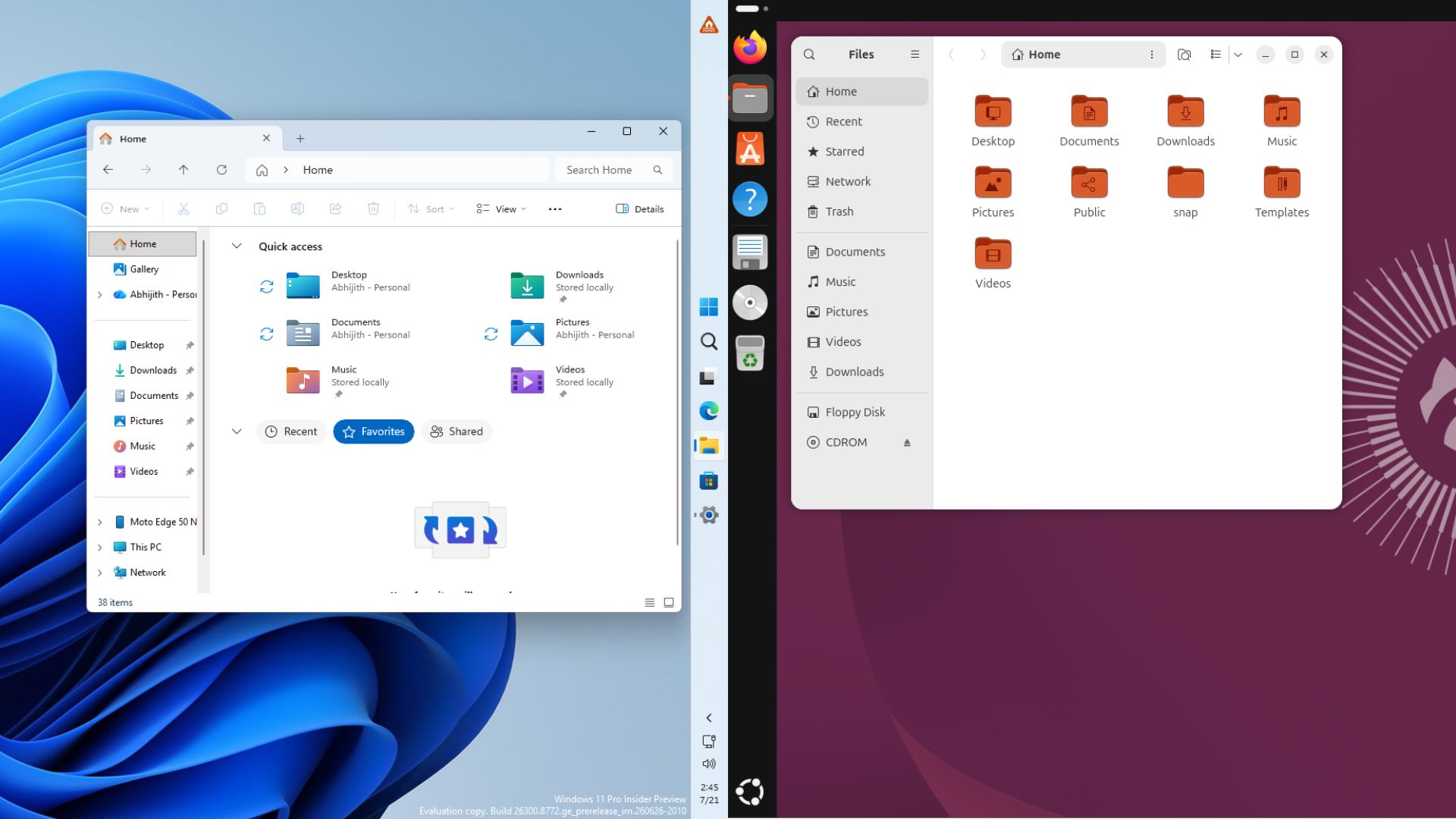
[@Linus Torvalds] argued that #AI tools belong in the Linux kernel workflow, pushing back on critics and saying Linux is not an anti-AI project and that decisions should be based on technical merit, not fear of new tools. The dispute centered on Sashiko, an agentic patch review tool partly built by Google engineer @Roman Gushchin, which flags potential bugs and claims to independently catch 53.6% of issues that might otherwise surface only after human approval, while kernel developer @Laurent Pinchart wanted a human filter in line with the #Software Freedom Conservancy guidelines on AI contributions. Torvalds sided with Gushchin, calling AI “clearly a useful one” today, acknowledging Sashiko finds “embarrassing bugs” and can add maintainer workload, but arguing the response is to improve how the tool helps maintainers rather than ban it. The article frames this as a shift from Torvalds’ October 2024 view that AI was “90 percent marketing and 10 percent reality,” noting that tools like #Claude and #ChatGPTCodex have improved enough to be used even in a quality-sensitive project like the kernel, and ties this to Microsoft’s earlier admission that a large chunk of its code was AI-written during a difficult period for #Windows11.
15. Stellantis taps Mobileye for hands-free driving assist

@Stellantis will adopt @Intel-owned @Mobileye technology to power #Level2 hands-free driver assistance across its vehicle brands starting in 2027. The rollout will use Mobileye’s #EyeQ system-on-a-chip and its #REM (Road Experience Management) data crowdsourcing program, which aggregates real-time data from Mobileye-equipped cars to build a global 3D map and support “hands-free, eyes-on” driving plus lane keeping on unmarked roads in designated areas and conditions. The companies did not specify which Stellantis brands will receive the system, even as automakers increasingly treat #ADAS as both a highway convenience feature and a software and subscription revenue opportunity, with forecasts projecting $90 billion in ADAS revenue over the next decade. Stellantis already offers Hands-Free Active Driving Assist in some Jeep and Ram models and is separately developing a “hands-free, eyes-off” system called #STLA_AutoDrive with UK self-driving firm @Wayve, targeted for 2028. For @Mobileye, the Stellantis deal expands its REM data network, which the company says now includes five of the world’s ten largest automakers, covers over 95 percent of public roads in the US and Europe, draws from more than eight million vehicles, and supported a reported $558 million in Q1 2026 revenue, up 27 percent year over year.
16. Google commits $40M to the Genesis Mission | Google Cloud Blog

Google is expanding its support for the White House #Genesis Mission by committing $40 million in AI tokens and cloud credits to help the U.S. Department of Energy (#DOE) accelerate scientific discovery. Announced at the DOE Genesis Mission Summit 2026, the commitment includes in-kind access for Genesis Mission awardees to Google DeepMind’s frontier AI for science tools such as #AlphaEvolve, #AlphaFold 3, #AlphaGenome, #WeatherNext, and #AlphaEarth Foundations, plus one year of #Gemini for Government seats and tokens for tens of thousands of users across DOE National Laboratories. The post argues that modern research challenges, from fusion plasma simulation to new materials discovery and massive experimental datasets, require frontier AI to scale exploration and analysis beyond human limits. It cites early lab usage, including Pacific Northwest National Laboratory where senior scientist Dr. Henry Kvinge uses #AlphaEvolve to automate exploration of complex mathematical systems and uncover connections faster than manual methods. Overall, the investment aims to provide a secure, shared AI foundation that supports DOE lab work from research through operations, aligning Google DeepMind and Google Cloud efforts with the mission to double the pace of American scientific discovery within a decade.
17. NASA’s nuclear Mars mission to cost over $2 billion
@NASA says @Jared Isaacman’s planned nuclear-powered Mars spacecraft, Space Reactor-1 Freedom, will cost about $2.1 billion, excluding the separate SkyFall science payload it would ferry. The agency told Congress it expects to spend $640 million in FY2026, $890 million in 2027, $415 million in 2028, and $180 million in 2029, drawing from its exploration account and money provided through last year’s reconciliation bill, while acknowledging SkyFall has no public cost estimate and could pressure the science budget. The mission targets a late-2028 launch as the first flight demonstration of #nuclear electric propulsion and would deliver three helicopters to collect data and look for potential water sources on Mars. To meet the accelerated schedule, @NASA plans to reuse existing hardware, including repurposing the Gateway Power and Propulsion Element from the canceled lunar station, and is working with the Department of Energy on the reactor, as officials say they are realigning resources within a likely flat topline budget. Even as details and appropriations pathways remain uncertain, the agency argues SR-1 can provide both a launch and ride to Mars while supporting near-term science and exploration objectives.
18. Microsoft is bringing original Xbox games to PC

@Microsoft is expanding #Xbox backward compatibility by officially bringing original Xbox console games to Windows through #Xbox Backward Compatibility on PC. An early preview launches with four titles, Blinx: The Time Sweeper, Conker: Live and Reloaded, Crimson Skies: High Road to Revenge, and Fuzion Frenzy, available to buy, included with all #Xbox Game Pass plans, and playable on PC and handhelds like Xbox Ally and Xbox Ally X for owners of digital copies. The PC versions add options such as VSync, up to 4x resolution upscaling, anisotropic filtering, enhanced anti-aliasing, fullscreen and windowed modes, plus customizable language and audio settings, with achievements coming in the next few months. The program requires #Windows 11 and targets broad hardware support, with minimum specs listed and higher recommended GPU and six-core CPU guidance for best results. @Jason Ronald says this is the start of a broader preservation effort to bring more past Xbox games to PC over time, alongside earlier teases tied to the next-generation Project Helix console and work on a disc-to-digital feature for existing physical collections.

@Google DeepMind released three new proprietary #Gemini models aimed at making #AI agents more token-efficient and lower cost at scale: Gemini 3.6 Flash, Gemini 3.5 Flash-Lite, and Gemini 3.5 Flash Cyber. Pricing via the #Gemini API is listed as $1.50 per 1M input tokens and $7.50 per 1M output tokens for Gemini 3.6 Flash, and $0.30/$2.50 per 1M tokens in/out for Gemini 3.5 Flash-Lite, compared with $1.50/$9.00 for Gemini 3.5 Flash and $2/$12 for Gemini 3.1 Pro Preview. Google notes the older Gemini 3.1 Flash-Lite remains its most cost-efficient by sticker price at $0.25/$1.50 per 1M tokens, but it is 2x slower than Gemini 3.5 Flash-Lite, framing a tradeoff between speed and cost. Beyond posted prices, Google argues overall enterprise spending can drop further because the new models are designed to use fewer tokens for the same work. Gemini 3.6 Flash and Gemini 3.5 Flash-Lite are available now in #Google AI Studio and #Android Studio, in the consumer Gemini app, and in Google Search, while Gemini 3.5 Flash Cyber is slated to ship soon via CodeMender to governments and trusted partners, underscoring Google’s continued closed-source, API-only distribution.
NVIDIA’s initial GeForce driver for Windows on ARM reveals the existence of the RTX Spark N1x GPU, featuring configurations with either 6144 or 5120 CUDA cores. This finding is based on driver files which list the GPU with its code name and core counts, providing concrete evidence of the hardware’s specifications. The data indicates that NVIDIA is preparing high-performance GPUs tailored for ARM-based Windows devices, potentially enhancing graphics capabilities in this segment. The emergence of RTX Spark N1x suggests a strategic expansion of NVIDIA’s GPU offerings to broader platforms beyond traditional x86 systems. Such developments align with growing demand for powerful graphics solutions on ARM architecture, showcasing NVIDIA’s commitment to support this evolving market.
21. Meta made its own AI detection system. It should have just used Google’s

Meta introduced #ContentSeal, an invisible watermark and detection system meant to flag images generated by its new Muse model, after Meta’s Oversight Board urged the company to use its tools to curb deceptive generative AI content. Meta says Content Seal embeds a hidden provenance signal that can be detected even after cropping, compression, resizing, or screenshots, similar to Google’s #SynthID and alongside existing standards like #C2PA Content Credentials. The article argues Meta should have adopted #SynthID instead, noting Meta already participates in #C2PA and that #SynthID has been adopted by @OpenAI, suggesting cross-company collaboration is possible. In its current form, Content Seal is limited because detection is only available via a separate web tool Meta is testing rather than built into the Meta AI chatbot, it applies only to images generated by Muse in the Meta AI app and Meta.ai site, and it does not yet support older Meta models or generated video. A Meta spokesperson, Faith Eischen, said Meta is exploring bringing detection closer to where people encounter AI-generated content, but the piece questions why those capabilities are not available at launch given the need for in-platform labeling and detection.
22. First AI takes the calls. Then your company stops listening

As companies replace call center and other frontline roles with #AI, they risk becoming less connected to customer reality unless they deliberately design automation to preserve and improve organizational listening. @Allianz plans to cut up to 1,800 jobs in its travel division, where about 14,000 of 22,600 employees handle customer inquiries and claims by phone, and @Munich Re has announced about 1,000 cuts, citing repetitive work that #AI models can do more efficiently. Standard automation business cases emphasize metrics like handle time, cost per contact, and resolution rates, but they often ignore what frontline staff know because it is hard to quantify. Those workers function as a company’s sensory system, surfacing confusion about policy clauses before regulatory complaints and anger about product changes before churn data reveals it. The outcome of frontline automation is therefore a leadership design choice, done carelessly it can deafen a firm to customers, done well it can make the organization a better listener than it was with humans on the phones.
23. AI tool reveals hidden DNA sequences that control genes
Scientists have developed an #AI tool that uncovers previously hidden DNA sequences which regulate gene activity. The tool uses machine learning algorithms to analyze vast genomic data, identifying subtle patterns linked to gene control. This discovery highlights the complexity of genetic regulation and provides new targets for therapeutic research. By revealing these hidden sequences, the AI approach improves our understanding of gene expression mechanisms and potential disease triggers. The study demonstrates the power of #AI in advancing genomics and opens new avenues for personalized medicine applications.
24. ‘$3.7B lost to deepfakes’ — Why social media is the perfect launchpad for AI fraud

A Surfshark study says #deepfake fraud has become a fast growing financial threat, with at least $3.7 billion in recorded losses, and #social media is the biggest launchpad for these scams. Surfshark attributes 47% of recorded losses to social platforms, and reports losses rising from $83 million (2020 to 2023) to $335 million (2024), $2.5 billion (2025), and $764 million in the first half of 2026, meaning 2025 and 2026 make up 89% of the total. The report says much of the damage comes from deepfaked celebrities and public figures used to promote fraudulent investment schemes, aided by viral reach at little cost, while other channels also contribute, including impersonation fraud ($911 million), fake job candidate schemes ($100 million), and phone calls, video platforms, and messaging apps ($174 million combined). It notes the FBI logged $893 million in AI-related losses for 2025, including $632 million from AI-assisted investment fraud, and Surfshark found nearly half of people cannot reliably distinguish bots from humans online. Surfshark argues awareness is the key defense, recommending tactics like a family safe word for urgent requests and a video call “glitch test” such as asking someone to wave a hand in front of their face to reveal distortions.
That’s all for today’s digest for 2026/07/23! We picked, and processed 24 Articles. Stay tuned for tomorrow’s collection of insights and discoveries.
Thanks, Patricia Zougheib and Dr Badawi, for curating the links
See you in the next one! 🚀
