
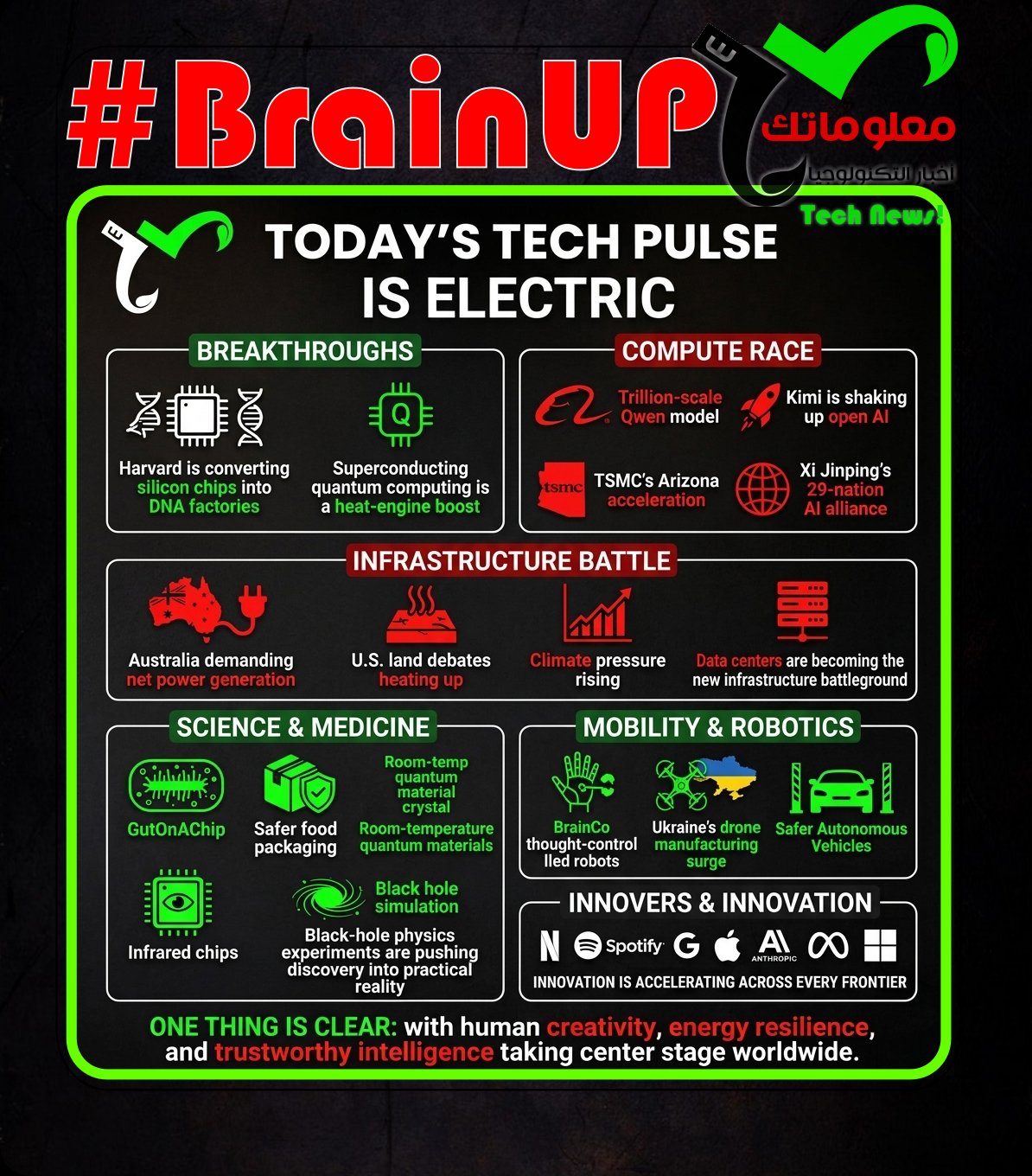
#BrainUp Daily Tech News – (Monday, July 20ᵗʰ)
Welcome to today’s curated collection of interesting links and insights for 2026/07/20. Our Hand-picked, AI-optimized system has processed and summarized 31 articles from all over the internet to bring you the latest technology news.
As previously aired🔴LIVE on Clubhouse, Chatter Social, Instagram, Twitch, X, YouTube, and TikTok.
Also available as a #Podcast on Apple 📻, Spotify🛜, Anghami, and Amazon🎧 or anywhere else you listen to podcasts.
1. Harvard Scientists Turned a Silicon Chip Into a DNA Factory

A Harvard-led team created a silicon chip that synthesizes many DNA strands in parallel using electricity to control a water-based #enzymatic DNA synthesis process, offering a cleaner alternative to conventional DNA manufacturing. Reported in Nature Electronics and led by @Donhee Ham, the chip produces 64 distinct DNA sequences simultaneously, each up to 39 nucleotides long, surpassing prior enzymatic systems that managed only about a dozen sequences at once. Instead of solvent-heavy #phosphoramidite chemistry used in centralized facilities, the chip regulates DNA growth by electrically triggering localized deprotection: current at an inner ring electrode generates protons to lower pH around a chosen site so the next nucleotide can be added. Each of the 64 synthesis locations uses concentric ring electrodes to precisely confine when and where acidity occurs during each synthesis cycle, enabling parallel control without conventional lab hardware. By shifting DNA writing toward an electrically addressed, water-based platform, the work points toward smaller, safer, and potentially portable DNA-writing systems for uses such as diagnostics, genome engineering, and cancer research.
2. Kimi: Threat or menace? | TechCrunch

Chinese company Moonshot AI released a new open source version of its #Kimi model, Kimi K3, triggering renewed debate about China’s role in open source AI and the competitiveness of U.S. firms. Moonshot says K3 still trails top proprietary systems like Anthropic’s @Claude and @OpenAI’s GPT 5.6 Sol, but claims frontier-level results that beat other tested models, with independent assessments from Arena.ai and Vals AI also describing it as competitive with flagship frontier models. The timing alongside @Xi Jinping’s World AI Conference speech and a reported Nasdaq dip of about 1% fueled market and policy anxiety, echoing earlier reactions to DeepSeek’s R1 release but amplified by U.S.-China tariffs, national security disputes, and looming AI IPOs. Figures such as @David Sacks argued U.S. regulations and restrictions could cost the AI race, while @Travis Kalanick highlighted concerns about #distillation and argued for symmetrical enforcement, even as the article notes U.S. models have also built on Chinese ones like Kimi. OpenAI strategist @Dean Ball called Kimi “a very good model,” warned that an open-weight-dominant world could lead to “full AI communism,” and suggested the U.S. could deter adoption of open-weight Chinese models by increasing regulatory risk through agency guidance that creates #FUD.
3. World’s First Superconducting Quantum Heat Engine Could Transform Quantum Computing

Researchers at Aalto University report the first cyclic #quantum heat engine implemented in a superconducting circuit, using a qubit as the working substance and operating near absolute zero. The device centers on a flux-tunable transmon qubit coupled to a resonator and a tunable #quantum-circuit refrigerator that can alternately heat or cool the qubit, enabling the four stages of a #quantum Otto cycle through carefully timed changes of the qubit’s energy levels. Using single-shot measurements over up to three consecutive cycles, the team quantified absorbed heat, produced work, and efficiency, finding positive work output and agreement between observed power and efficiency and their simulations. This demonstrates that a superconducting-qubit platform can act as a genuine cyclic heat engine with a simplified design that uses one controllable refrigerator as both hot and cold environments. Led by @Mikko Möttönen and first authored by Tuomas Uusnäkki, the work was published in Nature Communications and is positioned as relevant because superconducting circuits are a leading #quantum computing technology.
4. Xi Jinping Launches 29-Nation AI Alliance to Counter US Tech Dominance

@Xi Jinping announced the formal launch of the World Artificial Intelligence Cooperation Organization (#WAICO), a 29-nation intergovernmental body headquartered in Shanghai, positioning it as a challenge to US-led global #AI governance. Founding signatories include Russia, Brazil, Indonesia, South Africa, Pakistan, Malaysia, Senegal, and Kazakhstan, with no Western countries joining, and the move comes amid tighter US export controls on advanced semiconductors affecting China’s access to cutting-edge #AI chips. Xi pledged 5,000 AI training opportunities for developing countries over five years, promised to deploy China’s AI-powered meteorological early-warning system #MAZU in 30 countries, and said China will open six international AI cooperation centers with ASEAN, the Arab League, the African Union, CELAC, the Shanghai Cooperation Organization, and BRICS. He criticized policies that “overstretch the concept of national security” in AI, framing #WAICO as promoting cooperation and cross-border AI regulation while implicitly pushing back on US restrictions. The initiative is described as a counterweight to the US-linked “Pax Silica” framework that ties allies into AI supply chains, underscoring a widening geopolitical split over #AI standards and technology access.
5. Scientists Create a Gut-on-a-Chip That Reveals Hidden Drivers of Inflammatory Bowel Disease
Scientists have developed a gut-on-a-chip model that recreates human intestinal tissue to study inflammatory bowel disease (#IBD). This microfluidic device mimics the complex environment of the human gut, allowing researchers to observe interactions between cells and microbes that contribute to inflammation. The device revealed previously hidden mechanisms driving IBD, including how certain bacteria trigger immune responses and tissue damage. By offering a controlled and replicable model, the gut-on-a-chip accelerates understanding of disease progression and potential therapeutic targets. This innovation could pave the way for personalized treatments and improved management of IBD.
6. Australia Mandates AI Data Centers Be Net Power Generators, Sets Water Efficiency Rules
@Anthony Albanese announced the mandatory “Australian Standards for AI,” a national framework that would legally require large-scale #AI data centers in Australia to be net power generators, contributing at least as much energy to the grid as they consume. The proposal requires operators to underwrite new electricity generation, including new renewable generation and firming capacity, pay full grid-connection costs, reduce power use during grid strain, and ensure they do not raise electricity prices for Australian consumers, while also minimizing water consumption and funding any additional water infrastructure their facilities require. The rules also address siting, aiming to spread development beyond the current concentration of capacity in Sydney and Melbourne. Governance includes creating an Office of AI within the Department of the Prime Minister and Cabinet, seeking National Cabinet backing in August 2026, and targeting draft legislation in early 2027. The framework is positioned as a consolidated national structure for energy, water, location, and intellectual property rules, arriving amid heightened hyperscaler activity such as #Anthropic exploring a 1.4GW campus via RFPs to multiple data center operators.

The U.S. #AI and data center boom is driving a new wave of disputes over whether power companies can use #eminentDomain to take private land for transmission lines that primarily serve private data centers. Evidence includes a Pew Research Center analysis citing more than 3,000 U.S. data centers with another 1,500 in development, and a poll finding about 7 in 10 Americans oppose AI data centers in their communities due to concerns like higher utility bills, pollution, noise, and loss of green space, while data centers also consume large amounts of water and electricity and accounted for more than 4% of U.S. electricity use in 2024. When landowners refuse to sell easements for needed transmission lines, utilities may seek condemnations under the Fifth Amendment’s “public use” and “just compensation” requirements, often via state and local governments or delegated authority to utilities, with state-specific limits such as Texas requiring a project to “serve the public” and not be exclusively for the builder. The legal flashpoint is the meaning of #publicUse, shaped by the U.S. Supreme Court’s permissive approach in @Kelo v. City of New London (2005), which triggered backlash and prompted 45 states to enact eminent domain reform laws, while some state supreme courts apply more restrictive standards. The conflict links growing infrastructure needs for powering data centers with long-running constitutional debates about taking private property for projects that benefit private industry.
8. Ukraine wants to dominate drone manufacturing after battlefield successes

Ukraine says it has rapidly expanded domestic #drone manufacturing from a stated goal of one million per year to 10 million annually, with plans to reach 20 million, positioning drones at the center of its long term defense strategy. @Volodymyr Zelensky said the country has already hit 10 million units and aims to double that output, while stressing that further growth depends on continued cooperation with international partners. The announcement coincided with a $1.1 billion EU defense industrial arrangement, the #DroneDeal, confirmed by @Ursula von der Leyen, and Ukrainian officials said multiple agreements are already completed with more countries potentially joining. Officials linked the industrial push to battlefield reliance on unmanned systems for surveillance, reconnaissance, and precision strikes, including claims by Defense Minister Mykhailo Fedorov of hundreds of thousands of verified targets struck and heavy Russian losses, though the article notes such figures are hard to independently verify. Ukraine argues this experience and external financing could enable it to become a leading global producer of drones and robotic systems, but success is presented as contingent on funding, manufacturing capacity, component access, and sustained international support.
9. Physicists Just Turned a Black Hole Energy Theory Into Reality

@Sir Roger Penrose’s idea of extracting energy from a spinning black hole, later generalized by @Yakov Zel’dovich to wave amplification from fast rotation, has been recreated in a laboratory using #synthetic rotation. Researchers at CUNY ASRC reported in Nature that a stationary radio-frequency device with properties modulated across space and time can mimic ultrafast rotation beyond mechanical limits, enabling electromagnetic waves with the right rotational characteristics to draw energy from the engineered motion and emerge amplified. The team built a ring-shaped network of electronic resonators whose parameters were rapidly varied in a precisely timed sequence, producing a traveling pattern that makes the system appear to rotate even though no parts move. This demonstrates the essential physics of the #Penrose–Zel’dovich process and provides an experimental platform to study extreme rotational dynamics at the intersection of astrophysics, wave physics, and quantum science, with suggested relevance to communications, optics, and photonics.
10. TSMC is accelerating Arizona factory buildout to capitalize on AI ‘megatrend,’ CFO says

TSMC is accelerating capacity at its Arizona factory to capture a multi-year #AI demand “megatrend,” according to CFO @Wendell Huang. He said the company is adding $100 billion to its U.S. expansion, lifting its Arizona investment pipeline to $265 billion and prompting an increase in full-year capital spending guidance to $60 billion to $64 billion, citing robust U.S. customer demand and strong government support. To meet surging demand, TSMC is optimizing leading-edge capacity, including converting #5nm capacity to #3nm, while Arizona phase one using #4nm is already operating and #2nm is positioned as a new revenue driver after initial revenue in the second quarter. Huang noted U.S. fab construction costs are four to five times higher than in Taiwan, which can widen initial dilution as overseas scale grows, but he argued the buildout will strengthen the U.S. semiconductor ecosystem, spanning front-end wafer fabs and back-end advanced packaging. He also said TSMC is focused on business fundamentals and expects a manageable impact from Middle East conflicts due to diversified sourcing and safety stocks.
11. The First Room-Temperature Quantum Material of Its Kind Is Spun From Atoms of Gold

Researchers at Louisiana State University report a room-temperature #quantum material made from a thin gold film on a glass chip that can manipulate quantum states of light without cryogenic cooling. Published in Nature, the device is a #plasmonic metacrystal whose microscopic slit patterns function as “meta-atoms,” filtering which quantum statistics of incoming photons are allowed to pass, according to @Riley Dawkins. By tuning the slits’ size, shape, and spacing, the chip can enable more robust transport of certain light-based quantum states that carry information, as described by @Omar Magaña-Loaiza, because the approach emphasizes photons and plasmons rather than heat-sensitive electron or atomic coherence. The work is presented as an early proof of concept and a blueprint other teams can adapt by redesigning slit distributions to tailor how light is processed. The team notes that while room-temperature quantum-material behavior has been observed before, this is described as the first demonstration in an advanced light-sorting chip of this kind, opening a path toward practical #quantum technologies that operate outside ultra-cold lab setups.
12. Tiny infrared chip could improve detection of gases and heat – Technology Org

MIT researchers created a chip-based optical device that dynamically controls incoming mid-infrared light, acting as a tunable lens whose microscopic pixels can be adjusted independently to help infrared cameras capture different signals without moving parts. Reported in Nature Communications, the team demonstrated a lab-scale system made mostly with conventional semiconductor chip-factory processes, suggesting a path toward industrial-scale manufacturing. Built on #metasurfaces and phase-change behavior that can shift from solid to liquid with heat, the approach advances prior work that could tune focus only uniformly across the whole surface by enabling per-pixel control, avoiding the wiring complexity that typically limits single-pixel tuning. The device targets mid-infrared wavelengths useful for #thermal imaging and #chemical sensing because many organic molecules absorb there, with examples including methane and propane, supporting applications such as gas-leak detection, pollution monitoring, environmental protection, space studies, and potential defense uses like night vision.
13. Alibaba Launches Qwen 3.8 With 2.4 Trillion Parameters, Claims Near-Frontier Performance
@Alibaba unveiled a preview of Qwen 3.8, a 2.4 trillion-parameter multimodal #Mixture-of-Experts model it claims is “second only” to @Anthropic’s Claude Fable 5, though it has not released independent benchmarks to substantiate that ranking. The model can handle text, images, videos, and documents, and is positioned as the Qwen team’s first multimodal system exceeding one trillion parameters, with expected gains in coding, full-stack development, data analysis, and office workflows versus Qwen 3.7-Max. Access is offered via Alibaba’s Token Plan, Qoder, and QoderWork at 10% of standard pricing, with Lite at $6 for 2,500 weekly credits and Pro at $68 for 40,000 credits and six to eight concurrent agents, plus compatibility with OpenAI and Anthropic API protocols for easier integration. The article situates Qwen 3.8 in a Chinese parameter-scale race, noting it is the second-largest publicly disclosed model behind @Moonshot AI’s Kimi K3 at 2.8 trillion, while highlighting that Alibaba has not disclosed how many parameters are active at inference, a key efficiency detail for sparse MoE systems. Alibaba also promised an open-weight release “soon” without a date, a potential break from its history of keeping Max-tier models closed-source.
14. Google and Apple are clashing with the EU over the future of AI assistants | CNN Business

The @European Commission is using the #DigitalMarketsAct to push @Google and @Apple to make #AI assistants on smartphones more open and competitive, arguing their control of about 5 billion active Android phones and iPhones gives them a major advantage. It is demanding that Google give other AI agents broader access to #Android by July 2027, begin sharing Google Search data with other search engines and AI chatbots starting in January, and enable EU users to access third party assistants by voice and use them to operate apps similarly to #Gemini. Google and Apple argue these requirements could create serious security and privacy risks because external apps would need powerful permissions and data sharing could weaken privacy and expose trade secrets and national security issues, while some experts caution that the companies’ privacy arguments should be scrutinized. Apple has said it will not launch its new Siri AI assistant in the EU due to the DMA, highlighting the tension between EU competition goals and the companies’ claims about protecting users as #AI assistants become more capable than simple Q&A tools.
15. The next innovation in AI: robots that can be controlled by your thoughts

Chinese company BrainCo has unveiled a #brain-to-robot interface that lets human operators control robots using thoughts via non-invasive #EEG headsets. The system, called the #Brain-Controlled Robot AI Platform and presented at the World Artificial Intelligence Conference in Shanghai, translates measured neural activity into robot instructions using #AI algorithms trained on data linking imagined commands to neural patterns. BrainCo says the platform can also connect to robotic arms and other devices, for example enabling a robotic arm to pick up a cup through thought alone. As the platform sees wider use, it is intended to collect more high-quality real-world data to improve the underlying algorithms, addressing a key training-data bottleneck in embodied AI. BrainCo executive Nyx He argues the next frontier is improving how robots understand the humans they work with, as smarter AI models increasingly feed into more flexible, dexterous robotics.

Qualcomm CEO @Cristiano Amon argues that #6G could create a new mainstream device category, especially #smartglasses that effectively turn people into “walking cameras” by continuously capturing what they see and sending it to #AI models for instant assistance. In a Fox Business interview, he described glasses with built-in cameras streaming real-time video and audio to a user’s personal AI, enabled by much higher speeds and lower latency than #5G. The piece notes #6G is expected in the 2030s and, in theory, could reach 1Tbps using sub-terahertz spectrum, which would make always-on, data-heavy wearables more practical. It also highlights that smart glasses have struggled historically, citing backlash to camera-enabled designs like Google Glass and even Meta and Ray-Ban collaborations, suggesting privacy and social acceptance remain key obstacles. Even if networks and hardware improve, adoption depends on whether enough people are comfortable wearing camera-equipped glasses in public.
17. Anthropic in Early Talks to Lease $10B in Compute From Meta Over Two Years
@Anthropic is in early discussions to lease about $10B of computing capacity from @Meta over two years, a deal proposed in June 2026 that would be paid monthly and allow either side to terminate early. Reports from the New York Times and CNBC say talks are preliminary and may not become binding, and neither company has confirmed them. The arrangement would make @Meta an infrastructure provider to a competitor in #AI models, since @Meta develops the open-weight #Llama family while @Anthropic builds #Claude. The talks align with @Mark Zuckerberg stating a cloud business is “definitely on the table,” alongside @Meta’s major 2026 capex plans, GPU procurement, and the hiring of former @AWS SVP Dave Brown to lead the “Meta Compute” initiative. If completed, the lease would be smaller than @Anthropic’s other recent compute commitments, including a $45B three-year agreement with @SpaceX for 220,000+ #NVIDIA GPUs and a longer-term commitment to @AWS built around #Trainium.
18. 60% of agentic AI costs go to response refinement, and most enterprises are already over budget

A July 2026 @McKinsey report argues that enterprises are struggling to control #agenticAI operating costs, with most teams already over budget even as token prices have collapsed. In @McKinsey’s Enterprise AI FinOps Survey of 75 respondents across five industries, 93% reported exceeding AI budgets, and the report cites Menlo Ventures data showing enterprise #LLM spending tripled over 12 months by the end of 2025, despite Stanford HAI’s 2025 AI Index documenting inference costs for GPT-3.5-level capability falling from $20 per million tokens to $0.07 through 2024. The report attributes the rising bills to volume and architecture, especially “response refinement,” an iterative self-check and regeneration loop that accounts for 60% of total agentic AI costs, plus scaling workloads, a shift to consumption-based pricing, and using expensive frontier models for routine tasks. It concludes the key issue has shifted from deploying #AIAgents to proving that their output value justifies the full run cost, with budget constraints described as already present in a forthcoming 2026 @McKinsey State of AI survey.
19. Climate Activists Pelt Microsoft Data Center With Balloons Full of Acid

Climate activists affiliated with Extinction Rebellion attacked a future @Microsoft data center construction site in Amsterdam by throwing balloons filled with an acidic, corrosive mixture to protest the environmental and political impacts they associate with #AI data centers. According to The Register and Extinction Rebellion’s statement, the balloons contained hydrogen peroxide, acetic acid, salt, and acrylic paint, which the group said can degrade concrete and accelerate steel rusting, though the actual damage is unknown. The group framed the action as part of its tradition of nonviolent direct action, citing past incidents using butyric acid and barricading an insurance market, and argued that hyperscale facilities drive emissions through heavy electricity demand and strain local water supplies. Extinction Rebellion also claimed this project exploits a loophole to bypass rules against #hyperscalers and would intensify power shortages, while linking opposition to broader critiques of corporate power and allegations by rights groups about Microsoft’s role in Israel’s destruction of Gaza. The protest reflects escalating backlash against the rapid expansion of AI-linked data center infrastructure and Extinction Rebellion’s attempt to connect local energy and climate concerns to wider political grievances.
20. Amazon’s Robotaxi Company Recalls Its Fleet After One of its Cars Got Confused by Heavy Smoke
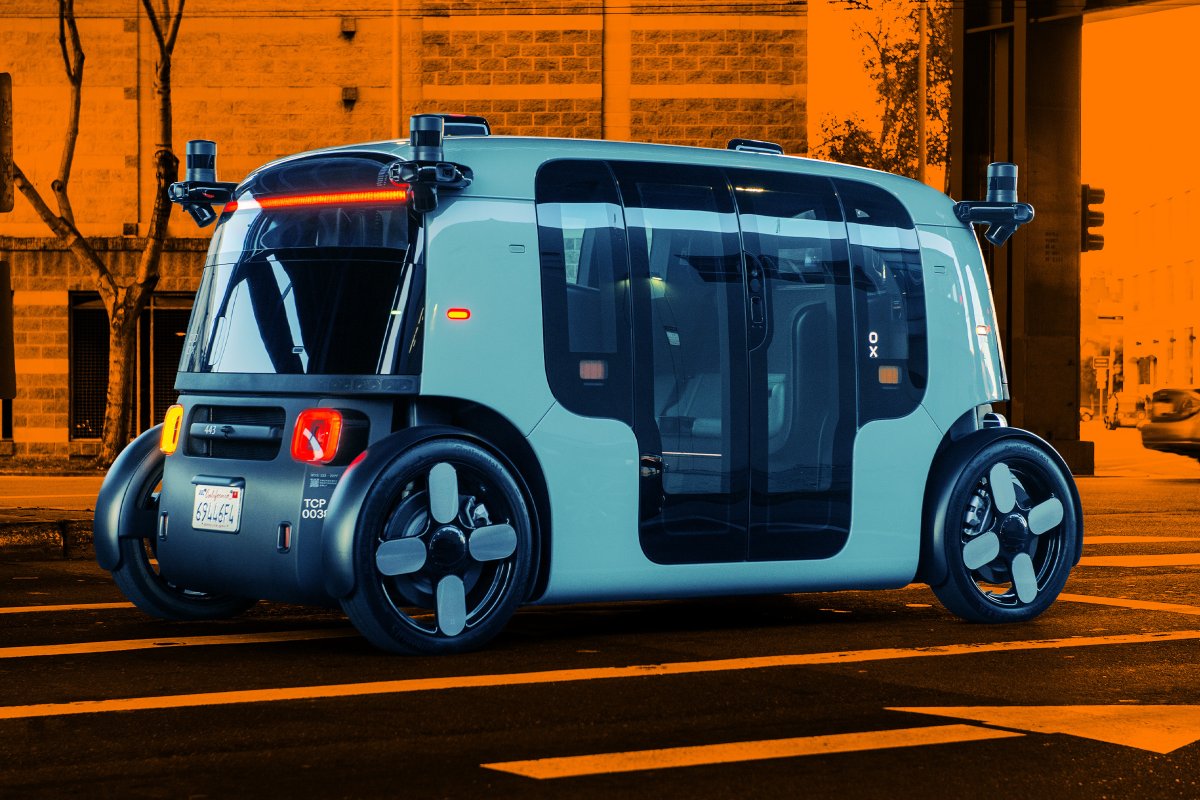
Amazon-owned Zoox recalled its entire fleet of 105 #autonomous robotaxis via a software update after one vehicle became confused by heavy smoke at an emergency fire scene. In a June 20 incident reported to the #NHTSA, the empty robotaxi drove into smoke that obscured an active scene that was not coned off, then braked hard while trying to steer away and came to a stop until a teleoperator manually reversed it. Zoox said the patch improves detection of active emergency scenes by adding the ability to detect and respond to heavy smoke in certain situations, underscoring how #self-driving cars still struggle with unpredictable conditions. The event, reported by CNBC as occurring in Las Vegas where Zoox offers free rides, fits a broader pattern of robotaxis impeding first responders, including incidents involving @Waymo vehicles during a San Francisco power outage and an ambulance response in Austin. Citing such cases, #NHTSA administrator @Jonathan Morrison called interference with emergency responders unacceptable and warned that AVs unable to safely interact with first responders pose a danger to the public.
21. France orders Polymarket blocked over illegal gambling promotion

France’s National Gaming Authority, #ANJ, ordered internet providers to block the crypto-based prediction market Polymarket after concluding it was illegally promoting gambling and games of chance to French users. The July 16 order covers all Polymarket sites operated by ADVENTURE ONE QSS INC, following monitoring since November 2024 and a prior notice that led Polymarket to geoblock French financial transactions, which the regulator said was being circumvented. The agency said #predictionMarkets are not authorized under French law and reiterated public warnings about risks such as addiction and market manipulation, while also citing a May probe by the Paris prosecutor’s cybercrime unit into alleged manipulation of weather bets via compromised sensors and noting the platform lacks #KYC for French and European users. France’s move aligns with restrictions in other European countries, and the ANJ said it blocked 1,290 URLs in 2025 under its administrative powers. The decision also follows broader scrutiny of Polymarket, including reporting that it paid influencers to promote fabricated betting wins on TikTok and efforts to block VPN access amid U.S. legal pressure.
22. AI advice made people three times less accurate but twice as confident, researchers found

Researchers from three French and Italian universities found that simply having access to #AI advice sharply reduced people’s willingness to admit uncertainty, making them less accurate but far more confident. In their experiment, “I don’t know” responses fell from 44% to 3%, accuracy dropped from 27% to 9%, and confidence rose from 30% to 76%, even though the team used Step 3.5 Flash on questions where such models are typically wrong, like visual details from films. Some participants who would have answered correctly changed to incorrect answers after consulting the model, and monetary incentives only partially helped, raising “I don’t know” to 8% and accuracy to 16%, still below the no-AI baseline. The authors, including @Valerio Capraro, argue this reflects #cognitive_surrender, where AI availability suppresses the habit of recognizing one’s knowledge limits and encourages trusting wrong answers. The article links these findings to concerns about children’s critical thinking and to product designs such as Google’s AI search summaries that prioritize answering rather than saying “I don’t know,” an approach Common Sense Media called an “unacceptable risk” for students.
23. Windows 11 Secure Boot is a messy ride on older PCs, and even Microsoft can’t fix it
Windows 11’s #SecureBoot feature presents significant challenges on older PCs, with numerous users reporting boot failures even after running official Microsoft tools and firmware updates. While #SecureBoot aims to protect systems by ensuring that only trusted software can boot, hardware limitations and firmware inconsistencies on legacy machines cause instability and prevent successful startups. Microsoft acknowledges the problem but has yet to offer a reliable fix, highlighting the difficulty of retrofitting modern security protocols on outdated devices. This situation underscores the tension between advancing cybersecurity measures and maintaining support for older hardware, urging users and manufacturers to reconsider upgrade paths. Ultimately, the struggle with Secure Boot on older PCs reflects broader challenges in balancing innovation, security, and backward compatibility.
24. Thinking Machines is coming for Anthropic’s intellectual vibe

Thinking Machines, founded by former OpenAI leader @Mira Murati, is positioning itself as a rival to Anthropic’s intellectual, creativity focused brand by emphasizing AI that enhances human cognition. The company has released its first model, Inkling, and says it can be fine-tuned through its Tinker platform, highlighting #customization over raw capability. Inkling is described as an #open-weights model with 975 billion parameters, including 41 billion active parameters, with core aspects made publicly available. Thinking Machines acknowledges Inkling is not the most powerful model on the market, but frames its differentiation around adaptability and user tailoring. This stance mirrors and challenges Anthropic’s messaging, which promotes Claude as a tool for deeper thinking rather than offloading cognition.
https://www.sciencedaily.com/releases/2026/07/260716023603.htm N/A
26. Methods to reduce harmful chemicals in food packaging developed
New methods have been developed to reduce the transfer of harmful chemicals from food packaging materials into food products. Researchers focused on materials known to leach substances potentially harmful to human health, aiming to improve food safety. These methods involve modifying packaging materials or applying barrier coatings, effectively minimizing chemical migration without compromising packaging quality. This advancement addresses growing concerns about food contamination and consumer health linked to packaging chemicals. The innovations provide a promising approach to safer food packaging, supporting regulatory efforts to limit exposure to hazardous substances.
27. Netflix paid $587M for Ben Affleck’s AI filmmaking startup | TechCrunch

In a regulatory filing, @Netflix disclosed it paid $587 million in cash to acquire InterPositive, an #AI filmmaking startup co-founded by @Ben Affleck. Netflix announced the deal in March but did not reveal terms then, and a later Bloomberg report suggested the acquisition could be worth up to $600 million. Affleck said InterPositive’s tools use #generativeAI to help filmmakers improve footage in post-production, addressing issues like missing shots, background replacements, and incorrect lighting, while emphasizing a goal of protecting human creativity. The acquisition includes the full InterPositive team joining Netflix, with Affleck serving as a senior advisor, aligning with Netflix’s note that roughly 300 titles have already used generative AI.
28. Spotify Doubles Down on AI Slop As It’s Being Flooded With It
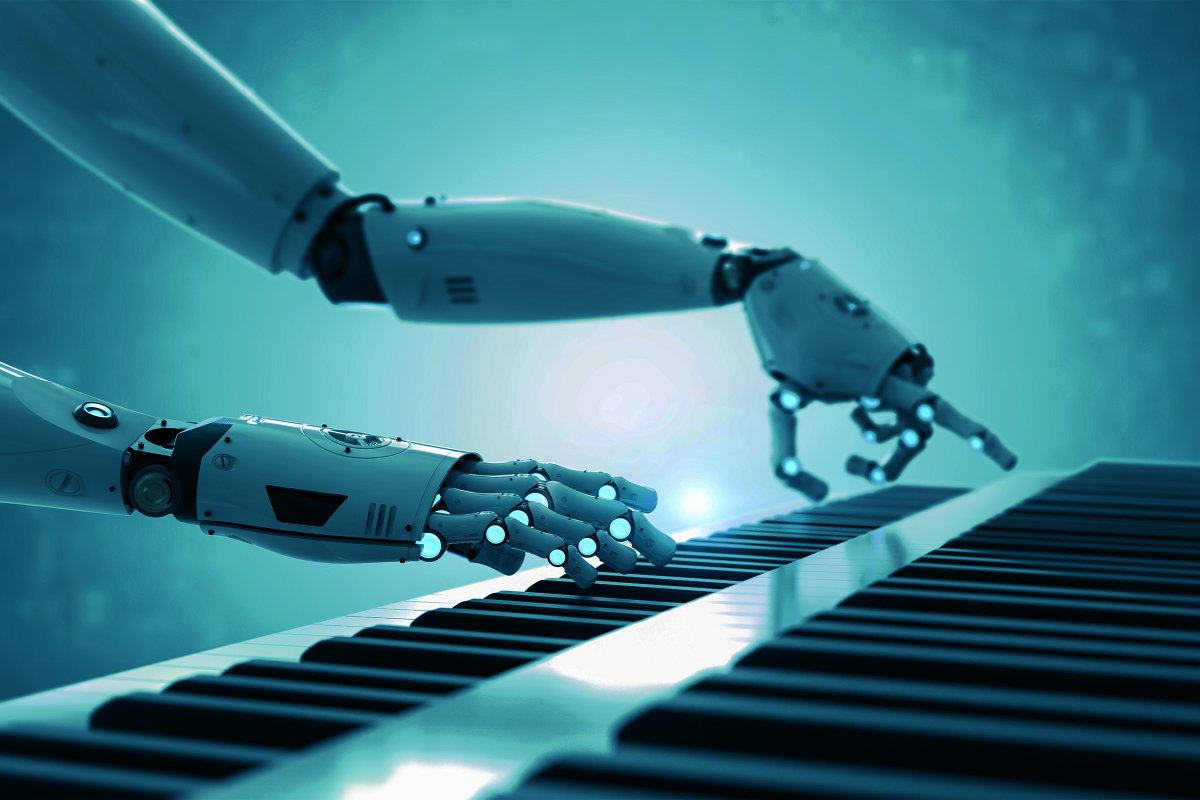
Spotify is trying to curb a flood of low-quality #AI-generated content while simultaneously expanding #AI features on its platform, a tension highlighted by @Lorde criticizing an AI summary that misrepresented her work. Spotify executive Sam Duboff said the service removed over 75 million spammy tracks in the past year and warned that #AI has “taken existing spam tactics and taken them to a new level,” even as AI-made music infiltrates playlists, charts, and enables impersonation of artists. The company’s beta feature “About the Song” pulls from third-party sources to generate context, but in @Lorde’s case it repeated an error from an outlet’s tour review, assigning a stage moment to the wrong song, prompting her to call the feature inaccurate and to ask for an artist opt-out, arguing it can limit free interpretation. Spotify told Rolling Stone the feature exists because fans want backstory, that it is still in beta, and that it moves quickly to correct inaccuracies when they appear. The episode underscores how Spotify’s push to add #AI tools like AI playlists and an AI “DJ” can clash with its stated efforts to keep the platform from being overwhelmed by #AI slop and misinformation.
29. Fix AI Mode or get Google out of classrooms, advocates say

Child safety advocates argue that #Google Search, now infused with #generativeAI through #AI_Mode and #AI_Overviews, poses an unacceptable risk for students and should be disabled for education users or removed from classrooms. A report from Common Sense Media says students should stop using it until educators can turn the AI off, noting it was made widely available, including to education accounts, even though it is powered by #Gemini models that are age-gated in other Google experiences. The report and experts cited by Mashable point to AI Overviews repeating misinformation, designs that project unwarranted authority, and AI tools that will complete homework for minors, all of which can confuse children and enable unintentional cheating. Because Google is deeply embedded in schools via #Chromebooks and #Google_Workspace_for_Education, sources say making AI fundamental and sometimes invisible has eroded long-standing trust and may make learning harder. Advocates want Google to implement developmentally appropriate controls for Search in education settings, or schools to reconsider their reliance on Google products.
30. Claude’s AI assistant could be manipulated through browser extensions

Security researchers at Manifold Security say #Anthropic’s Claude for Chrome extension (v1.0.80, July 7, 2026) still contains two unpatched weaknesses that could let other browser extensions push Claude into sensitive workflows. The first issue, reported May 21, 2026, allows synthetic clicks to trigger nine hardcoded workflows on claude.ai because the extension does not check Event.isTrusted, enabling actions like reading #Gmail, opening #GoogleDocs, checking #GoogleCalendar, and modifying #Salesforce leads, with severity rising from CVSS 7.7 to 9.6 if automatic execution is enabled. Manifold claims the vulnerable handlers stayed unchanged across eight releases (1.0.73 to 1.0.80) and that a fix could be as small as adding an isTrusted verification. The second issue centers on a side-panel URL parameter, skipPermissions=true, which can cause the panel to bypass permission prompts and enter a privileged mode, even though #Anthropic argues it is only constructed by internal scheduled-task systems and labeled the finding informational. Manifold counters that the bypass remains simple JavaScript, the relevant code was byte-identical across releases, and the behavior was reproducible across Claude side-panel model selections including Opus, Sonnet, and Fable.
31. Kimi.ai (@Kimi_Moonshot) on X

Kimi.ai says Kimi K3 demand has surged so much that its GPU capacity is close to the current limit, so it is temporarily pausing new subscriptions to keep service stable for existing subscribers. It reports that in the past 48 hours usage has pushed near capacity, and it will prioritize compute for current members, with existing subscribed users not affected. The company says it is adding capacity as fast as possible and will reopen new subscription spots in batches. It also plans to split membership into two plans, Kimi Membership for web, app, and work, and Kimi Code Membership for coding workflows, to match compute needs more precisely and maintain a stable experience.
That’s all for today’s digest for 2026/07/20! We picked, and processed 31 Articles. Stay tuned for tomorrow’s collection of insights and discoveries.
Thanks, Patricia Zougheib and Dr Badawi, for curating the links
See you in the next one! 🚀
