
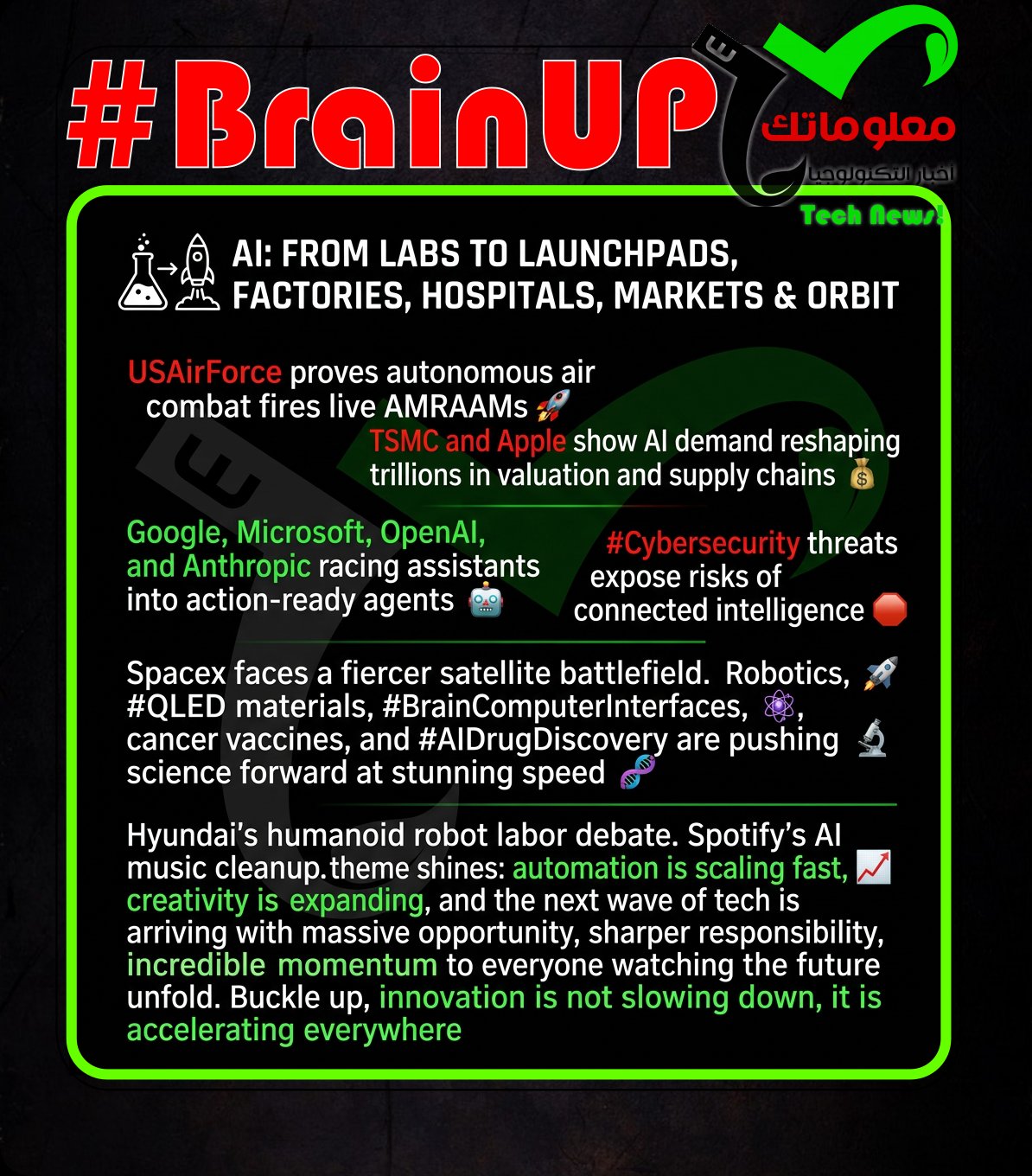
#BrainUp Daily Tech News – (Sunday, July 19ᵗʰ)
Welcome to today’s curated collection of interesting links and insights for 2026/07/19. Our Hand-picked AI ranked, AI-optimized system has processed and summarized 25 articles from all over the internet to bring you the latest technology news.
As previously aired🔴LIVE on Clubhouse, Chatter Social, Instagram, Twitch, X, YouTube, and TikTok.
Also available as a #Podcast on Apple 📻, Spotify🛜, Anghami, and Amazon🎧 or anywhere else you listen to podcasts.
1. USAF’s autonomous AI fighter drone just fired a real AMRAAM air-to-air missile in a world first
The US Air Force has successfully tested an autonomous AI fighter drone that fired a real AIM-120 AMRAAM air-to-air missile, marking a world first. The drone, equipped with advanced artificial intelligence, demonstrated the capability to identify, track, and engage enemy targets without human intervention during the trial. This breakthrough highlights significant advancements in unmanned aerial vehicle combat systems, potentially transforming future air combat scenarios by reducing pilot risk and increasing operational efficiency. The successful firing underlines the growing role of AI in enhancing military capabilities and reflects ongoing efforts to integrate autonomous technologies within defense strategies. This milestone indicates a pivotal step toward fully automated aerial combat missions within the USAF.
2. AI-designed recipe for QLEDs boosts efficiency to new heights
Researchers have employed artificial intelligence to discover a new recipe for quantum dot light-emitting diodes (#QLEDs) that significantly enhances efficiency and stability. The AI method sifted through numerous material combinations to identify optimal synthesis conditions, resulting in QLEDs with improved performance and longer operational lifespan. This approach marks a substantial advancement in materials science, demonstrating how machine learning can accelerate the development of next-generation optoelectronic devices. The integration of AI in materials design offers a pathway to overcome traditional trial-and-error limitations, potentially revolutionizing the field. These findings highlight the growing role of #AI in pushing the boundaries of device engineering and efficiency.
3. Ukraine’s private space race begin as Stetman build low Earth orbit network

Ukrainian company Stetman plans to build a #LEO satellite constellation of 360 spacecraft to boost Ukraine’s communications independence, with services targeted to start in 2027. The program remains on track after founder Dmytro Stetsenko’s death, with new CEO Kateryna Diachenko confirming continuity with Danish manufacturer GomSpace, and a test satellite slated for October 2026 to validate technology with @SpaceX engineers; full deployment is expected to take three years starting in 2027. Stetman chose @SpaceX for launches, citing lower cost and higher reliability, though it has not yet secured a formal agreement for launches beyond the initial test satellite. The project is reported to exceed €1 billion, covering satellites, software, launches, broker fees, and salaries, with per-satellite costs estimated at $2 million to $3 million and Falcon 9 launches typically $60 million to $70 million, while Stetman also aims to open a joint manufacturing facility in Ukraine next year if funding arrives. Alongside the constellation effort, the company already supplies and adapts communications equipment and terminals for Ukraine’s military and public services, aligning the space project with wartime communication resilience goals.
4. Apple overtakes Nvidia as world’s most valuable company as it barrels toward $5T – 9to5Mac

Apple reclaimed the title of the world’s most valuable company by #marketCap, overtaking Nvidia during intraday trading as its stock rose by 17 points this week. The company is approaching a $5 trillion valuation after touching about $4.9 trillion, while Nvidia had previously become the first to cross the $5T threshold. The move followed several days of record highs, even after a brief dip tied to unprecedented price increases on Macs, iPads, and other products amid an ongoing global #RAM shortage. The next milestone highlighted is Apple crossing the $5T market cap mark, alongside an ongoing CEO transition from @Tim Cook to @John Ternus, with August set to be Cook’s last month as CEO and his continued role as executive chairman.
5. Micron (MU) Stock Falls As CXMT Plans $8.6 Billion IPO And Expands DRAM
Micron Technology shares fell as investors digested news that ChangXin Memory Technologies, CXMT, plans an $8.6 billion IPO to expand #DRAM manufacturing capacity, raising fears of future supply growth and pricing pressure in Micron’s core markets. The stock is down 13.3% over the past week and 18.6% over the past month, despite a strong multi-year run that the article says delivered more than 7x gains over 3 years and more than 10x over 5 years, with the share price cited at US$848.95. The article argues that higher DRAM output from a heavily backed Chinese competitor could eventually weaken Micron’s pricing power and margins across PC, mobile, and AI-focused memory, even as US sanctions limit CXMT’s access to some advanced tools and customers. It also notes mixed valuation signals: Micron trades about 43% below the US$1,491.95 analyst target (with a wide target range), yet is assessed as about 49.6% above estimated fair value, and recent volatility plus insider selling and a well-funded rival add risk. The key watch items highlighted are Micron’s DRAM average selling prices, gross margins, and management commentary on Chinese competition in upcoming earnings calls and filings.
6. Hyundai Factory Workers Strike Over Plan to Deploy 25,000 Atlas Humanoid RobotsHyundai’s 40,000-member South Korean union staged a three-day rolling strike to demand binding employment and income guarantees before Hyundai introduces #BostonDynamics #Atlas #humanoidrobots into its factories. The July 13 to 15 action involved four-hour daily walkouts by about 34,000 workers, reportedly the first auto factory stoppage explicitly tied to humanoid robot deployment, and was estimated to cut output by roughly 5,000 vehicles and over 200 billion won ($145 million) in lost sales. The conflict is driven by Hyundai Motor Group’s plan to deploy 25,000+ Atlas robots across Hyundai and Kia plants starting at its Georgia Metaplant in 2028, a roadmap presented at a JPMorgan investor session that would use 83% of a targeted 30,000-unit annual robot production capacity. The union rejected management’s wage and bonus offer and instead demanded higher base pay, a performance bonus equal to 30% of 2025 net profit, retirement age extension, and a commitment that “not a single robot” enters without a labor-management agreement, while management has not accepted AI-related employment guarantees and views restructuring demands as difficult. The dispute links Hyundai’s automation strategy and projected cost reductions for Atlas units with workers’ concerns about an “employment shock” amid broader profit pressures, including U.S. tariffs cited as already cutting operating profit by 30.8%.
7. Claude Chrome extension flaw lets malicious extensions trigger AI actions
A flaw in @Anthropic’s Claude for Chrome extension could let a malicious Chrome extension trigger Claude’s predefined #AI workflows by simulating clicks, potentially abusing Claude’s authenticated access to connected services like #Gmail, #GoogleDocs, #GoogleCalendar, and #Salesforce. Ax Sharma of Manifold Security reported that the Claude extension listens for click events on a specific element to launch built in workflows, but it accepts JavaScript generated click events without verifying they came from a real user via the browser’s Event.isTrusted property. An attacker who tricks a user into installing a malicious extension with permission to run on claude.ai could inject an element containing one of the supported task identifiers and fire an untrusted synthetic click, which the Claude extension would still treat as legitimate and execute. The attack is limited to the nine predefined tasks, not arbitrary prompt injection, but it can still lead to actions such as reading Gmail and unsubscribing from emails, reading Google Doc comments, creating calendar meetings, or modifying Salesforce leads, with impact influenced by the user’s Claude extension settings including the optional “Act without asking” mode. This shows how missing trusted event checks in a browser extension can allow another extension to drive #AI actions through Claude’s workflow interface and connected service permissions.
8. TSMC Adds $100B Arizona Investment as Q2 Profit Surges 77% to Record $22B
#TSMC delivered record Q2 results and simultaneously expanded its U.S. manufacturing plans as demand for #AI chips accelerated. Net income rose 77.4% year over year to NT$706.6 billion ($22 billion) on $40.2 billion of revenue, beating profit estimates (NT$632.6 billion) and lifting gross margin to 67.7% and operating margin to 60.3%, with advanced nodes (7nm and below) contributing 77% of wafer revenue and #2nm generating 3% in its first full commercial quarter. CEO @C.C. Wei announced an additional $100 billion investment in Arizona for four new fabs and an advanced packaging plant, bringing total Arizona commitments to $265 billion, while raising 2026 revenue growth guidance to slightly above 40% and increasing capex to $60-64 billion. Despite the beat, U.S.-listed shares fell about 4% pre-market as investors weighed higher spending and near-term margin pressure from the 2nm ramp. The results highlight TSMC’s central role in producing leading-edge chips for major customers such as @Nvidia, @Apple, and @AMD, and show the company linking stronger AI-driven financial performance to an accelerated U.S. capacity buildout.
9. Microsoft warns of surge in ACR Stealer attacks on customers
@Microsoft reports a surge of #ACRStealer attacks targeting enterprise customers to steal browser-stored passwords, authentication tokens, and sensitive documents. From late April to mid-June, the actor used #ClickFix social engineering plus #WebDAV and #MSHTA to deliver the payload, with ACR Stealer described as a #MaaS operation believed to be a rebranding of Amatera Stealer. In one common chain, ClickFix triggers execution of a malicious DLL from a remote WebDAV share via rundll32.exe, followed by a heavily obfuscated PowerShell script that installs a Python loader, sets persistence via a scheduled task disguised as an update, manipulates timestamps, clears PowerShell history, and injects the final payload for in-memory execution, with some variants using public blockchain dead-drop resolvers (#EtherHiding). In another chain, ClickFix launches MSHTA to pull malicious content and an obfuscated PowerShell downloader, then decrypts an encrypted payload hidden in a steganographic JPEG and executes it in memory, ultimately collecting browser cookies and session data, decrypting browser data via #DPAPI, and harvesting PDFs and Microsoft 365 files including from Desktop, Downloads, and enterprise-synced #OneDrive and #SharePoint before archiving for exfiltration. Microsoft advises avoiding copying and running ClickFix instructions in command interpreters, and recommends reducing exposure to web-based delivery by filtering and blocking low-reputation or new domains, restricting unnecessary online resources, and using application control to limit remote content execution via tools like PowerShell, Python, mshta.exe, and rundll32.exe.
10. China and Russia have a secret ‘no limit’ pact to eliminate Elon Musk’s Starlink at all cost

Leaked documents described in a joint The Insider, Der Spiegel, and Le Monde investigation claim China presented Russia with a three-level plan to contain and defeat #Starlink, reflecting expanded China-Russia military cooperation under their reported “no limits” partnership. The plan was reportedly shared with Russian officers at a secret forum in 2023 and discussed at a November 2023 Guangzhou summit, proposing diplomatic pressure and regulation, electromagnetic #jamming, and then #cyberattacks, with an alternative path of physical destruction of satellites. The article frames #Starlink as a key communications backbone for Ukraine in the Russia-Ukraine war and as a growing concern for China due to increasing US military reliance on @SpaceX, including the military-grade #Starshield program. It says the proposals include “access spoofing, virus infection, and the exploitation of vulnerabilities,” alongside efforts to “eliminate” satellites already in orbit. Separately, it reports a June 2023 Moscow protocol committing Russia and China to jointly build a hypersonic-missile-defense system based on previously unshared Russian technology, reinforcing the broader strategic context for efforts targeting @Elon Musk’s satellite network.
11. New ClickLock macOS malware traps users into revealing login password
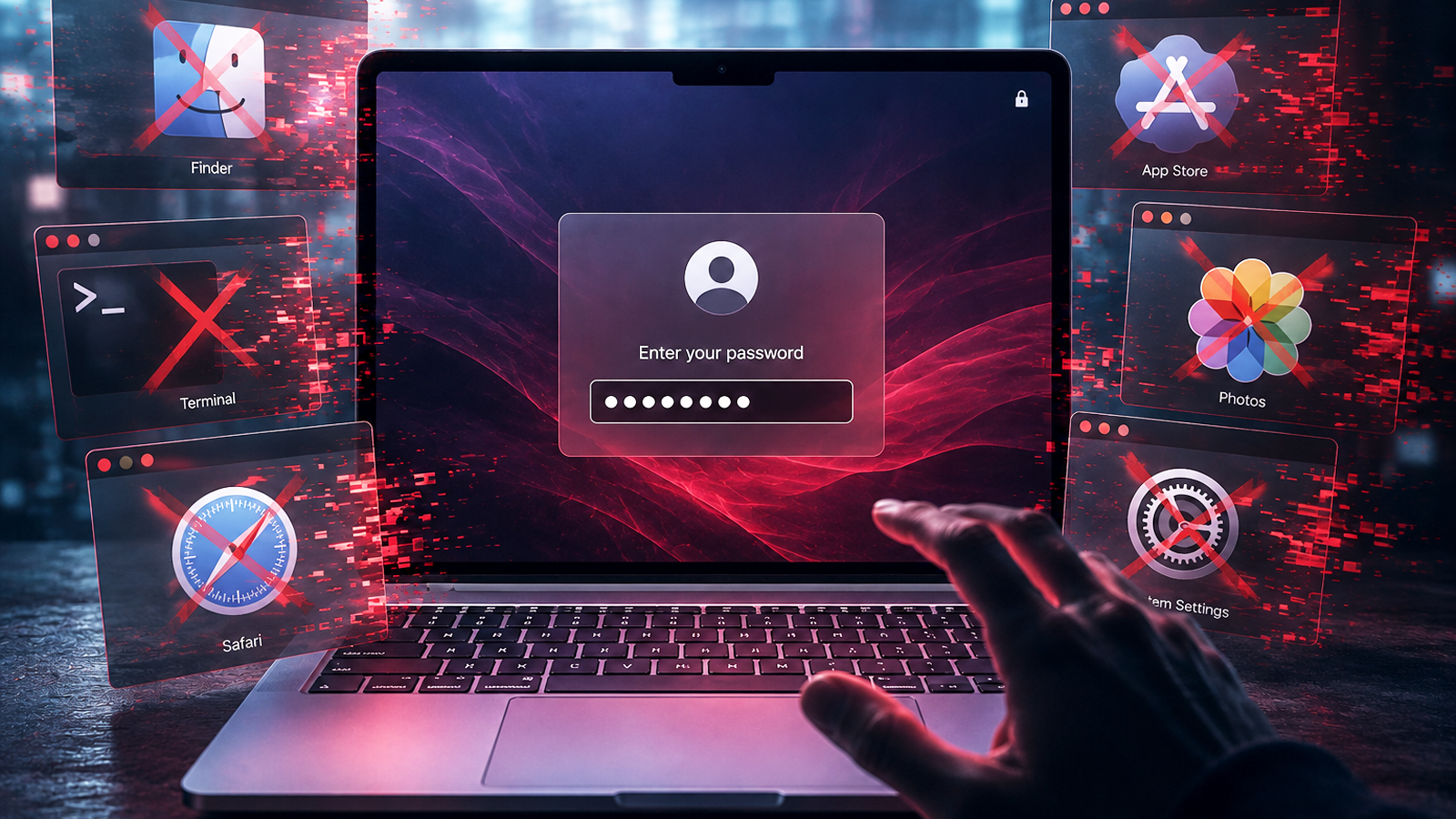
ClickLock is a new macOS #information-stealing malware that coerces victims into revealing their system login password by repeatedly killing visible apps until only a password prompt remains. @Group-IB analyzed a ClickLock shell script found on VirusTotal (first submitted June 9) that was reportedly undetected there at the time and linked it to at least 100 infections across 33 countries since May, likely starting with a #ClickFix lure that runs a malicious Terminal command and shows a fake Cloudflare “human verification” progress bar while downloading modules and suppressing NotificationCenter for about six hours. The script uses social engineering rather than exploits or elevated privileges, displaying a fake macOS password dialog using the victim’s real username and an Apple icon, validating the entered password, and exfiltrating it to attackers via Telegram. If the user cancels, it installs persistence through two #LaunchAgents (com.authirity.plist, com.chromer.plist) and on subsequent runs executes tight kill loops (every 210 ms for up to ~83 hours, and every 200 ms for up to ~35 days) that terminate key apps and also trigger a legitimate Keychain authorization prompt aimed at obtaining Chrome Safe Storage access for decrypting Chromium-based browser secrets. ClickLock’s collection targets include data from eight browsers (Chrome, Firefox, Brave, Edge, Opera, Vivaldi, Arc, Chromium), credentials and session data, cryptocurrency wallet extensions and files, wallet vault material for offline cracking, password-manager extension data, cached crypto addresses across multiple chains, shell histories, and FileZilla configuration and recent-server data.
Microsoft Teams will introduce a new default setting where meetings are automatically archived for AI-powered analysis by Copilot, enhancing productivity and record-keeping. This feature aims to streamline access to meeting content and insights, reducing the manual effort needed to organize meeting notes and follow-ups. Alongside this, six additional updates will improve user experience and functionality, demonstrating Microsoft’s ongoing commitment to leveraging AI for workplace efficiency. The changes indicate a strategic focus on integrating advanced AI tools into collaboration platforms to optimize communication and task management. These enhancements position Teams as a more intelligent and user-friendly hub for modern work environments.

@Microsoft restored streamer @Joshua Khane’s access to a 25-year-old account after it was hijacked by a hacker and suspended, returning both his purchases and personal data. Khane said the account included his OneDrive and Xbox profile, with 25 years of information such as his son’s baby photos and thousands of dollars worth of games, and he confirmed on July 16 that Xbox had reached out and restored access. He praised the recovery effort but criticized the initial response, saying he was first told the suspension was irreversible and arguing that visibility mattered, claiming the company might not act similarly for “a nobody.” The official Xbox account replied on July 15, apologizing and stating it was working to restore access and outlining next steps. Khane connected the incident to wider concerns about #digital ownership and used the outcome to raise awareness for others as the industry moves toward an increasingly all-digital future.
15. Meet GPT-Red: an LLM super-hacker OpenAI built to make its models safer

OpenAI built GPT-Red, an LLM designed to automate #red-teaming so it can help harden other OpenAI models against cyberattacks, and the company says training GPT-5.6 against it made that release its most robust yet. GPT-Red is trained in a self-play loop where it repeatedly tries to break other models while those models learn to defend, using a simulated “dojo” of real-world deployment settings like web browsing, email and calendar use, and code editing. OpenAI focused heavily on #promptInjection, in which malicious instructions hidden in text, code, or websites can induce an LLM to leak confidential data, sabotage codebases, or produce harmful output, and says GPT-Red can rapidly iterate on newly found attacks to discover the most effective variants for specific scenarios. The researchers report that GPT-Red has already uncovered previously unseen attack modes, including a “fake chain of thought” technique that inserts spoofed entries into another model’s internal scratchpad so it treats false information as already verified. OpenAI frames GPT-Red as a way to future-proof safety testing as agentic LLMs broaden the attack surface and the potential blast radius beyond what human-only red teams can keep up with.
A Beijing-developed #LLM, Kimi-K3 from Moonshot AI, surged to the top of Arena.ai’s “Frontend Code Arena,” beating models like Claude Fable 5 and GPT-5.6 Sol, while also reaching ninth place in the “Text Arena,” up from Moonshot’s prior Kimi-K2.6 at 38. The shift is notable because Kimi-K3 is an #open-weight model, with publicly viewable internals, and the article says open models cost users about six times less than proprietary systems while historically lagging slightly in performance. @Xiaoyin Qu argued that if the best open-weight model exceeds the best closed-source model, it undermines premium pricing for closed models and intensifies pressure on US firms as the performance gap narrows. The article connects this benchmark jump and cost-performance math to broader market anxiety, noting US semiconductor stocks and the Nasdaq fell amid worries about an American AI bubble and questioning valuation gaps such as Moonshot’s reported $20B versus @Anthropic’s nearly $1T.
17. Apple’s plot to crush OpenAI

On this episode of The Vergecast, the hosts dig into @Apple suing @OpenAI, focusing on what Apple really wants from a highly public fight and how much of the complaint reflects normal industry behavior. @Nilay Patel and @David Pierce read through the lawsuit and compare it with Apple’s history of splashy litigation to ask whether Apple is trying to blunt a potential competitor or capitalize on a weak moment for OpenAI. They also discuss Apple’s public betas, led by the new #Siri AI, and what its arrival suggests, including whether the updated Siri is actually good. The show then moves to gadget news, including leaks about OpenAI gadgets and Pixel phones, #OnePlus exiting the US and Europe, and the continuing #Samsung and Apple duopoly in the US, plus a lightning round covering Brendan Carr, changes to the #X feed, the cracking face emoji, and more.
18. NASA’s Psyche mission to swing by Mars on its way to a metal-rich asteroid
NASA’s Psyche spacecraft is set to fly by Mars in 2026 en route to the asteroid Psyche, which is rich in metal. The mission’s Mars flyby will use the planet’s gravity to adjust the spacecraft’s trajectory and speed, ensuring it reaches the asteroid efficiently. The Psyche mission aims to study the metallic core of a protoplanet, providing insight into planetary formation and the building blocks of the solar system. This flyby is essential for saving fuel and time, showcasing the importance of gravity assists in space exploration. The mission highlights NASA’s innovative approach to exploring previously inaccessible metal-rich celestial bodies.
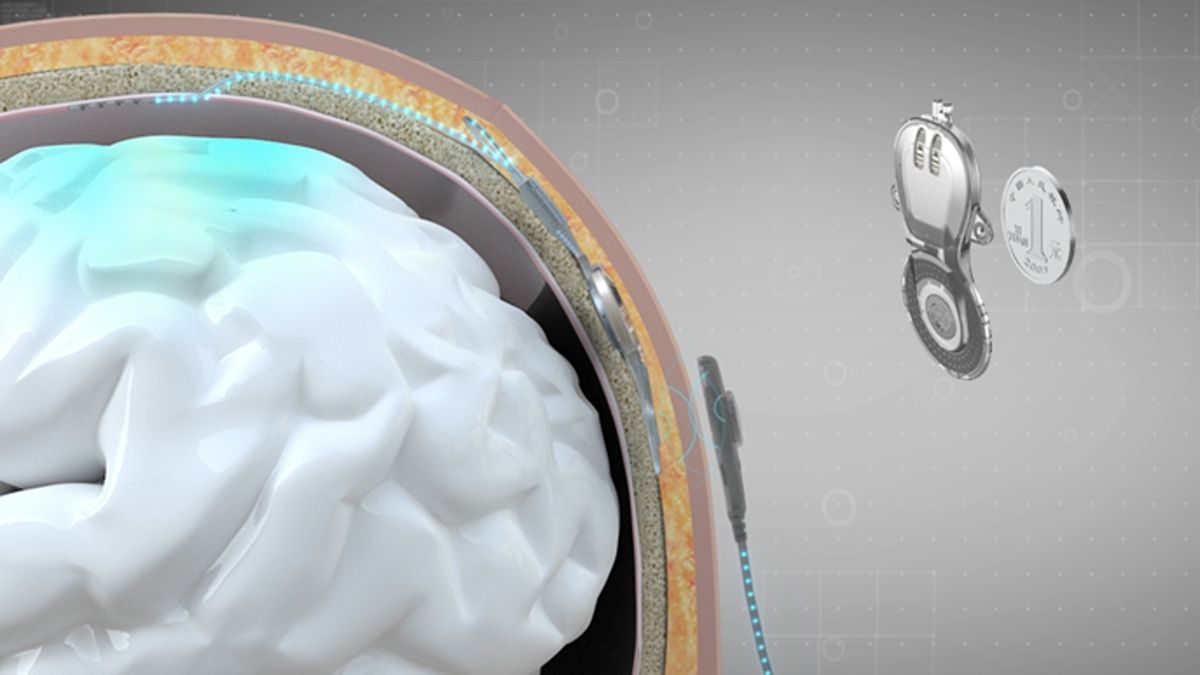
China has carried out the first implant of a commercially sold #brain-computer interface, after regulators approved sales of the Neural Electronic Opportunity (NEO) device. Reported by the South China Morning Post, the coin-sized NEO from Neuracle Medical Technology uses eight electrodes to read neural signals in sensory and motor regions and translate them into actions, such as moving a metal glove, and potentially controlling computers, phones, or robotic limbs. The first recipient was a person injured in a car crash about a decade ago with spinal cord damage and impaired hand mobility, and post-surgery reports said the patient was recovering well with normal brain signaling observed. The milestone is supported by Chinese government planning, including a blueprint with targets for #BCI technology by 2027, and it highlights a contrast with @Elon Musk’s @Neuralink, which has implanted devices but lacks US regulatory approval and is not yet commercially available.
20. Google takes aim at Canva and Adobe as its AI image editor Pics gets an official rollout date
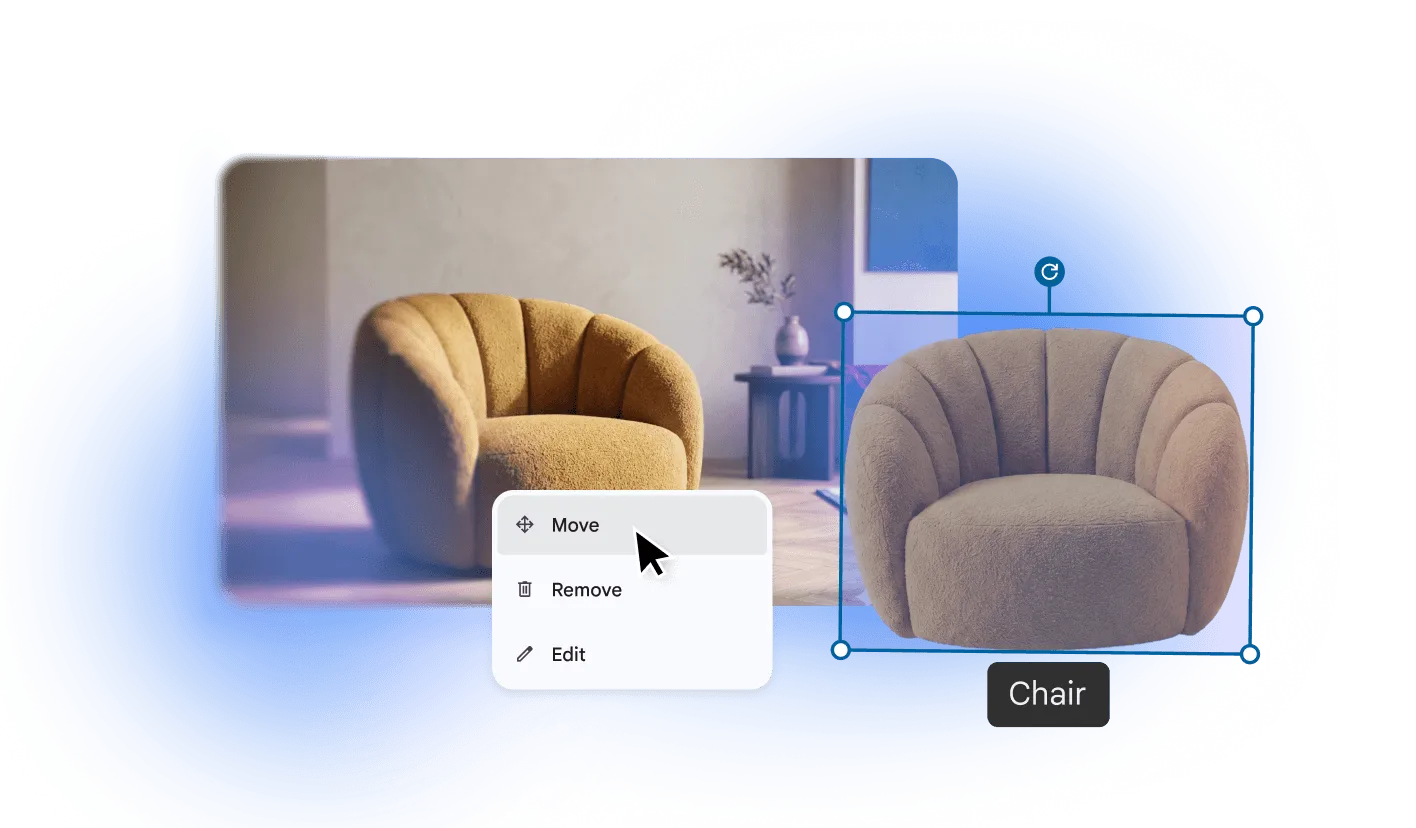
@Google is rolling out Google Pics, an #AI image generation and editing tool, to eligible #GoogleWorkspace business and education customers starting August 18, following an experiment period in Gemini Alpha. Built on Google’s Nano Banana imaging model, Pics will be available as a standalone web app and integrated into Workspace apps like Slides, Docs, and Sheets, enabling text-to-image creation plus edits such as manipulating elements, translating or editing text, and swapping objects. Google positions these capabilities to address common AI image issues like incorrect scale, garbled text, and mismatched elements, while also reducing the need to export assets to third-party editors. The product is framed as competition for @Canva (including Magic Grab), @Adobe (notably Adobe Express and background removal), and stock-image services like Shutterstock and iStock, with Pics enabled by default but optionally disableable by admins. #GenerativeAI usage limits will be introduced as availability expands, though higher-priority access is expected until February 28, 2027, and no consumer rollout timeline has been provided.
21. Microsoft nemesis returns with another zero-day PoC — but is ‘LegacyHive’ as nasty as expected?

@Chaotic Eclipse disclosed a new #Windows 11 zero day called #LegacyHive, a #local privilege escalation bug that targets Windows user registry hives on fully patched systems. The issue could allow an attacker with prior access to a device to gain privileged read and write access to other users’ hives, effectively turning a low privilege account into a high privilege one, though some researchers view it as less disastrous than the researcher’s earlier releases because it is not remotely exploitable. Unlike prior disclosures, LegacyHive was not published with a CVE identifier or a fully functioning #PoC, but experts warn capable threat actors could still fill in the gaps quickly and weaponize it. The disclosure continues a series of zero day releases tied to the researcher’s dispute with @Microsoft over responsible disclosure expectations and past legal threats. The report frames the risk as lower impact than earlier Chaotic Eclipse exploits, while still urging intelligence teams to prepare mitigations due to the ease of escalation once local access exists.
22. Google’s AI Mode now lets you link and interact with select apps | TechCrunch

Google is expanding #AI Mode, its conversational search experience, by letting users link and interact with select third-party apps so it can complete tasks, not just answer questions. At launch in the U.S., supported apps include Instacart, Canva, and YouTube, with examples like building a barbecue grocery list and sending items to an Instacart cart, browsing Canva templates for design ideas, or curating a playlist and saving it to YouTube Music. Google positions the update as a way to make AI Mode more useful for planning and shopping and to better compete with rivals like @OpenAI’s ChatGPT and @Anthropic’s Claude, which also support app integrations. The move builds on an earlier capability announced at Google I/O to connect third-party apps to the Gemini app, and it follows other AI Mode additions such as checking nearby in-store availability, side-by-side web exploration with context, and “Personal Intelligence” that can use Gmail and Google Photos for more individualized responses. Google says it is working with more partners and plans to add support for additional apps soon.
A vaccine targeting mutant KRAS proteins has produced immune responses in 90% of high-risk individuals for pancreatic cancer, highlighting potential for cancer prevention. The clinical trial tested a peptide vaccine designed to stimulate T-cell responses against common KRAS mutations found in pancreatic cancer. Participants showed robust immune activation without serious adverse effects, suggesting safety and efficacy. These findings indicate the vaccine could become a promising strategy for early intervention in individuals predisposed to pancreatic cancer due to KRAS mutations. This development represents an important step toward personalized cancer prevention through targeted immunotherapy.
24. New Lawsuit Filed Against Apple for ‘Hide My Email’ Privacy Vulnerability

A new California lawsuit, Alvarez v. @Apple Inc., alleges that @Apple’s #HideMyEmail feature failed to deliver the privacy protection it advertised because a vulnerability could reveal users’ real email addresses behind iCloud.com aliases. The complaint accuses @Apple of false advertising, fraud, and breach of contract, claims it was alerted to the flaw by a security researcher in June 2025, and seeks class action status, a jury trial, damages exceeding $5 million, and an order to fix the issue or disclose limitations. The flaw, attributed to findings by Easy Opt Outs and reported by 404 Media, allegedly allowed basic online identity search tools to analyze temporary iCloud aliases and uncover the underlying real addresses, with 404 Media reporting 100% exploitability on two tested sites. The article notes that exposing a real email can enable further deanonymization via public record databases and other data sources, increasing risks such as identifying personal details or linking to leaked password lists. It adds that @Apple plans to change the domain later this summer from iCloud.com to private.iCloud.com, a move that could let websites block these addresses and potentially push users toward using real emails or third-party tools.
25. Tuberculosis drug discovery becomes smarter with AI
The use of artificial intelligence (#AI) is advancing tuberculosis drug discovery by improving the identification of promising drug candidates and optimizing therapeutic strategies. Researchers have leveraged AI algorithms to analyze complex biological data, accelerating the screening process and enabling the design of more effective compounds. This integration of AI helps overcome traditional challenges in tuberculosis treatment, such as drug resistance and lengthy development timelines. By facilitating smarter decision-making in drug development, AI technology enhances the potential for creating effective tuberculosis therapies. These advancements underline AI’s growing impact on addressing global health challenges through innovative drug discovery approaches.
26. Spotify is deleting millions of AI-generated music tracks to fend off spammers
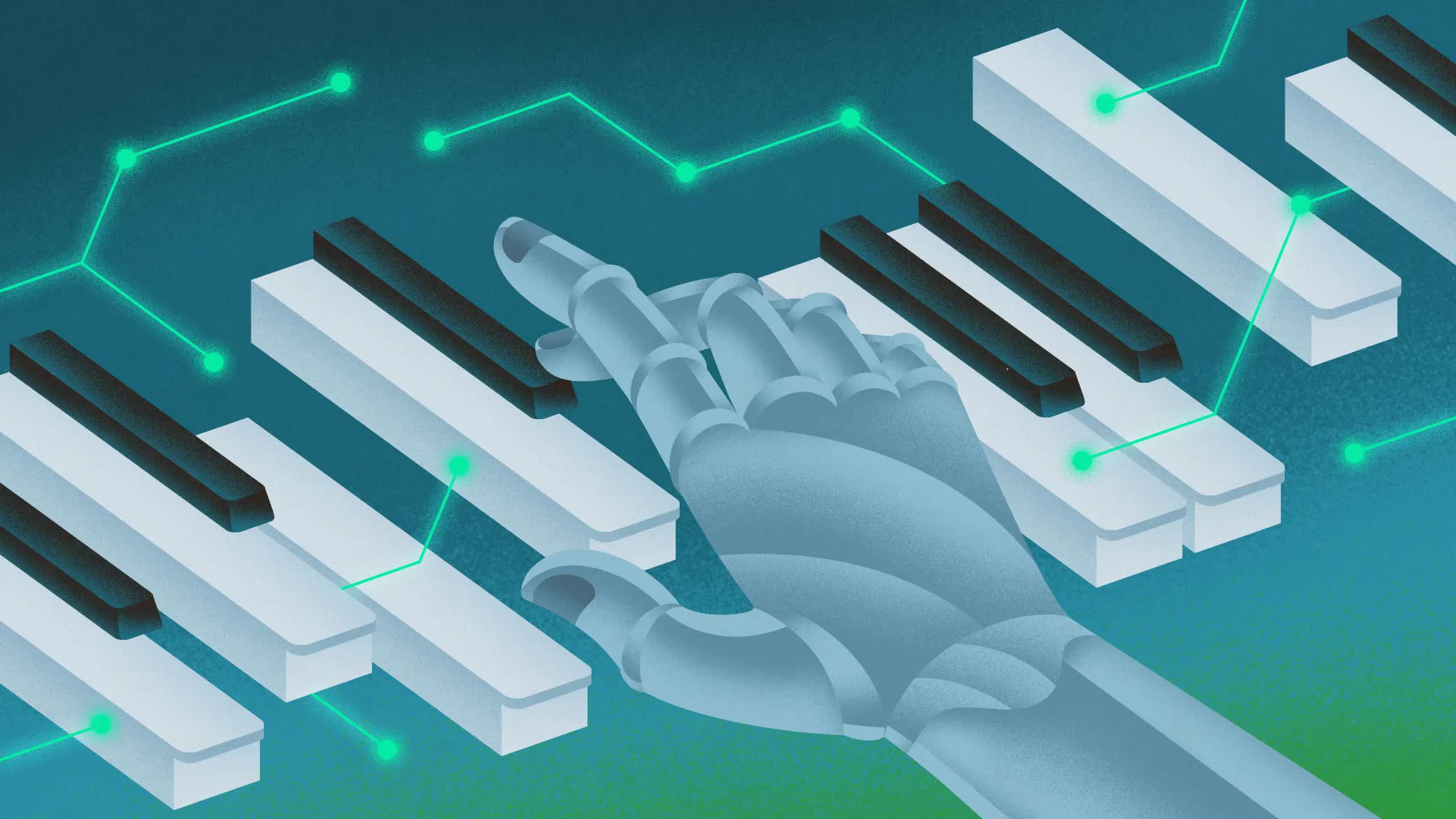
Spotify says it is removing massive amounts of low-effort #AI-generated music to combat spam and related abuse on the platform. According to @Sam Duboff, Spotify removed 75 million AI-generated tracks in 2025, and bots upload about 100,000 songs per day, many likely produced via #generativeAI services or custom #LLM setups, while Spotify also runs systems to fight both spam uploads and content scraping used to train AI models. Duboff argues AI has not created entirely new spam tactics, but it has amplified the scale and effectiveness of audio spam, requiring dedicated teams to identify new attack vectors. He also notes that not all genAI music is “slop” because real artists increasingly use AI in workflows, and Spotify itself is embracing AI, including using AI agents for coding and allowing label-approved AI tools for remixes and covers sold on the platform. Industry groups including the #IFPI and the #RIAA are responding with a voluntary labeling program to distinguish fully AI-prompted songs from “AI-assisted” human-led music, aligning with efforts to give listeners clearer signals as AI content proliferates.
That’s all for today’s digest for 2026/07/19! We picked, and processed 25 Articles. Stay tuned for tomorrow’s collection of insights and discoveries.
Thanks, Patricia Zougheib and Dr Badawi, for curating the links
See you in the next one! 🚀
