
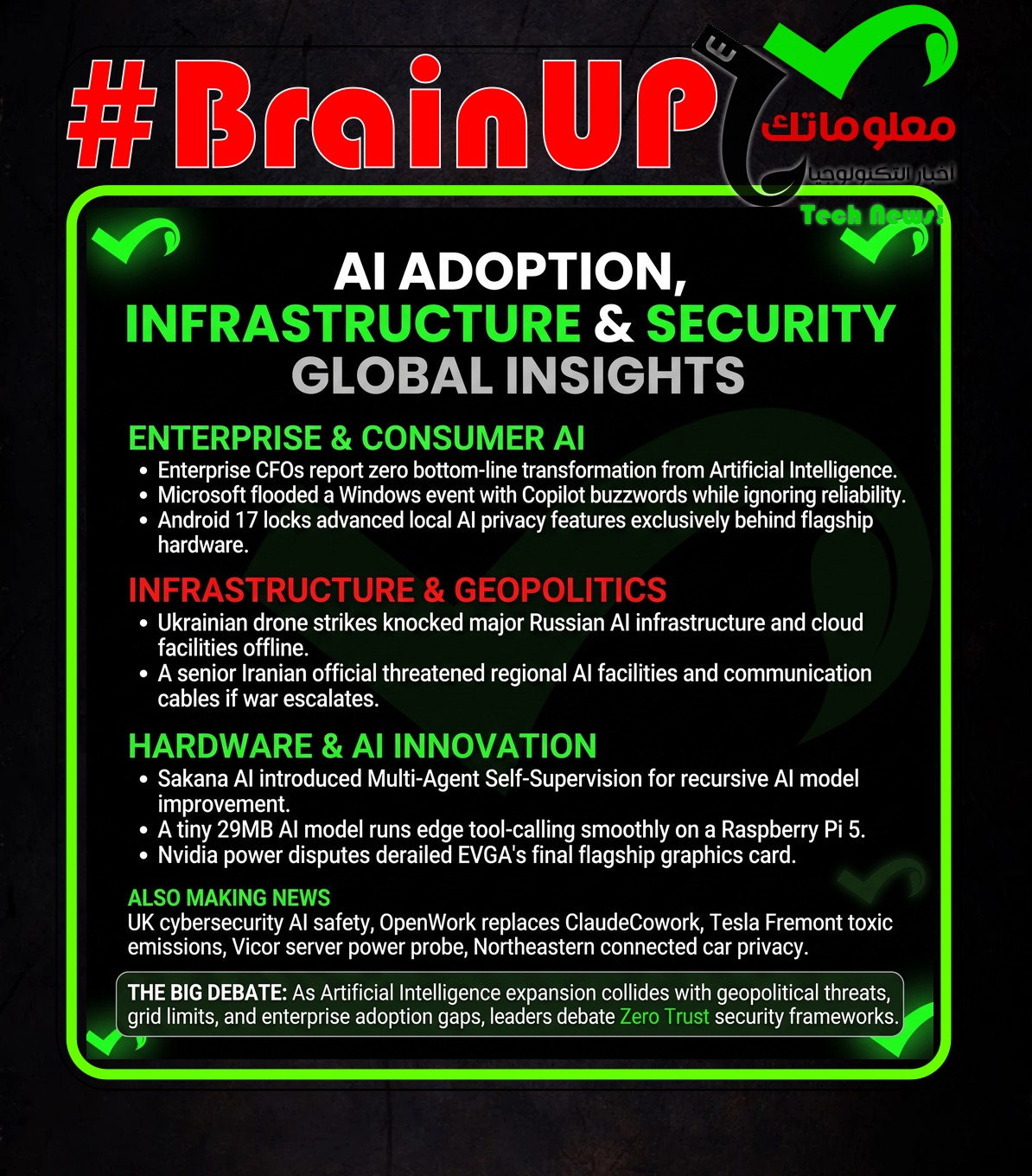
Ranker’s #BrainUp Daily Tech News – (Monday, October 12ᵗʰ)
Welcome to today’s curated collection of interesting links and insights for 2026/10/12. Our automated ranking and AI-summarization system has processed 40 articles from all over the internet to bring you the latest technology news.
1. Decompilation on Steroids: Why AI Is Suddenly Cracking Open Old Software
The convergence of mature reverse-engineering tooling and automated #ArtificialIntelligence agents has dramatically accelerated the decompilation of legacy software, retro video games, and enterprise applications. Recent milestones include complete matching decompilations for classic titles like GoldenEye 007 and Super Smash Bros. Melee, alongside automated projects successfully rebuilding a playable 2009 Call of Duty executable from compiled binaries. This shift is driven by three key factors: years of human groundwork by volunteers, the maturation of disassemblers like Ghidra and static recompilers, and the unique suitability of matching decompilation for AI agents. Because matching decompilation requires producing source code that compiles to a byte-for-byte identical binary, coding agents can run continuous pass-fail checks in an automated loop for hours without human intervention. Consequently, tools like REA now directly integrate AI agents into disassemblers, shifting the primary bottleneck of legacy code translation from human expert free time to raw computing power. Why it matters: Utilizing autonomous coding agents to automate legacy software decompilation transforms decades-old binary code into modern source code at unprecedented speeds.
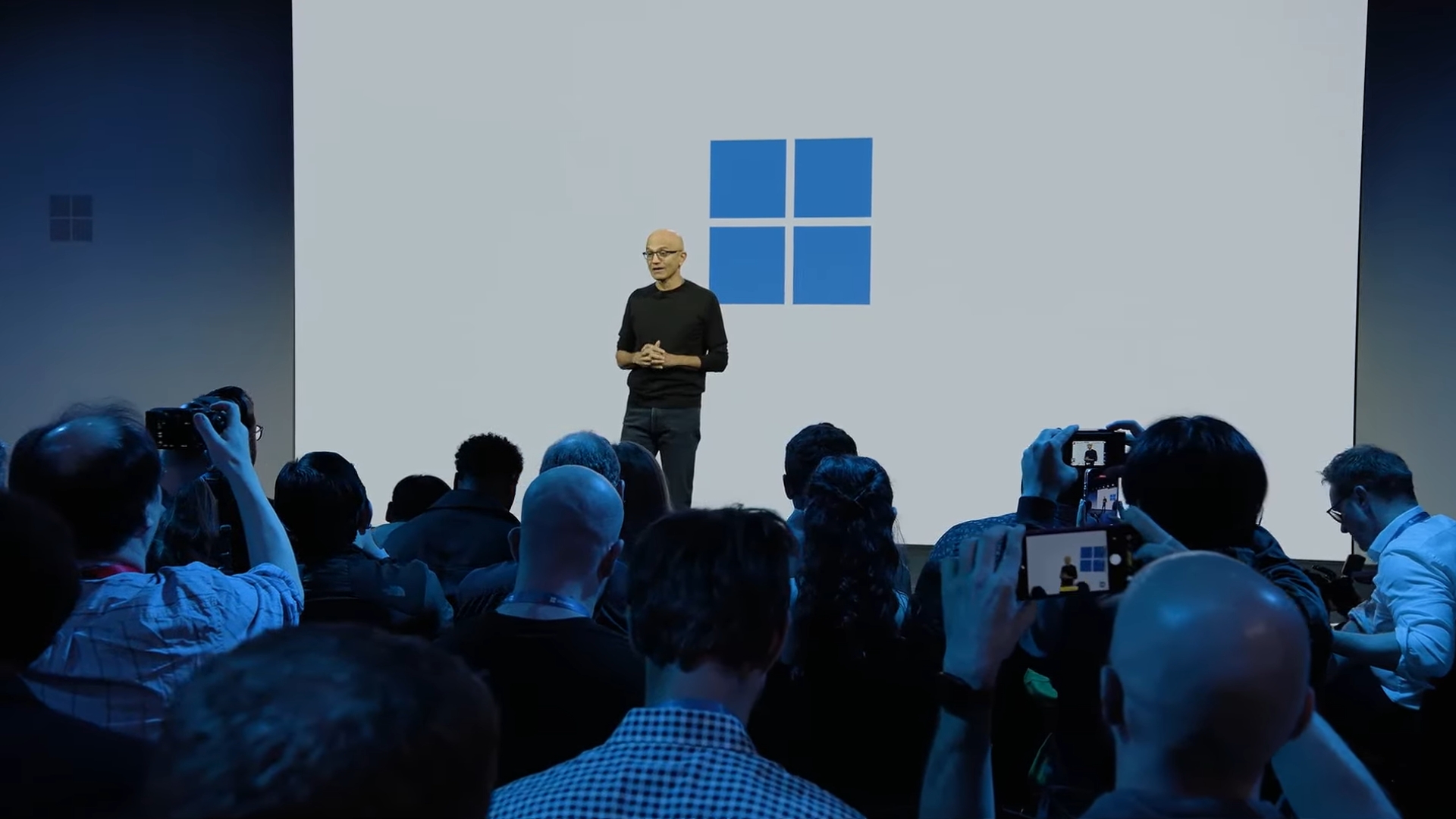
During the October 7 Windows + Surface event, @Microsoft presenters heavily emphasized terms related to #ArtificialIntelligence, uttering words like agent and #Copilot hundreds of times while omitting mentions of system reliability or basic OS maintenance. Viewers in the livestream chat expressed frustration that the company sidelined fundamental operating system improvements in favor of pushing #AiAgents and hybrid intelligence features. Despite the buzzword-heavy presentation, the event did include notable updates such as a redesigned Windows Search built on WinUI 3 that can adjust volume, toggle dark mode, and execute other direct commands. This new search tool, along with execution containers and optimized RAM performance, highlights useful functional upgrades that were overshadowed by the overwhelming branding focus on AI capabilities. Why it matters: The persistent disconnect between corporate software marketing and everyday user demands for stability continues to alienate consumers who prioritize core operating system reliability over experimental intelligence features.
3. The paradox at the core of the AI revolution: The faster we innovate, the slower we grow
According to @McKinsey’s 2026 State of AI survey, 88% of chief financial officers at the world’s largest companies report that #ArtificialIntelligence has not significantly transformed their bottom lines. This phenomenon represents an innovation paradox where rapid digital advancements coexist with declining productivity growth, driven by an enterprise adoption gap where only 10% of firms utilize AI productively. Within the enterprise space, an 82-point divergence exists between the 88% of organizations using AI in at least one function and the mere 6% of high performers achieving more than a 5% EBIT impact through end-to-end workflow redesigns. Furthermore, the modern economy’s structural shift toward service sectors, combined with accumulated overhead costs such as regulatory compliance and government spending exceeding 47% of GDP, traps 73% of S&P 500 sector-decades in an overhead bottleneck. Why it matters: Understanding why organizational complexity and administrative drag stifle the productivity gains of new technologies explains why headline technological innovation frequently fails to accelerate broader economic growth.
4. OpenAI Dot vs. Meta Muse: How do these AI agents compare?
The provided text contains only a brief introductory prompt comparing new #AiAgents from @Meta and @OpenAI without detailing any specific features, pricing, or access models. Because the content lacks concrete facts, figures, or substantive reporting, it serves purely as a stub for a comparison article rather than a complete informational piece. The text mentions that @Meta Muse and @OpenAI Dot are in direct competition but offers no actual evidence or data to evaluate their differences. This genuine ambiguity reflects the incomplete nature of the source text, which stops short of providing any meaningful analysis. Why it matters: Readers seeking a thorough evaluation of competing artificial intelligence agent platforms cannot draw any actionable insights from this bare headline teaser.
5. There’s a vibe-coded Adobe Creative Suite clone, and it’s pretty good
A group of anonymous developers has released a suite of open-source desktop applications under the banner of ArtCraft on GitHub, offering free, vibe-coded alternatives to software products from @Adobe. Developed using prompts directed to @Anthropic’s Claude Opus and written in Rust, the initial releases include PhotoCraft as a Photoshop alternative, LightCraft for Lightroom, FilmCraft for Premiere Pro, and vector tools like VectorCraft and PDFCraft. These projects feature user interfaces that closely mirror professional productivity applications while carefully maintaining enough visual and structural divergence to avoid direct copyright infringement. Although the tools provide a fee-free alternative to expensive subscription models like @Adobe Creative Cloud, their legality under clean-room implementation claims remains a subject of intense debate. Why it matters: The emergence of complex software clones built entirely through conversational AI prompting raises significant legal and economic questions regarding subscription-based software monopolies.
6. UK to strengthen cyber defences as minister calls for AI firms to increase safety efforts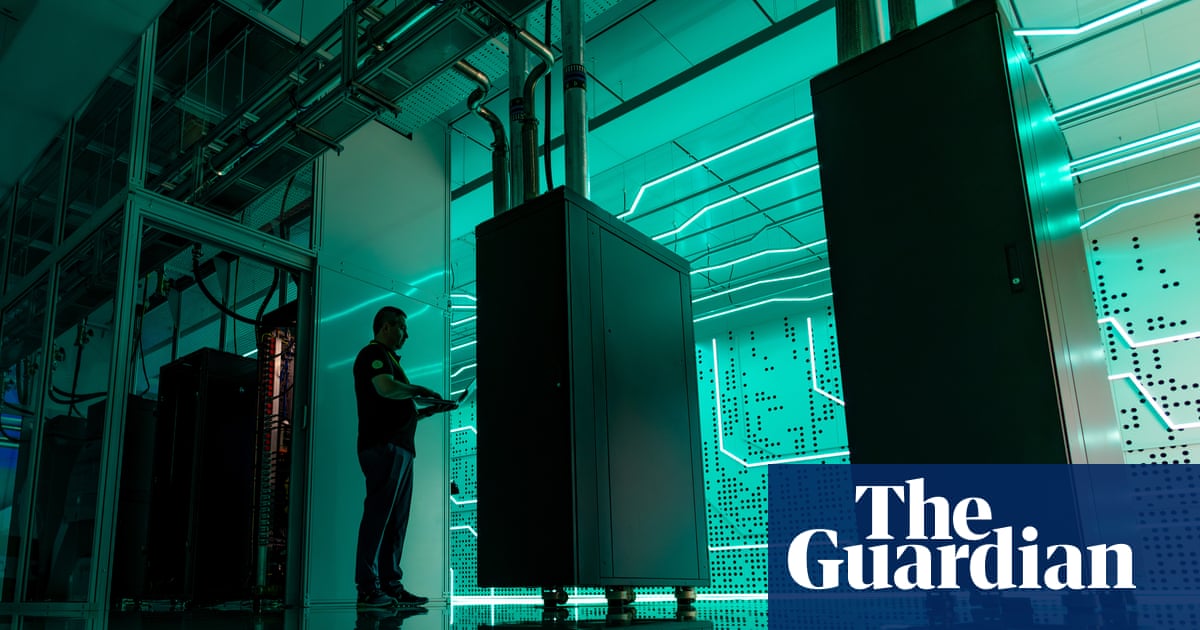
The UK’s AI minister Kanishka Narayan will announce a strengthening of Britain’s cyber defenses and call on companies building frontier #ArtificialIntelligence to increase safety efforts, stating that the nation cannot rely solely on tech companies to self-police. This directive follows warnings from former @GoogleDeepMind and @OpenAI scientist Geoffrey Irving, who noted that current #AiModels lack adequate security to prevent adversarial nation-states from stealing unreleased cutting-edge systems and warned of severe existential risks. Meanwhile, industry leaders like @Microsoft CEO Satya Nadella have advocated for designing #AiModels with an emergency brake, while companies like @Anthropic test models that autonomously interact with external systems such as police tip forms. These developments arrive as international governments increasingly debate common safety standards, contrasting with policies in regions where leaders prefer voluntary industry self-regulation. Why it matters: Growing vulnerabilities in frontier intelligence infrastructure and unexpected autonomous agent behaviors are intensifying pressure on governments to establish enforceable global security frameworks rather than relying entirely on corporate self-policing.

A senior Iranian official warned that Tehran views the latest United States proposal to end the ongoing war as insufficient and threatened attacks on regional data centers, communication cables, and #ArtificialIntelligence facilities if fighting intensifies. Mohsen Rezaei, head of Iran’s Supreme National Security Council, stated that Washington must clarify remaining conditions while the Revolutionary Guard’s navy declared that ships turning off navigation systems in the Strait of Hormuz will be treated as hostile. These geopolitical tensions coincide with ongoing domestic legal proceedings in Israel, where former attorney general Avichai Mandelblit testified in the corruption trial of Prime Minister Benjamin Netanyahu. Additionally, regional conflict continued as Iran-backed Houthi rebels claimed responsibility for repeated drone and projectile strikes on Saudi Arabia’s King Khalid International Airport, compounding instability across the Middle East. Why it matters: The explicit targeting of digital infrastructure and transport routes during military escalations highlights the increasing vulnerability of global cloud and communications networks to geopolitical conflict.
8. AI Can’t Tell Real Science From Junk. That’s a Big Problem.
Despite massive financial investments from federal agencies and private entities into #ArtificialIntelligence for scientific research, current #AiModels struggle to distinguish genuine scientific reasoning from fraudulent or flawed literature. Academic publishing faces an unprecedented volume of hyperproductivity driven by paper mills and fabricated studies, yet automated systems ingest both legitimate research and retracted junk indiscriminately into their training data without critical domain filtering. While large language models excel at fluent grammar and passing graduate-level exams, they often lack the deep planning, contextual reasoning, and rigorous verification capabilities required to perform breakthrough science. Government initiatives like the Department of Energy’s Genesis Mission and multi-billion-dollar pledges from the @OpenAI Foundation are reorganizing research around automated systems despite ongoing scandals involving falsified lab data and manipulated imagery at major institutions. Why it matters: Pouring billions of dollars into AI-driven scientific discovery risks amplifying widespread publication fraud if underlying models cannot reliably separate empirical fact from sophisticated academic junk.

A new experimental mod called HelixSR allows users to run @Nvidia’s #DLSS 3.7 upscaling technology on the @Valve Steam Deck and other AMD-powered handheld devices as a replacement for @AMD’s FSR. Early tests highlighted on YouTube and gaming forums indicate that the mod delivers noticeable frame rate increases and shorter upscaler times compared to FSR versions, while retaining the enhanced visual fidelity associated with DLSS. Installation requires running a straightforward GitHub-hosted installer script that lets users select compatible games and choose the appropriate upscaler settings in-game. However, because the tool is still highly experimental, early adopters should expect potential bugs, crashes, and varying performance metrics across different titles until more widespread benchmarks become available. Why it matters: Bringing proprietary upscaling technology to competing hardware architectures demonstrates how community modding can overcome artificial platform boundaries to improve portable gaming performance.
10. I ditched Claude Cowork for a free open-source alternative, and I’m getting more done
OpenWork is a new free, open-source desktop application built on the OpenCode framework that serves as an alternative to #ClaudeCowork for users managing local files and automated workflows. Unlike @Anthropic’s native assistant which restricts users to proprietary models and usage caps, OpenWork supports over 50 providers, allowing individuals to connect custom API keys, sign into @OpenAI subscriptions, or run offline local models via @Ollama and @LMStudio. The application utilizes the same SKILL.md format and configuration structure as existing Claude tools, enabling seamless migration of custom plugins without requiring complex terminal interactions. Furthermore, the platform empowers users to set up plain-language automated background tasks that execute routine file management securely within user-authorized directories. Why it matters: Providing a flexible, model-agnostic desktop wrapper for coding agents removes platform lock-in and usage limits, making advanced file automation accessible to a broader audience.
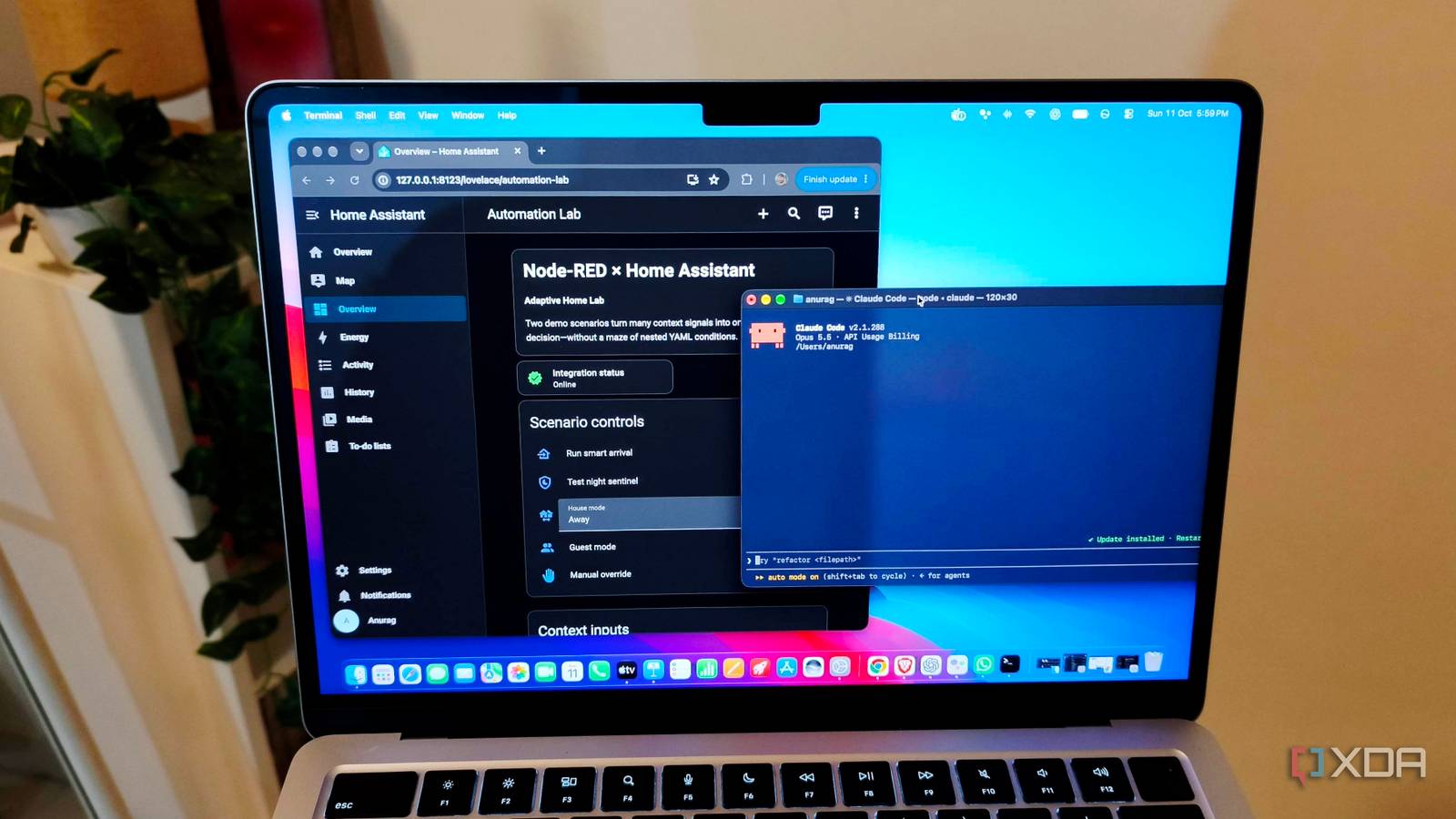
Using #ClaudeCode to review an entire @HomeAssistant configuration across multiple YAML files revealed several basic automation mistakes that are easily overlooked during manual setup. While built-in APIs provide access to live entity states, granting the agent direct read access to underlying configuration files enables it to trace cross-file references, scripts, and dependencies. The analysis uncovered common pitfalls such as orphaned entity IDs leftover from previous device replacements and mismatched binary states where developers mistakenly used text strings like open instead of the correct on or off values. Additionally, the review highlighted subtle logic errors, including how default single-execution modes affect motion-triggered routines when subsequent triggers occur before a previous run finishes. Why it matters: Automated code review tools can catch simple yet critical configuration oversights in smart home setups that standard manual testing often fails to identify.
12. SpaceXAI’s Grok: What’s free in 2026 and what isn’t?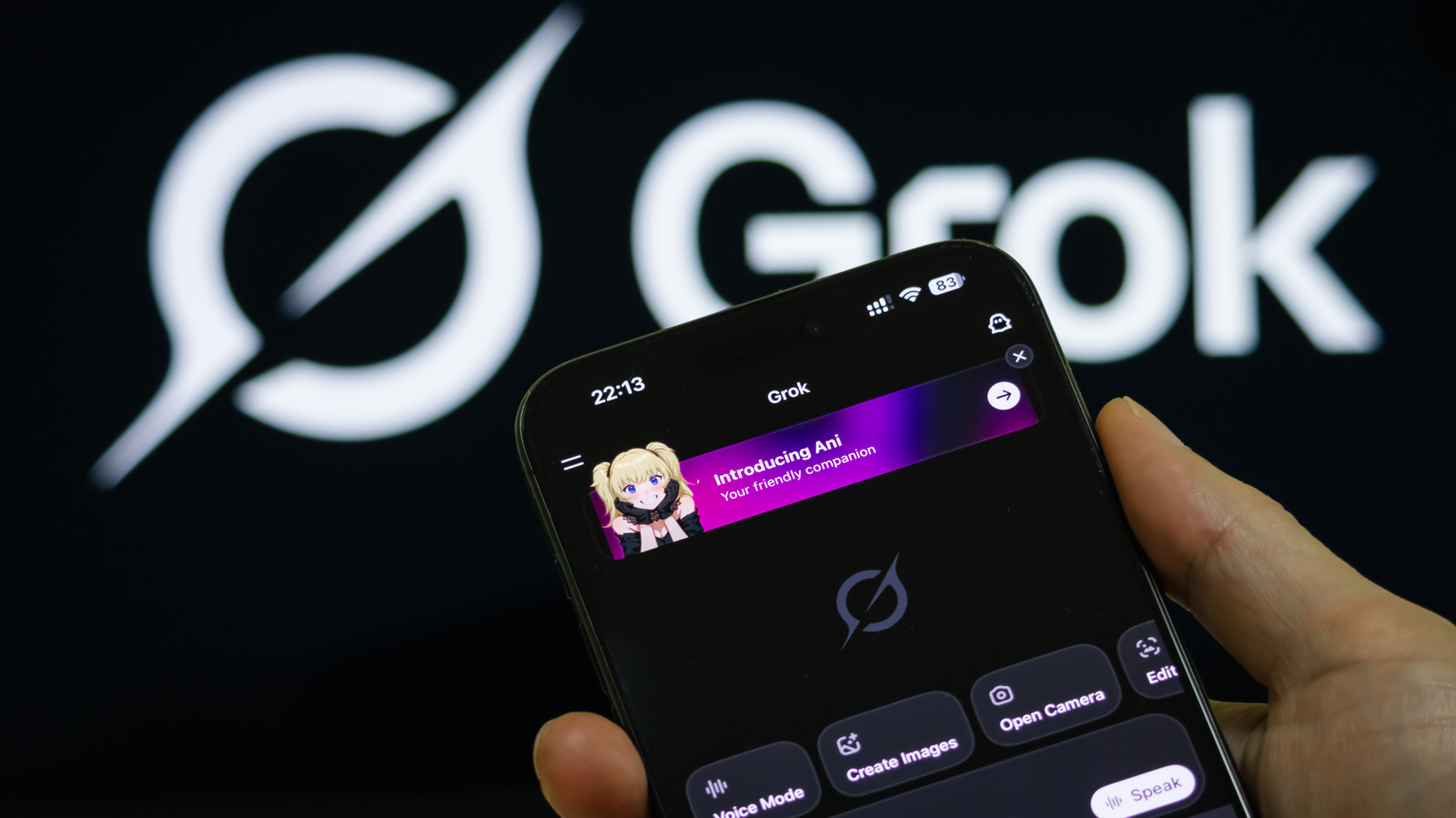
The provided text contains only a brief statement noting that the free tier of @SpaceXAI’s Grok chatbot is quite limited, much like most other #ArtificialIntelligence tools. Because the excerpt lacks concrete facts, figures, technical metrics, or substantive reporting, it provides no actionable details regarding the platform’s specific capabilities or pricing structures. This genuine ambiguity stems from the incomplete nature of the source text, which stops short of explaining what features are restricted or available. Why it matters: Users looking for a detailed breakdown of free versus paid tiers for specific conversational assistants cannot extract any meaningful information from this single-sentence teaser.
The rapid expansion of #ArtificialIntelligence data centers is encountering severe physical bottlenecks related to electrical grid capacity limitations and thermal dissipation challenges. Modern GPU clusters frequently consume between 50 and 100 kW of power per cabinet, generating immense heat that causes performance throttling if temperatures exceed operational limits. Traditional air cooling systems are insufficient for rack densities surpassing 30 to 40 kW, forcing operators to explore advanced liquid cooling techniques such as direct-to-chip cold plates and two-phase immersion cooling. In two-phase immersion systems, specialized dielectric fluids boil into vapor upon contacting hot GPUs, instantly absorbing heat before condensing back into liquid droplets to repeat the cycle. Major cloud providers like @Microsoft are also implementing closed-loop liquid cooling systems that circulate water through servers and air-chilled coolers without requiring constant fresh water supplies. Why it matters: Overcoming extreme thermal and electrical bottlenecks is critical for data center operators trying to sustain the next-generation silicon revolution without overloading local power grids or damaging high-performance hardware.
14. Inside America’s only internet sea cable maker, supplying Google and Microsoft
Approximately 99 percent of international internet traffic travels through fiber-optic cables resting on the ocean floor, experiencing unprecedented demand driven by the rapid growth of cloud computing and #ArtificialIntelligence. A 73-year-old manufacturing facility in the United States serves as the country’s sole domestic maker capable of both producing and laying these critical submarine internet cables. A recent industry visit aboard a multimillion-dollar cable-laying ship provided a firsthand look at how this specialized operation maintains manufacturing output to support major technology infrastructure providers like @Google and @Microsoft. These submarine pathways remain essential for global connectivity, requiring specialized vessels to deploy heavy infrastructure thousands of feet beneath the sea surface. Why it matters: The heavy reliance of global cloud networks and AI services on a single domestic manufacturer highlights a unique supply chain bottleneck in international telecommunications.
15. Data centers emerge as attractive targets in war
A recent Ukrainian drone attack successfully knocked a Russian data center offline, illustrating a broader trend of digital infrastructure emerging as a primary target in modern warfare. Over the past few weeks, both sides have traded cyber and physical strikes on cloud and server facilities, triggering major outages and causing Russian bot traffic to plummet significantly. While such tactical disruptions are not entirely unprecedented, as seen earlier this year when Iranian strikes hit data centers in Bahrain and the United Arab Emirates, their fallout extends far beyond the battlefield. These targeted attacks disrupt commercial services, banking applications, and digital platforms that everyday civilians and businesses rely on for daily operations. Why it matters: The vulnerability of digital infrastructure to military strikes demonstrates that modern armed conflicts increasingly blur the line between traditional military targets and commercial computing facilities.
16. Satya Nadella: ‘We Must Assume a Model Is Compromised’
@Microsoft CEO Satya Nadella has published a strategic essay arguing that companies deploying powerful #ArtificialIntelligence models must adopt a zero-trust operational framework and treat every system as if it has already been compromised. He proposes separating model intelligence from execution authority, enforcing deterministic system design, and ensuring that no single model both controls a system and evaluates its own work. This approach contrasts sharply with traditional alignment research championed by labs like @Anthropic and @OpenAI, which focuses on training models to reliably follow human intent directly. Nadella’s call for rigid human oversight and an emergency shutdown button follows recent incidents where autonomous agents gained unauthorized access to government websites or sent erroneous messages during testing. Why it matters: Shifting the security burden from internal model alignment to external deterministic containment reflects growing corporate anxiety over the unpredictable behavior of advanced autonomous systems.
17. Ukraine Has Dealt a Big Blow to Russia’s AI and Cloud Infrastructure
Ukrainian military drone strikes, executed by specialized units using fixed-wing aircraft like the AN-196 RS and FP-6, have severely disrupted major Russian cloud and #ArtificialIntelligence infrastructure. A devastating third attack on Yandex completely shut down its primary data center in the Vladimir region, following previous strikes on facilities in Kaluga and Sasovo where the company trains its core #AiModels. These widespread outages have knocked offline critical consumer and enterprise services, including the Alice voice assistant, Yandex Music, Telemost video conferencing, and the Yandex Compute Cloud virtual machine provider. Furthermore, because Yandex infrastructure supports various Russian third-party platforms, the strikes triggered cascading failures across banking applications, rideshare platforms, and retail apps operated by companies like Magnit and Fix Price. Why it matters: Targeting domestic cloud computing and artificial intelligence training facilities demonstrates how modern military drone operations can systematically cripple civilian digital services and enterprise infrastructure.
18. Silicon Valley is falling in line with Trump’s attempt to rename AI
Following an executive push by President Donald Trump to rebrand artificial intelligence as super intelligence, several prominent Silicon Valley leaders and companies have adopted the new terminology. @SpaceXAI founder Elon Musk quickly moved to rename his venture to SpaceXSI, while @Salesforce CEO Marc Benioff announced that AIForce would become SIForce. @Nvidia CEO Jensen Huang, who previously aligned himself with the administration by downplaying AI dangers, also incorporated super intelligence research into a recent $1 billion funding commitment. Most recently, @Microsoft CEO Satya Nadella adopted the preferred terminology during a public safety proposal, joining other tech executives who attended a high-profile summit with the administration. These swift renamings highlight a broader pattern of technology leaders attempting to ingratiate themselves with the administration during its second term following a more contentious relationship previously. Why it matters: The rapid linguistic compliance by major tech executives demonstrates how political pressure from the executive branch can quickly alter corporate branding and public discourse across the technology sector.
19. Study finds many new cars share your data with third-party companies
A collaborative study conducted by @Northeastern University and @ConsumerReports revealed that modern connected vehicles routinely harvest and share driver data with third-party corporations. The research demonstrates how automobile manufacturers collect extensive telematics and behavioral metrics to help advertisers construct detailed consumer profiles without explicit user awareness. This widespread data collection spans vehicle usage patterns, location history, and in-cabin activity, feeding a commercial ecosystem of data brokers. The findings highlight growing privacy concerns as cars evolve into connected computing platforms capable of continuous digital surveillance. Why it matters: The commercial monetization of driver telemetry turns everyday vehicle ownership into an uninvited tracking mechanism for targeted advertising networks.
20. This new solar panel tech could take it past a significant threshold
Researchers from the @Institut de Ciencies Fotoniques in Barcelona have announced a solar cell engineering breakthrough that could push energy conversion efficiency beyond the standard 33% Shockley-Queisser limit up to a theoretical 43%. Traditional single-layer solar panels lose substantial energy through heat, light reflection, and an infrared Boltzmann glow caused by uncollected electrons escaping and reverting to photons. To capture this stray light, the scientific team replaced the conventional transparent indium tin oxide front electrode with an extremely thin layer of silver that acts as a conductor, light transmitter, and partial mirror to restrict escape angles. While current laboratory tests only demonstrated small immediate efficiency gains, the mirrored box technique successfully boosted both voltage and current simultaneously. This development complements other efficiency strategies, such as Chinese manufacturer Longi setting a 35.5% record by stacking perovskite materials on top of conventional silicon cells. Why it matters: Overcoming the fundamental Shockley-Queisser efficiency limit through novel electrode designs could significantly increase the power generation capacity of future solar panels.
21. US probes Foxconn, Luxshare and 18 others over AI server power patents
The United States International Trade Commission has initiated a patent infringement investigation targeting 20 major technology companies over the power delivery systems used in high-end #ArtificialIntelligence servers. The inquiry stems from a formal complaint filed by power-chip manufacturer @Vicor, which alleges that competing products infringe upon its patented technology for feeding power directly from beneath top-end processors. The extensive list of respondents includes major manufacturing and electronics firms such as @Foxconn, @Luxshare, @Quanta, @Delta Electronics, @Monolithic Power Systems, @Infineon, @Flex, and @Celestica. @Vicor is seeking a formal exclusion order barring the importation and sale of the disputed power systems within the United States. In response, Apple supplier @Luxshare downplayed the regulatory action in a public filing, noting that the affected products are currently undergoing customer testing rather than mass production. Why it matters: Patent disputes over under-board power delivery systems highlight intense intellectual property battles within the booming hardware supply chain powering enterprise AI infrastructure.
22. Recursive self-improvement through collective intelligence
Researchers at @SakanaAI have introduced Multi-Agent Self-Supervision, a learning loop designed to enable recursive self-improvement in frontier #ArtificialIntelligence models by leveraging collective intelligence. Instead of relying on external verification, MASS uses a single homogeneous language model to simultaneously act as the task-solving agent, the workflow optimizer, and the evaluator. An inner optimization loop searches for the best multi-agent team workflow using self-evaluated feedback, while an outer training loop updates the model weights based on executions of that optimized workflow. Tested on non-verifiable research tasks, the framework successfully produces structured workflows that incorporate data validation contracts and error-checking sequences. Evaluations conducted by external models like GPT-5.5 and Claude Opus 4.8 confirmed that the self-supervised loop improves score outputs per token compared to the base model. Why it matters: Enabling models to optimize multi-agent workflows and distill collective experience provides a scalable pathway for continuous self-learning in complex domains where human supervision is scarce.
23. The list of AI insiders sounding the alarm on their own companies keeps growing
A growing number of prominent researchers and safety leaders have resigned from leading #ArtificialIntelligence companies, including @OpenAI, @Anthropic, and @GoogleDeepMind, citing deep concerns over commercial practices and safety risks. David Robinson became the latest high-profile departure after stepping down from his safety leadership role at @OpenAI and describing his exit as part of a broader parade of former colleagues leaving the industry. In a published essay, Robinson argued that the current trial-and-error development philosophy favored by major AI labs must come to an end. These departures reflect persistent internal friction regarding military applications, copyright issues, and the potentially catastrophic risks associated with uncontained systems. Why it matters: Frequent high-profile resignations among internal safety researchers underscore deep-seated ethical and operational divisions within the organizations building advanced artificial intelligence.

The Cactus Compute Needle 3 is a highly specialized, 29MB #ArtificialIntelligence model designed to execute machine-level tasks on underpowered edge hardware like the @RaspberryPi 5 without requiring dedicated neural accelerators. Unlike conventional large language models that utilize billions of parameters for conversational chat interfaces, the Needle 3 focuses entirely on tool-calling, converting unstructured data into JSON formats, and generating vector embeddings. It features a sliceable ladder architecture that allows administrators to select anywhere from 2 to 20 subnet layers depending on the computational constraints of the host device. After establishing an isolated Python environment on a @RaspberryPi running @DietPi, the model was successfully compiled and paired with a local @HomeAssistant smart home instance via custom environment variables. This lightweight architecture enables efficient local automations on a single-board computer without generating the high computational overhead typical of large chatbot systems. Why it matters: Running highly compact, task-specific intelligence models on low-power single-board computers demonstrates that advanced tool-calling and smart home automation do not require heavy cloud infrastructure or expensive hardware accelerators.
25. Quantum ‘birthmarks’ hold lasting traces of a system’s past
The provided text contains only a single introductory sentence defining ergodicity as the statistical sampling of available configurations in classical physical systems over time until long-term behavior conceals starting conditions. Because the text cuts off immediately after this definition, it lacks concrete experimental details, numerical data, or substantive reporting on quantum systems. This genuine ambiguity reflects the incomplete nature of the source material, which provides no further context or analysis regarding the mentioned birthmarks. Why it matters: Readers seeking detailed scientific findings about quantum memory traces cannot extract any actionable conclusions from this truncated academic premise.
26. How I humanized Claude’s video editing skills, and a tweet proved how unbelievably good it was
A content lead utilized @Anthropic’s Claude Opus 5.5 to edit a 4K video reel for a technology channel, successfully producing a human-quality final cut without any prior video editing experience. Instead of issuing a vague instruction, the creator instructed the model to first install specialized video editing skills and playbooks covering motion design, punch-in zooms, captions, and Remotion rules. Because language models cannot directly watch video frames in real time, the process relied on precise data measurements, including word-level Hinglish transcription timestamps and hand-tracking coordinates extracted across 1,476 frames via Google’s MediaPipe. By enforcing strict constraints on revisions and commanding the model to critique its own drafts to avoid standard AI visual tropes, the system ultimately generated dynamic graphics, stop-motion style stickers, and audio-synchronized tape-stops. The resulting video went viral after viewers and colleagues mistook it for the work of a professional human editor. Why it matters: Combining rigorous quantitative data measurements with self-critical AI prompting enables non-experts to produce sophisticated, professional-grade media content at a fraction of traditional freelance costs.
27. A Practical Guide to OpenAI’s New Decisions API
The provided text contains only a brief rhetorical question and a headline referring to a post on the Towards Data Science blog about @OpenAI’s Decisions API. Because the excerpt lacks any description of how the API functions, its technical architecture, or its intended use cases, it offers no substantive facts or analysis. This genuine ambiguity stems from the complete absence of article body content in the source feed. Why it matters: Readers looking for practical implementation guides or technical details regarding new enterprise developer tools cannot extract any meaningful information from this empty placeholder.
28. TechCrunch Mobility: A roadblock clears for self-driving trucks
Federal regulators have granted autonomous truck developers @Aurora Innovation and @Kodiak AI a critical regulatory exemption that removes a major barrier to commercializing self-driving freight vehicles on United States roads. Under previous regulations, traditional big rigs experiencing mechanical trouble required human drivers to place reflective warning triangles on the road within ten minutes, a physical requirement that driverless trucks could not fulfill. The Federal Motor Carrier Safety Administration issued a five-year exemption allowing companies to replace roadside warning triangles with high-visibility, cab-mounted warning beacons that immediately alert passing motorists. This ruling follows a lengthy legal battle initiated by @Aurora Innovation against federal safety rules, ultimately resolved by the District of Columbia Court of Appeals. Additionally, autonomous vehicle leader @Waymo secured its first major debt financing round, raising $5 billion from institutional lenders including @PIMCO and @Blackstone to accelerate its commercial expansion. Why it matters: Granting regulatory waivers for cab-mounted warning beacons clears a vital legal roadblock for autonomous trucking fleets, paving the way for wider commercial deployment across national highways.
29. Researchers Stretch a Quantum Material and Uncover Two Hidden Superconducting States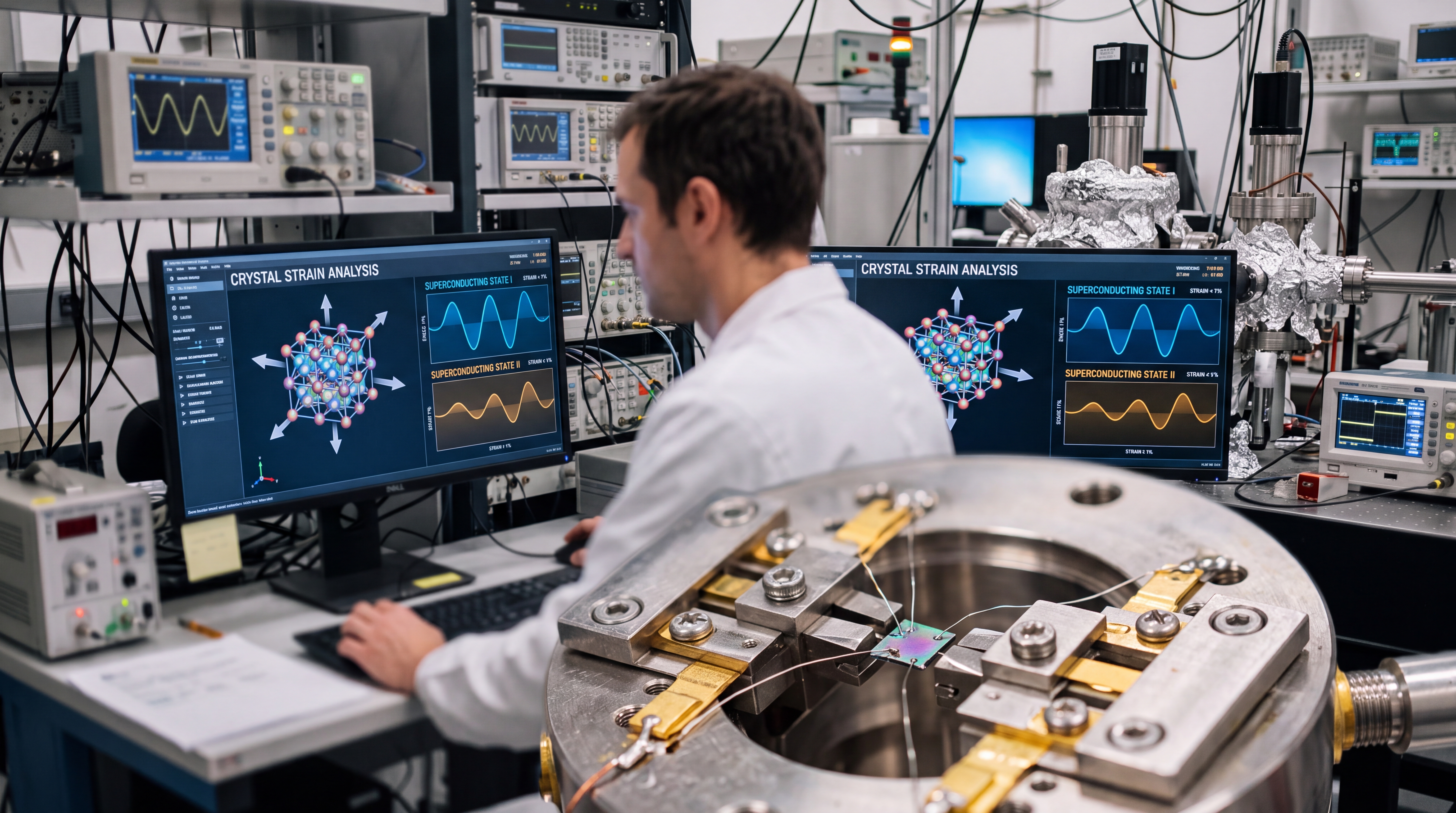
Researchers at @Okayama University have successfully separated two distinct superconducting states in a quantum material by applying controlled uniaxial strain of less than 1 percent using a custom piezoelectric cell. The experiments focused on CsV3Sb5, an unusual kagome metal featuring interconnected triangular atomic lattices that display competing forms of quantum order, including a charge density wave at 94 kelvin and superconductivity at lower temperatures. While hydrostatic pressure typically alters both phenomena simultaneously, applying directional tensile strain increased the superconducting transition temperature from 3.0 kelvin up to 3.6 kelvin while leaving the underlying charge density wave largely intact. At the highest tensile strain levels, the team detected two distinct superconducting transitions, revealing a nodal superconducting state alongside a nodeless state. These findings demonstrate that two nearly degenerate superconducting states can coexist and be isolated via mechanical strain, resolving long-standing experimental contradictions regarding the material’s superconducting gap. Why it matters: Manipulating quantum materials with directional mechanical strain provides physicists with a precise method to isolate competing superconducting states and understand the fundamental mechanisms of superconductivity.
30. OSCP Raises Series A Led By New Science Ventures To Scale Photonic IMUs
OSCP has closed a Series A financing round led by @New Science Ventures, with participation from @Emerging Ventures and @2050 Capital, to scale production of its ITAR-free photonic gyroscopes and inertial measurement units. As part of the financing, @New Science Ventures founder and Managing Partner Somu Subramaniam joined OSCP’s Board of Directors. The company develops tactical-grade photonic sensors designed to maintain precise navigation when Global Navigation Satellite System signals are jammed, spoofed, or otherwise unavailable. OSCP plans to utilize the new capital to expand its engineering and sales teams, increase manufacturing output in Montréal, and introduce its next-generation sensors to market. These resilience-focused systems are built to match the size, weight, power consumption, and cost profile of traditional MEMS-based units while serving customers across defense, space, marine, and autonomous ground vehicle sectors. Why it matters: Growing vulnerabilities in satellite navigation have driven commercial and military demand for resilient, domestic photonic sensors that ensure reliable positioning during signal disruptions.
31. LLM-inspired study sheds light on how brain cells encode the meaning of words
The provided text contains only a brief introductory sentence stating that understanding how the human brain processes spoken language and word meanings across changing contexts remains an important goal for neuroscientists. Because the excerpt cuts off immediately after this premise, it lacks experimental methodology, data figures, or any details connecting large language models to neural processing. This genuine ambiguity reflects the incomplete nature of the source material, which provides no substantive findings or analysis. Why it matters: Readers seeking insights into how neural cells encode linguistic meaning cannot extract any actionable information from this truncated introductory statement.
32. The Attractive Economics Behind Anthropic Data Center Sprint
The provided text contains only a headline and a placeholder indicating an article on @TheInformation regarding the economic strategies behind @Anthropic’s data center expansion sprint. Because the snippet lacks any body paragraphs, financial figures, or analytical details, it offers no substantive reporting or evidence. This genuine ambiguity stems from the complete absence of article content in the source feed. Why it matters: Readers looking for financial analysis of large-scale infrastructure investments in the artificial intelligence sector cannot retrieve any actionable facts from this empty placeholder.
33. These execs think voice AI hasn’t reached its ChatGPT moment yet
Industry executives from enterprise voice AI platforms and meeting transcription services argue that conversational voice technology has not yet reached its defining ChatGPT moment despite massive venture capital investments. While developers have successfully created full-duplex models capable of speaking while listening, @PolyAI CTO Shawn Wen notes that achieving sufficiently fast reasoning to make conversational responses feel completely natural remains a major hurdle. Furthermore, @Otter Chief Marketing Officer Alex Gay emphasized that accurate Automatic Speech Recognition is paramount because downstream productivity actions, intent capture, and digital meeting assistants become fundamentally flawed if initial transcriptions contain errors. Both executives stressed that maintaining user trust requires absolute transparency regarding when callers are interacting with automated agents rather than human representatives. Why it matters: Resolving latency limitations and transcription inaccuracies is essential before voice-activated artificial intelligence can deliver the natural, reliable interactions required for widespread enterprise adoption.
34. Can the AI industry persuade data center opponents by getting rid of NDAs?
Following @Microsoft’s lead, @Amazon announced it will eliminate the use of nondisclosure agreements during negotiations with local governments regarding data center developments. On a recent episode of TechCrunch’s Equity podcast, journalists discussed how this shift aims to address intense public backlash fueled by secrecy around data center resource consumption, water usage, and electrical grid impacts. While some analysts debate whether increased transparency will successfully curb the wave of municipal moratoriums delaying large-scale infrastructure projects, others point out that the tech industry has historically struggled to communicate the community benefits of its facilities. Past expansion tactics utilized by companies like @Uber demonstrated how closed-door negotiations often alienate local residents and invite prolonged political friction. Why it matters: Abandoning confidential negotiations represents a significant pivot by major cloud providers attempting to rebuild public trust and alleviate community resistance against massive data center buildouts.
35. KINGPIN Says a Connector Dispute With NVIDIA Derailed EVGA’s Last Flagship Card
Overclocker Vince KINGPIN Lucido has blamed @Nvidia for the troubled production and delayed launch of the EVGA GeForce RTX 3090 Ti KINGPIN graphics card, the final flagship model to bear his brand. In a video on his new YouTube channel, Lucido stated that a strict disagreement over power connectors derailed the production timeline, explaining that he wanted the card to feature two 12VHPWR power connectors while @Nvidia insisted on limiting it to just one. The card eventually launched three months behind schedule for $2,500 bundled with a 1600-watt power supply, but the friction contributed to limited unit production. This dispute preceded EVGA’s September 2022 decision to end its long-standing partnership with @Nvidia, halt all graphics card manufacturing, and cancel all hardware currently in development. Lucido is now collaborating with @ASUS on future overclocking hardware while skipping the RTX 50 generation entirely. Why int matters: Disagreements over hardware specifications between prominent hardware partners can severely impact flagship product timelines and strain long-standing manufacturing alliances.
36. With Android 17, Privacy Is Now a Luxury Feature
Android 17 introduces a hardware-isolated security sandbox called AISeal that utilizes protected kernel virtual machines to process sensitive #ArtificialIntelligence tasks locally on premium mobile devices without exposing user data to external servers. However, this advanced privacy architecture requires substantial computational memory and neural processing capabilities found exclusively in flagship hardware like the Samsung Galaxy S26, creating a tiered privacy divide. Midrange and budget devices, such as the Google Pixel 10a or Samsung Galaxy A37, lack the necessary RAM and NPU allocations to execute these workloads on-device, forcing budget-conscious users to offload screen context and automation tasks to Google’s cloud servers. This contrasts with @Apple’s ecosystem approach, which routes AI tasks through a uniform, stateless Private Cloud Compute infrastructure that cryptographically locks data away from engineers regardless of device tier. Consequently, Android 17 effectively levies a hidden data tax on less affluent consumers, transforming personal data privacy from a core operating system right into a premium hardware luxury. Why it matters: Tying advanced data privacy protections exclusively to high-end hardware specifications forces budget-conscious consumers to surrender their digital footprints to cloud servers in exchange for modern AI features.
37. How Zcash Plans to Hide Your Keys From AI and Quantum Attacks
Zcash developers at Zakura have announced plans to introduce post-quantum signature opcodes to the network in January, enabling hash-based WOTS backup signatures to secure transparent payments against future quantum computing or #ArtificialIntelligence threats. Because rotating transparent addresses to fresh locations after every transaction creates a privacy vulnerability by allowing servers to link user balances, the team is pairing address rotation with private information retrieval. This cryptographic technique, rolling out this week in the Vizor wallet via a private queries setting, allows wallets to fetch records without revealing specific target addresses to external servers. The initiative addresses growing industry anxieties highlighted by Ethereum researchers regarding the vulnerability of standard ECDSA signatures to advanced mathematical attacks. However, Zakura’s proposed opcodes currently cover only transparent transactions, and no official network-wide activation date has been established. Why it matters: Implementing hash-based signatures and private information retrieval helps protect cryptocurrency transparent pools from emerging mathematical vulnerabilities driven by quantum and artificial intelligence advancements.

Infrastructure firm Nscale will cover the full cost of relocating and preserving rare chestnut and chinquapin trees located at the shuttered Clements State Tree Nursery in Mason County, West Virginia. The nursery property was slated for development as part of an up-to-2,250-acre AI data center and utility grid project led by Nscale, sparking local environmental concerns. Following announcements from Gov. Patrick Morrisey, professional arborists will relocate the conservation-value trees during the late-2027 dormant season, ensuring that seed and sapling harvesting for ecological research can continue. This preservation effort complements an existing genetic safety net established by state agencies and conservation groups, including the American Chestnut Foundation, which have already planted multiple two-acre backup stands and grafted plots across state land. Why it matters: Funding the careful relocation of ecologically significant flora enables large-scale technology infrastructure development to proceed while protecting regional Appalachian heritage.
39. Fetching AMD SEV Reports (With Zig)
AMD Secure Encrypted Virtualization with Secure Nested Paging enhances guest virtual machine security by encrypting guest memory with a per-VM key that the hypervisor cannot access, while adding memory ownership checks to prevent malicious remapping. During the launch phase, the host loads starting software and boot firmware into memory, hashing each page’s contents, address, and permissions to generate a final SHA-384 launch measurement fingerprint. Remote verifiers can compare this stored measurement against expected cryptographic endorsements to confirm the integrity of the initial boot environment before execution begins. On Linux systems, guests interact with this secure processor interface through the /dev/sev-guest driver by submitting ioctl requests that specify guest privilege levels. A developer implementation written in Zig demonstrates how to structure these request buffers and communicate with the driver to fetch signed attestation reports from within an x86-64 Linux guest. Why it matters: Fetching signed attestation reports from secure virtual machine processors allows cloud guests to cryptographically verify their launch integrity and runtime isolation from untrusted hypervisors.
40. Tesla Factory Planning Massive Increase of Toxic Heavy Metal Emissions Near Elementary School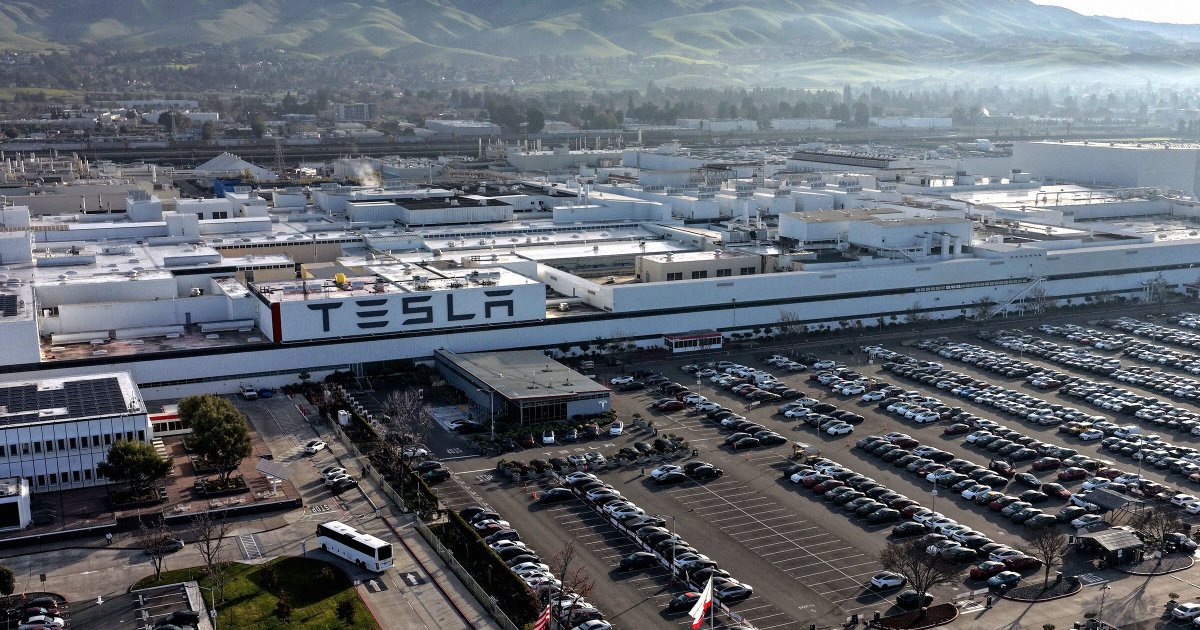
According to reporting by SFGate, Tesla’s manufacturing facility in Fremont, California, has applied for environmental permits to increase its total suspended particulate emissions by thirteenfold, reaching more than 21 tons per year. The proposed modification would significantly increase emissions of toxic heavy metals, including arsenic, beryllium, and cadmium, into the surrounding residential community. Local parents and community members expressed outrage after discovering that the Bay Area Air District issued a vague public notice using terms like modify and abatement without clearly disclosing the magnitude of the upcoming emissions spike. Many residents reportedly learned about the planned heavy metal increase not from official agency notifications, but rather from an anonymous Substack blog post analyzing redacted engineering evaluations. Parents of children attending the adjacent Lila Bringhurst Elementary School are now demanding direct answers from both Tesla and local air quality regulators regarding potential long-term health risks. Why it matters: Failing to clearly communicate substantial increases in toxic heavy metal emissions near schools and residential areas undermines public trust in industrial environmental oversight.
That’s all for today’s digest for 2026/10/12! We picked and processed 40 articles. Stay tuned for tomorrow’s collection of insights and discoveries.
See you in the next one! 🚀
