
Global AI Optimism Outweighs Fear, But Familiarity Breeds Trust
Key points
- The Gallup-Microsoft AI survey found that positive feelings outweigh negative ones in 34 of the first 37 countries surveyed.
- Curiosity is the dominant global emotion at 64 percent, while worry stands at a median of 32 percent.
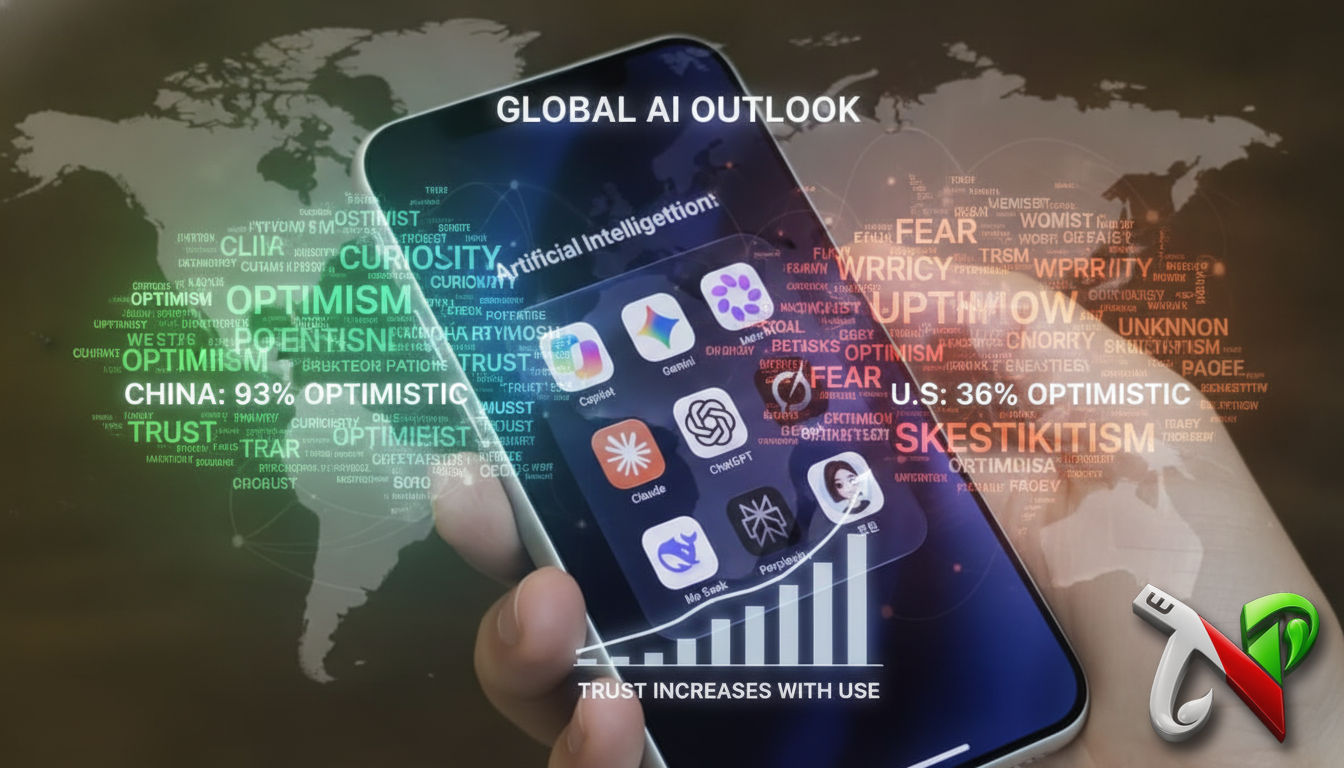
- China leads major nations with 93 percent of respondents believing AI will help their country, compared to 36 percent in the United States.
- Trust in AI accuracy remains generally low worldwide, though it increases significantly among daily users.
Global Sentiment and Optimism
When looking at artificial intelligence on a global scale, public sentiment leans heavily toward excitement rather than dread. A comprehensive international study published by Gallup in collaboration with Microsoft reveals that positive emotions regarding AI significantly outweigh negative ones across the vast majority of regions evaluated 1. Out of the initial 37 countries to complete fieldwork for the project, 34 showed a net positive outlook. Across these nations, roughly 72 percent of adults who are aware of AI reported experiencing at least one positive emotion, while only 41 percent reported any negative feelings.
Curiosity emerged as the most widespread reaction globally, reported by a median of 64 percent of respondents. Conversely, worry took the top spot for negative emotions at a median of 32 percent. Despite prevailing anxieties in certain pockets of the world, the overall mood is defined more by a sense of wonder and anticipation than by dystopian fears.
Geographic Divides in Outlook
The survey highlights stark contrasts in how different nations view the future impact of artificial intelligence. In 29 of the surveyed countries, the majority of the population believes AI will ultimately help their homeland rather than harm it. However, regional attitudes vary wildly when examining individual superpowers and emerging markets.
China demonstrated some of the highest confidence in the world, with 93 percent of respondents stating that AI will be a net benefit to their nation. On the other end of the spectrum, the United States landed near the bottom of the rankings alongside Egypt and Bangladesh, with only 36 percent expressing a belief in AI’s national benefit. Wealthy Western nations, including the U.S., the Netherlands, and Canada, registered some of the highest anxiety levels globally, with 74 percent of AI-aware Americans reporting that the technology makes them feel worried.
The Usage and Trust Gap
One of the most paradoxical findings of the research is that widespread optimism often exists independently of actual experience. In Nigeria, for example, 68 percent of respondents expect AI to help their country, even though only 20 percent have ever used the technology 1. In fact, a majority of respondents globally reported that they have never interacted with AI tools at all.
Trust in the accuracy of AI outputs also remains relatively low. Only a median of 36 percent of respondents said they trust AI completely or a lot to provide correct information, with majorities reaching that threshold in just four nations. Interestingly, familiarity appears to breed confidence. In the United States, daily users of AI exhibited much higher trust rates and lower overall worry compared to those who rarely or never use the technology, suggesting that hands-on experience helps demystify the tools.
Companies mentioned: Microsoft (MSFT $500.59 ▲0.5%)
Primary sources
 Gallup poll reveals widespread global AI optimism, not doom and gloom (mashable.com) – This source is an article by Chance Townsend published on Mashable covering the findings of the Gallup-Microsoft AI survey [[1]]. The report details global public opinion on artificial intelligence across an initial 37 countries, highlighting widespread optimism, geographic divides between countries like China and the United States, and the correlation between actual usage and trust in AI accuracy. Published on mashable.com.
 Powered by News Ranker