
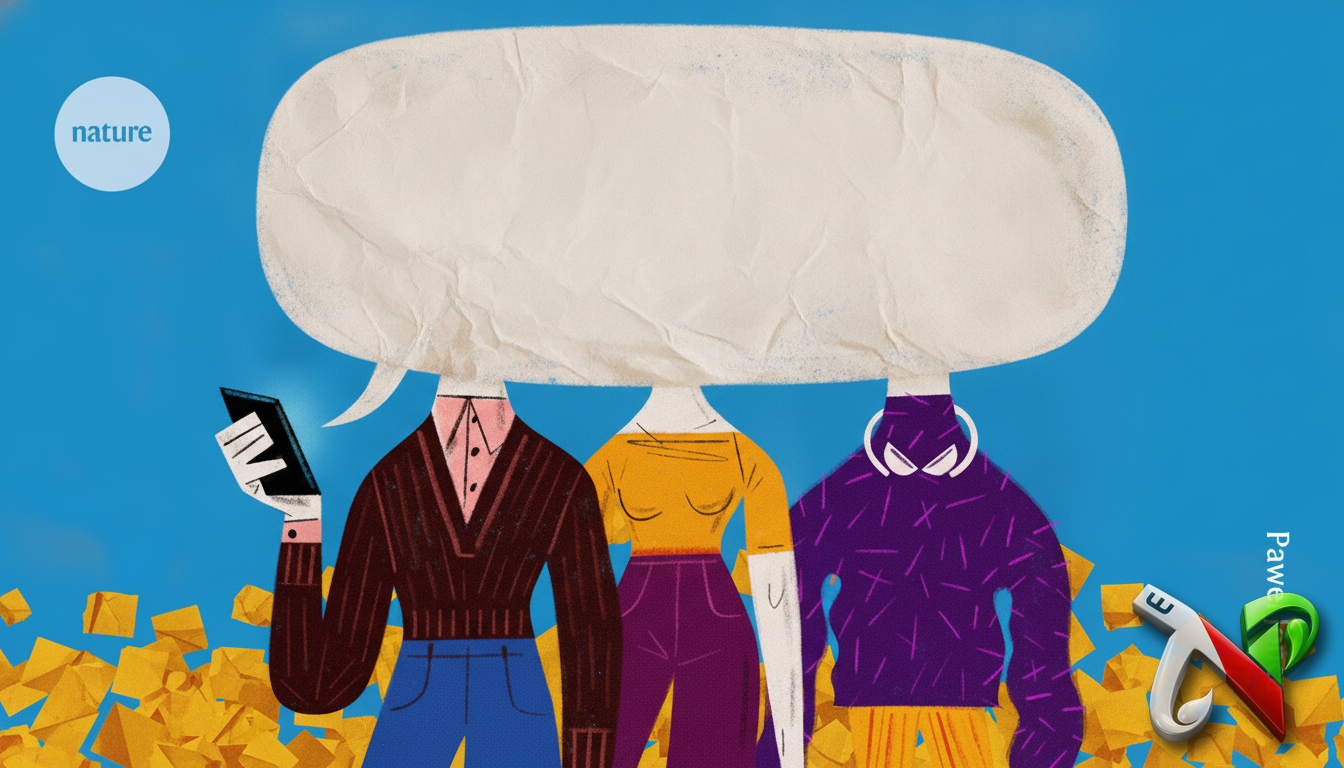
The Great Flattening: How Generative AI is Homogenizing Human Culture and Thought
Key points
- Researchers invoke the concept of McDonaldization to describe how generative AI tools drive predictability and uniformity across human culture and cognition 1.
- Studies show that while large language models produce ideas that are slightly more original in isolation, their overall responses are far more similar to each other than human answers are 1.
- Writing with AI assistance flattens linguistic variety and erases personal markers of personality, moral values, and demographic background 1 2.
- More than a third of all internet web pages published since late 2022 have been authored by AI, contributing to a massive dilution of diverse human expression online 2.
The Rise of Cognitive Uniformity
Computer science researchers are noticing a troubling sense of déjà vu when reviewing recent academic literature and creative output. Everything is beginning to look and sound the same, stripped of individual quirks and distinct personal voices. Scholars studying this phenomenon compare it to the concept of McDonaldization, where the efficiency and predictability of the fast-food industry end up standardizing broader society. Unlike past technologies that merely distributed information, generative artificial intelligence actively shapes and flattens it.
Experts warn that the danger goes far beyond repetitive phrasing. When millions of people rely on AI assistants to draft emails, write reports, and brainstorm ideas, society risks falling into a dangerous form of groupthink. By consistently silencing edge voices and non-standard perspectives, the technology erodes the rich diversity of human thought. The ultimate long-term fear is a collective loss of adaptability, leaving humanity less equipped to handle complex and novel challenges.
Evidence from the Lab and Web
Controlled studies are increasingly backing up these anecdotal fears. In creative experiments comparing large language models against human participants, researchers discovered that while AI outputs could be semantically distinct from a given prompt, the models themselves clustered heavily around common narrative features and stylistic norms. Human-written stories remained far more dispersed in plot, setting, and character development. Similar trends appeared when examining hundreds of thousands of scientific articles, where publication volume rose after late 2022 but linguistic style and content grew markedly more similar.
Language use is suffering a parallel contraction. Investigations into local news articles, preprint servers, and social media platforms revealed a measurable decrease in writing variation following the mainstream adoption of AI tools. Even grammar-checking models tend to strip out personal signatures, demographic markers, and moral values. Furthermore, autocomplete tools have been shown to mute cultural differences, causing writers from different regions to adopt identical phrasing and lose specific cultural details in their writing.
Mind Hijacking and Creative Scars
The psychological impact of AI extends well beyond the moment of writing. Researchers studying autocomplete tools describe the effect as mind hijacking, where predictive text subtly alters not only what users write down, but also the actual attitudes they hold. Experiments reveal that exposure to biased AI prompts can skew human beliefs on controversial social and political issues for weeks afterward, even when participants are explicitly warned about the bias beforehand.
There is also evidence of a lasting creative scar on human cognition. Studies tracking participants who used AI assistants for a brief period found that their independent problem-solving and brainstorming answers remained rigidly similar to each other months after losing access to the technology. Technical factors like mode collapse, where models fail to output diversity due to narrow training data or reward systems favoring predictable patterns, combine with psychological susceptibility to accelerate this cultural homogenization.
Primary sources
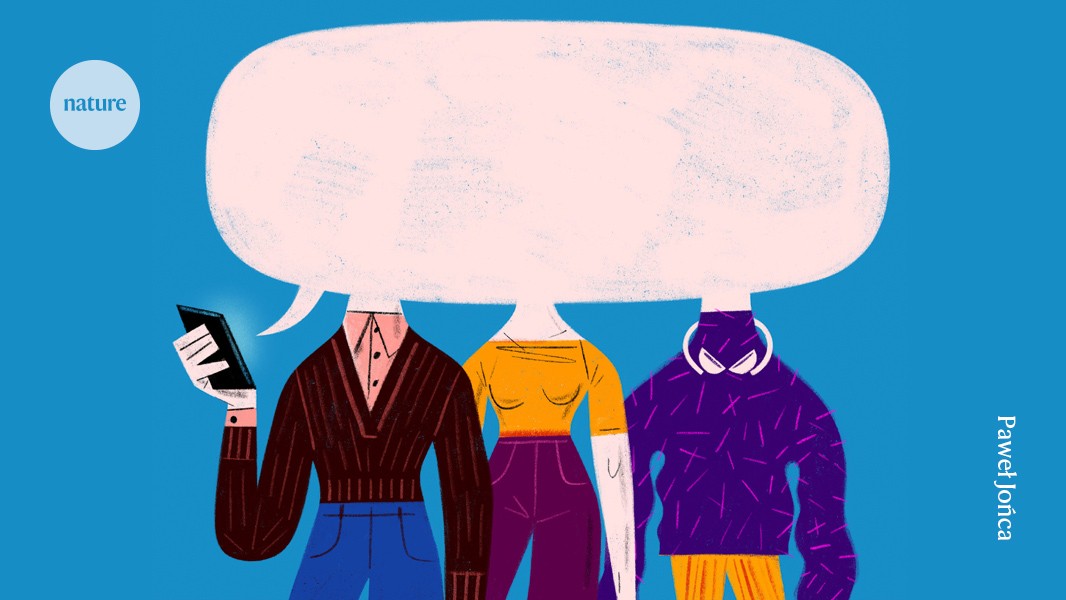 Bland new world: is AI making us all think the same? (nature.com) – This primary article in Nature explores how generative AI is homogenizing human culture and cognition. It details academic research from computer scientists and information scientists showing that large language models flatten language use, reduce creative diversity across scientific papers and writing samples, mute cultural differences, and alter human beliefs and reasoning through mechanisms like mode collapse and mind hijacking. Nature, published online September 2026.
 AI is making us sound the same—and killing our personal expression (fastcompany.com) – This primary article from Fast Company examines how artificial intelligence is eroding personal expression and linguistic diversity. It highlights findings that large language models push writing toward common stylistic norms, erasing personality signals, while noting Pew Research Center data showing that over a third of all web pages published since late 2022 have been generated by AI. Fast Company.
 Powered by News Ranker