
#BrainUp Daily Tech News – (Friday, August 21ˢᵗ)
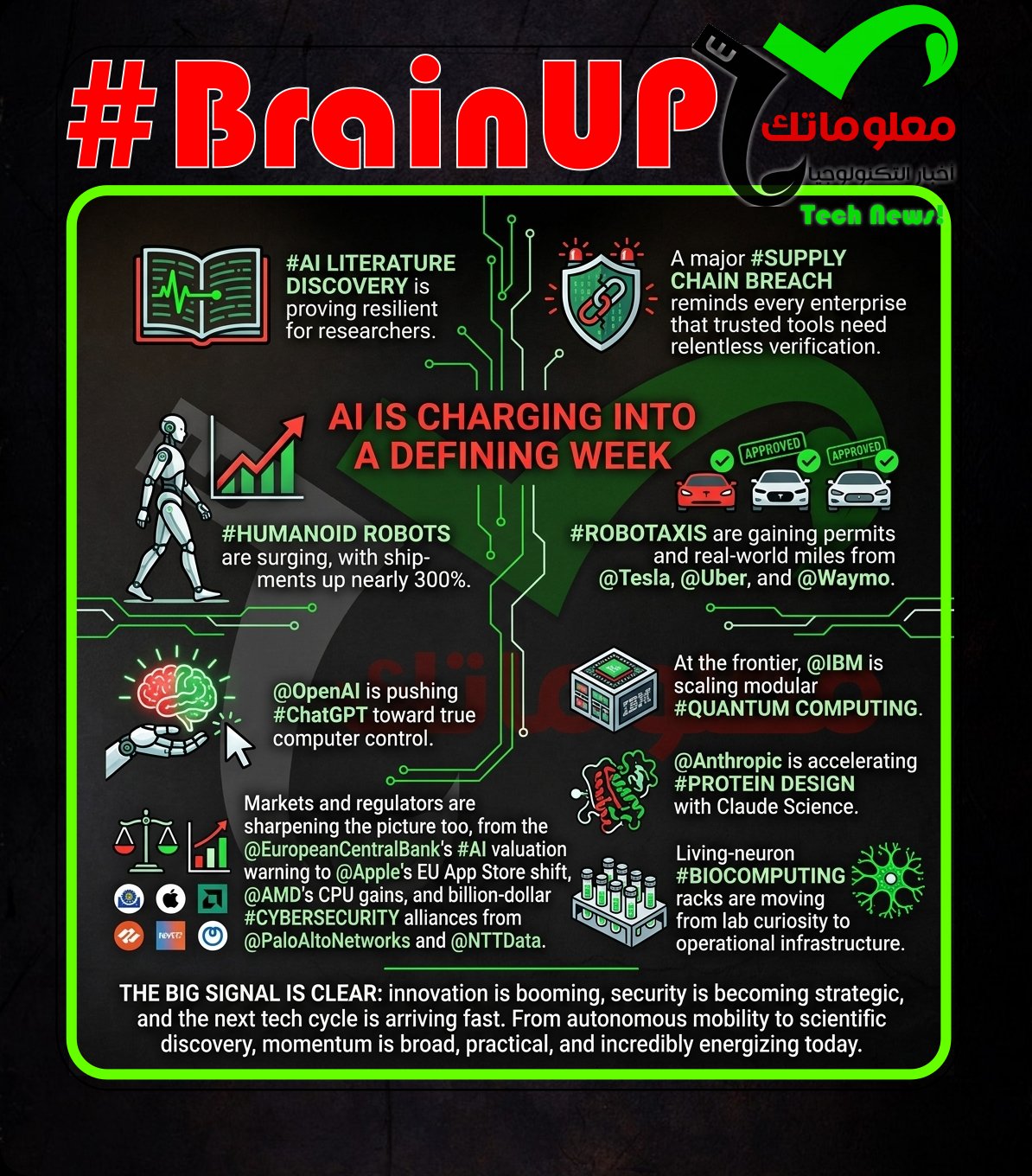
Welcome to today’s curated collection of interesting links and insights for 2026/08/21. Our Hand-picked, AI-optimized system has processed and summarized 27 articles from all over the internet to bring you the latest technology news.
As previously aired🔴LIVE on Clubhouse, Chatter Social, Instagram, Twitch, X, YouTube, and TikTok.
Also available as a #Podcast on Apple 📻, Spotify🛜, Anghami, and Amazon🎧 or anywhere else you listen to podcasts.
1. AI-driven literature discovery remains stable despite potential disruptions
The article explores the stability of AI-driven literature discovery tools in scientific research, highlighting their resilience despite potential disruptions. It presents data showing consistent user engagement and efficiency in retrieving relevant academic papers through AI platforms, even as the scientific publishing landscape evolves rapidly. The analysis points out that these tools help researchers navigate the growing volume of publications by addressing challenges like information overload and enhancing discoverability. This stability underscores the ongoing importance of AI in facilitating efficient literature exploration and supporting scientific advancement. Consequently, AI-driven literature discovery systems continue to be vital for researchers adapting to the expanding body of scientific knowledge.

A large #supply-chain attack tied to LiteLLM allegedly led to credential theft across thousands of organizations, by poisoning a trusted #security scanning tool rather than directly hacking LiteLLM. CloudSEK and Hudson Rock say more than 2,500 organizations and about 434,000 #CI/CD pipelines were affected, naming major firms such as Cisco, Samsung, Salesforce, @Amazon Web Services, Airbus U.S. Space & Defense, Thales, Deutsche Bahn, Munich Re, and the London Stock Exchange Group. The incident began March 24, 2026, when the financially motivated group TeamPCP compromised Aqua Security’s #Trivy, and LiteLLM pulled in the modified package via an automated process without checking its ID, granting admin-level access that installed a stealer for cloud keys, #SSH keys, #Kubernetes tokens, environment variables, repo and package-publishing tokens, and AI provider keys. The continued risk is highlighted by @Kevin Beaumont, who tested and found some stolen credentials still valid nearly five months later despite claims they were rotated, while Hudson Rock reports publishing a 153 GB archive after examining a 195 TB dataset. CloudSEK and Hudson Rock are running domain-lookup tools so organizations can assess exposure, and the episode underscores how leaked secrets can act as reusable keys across systems, potentially impacting mission-critical AI tooling and sensitive data.
3. Humanoid Robot Shipments Up 300%: Up To 30,000 So Far In 2026

Humanoid robot shipments rose sharply in the first half of 2026, but different trackers disagree on the total and on where the robots are going. #CounterpointResearch reports more than 22,000 units shipped globally in H1 2026, nearly 300% year over year, while #SmartAnalyticsGlobal estimates 19,100, and China’s Humanoid Robot Scene Application Alliance claims Chinese vendors shipped more than 30,000 units in the same period, possibly because it counts wheeled humanoids as well as bipedal. The market is highly concentrated, with Agibot at about 9,700 units and just over 43% share and Unitree at over 7,000 units and 31% share, together roughly three quarters of shipments, with Galbot, UBtech, and Leju far behind. Application data also diverges: Counterpoint says over 60% of shipments go to entertainment, performance, data production, and research, with service and guidance around 19%, intelligent manufacturing 13%, and warehousing and logistics 5%. Overall, the article argues that despite uncertainty in counting and categorization, the surge is real, China dominates shipments, and a few vendors control most of the volume.
4. AI market correction is coming, ECB blog predicts
The European Central Bank (ECB) anticipates a significant correction in the AI market by 2026 due to recent unprecedented investment growth and market optimism. The blog highlights that while AI innovation drives economic potential, valuations in AI sectors have surged beyond sustainable levels, prompting risks for investors and markets alike. This imbalance stems from speculative enthusiasm outpacing actual productivity gains, suggesting a contraction phase is likely. The ECB’s analysis warns stakeholders to prepare for a market adjustment that aligns valuations more closely with genuine AI technological progress. This forecast urges caution and realistic assessment of #AI developments in financial and technological sectors.
5. What Happens When the World is Run on Code No One Understands?

The authors argue that as AI accelerates #discovery and software production, society’s limiting factor is no longer generating results but verifying them, making #formalization and #formal_verification a national-scale priority. They point to @Jacob Tsimerman’s move toward #AI_safety after helping assess an AI-driven claimed refutation of the Erdős unit distance conjecture, where human experts had to translate the machine’s reasoning into math people could understand, and they cite AI’s ability to uncover serious software vulnerabilities and incidents like a faulty 2024 update that disrupted flights and hospitals. The risk is that critical systems already rely on code we assume is correct, while “vibe coding” can rapidly create large codebases that nobody fully understands. The proposed remedy is to pair AI’s generative power with mathematical rigor via formal methods that accept programs only when code, a specification, and a proof all check out, with generative AI making this approach more accessible than before. Even with cheap proof checking, they caution that the next hard problem is writing the right specification, because defining what a system should do remains a matter of human judgment.
Certain budget Android smartphones have vulnerabilities allowing hackers to gain control through a simple video call. Security researchers have identified that these weaknesses in specific devices enable attackers to exploit call handling processes and execute malicious code remotely. This risk highlights a significant concern for users of lower-cost devices who may lack timely security updates or robust defenses against such exploits. The issue emphasizes the need for manufacturers to prioritize patching and for users to stay informed about potential threats to device security. Awareness of these vulnerabilities is crucial for protecting personal data and maintaining device integrity in the #Android ecosystem.
7. IBM’s Quantum Fridges Run 180× Colder Than Deep Space
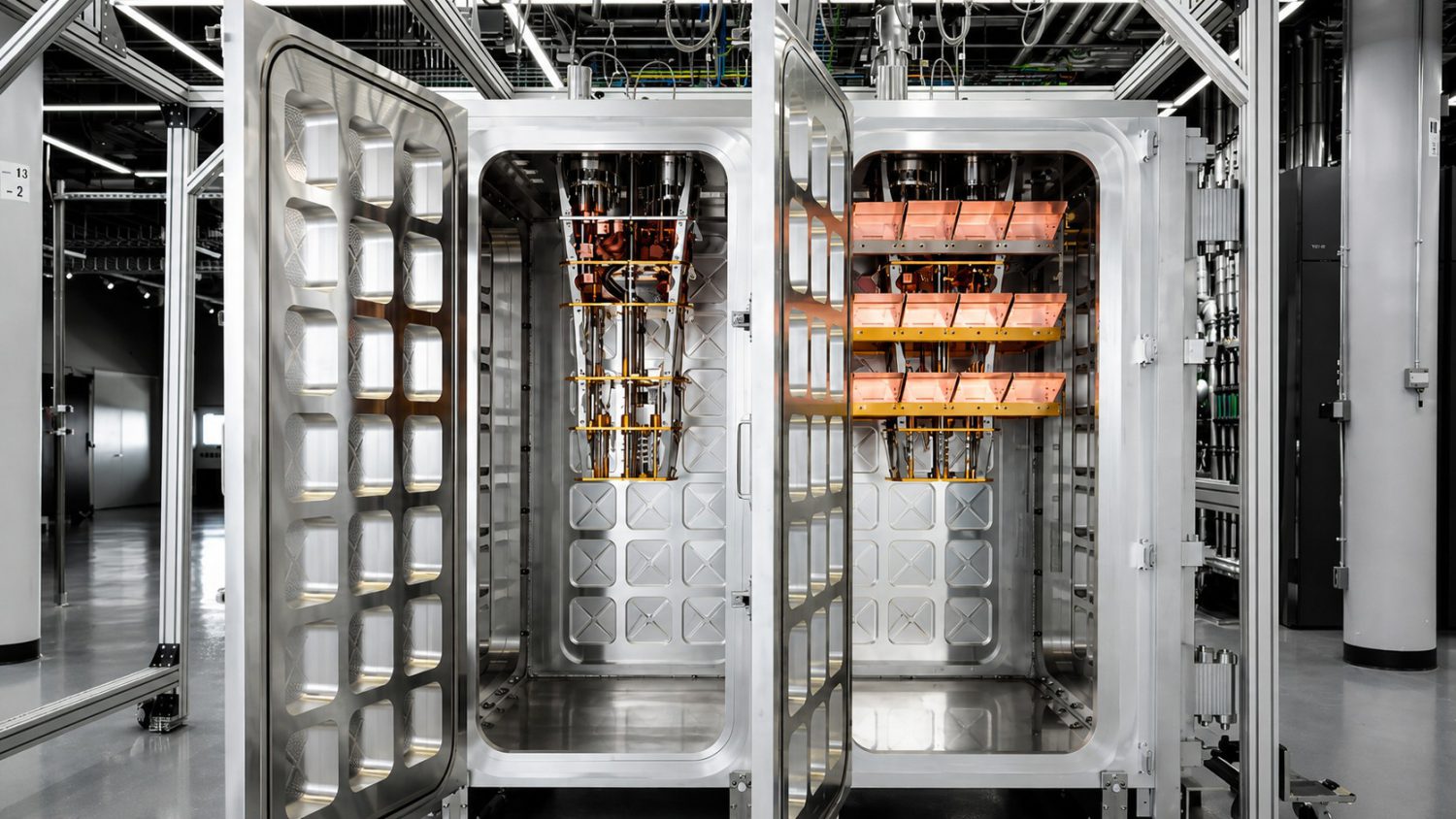
IBM cooled linked modular #cryogenic cells to below 15 millikelvin, about 180 times colder than deep space, because #superconducting qubits need extreme cold to avoid thermal noise and remain usable. On August 19, IBM said it connected two independently shippable fridges into one environment and ran the company’s first multi-module #quantum gate operations across separate units, using its “Flamingo” processor, with “Nighthawk” processors planned for installation later in 2026. Each module is about 8 feet tall and 8 feet wide with roughly 9 cubic feet of cold interior volume, cooling from room temperature to 4 K in under five days and then below 15 mK, and the modules are linked by roughly 1-meter aluminum superconducting L-couplers that enable two-qubit gates between cells. IBM frames the advance as many incremental engineering feats across hardware, software, controls, infrastructure, and #error correction, per @Jerry Chow, rather than a single breakthrough. The work supports IBM’s Starling roadmap aiming for 200 logical qubits and 100 million quantum gates by 2029, while trapped-ion, photonic, and spin-qubit competitors pursue similar #fault-tolerant quantum timelines.
8. Slack wants to drag AI coding out of the terminal and into the group chat

Slack announced Slack Code, a product that embeds AI coding agents like @Anthropic’s Claude Code, Cognition’s Devin, @GitHub Copilot, and Vercel’s agent into dedicated Slack channels so teams can build software collaboratively instead of one developer working privately in a terminal. When a user tags an agent, it creates a project-specific code channel where the agent works in the open with code diffs, live previews, and a visible plan, then archives the channel to leave a searchable audit trail; Slack Code launches on any Slack plan, but customers must bring their own access to partner agents. In a demo, Devin responded to a bug report, investigated, tested via its own cloud “computer” using Chrome and DevTools, opened a pull request, tagged the code owner, incorporated a Figma file shared mid-task, and posted code changes with screenshots and a recorded demo as verification. Slack and Cognition argue that cloud-based agents make scaling, auditing, and sharing work easier than local agents, positioning #Slack as the “collaborative layer” for the #AI coding boom and shifting the bottleneck from writing code to team judgment, craft, and review. The company also described broader agent UX updates, including agent DMs, an Agents tab with live status and a stop button, and an “Add to Slack” flow.
9. Palo Alto Networks and NTT DATA team up on a $1 billion AI security push

@Palo Alto Networks and @NTT DATA expanded their partnership into a multiyear global alliance aimed at helping enterprises secure #AI deployments, especially by gaining control over rapidly growing machine identities. The companies target $1 billion in joint customer contracts and orders by the end of 2029, combining Palo Alto’s security platforms and identity tools with NTT DATA’s consulting, integration, and managed services for cyber risk assessment, secure deployment, and ongoing controls. NTT DATA and Palo Alto said the $1 billion is a shared sales target across both companies’ books, not a disclosure of current joint revenue, and they did not detail the size of their joint investments or break out financial specifics. The deal builds on NTT DATA’s role as a launch partner in Palo Alto’s April Frontier AI Alliance, but is broader, spanning Palo Alto’s full portfolio and adding a dedicated go-to-market and delivery model with a joint engineering roadmap and early access to unreleased features. The alliance is positioned as a way to reduce tool sprawl through #platformization while addressing the gap that many security teams cannot even fully inventory machine accounts and their access.
10. Tesla, Uber, and Waymo all get the OK to operate thousands of robotaxis in Nevada | TechCrunch

The Nevada Transportation Authority unanimously approved permits allowing @Tesla, @Uber, and @Waymo to run commercial #robotaxi services in Clark County, setting up Las Vegas as a major #autonomous-vehicle battleground. The approvals collectively cap deployments at up to 8,000 vehicles over 12 months, with @Tesla permitted for 5,000, @Waymo for 1,000, and @Uber for 1,000 via partnerships with Motional and Zoox, which already has a separate permit for 100 robotaxis. Company testimony suggested real rollouts may fall well below the ceilings, with @Tesla’s Cybercab chief engineer Eric Early saying the 5,000 figure is a maximum and that 2,500 or slightly more would be a satisfying target within a year. The prospect of rapid scaling raised concerns from local livery and taxi groups about industry oversaturation and roadway crowding, especially in the Golden Triangle where most AV testing has occurred, while @Uber argued for a hybrid model mixing human drivers and robotaxis to meet peak demand without flooding the market. The decision links Nevada’s permitting push to looming competition among the companies and potential workforce disruption, either creating support jobs like cleaning and charging or reducing demand for human taxi and gig drivers.
11. Apple’s long-running app store battle with the EU appears to finally be over

@Apple’s long-running antitrust dispute with the European Union over iPhone app distribution appears close to resolution after the EU said it welcomes Apple’s revised commission and fee terms in the bloc. Under the updated structure, commissions vary by channel and developer status: 26% for #AppStore apps using Apple In-App Purchase, 20% for apps using alternative payment processing (10% for many program-eligible developers), 15% for apps that link out to complete purchases (10% for many program-eligible developers), and a 5% #CoreTechnologyCommission for apps distributed via alternative marketplaces or the web. The European Commission said the changes follow close dialogue after an April 2025 non-compliance decision related to steering terms and preliminary findings on alternative app distribution, and it will monitor effective implementation. 9to5Mac concludes the EU fight now appears resolved, while noting Apple’s US dispute continues, with Apple seeking settlement talks with @Epic Games and a court set to decide next steps.
12. OpenAI wants ChatGPT to take the mouse and keyboard out of your hands
@OpenAI is rolling out #Computer Use features that let #ChatGPT operate a web browser and other apps, aiming to make AI agents that can use computers with human-like dexterity and automate everyday computer work. The company has introduced a Chrome extension that lets ChatGPT take over the browser, built cloud and in-app browsers for interacting with public websites, and added Computer Use to its Codex coding tool, with staff saying the tools are near an inflection point though still improvable. A major obstacle has been collecting and creating training data, with approaches described as including screenshot-like visual data, supervised examples where humans demonstrate task completion, and reinforcement learning that rewards successful virtual task performance, while OpenAI declined to detail its latest datasets and researchers noted this data is costly to obtain and clean. OpenAI is also positioning the capability as broadly useful, with @Greg Brockman saying an April update made it “no longer just for coders,” and a team manager arguing that once ChatGPT can use software faster than people, it will change default computer interaction. The push comes amid competition with @Anthropic, which shipped first in 2024 and reported widespread organizational trials of its Claude Cowork feature, as OpenAI claims it has caught up and is betting users will hand over more work to ChatGPT.
13. AMD Crosses a 30% Client CPU Market Share Against Intel

@AMD has surpassed 30% of the x86 #client CPU market for the first time, indicating rising desktop and notebook shipment share against @Intel. Mercury Research reports AMD reached 30.3% in Q2 versus Intel’s 69.7%, up from 21.1% two years ago, with AMD at 34.9% desktop share and 28.9% mobile share of x86 shipment volume. The competitive picture is also shifting as @Apple, @Qualcomm, and @MediaTek push #Arm-based laptop processors that are not included in x86-only tracking, with Mercury estimating Arm-inclusive PC client CPU share at 15.3% in Q2 2026, a new record. At the same time, the PC market is under pressure as desktop x86 CPU shipments fell more than 20% year over year in Q2, which Mercury describes as “ugly.” The firm links the slump to an ongoing #memory crunch that has raised prices for RAM, storage, and higher-end GPUs, with higher PC prices and limited GPU supplies reducing end demand for desktop PCs and thus desktop CPUs.
14. A data centre rack running on living neurons is now operating in Singapore

NUS Medicine, data centre operator DayOne, and Melbourne’s Cortical Labs have switched on a 20-unit server rack in Singapore that runs #biological computing on living human neurons, billed as the first independently operated biologically integrated server rack. The neurons are grown from stem cells and cultured at the NUS Life Sciences Institute, and the rack uses 20 neuron-powered CL1 units that were shown to about 80 guests on 6 August. Although the project argues #AI could scale at a fraction of the electricity demanded by silicon servers, no power-efficiency figures are published, and Cortical Labs’ own specs put each CL1 at 850 to 1,000 watts, implying up to about 20 kilowatts for the rack, similar to conventional racks because much of the power sustains the cells rather than computation. The article contrasts this with @FinalSpark’s claims of dramatically lower energy for the cells doing computation while noting incubators and life-support systems drive real-world consumption, and with #neuromorphic computing efforts in Europe that emulate neurons without biological maintenance. Cortical Labs is positioning the system for commercial use cases such as drug discovery, humanoid robotics, cybersecurity, and fraud detection, but the key missing metric is watts per useful task, alongside practical limits like keeping neurons viable for only up to six months.
15. Claude Science outperforms experts in protein binder task

@Anthropic reports that Claude Science, using the Mythos Preview and Opus 4.8 models, designed protein binders for 14 of 15 targets and often outperformed human design competitions on the same targets. In lab validation with Adaptyc Bio and Twist Bioscience, Claude achieved hit rates of 26.7% and 22.6% in a combined session across all 15 targets, rising to 35.1% when each target was handled separately, compared with a typical 10% to 15% hit rate for #protein design campaigns. For most targets, the best Claude-designed entry had higher hit rates and higher affinity than contest entrants and, in many cases, the contest winner, even though it was instructed not to use existing binders as starting points. Anthropic frames the work as foundational because protein minibinders are not a standard therapeutic modality and high-affinity binding is only an early step toward drug-like molecules, but says it is extending Claude toward end-to-end development across drug modalities. The blog post also describes #chemical analysis acceleration, where Claude processed raw #NMR and #LC-MS files without vendor software in 23 and 19 minutes, producing results closely matching a contract lab’s processing, including purity of 96.4% versus 96.33%.
16. Voters Aren’t Waiting for Election Day to Fire Officials Who Approved Data Centers

Grassroots recall campaigns are turning #AI #dataCenter tax incentive deals into immediate political fights, with residents moving to remove officials who approved large abatements. In Independence, Missouri, a $6.2 billion incentive package for Nebius, including 20-year property tax abatements of about 90% on personal property and 98% on real property for a 2.1 to 2.25 million square foot complex, prompted resident McKenna Cobb to file a recall petition, and 1,214 neighbors signed to force a September 1, 2026 special election that the city estimates will cost $164,400. Supporters argue the project could add $35 to $55 million annually to the general fund, plus 150 full-time jobs and over 1,000 construction positions, while opponents question those projections, object to the scale of the giveaway in a city with 16% poverty, and cite concerns about water quality, electricity prices, and a potential 1.2 gigawatt power demand that might require restarting a retired power plant. After a judge allowed the recall election to proceed and two pro-deal council members lost re-election, residents framed the effort as accountability for being ignored, echoing criticism like @Bernie Sanders’s statement that officials should not cave to large corporations. The article links Independence to a broader pattern across Missouri and beyond, noting that similar recall efforts in Festus, Missouri, were blocked under local rules, showing how community backlash to #dataCenter deals is reshaping local politics before regular election day.
17. OpenAI is gaining on Anthropic with business users, new data indicates | TechCrunch

New data from Ramp suggests @OpenAI is starting to gain ground with U.S. business users even though @Anthropic still leads overall among Ramp’s paying AI customers. Ramp reports that Anthropic overtook OpenAI in May at 41% vs 39%, and by July Anthropic was near 44% while OpenAI was near 40%, based on more than 70,000 U.S. businesses using Ramp’s bill pay and corporate cards, with spend figures provided only as percentages. Ramp economist Ara Kharazian says OpenAI is growing faster so far in Q3, attributing some momentum to #GPT-5.6 Sol’s appeal to developers while noting weaker adoption for Anthropic’s higher end Fable tier amid price and data retention requirements, though the article notes Fable targets narrower use cases and the trend could change quickly. The shifts imply enterprise AI spending may be less “sticky” than investors assume, with companies switching as new models arrive, but the overall market is expanding. Ramp’s data shows the share of its customers paying for AI rose above 50% in March and reached nearly 56% by July, indicating both firms could still grow revenue while competing for share.
AI training startup Micro1 is attempting to disrupt #Google’s deal to acquire Spirit Airlines’ old data by submitting a late, higher bid. The article states Micro1 is offering $12.5 million, compared with #Google’s reported $10 million bid for the same Spirit data. This move tests whether a smaller AI company can outbid a major tech firm for datasets that can be used to improve #AI systems. The situation underscores the competitive market for airline data as training material and highlights that such legacy corporate data can become valuable assets even after operations change. Overall, Micro1’s bid directly challenges #Google’s plan to use Spirit Airlines data to improve its AI.
19. Intense bent ultrafast lenses made from gas
Researchers have demonstrated a new way to create intense, bent ultrafast lenses using gas, enabling advanced control of laser pulses. By shaping the refractive index profile within a gas medium, the team achieved strong bending of ultrafast laser beams without damaging materials, which is a limitation in conventional solid lenses. This approach allows for the manipulation of light with high intensities and ultrashort durations, expanding possibilities in fields like microscopy and laser machining. The gas-based lenses offer adjustable properties and durability under intense laser conditions, enhancing performance over traditional optics. These findings advance #ultrafastoptics, providing a flexible platform for controlling laser beams in scientific and industrial applications.

@NASA’s open source ground control software, the browser-based AIT-GUI in the AMMOS Instrument Toolkit, contained a critical flaw that could have allowed unauthenticated attackers to access and issue commands to spacecraft. Researcher @Yuval Elbar disclosed on August 18, 2026 that affected versions up to 2.5.1 ran a web server listening on all network interfaces and exposed an API with no #authentication or #authorization, lacking #CSRF protections on changing endpoints. The weaknesses could expose endpoints such as /cmd, /script/run, and /seq, letting attackers run command sequences, execute server-side scripts, and potentially pass files or scripts through a browser session, escalating to near full control and leaving craft largely beyond @NASA’s control. The risk could be triggered via an exposed port or by luring an operator to a malicious web page, meaning an attacker may not need to be on the same network. The issue is reported as fixed in v2.5.2, and Cycode recommends upgrading, checking the console port, and reviewing command history.
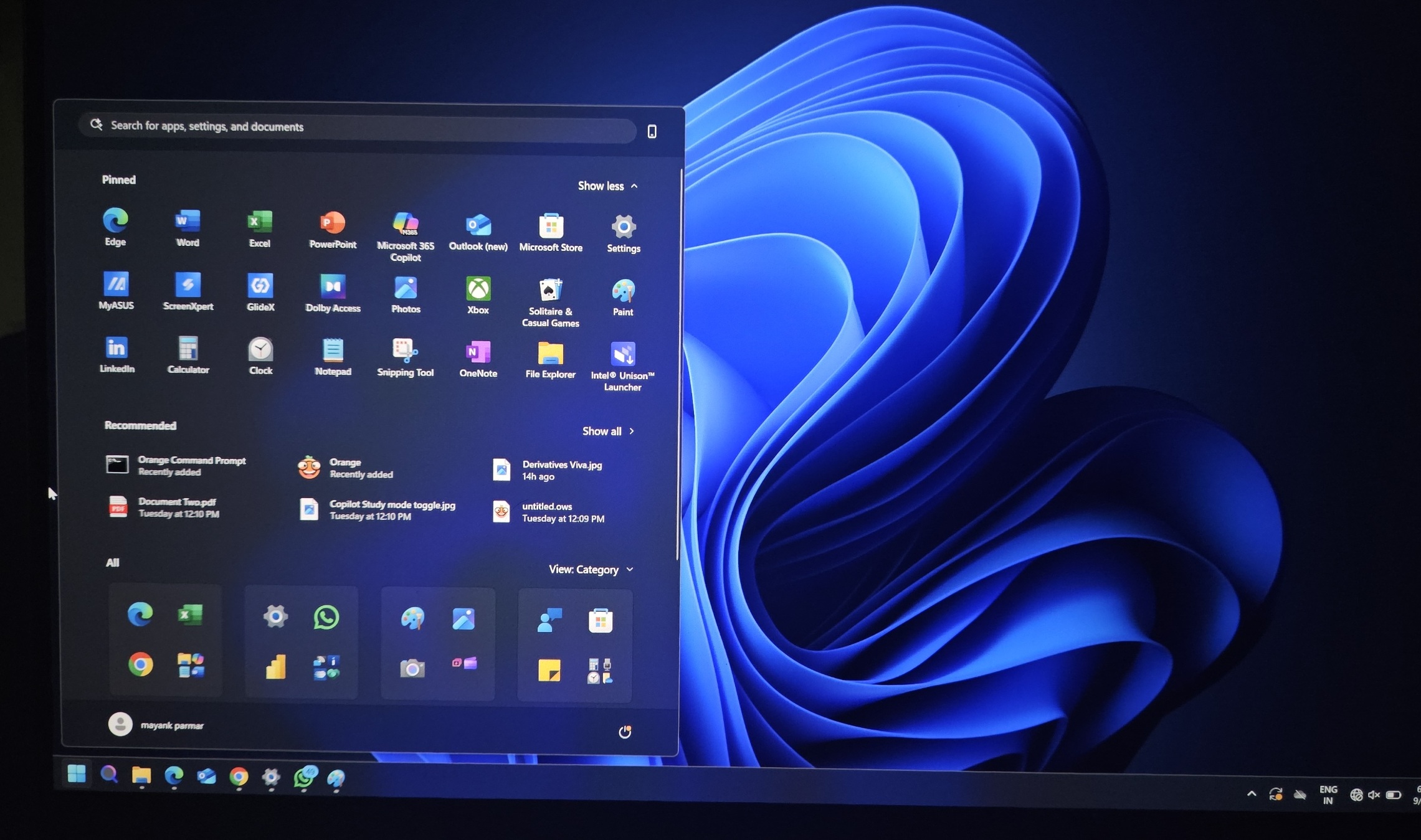
Windows 11 is fully removing #WMIC (Windows Management Instrumentation Command-line), a legacy enterprise-focused command-line tool that has also been abused by cybercriminals to deploy malware and ransomware. Testing on early builds of the September 2026 Patch Tuesday update, identified as Windows 11 26H2, shows WMIC is entirely absent: it does not appear in Windows Search, its components are not present on the Windows partition, and running `wmic` returns a “command not recognized” error, with no ability to re-enable it via Optional Features or terminal commands. The article contrasts this with Windows 11 August 2026 and Windows 11 25H2 or older, where WMIC still appears and works, and notes Microsoft’s earlier steps like deprecating WMIC, stopping active development on Windows 10 21H1 or newer, and not installing it by default on clean installs of Windows 11 25H2 while still offering it as a #FeatureOnDemand. Microsoft confirms in updated release notes that WMIC has been removed as part of ongoing deprecation, framing the change as improving Windows security and reliability while preserving management capabilities through supported alternatives. The removal targets a common #LOLBIN risk by eliminating a Microsoft-signed component that threat actors could misuse, making WMIC impossible to bring back once the September 2026 update rolls out.
22. Supermicro investigation clears CEO in $2.5 billion alleged smuggling scheme | Fortune

Super Micro Computer said an independent board-led investigation found no evidence that CEO @Charles Liang or other senior managers knew about an alleged $2.5 billion #chip-smuggling scheme involving hardware packed with #Nvidia chips sent to China. The company provided few specifics beyond stating the board found no evidence of management awareness, while noting it took personnel actions, including terminations in sales, technical support, and business development for failures to follow policies or its code of conduct. Legal and regulatory scrutiny continues: co-founder and board member Yih-Shyan “Wally” Liaw was indicted by the U.S. Department of Justice and has pleaded not guilty, Taiwan authorities detained four employees for questioning related to sales, and Supermicro disclosed it received a federal grand jury subpoena in New York and a subpoena from the #SEC seeking customer-related documents. Liaw’s trial was postponed to March 2027 after his lawyer said the subpoena could yield materials relevant to his defense, and Liaw faces up to 20 years in prison. The internal probe, led by independent director Scott Angel and audit committee chair Tally Liu with outside counsel Munger, Tolles, & Olson and forensic support from AlixPartners, aims to reassure investors, but ongoing government probes and limited disclosure leave broader questions unresolved.
23. Senators demand answers from TikTok About ‘depraved’ experiment | Fortune

Two US senators demanded answers from TikTok after reports that the company ran an experiment that withheld an algorithmic safety feature from millions of US users, including minors, which they called “depraved.” A confidential 2023 internal document, disclosed in litigation and reported by Bloomberg Businessweek, says TikTok intentionally switched off an #algorithmic safeguard meant to disrupt harmful-content echo chambers for 10% of US users, about 15 million people, to measure effects on #DAU and other core metrics. The document links this design choice to the experience of 16-year-old Chase Nasca, who was randomly placed in the control group in January 2022, received thousands of videos about sadness, hopelessness, loneliness, and suicide, and died by suicide within a month, because “filter bubble prevention strategies did not take effect on this user by design.” Senators @MarshaBlackburn and @RichardBlumenthal argued TikTok was already on notice since October 2021 about concerns that its recommendation system could steer children toward harmful content, raising doubts about the company’s public assurances that safety comes before profit. Their letter to CEO @ShouChew and US spinoff CEO Adam Presser demands responses to 13 questions, including who knew about the test, why minors were included, when executives learned of it, and an unredacted version of the internal document; TikTok did not comment on the letter, but told Businessweek it is committed to user safety and invests in Trust & Safety enforcement.
24. Tesla robotaxi in Austin: nobody in the seat, bollards down

#Tesla’s robotaxi service in Austin appears to have shifted to fully driverless operation, with an independent tracker logging 170 rides over two weeks with no onboard human safety monitor across 54 cars. The data comes from the crowdsourced Robotaxi Tracker run by Ethan McKanna, who told @The Verge the rides were unsupervised, noted that plates previously marked supervised are now offering unsupervised rides, and said roughly 30 driverless Teslas have also been running in Dallas and Houston, though the tracker’s counts also rose after he improved lagging data sources. Separately, a passenger video reported by Electrek shows a robotaxi creeping forward and then driving through plastic bollards at a curb extension in Austin with nobody in the driver’s seat, and Reddit users geolocated the spot and found the posts have been there since at least February 2024 via Google Street View. The article stresses that “unsupervised” only confirms the absence of an onboard monitor and does not rule out #remote operation, which #Tesla does not disclose in terms of frequency or staffing ratios. Overall, the evidence suggests a real expansion of empty-seat rides in Austin, but the exact level of remote intervention remains unknown because #Tesla publishes no comparable fleet data.
25. Waymo’s custom chip decides what the car sees
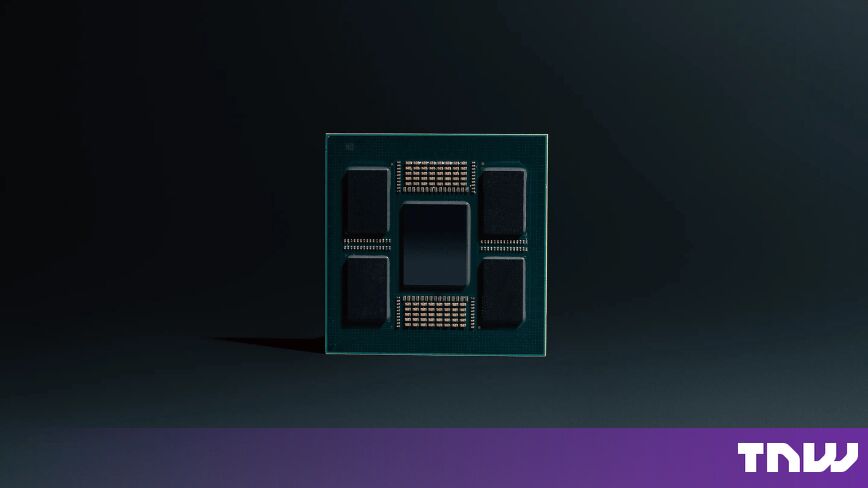
@Waymo disclosed its robotaxi compute architecture, centered on a custom 5nm #ASIC that preprocesses raw lidar, radar, and camera data so the downstream inference engine can run sensor-fusion models, meaning it shapes what the driving system sees rather than deciding vehicle actions. The company says these ASICs deliver over 1,000 TOPS for front-end processing, but the article notes this figure has been compared in coverage to full autonomous-driving platforms even though it represents one component and is not a claim @Waymo made. Supplier disclosures show #Nvidia and #AMD remain part of a “balanced, heterogeneous system” alongside Micron, Samsung, Sandisk, Socionext, and #TSMC, so the custom chip adds capability rather than replacing merchant CPUs, GPUs, and accelerators. @Waymo frames the design around being responsive, ruggedised, and redundant, including a dual-engine hardware setup where either side can take over if the other faults, plus vehicle-grade constraints like vibration, temperature swings, liquid cooling integration, silence, and cargo space. The compute system is described as processing 13 high-resolution cameras and is reported by Bloomberg to be going into the Zeekr-built Ojai robotaxi, while operational and safety scale claims cited, such as 200 million autonomous miles and crash reductions, are attributed to @Waymo with no external audit mentioned.
26. Sudan’s forgotten war now has its own strange and deadly air contest

Sudan’s civil war has expanded into a deadly aerial contest in which a Turkish-built Bayraktar Akıncı operated by Sudanese forces is repeatedly intercepting Chinese-made CH-95 drones flown by the paramilitary RSF. Footage shared by Clash Report on X appears to show an Akıncı engaging a CH-95 midair, and reports since June 23, 2026 say at least six Chinese-made CH-95 or FH-95 family drones have been destroyed, with several losses attributed to Akıncı interceptions. The matchup is also financially stark, with estimates placing the Akıncı at about $25 million per aircraft versus roughly $2 million for a CH-95, highlighting the high cost of this #drone_warfare even as the conflict has persisted for decades. #Armed_drones are also driving severe civilian harm, with UN High Commissioner for Human Rights @Volker_Türk saying they are now the leading cause of civilian deaths, and the UN reporting at least 880 civilian deaths from drone strikes between January and April 2026, more than 80% of conflict-related civilian deaths. The article links these interceptions to a broader shift in how drones are used in Sudan, noting the Akıncı’s radar and air-combat weapons enable air-to-air engagements rather than only conventional strikes on ground targets.
27. US says hackers are targeting vulnerable water systems with the help of AI | TechCrunch

U.S. security agencies warn that hackers are actively breaking into #Siemens S7 programmable logic controllers used in critical infrastructure, including water supply and wastewater systems across the United States. @CISA, the @FBI, and the @NSA say attackers are targeting all Siemens S7 PLCs, using #AI to generate exploit scripts from publicly available information to find and compromise internet-connected controllers that are outdated or poorly secured. The agencies caution that successful intrusions could cause downtime, safety incidents, or equipment damage, and reiterate long-standing guidance to keep these devices off the internet, noting rural communities can be especially impacted. An incident response professional told TechCrunch the AI use is notable for identifying and understanding PLCs, but emphasized the devices are already highly vulnerable. The warning follows recent intrusions at water facilities in states including Minnesota, Michigan, Arkansas, Georgia, and New Jersey, amid a broader wave of suspected Iranian-linked attacks on U.S. water systems.
That’s all for today’s digest for 2026/08/21! We picked, and processed 27 Articles. Stay tuned for tomorrow’s collection of insights and discoveries.
Thanks, Patricia Zougheib and Dr Badawi, for curating the links
See you in the next one! 🚀
