
#BrainUp Daily Tech News – (Sunday, August 16ᵗʰ)
Welcome to today’s curated collection of interesting links and insights for 2026/08/16. Our Hand-picked, AI-optimized system has processed and summarized 39 articles from all over the internet to bring you the latest technology news.
As previously aired🔴LIVE on Clubhouse, Chatter Social, Instagram, Twitch, X, YouTube, and TikTok.
Also available as a #Podcast on Apple 📻, Spotify🛜, Anghami, and Amazon🎧 or anywhere else you listen to podcasts.
1. Ukraine strikes major Russian rocket factory with cruise missiles

@Volodymyr Zelenskyy said Ukraine struck the Progress Rocket Space Center in Russia’s Samara region using ground-launched FP-5 “Flamingo” #cruise-missiles, calling it a significant achievement. The Progress Center, a key @Roscosmos enterprise about 900 km from Ukraine, assembles the Soyuz-2 rocket, develops the newer Soyuz-5, and also builds military satellites, with Soyuz-2 serving as Russia’s primary launcher for civil and military missions including crewed flights to the #InternationalSpaceStation. While the specific damage was unclear, open-source reports suggested a hit on a building tied to a clean room for avionics, aligning with Zelenskyy’s reference to electronics production. Because Russian civil and military space efforts are closely linked, any sustained disruption to Soyuz production could severely affect Russia’s space programs, especially since over 85 percent of Russia’s 120-plus launches since 2020 used the Soyuz-2 family amid Proton’s phaseout and slow #Angara ramp-up. The article notes Russian officials had already reported Soyuz demand outpacing capacity, projected at 30 to 50 percent above production capability for 2027 to 2030.
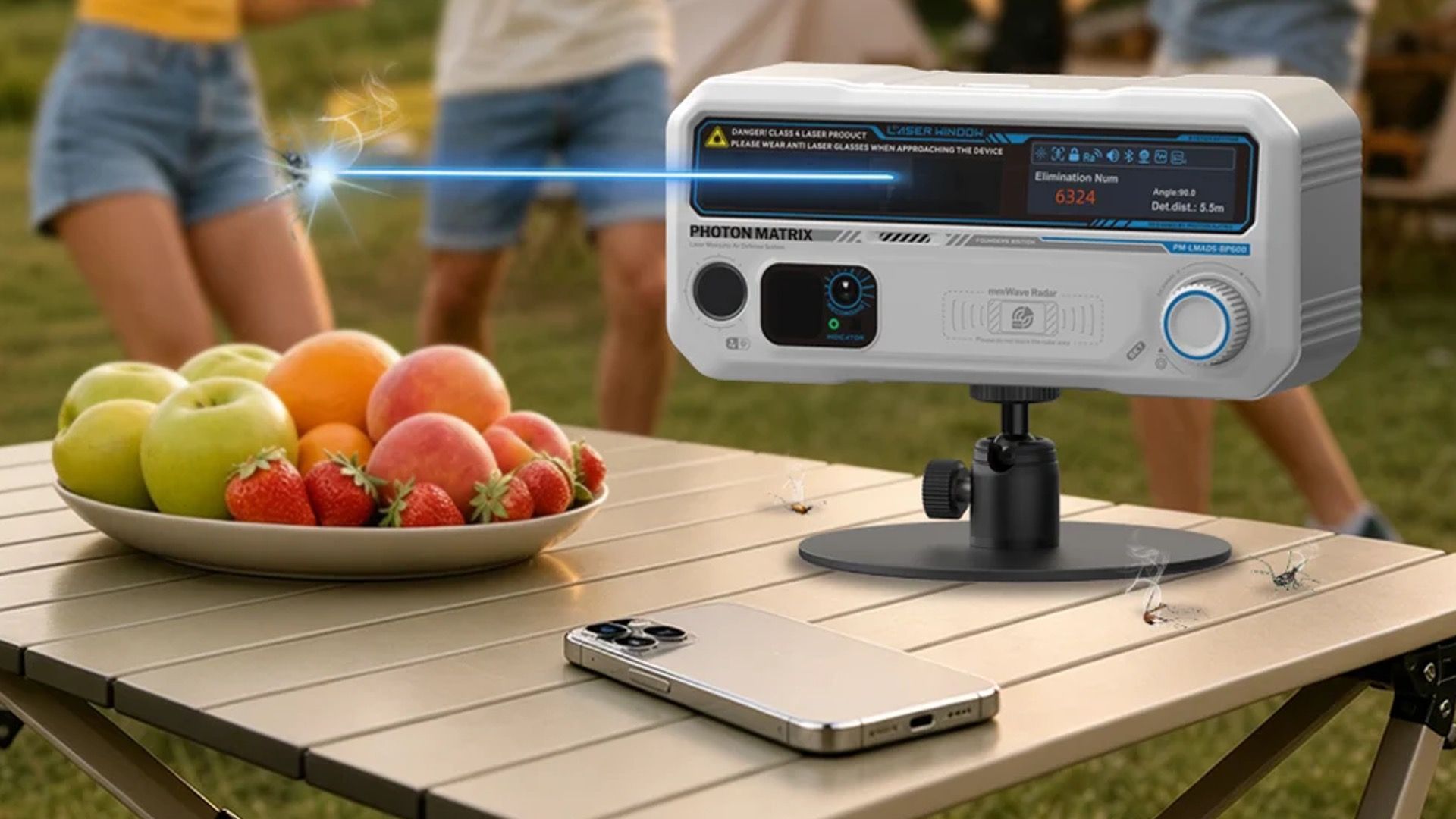
The #Photon Matrix mosquito zapping laser has moved from crowdfunding to commercial availability, with the company saying it has started mass production and expects to ship the first units later this month. It is designed to eliminate insects within a six meter radius across a 90 degree scanning plane, using #LiDAR, #mmWave radar, and an #AI vision module to detect targets 2 mm to 20 mm in size moving at up to 1 meter per second, then striking them with a laser. Company test videos indicate strong performance, though the article notes it still needs independent reviews to confirm real world effectiveness and assess safety in typical environments. Pricing is high: $988 for the infrared home version and $1,088 for the blue laser industrial version, and the article raises eye safety concerns while stating the device has passed certifications intended to ensure it will not harm people, pets, or birds. Positioned as an alternative to chemical pesticides that can harm humans and animals, the system is presented as a potentially important option for homes and hospitals in regions affected by mosquito borne disease, compared with DIY prototypes or noisy micro drone approaches.
3. So How Is AI Drug Discovery Doing, Really?

The article argues that despite a flood of hype around #AI in drug discovery, credible evidence of clinically relevant impact remains very thin so far, better framed as an “absence of evidence” rather than proof it cannot work. It highlights that the most meaningful test would be improved decision making and higher Phase II success rates, since early discovery gains are minor compared with the cost and failure risk of clinical trials, yet the author sees little real-world improvement and notes that pre-#AI “revolutionary” initiatives also failed to move the needle. A key problem is attribution and selective reporting: successes get credited to insight and any #AI involvement, while failures are quietly ignored, making it hard to generate honest performance data. The cited paper urges shifting from what is easy, modeling readily available data, to what should be done, including substantial new data generation, but the author stresses this will be slower and more expensive than press releases claim and requires telling investors and the media to expect longer timelines. Overall, #AI drug discovery may still have potential, but demonstrating clinical impact will demand costly commitments, better evidence standards, and focus on the hardest, most decision-critical parts of development.

A Reddit user claims @SK hynix could not provide a warranty replacement for a malfunctioning consumer #SSD and instead offered a refund based on the warranty’s refund clause, which can leave buyers unable to replace the drive during a #storage shortage. The article cites SK hynix’s policy stating that in place of repair or replacement, the original purchaser may receive a refund of either the original purchase price or the fair market value, whichever is lower, meaning the company chooses the lower of those two figures. While that approach may seem reasonable in normal conditions, the current shortage has driven SSD prices up substantially, so an original price refund or a lower market value determination may not cover a comparable replacement, with examples like the SK hynix Platinum P51 and Platinum P41 said to have doubled in price. The piece notes this is part of a broader trend of warranty disputes becoming public, referencing a case where @Micron initially offered an original purchase price refund for a Crucial memory kit but later, after pushback, offered alternative modules matching capacity. Overall, the situation highlights how fine-print refund terms can disadvantage customers when #component pricing rises rapidly and replacement stock is unavailable.
5. GenRec: Towards LLM-native Recommendation at Netflix
Netflix has developed #GenRec, a novel recommendation system that integrates large language models (LLMs) natively to enhance content personalization. By leveraging the advanced natural language understanding and generative capabilities of LLMs, GenRec improves the matching between users and content through richer semantic representations and context-aware recommendations. The approach involves fine-tuning LLMs on user interaction data and content metadata to capture nuanced preferences and dynamics beyond traditional collaborative filtering or embedding-based methods. Evaluation shows GenRec outperforms prior recommendation architectures in accuracy and relevance, demonstrating the potential of LLMs to transform recommendation engines at scale. This advancement aligns closely with Netflix’s ambition to provide highly engaging and personalized experiences by exploiting cutting-edge AI technologies.
6. Will you actually use other app stores now that Google can’t stop you?

After a court battle and settlement with @Epic, @Google said it would support #third-party app stores, but a federal judge now argues the company is still making them difficult to install. US District Court judge @James Donato criticized how searches for alternative stores can mislead users and how third-party stores may be buried under a special banner rather than appearing in normal results, with @Epic’s lawyers showing that searching “store for apps” returned physical retailers like Walmart. The judge also objected to @Google allegedly replacing a standard “Install” button with “View” for an alternative store, citing the example of #Aptoide, and said these extra layers discourage users. @Google agreed to make changes within a week, though specifics were not provided, with the expectation that installation and discoverability will be made more straightforward.
7. Lenovo Legion C700: Cloud Gaming Handheld at 556g [2026]
![7. Lenovo Legion C700: Cloud Gaming Handheld at 556g [2026]](https://tech-insider.org/wp-content/uploads/2026/08/lenovo-legion-c700-cloud-gaming-handheld-2026.webp "#BrainUp Daily Tech News - (Sunday, August 16ᵗʰ) 57")
Lenovo has confirmed the Legion C700 will launch in China in August 2026 as a 556g handheld designed primarily as a #cloudgaming client built around Tencent START, rather than a traditional local-compute device with an AMD or Intel processor and dedicated GPU. Confirmed hardware details focus on controls and display, including a 7.82-inch 120Hz IPS screen, TMR thumbsticks, Hall Effect triggers, an omnidirectional D-pad, two extra shoulder buttons, and two programmable rear paddles, while key PC-style specs like chipset, battery capacity, RAM, storage, and pricing remain undisclosed. Reporting frames this omission as deliberate positioning, with outlets noting it is “not a Windows gaming PC in a smaller case,” and Lenovo instead highlighting Tencent START branding and a marketed 10ms cloud-latency target that may reflect best-case conditions. The device is also said to support a “Legion Stream” dock or USB dongle mode to stream games from a connected PC over a local network without internet, providing a fallback when broadband is inconsistent. Strategically, the co-branded Tencent partnership ties the C700 to START’s two-tier subscription pricing (29 yuan/month VIP, 59 yuan/month Super VIP), creating a dedicated hardware funnel in China that contrasts with more provider-agnostic Western services and complements Lenovo’s separate Legion Go and Legion Go S local-compute lineup.
8. SpaceX has officially acquired AI coding startup Cursor – Engadget
Cursor, known for its AI coding tool, is now officially owned by @SpaceX after an acquisition announced in June that began with a partnership in April for model training. Cursor says the deal gives it access to “the largest fleet of GPUs in the world,” increasing its computing capacity to train better models and offer them to customers at lower cost. @SpaceX, which merged earlier this year with @Elon Musk’s AI company @xAI, paid $60 billion, and xAI was renamed SpaceXAI in July. After the rebrand, SpaceXAI and Cursor released Grok 4.5, aimed at #coding, #agentic tasks, and knowledge work at lower costs, followed by Grok 4.6 trained for real-life tasks like general coding, web development, and computer-aided design. Cursor frames Grok 4.6 as an early indicator of what it can build together with SpaceXAI using expanded compute resources.
9. Review: Switch 2 Oblivion Remastered Frustrates as Much as It Impresses

The Switch 2 port of #TheElderScrollsIVOblivionRemastered preserves much of the remaster’s visual uplift and adds Switch-specific perks, but it still struggles with the same performance problems, often worsened by the hybrid hardware’s lower headroom. It uses an Nvidia #DLSS upscaler (with docked 1080p reconstruction from 960×540 and portable 900p from 800×450), offers detachable Joy-Con mouse support, and ships as a notably smaller 58GB install, while visuals can look strong in dungeons and towns and even appear crisper than Xbox Series S in some close-range scenes. In open-world areas, the low input resolution pushes DLSS to its limits, producing flicker and shimmer on foliage, noise on specular highlights, and visible artifacts around the Imperial City, while several settings are cut back versus Series S including foliage density, draw distance and LOD behavior, and simplified tree shadows, though Lumen GI and reflections largely make the grade with lower-res SSR as fallback. To reduce CPU load, distant NPC animations drop to 15fps, and the game targets 30fps yet inherits poor frame pacing that causes camera judder plus recurring traversal hitches that can exceed 230ms when moving quickly or during busy encounters. Overall, @Bethesda appears to have given the Switch 2 build extra attention and has promised to bring its optimizations to other platforms, but the port still underlines the core issue: a troubled remaster remains hard to run smoothly on less capable hardware.
10. Jaia Robotics is Harnessing Micro-Autonomous Systems for Coastal Science

Coastal scientists need affordable, flexible tools to observe fast-changing nearshore and inland waters where vessel surveys are costly, moorings have limited coverage, and manual sampling strains staff, and Jaia Robotics positions its micro-sized autonomous aquatic drones as a scalable solution. The company’s JaiaBot family targets #harmful algal bloom monitoring, multi-parameter #water quality assessment, and #coastal resilience work, using a shared architecture across variants, including propulsion, electronics, software, and a cloud data pipeline, and it reports delivering more than 300 units to government, academic, and industry users. For #HAB detection, JaiaBot-BIO combines fluorometers, turbidity, dissolved oxygen, pH, CTD, and imagery for real-time bloom detection, with reconfigurable C-FLUOR optical heads to target chlorophyll, phycoerythrin, phycocyanin, or oil-related fluorescence, while multi-vehicle pods track bloom intensity and boundaries. A complementary JaiaBot-HYDRO-CTD supports dense hydrographic coverage to characterize stratification and frontal dynamics, and pod deployments can produce synoptic CTD casts without interrupting vessel operations. For resilience and change mapping, JaiaBot-HYDRO profiles to 100 meters to support bathymetry and bottom classification, and extended-range variants add long-duration loitering and wider-area survey capability.
11. AI Agents Reshape Cyberattacks by Adapting to Failed Attempts
AI agents are transforming the nature of #cyberattacks by adapting and evolving after failed intrusion attempts, making cyber threats more sophisticated and dynamic. These AI-driven systems analyze unsuccessful breaches and modify their tactics to improve future attack success rates, thereby increasing the challenge for cybersecurity defenses. This adaptive behavior elevates the risk level and requires new defensive strategies leveraging artificial intelligence to predict and counteract evolving threats effectively. As AI empowers attackers with rapid learning and adaptation capabilities, cybersecurity professionals must innovate continuously to protect critical systems. These developments illustrate the growing arms race between offensive AI-powered cyber tactics and defensive cybersecurity technologies.

Using #human-machine teaming with GPT-5.6 Sol, parallel agents, exact-arithmetic programs, and the #Lean proof assistant, the author ran two intensive weekend projects and concludes that mathematical experiments are becoming abundant even when accepted knowledge is not. In a Hadamard-matrix search, the workflow eliminated 44 precisely defined regions of the search space and audited five standard routes to a nonexistence proof, yet still did not produce a Hadamard matrix of order 668. In a second “Maxwell” project, it produced a full proof candidate, exact checks on selected inputs, a teaching guide, and a partial formalisation where Lean verifies the algebraic core, but the author does not trust it enough to claim a result because no specialist review has occurred, novelty is unknown, and only part is formally checked. The weekend extends the author’s earlier #neuro-symbolic loop idea, scaling from an LLM plus #SymPy checker to a richer propose-attack-check-retain process with adversarial critics and explicit status tracking. It also aligns with @Jeff Dean’s framing of research as an iterative loop that AI can accelerate by automating proposal, implementation, evaluation, and parallel iteration, with “implementation” and “evaluation” realized here as exact arithmetic, counterexample search, and partial formalisation.
13. Ontario Launches Data Centre Playbook With New Grid and Community Rules
Ontario, under @Doug Ford’s government, released a Data Centre Playbook on August 13, 2026, to guide how it will attract and evaluate new data centre investments and large electricity connections while protecting the grid and host communities. The province opened a 30-day public consultation and said the playbook is a strategic framework, not a binding operating standard, building on 2025 electricity legislation that gives Ontario authority to approve or reject certain large-load connections. Projects would be assessed against three pillars: Ontario economic development, #data security and #digital sovereignty, and host-community investment and public confidence, with examples such as apprenticeships, reskilling, amenities, infrastructure upgrades, jobs, and local accommodation demand, but without a single province-wide dollar threshold for contributions. On power policy, the playbook proposes that new data centres pay for their impact so costs are not shifted to residential customers, including considering a separate electricity rate class for new facilities above 1MW and encouraging dedicated generation, as Ontario forecasts data centres could represent about 13% of new electricity demand by 2035. Ontario also says it will lean on non-financial supports, highlighting grid capacity, land, climate, and workforce, and ties the initiative to a broader #AI strategy with government projections of $122 billion in growth by 2035 and over 17,000 jobs annually.
14. RAVEL, Strata Expanse Name RT-One First AMPHIX Customer
RAVEL and Strata Expanse have named RT-One the first commercial customer of the #AMPHIX #AI infrastructure platform, with RT-One expected to use an AMPHIX Center of Excellence near Colusa, California, to validate configurations before committing to permanent production campuses. The planned validation covers compute, networking, thermal management, and orchestration, with RAVEL’s Orchestrate AI software managing workloads and the resulting configuration intended to become a standardized deployment block for RT-One’s federated infrastructure model across the Americas. #AMPHIX is described as a production-grade validation environment that combines infrastructure-ready land, power, cooling, secure networking, certified compute and storage systems, and workload-orchestration software so customers can test workloads and operating policies ahead of larger infrastructure commitments. StorageReview reported Strata Expanse will provide the physical foundation, while RAVEL will handle technology certification, deployment validation, and operator training, and the Colusa site is expected to use a microgrid developed and managed by Colusa Indian Energy. The announcement follows RT-One’s earlier selection of RAVEL as a strategic partner and RT-One’s disclosure of a 400MW renewable-powered AI campus under development in Uberlândia, Brazil, while no transaction value, capacity commitment, or contract term was disclosed.
15. Windows 11 is heading for a new look as Microsoft replaces another legacy interface with WinUI 3
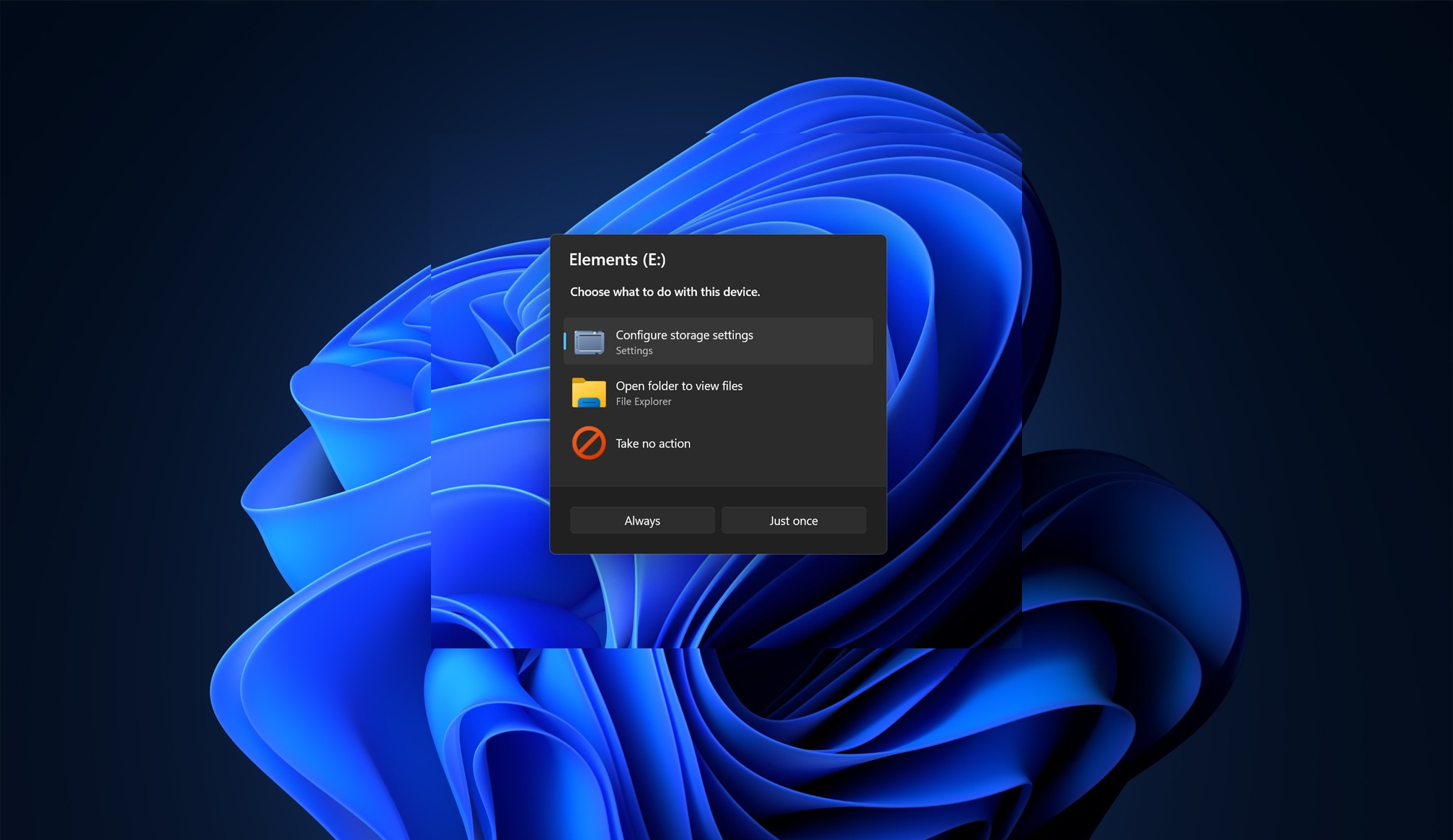
Windows 11 is moving toward a more consistent look as @Microsoft replaces legacy dialogs and pop ups with #WinUI 3 aligned with #Fluent Design, extending the framework beyond apps into the Windows shell despite acknowledging WinUI performance challenges it plans to improve. Evidence of this shift is already visible in preview builds, including a redesigned AutoPlay interface that replaces the Windows 8 era top right flyout with a centered, proper dialog similar to Windows 7. The new AutoPlay design matches Windows 11 styling with dark or light mode support, rounded corners, larger icons, and more spacing, and it adds clearer choice persistence with “Always” versus “Just once.” The changes are presented as part of broader ongoing shell modernization efforts that are now showing up concretely in previews rather than remaining promises. The article ties these updates to a wider push to modernize Windows 11’s remaining legacy interfaces, with the Properties sheet also mentioned as getting a #WinUI based revamp.
16. CVC DIF Agrees Majority Acquisition of German Colo Operator Firstcolo
CVC DIF agreed to acquire a significant majority stake in Frankfurt-based colocation provider Firstcolo Holding GmbH from Cube Infrastructure Managers via DIF Value Add IV, expanding its #digital infrastructure exposure with a German operator that has operating sites and a major build underway. The deal is expected to close by end of September 2026, terms were not disclosed, and founder-led leadership will remain in place: CEO Jerome Evans, COO Nicolaj Kamensek, and CFO Dennis Bergfeld. Firstcolo runs two near-fully-utilized Frankfurt facilities, Werkhaus with capacity for 1,000 racks and AOC Data Center with roughly 390 racks, and serves more than 350 enterprise customers with colocation, cloud, connectivity, and managed services. The company is also developing FRA7 in Rosbach vor der Höhe, a planned 24MW, ~11,555 square meter site targeted for early 2027, described as a ~€250 million project designed for #AI and #HPC with up to 200kW per rack and liquid cooling, with the location chosen for earlier grid availability. CVC DIF’s Willem Jansonius said the transaction pairs a cash-generative base business with a substantially de-risked expansion, linking the acquisition to accelerated growth around new capacity and high-density compute demand.
17. Top Stories: iOS 27 Beta 5, iPhone 18 Pro Rumors, and More
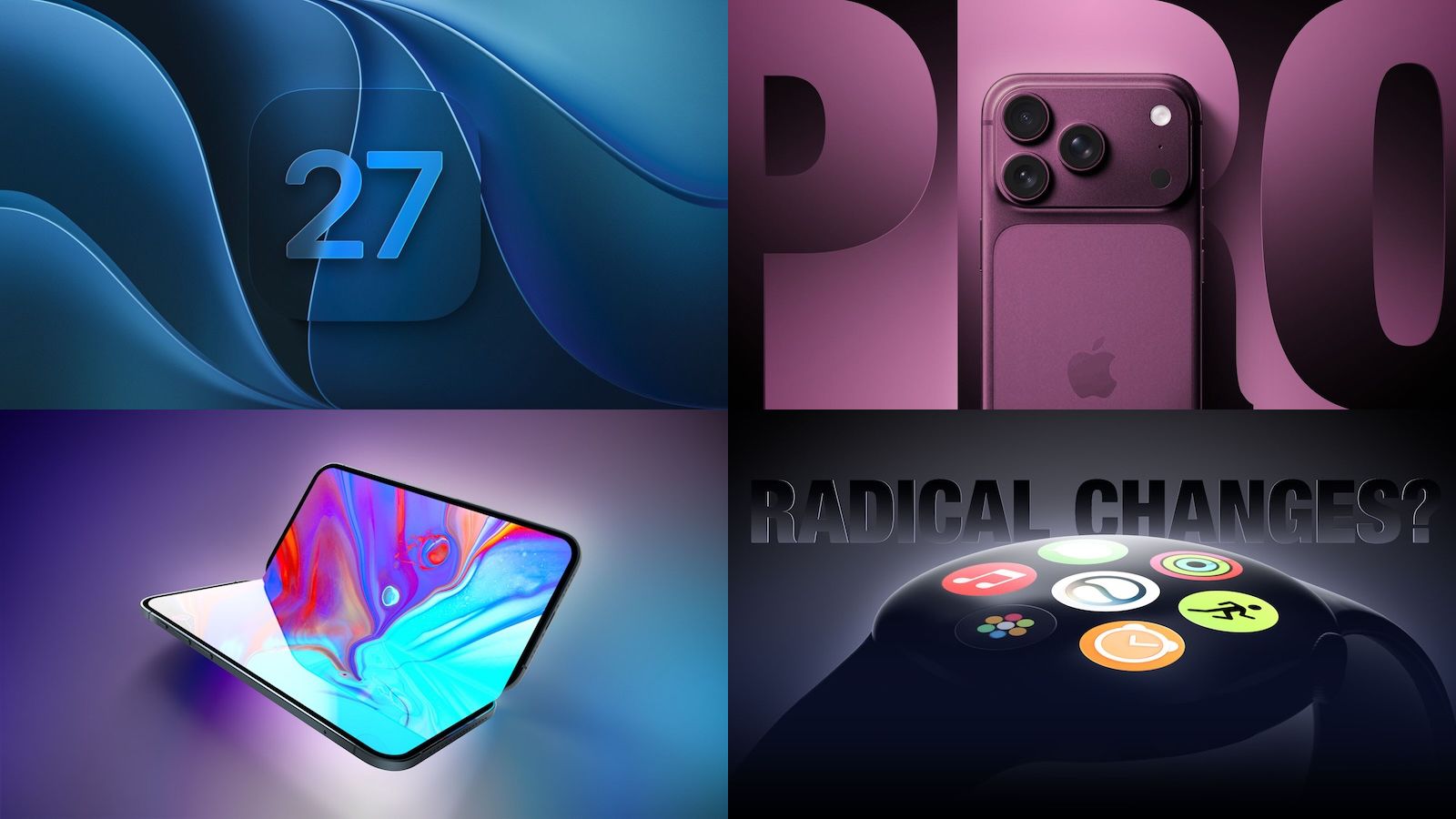
As Apple nears the initial release of #iOS 27 ahead of new iPhone models next month, it is still refining the software and the week’s roundup also highlights several hardware rumors. The iOS 27 beta 5 update changes the look of some app icons, adjusts #LiquidGlass, and adds small usability features. A reported leak claims the iPhone 18 Pro Max battery could be 5,391 mAh, nearly 12% larger than the iPhone 17 Pro Max’s 4,823 mAh, while another note says the iPhone 18 Pro may start at 256GB and an analyst firm estimates manufacturing costs could rise about 38% due to memory price spikes and other increases. Leaker @Ice Universe shared screen protector images suggesting the foldable “iPhone Ultra” may have asymmetric corners, square on the hinge side and rounded on the opposite side, and camera protector accessories may hint at silver and dark blue color options. Separately, @MarkGurman reports Apple is exploring major Apple Watch design changes including a round model and even screenless fitness trackers, possibly bringing back a ceramic case, and he also points to likely October launches for an M6 MacBook Pro and refreshed iMacs.
18. First test flight of largest all-electric aircraft used just $5 of electricity

Heart Aerospace flew the largest battery-electric aircraft yet for nearly 30 minutes while using about $5 worth of electricity, highlighting potential cost and emissions advantages as jet fuel prices rise. The X1 demonstrator flew on August 12 at Plattsburgh International Airport in upstate New York, with four wing-mounted electric motors delivering more than one megawatt of power and supporting a maximum takeoff weight over 25,000 pounds. While #all-electric flight can be quieter and cleaner, Heart Aerospace is not aiming to commercialize an all-electric airliner because current #battery-electric systems typically support only about 100 to 200 miles of range. Instead, X1 and a planned X2 will inform the 30-seat ES-30 #hybrid-electric regional airliner, designed for 125 miles all-electric and up to 500 miles in hybrid mode using inboard electric motors plus turboprop engines that run on jet fuel. Airline backing, including a commitment from @United Airlines for 100 aircraft and investments or support from Air Canada and Mesa Air Group, ties the milestone to Heart’s plan to test the pre-production ES-30 starting in 2028 and seek certification for commercial service by 2031 amid higher jet fuel costs linked to disruptions from the US-Israeli war against Iran.
 A study reports that the #AstroRad radiation-shielding vest tested on NASA’s #ArtemisI flight could substantially lower lunar astronauts’ exposure during severe #solar particle events. Evidence comes from measurements taken by two female manikins, #Zohar and #Helga, flown in the #Orion capsule in 2022, with Zohar wearing the 57-pound vest made by @StemRad and @LockheedMartin while Helga flew without it, both packed with radiation sensors. Although Artemis I saw no major solar outbursts, the team used the recorded data, including passages through the inner #Van Allen belt, to simulate extreme storms like those in 1972 and 1989, estimating dose reductions of about 60% and nearly 40% respectively, equivalent to avoiding roughly 193 and 131 days of deep-space radiation exposure. The analysis frames radiation as a major obstacle to longer lunar stays and suggests a wearable shield could protect vulnerable organs, particularly for women who are believed to be more susceptible to radiation-induced cancer. The results support considering such garments for future, longer-duration moon missions and potential moon-base scenarios where crews may need protection beyond their shelters.
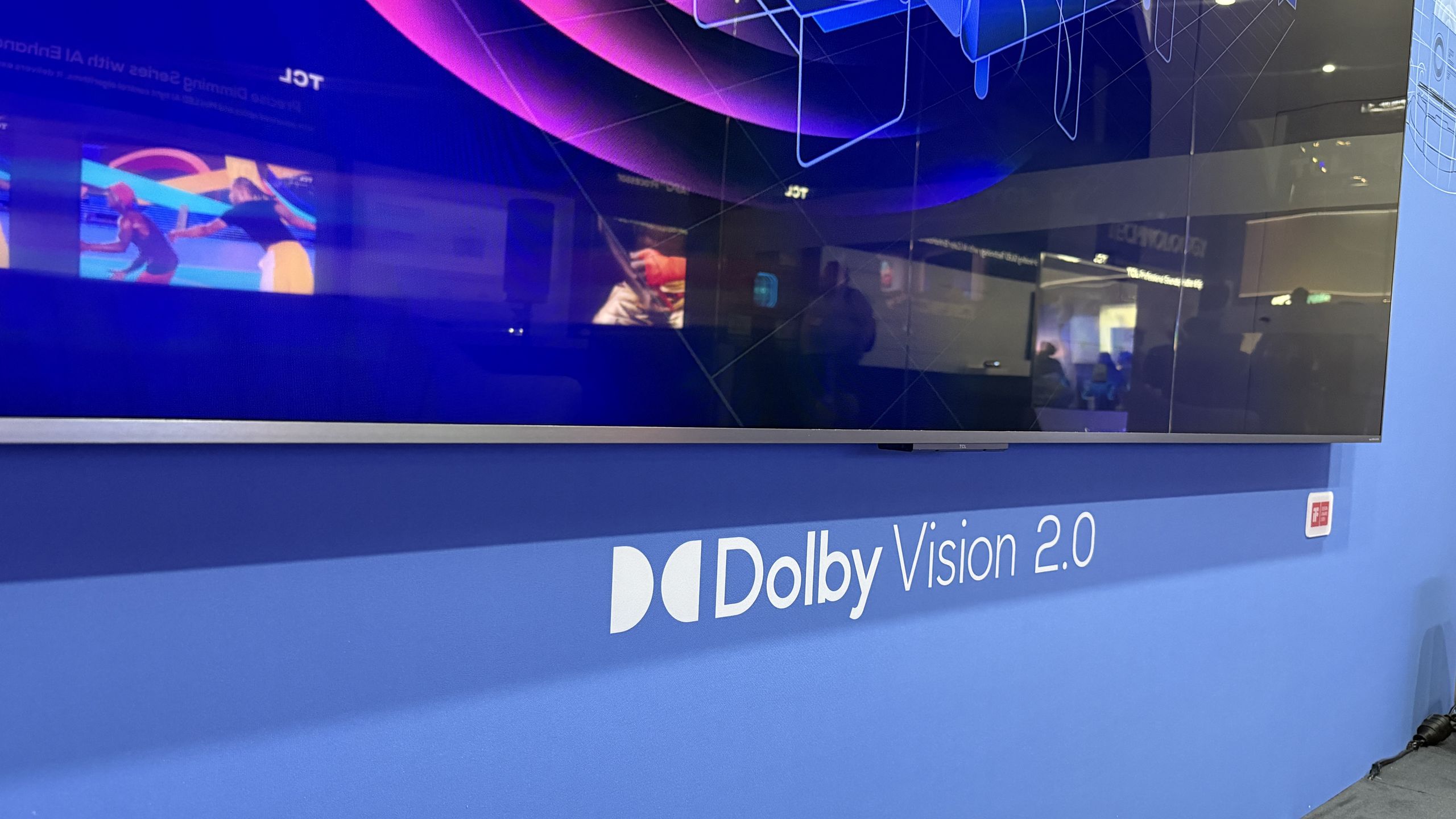
@Dolby says its next-gen #HDR format #DolbyVision2 is being split into two versions so it can reach both premium and budget TVs, with standard Dolby Vision 2 priced to make adoption viable for lower-cost sets that previously skipped Dolby Vision 1 due to licensing costs. According to @ChrisTurkstra and @JonasKlittmark, #DolbyVision2Max is intended to replace #DolbyVision1 in higher-end models and is already arriving on its first TVs this month, while standard Dolby Vision 2 is simpler, less demanding, and supported by more chips expected to help bring it to likely 2027 TV models. Turkstra argues that for manufacturers, licensing Dolby Vision 2 is a cheaper way to improve picture quality than upgrading panels or backlighting, and cites demos comparing two $300 TVs showing Dolby Vision 2 delivering better accuracy and more visible detail than Dolby Vision 1. The rationale is that premium TVs can use the full feature set enabled by brighter hardware and wider color gamut, but mainstream TVs can still gain meaningful benefits, so Dolby tailored the technology and cost structure accordingly. Overall, the article frames the lower-cost Dolby Vision 2 tier as a value-focused path to better picture quality on budget TVs while Dolby Vision 2 Max targets the premium segment as the Dolby Vision 1 successor.
21. Tungsten may be key to safe and efficient fusion reactors
Tungsten offers a promising solution for the inner wall material in #fusion reactors, which face extreme heat and neutron flux during operation. Researchers have found that tungsten’s high melting point, strength, and resistance to neutron damage make it well-suited to withstand the harsh conditions inside a fusion reactor. Experiments demonstrate tungsten can maintain structural integrity and limit plasma contamination better than alternatives like steel or carbon composites. This advance addresses a critical challenge in making fusion reactors safe and efficient for sustainable energy production. The findings highlight tungsten’s potential to enable practical and durable fusion power systems.
22. Helios Targets 80-Hectare Data Center Campus in Finnish Lapinlahti
Helios Nordic Energy Finland Oy is pursuing a large #data center campus in the Alapitkä area of Lapinlahti, Finland, covering more than 80 hectares and located next to Fingrid Oyj’s Alapitkä substation. According to Data Center Dynamics, the site could potentially support up to 500MW, and Helios has submitted a zoning initiative that Lapinlahti’s municipal board is expected to consider in late August 2026, with construction possibly beginning in 2027. The project remains early-stage, with no disclosed capex, tenant, firm schedule, or committed IT-load, and the 500MW figure is described as indicative site potential rather than an announced operating capacity or binding grid allocation. The municipality has also referenced Helios planning a nearby solar project, previously described in 2024 as an initial roughly 170-hectare area intended to connect via the same substation, but this is presented as geographic context rather than confirmation of the data center’s power supply. Separately, April 2026 municipal minutes name Greensky Data Oy as proposing a different Alapitkä zoning initiative for an approximately 12-hectare, phased #data center project exceeding 100MW, with the public record not confirming whether it is related to or distinct from Helios’s newer 80-hectare plan.
25. ChatGPT lost 22 points of web share in a year
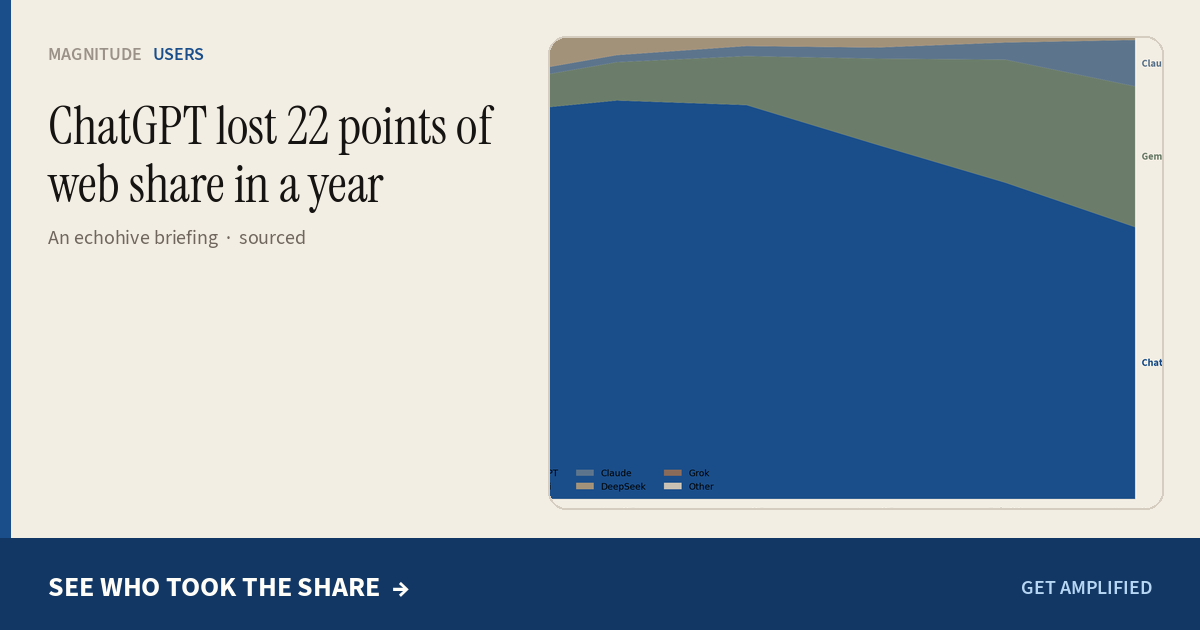
Worldwide #AI-chatbot web-visit share shifted substantially over the past year, with @ChatGPT falling from 76% to 54% while @Gemini rose from 6% to 28% and @Claude increased from 1% to 9%. The figures represent Similarweb worldwide web-visit share across desktop and mobile web, and they are not measures of monthly users or revenue. The latest comparable stacked snapshot cited is May 2026, reported as the most recent comparable print as of 12 Aug 2026, based on Momentic data derived from Similarweb. The note adds that @Gemini can have about 28% web share while also having 1B app MAU because much of its usage occurs in-app on Android. These changes indicate that web traffic share has redistributed away from @ChatGPT toward @Gemini and @Claude within the measured period, specifically for web visits rather than app usage.

@Nvidia made 6x #Multi-Frame Generation exclusive to RTX 50-series cards, but an open-source workaround can enable higher MFG modes on older RTX GPUs like the author’s RTX 4070 Ti Super. The tool, DLSS Enabler 4.5.0.0 by @Artur Graniszewski, unlocks MFG in compatible #DirectX12 games via DLL swapping and #Streamline integration, and this version specifically adds 5x and 6x MFG plus a new #Hybrid MFG mode. Hybrid MFG keeps @Nvidia’s native #DLSS Frame Generation for the middle frame while DLSS Enabler fills additional frames by routing much of the pipeline through a modified #AMD #FSR3 path, avoiding the expected tradeoff of losing native DLSSG to reach 6x output. In practice, the “simple DLL injection” can require troubleshooting because 5x and 6x only work when the game already includes the correct Nvidia Streamline files, with the mod requiring official Streamline 2.11.x or newer. Overall, the piece argues that community tools can bypass feature segmentation and bring advanced frame generation options to RTX 40-series owners in supported setups.
28. Webb telescope ‘fix’ will change the way we see moons and planets

A ground-sent software update will help the @James Webb Space Telescope take clearer images of bright solar system targets like planets and moons, which have been an Achilles’ heel for the observatory. Webb is designed to detect extremely faint infrared light from the early universe, but nearby bright objects can saturate its sensors, forcing astronomers to use dark filters and other workarounds that can discard useful information. The new readout method, called #superstripe, is intended to let Webb safely photograph objects 100 or more times brighter than it could handle before by scanning a target in thin, rapid slices instead of taking a single long readout. This approach reduces overexposure and motion blur from fast-changing features like clouds, storms, or auroras, then software stitches the slices into a sharper final image, addressing issues seen in early, blurry Jupiter test images. Although Webb was not built primarily for solar system work, the upgrade supports astronomers’ efforts to use its capabilities to study nearby worlds more effectively.
29. UK and Ireland booksellers suspect AI companies of bulk orders for data acquisition
Booksellers in the UK and Ireland have raised concerns about AI companies making bulk purchases of books to collect extensive data. Sellers have noticed unusual order patterns and speculate that these purchases aim to feed algorithms for developing #artificialintelligence products. This behavior disrupts the traditional book market and raises questions about the ethics of data acquisition in the AI industry. Industry experts warn that such bulk buying could affect supply for regular customers and harm smaller booksellers financially. The issue highlights the growing tensions between AI developers’ data needs and the sustainability of local bookselling businesses.
30. The Government is Monitoring Anti-Flock TikTok and Instagram Accounts
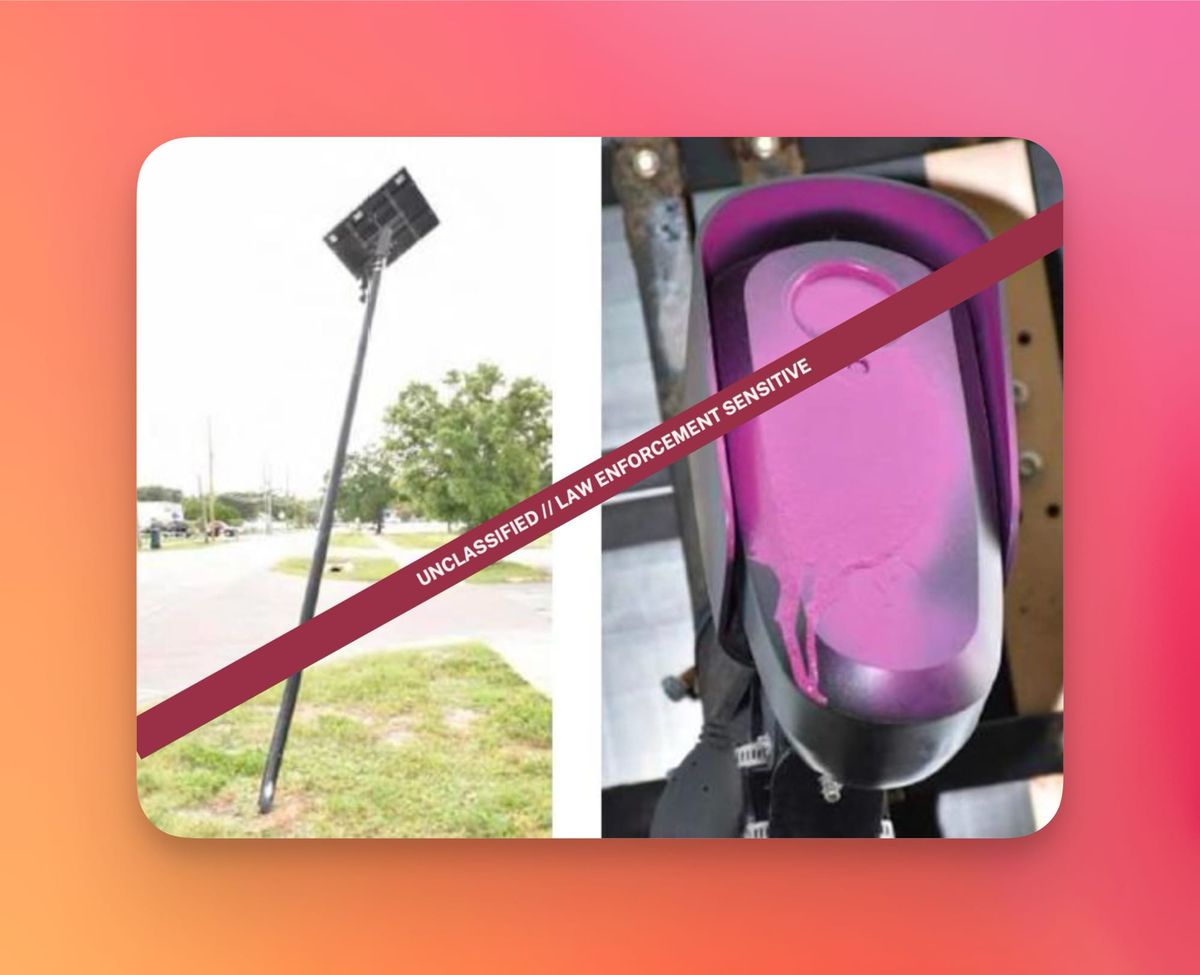
Government #fusioncenters are monitoring anti-#Flock activity on TikTok, Instagram, and other platforms and warning police about potential threats to #ALPR cameras as the #DeFlock movement grows, according to intelligence bulletins obtained via public records requests. The briefings urge agencies to increase patrols around camera locations, track upcoming DeFlock events including a “National Week of Action Against Automated License Plate Readers,” and note posts and videos that discuss or depict vandalism, plus tools that could help locate cameras. One Colorado bulletin highlights an Instagram account, Nomark.Project, posting daily videos of disabling Flock cameras and says online support may be encouraging copycats, while also mentioning neo-Nazi accelerationists discussing sabotage but with no indication they actually targeted cameras. Another bulletin cites “extensive and ongoing chatter” about destroying or disrupting Flock LPRs and describes a June 25, 2026 traffic stop where University of South Florida police found a device allegedly used to identify Flock camera locations and linked the driver to DeFlock and software to scan for vulnerabilities in internet-connected devices. Overall, the documents depict law enforcement trying to connect political opposition to mass surveillance with physical attacks on camera infrastructure, treating both as part of the same threat picture.
32. Marvel unveils first ‘VisionQuest’ trailer

@Marvel Studios unveiled the first trailer for Disney+ series VisionQuest at D23 in Anaheim, highlighting @Paul Bettany’s return as Vision and framing the show as a strange #AI existential crisis. The footage shows Vision living in hiding and wrestling with identity and purpose after being resurrected in WandaVision, while seeking answers by talking with AIs derived from his own programming: FRIDAY (Orla Bradley), DUM-E (Henry Lewis), JARVIS (James D’Arcy), and Ultron (@James Spader). Ultron appears largely in human form and is unwelcome among the other Tony Stark-created AIs, a tension tied to his near-destruction of humanity in Avengers: Age of Ultron. @Kevin Feige says the series is the final entry in his “Wanda trilogy,” after WandaVision and Agatha All Along, and it is expected to be Marvel’s last live-action Disney+ series for the foreseeable future amid a reported pullback from television that has included the cancellation of Wonder Man. VisionQuest premieres on Disney+ on Oct. 14.
33. Microsoft is scrapping the =COPILOT function from Excel after only a year since its release
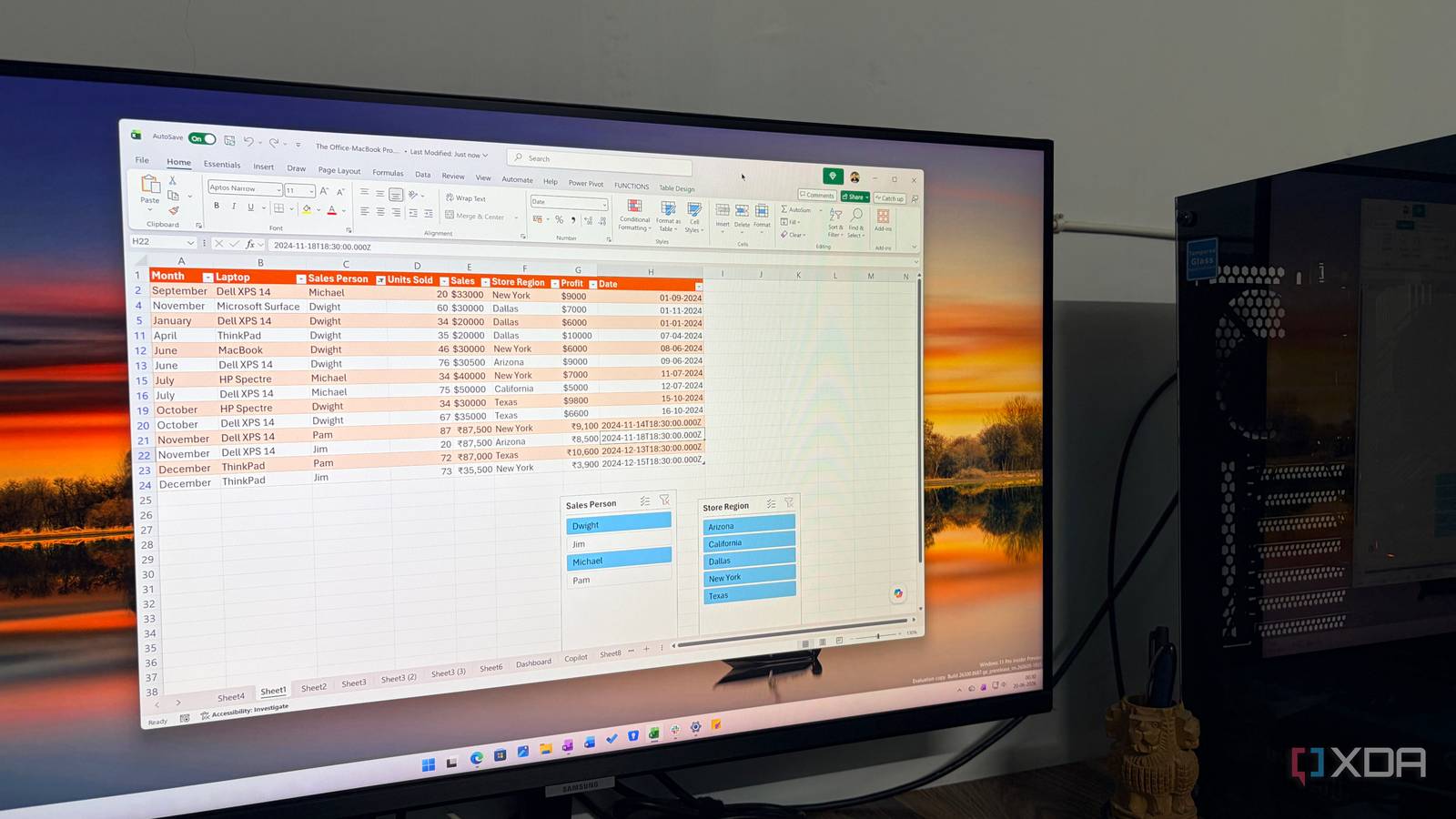
Microsoft is removing the #=COPILOT function from @Microsoft Excel, ending the formula-style way to invoke Copilot about a year after it was introduced. In a Microsoft 365 Message Center notice (“MC1454373”), Microsoft says the preview feature, offered via the Insider and Frontier programs, will stop being available on September 14, 2026, and any #=COPILOT calls will no longer work after that date. Users can still access the same kinds of AI help through the Copilot side pane, including summarizing text, classifying data, generating content, and retrieving information from the web, and can still ask for help building functions in plain English. The stated rationale is to streamline the Copilot experience by unifying AI capabilities into a single, supported interface within Excel. In effect, Microsoft is consolidating Excel’s AI features into the Copilot sidebar rather than maintaining a separate worksheet function.
34. Apple has a huge product roadmap for the smart home: Here’s what’s coming – 9to5Mac

Apple is expected to refresh its smart home lineup soon, with new hardware timed around the arrival of #SiriAI and more on device #AppleIntelligence features. Reporting says updated #HomePodMini and #AppleTV4K models could launch later this fall, with HomePod mini moving from S5 to S9 (or better), potentially adding a new wireless chip like N1, new colors, and audio improvements, while Apple TV 4K may jump from A15 Bionic to A17 Pro plus a possible remote redesign. A new smart home hub, often nicknamed “HomePad,” is also in development in two variants (wall mounted screen and speaker base), targeting “between October and early next year,” featuring a 7 inch square display, an A18 chip, and a new operating system called #homeOS for #FaceTime, Siri AI, and smart home control. Bloomberg’s @MarkGurman is cited as saying a full size #HomePod update is in the works, likely to add a newer chip for Siri AI support, though timing is unclear. Further out, Apple is said to be planning first party smart home accessories like a security camera and doorbell, plus a more advanced smart display with a robotic arm and a larger 9 inch display, extending the roadmap beyond late 2026 into early 2027.
35. Saber CEO Apologizes To Lead Writer Replaced With ChatGPT

Saber Interactive CEO Matt Karch privately apologized to former Rideshare “Simulator” lead writer Stella Sacco after a public dispute over the game’s use of #AI, including claims she was replaced with #ChatGPT. Sacco said Karch emailed her an “unreserved” apology for how he spoke about her in the press, and while she is unsure what “making it right” would mean, she accepted the apology and believes her account has been borne out. The controversy began after the game’s trailer, when Sacco alleged Saber had replaced her with AI without disclosing it on Steam, followed by an initial company denial and then Karch’s snarky response referencing @Claude and dismissing her with “Stella who?” Saber later updated the Steam page with an AI disclaimer stating that much of the game’s voice overs, music, and non-campaign mission dialogue is generated, as Karch’s remarks began to overshadow the game itself. Sacco framed the apology as meaningful and hoped it would be her last public statement on the matter, closing a week of backpedals and escalating comments about #generativeAI in the project.
37. Brazil orders Discord to suspend livestreaming after teen suicide

Brazil’s National Data Protection Authority ordered Discord to suspend its Go Live #livestreaming feature while authorities investigate whether the platform failed to protect minors from content encouraging #self-harm and suicide. The order follows the death of a 13-year-old girl who authorities say was encouraged to harm herself during a roughly 45-minute Discord livestream in July, with five teenagers arrested, and police also stopping another broadcast where a girl was preparing to die by suicide. The ANPD said it found “robust evidence” that Discord did not take reasonable steps to protect children and teens from harmful content and argued Discord’s setup, including adding #end-to-end encryption to Go Live in March, limits real-time detection and leaves moderation reliant on automated systems and user reports, with safeguards often acting only after harm occurred. The regulator said Discord is not being blocked in Brazil, only Go Live is affected, and the suspension stays until Discord demonstrates effective risk controls and has three business days to implement the shutdown nationwide. Discord said it is reviewing the order, disputed the regulator’s characterization of its safety practices, and called the suspension premature while seeking continued dialogue with Brazilian policymakers.
38. Remote workers report the highest well-being in study of 7,700 employees

A study of 7,704 employees at a large healthcare organization found fully remote workers reported the highest #well-being, hybrid workers were next, and fully onsite workers reported the lowest. Survey responses showed little evidence that remote employees felt less connected to colleagues or workplace culture, and remote workers were slightly more likely to describe the culture with words tied to teamwork, inclusion, and support. Co-author @Stefanie Johnson argues the results support letting employees choose remote work rather than imposing #return-to-office mandates, noting that leaders often make decisions not grounded in data. The researchers also linked higher well-being to lower turnover one year later, with work location not strongly predicting turnover directly, instead remote work related to higher well-being that in turn related to staying. Johnson adds that face-to-face time can still help relationship-building, especially early in careers, suggesting some benefit to occasional in-person interaction even as remote work shows strong well-being outcomes.
39. Scientists Create AI Skin Patch That Acts Like an Instant Personal Doctor
Researchers at the University of Chicago Pritzker School of Molecular Engineering created a skin-like #AI computing patch that processes health data directly on the body, delivering results in milliseconds without sending data to external servers. They argue this on-device analysis can avoid delays that matter in emergencies such as detecting ventricular fibrillation, unlike many conventional wearables that collect signals but offload analysis. Built and tested with Argonne National Laboratory, the patch relies on manufacturing methods that print #organic electrochemical transistors onto flexible surfaces to enable a stretchable #neuromorphic computing circuit. These transistors combine electrical currents with ion movement in a gel electrolyte, and the electrolyte’s ability to retain information gives each device memory-like behavior similar to brain synapses. The work extends @Sihong Wang’s group’s prior efforts on stretchable electronics toward smarter wearable and implantable systems intended to function like an instantaneous personal doctor integrated into the device.
That’s all for today’s digest for 2026/08/16! We picked, and processed 39 Articles. Stay tuned for tomorrow’s collection of insights and discoveries.
Thanks, Patricia Zougheib and Dr Badawi, for curating the links
See you in the next one! 🚀
