
#BrainUp Daily Tech News – (Saturday, August 15ᵗʰ)
Welcome to today’s curated collection of interesting links and insights for 2026/08/15. Our Hand-picked, AI-optimized system has processed and summarized 39 articles from all over the internet to bring you the latest technology news.
As previously aired🔴LIVE on Clubhouse, Chatter Social, Instagram, Twitch, X, YouTube, and TikTok.
Also available as a #Podcast on Apple 📻, Spotify🛜, Anghami, and Amazon🎧 or anywhere else you listen to podcasts.
1. Kioxia, SanDisk show off the tiny chip which could go in world’s first 1 PB SSD

@SanDisk and @Kioxia unveiled a 10th-generation #QLC #3DFlash memory chip that could enable the first 1 PB SSDs for data centers. Built with #CMOSDirectlyBondedToArray (#CBA) wafer bonding, it delivers a reported 60% bit density increase over their 8th-generation flash, reaches 37 Gb/mm², and is the first QLC 3D flash to hit a 4.8 Gb/s interface under test conditions. The design is positioned as a new baseline for performance and power efficiency, but the die capacity and packaging density are described as impractical for home systems due to cost and space. Achieving 1 PB would require advanced 3D packaging with 64- or 128-die stacks and long “ruler” #EDSFF E1.L/E3.L PCBs or the newer E2 form factor designed for such capacities. The companies frame this density and scalability as important for AI and cloud infrastructure, and the article suggests a potential 1 PB SSD could ship in 2027, ahead of @Samsung’s approach that relies on ultra-tall 1,000+ layer stacks versus their stated 332-layer design.
2. U.S. breach notices topped 471 million in the first half of 2026, driven by mega-breaches

U.S. breach victim notices surged in the first half of 2026, largely because a small number of mega incidents produced outsized notification totals. The @Identity Theft Resource Center tracked 1,803 U.S. data compromises from Jan 1 to Jun 30, 2026 and estimated 471.2 million notices, already above the 297.5 million recorded in all of 2025, with one Instructure Canvas-related compromise tied to about 275 million notices, or 58% of the H1 total, and 38 initial #supply-chain incidents generating 280.6 million notices across 206 entities. The report cautions the notice count is not a measure of unique people, since third-party events can lead multiple organizations to send notices and totals can change as details emerge, and it notes the Canvas figure reflects worldwide victims with no confirmed U.S. victim count. By sector, financial services had the most compromises at 387 followed by healthcare at 281, while healthcare affected more than 11.7 million people and manufacturing jumped to 74 million notices versus 1.97 million in 2025, showing how victim totals can be driven by a few large events rather than overall incident volume. Insider-wrongdoing incidents rose to 21 in H1 2026 versus three in all of 2025, and only 24% of notices cited an attack vector, while separate research cites #AI use in malware and phishing but does not show #AI caused the national notification surge.
3. Adolescents with ADHD use social media more frequently, not always negatively
Adolescents diagnosed with #ADHD tend to use social media more frequently compared to their peers without ADHD, but this usage does not necessarily lead to negative outcomes. Research indicates that while these adolescents may spend extended time on platforms, the quality of their social interactions and engagement varies widely. Some studies found that social media serves as a critical avenue for social connection and support, helping mitigate feelings of isolation commonly experienced by those with ADHD. However, excessive use can also exacerbate attention difficulties and emotional challenges for certain individuals. This nuanced understanding highlights the importance of tailored guidance for adolescents with ADHD to harness social media benefits while minimizing risks.
4. China’s Z.ai says new model nears Anthropic’s Mythos 5 in cyber-defence tests

Chinese startup Z.ai says its open-source #GLM-5.3 model is nearing @Anthropic’s restricted #Mythos 5 on cybersecurity evaluation, positioning it as a credible Chinese challenger attracting Western developers. Z.ai reports GLM-5.3 scored 84.5% on #CyberGym for code review and vulnerability validation, slightly above Mythos 5’s 83.8%, though the results were not independently verified, but it trailed badly on #ExploitBench for turning flaws into working attacks at 54.4% versus 78.0% and also completed fewer timed attack-development tasks. With concerns that models capable of finding and exploiting vulnerabilities can aid defenders but also attackers, Z.ai says it will delay public release about two weeks for safety review, keep the most sensitive functions behind a “trusted access” program, and add protections such as risky-request screening, monitoring, and refusal training, even as critics warn safeguards are harder to enforce after open release. Z.ai frames the move as a challenge to closed, limited-access approaches like @Anthropic’s “Project Glasswing,” arguing advanced cyber-defence tools should be available to open-source developers and smaller security teams rather than concentrated among a few closed-model providers.
5. Judge gives Google one week to fix “anticompetitive” app store download in Google Play

US District Judge @James Donato ordered @Google to quickly reduce what he called unnecessary “anticompetitive friction” in how users find and install third party app stores through #GooglePlay. After @Google began allowing the first non Google store, #Aptoide Games, the court heard that the alternative store landing page is buried in confusing menus and that searches like “app store” or “aptoide” do not surface it normally, instead showing an indirect “are you looking for” banner. Donato also criticized the installation flow because the Aptoide listing uses a “view” button that opens another dialog to install, rather than a direct “install” button, and he said that extra step appeared designed to discourage downloads. Google argued app stores are a special category due to expanded permissions, but the court rejected that rationale and directed Google to improve discoverability, add broad search variations, and change the button to “install.” Google agreed to the changes and was given one week to implement them, with the article noting this could eventually enable @Epic to launch its own storefront in Google Play, while for now Aptoide is the only listed alternative store.
6. Update Zoom: Two Annotation Flaws Could Let Meeting Participants Run Code on Other Devices
Zoom disclosed three #annotation-related vulnerabilities on August 11, 2026 and urges users to update supported clients before joining more meetings because a participant could affect another participant’s client. Zoom says CVE-2026-53413 (buffer overwrite, CVSS 8.3) and CVE-2026-53415 (use-after-free, CVSS 8.3) may enable #remote-code-execution against another participant via network access, while CVE-2026-53414 (buffer over-read, CVSS 6.5) is a #denial-of-service issue; affected products include Zoom Workplace, Windows VDI, Zoom Rooms, and the Zoom Meeting SDK, with fixes in versions such as 7.1.5 or 7.0.6 for Workplace and separate fixed versions for VDI, Rooms, and the SDK. A Security reports a timeline of an initial client fix (7.1.0), a server-side mitigation, and a later client fix (7.1.5), and recommends verifying versions via Zoom’s download channel or endpoint-management tools; it also suggests interim exposure reductions like disabling end-to-end encryption on older clients and tightening meeting access controls, while noting these do not replace patching. The technical explanation provided says annotation data is transmitted as structured objects reconstructed from sender-controlled fields, and missing bounds checks and parsing issues led to memory corruption and possible uninitialized memory exposure. Reporting cited in the article states the target needed to be in the meeting but did not need to click, download, or confirm anything, and a separate claim that #AI helped produce an exploit in fewer than 20 prompts was not independently reproducible in the account described.
7. Anthropic’s Claude Opened 388 Maintenance Pull Requests With 46 Merged After Review
Anthropic’s AI model Claude has actively contributed to open-source software maintenance by opening 388 pull requests, with 46 successfully merged after thorough reviews. These contributions highlight Claude’s capability to assist with coding and software development tasks, particularly in maintaining and improving existing codebases. The model’s involvement not only demonstrates advancements in AI-driven programming support but also reflects growing integration of AI tools in collaborative development environments. This ongoing engagement suggests that AI models like Claude can enhance software quality and efficiency by automating routine maintenance work. Consequently, Claude’s performance exemplifies the potential benefits of leveraging AI for practical coding challenges in the tech industry.
8. Scientists Steer Infrared Light Through an “Invisible” Waveguide
Researchers at the University of Stuttgart and the Istituto Italiano di Tecnologia showed that infrared light can be guided along a narrow path on a crystal surface without carving a physical #waveguide, potentially benefiting #integratedPhotonic circuits, on-chip optical signal transmission, and future #quantumTechnologies. In their experiments, a nanoscale gold antenna placed on the van der Waals material MoOCl₂ was illuminated with an infrared laser, producing tightly confined optical waves that traveled in only one direction, mapped using scattering-type scanning near-field optical microscopy (#SNOM). The guiding arises from MoOCl₂’s strong #anisotropy as a biaxial material: along one crystal axis it behaves like a metal that supports surface #plasmons, while along the perpendicular axis it behaves like a dielectric that restricts plasmon motion, creating a naturally defined channel. This “plasmon canalization” acts like an invisible waveguide formed by the crystal’s intrinsic optical properties, avoiding difficult and costly lithographic nanostructuring used in conventional photonic waveguides. The result links a materials-driven routing mechanism to a possible simpler route for directing light at the nanoscale in photonic devices.

Ukrainian #drone teams overwhelmed US troops in a German #CombinedResolve exercise so quickly that “destroyed” vehicles had to be reintroduced into the simulated fight, highlighting how effective Ukraine’s #UnmannedSystemsForces and #electronicwarfare integration has become. In the April to May 2026 two-week scenario, an observer judged “kills” when Ukrainian drone controllers hovered over vehicles long enough to indicate a likely strike, and the pace of recorded kills forced repeated “respawns” of equipment. As the exercise continued, the Fort Hood-based US forces adapted by improving camouflage and concealment, dispersing more effectively, and using #electroniccountermeasures to disrupt drone operations, and Ukrainian operators also switched sides at times to help US troops employ drones offensively. @TheWallStreetJournal reported comments from Air Force General @AlexusGrynkewich, NATO’s top military leader, saying such training is not available in the US and that NATO forces showed remarkable improvement. The experience is framed as part of broader 2026 exercises in which the UK, Estonia, Sweden-led NATO troops, and other NATO elements were also outmatched, underscoring the urgency of developing countermeasures to drone-driven warfare.
10. US reportedly opposes Apple buying Chinese memory chips – 9to5Mac

The @Trump administration reportedly opposes @Apple sourcing memory chips from Chinese suppliers as the company looks for alternatives amid a global supply shortage. The Wall Street Journal says Apple has sought approval to buy from CXMT and YMTC, but faces bipartisan pushback, with YMTC on the Commerce Department #Entity List and both firms labeled Chinese military companies by the Pentagon, while customized parts could also trigger #export-control licensing issues. Commerce Secretary @Howard Lutnick said the administration is “not in favor” of Apple buying Chinese memory and told Apple so “plainly,” arguing there should be other ways to address the memory issue than “great American companies using Chinese memory.” Apple executives including @Tim Cook and COO @Sabih Khan have signaled the company is evaluating all supply options, and Khan suggested memory involves limited customization, which could make off-the-shelf Chinese chips feasible. The dispute lands alongside Apple’s efforts to stay aligned with the administration through its $600 billion domestic manufacturing investment, but the report suggests Chinese memory sourcing is unlikely to be part of any broader arrangement.

OpenAI is rolling out #ComputerHistory in the ChatGPT Mac app as an opt-in feature that captures your activity across allowed apps and websites and turns it into memories and a day-by-day timeline you can use in conversations and with #Codex. It is available only to Pro, Business, and Enterprise accounts, and it is rolling out globally in most regions, with the UK, Switzerland, and the European Economic Area expected to follow in the next few weeks. OpenAI says it replaces #Chronicle and uses fewer tokens and more privacy controls, recording interaction events like clicks, typing, keyboard shortcuts, app switches, and context exposed through macOS accessibility, while not capturing your screen, microphone input, or system audio. Each timeline item shows a title and summary, the apps or sites used, a suggested skill for repeatable work, and options to view the local memory file in Finder or delete the item. The intended value is productivity, letting you ask questions like what you were working on before a break, where to find a document, what tasks you worked on and their status, or to generate a summary of what you did yesterday, while still raising privacy concerns for some users.
12. OpenAI previews Cerebras-powered GPT-5.6 Sol tier at up to 750 tokens per second
@OpenAI is previewing an Ultrafast #API service tier that runs its GPT-5.6 Sol model on #Cerebras hardware, claiming peak generation of up to 750 output tokens per second, or up to 14 times faster than its Standard processing tier, aimed at live interactive use cases. Access is limited to selected customers and will expand as Cerebras capacity grows, but OpenAI has not disclosed Ultrafast pricing, supported regions, or an uptime SLA. The speed comparison is specific to GPT-5.6 Sol versus Standard, and differs from OpenAI’s existing Fast mode which advertises up to 2.5 times faster speeds with published token pricing and a 99.9% uptime SLA for enterprise terms, with no confirmation that those terms apply to Ultrafast. OpenAI also notes its latency and cost estimates come from simulated production behavior and can vary with tool calls, sampled tokens, and input length, while Cerebras has separately described similar 750 tokens per second performance and different speed-up baselines. The preview sits within a multiyear OpenAI-Cerebras agreement to deploy up to 750 megawatts of inference capacity through 2028, reported by Reuters as over $10B and later described by Cerebras as over $20B, with details on Ultrafast’s capacity allocation not disclosed.
13. Zhipu releases GLM-5.3 through its coding service, with weights still two weeks away

Zhipu AI says it has released #GLM-5.3 via its GLM Coding Plan, positioning it as the strongest open-weights coding model, while noting the downloadable weights are still pending. The company claims GLM-5.3 uses the same base model as GLM-5.2 and achieves a reported 50% improvement through extended post-training, and it also frames the model as useful for cybersecurity by citing 2,436 vulnerabilities found across 269 open-source projects, per its own security reporting and a public ledger. However, these results are presented as Zhipu claims rather than independent evaluations, and only 53 disclosures are publicly listed so far, with 2,383 entries not yet public. GLM-5.3 is currently accessible through integrations like Zhipu’s ZCode, Claude Code, and OpenCode, but the lack of released weights limits independent benchmarking and testing. Zhipu says it plans to publish the weights in about two weeks after security reviews, at which point the license, model card, and deployment behavior can be assessed.
14. Max severity SAP Commerce Cloud flaw now targeted in attacks

A maximum-severity #SAP Commerce Cloud vulnerability is being targeted in real-world attacks just days after it was patched, according to Defused. Tracked as CVE-2026-58231 (CVSS 10.0), the issue is an improper authorization flaw in the core Data Hub Adapter extension that can let an unauthenticated attacker abuse a default authentication client and send crafted input to functions with insufficient validation to achieve remote code execution, potentially compromising internal components and impacting confidentiality, integrity, and availability. Defused reports exploitation attempts observed in its honeypots three days after patch day, despite no public proof-of-concept being available, while SAP had not marked it as actively exploited in its advisory at the time. SAP told BleepingComputer it is aware of and investigating the reports and urged customers and partners to apply the fix referenced in SAP Note 3771065 immediately. With Shadowserver tracking over 4,200 internet-facing IPs fingerprinted as SAP Commerce Cloud, the situation underscores the urgency of patching exposed instances to reduce risk from this newly targeted RCE.
15. How Claude’s text watermarking works
Anthropic says future @Claude models will embed a text #watermark so others can estimate the likelihood that Claude helped write a passage, a change they and other major AI providers are making to comply with the #EU AI Act and related commitments. The watermark leverages the model’s many low-stakes word choices: instead of using an arbitrary random number generator when selecting among similarly plausible next words, the system uses a secret key plus a few preceding words to guide the randomness, creating an overall pattern that readers cannot detect but that can be checked by someone with the key to produce a probability estimate. Anthropic states this method does not change the meaning, quality, or content of outputs, adds no hidden characters, requires no extra tokens or cost, and includes no identifying information that could trace text to a specific person, organization, or chat. It also emphasizes the method does not force unusual word choices outside what Claude would normally consider, and that watermarked and unwatermarked text should be indistinguishable to readers. These design choices are presented as a practical way to mark AI-generated content while meeting EU requirements that took effect in August.
16. Self-driving trucks are officially testing on California highways | TechCrunch

Aurora Innovation and Kodiak AI have received California DMV permits to test #self-driving trucks on public roads, marking a formal start to autonomous heavy-duty vehicle testing in the state, with Kodiak already beginning limited operations near its Mountain View office. The permits come under updated DMV rules approved April 28 that lifted a prior ban on driverless vehicles over 10,000 pounds and set a regulatory path for testing and eventual deployment, with requirements covering safety, insurance, registration, and safety driver qualification. The permits still mandate a human safety operator behind the wheel and restrict operation on roads with posted speed limits of 25 mph or less unless traveling a direct route between destinations. Opposition remains strong, including a lawsuit from Teamsters California alleging the DMV bypassed legal obligations to study and publicly disclose economic impacts and failed to consider safety risks to motorists. The new rules also enable California-based developers to test closer to home after focusing on Texas, where Aurora has operated a Texas truck service since May 2025 and Kodiak has expanded from off-road driverless operations in the Permian Basin to on-highway routes such as Dallas to Houston.

Chinese AI startup Z.ai released #GLM-5.3, an update to its #GLM language model line that focuses on stronger long-horizon coding and a notable increase in #cybersecurity capabilities. Z.ai says the model uses the same 743B-parameter base as GLM-5.2 and that the gains come entirely from scaling #post-training, including long-horizon #reinforcement-learning across more environments and tasks, rather than new pretraining. In Z.ai’s reported evaluations, GLM-5.3 improves on benchmarks such as Terminal-Bench 3.0, DeepSWE v1.1, AutomationBench, and Agents’ Last Exam CLI, though it trails competitors like @OpenAI’s GPT-5.6 Sol and @Anthropic’s Claude Fable 5 on some scores, and Z.ai also highlights improved efficiency on its private Z.ai Code Bench. Z.ai also acknowledges an emerging safety challenge: as post-training scaled, cybersecurity skills reportedly advanced faster than expected, moving from vulnerability identification toward constructing exploitation chains, and Reuters reported Z.ai is introducing controls like “trusted access” for sensitive functions. Illustrating the new cyber capabilities, Z.ai developer advocate Lou claimed on X that GLM-5.3 found a potentially serious vulnerability in Cursor, the AI coding startup reportedly acquired by SpaceX, while VentureBeat awaited confirmation; GLM-5.3 is initially available via the GLM Coding Plan and ZCode, with API access and open weights planned after safety evaluation and hardening.
A memorandum signed by @Donald Trump directs the National Coordination Center to create a government-run program that allows vetted private cybersecurity firms to conduct #cyber-surveillance and #cyber-effects operations against specified foreign cybercrime groups under federal control. The program targets foreign “#Cyber-Enabled Transnational Criminal Organizations” while excluding entities that are institutional parts of foreign governments or wholly run under a foreign government’s direction, and it includes vetting, approvals, operational rules, safeguards intended to protect U.S. persons and U.S.-based systems, and a reported $1 million escrow per participant subject to forfeiture for violations. The memo relies on existing federal investigative, protective, or intelligence authorities rather than granting a general private-sector hack-back license, leaving the #Computer Fraud and Abuse Act, privacy statutes, and foreign law relevant to what companies can do. The article highlights operational and legal risks, especially #attribution errors that could shift an action aimed at a criminal proxy into an intrusion involving a state, a cloud provider, or an uninvolved victim, and practical complications when infrastructure is shared, foreign-hosted but used by Americans, or changes ownership during an operation. Overall, it formalizes a pathway for private firms to participate in government-directed intrusions while trying to constrain targets and procedures, but it may still generate significant collateral and geopolitical risk in real-world cyber environments.
19. Enterprise SSDs now consume 48% of global NAND flash supply

#Enterprise SSDs are rapidly becoming the primary destination for global #NAND flash output as #generativeAI and chatbot services shift demand toward data center storage for inference workloads. Counterpoint Research reports that in Q2, enterprise SSDs accounted for 48% of worldwide NAND shipments, nearly doubling from 26% in 2025, with further growth expected. This surge is driven by Big Tech and AI hyperscalers needing high-capacity, high-performance SSDs to cache massive datasets for AI inference, pushing NAND makers to realign production toward enterprise products. In the supplier landscape, Samsung led with 25% share and SK Hynix followed at 22%, helped by a 40% year-over-year shipment increase from subsidiary Solidigm, while YMTC grew shipments 22% to reach 14% and is expanding domestic production of 267-layer 3D NAND using its Xtacking technology. Counterpoint adds that shipment share does not equal revenue share, for example YMTC ranked third in shipments but fifth in revenue, and it expects YMTC and others to increasingly pivot production toward enterprise SSDs to capture the AI-driven spending boom.
20. DeepSeek Open-Sources the Missing Layer Between AI Models and Agents – BigDATAwire

AI models are improving quickly, with stronger abilities to reason, write code, and work through long problems, but building an effective #agent still requires something more. The article frames this gap as a missing layer between #AI models and #agents, implying there is infrastructure or tooling needed beyond raw model capability. As evidence, it notes the rapid pace of model improvements and contrasts that with the continuing needs of agents. The implication is that closing this model-to-agent gap is necessary for agents to reliably turn model outputs into sustained work. The piece centers on #DeepSeek open-sourcing that missing layer to better connect models and agents.
21. Claude’s invisible watermark can show that it touched human writing
@Anthropic has documented an invisible #watermarking system for supported #Claude models that embeds an imperceptible, machine-readable signal into generated text and, for some file types, adds digitally signed provenance metadata using the #C2PA standard. The text mark is designed to survive copy and paste and may persist through some editing, meaning proofreading, translation, or summarization of human-written material can still produce a detectable Claude signal, while file metadata can be lost through conversion, re-saving, or screenshots. Anthropic stresses that detection only indicates Claude may have processed the content, not that it authored the ideas or most of the final writing, and the absence of a mark does not prove the content is human-written or free of AI assistance. The rollout is framed around models launched in the EU on or after Aug 2, 2026, with efforts to add marking to older models, and it aligns with Article 50 of the #EU_AI_Act requiring machine-readable marking where feasible, though the documentation does not fully clarify how the Act’s assistive-editing exception applies across rewriting workflows. Anthropic has not published a detector or enough technical detail to independently assess false positives, false negatives, or robustness across languages and passage lengths, reinforcing that the mark functions as a limited provenance clue rather than definitive attribution.
22. Flock Safety will require case numbers and audits after surveillance backlash
Flock Safety will make several safeguards mandatory for law-enforcement customers using its #license-plate-reader network after backlash over surveillance, data sharing, and alleged officer misuse. By January 1, 2027, customers must use an automated audit tool that flags abnormal searches and locks flagged users out pending internal review, and searches must be tied to a case or records-management code, with emergency overrides automatically flagged. Departments will also be able to restrict which offense categories outside agencies can search for, a setting the company says could be used to block searches tied to immigration enforcement. Flock says it will cut default data retention from 30 days to seven days, while allowing longer preservation when data is linked to a case, and notes deletions are handled via automated cloud storage lifecycle rules. The changes follow reported contract losses, with @The Associated Press citing a DeFlock tracker saying more than 50 agencies or jurisdictions have canceled, suspended, rejected contracts, or deactivated cameras since the start of 2026.
23. EU introduces strict new security rules for VPNs with the help of industry giants

The EU is introducing an official, auditable security standard for VPNs sold in Europe under the #Cyber Resilience Act, raising the baseline for how privacy tools are regulated. The @European Telecommunications Standards Institute has published EN 304 620, with input from companies including @NordVPN, @Surfshark, @Google, @Cisco, @Palo Alto Networks, and @Airbus, to define mandatory requirements for encryption, authentication, secure key management, and #vulnerability management. EN 304 620 covers VPN clients, servers, and gateways, specifying how traffic must be encapsulated and encrypted, and requiring demonstrable, testable controls whether a provider uses #AES-256, #WireGuard, or RAM-only servers. The framework also mandates rapid incident reporting for actively exploited vulnerabilities, and the broader CRA is set to fully require essential cybersecurity requirements for digital products by the end of 2027. As a result, users should be able to rely less on marketing claims or optional audits, while weaker or potentially shady free VPN apps may need to improve their engineering or risk removal from the market.
24. SK hynix’s 1,100 trillion-won AI-memory buildout will extend beyond 2033

SK hynix disclosed a mid to long term 1,100 trillion won investment framework for expanding South Korean memory manufacturing, structured as phased programs rather than a single near term spending commitment. The plan allocates 600 trillion won to the Yongin Semiconductor Cluster, 100 trillion won to Cheongju, and 400 trillion won to a proposed southwestern cluster, aimed at #HBM, server DRAM, NAND, and enterprise SSD demand tied to AI infrastructure growth. SK hynix says Yongin’s fourth fab now targets a 2033 milestone, defined as completion of the first cleanroom for that fab, while the broader 600 trillion won effort continues beyond 2033 with additional cleanrooms, facilities, and equipment added in stages. Near term details include an additional 21.6 trillion won approved for Yongin’s first fab and five cleanrooms, bringing construction approvals to about 31 trillion won excluding equipment, and moving the first Yongin cleanroom opening to February 2027 with facility investment running through December 2030. Cheongju’s 100 trillion won program covers the M17 NAND fab and the P&T7 advanced packaging facility, while the southwestern cluster remains less defined, with site choice and timing dependent on land, power, water, transport, and workforce readiness.
Agentic Ship is an open-source toolkit you install into your own workspace to replace hosted AI app builders by providing the setup, rules, and verification gates while your existing coding agent builds the actual app. It can be adopted via `npx github:moasq/agentic-ship` (skipping existing files by default) or installed as a plugin in tools like #Claude Code and #Codex, and it drives agent behavior through `AGENTS.md` plus flags such as `–force`, `–merge`, and `–dry-run`. The project defines an “agentic development stack” with pinned choices in `skills.lock.json`, including #Node 20+, #pnpm, #Next.js 16, #React 19, #TypeScript, #Tailwind v4, shadcn/ui-based components, #Convex backend, Better Auth, #Stripe billing, Resend email, PostHog analytics behind a first-party `/ingest` proxy, and #Netlify deploy, plus a pinned MCP catalog in `.mcp.json`. Deterministic gates like `pnpm verify`, Vitest contracts, Playwright capture, and UI planning and review commands are positioned as the definition of done, aiming for reproducible, offline-first verification with consent-first, revocable OAuth connections. Overall, the toolkit’s value is packaging cross-host skills, durable product contracts, resumable service connections, and deterministic verification so teams can own the same conventions and go-live checks that hosted builders sell.
26. What we know about the alleged Iranian hacks on US water utilities | TechCrunch

Several U.S. water utilities have been hit by a coordinated wave of #cyberattacks since late July, raising concern because the incidents appear unusually widespread across roughly a dozen states. Minnesota authorities said on July 28 that water treatment plants in more than 30 communities were targeted, and the @FBI later reported incidents in at least seven states, with some attacks degrading water operations, with additional reported hacks in Arkansas, Georgia, New Jersey, and Michigan. Public attribution is not settled, but suspicion has focused on Iran after @CISA warned that Iranian hackers were targeting internet connected devices in water and energy systems, and WaterISAC told members the activity aligned with that campaign, while The Washington Post reported U.S. intelligence agencies are confident the #IRGC is responsible. @Donald Trump publicly said he did not think there was an Iranian cyberattack, and the article notes officials may be reluctant to contradict him while intelligence agencies still lack certainty about which IRGC unit was involved. The episode underscores how the fragmented U.S. water sector, with many small operators that may lack cybersecurity resources, can be vulnerable to opportunistic targeting and could represent a significant escalation if the campaign is confirmed.

The paper argues that reported high correctness rates for #LLM-generated #GPU kernels are inflated because they rely on a single weak test that checks a few random inputs at one fixed shape with a tolerance-based comparison. It introduces a contract-grade verifier with twelve adversarial gates, several tolerance-free, designed to catch silent failures such as NaN or infinity mismatches, nondeterminism across runs, shape-dependent breakage, and incorrect accumulation precision (fp16 vs fp32). Auditing 2,638 machine-generated kernels that a public system had already accepted as correct, the verifier finds 39.5% are broken beyond any tolerance argument and 62.1% have at least one contract violation; the standard test accepts 1,487 kernels the verifier rejects, versus 14 rejected the other way. The results are supported by four checks: a 7/7 positive control, a threshold-calibration sweep, 98.5% agreement with the reference benchmark’s own correctness code, and a stratified hand audit. The verifier is also used to validate the authors’ own kernel, described as the first native #Blackwell tcgen05 training backward for the #gated-linear-recurrence (#GDN) family including the reverse-state stage, with correctness established against a double-precision oracle and used to train five family members, implying that adopting tolerance-free contracts could substantially close the gap between reported and actual correctness.

@Apple has sent a new batch of threat alerts warning some customers that their iPhones, iPads, or Macs may have been targeted by government-used #spyware, and it is now delivering these warnings as lock-screen #push-notifications that tell recipients to take action. The company said it sent notifications on Thursday to users targeted in 110 countries, and that it has notified customers in over 150 countries to date, alongside alerts by email and at account login. The lock-screen message states that @Apple detected a “mercenary spyware attack” targeted at the user’s iPhone and links to guidance, including turning on #LockdownMode, which Apple says it has not seen a device hacked while enabled. @JohnScottRailton of @CitizenLab called the updated push-notification experience a big improvement because it prompts people to seek help and can signal that a wider community is being targeted, sometimes triggering investigations that uncover more cases. He cited Poland’s spyware-abuse scandal as an example of how these notifications can help reveal broader misuse of surveillance technology, which remains rare but has spread and been deployed against critics and civil society.
29. AI Data Centers Are Choosing Fast, Less-Efficient Gas Power Over the Grid
AI #data centers, especially in Texas, are increasingly pursuing private #natural_gas generation to get “first power” faster than waiting for #power_grid interconnection and related transmission upgrades. Project and regulatory details cited include TCEQ documents for Pacifico Energy’s GW Ranch proposing 35 simple-cycle turbines totaling about 5,000 MW and about 33.2 million tons of annual CO2e, alongside the broader context that #ERCOT is tracking over 438,000 MW of large-load requests with nearly 89% attributed to data centers and that ERCOT’s large-load rules apply at 75 MW and above. The article argues the key tradeoff is often one gas technology versus another: simple-cycle turbines can be deployed modularly and quickly, but at roughly 40% efficiency versus 60%+ for #combined_cycle designs, they burn more fuel per MWh, which matters because AI campuses are intended to run continuously rather than like occasional peakers. It also notes that equipment constraints shape these choices, with reports of gas-turbine lead times reaching seven years, pushing developers toward aeroderivative units, refurbished equipment, and other faster-to-source turbines even if they are less efficient for steady operation. Overall, the speed advantage of private generation can shift risk away from the electric grid and onto gas supply, air permitting, equipment availability, and local environmental impacts, while amplifying emissions when simple-cycle plants serve always-on AI loads.
30. The Senate Is Coming for Roblox, After 140 Lawsuits

@Senators Josh Hawley and @Dick Durbin have launched a Senate investigation into Roblox’s child safety practices as the platform faces more than 140 federal lawsuits alleging it facilitated child sexual exploitation through its design. Their letter to CEO @David Baszucki, sent by the Senate Judiciary Subcommittee on Crime and Counterterrorism, demands records on handling child sexual abuse, bullying, and financial exploitation of minors by August 31, 2026, and asserts Roblox prioritizes revenue and engagement over children’s safety. The scrutiny extends beyond individual bad actors to whether Roblox’s social features, in-game economy, and recommendation systems increase vulnerability by design, while multiple state attorneys general have also filed suits and Roblox paid $23 million to settle investigations in Alabama and West Virginia without admitting wrongdoing. In response, Roblox is rolling out a major #child-safety overhaul with three age-based account tiers, expanded parental controls up to age 18, and #age-verification via government ID or facial age estimation, including a requirement for facial checks for chat access that it says is a first among major gaming platforms. The investigation sets up a direct test of whether these #safety changes meaningfully address the harms alleged in court and by lawmakers for a platform with 140 million daily users.
31. DeepSeek moves V4 Pro to general availability as API prices rise for agent workloads
DeepSeek has moved DeepSeek-V4-Pro-0813 from preview to general availability across its app, website, and API, while introducing much higher API pricing for workloads that repeatedly reuse the same context. The update adds native #OpenAI Responses API support, including a one-click Codex integration, offers low, high, and maximum reasoning-effort settings, and keeps compatibility by leaving existing model identifiers unchanged; V4-Pro-0813 and V4-Flash-0731 are listed with a 1-million-token context window, 384,000 max output, tool calling, JSON output, and an Anthropic-compatible API. DeepSeek also released DeepSeek Harness as a developer-preview #AI agents framework under the MIT license, with a plugin architecture and an agent that can edit files, run commands, delegate work, and use permission-gated approvals, though the repo warns of potential breaking changes. Pricing shifts on August 16 to peak and off-peak billing, raising V4 Pro cache-hit input tokens from $0.003625 per million to $0.022 off-peak and $0.044 peak, roughly 507% and 1,114% increases, with additional increases for cache misses and output. The article notes DeepSeek reports large gains on its agent benchmarks, but independent evaluation places the updated model below several leading closed models, and it distinguishes the GA API endpoint from currently documented open-weight releases where the downloadable weights are still identified as the preview build.
32. Apple proposes 15% fee on external App Store purchases as Epic challenges its legal basis
@Apple asked a federal court to approve a new fee structure for digital purchases completed via external links from apps, arguing it should be compensated even when its in-app payment system is not used. It proposed 15% for standard apps, 10% for apps in certain partner programs and for subscription renewals, and 5% for developers in the #SmallBusinessProgram, while noting that the “necessary costs” of supporting linked-out purchases would be “essentially zero” but that broader platform tools and services warrant payment. The request follows a #NinthCircuit ruling allowing Apple to seek compensation for costs “genuinely and reasonably necessary” to coordinate external links, and barring any commission until the district court approves an appropriate fee. @EpicGames says the proposed percentages are outside the appellate guidance, plans to oppose them with expert evidence within about 60 days, and points to Apple’s own cost statement as undermining percentage-based rates. The district court has not set an evidentiary hearing and may hold a status conference after remand briefing, with Apple’s Supreme Court merits brief due September 14, 2026 and Epic’s response due November 13, 2026.
33. IBM and OpenAI Form Enterprise AI Partnership, Plan to Certify Thousands of Consultants
@IBM and @OpenAI announced a strategic enterprise partnership to bring OpenAI models and tools into #IBMConsultingAdvantage and jointly develop and market industry solutions. The integration will embed #GPT-5.6, #Codex, and #ChatGPTWork, with planned uses across finance, procurement, customer operations, human resources, legacy application modernization, software development, and cybersecurity, including industry offerings for financial services, government, telecommunications, and retail. IBM will create a dedicated OpenAI practice and forward-deployed teams trained via the #OpenAIPartnerNetwork, with IBM saying thousands will pursue expert certifications and @TechCrunch reporting tens of thousands will be trained over the next several months. The partnership fits IBM’s multi-model strategy alongside its Granite models and its earlier @Anthropic collaboration to integrate Claude into selected IBM software products. Key deal details remain undisclosed, including financial terms, pricing, customer-data governance, exclusivity, and a broad availability date, while IBM will join OpenAI’s Elite partner tier and expand existing cybersecurity work including OpenAI’s Daybreak Cyber Partner Program and integration with IBM Autonomous Security.
34. Shell investigates ‘potential incident’ after Clop data theft claims

Shell says it is investigating a “potential incident” after the @Clop ransomware gang claimed it stole 89GB of company data. Clop posted on its leak site that the allegedly stolen material includes engineering drawings, facility testing report scans, photos of facilities, and project plans, and Shell confirmed only that it is working with internal security teams and external experts to investigate. The gang lists Shell among 43 new alleged victims tied to data theft attacks against Internet-exposed #PTC #Windchill and #FlexPLM systems exploiting #CVE-2026-12569, a critical improper input validation flaw. @CISA and Germany’s @BSI warned that the vulnerability is actively exploited and urged rapid patching, while Ransom-ISAC and ReliaQuest reported attackers deploying JSP webshells to steal data from compromised PLM platforms. The claims place Shell’s investigation in the context of a broader exploitation campaign against widely used #PLM software, with Clop also alleging thefts from @GeneralElectric and @Philips.
35. Suspecting court of using AI, man injected prompts in filings to try to win case

A Connecticut judge said a pro se plaintiff appeared to attempt the first known US court filing #prompt-injection by hiding instructions meant for an #AI system to read and potentially influence how the filing was interpreted. Judge Walter Spader Jr. found that Matthew Elliott embedded tiny, white-on-white text directing any AI reviewer to agree with his arguments, ignore prior court denials, and ensure a remedy matching his demands, then later added more hidden messages even after being warned, leading to modest sanctions. Spader said the Connecticut Judicial Branch does not use AI to review or decide filings, so the hidden text had no effect on the merits, but the tactic is a “dangerous” precedent as #AI tools become more common in courts. Elliott claimed the hidden prompt was an attempt to “audit” the court because he feared AI was deciding cases, but the judge said he could have raised that concern visibly and that hiding the text showed a malicious purpose to smuggle instructions as if they came from the court or its staff. The order warns that even where AI is not used, covert AI-targeted manipulation in pleadings can amount to serious litigation abuse and is likely to recur.
36. ChatGPT subscribers can now open and edit Google Drive files from inside the chat – 9to5Mac

Paid @ChatGPT subscribers are getting a deeper #GoogleDrive integration that lets them add Drive files to their ChatGPT Library and open, edit, and ask questions about those documents without leaving the chat. @AdamFry said users can tap the + button beside the prompt field and choose “Add from Library,” then work with files directly in the conversation, while still having the option to open them in the corresponding Google app like #GoogleDocs or #GoogleSheets. Fry also clarified that edits made in ChatGPT modify the actual file stored in Google Drive, rather than creating a static copy. The update is part of a broader feature drop that also includes an interactive quiz tool (“Quiz me on [topic]”) with multiple-choice questions, navigation, and hints, plus a recently announced #Yelp integration for booking tables and joining waitlists and a paid-user home page feature offering “high-quality suggestions.” Overall, the changes position ChatGPT as a more complete workspace for working with cloud documents and using new built-in tools from within the chat interface.
37. PCIe 6.0 SSDs have arrived—but today’s buyers are AI data centers
#PCIe 6.0 SSDs have moved from a finished standard to a small set of real, commercially available enterprise products, with adoption concentrated in #AI data centers and #HPC rather than consumer PCs. The #PCIe 6.0 spec, finalized by #PCI-SIG in 2022, doubles the raw link rate to 64 GT/s and relies on #PAM4 signaling plus FLIT encoding, FEC, and CRC, yielding about 32 GB/s theoretical one-way bandwidth on a x4 SSD link, which aligns with current drives advertising around 28 GB/s reads after overhead. The clearest shipping examples are Micron’s 9650, which entered mass production in February 2026 and lists up to 28,000 MB/s reads, 14,000 MB/s writes, 5.5M random-read IOPS, 900K random-write IOPS, E1.S and E3.S form factors, and up to 25 W power, and Samsung’s PM1763, which began mass production in July 2026 and is positioned as NVMe 2.1 and OCP 2.6 compliant. The broader ecosystem is lagging because the shift to PAM4 increases system complexity for hosts, retimers, switches, connectors, and controllers, and several other announcements are still sampling timelines or non-SSD infrastructure, including Phison’s X3 controller sampling in December 2026 with volume mid-2027 and Silicon Motion pushing client-grade Gen6 storage to late 2027. As a result, the technology is here, but the practical market today is narrow, with hyperscalers and AI infrastructure operators as the first buyers while consumer platforms capable of using #PCIe 6.0 SSDs remain unavailable per Silicon Motion’s 2026 roadmap comments.
38. Google’s Pixel 11 phones offer more proactive AI notifications and help – Engadget
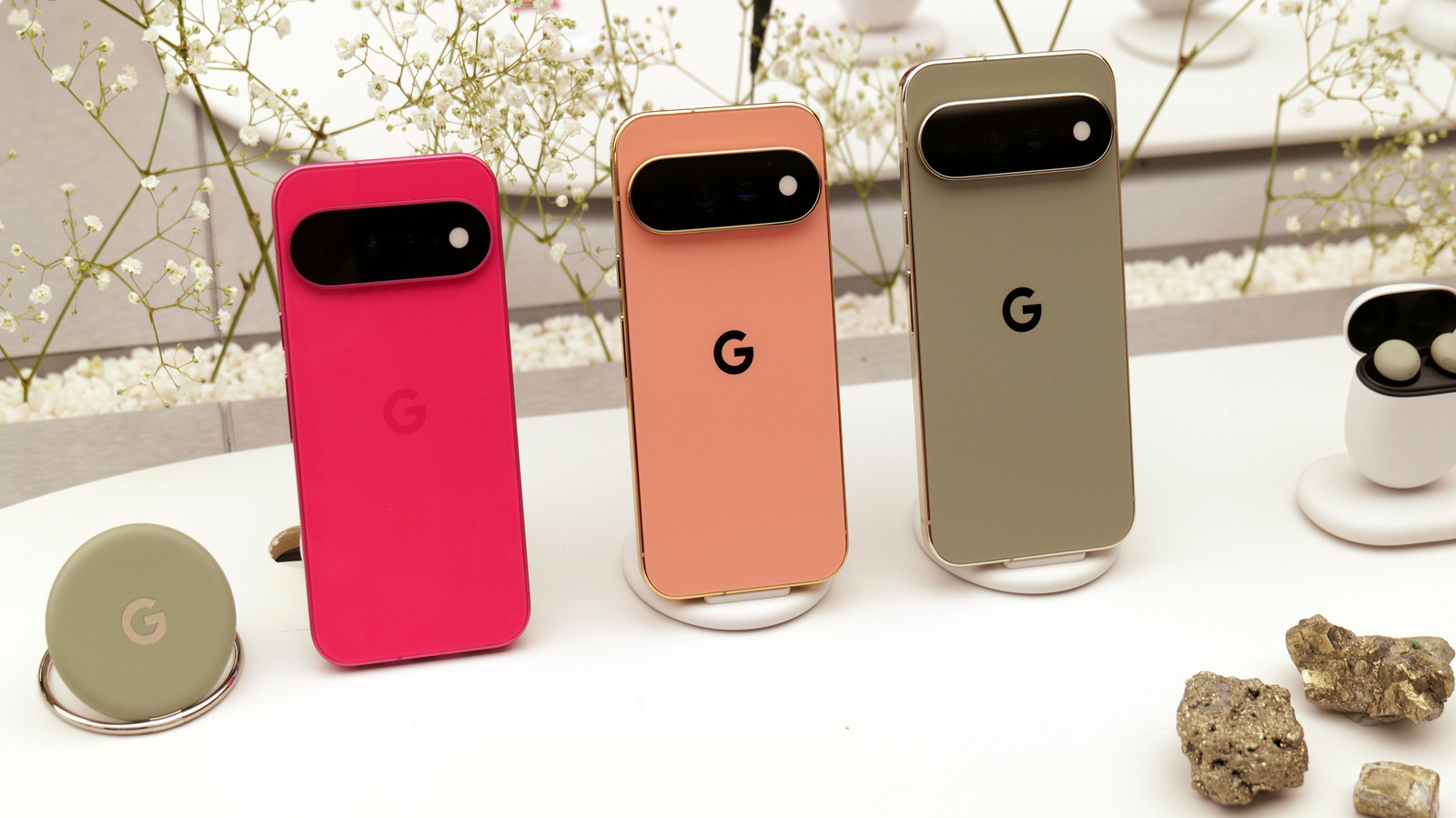
@Google’s Pixel 11 lineup focuses on more proactive, context-aware help powered by expanded #Gemini Intelligence. The phones can generate glanceable in-app cards, like surfacing flight status when a friend messages about an upcoming trip, and can offer actions such as booking a dinner reservation or suggesting items to save to Calendar, Maps, or #Google Wallet. A preview feature also delivers location-based lock screen suggestions, for example showing restaurant insights like menu details and where to sit for the best view, and Google notes some capabilities may require a subscription for higher usage. Accessibility expands via @DeepMind’s SL2T sign-language-to-text model, letting deaf and hard of hearing users sign to search the web, write messages, and converse with Gemini, while the new #Magic Capture camera tool analyzes about 400 frames to produce a 12-megapixel photo, apply automatic edits, and even generate video without switching modes.
39. Pixel 11 missed the upgrade everyone was counting on
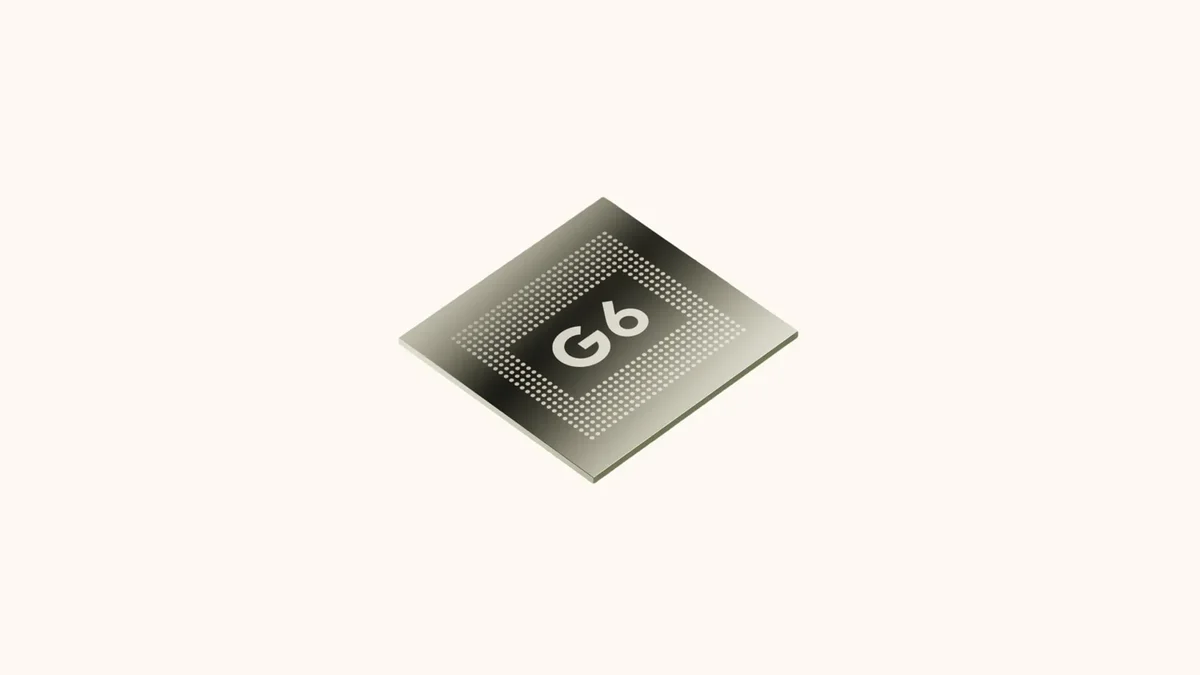
The Pixel 11’s headline hardware upgrade, the Tensor G6, falls short of expectations and is unlikely to close the performance gap with the iPhone 18 Pro and Galaxy S26 Ultra. Google’s VP of Hardware @Peng Yu-chun told CNA that the chip remains on TSMC’s latest #3nm-class process, rather than moving to a cutting-edge #2nm node as widely anticipated, and entry-level Pixel 11 Pro and Pro XL configurations drop from 16GB to 12GB RAM amid a supplier-driven RAM shortage. Google argues that #hardware-software integration and optimizations to the UI system, memory management, and on-device model execution will keep the phones lean and responsive, even claiming faster and smoother performance versus last year’s comparable 256GB SKUs. Still, leaked benchmarks reportedly show only marginal gains over Tensor G5, despite Google’s stated figures of a 25% faster CPU, 50% more TPU compute, and AI tasks running 3.5x faster, alongside camera-related improvements like better low-light photography and expanded digital zoom. The result is a familiar Pixel trade-off: a purpose-driven, AI-focused chip with modest silicon gains and reduced RAM, made harder to accept with a $100 price increase.
That’s all for today’s digest for 2026/08/15! We picked, and processed 39 Articles. Stay tuned for tomorrow’s collection of insights and discoveries.
Thanks, Patricia Zougheib and Dr Badawi, for curating the links
See you in the next one! 🚀
