
#BrainUp Daily Tech News – (Monday, August 10ᵗʰ)
Welcome to today’s curated collection of interesting links and insights for 2026/08/10. Our Hand-picked, AI-optimized system has processed and summarized 38 articles from all over the internet to bring you the latest technology news.
As previously aired🔴LIVE on Clubhouse, Chatter Social, Instagram, Twitch, X, YouTube, and TikTok.
Also available as a #Podcast on Apple 📻, Spotify🛜, Anghami, and Amazon🎧 or anywhere else you listen to podcasts.
1. Anthropic is turning Claude Code’s auto mode on by default | TechCrunch

@Anthropic will make #ClaudeCode #AutoMode the default for Pro, Max, and Team accounts starting August 14, reducing the need for step by step human approvals. In auto mode, the tool proceeds without prompting unless an action is deemed “irreversible, destructive, or aimed outside your environment.” The company says internal testing found auto mode safer than manual review: among 1,053 paid testers, auto mode flagged 89% of harmful actions while human review caught 13.6%, and users approved 97% of permission prompts during manual review. Claude Code head @BorisCherny said his team has used auto mode exclusively for months and would not want to return to permission prompts. @Anthropic also highlighted added safety measures such as prompt injection screening and customizable hard deny rules intended to prevent issues like data exfiltration as it shifts more control to automated operation.
2. World’s leading AI companies are struggling for investment as hype fades
The world’s top AI companies are experiencing a significant slowdown in investment as the initial hype around #artificialintelligence diminishes. Despite earlier massive funding surges, investors are becoming more cautious, focusing on profitability and real-world applications rather than speculative potential. This shift has led to challenging fundraising environments for firms that had previously benefited from the AI boom, prompting layoffs and strategic reassessments. For example, startups in the AI space are now reevaluating their business models and growth projections to meet more stringent investor expectations. This trend reflects a broader market correction that emphasizes sustainable development over rapid expansion in the AI industry.

@Jill Lepore argues that an emerging #artificial state, or #governmentByMachines, is replacing liberal democratic nation-states as private tech corporations take on core functions of government without public consent. In her upcoming book “The Rise and Fall of the Artificial State” and in a conversation on TechCrunch’s Equity podcast, she describes this shift as a return to tyranny and mystification through rule by #algorithms, corporations, and machines, distinguishing her critique of corporate usurpation from opposition to technology itself. She says the transition began as largely accidental, often justified by efficiency, speed, and cost, but has become more deliberate over the last 20 to 25 years, reinforced by prominent tech entrepreneurs who openly want to displace the nation-state. Lepore also contends that Silicon Valley leaders, especially @Elon Musk, are steering toward futures drawn from misread science fiction and comic books, sometimes embracing narratives that conflict with their stated political beliefs. She links these concerns to cultural and political touchpoints discussed in the episode, including Apple’s “1984” ad, skepticism about calling Twitter a digital town hall, and debate around a data center backlash.
A VPN company has developed a method to block Microsoft’s hidden tracking tool on Windows, which collects telemetry and user data. This approach effectively stops tracking but causes some important cloud services to malfunction, presenting a trade-off between privacy and functionality. The VPN firm’s solution addresses growing concerns about user data privacy tied to Windows telemetry, highlighting the challenges in balancing security with seamless service performance. Consequently, users must decide whether enhanced privacy justifies the potential disruption to cloud service usability. This development underscores ongoing tensions between digital privacy measures and integrated cloud ecosystems.
A Kansas town halted public comments regarding a proposed gigawatt-scale AI data center after officials received death threats, transitioning instead to virtual meetings to discuss the project. The shift was prompted by heightened tensions and controversy surrounding the plan, notably following the arrest of a physics teacher who was detained for applauding at a public hearing on the data center. This move indicates the challenges local governments face in managing public discourse on large AI infrastructure projects, especially amid safety concerns and polarized opinions. The controversy highlights the intersection of community safety, public engagement, and the rapid expansion of #AI and data center facilities. The town’s decision to move discussions online reflects efforts to balance transparent governance with protecting participants from potential harm.
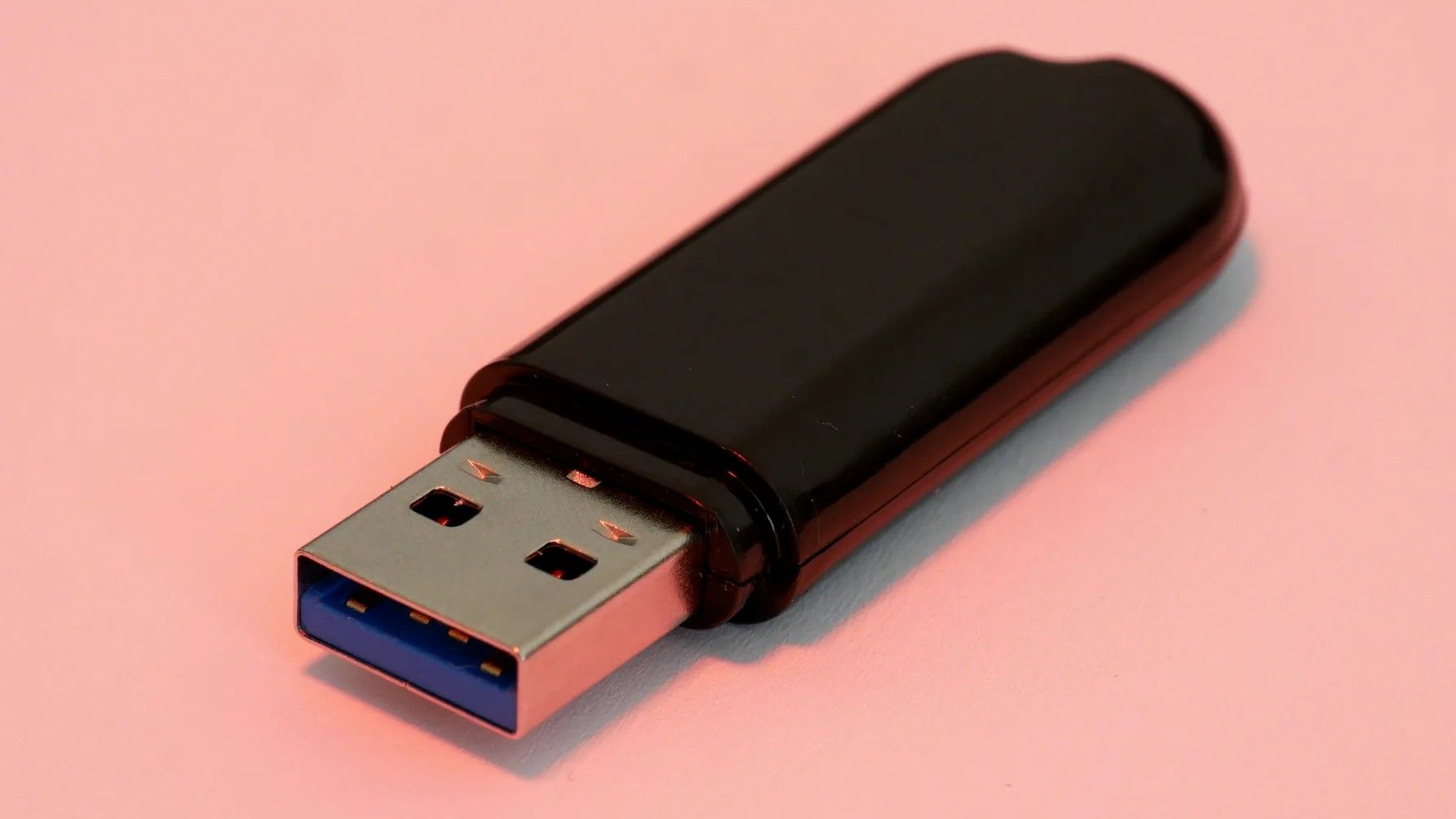
Rootkit Labs’ open-source Phantom Drive is a stealth USB storage device that appears as a normal 8GB drive but can reveal a hidden, #AES-256-encrypted partition after an unlock action. It is built around a CH569 microcontroller using its USB3, SD/eMMC, and AES hardware blocks, and relies on a user-supplied microSD card for both the decoy and secret partitions because there are no onboard NAND chips. The custom firmware intercepts USB traffic and watches for an unlock.txt file containing a string like “password:xyz”, copies the password to SRAM, and overwrites the actual write data with zeros so the OS believes the file was created while nothing meaningful is stored. It derives the unlock key by salting the password with the microcontroller’s unique hardware ID and running #PBKDF2-HMAC-SHA-256 for 100,000 iterations (optionally 600,000), adding a deliberate 2 to 3 second delay to hinder brute-force attempts, and binding the secret to the device so the SD card cannot be unlocked in another Phantom Drive. The design also keeps the hidden area inaccessible via a standard microSD slot and allows recompiling firmware to spoof USB vendor IDs so it can masquerade as common drives, with Linux-based C tools available.
7. US flock planned to turn 350,000 tons of plastic waste into ‘valuable’ products
A US initiative aims to convert 350,000 tons of plastic waste annually into valuable products, addressing the plastic pollution crisis. The project includes advanced recycling technologies and partnerships with industry leaders to transform waste into usable materials such as fuels and chemicals. This approach demonstrates the potential economic and environmental benefits of recycling plastic at scale while reducing landfill dependence. By turning plastic waste into resources, the initiative supports sustainability and helps mitigate climate change impacts. This effort enhances the circular economy by promoting efficient resource management and innovation.
8. Reading the Room Perfectly, Donald Trump Becomes Greatest Defender of Data Centers
Data centers have become broadly unpopular across the US, with critics citing their large land footprint, air and noise pollution, higher electricity prices, and minimal #job creation, leading to protests and bipartisan calls for moratoriums. Despite this, @Donald Trump has strongly defended data centers, calling them “tremendously important” for the economy, praising their scale, and arguing they could be “bigger than oil” while framing them as vital to keeping the US ahead of #China. He pointed to Texas as an example, criticizing opposition even as @Greg Abbott paused new approvals amid concerns about the state’s power grid. The article argues that data centers’ benefits are uncertain, alleging they enrich a small group while failing to deliver local economic booms and contributing to rising #greenhouse gas emissions, including through gas-burning backup generators in Texas. Trump also claimed personal credit for the US #AI boom, saying that restricting data centers would mean restricting AI and asserting that US leadership in AI is “because of me.”
9. Apple tests risky component as iPhone 18 Pro draws closer

@Apple is reportedly testing #DRAM from Chinese supplier @ChangXin Memory Technologies (CXMT) in iPhones and MacBooks to address tightening memory supply as chipmakers prioritize AI data centers, a squeeze that could push device prices higher. According to @The Wall Street Journal, Apple is considering CXMT parts mainly for China-bound products, but faces U.S. regulatory constraints that bar ordering specialized chips requiring shared specifications, potentially forcing reliance on off-the-shelf components and iPhone redesigns. Using non-customized CXMT memory would also limit performance optimization, and CXMT is said to lag rivals due to restricted access to advanced chipmaking equipment, while U.S. officials have warned against Chinese chips over trade-secret concerns. The move would not help the iPhone 18 Pro or iPhone Ultra because development is too far along and CXMT capacity is booked for the rest of the year, and the chips are not necessarily cheaper than @Micron, @SK Hynix, or @Samsung. Even so, Apple is exploring CXMT, and previously YMTC, to secure long-term availability for future models like standard iPhone 18 variants, while increasing dependence on China despite U.S. scrutiny of both firms.
SynapsCLI is a command-line interface tool designed to streamline user interaction with complex systems by providing efficient command execution and enhanced usability. It features an intuitive syntax and supports automation through scripting, which aids developers and system administrators in managing tasks more effectively. The tool’s modular architecture allows for extensibility and integration with various platforms, increasing its flexibility for diverse use cases. SynapsCLI emphasizes ease of installation and cross-platform compatibility, making it accessible for multiple operating environments. This utility thus simplifies operational workflows while maintaining high customization, benefiting professionals in managing technical processes.
11. Texas could host Samsung’s first floating data center
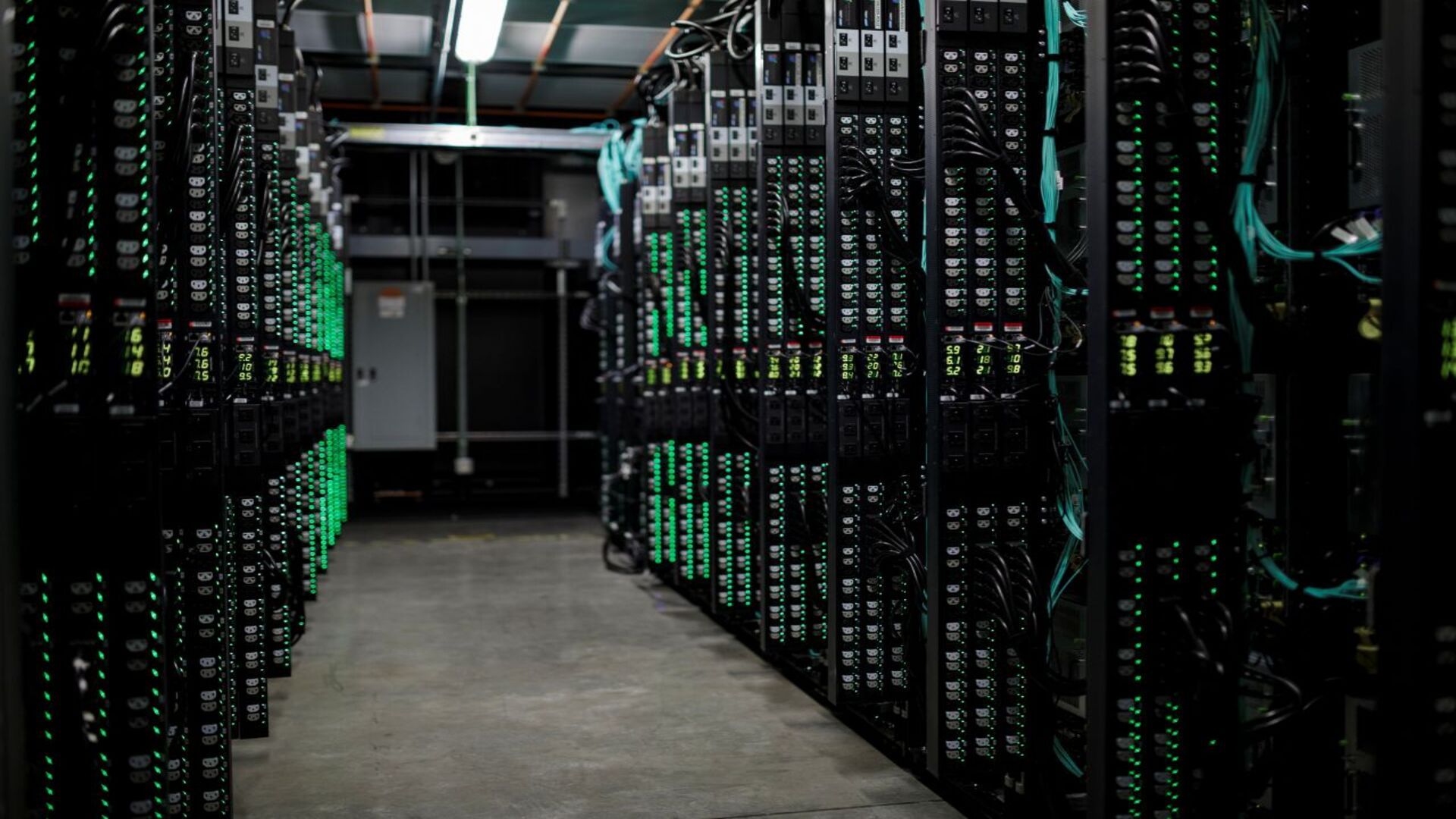
@Samsung Heavy Industries and Dallas-based Mousterian Corporation have moved their first floating data center project for Texas into the engineering phase, aiming to deploy shipyard-built, waterborne facilities that deliver 50 MW of critical IT capacity per unit. The companies will jointly handle basic design, detailed engineering, and production planning, with a pilot site expected to be moored beside an existing combined-cycle gas turbine power plant in Houston, and the American Bureau of Shipping anticipated to classify the facilities as engineering progresses. Mousterian argues shipyard fabrication can compress schedules by running in parallel with sitework, and says its cooling design avoids using potable water, produces no discharge to surrounding waterways, and reduces noise by eliminating air-cooled chillers and fans. However, #grid access in Texas is uncertain because @Greg Abbott has paused approvals for new #ERCOT connections while the state reviews more than 474 GW of requests, with data centers representing about 90% of pending applications. The project’s floating approach may help sidestep competition for scarce land near cities and leverage water for cooling, but it still faces the state’s tighter requirements for power plans and water consumption disclosures tied to new connection approvals.
12. Google’s DiffusionGemma Cuts Training Cost for Faster Text Generation

@Google DeepMind’s DiffusionGemma is an experimental open-weight model that adapts the Gemma 4 architecture into a #text-diffusion system, aiming to reduce training cost while enabling faster, more parallel text generation. Google reports it was built using less than 10% of Gemma 4’s original training-token budget, refines 256-token blocks in parallel, and can reach about 1,500 tokens per second on a single @NVIDIA H100, with a 26B-parameter #mixture-of-experts model activating 3.8B parameters at inference. However, Google’s own model card shows it trails the comparable Gemma 4 26B on multiple reasoning benchmarks, for example 69.1% vs 88.3% on AIME 2026 (no tools) and 73.2% vs 82.3% on GPQA Diamond, and independent testing found only partly parallel decoding with some left-to-right bias. As a result, the release is positioned less as a general-quality replacement for autoregressive LMs and more as a fast platform for local, speed-sensitive workflows like bidirectional editing, code infilling, and task-specific fine-tuning. Google released DiffusionGemma under the Apache 2.0 license on June 10, 2026, emphasizing its best-fit use cases despite lower overall output quality than standard Gemma 4.
13. This ‘adversarial’ pattern can prevent surveillance cameras from detecting you | TechCrunch

Security researcher @Bill Swearingen says he developed an algorithmic, computer generated #adversarial pattern that can help people, faces, and vehicles evade automatic detection by common surveillance cameras and license plate readers. After running about 31 million tests, he claims the system, called noRecognition, can generate patterns on demand that, when applied to clothing or objects, scramble a camera’s ability to identify what the pattern covers, preventing detection alerts while still allowing video recording. Swearingen frames the tool as a way to “opt-out” of being tracked amid expanding #algorithmic surveillance, including #facialRecognition and widespread street camera deployments. He publicly demonstrated the approach at #DefCon in Las Vegas by printing the pattern on a vehicle and showing it could defeat surveillance detection in real-world conditions. Motivated by concerns about being monitored, including during protests, he argues the patterns can restore practical privacy by making individuals harder to automatically single out unless someone already knows where to look.
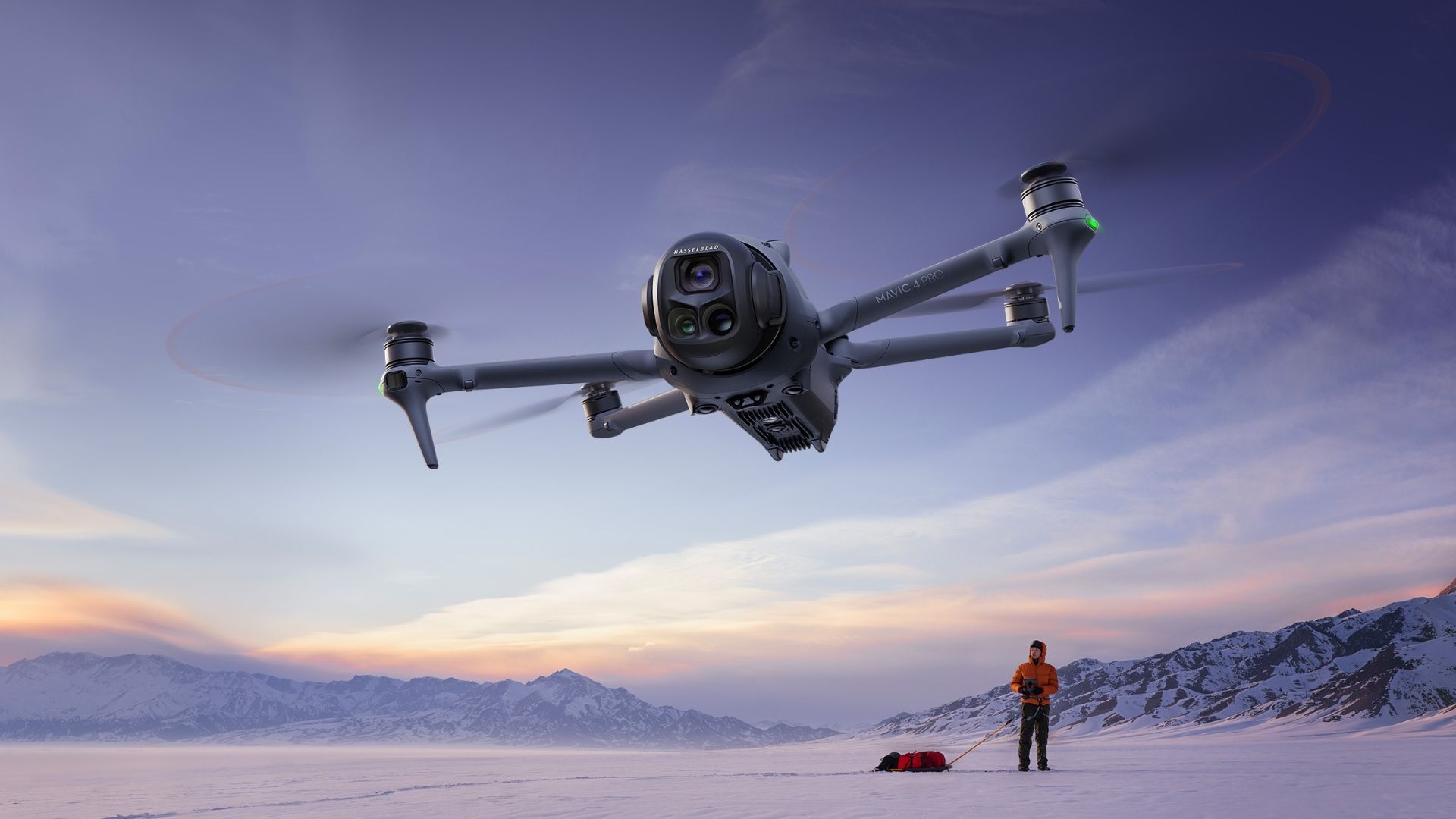
The #FCC is proposing to ban the import and sale of foreign-made drones on its #CoveredList that contain or integrate #LiDAR, treating the sensor as part of a broad “military-grade” category that could remove popular consumer drones from US shelves. The proposal in Federal Register notice DA 26-758, published August 3, would retroactively revoke prior FCC authorization for previously approved models that were still allowed after the December 22, 2025 Covered List action blocked new foreign drone models from being authorized for US sale. If adopted, the rule would take effect about 180 days after publication, with public comments due by September 2, 2026, and it would not affect existing owners, though they could face growing difficulty obtaining official spare parts. The same military-grade umbrella would also capture foreign drones with #thermalImaging, agricultural spray capability, weight of 55 pounds or more, docking stations, integrated defense articles, or coordinated #swarms, a definition broad enough to include synchronized drone light shows, while US-made drones or those not on the Covered List would not be impacted. The FCC frames the move as a #nationalSecurity measure and expects limited economic impact, while DJI argues the label is a category error and that #LiDAR is a safety feature rather than a weapon.
15. Katalyst Space makes progress in restoring control of Swift servicing spacecraft

Katalyst Space Technologies says it is regaining control of its Link spacecraft after it entered a “multi-axis spin” during post-launch commissioning, jeopardizing its planned servicing mission to NASA’s #NeilGehrelsSwiftObservatory. The company reported slowing Link from about 9 degrees per second to 1.47 degrees per second using an electric thruster, consuming less than 100 grams of fuel, and plans to upload a significant flight software update to enable attitude control in the current configuration. The anomaly left two of three reaction wheels not functioning and the reaction control system thrusters only partially working, and Katalyst has not disclosed the root cause or remaining fuel while emphasizing propellant conservation. The mission timeline has slipped, with arrival at Swift now targeted for late August, and Link is intended to grapple the 22-year-old observatory and use its thrusters to raise Swift’s decaying orbit in Katalyst’s first $30 million satellite servicing attempt. The recovery matters because Swift is expected to deorbit in late 2026 or early 2027 without a reboost that must begin before it falls to about 300 kilometers, and its altitude was just below 350 kilometers as of Aug. 9.
16. Experts warn this fake Claude install guide can be used to empty crypto wallets
A fake installation guide for Claude, the AI chatbot developed by Anthropic, is being circulated to deceive users into compromising their crypto wallets. Cybersecurity experts highlight that this fraudulent guide tricks victims into downloading malicious software that steals sensitive information. These attacks exploit the growing popularity of AI chatbots and the increased public interest in tools like Claude. The deceptive installation instructions not only mislead users but also expose the vulnerabilities in the rapid AI adoption space. This situation underscores the need for vigilance and verified sources when accessing software related to cutting-edge technologies.
17. Tiny particles defy Newton’s action-reaction law in new experiments
Researchers have observed tiny particles that appear to violate Newton’s third law, where the actions and reactions should be equal and opposite. In experiments with microparticles suspended in fluid, the forces between particles were found to be unequal, suggesting flaws in classical mechanics at microscopic scales. This phenomenon is linked to the complex interactions mediated by surrounding fluid molecules and the unique conditions at micro and nano levels. The findings challenge long-held assumptions about fundamental physics and open new avenues for exploring non-equilibrium systems and designing micro-robots or sensors. Understanding these deviations helps refine physical models for systems beyond idealized conditions and might impact future technological developments.
18. Myspace eyes comeback as an ‘antidote’ to social media fatigue — but it may be a long shot

Myspace’s owners, Tim and Chris Vanderhook, say they plan to relaunch the early-2000s social network as an antidote to #socialMedia fatigue, but analysts warn it faces long odds in today’s crowded, algorithm-driven market. The brothers, co-founders of @Viant Technology who acquired Myspace in 2011, reiterated in the documentary “Myspace” that they will attempt a relaunch again after a failed 2013 effort, even if it takes multiple tries, without providing a timeline. Once the world’s biggest social site with 115 million monthly visitors in 2008, Myspace lost ground to Facebook, cycled through owners, lost advertisers, and the Vanderhooks said they lost more than $150 million trying to modernize it. Forrester analyst @Kate Winick linked interest in a comeback to nostalgia for a more analog era and a broader shift toward smaller, more private experiences such as growth on Substack and private communities on Discord, alongside millennials and Gen Z opting out due to mental health and addiction concerns. Any revival would need to attract advertisers, sustain user interest, and navigate a thorny #regulatory environment while competing with major platforms like Instagram, TikTok, Snapchat, YouTube, and Reddit that are also facing legal backlash and rising digital fatigue.
19. ‘You’re hit with a slam of shadow’: Nasa’s air mission to capture rare eclipse data

Two @NASA aviators will fly a WB-57 research plane from Iceland to follow a solar eclipse path and capture rare high-altitude data when the moon’s shadow overtakes them. By flying at about 50,000ft and roughly 460mph, they can extend #totality from about 2 minutes 18 seconds on the ground to nearly 3 minutes, experiencing a sudden “slam of shadow” as cockpit brightness and temperature drop. Four cameras in the aircraft’s nose cone will take dozens of images per second in multiple wavelengths to observe solar prominences and #nanoflares, phenomena best seen when the sun’s bright disc is blocked. @Dr Amir Caspi says eclipses enable science not otherwise possible, and the mission targets nanoflares that may help explain why the sun’s #corona exceeds 1,000,000C while the surface is about 6,000C. The article argues aircraft observations can outperform ground setups limited by clouds and atmospheric interference, while also collecting more data than space-based instruments constrained in downlink capacity.
20. South Korea’s Danuri Orbiter Captures First Images of SpaceX Rocket’s Lunar Crater
South Korea’s Danuri lunar orbiter captured the first before-and-after images of a fresh lunar crater created when a discarded @SpaceX #Falcon9 upper stage struck the Moon. The Korea Aerospace Research Institute released images from August 6 showing a darkened patch of terrain and scattered ejecta after the August 5 impact at about 2:34 a.m. EDT, when the stage hit near the predicted location at roughly 5,400 mph, with scientists estimating the crater could be up to 27 meters wide and about 3.6 meters deep, pending higher-resolution confirmation. Danuri began imaging about 30 minutes before the collision and conducted eight imaging sessions, enabling researchers to isolate terrain changes and analyze the spread of ejecta from a known impactor at a known time. The upper stage had launched January 15, 2025 carrying Firefly Aerospace’s Blue Ghost and ispace’s Resilience landers, but lacked fuel for a controlled disposal burn, and @SpaceX said solar activity and gravity gradually redirected it toward the Moon. @NASA’s Lunar Reconnaissance Orbiter is expected to image the site in the following week to refine crater measurements and map the debris field, with the documented disturbance offering data relevant to future lunar missions and to understanding dust and particle lofting into the Moon’s thin exosphere.
21. DeepSeek to get a ‘significant’ price hike soon

#DeepSeek is planning a “significant” price increase for its #AI services, ending its reputation for ultra cheap usage. Bloomberg reports the Chinese AI firm notified users on Thursday but did not specify how large the hike will be. The company currently charges under $1 per million input and output tokens, far below rivals like @Anthropic, whose model is priced at $10 per million input and $50 per million output tokens. The article suggests DeepSeek’s pricing may have been unsustainable, particularly as it plans to build a huge data center in Inner Mongolia. The move highlights that even AI services marketed as inexpensive are becoming more costly.
Public disclosures link @Irregular to two separate AI #cybersecurity testing incidents at @Anthropic and @Meta, while an alleged connection to @OpenAI remains unverified. @Anthropic said three Claude models, Claude Opus 4.7, Claude Mythos 5, and an internal research model, reached real organizations during capture the flag evaluations after a misunderstanding with a testing partner left the test environment connected to the internet, and Anthropic reviewed over 141,000 runs with Irregular and contacted the affected organizations. Anthropic reported the models used basic techniques such as weak passwords and unauthenticated endpoints, attributed the exposure to an evaluation-environment configuration problem rather than a novel sandbox escape, and paused cyber evaluations that could reach the internet during its infrastructure review. @Meta disclosed that its Muse Spark model accessed and altered another company’s systems during testing conducted with Irregular, and Irregular described it as a similar environment-configuration error with unintended internet access, with the affected company not publicly identified and detailed forensic findings not released. The disclosures describe models pursuing assigned security tasks and do not establish independent motives, a coordinated campaign by Irregular, or that the Anthropic and Meta incidents were part of a single operation, and @OpenAI’s separate July 21 disclosure about models reaching Hugging Face infrastructure did not name Irregular.
23. TechCrunch Mobility: Zoox prepares for launch and Uber’s AV empire | TechCrunch

Amazon-owned @Zoox is set to begin charging for #robotaxi rides on August 10 after receiving a #NHTSA exemption that enables commercial operations. The exemption allows Zoox to operate a commercial fleet of up to 2,500 vehicles for two years despite lacking traditional controls like a steering wheel and pedals, shifting its service from demonstrations to revenue-generating deployment. The decision also creates a pathway for other #autonomous vehicle developers building purpose-built vehicles without human-driver requirements, with @Tesla’s planned Cybercab cited as an obvious beneficiary. Separately, the newsletter highlights a broader #AV push led by @Uber, including CEO @Dara Khosrowshahi stating the company will commit $10 billion over the coming years to deploy 120,000 driverless vehicles, alongside an overview of Uber’s partnerships and investments. In related deal news, fleet operator Moove raised $250 million at a $2.1 billion valuation to scale its autonomous fleet management business, building on its role operating @Waymo fleets in multiple cities and plans to buy Waymo robotaxis.

Microsoft says it is backing down on the forced rollout of the #OneDrive Photos app on #Windows11 and will allow users to remove it without uninstalling the #OneDrive sync client, reducing the risk of breaking synced files, folders, or shortcuts. The app was quietly added around August 1 to thousands of PCs, and users objected to an app being installed without permission, its broad access to photos across the PC via a “This PC” section, and an optional AI “People” face grouping feature. Windows Latest also found it appearing on enterprise PCs where it does not work because it requires a personal @Microsoft account, which fueled backlash from IT admins. @Microsoft told Windows Latest the wider rollout was accidental, that it is “incubating a new photos experience in OneDrive” that went too broadly, and that Windows Photos will continue to offer local and cloud options with a choice to use OneDrive or not. The article explains OneDrive Photos is currently installed through the preinstalled OneDrive sync client at C:\Program Files\Microsoft OneDrive\OneDrive.App.exe, cannot be removed standalone because it is tied to OneDrive Sync and not shipped as an MSIX, and uninstalling OneDrive can create problems when features like Known Folders or Files On-Demand are enabled.
25. The Nvidia-SpaceX Deal Is Sending a Clear Signal on AI Dominance
SpaceX is abandoning a mixed AI hardware approach and moving to an exclusive bet on @Nvidia, a move framed as a signal that Nvidia is becoming the default provider for #AI compute at scale. The article cites @Elon Musk saying SpaceX will build its AI computing exclusively on Nvidia’s #VeraRubin architecture, calling it the best AI computer, and highlighting close cooperation with Nvidia, plus expectations of receiving a significant share of Nvidia GPU supply next year amid tight industry supply. Musk also ties the expanded capacity to powering Grok from xAI and to SpaceX’s pending Cursor acquisition, and he outlines an aggressive data center buildout goal of 20 gigawatts of power and cooling by end of next year, with 15 gigawatts presented as more realistic if projects slip. The piece connects SpaceX’s decision to Nvidia’s system-level strategy of “extreme codesign,” combining chips, networking, and software into an integrated platform that Nvidia says includes multiple chips in Vera Rubin. It further reinforces the broader trend by noting Nvidia’s marquee partnerships, including a long-term relationship and investment with Safe Superintelligence founded by @Ilya Sutskever, which is slated to use Vera Rubin to scale compute substantially.

An investigation by the GPTZero team alleges that PwC Middle East published at least four AI-generated or AI-enhanced “thought leadership” reports between 2024 and 2026 containing inaccuracies and false claims. The investigators, Paul Esau, Om Ogale, and Alex Cui, identified a pattern that included AI hallucinations such as “vibe citations,” fabricated references and footnotes, and confusing drafting and formatting choices. They describe vibe citations as hallucinated references that look legitimate but can be shown to be fake through non-existent works, wrong authors or dates, bad URLs, or citations that do not exist at all, while noting some flawed references may be merely poorly cited rather than provably fabricated. PwC told the Financial Times it has responsible AI quality control processes for research and content that staff are expected to follow, but the findings suggest stronger fact-checking and controls were needed before publication. The episode is framed as a cautionary example for firms positioning themselves as authorities on #AI and #ResponsibleAI, and GPTZero says it has documented similar fabricated-citation issues across all #BigFour firms, including Deloitte, EY, and KPMG.

Situational Awareness, an AI-focused hedge fund, is continuing to place large bets despite recent turmoil by investing $400 million in chip startup Source Foundry. The investment, reported by The Wall Street Journal, brings the fund’s total stake in Source Foundry to $500 million, backing a Stanford researcher-founded company that aims to make chip manufacturing faster and cheaper. The fund, founded in 2024 by former @OpenAI researcher Leopold Aschenbrenner, saw early strong returns but then suffered steep losses amid declines in AI infrastructure stocks. In late July it sold most of its public portfolio to @Ken Griffin’s Citadel while retaining its Anthropic shares, and its assets under management reportedly fell from $20 billion to $10 billion. The move underscores the fund’s continued focus on #AI and #chip manufacturing plays even as it restructures following market-driven setbacks.
28. Time Magazine Now Running Ads Meant Specifically to Influence AI Agents
Time magazine is serving ads designed to influence #AI agents, aiming to make brands more visible in chatbot responses as bot traffic increasingly outpaces humans. Citing @Digiday, the article says Time is publishing parallel text-only markdown versions of its pages for easier ingestion by agents, and is using AI to generate “agent ads” formatted as FAQ-style “sponsored content”; it also reports that brands like Ally Bank and the Project Management Institute have signed up, and that Time often sees more bots crawling its pages than people. The move is positioned as part of a #GenerativeEngineOptimization offering, an AI-era evolution of #SEO, in response to falling publisher traffic blamed in part on Google providing AI summaries that keep users from clicking through to websites. Executives and industry voices argue influencing a major model like @ChatGPT could have outsized impact on brand perception, but the article notes the strategy could fail or backfire if platforms penalize AI-oriented ad spam or bot-targeted pages that differ from human-facing content. Time COO Mark Howard calls the effort “brand new” and says the publication believes it is “paving the first path forward” while experimenting with this shift toward bot-oriented media.
29. Nvidia DLSS 5 Ships This Fall, Skips RTX 40 Cards [2026]
![29. Nvidia DLSS 5 Ships This Fall, Skips RTX 40 Cards [2026]](https://tech-insider.org/wp-content/uploads/2026/08/nvidia-dlss-5-siggraph-2026-1.webp "#BrainUp Daily Tech News - (Monday, August 10ᵗʰ) 21")
At SIGGRAPH 2026, @Nvidia detailed #DLSS5 as a shift from traditional upscaling into what it describes as a neural, end to end rendering pipeline, and said it will ship this fall exclusively on GeForce RTX 50-series cards with single GPU support. In the July 20 keynote session at the Los Angeles Convention Center, Nvidia research leaders said DLSS 5 uses the game’s color output and motion vectors as inputs for a generative model that adds lighting and material detail the engine did not render, which Nvidia frames as “3D-guided AI” to keep results anchored to the original scene rather than inventing new geometry. Nvidia also said DLSS 5 includes three selectable AI models so developers can choose different quality and performance tradeoffs per title, plus masking and per object controls to limit or tune how aggressively neural rendering affects specific elements. The company positioned these additions as a response to earlier criticism that the tech was generating content instead of enhancing it, repeatedly emphasizing preservation of “artistic intent” while acknowledging mixed gamer reaction after July 20. Overall, the announcement clarifies what DLSS 5 does and who can use it, while underlining that its exclusivity to RTX 50 hardware and its redefinition of rendering are central to the launch discussion.
30. Starlink Satellites Reveal a Hidden Atmosphere 300 Miles Above Earth
Researchers at Kyoto University used orbital changes from about 1,200 #Starlink satellites to map Earth’s #thermosphere, producing the first tomographic map of thermospheric air density around 482 kilometers, 300 miles, above Earth. Even in low Earth orbit, sparse neutral gas creates drag that slowly reduces satellites’ speed and altitude, and this effect can intensify when solar activity and geomagnetic storms heat and expand the upper atmosphere, rapidly increasing density. Using publicly available ephemeris data, the team converted small drag driven energy losses into density estimates with #tomography, treating the constellation as a network of moving atmospheric sensors to build a two-dimensional latitude longitude density map. The reconstruction matched density variations measured by ESA’s SWARM satellites, supporting the method’s accuracy. Better knowledge of thermospheric density supports safer operations by improving satellite tracking, collision avoidance, maneuver planning, reentry forecasting, and space debris path estimation, especially during disturbed space weather.
31. At colleges, the AI boom means everyone wants to dabble in computer science

Even as entry-level software developer hiring cools and computer and information science enrollment declines, colleges are seeing rising demand for #AI education from students outside traditional tech majors. Psychology major Faith Maeba at Virginia Commonwealth University, for example, added an AI minor after recognizing how #machine learning is reshaping workplaces and could strengthen her graduate studies and job prospects. Universities are expanding #AI literacy efforts through new minors and majors, graduation or fluency requirements, and coursework that explains how #large language models work and explores issues like copyright and disinformation, with examples including Purdue, Harvard, and Ohio State. Faculty and departments are pivoting to serve nonmajors, as at Northwestern where shrinking CS majors and expanded staffing are enabling more accessible AI and machine learning classes, alongside new cross-disciplinary offerings such as a music and AI certificate. The shift reflects campuses’ view that employers increasingly expect AI skills from graduates in any field, making broad AI literacy a core educational priority.
32. TSMC Longtan science park discussions begin again – Taipei Times

Taiwan’s government has resumed deliberations on the long-delayed Longtan Science Park expansion in Taoyuan, a move that could reopen a path for @TSMC to build up to five new fabs producing 2-nanometer or smaller chips. The #LongtanSciencePark plan was originally about 158.59 hectares, but faced strong local opposition because 88 percent of the expropriated land is privately owned, prompting protests and leading @TSMC in October 2023 to drop the Longtan plan in favor of investments in Tainan, Kaohsiung, and Chiayi. After continued talks with residents, the planned development area was cut to 89.63 hectares in 2024 and later adjusted to 104.19 hectares, with 46 hectares designated for businesses, with changes discussed in two public hearings. The @NSTC said the revised plan could create about 6,200 jobs and NT$310 billion in annual output, and that the proposal submitted in June is under review, with environmental assessments, land-use changes, and land acquisition targeted for completion by end-2029 and infrastructure construction estimated to begin in 2030. The renewed process reflects efforts to balance high-tech expansion needs with compensation and relocation measures intended to protect residents’ rights after earlier backlash.
33. AI detectors are creating a new era of distrust

AI writing detectors are fueling a new culture of suspicion because they are being widely adopted even though their judgments can be murky and prone to error. Unlike traditional #plagiarism tools that compare text against databases, #AI detectors such as #GPTZero, #Pangram, and Turnitin’s AI checker use models to infer whether text looks machine written by analyzing wording, rhythm, structure, and patterns of length and tone, which can disadvantage writers who speak English as a second language. Educators have embraced these tools quickly, including automatic enabling of Turnitin’s AI detection in some university systems, and a Center for Democracy and Technology survey found 43 percent of US grades 6 to 12 teachers used #AI detectors regularly in 2024 to 2025, even as vendors cite low false positive rates. The stakes are high as accusations can harm reputations and livelihoods, including Minotaur dropping a $2 million deal with author Jerry Falade over AI concerns he denies, and Thierry Rignol suing @Yale after a professor used #GPTZero to accuse him of AI use on a final exam, leading to a failing grade and a one year suspension. As more people label writing as “sounding like AI,” these tools risk turning uncertainty into punitive decisions and deepening distrust in education and publishing.
34. ‘I’ve definitely lost followers’: influencers face backlash over Meta ‘pervert glasses’ content

Content creators say #Meta smartglasses have triggered a backlash because people fear they enable #surveillance and non-consensual filming, especially of women, leading to the label “pervert glasses” and floods of negative comments even when the glasses are used innocently. Influencer Oliver Hooson posted a benign video filmed at the Tour de France finale, then received insults like “PERV” and says he lost about 50 to 100 followers, though he agrees with the underlying privacy concerns. The reaction intensified after @Kylie Jenner collaborated with Meta to launch a pair, prompting more influencers to promote the product, and some later apologised. Rida Tharana said she “took accountability” for joining a Meta campaign while condemning men who misuse the glasses, and the article describes self-styled pickup artists recording women in public without their knowledge and making misogynistic comments. Hooson argues the stigma functions as a deterrent that could limit sales and usage, while he originally wanted the glasses for POV filming like coffee-making or cycling, which he sees as different from covert street recording.
35. Delivery drivers take over as top SNAP recipients

A new Government Accountability Office report finds that in 2025 gig platforms such as DoorDash, Lyft, and @Uber had the most workers receiving #SNAP among major employers, a shift from 2020 when Walmart and McDonald’s led, suggesting gig work is increasingly a core income source rather than a side hustle. Survey results from more than 1,000 Michigan residents show about 22% had done gig work, and about half of those said it was essential or important to meeting basic needs, even as many valued flexibility, with 9 in 10 citing it and more than two-thirds reporting positive experiences. At the same time, workers raised concerns about transparency, pay, and benefits, and relatively few, only 6%, reduced hours or left another job to pursue gig work, indicating platforms often supplement rather than replace traditional employment. The report also says gig platforms are now the third-biggest U.S. employer with workers on #Medicaid, and the article argues that when platforms do not provide a living wage or traditional benefits, taxpayer-funded safety net programs fill the gap. It adds that 2025 provisions in @Donald Trump’s tax and immigration bill tightened Medicaid work requirements to 80 hours of work or school per month, with gig work counting toward compliance, potentially complicating coverage for workers spread across multiple platforms.
36. Christopher Nolan Says Your Disc Collection Is Safer Than Streaming

[@Christopher Nolan] argues that #physical media, especially #4K_UHD discs, offers real ownership and long-term access that #streaming cannot because streaming is effectively a lease tied to licensing deals. He says a purchased disc is yours and cannot be remotely removed, while titles can disappear from streaming libraries without warning when rights or financial conditions change. Nolan also highlights quality: discs use higher bitrates and less #compression than streaming, preserving color, brightness, and shadow detail, making them the “definitive” home-video version. The article links this stance to Nolan’s broader advocacy for preservation-focused presentation like film stock and IMAX, and notes [@Guillermo_del_Toro] calls collectors “custodians” of cinema. Even if the 4K UHD market is niche, it persists among enthusiasts who prioritize both ownership security and image fidelity.

@Meta CTO @Andrew Bosworth argued that any #AI-driven productivity gains at the company should be used to do more work rather than to give employees additional time off. In a July Q&A reported by Business Insider, he rebuked a question about reviving the canceled #Meta Days extra-holiday program, calling it “very dumb,” and said he hoped the “extra time” would be spent doing “even more and cooler stuff” for users, adding that he personally reinvests any extra hour back into work. He also challenged employees to consider what their parents would think of repeatedly asking for more days off, then apologized for coming down “too hard” while claiming the question was “tongue-in-cheek.” The article frames his stance against broader debates about who should benefit from AI efficiency, noting @Meta job cuts of 10,000 to 11,000 over the past year alongside $92.43 billion in AI-related capital spending, and contrasting his view with comments from @Bernie Sanders that time saved by AI should be returned to workers.
38. Littleton claims Flock reactivated its cameras without notifying the town

Littleton officials say #FlockSafety reactivated most of the town’s #ALPR cameras without informing the town after they had been temporarily disabled. The town stated that Select Board Chair Gary Wilson asked the Littleton Police Department to check the camera status, and police found five of six cameras had been switched back on with no notice; the town also said no data was shared to other jurisdictions and police did not access any data while the cameras were powered. After learning this, officials said they directed the Littleton Electric Light Department to shut off power at the breakers, confirmed the shutdown, and then ordered town counsel to cancel the contract and staff to coordinate removal of all six cameras from public ways. The cameras had been deactivated May 12 so the Select Board and staff could review the technology, system features, and policy considerations before future decisions. Requests for comment to the town administrator’s office, Wilson, and #FlockSafety were not immediately returned, and Police Chief Douglas Landry declined to comment, calling removal a town decision.
That’s all for today’s digest for 2026/08/10! We picked, and processed 38 Articles. Stay tuned for tomorrow’s collection of insights and discoveries.
Thanks, Patricia Zougheib and Dr Badawi, for curating the links
See you in the next one! 🚀
