
#BrainUp Daily Tech News – (Friday, August 7ᵗʰ)
Welcome to today’s curated collection of interesting links and insights for 2026/08/07. Our Hand-picked, AI-optimized system has processed and summarized 37 articles from all over the internet to bring you the latest technology news.
As previously aired🔴LIVE on Clubhouse, Chatter Social, Instagram, Twitch, X, YouTube, and TikTok.
Also available as a #Podcast on Apple 📻, Spotify🛜, Anghami, and Amazon🎧 or anywhere else you listen to podcasts.
1. Google’s AI told people Flock cameras were full of gold. They weren’t.

Google’s #AIOverviews briefly turned an internet meme into an apparently factual claim that #Flock license plate reader cameras contained valuable amounts of gold and copper, effectively suggesting a financial motive for vandalism. For a time, searches like “how much gold does a Flock camera have” produced a confident estimate of 1 to 5 grams of gold and 2 to 23 pounds of copper, figures that would imply hundreds of dollars in metal and even exceeded what could fit in a roughly three pound device, with no teardown or materials evidence. After the discrepancy was reported, Google updated the overview to say the “pounds of recoverable copper” claims are false and that any gold is only trace amounts typical of small consumer electronics, explicitly attributing the rumor to memes and #AIHallucinations. The episode spread within a broader online backlash against Flock’s #AISurveillance network, where cameras use #MachineLearning and automated plate recognition to feed searchable databases used by police and private customers, raising concerns about expansive monitoring and reports of misuse. Overall, it illustrates how a widely used AI search feature can amplify misinformation by presenting jokes as authoritative answers, especially around contentious surveillance technologies.
2. DuckDuckGo made sunglasses that do absolutely nothing, and they sold out

DuckDuckGo launched a real, intentionally featureless pair of sunglasses to make a point about #privacy in an increasingly #AI-saturated world. Made with Knockaround, the “Normal F***ing Sunglasses” are matte black Paso Robles frames with polarized lenses, UV400 protection, and FDA-compliant impact resistance, and the product explicitly includes no battery, no power source, and no electronics, video recording, or #generativeAI integration. A DuckDuckGo spokesperson said the glasses are a satirical jab at tech companies such as @Meta turning eyewear into surveillance devices, and a nod to buyers who prefer plain analog products with no data collection. Despite the stunt-like framing, the sunglasses sold out within days and DuckDuckGo said a significant portion of inventory was depleted, though it did not provide full sales figures. The campaign aligns with DuckDuckGo’s broader approach to AI, after users opposed fully integrating AI results into search, the company kept AI interactions on a separate page while the sunglasses underline a preference for non-instrumented everyday tech.
3. Safety fears as scientists make first viruses designed by AI

Scientists report the first #AI-designed viruses, a milestone that could accelerate #phage_therapy but also intensifies #biosafety and #biosecurity concerns. @Brian_Hie and colleagues at Stanford used #genome_language_models (Evo1 and Evo2) trained on genetic data from 2 million bacteriophages, excluding viruses that infect plants, humans, or other animals, then generated thousands of candidate genomes and built nearly 300 in the lab, yielding 16 viable bacteriophages. In dish experiments, a cocktail of these AI-designed phages killed two strains of #E_coli that were resistant to natural bacteriophages, suggesting genomes could be rapidly designed and tuned to overcome resistance. However, an accompanying commentary by @Tom_Inglesby and Dr Moritz Hanke argues governance lags behind capability, warning that composing viral genomes with generative AI is now possible and that work on pathogens infecting humans, animals, or plants should not be pursued because new pathogens might evade existing countermeasures. External expert Tom Ellis calls the achievement impressive but notes it is the smallest and easiest genome class to make, and argues that restricting access to dangerous genetic data and limiting synthesis of genomes that look risky could help keep the technology safe.
4. Large genome models used to design new viruses
Researchers have developed advanced large genome models that enable the design of new viruses by predicting genetic sequences and their functions. These models leverage deep learning techniques to analyze and generate viral genomes, offering insights into viral behavior and evolution. The approach enhances the ability to explore viral diversity and engineer viruses with specific traits, which could advance vaccine development and gene therapy. However, the technology raises ethical considerations and biosecurity risks, emphasizing the need for responsible use and oversight. This breakthrough reflects a significant step in synthetic biology, linking computational power directly to genomic innovation.
5. New Adobe plugin in ChatGPT combines Photoshop, Firefly, Premiere, Acrobat, and more – 9to5Mac

Adobe has consolidated its previously separate ChatGPT connectors into a single Adobe plugin for @ChatGPT, letting users request outcomes in natural language while the plugin orchestrates 70+ tools across Adobe’s creative and productivity apps. It builds on last year’s native integrations that enabled image editing, design creation and animation, and PDF management inside @ChatGPT, and now adds broader capabilities spanning Photoshop, #Firefly, Premiere, Acrobat, Lightroom, Illustrator, InDesign, Adobe Express, Adobe Stock, and more. Adobe says the plugin supports workflows like editing photos, producing campaign videos, designing marketing assets, and generating polished PDFs via interactive, in-conversation experiences, with the option to continue advanced, pixel-level work in Adobe apps where you left off. The company positions this launch within a wider expansion of Adobe tools across AI platforms like @ChatGPT and Microsoft Copilot, with Slack and Gemini integrations planned later in the month. Users can install it from the plugins directory, invoke it with @Adobe or the + menu, and optionally sign in to unlock generative features and #CreativeCloud access, while guest access is also available.
6. Apple’s record iPhone and Mac quarter runs into tighter chip and memory constraints

@Apple delivered its strongest June quarter on record, but warned that tighter #advanced-chipmaking capacity and rising #memory prices will constrain shipments and pressure margins into the September quarter. Fiscal third-quarter revenue rose 16% to $109.4 billion, net income was $29.8 billion, and diluted EPS was $2.02, driven by iPhone revenue up 22% to $54.25 billion and Mac revenue up 29% to $10.35 billion despite supply constraints. The company guided to September-quarter revenue growth of 9% to 11% and gross margin of 47% to 48%, down from 50.1% in June, with management citing processor capacity as the immediate bottleneck and noting that memory inflation will bite more as older component inventory runs down. Mix was otherwise uneven, with Services up 12% to $30.74 billion, Wearables up 6% to $7.88 billion, and iPad down 6% to $6.19 billion, while June margins were boosted by tariff refunds that Apple expects to help less in September. The results underline that demand for the iPhone 17 lineup and Macs is outpacing supply plans, turning supply chain limits into a near-term ceiling on growth and profitability.
7. OpenAI and rivals agree on a standard for AI agents
@OpenAI, @Amazon, @Microsoft, Cursor, and @Vercel have published #AgentPlugins, an open standard meant to let developers build a single AI agent extension that runs across competing clients, a “build once, run anywhere” package format. The spec standardizes today’s fragmented agent-tool setups by defining a plugin as a folder with a root plugin.json that bundles #ModelContextProtocol servers for connecting agents to tools and data, plus #AgentSkills as reusable instruction sets. Although @OpenAI promoted it as a milestone around GPT-5’s first birthday, the proposal was initiated by @Vercel and shaped by representatives from @Amazon, Anysphere (Cursor), @GitHub, @Microsoft, @OpenAI, and @Vercel, with a five-member steering committee and an open license. The standard is deliberately limited to packaging and discovery, leaving marketplaces, installation, permissions, sandboxing, and trust decisions to each client, which keeps adoption easy but does not solve safety concerns highlighted by recent fake Agent Skills slipping past scanners. Support at launch includes ChatGPT and Codex, Cursor, @GitHub Copilot, Kiro, and VS Code, and the article argues the shared plumbing could broaden reach for small developers while also potentially reinforcing dominant clients, with debates over marketplaces and trust still ahead.
8. Into the Omniverse: How Open World Models Push the Frontier of Physical AI
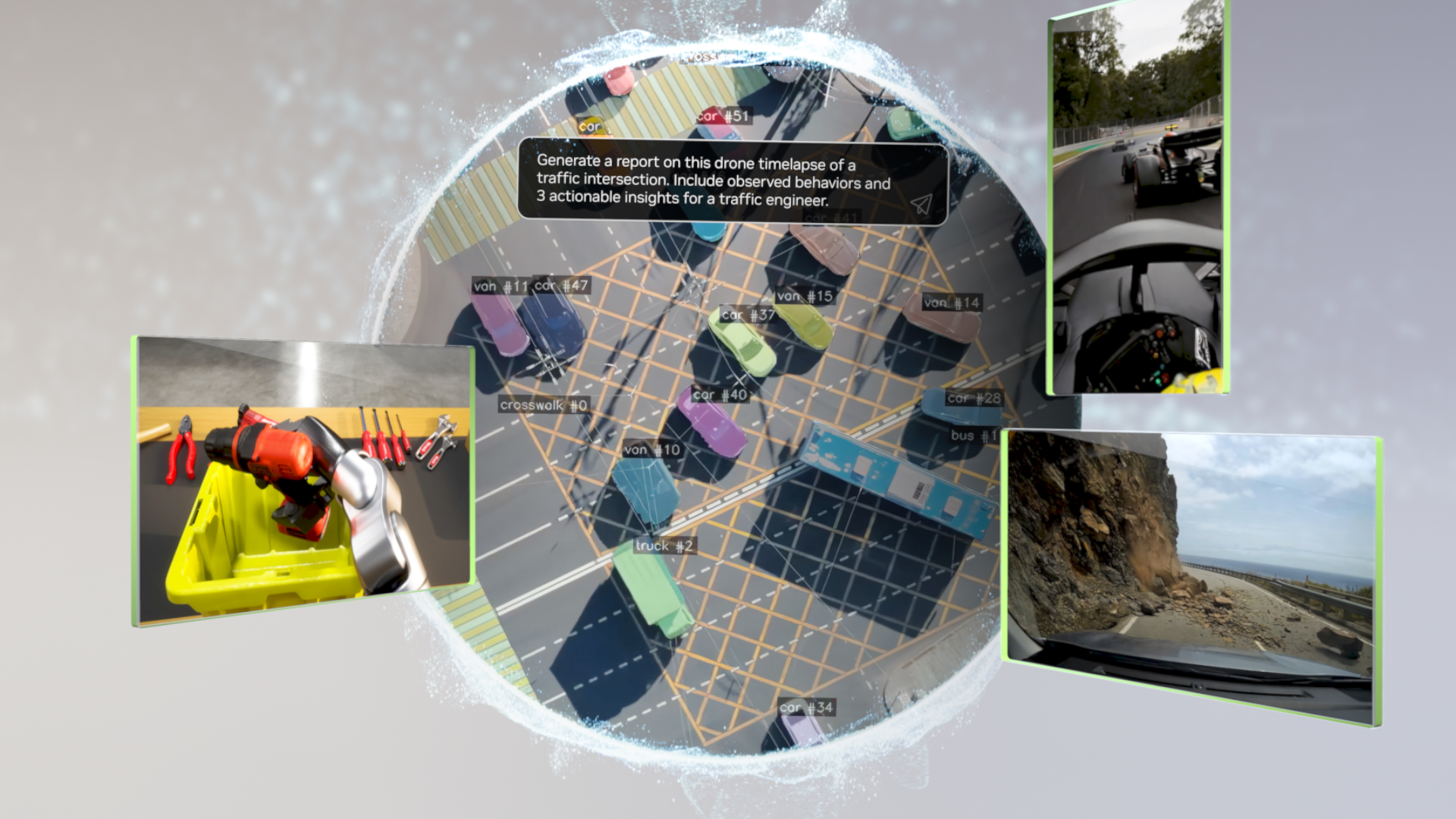
Open #world models and open model weights are positioned as essential for advancing #physical AI because deployments require specialization for specific robots, vehicles, sensors, tasks, and operating environments. The article argues that physical AI must predict consequences, not just appearances, and that world models can learn physical relationships from large-scale multimodal scenarios, generate physically grounded world and action data, simulate future states, and help create diverse environments across weather, lighting, objects, and trajectories, including rare and long-tail scenarios that are costly or unsafe to collect in the real world. It highlights #NVIDIA Cosmos 3 as an open model family that brings together vision reasoning, world generation, and action prediction, described as a frontier open physical AI foundation omni-model using a mixture-of-transformers architecture, and notes the Cosmos world foundation models are available under the Linux Foundation’s #OpenMDW 1.1 license to enable post-training on a team’s own data and hardware. It also points to #NVIDIA Omniverse libraries within the NVIDIA Agent Toolkit, plus #OpenUSD, as tools to build simulation-ready worlds and reduce duplicated work when assets, sensor configurations, or environmental conditions change. Framed within the “Into the Omniverse” series and an open-ecosystem stance referenced by the “Open Weights and American AI Leadership” letter, the piece links openness to practical workflows for generating training data, testing policies, and validating systems before real-world deployment.
9. Anthropic will design its own hardware to power Claude

Anthropic is building an in-house “custom silicon team” to design chips to run its #AI models, aiming to scale Claude while reducing reliance on #Nvidia. The plan was confirmed by an Anthropic spokesperson after job listings surfaced for silicon roles, and Anthropic says it will keep a “multi-chip approach,” continuing to use third-party hardware alongside its own designs, with teams co-designing new hardware and models together. The move aligns with a broader industry shift toward #custom silicon and vertical integration, highlighted by @OpenAI’s inference chip Jalapeño built with @Broadcom, plus similar efforts from @Google and @Meta, and reports that Mistral is exploring the same path. Anthropic frames the strategy around avoiding strategic vulnerability in a compute-constrained market and potentially improving performance by tailoring chips to specific models, while also seeking an edge as users consider cheaper, smaller, or open-weight models on their own or edge hardware. Because Anthropic is still hiring key staff, any practical benefits for the company or users are expected to take time to materialize.
10. Google open-sources an AI model it says can help with earlier hurricane warnings – Engadget
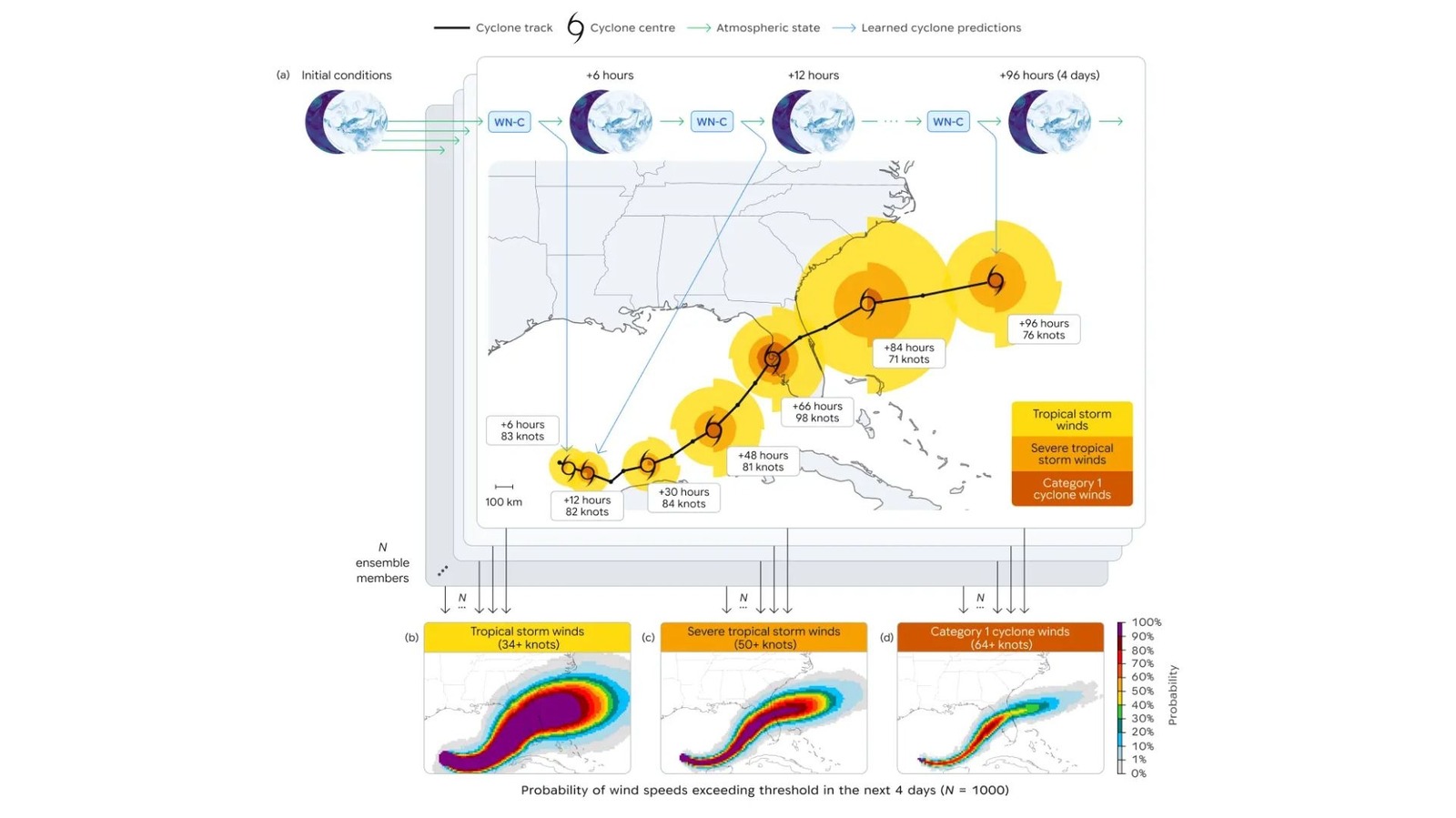
@Google researchers from @Google DeepMind and @Google Research have open-sourced #WeatherNext, an #AI weather prediction model they say can improve tropical cyclone warnings by forecasting both storm track and intensity. The model was developed with contributions from the National Hurricane Center, the Cooperative Institute for Research in the Atmosphere, the UK Met Office, and other agencies, and its code and weights are available on #GitHub, alongside a Nature paper and a Google blog post. Because cyclone path and intensity have typically required different modeling approaches, WeatherNext is trained on nearly 20 terabytes of global atmospheric data plus historical records from the International Best Track Archive for Climate Stewardship to unify both tasks in one system. The researchers say it can produce a single 15-day forecast in under a minute on a #TPU, helping forecasters quickly assess probability distributions and potentially severe tail risks. Google notes this work builds on a second-generation WeatherNext introduced last year and follows its broader efforts to use AI for hazards like flash flood prediction.
@Meta removed more than 50 paid ads containing #AI-generated child sexual abuse imagery or sexualized depictions of minors after @WIRED and researchers from the Tech Transparency Project found them in Meta’s public Ad Library. The ads appeared across Facebook, Instagram, Messenger, and Threads from November 2025 to early August 2026, and some were still active in early August despite Meta’s claim that ads are reviewed for policy violations before going live. TTP said it reported the material to the National Center for Missing and Exploited Children’s CyberTipline, and researchers found about 30 additional examples hours before publication, many posted after WIRED’s initial inquiry, with Meta records showing some ads ran for days and at least one reached 2,563 accounts across eight European countries. The episode points to gaps in Meta’s ad enforcement against promotions tied to #nudify and face-swapping services, including cases where near-identical versions were treated differently and a prior TTP investigation describing a page that ran hundreds of ads after one was removed for violating child-exploitation policy. Meta said most ads had minimal reach, many were already disabled, and several predated newly deployed AI detection systems meant to block violating ads during upload.

@Waymo co-CEO @Dmitri Dolgov argues that camera-only #self-driving systems can support driver assistance or roughly match human driving, but they are not sufficient for fully driverless #robotaxi operation where safety must be near-perfect. He says “weak sensing” causes safety improvements to plateau too early because cameras can fail in low light, poor visibility, dust storms, or when the lens is blocked. As evidence for #sensor-fusion, he describes a Waymo vehicle using #LiDAR, #radar, and high-definition cameras to safely return to a depot after a tree branch caught in its wipers and obscured the camera lens. The article’s author agrees based on rides in multiple autonomous vehicles and points to #Motional’s approach, stating its Hyundai Ioniq 5 robotaxis use radar and LiDAR and have driven over two million autonomous miles with zero at-fault incidents, and to @Laura Major’s view that camera-led systems can reach about 90% performance but that is inadequate for true driverless operation. It adds that, per Electrek, Tesla’s own data indicates a crash rate three times worse than humans even with a monitor at the wheel, reinforcing the case for multimodal sensing over camera-only designs.
13. Microsoft confirms increased Xbox prices in the UK and Europe
.jpg?width=1200&height=630&fit=crop&enable=upscale&auto=webp "#BrainUp Daily Tech News - (Friday, August 7ᵗʰ) 12")
@Microsoft has confirmed significant UK and Europe price increases for #Xbox consoles, following worldwide hikes announced in late June. In the UK, Xbox Series S 512GB rises from £299.99 to £429.99 and the 1TB model from £349.99 to £519.99, while Series X models increase to £619.99 (1TB Digital) and £669.99 (1TB Disc); in Europe, the same models rise to €499.99, €599.99, €749.99, and €799.99 respectively. Microsoft attributed the rises to sharply higher #storage and #memory component costs, saying console storage and memory prices have increased more than 2.5x and could double again by fall 2027, and it also discontinued the 2TB model. The changes come amid major Xbox restructuring including 3,200 layoffs, divestment of five studios, and a reported $1.7 billion decline in Xbox revenue in 2026 with hardware sales down 29% year on year. Xbox CEO @Asha Sharma and @Satya Nadella said leadership is resetting the business by investing in what players value and making necessary portfolio and operational decisions, aiming to return to growth by the end of 2027.
14. Castaway SpaceX rocket stage crashed into Moon, scientists say
A castaway upper stage from a @SpaceX #Falcon9 rocket is believed to have crashed into the Moon as predicted, an unplanned collision expected to leave a new crater but posing no danger to Earth. The @EuropeanSouthernObservatory said its #VeryLargeTelescope detected spectral lines in an impact plume, showing chemical fingerprints of sodium and lithium gas that lasted 5 to 10 minutes, with sodium likely from lunar soil and lithium possibly from the rocket. Astrophysicist @JonathanMcDowell and Los Alamos researcher @BenjaminFernando said the impact occurred, and Fernando’s recent paper estimated the stage weighed about 8,800 pounds on impact assuming its propellant was spent. #NASA said it plans to collect lunar data from the event to refine techniques for tracking objects in space, and its #LunarReconnaissanceOrbiter along with South Korea’s Pathfinder Lunar Orbiter may image the site after a delay of days. The stage came from a January 2025 launch carrying two lunar landers, and @SpaceX said it performed the usual safety maneuver but solar activity and gravity shifted the stage’s path toward the Moon, highlighting growing concern about #spacejunk as agencies plan sustained lunar activity.
15. Google says hackers are calling financial firm employees to hack and extort victims | TechCrunch

Google security researchers say multiple hacker groups are breaking into large U.S. financial and investment firms to steal sensitive data and extort victims by threatening to publish it. The groups, dubbed Falcon, Helix, Pink, and Redact, use #voice phishing, calling employees’ personal phones while impersonating co-workers or IT helpdesk staff and tricking targets into entering credentials and multi-factor codes on spoofed sites. Google says some of the groups run leak sites to pressure victims into paying ransoms, and researchers suspect the brands may be linked under a larger collective tracked as UNC6671, possibly to compartmentalize operations and obscure breach volumes. Reuters reported that affected firms include Apollo Global Management, Bain Capital, Blackstone, Bridgewater Associates, CME Group, KKR, Moody’s, and TPG, though Google did not name victims. Google adds the same actors have targeted other sectors, and that focusing on organizations involved in mergers, acquisitions, capital deployment, and litigation may be aimed at maximizing leverage with high-value corporate and confidential data.
16. Microsoft’s Quantum Chief Doesn’t Care That Scientists Don’t Believe His Results

@Zulfi Alam, Microsoft’s quantum chief, says he is not focused on satisfying outside scientists after his team claimed it had split an electron into #Majorana quasiparticles as part of Microsoft’s approach to #quantum computing. Researchers have challenged the claim, citing inconclusive data, limited peer review, and Microsoft’s refusal to share raw data, with skepticism amplified by past controversy including a 2021 Nature paper retraction related to alleged evidence of Majoranas. Microsoft also announced in June that it made a qubit 1,000 times more reliable than its predecessor using its scientific discovery #AI agent, but critics argue the underlying Majorana work remains unverified without open scrutiny. Alam argues commercial sensitivity and slow publication timelines make sharing granular data and relying on traditional peer review impractical, calling the paper process outdated in a fast moving field. Critics like physicist Trevor Lanting counter that independent evaluation is essential to establish the technical foundation, and that avoiding scrutiny suggests results may not be strong, while Alam says Microsoft will ultimately persuade academia by delivering a working machine.
17. AI Earthquake at Google: DeepMind CEO Out, Chief Scientist Launches his Own Startup

Google DeepMind is undergoing a major leadership reshuffle as founder and CEO @Demis Hassabis steps back from day to day management to become DeepMind chairman and Alphabet chief scientist, while CTO Koray Kavukcuoglu becomes the operational lead as senior vice president reporting to @Sundar Pichai. At the same time, chief scientist @Jeff Dean is leaving after 27 years to start Discovery Loop, an independent public benefit corporation backed by Google, which will also serve as its cloud provider, with senior figures including Sanjay Ghemawat, Oriol Vinyals, and Quoc Le joining. The news sparked a roughly 4 to 5 percent drop in Google’s stock after a recent rally. The move is framed as consolidation amid reorganizations to keep pace with rivals like OpenAI and Anthropic, especially in #AI coding agents and the #Gemini roadmap, following prior restructurings, a “Code Strike” effort, and departures such as David Silver and John Jumper. Hassabis told staff that #AGI feels close and said the shift gives him room to focus on broader AGI questions and potential #AI regulation, while leadership says DeepMind’s responsible mission remains and integration with Google will increase rather than turning the lab purely commercial.
18. OpenAI accepts three years of DOJ oversight in $3.2 million hiring settlement
@OpenAI and Statsig agreed to a $3.2 million hiring settlement that subjects their employment-based green-card sponsorship recruiting to three years of @DOJ oversight, including semiannual reporting tied to #PERM permanent labor certification. The deal requires $1.2 million in civil penalties paid to the Treasury and up to $2 million reserved for potential back pay to U.S. workers, while @OpenAI denies the allegations and the agreement states it is not an admission of wrongdoing or liability. The @DOJ alleged the companies excluded #PERM-related roles from external career sites, required paper applications while other roles accepted electronic submissions, and used recruiting methods such as late-night radio ads that discouraged applicants, with fewer than 10 positions involved. Within 120 days, each company must submit a #PERM recruitment policy for @DOJ approval, ensure future PERM openings are publicly posted with unique identifiers, accept electronic applications routed through the same tracking systems as other candidates, and train relevant staff on anti-discrimination within 60 days. The settlement resolves administrative investigations rather than a filed complaint or court order, with federal court in Northern California listed as the preferred venue only if enforcement litigation becomes necessary.
19. DeepMind Says Its AI Can Predict Hurricanes Earlier Than Everyone Else

@DeepMind and Google Research say their #WeatherNext AI model can predict tropical cyclones earlier and more accurately than existing forecasting systems, and they plan to open source it. In an example from October 2025, the model predicted five days before landfall with 80 percent confidence that Hurricane Melissa would strike Jamaica as a Category 5 storm, enabling earlier warnings before catastrophic flooding and landslides. A Nature paper reports that, on average, WeatherNext provides about one extra day of lead time, making its three day forecasts as accurate as prior models’ two day forecasts, which @Mike Brennan of the US National Hurricane Center says is crucial for evacuations and resource staging. The team addressed limited cyclone data by training a model to perform well on broad weather data while also learning cyclone behavior, and it appears to improve not only track forecasts but also intensity forecasts, which are harder because they depend on smaller scale local conditions. Researchers and operational forecasters report being surprised that the strong retrospective results held up in real time, even as the developers say they do not yet fully understand how the model achieves this performance.
20. New fridge-free tetanus and diphtheria vaccine promises improved immunization access
A new tetanus and diphtheria vaccine developed to be stored without refrigeration offers a significant advancement in immunization, particularly for regions lacking stable cold chain infrastructure. Researchers engineered the vaccine to maintain stability at higher temperatures, overcoming challenges posed by #vaccine cold storage requirements. This innovation can enhance global vaccine distribution, reduce costs, and increase coverage in remote or resource-limited areas. By eliminating the dependence on refrigeration, the vaccine supports public health efforts to control and prevent tetanus and diphtheria outbreaks. Consequently, this fridge-free vaccine aligns with global health goals to improve equitable vaccine access and protect vulnerable populations.
21. Apple’s Private Relay tool can leak users’ IP addresses — with OnionBrowser also affected

Security researchers Talal Haj Bakry and Tommy Mysk report that #WebKit flaws can cause @Apple #iCloud+ #PrivateRelay to leak users’ real IP related information, despite the feature’s intent to hide IP addresses and encrypt Safari web traffic. They describe three behaviors that bypass proxy configuration and send traffic directly from the device: #DNSPrefetching (revealing the user’s real DNS servers), #WebAuthn related origin requests (fetching a validation file and exposing the real IP), and #WebTransport (opening a direct HTTP/3 connection that also exposes the real IP). Because #WebKit is mandatory for browsers on Apple platforms, the issue affects all Apple ecosystem browsers, with Tor and Mysk’s Psylo already issuing fixes while @Apple has not confirmed a patch and says it is reviewing the report (per 404 Media). The report also notes that Private Relay is not a VPN and only covers browser traffic, not other apps. The researchers built a website for users to test whether Private Relay is functioning correctly or still leaking their IP.
22. DeepMind AI gives an extra day of warning ahead of deadly cyclones | New Scientist

@DeepMind has developed #WeatherNext, an AI weather model that can predict cyclones accurately one extra day in advance, which could help authorities make better evacuation decisions. The model can generate a 15-day forecast in under a minute on Google’s Tensor Processing Unit hardware, while traditional physics based supercomputer models can take days, despite WeatherNext operating on a coarser 28 square kilometre grid. Trained on nearly 20 terabytes of global atmospheric data plus 5000 historical storms, it was benchmarked against Google’s GenCast, the European Centre for Medium-Range Weather Forecasts ENS model, and NOAA’s Hurricane Analysis and Forecast System, and it matched their two day lead performance at three days for maximum wind speed and track error. This suggests AI can push forecasting closer to the practical limits imposed by atmospheric chaos, and the team says it is already working on faster and more accurate successors beyond what the paper reflects. External expert Hannah Cloke says AI has rapidly reshaped meteorology and is increasingly seen as faster, cheaper and often more effective than physics approaches, while warning that meteorological expertise still needs to be maintained.
23. AI is now making new viruses – Engadget

A study in Science describes researchers using #AI genome language models to design new viruses that can infect and reproduce inside bacteria, a capability that could advance gene therapy and biotechnology but also raises serious misuse concerns. Scientists at Palo Alto’s Arc Institute and Stanford trained Evo 1 and Evo 2 on trillions of nucleotides and then on about 15,000 viruses related to Phi X-174, while explicitly restricting the work to viruses that cannot infect humans, animals, plants, or fungi. Evo generated roughly 700,000 candidate viruses, researchers synthesized DNA for 285, and 16 ultimately produced functioning viruses, some reproducing faster than Phi X-174. The article argues this mirrors other dual use technologies, with potential benefits like better genome understanding and tools against harmful bacteria, but also the risk that more advanced models could enable designing contagious or deadly pathogens, especially given demonstrated ways standard chatbots can aid harmful planning. It concludes that relying on good intentions is insufficient and questions whether regulation and ethical guardrails will keep pace with the rapid progress in #AI-driven genome design.
24. AMD’s Data Center Sales Double, but Shares Fall as Investors Wait for Helios Ramp

AMD posted a strong second quarter with record revenue driven by surging #DataCenter demand, but its stock fell as investors focused on the timing and profitability of the upcoming #Helios ramp. Revenue rose 50% to $11.54 billion and adjusted EPS was $1.66, beating estimates, while Data Center revenue jumped 107% to $6.7 billion, or 58% of sales, supported by EPYC server CPU sales up more than 70% and Instinct accelerator sales more than doubling as MI350 deployments expanded. Companywide adjusted gross margin improved to 56%, aided by an easier year-ago comparison that included $800 million in inventory and related charges tied to U.S. export restrictions on MI308 accelerators to China, and Data Center operating income reached $2.1 billion, or 31% of segment revenue. Despite forecasting about $13 billion in third-quarter revenue above consensus, shares dropped more than 7% premarket after a big 2026 run-up on hopes AMD would be the leading alternative to @Nvidia in AI accelerators, as attention turned to supply, ramp cadence, and margins: @Lisa Su said sixth-gen EPYC “Venice” and MI455X are in production and Helios rack-scale systems should begin shipping near the end of Q3 with larger ramps in Q4 and Q1 2027. Outside data center, Client revenue grew 23% to $3.1 billion while Gaming fell 31% to $779 million, and AMD built inventory to $8.5 billion to support expected server CPU and data center AI demand.

@Microsoft confirms in its annual SEC filing that it leverages #Windows 11 and other Windows products to fuel its cloud business and increase engagement with services like Edge, Bing, Copilot, Teams, Microsoft 365 Consumer, and Xbox Game Pass. The Google and Opera backed @Browser Choice Alliance, whose members include Chrome, Opera, and Vivaldi, says this steering restricts user choice, undermines web freedom, and gives Microsoft an unfair competitive advantage. The article notes this strategy is not unique among major tech firms, citing similar ecosystem promotion by @Apple and @Google, but argues Microsoft draws heavier negative attention partly due to Windows’ reputation. It also references an anonymous employee allegation that past leadership added ads and MSN features to Windows 11, including Bing pop-ups, to drive ads revenue. Under @Satya Nadella, Microsoft says it is refocusing on Windows quality and fundamentals and has confirmed plans to remove ads from the setup experience, with some visible reductions in Bing and ad surfaces, though concerns about continued pushing of Edge and Bing remain unresolved.
26. Meta Ordered to Pay $567M in New Mexico Child Exploitation Lawsuit – CNET

A New Mexico court ordered @Meta to pay $567 million for failing to warn the public about dangers its social media platforms posed to children, adding to the $375 million it was ordered to pay in March in the lawsuit’s first phase. Judge Bryan Biedscheid wrote that New Mexico teens are in a mental health crisis and found Meta’s platforms to be a significant contributing cause, calling the platforms a #public nuisance and likening Meta to a factory whose “pollution” is psychological harm and sexual exploitation of children. The judgment earmarks funds for awareness and prevention, screening and assessment, and referral programs, with $420 million directed to treatment. The court also ordered platform changes for users under 18, including #private-by-default settings, limiting Friends to other under-18 users, and preventing under-18 accounts from appearing in search or recommendations. New Mexico Attorney General @Raúl Torrez called the verdict a win for families, while Meta said it disagreed and will appeal, arguing it works to keep people safe and that claims misrepresent the facts.
27. You Can Now Have Unlimited Text Chats Without Paying for ChatGPT – CNET

@OpenAI is removing daily limits for free users on text-only #ChatGPT conversations while upgrading default models for both free and paid tiers. The company said free users will get unlimited text chats, though limits remain for image generation, file uploads, and voice tools, and a new default model, #GPT-5.6 Luna, will replace GPT-5.5 Instant, with OpenAI claiming factual errors were 62% less common. Free users and $8 per month Go subscribers will also get a new “Think” button to spend more time on harder questions, while Plus ($20) and Pro ($200) users will see improvements to #GPT-5.6 Sol and a slider to choose more technical “firepower.” OpenAI says Luna rolls out starting this week and the unlimited chats, Think button, and slider next week, but availability may take a few days. The article notes concerns that unlimited access could worsen excessive chatbot use for vulnerable people, and cites lawsuits and OpenAI’s stated under-18 guardrails that aim to avoid romantic roleplay, age-restricted challenges, and positioning the bot as a substitute for real-world relationships.
28. OpenAI says it stopped an Asian scam campaign hijacking ChatGPT to lure in victims

OpenAI says it disrupted a major scam operation in Cambodia by banning multiple #ChatGPT accounts tied to the campaign and making it harder to register new ones. After being tipped off via #WhatsApp, OpenAI investigated and found the group, operating out of Poipet, used #AI for romance fraud, fake investment schemes, and bogus police investigation scams, plus operational support possibly linked to human trafficking and forced criminality. OpenAI reported the tool was used to generate fake personas, draft fraudulent emails and chat messages, create posters for fake jobs, translate discussions about immigration and visa issues, and manage workers through records of debts, salary deductions, fines, and loan repayments, with some conversations referencing detention and escape attempts. The company said it could not determine total losses but found evidence of hundreds of victims losing thousands of dollars, and it shared its findings with relevant authorities.
Qatar’s Ooredoo is leading a multi-billion-dollar push to build a dedicated #AI compute and #neocloud platform in Indonesia called Zankore, backed by @Nvidia, @Nokia, and Indosat Ooredoo Hutchison, with the goal of serving rising regional demand and expanding across Southeast Asia. Zankore targets contracting 1 gigawatt of AI capacity over three years using @Nvidia’s latest technology, and has already secured blue-chip customers for about 200 MW planned for the first half of 2027. Ooredoo, as founding shareholder and lead investor with a 49% stake, is committing $800 million over five years, while the initial 200 MW will be financed through a mix of equity and debt and sourced from multiple Indonesian data center providers. The platform will offer #GPU-as-a-Service with an orchestration layer that allocates capacity across users and uses @Nvidia technology to recover stranded power, which Ooredoo says can deliver up to 40% more compute, improving utilization and revenue potential. Ooredoo’s CEO Aziz Aluthman Fakhroo frames Zankore as the latest step in a multi-year shift from traditional telco to digital infrastructure provider, combining @Nvidia’s compute architecture with @Nokia’s networking expertise to scale the model beyond Indonesia.
30. OpenAI’s Browser Could Be Hijacked to Spam Your WhatsApp Contacts

Researchers from security firm Zenity report that @OpenAI’s Atlas AI-enabled browser could have its protections bypassed and be tricked into actions like spamming a user’s WhatsApp contacts, and they also demonstrated an unauthorized Amazon purchase. In tests presented at the #BlackHat cybersecurity conference, Zenity found about 20 flaws across AI browsers and extensions from companies including @Google, @Anthropic, @Microsoft, and @Perplexity, enabling attacks such as accessing local machines, grabbing files, taking over a password manager, and leaking a full browsing history. One proof-of-concept used a malicious newsletter signup page posted on X that contained Hebrew instructions to drive Atlas into WhatsApp Web and message every contact, described as a mass phishing “worm,” without exploiting a WhatsApp bug, but by bypassing Atlas safeguards and using tactics like a legitimate-looking page, non-English text, and false claims about a sandboxed environment. Zenity frames the core risk as #promptInjection and “intent collision,” where an agent blends a user’s legitimate goal with malicious web content, weakening traditional browser defenses like the #sameOriginPolicy. Although Zenity says Atlas had stronger boundaries than other tools and @OpenAI is shutting it down next week, the findings argue that AI agents in browsers can reintroduce decades-old classes of web attacks by letting untrusted pages steer automated actions.

@Microsoft has implemented steep European and UK price increases for Xbox Series S and X starting August 1, citing an ongoing #memory and storage component crisis, a move the article argues further weakens Xbox’s already difficult sales outlook. Reported new prices across Europe rise by €150 to €200, including Xbox Series S 512GB from €349.99 to €499.99, Series S 1TB to €599.99, and both Series X 1TB models to €749.99 to €799.99, while the UK sees increases up to £170, such as Series S 1TB to £519.99 and Series X with disc drive to £669.99. The piece notes these hikes broadly match Microsoft’s stated worldwide August 1 increases in dollar terms, and mentions @Sony also raised PlayStation 5 and PlayStation 5 Pro prices due to the same component pressures, but contends Sony can absorb this better because it sells far more hardware. It highlights the widening hardware gap, citing over 95 million PS5 units shipped versus an estimated 35 million Xbox consoles, and argues Microsoft could have used its financial resources to keep prices lower ahead of anticipated console shopping tied to @Rockstar’s Grand Theft Auto VI. Instead, it frames the decision as part of a shift toward making the Xbox division financially sustainable, referencing @Satya Nadella’s demand for growth next fiscal year and Xbox CEO @Asha Sharma’s goal of reaching half a billion daily players by 2030.
32. Qubit entangling gate that flags errors could improve quantum computers
Researchers have developed a novel qubit entangling gate that can identify and flag errors during quantum computations, potentially enhancing the reliability of #quantumcomputers. The innovation relies on a carefully engineered two-qubit gate that signals the occurrence of certain errors without disturbing the computation, allowing corrective measures to be taken. By detecting these errors in real-time, the new approach addresses a critical challenge in scaling quantum processors, where error rates limit performance and fault tolerance. This advancement improves the prospects for building more robust quantum hardware by integrating error detection directly into the entangling operations fundamental to quantum algorithms. Such development paves the way for more effective quantum error correction strategies, crucial for the practical deployment of quantum technology.
33. AI model achieves breakthrough in forecasting cyclones

The article says #WeatherNext is an AI weather model that achieves a breakthrough in #cyclone forecasting, enabling accurate cyclone forecasts that can provide an extra day of warning. It also states the model is being open sourced. The post points to related work and examples, including how WeatherNext helped the National Hurricane Center better predict Hurricane Melissa’s historic landfall in Jamaica, and references other AI forecasting systems like #GenCast and #GraphCast. Overall, it frames WeatherNext as improving cyclone warning lead time while expanding access by releasing the model openly.
34. Valar Atomics Raises $1 Billion to Move Beyond Its Utah Test Reactor
Valar Atomics has secured $1 billion in funding to advance its nuclear technology beyond the initial test reactor in Utah. This capital infusion supports the company’s development of next-generation nuclear reactors aimed at improving safety and efficiency in clean energy production. The investment reflects growing interest and confidence in innovative nuclear solutions as a means to address climate change and energy sustainability challenges. Valar Atomics’ progress exemplifies the burgeoning field of advanced nuclear technologies poised to complement renewable energy sources. This funding milestone positions the company to accelerate its plans for commercial deployment and broader market impact.
35. Next Xbox console will play every generation according to leaked Microsoft memo – Dexerto

A leaked internal Microsoft memo claims the next Xbox console, codenamed Project Helix, is being designed around #backwards-compatibility so it can run games from every Xbox generation, from the original 2001 Xbox through new Helix releases. The memo, reported as coming via The Verge, also says digitized Xbox One and Xbox Series disc libraries will carry over to “any Xbox device,” potentially consolidating five generations of Xbox games on one system. The document is framed as a publisher pitch titled “Why Publishers Win,” arguing that letting back catalogs onto Helix could expand reach, revive dormant titles, complete franchise collections, and bring classics to modern hardware with “zero engineering” using Microsoft’s emulator, within a “play anywhere” ecosystem where older games behave like “2026 games.” Microsoft promises to handle engineering, certification, and support while publishers retain control over rights, pricing, and brand. The memo emphasizes that widespread availability of classic games on Helix ultimately depends on whether publishers opt in.
36. Is AI Reasoning Right for the Wrong Reasons?
Researchers are examining whether AI systems that appear to reason logically actually do so for the correct underlying reasons. Recent studies reveal that some AI models can achieve impressive problem-solving performance by exploiting superficial patterns instead of deep understanding or true reasoning capabilities. This tension challenges assumptions about AI intelligence, suggesting that success in reasoning tasks might stem from shortcuts rather than genuine cognitive processes. These findings highlight the importance of rigorous evaluation methods to distinguish authentic reasoning from spurious correlations in AI behavior. Understanding these distinctions is crucial for improving the reliability and trustworthiness of #ArtificialIntelligence systems.
37. Ninth Circuit Vacates Amazon Injunction Against Perplexity’s Comet Agent
The Ninth Circuit vacated @Amazon’s preliminary injunction against @Perplexity’s Comet shopping agent, holding that on the current record Amazon was unlikely to show that Perplexity itself accessed Amazon’s computers under the #ComputerFraudAndAbuseAct and a California analogue. The court focused on Comet’s architecture, Comet runs locally on a user’s computer, the user’s browser requests and displays Amazon pages, and while Comet’s Assistant may send screenshots and receive navigation instructions via Perplexity’s servers, the record showed Perplexity’s servers did not directly communicate with Amazon’s servers. Because the Assistant is a software tool rather than a legal person, the panel said that receiving screenshots or sending instructions did not by itself mean Perplexity “entered” Amazon’s systems, reversing Judge Maxine Chesney’s view that Perplexity accessed password protected Amazon accounts without Amazon’s authorization. The opinion is narrow and design specific, it leaves open whether different evidence or a different agent architecture could show sufficient Perplexity control to constitute access, and it does not establish a broader regime for #AIAgents or decide potential tort liability. The case is remanded for further proceedings, and the court noted Amazon may still govern users through terms of service even as the district court case remains pending.
That’s all for today’s digest for 2026/08/07! We picked, and processed 37 Articles. Stay tuned for tomorrow’s collection of insights and discoveries.
Thanks, Patricia Zougheib and Dr Badawi, for curating the links
See you in the next one! 🚀
