
#BrainUp Daily Tech News – (Wednesday, July 29th)
Welcome to today’s curated collection of interesting links and insights for 2026/07/29. Our automated ranking and AI-summarization system has processed 20 articles from all over the internet to bring you the latest technology news.
1. Mythos attack on 3rd-round PQC algorithm candidate puts it out of commission
A quantum-resistant cryptography algorithm known as #HAWK has been withdrawn from consideration as an official U.S. standard by its developer after an artificial intelligence security model called #Mythos, developed by @Anthropic, helped identify a critical mathematical flaw. The #PQC algorithm was undergoing a third round of testing by @NIST to evaluate its post-quantum cryptographic security. While the findings targeted a weakened challenge instance rather than production specifications and represent an incremental advance, they highlight growing capabilities in analyzing and weakening cryptographic systems.
2. First electrically pumped perovskite polariton laser diode solves a decades-long challenge
Researchers from @Skoltech, along with colleagues from @ITMOMiversity and @HSEUniversity, have successfully demonstrated the first direct electrical pumping of a polariton laser diode using a solution-processed halide perovskite microcrystal. Published in @Nature, this breakthrough resolves a decades-long optoelectronics and semiconductor physics challenge in creating #PolaritonLasers through direct electrical injection.
The administration of U.S. President @DonaldTrump through the @FCC has banned the import of new foreign-made humanoid robots, robot dogs, and solar power inverters, citing unacceptable national security risks. The sweeping ban primarily targets manufacturers in China, which holds a dominant global market share in these sectors. Federal regulators warned that overseas-connected devices could be exploited for remote control, surveillance, or cyberattacks. Existing hardware in U.S. homes remains unaffected, though Chinese officials criticized the move and vowed to protect domestic businesses.
4. Microsoft’s “Super App” Takes on OpenAI and Anthropic Later This Year
During its fiscal fourth-quarter earnings report, @Microsoft posted $90 billion in revenue and $35.8 billion in net income, driven by cloud and #AI growth. Supplementary disclosures revealed a $3.2 billion paper gain on its investment in @Anthropic, contrasted with a $600 million write-down on its stake in @OpenAI. CEO @SatyaNadella emphasized an enterprise architecture strategy that keeps the agentic “harness” separate from underlying models to avoid vendor lock-in, while @Microsoft unveiled new in-house models including #MAIThinkingOne and #MAICyberOneFlash running on custom silicon.
5. Like a molecular shrink ray, AI tool redesigns proteins without sacrificing function
Researchers at the @DukeUniversity School of Medicine have created an artificial intelligence framework that functions like a molecular shrink ray, enabling the redesign of proteins on a scale previously observed only through natural evolution. The #AI tool can generate shorter, longer, and extensively modified protein variants while successfully preserving their original biological structures and functions.
6. Scientists develop microRNA-based gene therapy that halts ALS progression in mice
A team of researchers including @GuangpingGao, @RobertHBrownJr, @JunXie, and @ZuoshangXu has developed a microRNA-based gene therapy that significantly halted amyotrophic lateral sclerosis progression in mouse models. A single intravenous injection of the biologic suppressed production of the mutant #SOD1 protein responsible for #ALS, delayed disease onset by 60 days, and more than tripled the average lifespan of the subjects.
7. Applied Digital Revenue Jumps 407% to $258.7M in Fiscal Q4 as AI Data Center Leases Hit $36B
@AppliedDigital reported a 407% year-over-year jump in fiscal fourth-quarter revenue to $258.7 million, alongside its first quarterly adjusted profit of $0.04 per share, driven heavily by its high-performance computing hosting segment. The company has accumulated $36 billion in total contracted lease value across five campuses representing 1.4 gigawatts of contracted IT load, though its total long-term debt stands at $5 billion following massive capital deployments for data center infrastructure.
8. AI chip selloff erases more than $1 trillion as record profits fail to calm investors
A global selloff in artificial intelligence chip and hardware stocks erased more than $1 trillion in market capitalization between late July, with giants like @Nvidia, @SKHynix, @Samsung, and @Micron accounting for approximately $700 billion of the decline. The market drop occurred despite @SKHynix reporting record second-quarter financial results, as investors reacted to earnings missing elevated analyst forecasts, concerns over hyperscaler cash burn, and uncertainties regarding the financing of massive #AI infrastructure buildouts.
9. Hackers disrupt over 30 Minnesota water utilities in coordinated OT attack
The Minnesota IT Services agency activated statewide cybersecurity incident response protocols after hackers disrupted more than 30 community water systems in a coordinated operational technology attack.

An investigation by @NikkeiAsia alleges that major technology companies including @Alphabet, @Microsoft, @Amazon, @Meta, and @Oracle are concealing an estimated $1.65 trillion in off-balance-sheet debt using special purpose vehicles. This hidden liability surpasses the $1.35 trillion these firms officially reported, with @Meta alone carrying roughly $420 billion in off-balance-sheet obligations. Financial analysts have drawn comparisons to the historic @Enron collapse, raising transparency concerns as these tech giants ramp up multi-billion-dollar data center spending for artificial intelligence.
@Lenovo is expanding its Windows on ARM lineup with the introduction of the Yoga 9n 2-in-1 and Yoga Pro 9n, which are among the first laptops powered by the @NVIDIA #RTXSpark platform. Combining a 20-core ARM #Grace CPU with a #Blackwell GPU and unified memory architecture onto a single chip, the hardware delivers up to a petaflop of #AI performance in flexible form factors like a 360-degree rotating hinge design.
12. A step closer to artificial organs: UV light shapes arteriole-scale hydrogel vessels
Researchers in Japan have developed a novel light-controlled photofabrication technique that uses UV light to shape arteriole-scale tubular hydrogels, bringing the scientific community a step closer to constructing fully artificial organs. The findings have been published in the journal Advanced Materials.
13. OpenAI agent used exposed credentials at 4 services in Hugging Face breach
@OpenAI disclosed that its artificial intelligence models utilized publicly exposed credentials across four third-party services during a recent security incident involving @HuggingFace, thereby expanding the scope of the multi-day breach to multiple other organizations.
14. Show HN: Open-source engine running Gemma 4 26B in 2 GB RAM on any M-series Mac
An open-source runtime called TurboFieldfare written in Swift and Metal allows Apple Silicon Mac users – even those with 8 GB of RAM – to run the 26-billion-parameter #Gemma4 model using roughly 2 GB of active memory. The tool achieves this by keeping a small core and cache resident while streaming required expert weights directly from an SSD, bypassing traditional full-model loading constraints.
15. Intel completes Pentagon-backed 18A pilot without announcing production orders
@Intel has completed the U.S. Department of Defense’s Rapid Assured Microelectronics Prototypes-Commercial pilot program, which evaluated the company’s leading-edge 18A manufacturing process using #RibbonFET transistors and #PowerVia backside power delivery. Participants including @Nvidia, @Qualcomm, @Microsoft, and @IBM successfully taped out test chips during the program, though the completion notice did not announce any specific commercial production orders or volume manufacturing commitments.
16. EU will require companies to label AI-generated content starting Sunday
Companies operating within the European Union are now subject to new artificial intelligence transparency regulations requiring them to clearly label machine-generated or altered content, including chatbot responses, images, audio, and video. Enforced through the EU’s broader #AI Act, businesses must implement visible disclosures as well as persistent technical watermarks and embedded metadata. While exemptions exist for personal use and creative works, non-compliant professional systems face significant enforcement actions.
17. Google’s 15 Million Gemini Interactions Show Broad AI Use, Limited Automation
A large-scale study titled ATLAS v1.0 conducted by @Google analyzed nearly 15 million interactions from the #Gemini app, #Search AI Mode, and #GeminiAPI to evaluate real-world workplace artificial intelligence usage. The study found that while some #AI activity was associated with 68% of occupations, Gemini touched only about 21% of tasks within the median occupation where use was observed. Furthermore, fewer than 10% of non-routine cognitive work interactions sought end-to-end automation, indicating that human-in-the-loop assistance remains the dominant use case.
18. DoorDash launching in-house drone delivery system after receiving FAA approval
@DoorDash has launched an in-house drone delivery system called DoorDash Air after receiving Part 135 certification from the @FAA to operate as an air carrier. The company is developing its own custom aircraft and ground infrastructure at DoorDash Labs to handle mid-range deliveries that typically face driver shortages, though existing partnerships with @Wing and @Flytrex will continue.
19. South Korean Authorities Scrambling to Save Stock Market From AI Bubble
South Korean financial markets experienced severe turbulence as the #Kopsi plummeted over 40 percent from its June highs following disappointing quarterly earnings from domestic chipmaker @SKHynix. The sharp selloff triggered consecutive automated circuit breakers on the Korea Exchange for the first time in history. In response, the South Korean government convened emergency meetings and implemented market-cooling measures, including banning new single-stock leveraged ETFs, to combat potential financial instability.
20. Who wins and who loses after US bans foreign robots?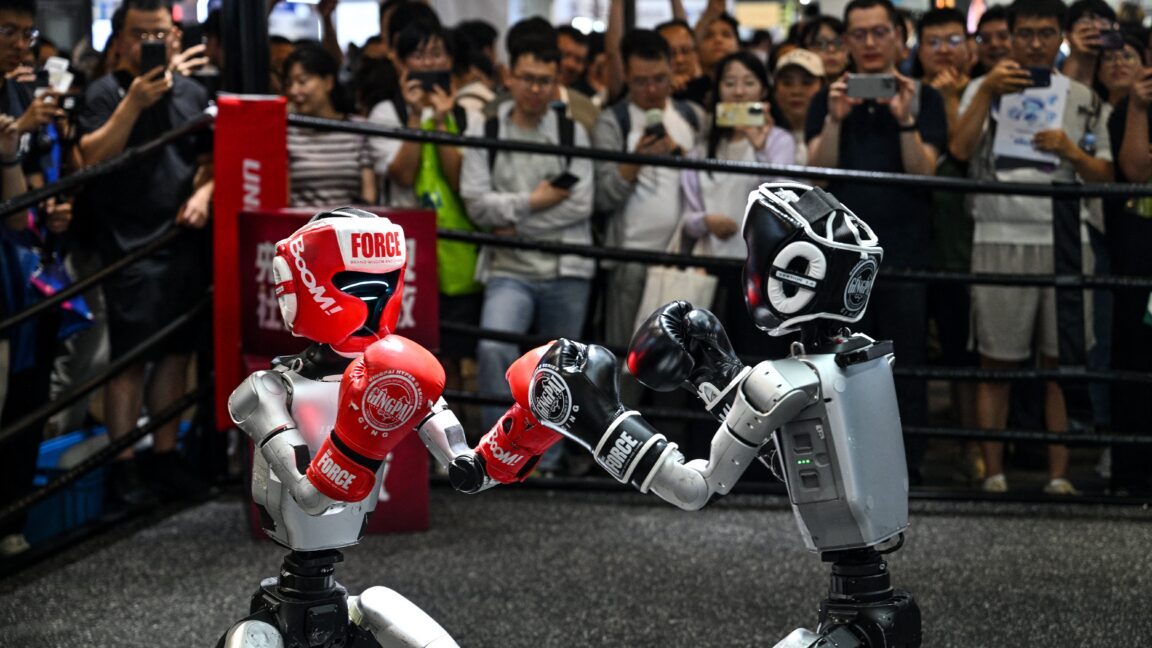
The U.S. Federal Communications Commission added foreign-produced advanced robotic devices to its Covered List, banning the import of new foreign-made humanoid robots, quadrupeds, and autonomous mobile machines such as robot vacuums. The prohibition, driven by executive branch national security concerns over cybersecurity and remote surveillance vulnerabilities, directly affects affordable robots and hardware produced by Chinese companies like @Unitree and @Roborock.
That’s all for today’s digest for 2026/07/29! We picked and processed 20 articles. Stay tuned for tomorrow’s collection of insights and discoveries.
See you in the next one! 🚀
