
#BrainUp Daily Tech News – (Monday, January 19ᵗʰ)
Welcome to today’s curated collection of interesting links and insights for 2026/01/19. Our Hand-picked, AI-optimized system has processed and summarized 30 articles from all over the internet to bring you the latest technology news.
As previously aired🔴LIVE on Clubhouse, Chatter Social, Instagram, Twitch, X, YouTube, and TikTok.
Also available as a #Podcast on Apple 📻, Spotify🛜, Anghami, and Amazon🎧 or anywhere else you listen to podcasts.
1. Hackers claim to have Target source code for sale following recent cyberattack
Hackers from the ransomware group Ransom House have claimed to possess and are attempting to sell proprietary source code stolen from Target after a recent cyberattack. The group posted samples of the source code as proof, which includes sensitive internal details such as software configurations and payment processing data. This development poses a significant cybersecurity risk to both Target and its customers due to potential exploitation of vulnerabilities contained in the leaked code. The ongoing situation highlights the growing threat of ransomware groups targeting large corporations to extract financial gain by leveraging stolen digital assets. Addressing this breach requires urgent incident response and enhanced defensive measures to prevent further data exposure and mitigate damage.
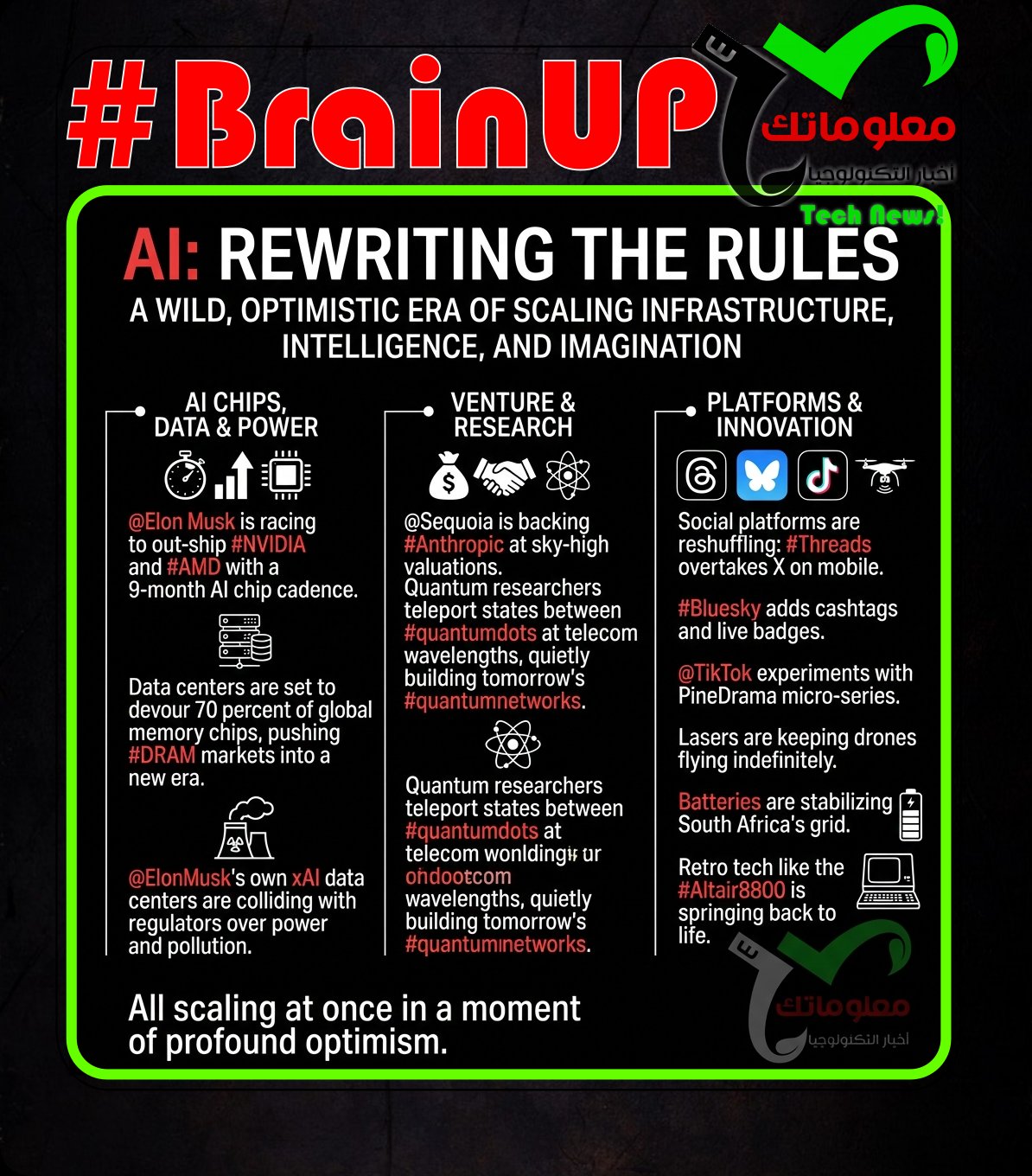
@Elon Musk outlined a 9-month design cadence for new #AI processors at @Tesla, spanning #AI5 to #AI9, with the aim of becoming the highest-volume AI chips in the world and potentially catching up to @NVIDIA and @AMD. Evidence: He said #AI5 is nearly finished and #AI6 is in early stages, with #AI7, #AI8, and #AI9 planned. Analysis: The cadence would require incremental, platform-based updates that reuse core architecture, memory hierarchy, safety frameworks, and IP, since major architectural changes would lengthen the schedule. Automotive safety requirements, such as ISO 26262, ADAS, and cybersecurity, drive long lifecycles and deterministic performance, which historically slow hardware cadences compared with data-center accelerators. Link back: The plan might be feasible given overlapping development and a single internal customer, but its success depends on constrained evolution and may still hinge on how well the software and ecosystem from @NVIDIA and @AMD stack up.
3. Erroneously Assembled 1974 Altair 8800 Computer Gets Fixed and Enjoys First Run in 2026
A 1974 #Altair8800 computer powered by an Intel 8080 chip, initially assembled incorrectly, was successfully repaired and ran its first program after 52 years. The restoration was achieved by #retrocomputing enthusiasts who identified and corrected the early assembly errors. This event highlights the challenging nature of early personal computers and the dedication of the vintage technology community to preserving computing history. The Altair 8800 is significant as one of the first commercially successful microcomputers, instrumental in sparking the personal computing revolution. The successful operation of this machine decades later underlines the durability and historical importance of early computing technology.
4. Microsoft confirms some Windows 11 PCs can’t shut down or hibernate after latest Patch Tuesday
Microsoft has acknowledged that some Windows 11 users experience issues shutting down or hibernating their PCs following the latest Patch Tuesday updates. The problem affects devices running Windows 11 21H2 and relates to the KB5025309 update, which causes power options like shutdown and hibernate to stop functioning correctly. Microsoft recommends workarounds such as using the command line to shut down or disconnecting power to force shutdown if normal methods fail. This issue highlights the importance of thorough testing in updates and reflects challenges in maintaining operating system stability. Users affected are advised to watch for future patches addressing the problem and use provided temporary solutions.
An out-of-band emergency fix from @Microsoft addresses problems introduced by the January 2026 Windows security update, including Windows 11 devices that could not shut down. The patch fixes a bug where Windows 11 devices would only restart when shutting down or hibernating and restores remote login via #remote connection apps on Windows 10 and Windows 11. Microsoft says the shutdown issue affected Secure Launch during startup, while remote login failures were caused by credential prompts. WindowsLatest notes lingering problems such as blank screens or Outlook Classic crashes after the update, and Microsoft previously issued an October emergency fix for the Windows Recovery Environment. Microsoft also continues to offer Extended Security Updates for Windows 10, signaling ongoing support for users not yet on #Windows11.
6. Sequoia to invest in Anthropic, breaking VC taboo on backing rivals: FT | TechCrunch
Sequoia @Sequoia is reportedly joining Anthropic’s blockbuster round, a move that breaks VC tradition by backing a rival in the same #AI field. The round is led by @GIC and @Coatue, each contributing $1.5B, with Anthropic seeking $25B+ at a $350B valuation; @Microsoft and @Nvidia have pledged up to $15B, with other investors adding $10B+. The move comes despite OpenAI’s prior protections around confidential information, as @Sam Altman and @OpenAI have suggested investors could be restricted from non-passive investments in competitors, a dynamic Sequoia’s history with @Sam Altman and ties to @xAI and other Musk ventures complicates. This episode underscores how Sequoia’s portfolio choices sometimes blur lines between competition and collaboration, reflecting evolving risk appetites in a fast-moving #AI funding landscape and inviting observers to watch how the market navigates conflicts of interest and alliances.
7. South Africa Turns to Batteries to Combat Electricity Crisis
South Africa is increasingly investing in battery storage technology to address its ongoing electricity supply challenges and reduce reliance on the unstable grid. The government and private sector collaborations focus on large-scale battery projects to stabilize power, especially during peak demand periods, mitigating frequent blackouts. These initiatives illustrate a strategic shift toward #energy resilience and #renewable integration, with batteries enabling more efficient management of solar and wind power. The technology supports South Africa’s goals for a cleaner energy system and economic stability by reducing the costs and social impacts of power outages. This battery deployment demonstrates how innovation can help countries struggling with energy infrastructure improve reliability and sustainability.
8. Trump’s voice in a new Fannie Mae ad is generated by artificial intelligence, with his permission
A Fannie Mae ad features a voice that sounds like @Donald Trump, but the narration is generated by #AI voice cloning with his permission, per the video disclaimer. The disclaimer in the video confirms the voice is AI-cloned and reading the text. This illustrates how #AI technology is used to replicate real voices in advertising. The approach highlights the importance of clear disclosure when a public figure’s likeness is used. It underscores the broader impact of AI on media, advertising, and how audiences gauge authenticity.
9. Laser based charging system aims to keep drones airborne indefinitely
A laser-based wireless power system from PowerLight Technologies aims to keep drones airborne indefinitely by transmitting kilowatt-class power to an onboard receiver over distances approaching 2 km. The autonomous ground transmitter tracks the aircraft and directs a laser beam with precision, delivering energy as a ‘wireless power line in the air’ and forming an intelligent mesh energy network, according to @TomNugent, CTO and co-founder. The onboard receiver, about six pounds, converts the laser energy into electrical power to recharge the drone’s batteries and includes telemetry plus a bi-directional optical data link to the ground station. Testing has shown precise optical tracking, power delivery to altitudes up to 5,000 ft, and a layered safety system for mixed airspace. PowerLight is integrating the system with the #K1000ULE long-endurance drone through @FatemaHamdani and Kraus Hamdani Aerospace, with demonstrations planned to prove sustained in-flight charging and theater-wide mission persistence.
10. Former USDS Leaders Launch Tech Reform Project to Fix What DOGE Broke
The article outlines #Tech Viaduct, a reform initiative led by former USDS administrator @Mikey Dickerson, aimed at rebooting how the U.S. delivers services and overcoming the bureaucratic inertia exposed by the DOGE era. The project mobilizes an advisory panel that includes @Denis McDonough, @Alexander Macgillivray, @Marina Nitze, and @Robby Mook, with the goal of producing a master plan and initial recommendations by the spring and hoping for White House adoption by 2029 if a Democrat wins. Dickerson emphasizes that the system is hard to change because of fragmented efforts, arguing for a transformed procurement process, merit-based hiring, and stronger oversight through #inspector generals to prevent new failures. Funding from the liberal think tank #SearchlightInstitute, budgeted at about $1 million, helped launch the effort after a chance meeting between @Denis McDonough and @Robby Mook, tying Tech Viaduct to a broader push to reboot government services for citizens.
11. DRAM Makers Gear Up for AI-Driven Demand in Data Centers Amid Semiconductor Shortage
As artificial intelligence (AI) technologies increasingly drive data center demand, memory chip manufacturers like #DRAM makers are adjusting strategies to address a growing semiconductor shortage. The surge in AI workloads requires significant memory capacity and bandwidth, prompting companies to increase production despite supply chain challenges. Industry trends show that AI’s impact will reshape semiconductor market dynamics, influencing pricing and availability of DRAM products. This evolving landscape underscores the critical link between AI advancements and semiconductor manufacturing, highlighting the need for innovation and resilience in supply chains.
Data centers are projected to consume 70% of memory chips produced in 2026, significantly increasing demand in this sector and causing a supply shortfall. This rising consumption is driven by expanding cloud and AI workloads, which require higher memory capacities and faster speeds. The limited memory chip supply resulting from increased data center demand is expected to extend the chip shortage beyond traditional markets like PCs and smartphones. Industry experts warn that this shift will intensify competition for memory chips, affecting availability and pricing across multiple segments. This trend underscores the growing importance of data center technology in shaping the memory chip market landscape.
13. Plastic surgeons are now using fat harvested from dead people in controversial new procedure
A controversial method called alloClae now allows plastic surgeons to use a fat filler derived from deceased donors to add volume and contour in procedures such as breast and buttock augmentation. Manufactured by #Tiger Aesthetics, alloClae is processed from intact donor fat cells and their growth factors, promising instant volume, shorter recovery times, and no anesthesia. Pricing reportedly ranges from $10,000 to $100,000, and demand is rising as patients who have rapid weight loss from GLP-1 drugs like #Ozempic seek quicker, lasting results. Surgeons such as @Sachin Shridharani acknowledge the macabre aspect but say donor fat can be a natural alternative to synthetic fillers and implants, with the graft eventually becoming part of the patient. Tiger Aesthetics’ Caroline Van Hove says production will expand to meet demand as interest grows, reflecting a broader shift in cosmetic surgery toward body-contouring options after rapid weight loss.
14. Elon Musk’s xAI datacenter generating extra electricity illegally, regulator rules
@Elon Musk’s xAI datacenters in Tennessee were ruled illegal by the EPA, which found that dozens of methane gas turbines powering Colossus 1 and Colossus 2 were not exempt from air permits. The agency revised policies around #gasTurbines, stating that operating these machines requires air permits even when used on a portable or temporary basis; at Colossus 1, as many as 35 generators powered the site before permits were issued for 15 and now 12 operate under permit. This ruling is a win for Memphis activists and the #NAACP, which filed suit under the #CleanAirAct, arguing that unpermitted turbines added pollution to nearby historically Black neighborhoods, as methane turbines emit #NOx linked to cancer, asthma and other respiratory diseases, with the EPA estimating up to 296 tons of NOx reductions by 2032. xAI says the turbines are needed to power its supercomputers, noting Colossus 1 draws about 150 MW and Colossus 2 is larger, with a third data center in Southaven; Musk announced the MACROHARDRR supercomputer would require nearly 2 GW of computing power. The action tightens regulatory oversight on data-center power and highlights environmental-justice concerns around air quality, potentially shaping future expansion and enforcement.
15. NASA Artemis mission to the moon delayed to 2028
NASA’s Artemis mission, aimed at returning humans to the moon, has been delayed to 2028 due to technical and budgetary challenges. The original plan targeted a moon landing by 2024, but issues with the Space Launch System (SLS) rocket and the Orion spacecraft have pushed back the timeline. These setbacks highlight the complexities and costs of deep space exploration, requiring additional time for testing and development to ensure mission safety and success. The delay impacts NASA’s broader goals of establishing a sustainable human presence on the moon and preparing for future Mars missions. Consequently, the revised schedule reflects the agency’s commitment to cautious progress amid the ambitious #Artemis program.
16. CEO of Iranian telecom operator fired for failing to block internet
The chief executive of Irancell, @AlirezaRafiei, was dismissed for failing to comply with Iran’s internet shutdown order. Fars news agency reported he was removed after about a year in the role, citing ‘disobedience to the orders of decision-making institutions in implementing the announced policies regarding the restriction of internet access in crisis situations’. Iran cut off all communications on January 8 amid protests, with internet access largely blocked, though some services began to ease over the weekend and access to Google was restored. Irancell, founded in 2005 and claiming 70 million subscribers, highlights the scale of the state’s effort to constrain #internet during #crisis in #Iran, with authorities saying access will be restored gradually.
17. Startup company wants to light up the night skies with reflected sunlight
Reflect Orbital plans to brighten the night by deploying up to 4,000 sky mirrors in orbit to reflect sunlight onto Earth after dusk. The mirrors, up to 180 feet (55 meters) wide, would operate in a sun-synchronous orbit to catch daylight while targets on the ground are in darkness, and the project’s first satellite, #Earendil-1, is awaiting FCC license with a planned 2026 demonstration. The moving bright reflections could be visible as a bright object across the sky, potentially four times brighter than the full Moon and detectable up to about 60 miles away, raising concerns for observatories, habitats, and general night-sky darkness. Space debris risks mount as more reflective satellites enter Low Earth Orbit, complicating cleanup and increasing the chance of collisions, while satellite trails could contaminate space telescope imagery and widen skyglow. The debate centers on balancing potential benefits of extra illumination for cities and energy sites against the loss of dark skies and the safety challenges of a busier orbital environment, underscoring the need for regulatory scrutiny as #Earendil-1 advances.
18. Credential-stealing Chrome extensions target enterprise HR platforms
A wave of malicious Chrome extensions is targeting enterprise HR platforms to steal user credentials and sensitive information. These extensions impersonate legitimate HR tools, such as BambooHR and Workday, harvesting usernames, passwords, and personal details when users attempt to log in. The stolen credentials are then sent to attacker-controlled servers, increasing the risk to corporate environments and employees’ private data. This campaign exploits trust in corporate software and the widespread use of browser extensions to bypass traditional security defenses. Organizations are urged to scrutinize browser add-ons and enhance monitoring for unauthorized access to HR systems to mitigate these risks.
19. XREAL files lawsuit against rival smart glass maker Viture
XREAL has filed a federal lawsuit in Texas against rival smart glasses maker Viture, accusing the company of illegally incorporating @XREAL’s patented tech into its Luma Pro, Luma Ultra and Beast AR glasses and pursuing a pattern of IP infringement. XREAL says the case targets more than a single patent and notes a German preliminary injunction that froze Viture’s sales, with potential spillovers to nine other European nations including France, Italy and Spain, affecting Pro, Luma and Luma Pro models. Viture denies infringement and questions the patent’s strength, while accusing XREAL of making false claims about a ban across nine European countries and saying it is taking legal action in response. XREAL says it holds more than 800 patents and patent applications globally around AR, VR and related tech, and claims Viture has fewer than 70 with none in the US or Europe. At CES 2026, XREAL unveiled new AR glasses with @ASUS, underscoring the high-stakes rivalry in this space. #AR #VR #patents #CES2026
20. Threads edges out X in daily mobile users, new data shows | TechCrunch
Threads now leads X in daily mobile usage, with 141.5 million DAU on iOS and Android as of January 7, 2026, compared with 125 million for X. X still dominates on the web, but Threads’ mobile growth appears tied to longer-term trends rather than the Grok controversy. Growth has been helped by cross-promotions from @Facebook and @Instagram, plus a stronger emphasis on creators and rapid feature rollouts. Threads has added features like interest-based communities, better filters, DMs, long-form text, disappearing posts, and even testing games, all aimed at boosting daily usage. Meta had reported Threads surpassed 400 million MAU in Aug 2025 and about 150 million DAU in Oct 2025, indicating sustained growth even as X maintains a large web audience.
21. ASUS 800-Series Boards Are Killing Ryzen 7 9800X3D Chips, Five Dead CPU Reports in Two Weeks
ASUS’s 800-series motherboards are reportedly causing damage to AMD Ryzen 7 9800X3D CPUs, with at least five reports of dead processors emerging within two weeks. Users have observed that the issues primarily occur on the ASUS ROG Crosshair X670E Extreme and ASUS ROG Crosshair X670E Hero models, leading to CPU failures shortly after system startup or during operation. The problem appears linked to the motherboard’s VRM or power delivery design, which might cause excessive stress on the CPUs. This raises concerns about hardware reliability and compatibility between ASUS’s latest 800-series boards and AMD’s Ryzen 7 9800X3D, impacting consumer trust and warranty considerations. The situation highlights the need for ASUS to address these hardware conflicts promptly to ensure the longevity and stability of both the motherboard and CPU partnerships.
22. TikTok’s latest spinoff app feels a lot like Quibi, but with shorter and cornier content
@TikTok’s PineDrama spins up minute-long, serialized micro dramas designed to keep users scrolling within a familiar TikTok-style feed. The shows are vertical, roughly a minute per episode, with cliffhangers that push viewers to the next installment, and the app includes a Discover tab, favorites, and real-time reactions, with examples like The Officer Fell For Me and Married to my past life’s nemesis, all currently free and without ads, #microdramas. This format mirrors short-form storytelling and social interactivity as a core strategy, blending entertainment with engagement rather than traditional long-form narratives. The approach nods to prior experiments in ultra-short formats, notably @Quibi, which briefly popularized sub-10-minute episodes before folding, suggesting @TikTok may be testing whether such a model can sustain attention and monetization within its platform. The takeaway is that PineDrama signals a broader push toward bite-sized, socially driven drama within major social apps, balancing familiar features with a new serialized twist.
23. Intel’s Upcoming Core Ultra 9 Mobile CPU Outperforms Most Desktop Counterparts in New Benchmark
Intel’s upcoming Core Ultra 9 290HX mobile processor has demonstrated performance that surpasses many desktop CPUs and closely approaches its flagship Core Ultra 9 285K model in single-threaded tasks. In a recent benchmark, the 290HX nearly matched the 285K, highlighting Intel’s advancement in bridging the performance gap between mobile and desktop CPUs. This marks a significant development in mobile computing, as traditionally desktop processors have held a clear lead in raw performance metrics. The strong showing suggests that Intel’s mobile chips are becoming more capable for demanding applications, potentially reshaping expectations about mobile workstation capabilities. This progress reflects Intel’s strategy to enhance mobile CPU performance while maintaining energy efficiency, making high-end mobile processors a viable alternative to many desktop configurations.
24. Quantum state teleported between quantum dots at telecoms wavelengths – Physics World
A team teleported a quantum state between photons produced by two different #quantumdots separated by metres, illustrating a proof-of-principle step toward future #quantumnetworks. One dot emits a single photon while the other emits an entangled photon pair; a photon from the pair interferes with the single photon, generating a superposition that transfers the information to the distant partner photon via #quantumteleportation. To achieve indistinguishability, the researchers used #quantumfrequencyconverters to spectrally match the photons and shift their wavelengths from around 780 nm to telecom band 1515 nm without disturbing the quantum state. The Stuttgart study, published in Nature Communications, is paired with an independent campus-scale demonstration by @Rinaldo Trotta’s group at Sapienza, both underscoring the maturity of #quantumdots for networking and the feasibility of interfacing remote sources. By operating at telecom wavelengths, the work aligns with existing optical-fibre networks and represents a concrete step toward long-distance quantum repeater networks and real-world quantum communication.
25. Spotify’s 3rd price hike in 2.5 years hints at potential new normal
Spotify’s third price hike in 2.5 years will raise Premium to $13 and push other plans higher, signaling a shift toward a higher-price normal. In February, Premium moves from $12 to $13; Student from $6 to $7; Duo from $17 to $19; and Family from $20 to $22, while Basic remains $11. Spotify has previously raised prices in July 2023 and July 2024. The company ties pricing to value delivered and ongoing investments, pointing to features like lossless audio, music videos, Messages, and a new Hollywood podcast studio, while it also notes it paid $10 billion in music royalties in 2024 and reports YoY growth in Premium subscribers (12%), Basic users (11%), and total MAUs (11%), with gross profit up 9% to $1.56B. Still, critics cite how much artists earn and point to related controversies, including investor activity and ad campaigns, suggesting friction around monetization even as prices rise. Taken together, the moves suggest @Spotify may pursue a steadier path of price adjustments to fund ongoing features, artist payouts, and new ventures, potentially signaling a #new_normal for streaming pricing.
26. Bluesky rolls out cashtags and live badges amid a boost in app installs
Bluesky has introduced new features including cashtags and live badges to enhance user interaction and credibility on the platform, coinciding with a notable increase in app installs. Cashtags allow users to link directly to stocks and companies, facilitating discussions around investments and business updates. Live badges authenticate real-time engagement by prominent accounts, boosting transparency and trust within the community. These additions follow a surge in user growth, indicating Bluesky’s strategic efforts to attract and retain users by integrating financial and verification elements. Together, these updates position Bluesky as a more dynamic social media environment focused on verified information and user engagement.
27. Sanders and Oz clash over health care in Alabama Senate debate
In a Senate debate in Alabama, candidates @BernieSanders and Dr. Mehmet Oz articulated contrasting visions on health care policy. Sanders advocated for expanded public health coverage and emphasized the importance of affordable health care access, citing the need to protect and build on #Medicare and #Medicaid programs. Oz focused on the role of technological innovation such as #robots and #ultrasounds in medical treatment, proposing market-driven solutions to improve care quality and efficiency. This clash underscores differing approaches to health care reform, with Sanders prioritizing public welfare and Oz highlighting private sector advancements. The debate highlights the broader national discourse on how best to achieve accessible, effective health care.
28. TSA’s Use of Facial Recognition Raises Traveler Rights Concerns
The increasing use of #facialrecognition technology by the Transportation Security Administration (#TSA) has sparked significant concerns about traveler privacy and rights. Critics highlight that this technology often operates without full transparency or explicit passenger consent, raising ethical and legal issues surrounding surveillance and data protection. Incidents of misidentification and potential biases further complicate its deployment, disproportionately affecting marginalized groups. Legal experts and privacy advocates emphasize the need for clear regulations and oversight to ensure that security measures do not undermine civil liberties. This situation underscores the broader tension between enhancing security through technology and safeguarding individual freedoms in public spaces.
29. Iran plans permanent break from global internet, say activists
Iran plans to permanently break from the global internet, turning international access into a government privilege and restricting most Iranians to a domestic, parallel network #nationalInternet #globalInternet. A confidential plan described by @Filterwatch cites Iranian sources and says state media have signaled a permanent shift, warning that unrestricted access will not return after 2026, with those who pass security checks able to access a filtered global internet while others would rely on a national internet powered by #whitelisting. The current shutdown began on 8 January amid anti-regime protests, has been among the most severe in history, and officials say the international internet will stay off until Nowruz; analysts say the move is plausible but costly, with potential huge economic and cultural disruption and stronger control. If realized, the plan would deepen state surveillance and censorship by enabling authorities to monitor and block traffic at scale, illustrating a long-running strategy to curb online dissent.
30. Musk wants up to $134B in OpenAI lawsuit, despite $700B fortune | TechCrunch
@ElonMusk seeks as much as $79 billion to $134 billion in damages from #OpenAI and #Microsoft, arguing that OpenAI defrauded him by abandoning its nonprofit mission and that he should be compensated as an early startup investor who saw returns many orders of magnitude greater than his initial $38 million seed. An expert, C. Paul Wazzan, calculates wrongful gains of $65.5 billion to $109.4 billion for OpenAI and $13.3 billion to $25.1 billion for Microsoft, whose 27% stake is noted, based on OpenAI’s current $500 billion valuation. The move highlights the scale of the dispute while underscoring that Musk’s personal wealth—around $700 billion—would absorb such a payout without altering the broader dynamic of his fortune. The legal strategy appears as much about signaling leverage and framing the case within his broader narrative as about a pure financial claim, with OpenAI warning that Musk will mount deliberately outlandish claims as the trial in Oakland, CA, approaches in April. The article situates the lawsuit amid other developments, including a $1 trillion pay package for Musk approved by Tesla shareholders and ongoing debates over OpenAI’s mission and governance.
That’s all for today’s digest for 2026/01/19! We picked, and processed 30 Articles. Stay tuned for tomorrow’s collection of insights and discoveries.
Thanks, Patricia Zougheib and Dr Badawi, for curating the links
See you in the next one! 🚀
