
#BrainUp Daily Tech News – (Friday, February 27ᵗʰ)
Welcome to today’s curated collection of interesting links and insights for 2026/02/27. Our Hand-picked, AI-optimized system has processed and summarized 29 articles from all over the internet to bring you the latest technology news.
As previously aired🔴LIVE on Clubhouse, Chatter Social, Instagram, Twitch, X, YouTube, and TikTok.
Also available as a #Podcast on Apple 📻, Spotify🛜, Anghami, and Amazon🎧 or anywhere else you listen to podcasts.
1. Netflix Backs Out of Warner Bros. Bidding, Paramount Set to Win
@Netflix is declining to raise its bid for #WarnerBros, effectively positioning @DavidEllison’s @Paramount and Skydance as the likely winner for the studio. Co-CEOs @TedSarandos and @GregPeters said the deal became “no longer financially attractive” at the price needed to match Paramount Skydance’s latest offer, emphasizing Warner Bros. was a “nice to have” at the right price rather than a “must have” at any price, despite believing their negotiated transaction would have created shareholder value with a clear path to #regulatory approval. Warner Bros. Discovery said its board had determined Paramount’s bid was a “superior proposal,” and CEO @DavidZaslav said adopting the Paramount merger agreement would create tremendous shareholder value. Paramount Skydance’s proposal was $31 per share with added terms including a ticking fee of $0.25 per quarter starting after Sept. 30, 2026, a $7 billion regulatory termination fee, and an agreement to cover the $2.8 billion termination fee Warner Bros. would owe Netflix to exit the existing merger agreement. The news sent Netflix shares up more than 10 percent in after-hours trading, while the article notes a Paramount deal is still not guaranteed due to U.S. and European regulators.
2. Statement from Dario Amodei on our discussions with the Department of War
@Dario Amodei says Anthropic views using AI to defend the United States and other democracies as existentially important, and has proactively deployed Claude across the Department of War and the intelligence community for mission critical work like intelligence analysis, modeling and simulation, operational planning, and cyber operations. He claims Anthropic was the first frontier AI company to deploy models on US government classified networks, at the National Laboratories, and to provide custom models for national security customers, and says the company has accepted short term costs by cutting off Claude access for firms linked to the Chinese Communist Party and advocating strong #export controls on chips. He emphasizes that the Department of War, not private companies, makes military decisions, and that Anthropic has not objected to particular military operations or tried to limit use ad hoc. He identifies two narrow exclusions that are not in Anthropic contracts and should not be added: #mass domestic surveillance, which he argues is incompatible with democratic values and enables assembling legally purchased data into comprehensive profiles at massive scale, and #fully autonomous weapons, which he says today’s frontier AI is not reliable enough to run safely without humans in the loop and without proper oversight and guardrails. He adds Anthropic supports lawful foreign intelligence and counterintelligence uses, supports partially autonomous weapons, and has offered to collaborate on R&D to improve reliability for autonomous systems, but says the Department of War has not accepted that offer.
@Anthropic is accusing other AI labs of running “industrial-scale” #distillation attacks on #Claude to extract its capabilities for training competing models, while the article notes @Anthropic has itself faced controversy over training on copyrighted material. @Anthropic claims #DeepSeek, #MoonshotAI, and #MiniMax created more than 24,000 fraudulent accounts and produced over 16 million exchanges with Claude, and says it attributed campaigns to specific labs via IP correlation, request metadata, infrastructure indicators, and partner corroboration. The company argues that although distillation can be legitimate, illicit distillation by foreign labs could remove safeguards and feed capabilities into military, intelligence, and surveillance systems, and it calls for coordinated action by industry and policymakers. The author highlights the apparent tension between @Anthropic defending its own training practices under fair use while condemning others using Claude outputs to train models, and also notes a privacy concern raised by an X user that the attribution claims imply user de-anonymization. Overall, the piece frames @Anthropic’s complaint as potentially “rich” given its history, and questions whether the foreign military framing will attract the same sympathy as claims from individual creators whose work may have been absorbed into #Claude.
4. This One Killer Feature Sets the Samsung Galaxy S26 Ultra Apart From All Other Phones
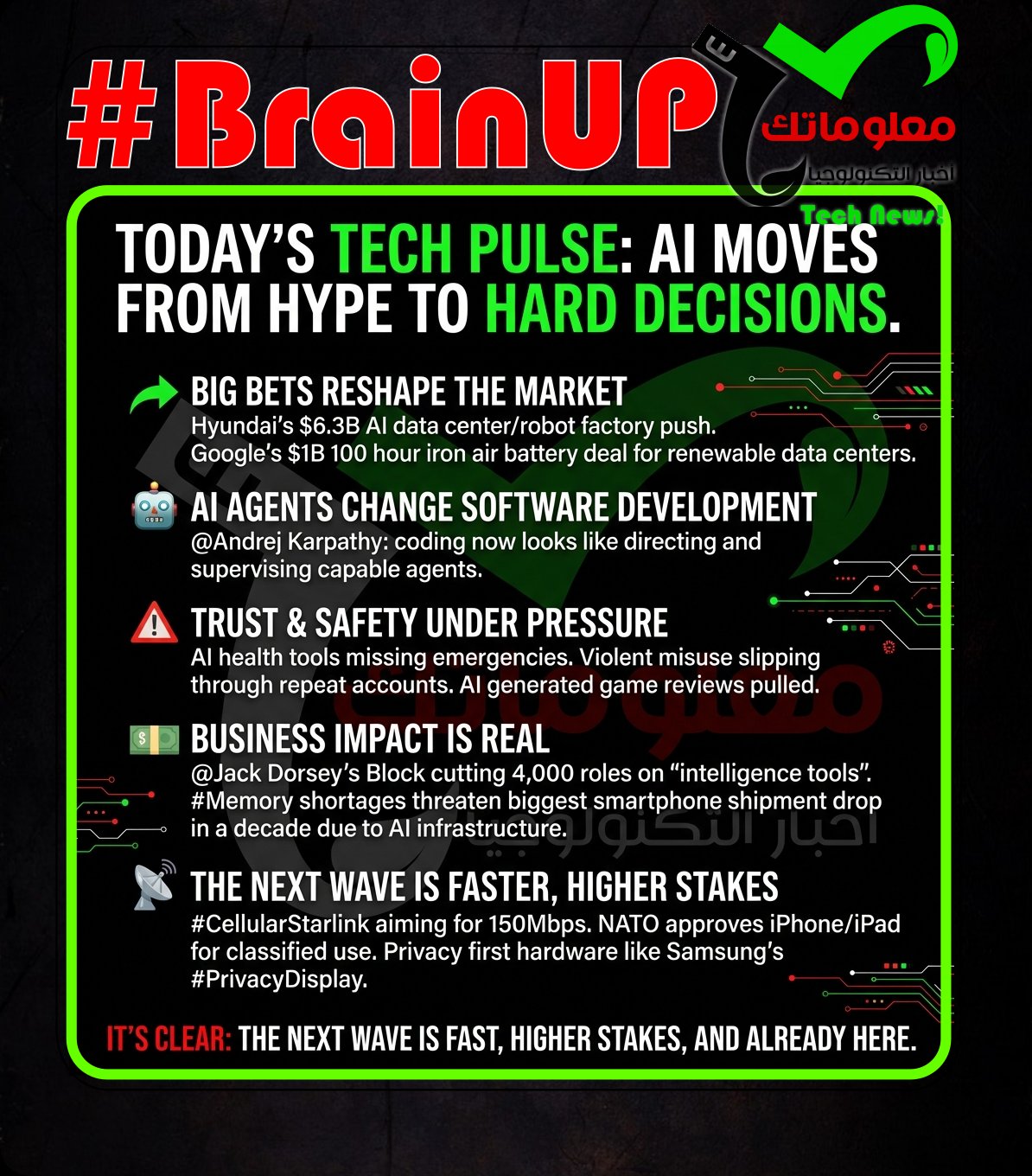
Samsung’s Galaxy S26 Ultra stands out in a market of lookalike upgrades by introducing a hardware feature called #PrivacyDisplay that blocks shoulder surfers with pixel level privacy rather than relying on #AI or software gimmicks. The display disperses light so off angle viewers see darkened content, works in portrait and landscape, and can be toggled quickly via Quick Settings, with options to apply it to specific apps, notifications, or sensitive inputs like PINs and passwords. @BenWood of CCS Insight argues the feature is easy to demonstrate and understand, and unlike aftermarket privacy screen protectors it is not an all or nothing solution, making it a meaningful differentiator. The article suggests emphasizing privacy could give Samsung an edge competitors cannot match via a simple software update, helping justify the phone’s $1,300 price and making the Ultra easier to sell versus its similar predecessors. Wood expects this kind of privacy capability to become a benchmark on premium phones and other devices over time, but for now it remains exclusive to the Ultra for early adopters.
5. Metacritic Removes Resident Evil 9 Review From Fake AI Writer
A Resident Evil Requiem review from UK site Videogamer was removed from #Metacritic after readers flagged it as apparently written by a fake, #genAI-created journalist. Kotaku reports that Videogamer’s human staff was recently gutted and the site has since been publishing what sources describe as AI-generated “slop,” including a 9/10 review credited to “Brian Merrygold,” an “experienced iGaming and sports betting analyst” with an AI-looking profile image and no real online history. Readers and critics said the review was heavy on clichés and generalities rather than concrete gameplay specifics, and one post on X highlighted the suspicious author profile image file name referencing #ChatGPT. Videogamer cofounder @Marc Doyle told Kotaku that the RE Requiem review and other 2026 Videogamer reviews were removed from Metacritic, raising concerns about quality control at a major review aggregator used by fans and cited by companies. The episode is presented as part of a broader shift after Videogamer’s sale to Clickout, with other similarly dubious bylines and social accounts appearing around the same time.
6. Fintech company Block lays off 4,000 of its 10,000 staff, citing gains from AI
Fintech company Block said it is laying off more than 4,000 employees, citing efficiency gains from #artificial intelligence. The company has about 10,000 employees, and the layoff announcement came from its CEO, with shares rising more than 20% in after-hours trading. The market reaction suggests investors viewed the cost and productivity changes tied to #AI as a positive signal for the business. The move links Block’s workforce reduction directly to its push for #AI-driven efficiency.
7. Andrej Karpathy says programming is “unrecognizable” now that AI agents actually work
According to @Andrej Karpathy, programming has become “unrecognizable” because #AI agents now reliably complete complex work quickly, shifting developers from writing code to assigning tasks in English and supervising results. He says that before December 2026, agents “barely worked,” but recent gains in model quality and longer task persistence have made them dependable enough to deliver finished outputs, such as an agent-built video analysis dashboard that took about 30 minutes of agent time after he described the task in plain English. Karpathy argues this compresses work that previously took days or an entire weekend into minutes, and changes the workflow into managing multiple agents in parallel while reviewing and iterating. He adds that humans are still needed for high-level direction, judgment, taste, oversight, iteration, and providing hints and ideas. He highlights how recent this shift is by contrasting it with his October 2025 view that #AI agent hype was exaggerated, noting he changed his mind after releases like #Opus 4.5 and #Codex 5.2.
8. Tumbler Ridge shooter had second ChatGPT account that OpenAI missed
@OpenAI said it banned Jesse Van Rootselaar from #ChatGPT last June for violating its #violent_activities policy, but later discovered she had circumvented its repeat-violator detection system and created a second account that the company initially missed. In a statement by Ann M. O’Leary, OpenAI’s vice president of global policy, the company said it found the second account only after the perpetrator’s name became public and then shared that account information with law enforcement. The company has faced pressure from the Canadian government after it emerged that although the shooter’s interactions, including scenarios of gun violence, were flagged for human review and known to at least a dozen people, the information was not reported to police before the Feb. 10 attack that killed eight people, including six children. O’Leary said OpenAI will change its system by teaming up with mental health and behavioural experts to assess difficult cases and by refining what counts as an “imminent and credible risk” warranting a police referral. The update is presented as a response to failures in detecting repeat accounts and in escalating high-risk content tied to the Tumbler Ridge shooting.
HYUNDAI MOTOR GROUP plans to invest approximately $6.3 billion in a new #AI data centre and #robot factory in South Korea by 2026. The investment aims to enhance #AI capabilities, develop advanced #robots, and strengthen #autonomous vehicle technology. This initiative aligns with HYUNDAI’s strategy to innovate in #automotive and #robotics industries, integrating AI into future mobility solutions. The project underscores South Korea’s broader goal of becoming a global leader in #tech innovation and smart manufacturing, with government support and industry collaboration driving progress.
10. China’s Covert Operation Used ChatGPT to Intimidate Critics Abroad, U.S. Says
The U.S. Department of Justice alleges that a state-linked Chinese influence campaign used #ChatGPT and other AI tools to generate threatening messages, call large numbers of critics abroad and flood their phones with automated calls that blended generative #AI responses with real audio in efforts to harass, intimidate and dissuade dissenting voices. According to U.S. officials, the operation exploited AI’s ability to produce natural-sounding language at scale to target journalists, activists and diaspora community members critical of China’s government, inundating them with messages that mixed personalized content with coercive themes designed to create fear and confusion. The Justice Department claims investigators traced parts of the campaign to infrastructure associated with Chinese government influence networks and is pursuing charges related to fraud and abusive automated calling, illustrating how generative AI can be weaponized for political repression across borders. The alleged scheme also highlights the challenge of regulating AI-driven influence operations that blur the line between automated outreach and unlawful harassment, raising questions about international norms, platform accountability and the responsibility of AI companies to prevent misuse of their tools in geopolitical contexts. The case underscores broader concerns about how authoritarian states may harness advanced AI to extend coercive reach into foreign societies and the need for legal frameworks to address transnational AI misuse.
11. New Android App Alerts You When Someone Nearby Is Using AI to Look at You
A new Android app has been released that uses the phone’s sensors and local signal analysis to notify users when someone nearby is using an AI-powered camera or scanning tool that could be capturing their image without consent, aiming to give people more awareness and control over unconsented visual surveillance in public spaces by detecting patterns associated with active camera use or AI scanning frequencies. Designed as a privacy-focused tool, the app monitors ambient signals and device activity to infer when a nearby device is taking photos, recording video or using augmented reality features linked to real-time #AI detection algorithms, and then pushes an alert so users can take action such as moving away or covering sensitive areas. Developers say the goal is not to block cameras but to raise situational awareness about how pervasive visual capture has become, reflecting growing public concerns about privacy erosion in an era of ubiquitous #ComputerVision and social media sharing. Critics note that the app’s detection capabilities are limited by hardware and environmental factors and may generate false positives, but proponents argue that even imperfect alerts can empower people to reclaim some control over how their image is captured in everyday life. The project illustrates how consumer tech is evolving to address surveillance anxieties by layering AI-informed sensing onto smartphones for personal privacy defense.
12. SpaceX’s Cellular Starlink Aims for Speeds That Reach 150Mbps Per User
@SpaceX says its next-generation #CellularStarlink satellite-to-phone service is targeting peak speeds of 150Mbps per user, aiming to approach terrestrial #5G performance. At the International Telecommunication Union’s Space Connect conference, policy lead @UdrivolfPica said the current T-Mobile #T-Satellite offering is constrained, supporting texts, select apps, and low-resolution video calls at an estimated 4Mbps per user. SpaceX plans to boost capacity by using newly acquired radio spectrum from #EchoStar and is seeking regulatory approval to launch 15,000 more satellites for the service, expanding from about 650 satellites today, to enable broader video, voice, and data services and cellular broadband use cases. The article frames the 150Mbps target against competitors such as #ASTSpaceMobile, which cites peak speeds of 120Mbps per coverage cell and plans a constellation buildout with partners #ATT and #Verizon. Overall, the upgrades in spectrum and satellite capacity are presented as the path for SpaceX to move from limited connectivity in dead zones to higher-quality broadband-like mobile service from space.
@Morgan Stanley argues that #AI is unlikely to make most people permanently unemployed, instead it will shift #job types and require workers to retrain for roles that often do not exist yet. The report contrasts dire forecasts from tech leaders like @Elon Musk, @Sam Altman, @Mustafa Suleyman, and @Dario Amodei, and notes investor anxiety reflected in software multiples pulling back about 33% since late 2025 as markets price in automation risk. Pointing to the last 150 years of technological change, including electrification, tractors, computers, and the internet, the analysts say disruption historically changed tasks and skills but did not eliminate labor, citing spreadsheets in the 1980s as a tool that automated bookkeeping while enabling more complex analysis and new finance roles. They expect a similar pattern of automation, augmentation, and net-new positions as AI becomes embedded in business operations. Examples of emerging roles include executive-level chief AI officers, expanded #AI governance jobs spanning data compliance, policy oversight, and information security, and blended positions such as product manager/engineer hybrids using natural-language coding and “vibe coding” to prototype and iterate.
A surge in RAM demand from computers and data centers powering #AI is creating a major #memory shortage, and IDC says it will drive the steepest single year decline in smartphone shipments in more than a decade. IDC forecasts 2026 shipments will fall 12.9% to 1.12 billion units, down from 1.26 billion in 2025, while average retail prices rise and smartphone #ASP climbs 14% to a record $523. IDC’s @Nabila Popal says the shortage is a structural reset that will reshape market size, vendor dynamics, and product mix, likely accelerating consolidation as smaller players exit and low-end vendors face sharper declines, and she warns sub $100 phones may become permanently uneconomical. Regionally, IDC expects shipments to drop more than 20% in the Middle East and Africa, and decline 10.5% in China and 13.1% in Asia Pacific excluding Japan, with RAM prices not stabilizing until mid 2027. Echoing the same pressure, @Carl Pei of Nothing says brands may have to raise prices by 30% or more or downgrade specs, undermining the “more specs for less money” model and shrinking entry and mid tier segments.
15. Burger King will use AI to monitor employee ‘friendliness’
@Burger King is rolling out a voice-controlled, @OpenAI-powered chatbot called “Patty” that will sit in employees’ headsets and monitor customer-facing “friendliness” in addition to helping with restaurant tasks. The system is trained to recognize phrases like “welcome to Burger King,” “please,” and “thank you,” and managers can use it to track a location’s friendliness performance, with the company also iterating it to detect conversational tone. Burger King says it is intended as a coaching tool, while the assistant also answers meal-prep and cleaning questions and ties into the point-of-sale system to alert managers about stockouts or broken machines. Patty is part of the broader #BK Assistant platform, with a pilot running in 500 restaurants now and a plan to reach all US locations by the end of 2026, signaling a push to combine operational automation with increased employee voice surveillance.
16. BMW Has M, Mercedes Has AMG, and Now Rivian Has RAD
@Rivian has formally launched the Rivian Adventure Department, or #RAD, turning what had been a skunkworks passion project into the company’s official high-performance division focused on pushing vehicle capability and developing products and experiences. The team’s work has already produced enthusiast-focused projects and features, including a one-off eight-seat R1T safari rig, record-setting #PikesPeak efforts led by engineer @Gardner Nichols, and #SoftSandMode that came from #RebelleRally testing and was later delivered to R1S and R1T via over-the-air update. RAD also developed the 2026 R1 Quad’s #KickTurn function and the #RADTuner, a powertrain equalizer that lets owners adjust 10 variables and includes Hill Climb and Desert Rally modes, plus the ability to save custom modes. Rivian is signaling broader ambitions by formalizing RAD ahead of the 2026 #FATIcERace, where it will run an R1S Quad with RAD livery, and by showing the pre-production R2 in RAD livery as the division emphasizes extreme-condition validation of systems, components, and algorithms.
Amid an AI-driven #memory boom, U.S. and other global tech firms are intensifying recruitment of South Korean engineers skilled in #HBM and #NAND to close the lead held by @Samsung Electronics and @SK hynix. Reported openings and offers include @NVIDIA roles for #HBM development with base pay up to US$258,750, @Apple advertising a #NAND flash product engineer role up to US$305,600, and @MediaTek seeking #HBM engineers around US$260,000, while @Qualcomm recruits #3D DRAM R and D talent in South Korea. @Google and @Broadcom, partners on #TPU development, are expanding #HBM-related hiring, and @Elon Musk amplified @Tesla Korea recruiting tied to a proposed #Terafab concept described as integrating foundry, memory production, and advanced packaging; @Micron is also hiring from Korea with reported packages exceeding twice current salaries plus about 300 million won signing bonuses. In response to the talent drain, @SK hynix paid a record bonus of 2,964 percent of monthly base salary after allocating 10 percent of its 47.2 trillion won operating profit to bonuses under a revised labor agreement, and @Samsung’s semiconductor division awarded up to 47 percent of annual salary for 2025. The reported pay levels, including Silicon Valley base salaries above US$300,000 before stock compensation, underscore how AI-linked #HBM demand is reshaping compensation and retention competition across the memory supply chain.
18. Leave big tech behind! How to replace Amazon, Google, X, Meta, Apple – and more
The article argues that people can leave #BigTech services because their dominance is tied to harms such as misinformation, polarisation, #personal-data mining and misuse, environmental negligence, tax avoidance, and deliberate #enshittification, and because their leaders are portrayed as aligning with the @Trump administration. It frames the relationship as a “Faustian pact”, where “free” high quality tools are paid for with attention, privacy, and data, and suggests that Europe in particular is looking for greener, more ethical, more independent alternatives. For #search, it says switching your default engine is easy and critiques @Google’s market dominance and quality, citing @Cory_Doctorow’s claim that Google worsens search so users spend longer on the site. It highlights Ecosia, a Berlin based engine that says it has planted nearly 250m trees since 2009, commits 100% of profits to climate action (over €100m), produces more clean energy than it uses via solar plants, and collects minimal user data, while noting its results can be less thorough and it relies largely on #Bing and ad clicks for revenue. As a more independent option, it points to UK based Mojeek, which says its results are independent of Google or Bing and that it does not track users or collect information, reinforcing the article’s message that practical alternatives exist if you prioritise privacy, ethics, and reduced platform power.
19. Google paid startup Form Energy $1B for its massive 100-hour battery | TechCrunch
@Google is paying about $1 billion to buy a long duration #energy storage system from Form Energy for a Minnesota data center powered by wind and solar. According to The Information, the deal covers Form Energy’s iron air battery, designed to deliver 300 megawatts continuously for 100 hours by using oxygen to rust iron and release electrons. The battery is intended to smooth output from 1.4 gigawatts of wind and 200 megawatts of solar tied to the project, and it marks Form Energy’s first major customer after years of development and building a West Virginia factory. With the order secured, CEO @Mateo Jaramillo said the company is raising a $500 million round, after $1.4 billion raised to date, and it plans to go public next year. The agreement highlights how multi day battery technology is becoming a key piece of renewable powered data center infrastructure.
20. CoreWeave Beats Fourth Quarter Revenue Estimates
CoreWeave, a U.S. cloud provider focused on GPU-based infrastructure for #AI workloads, reported fourth-quarter revenue that exceeded analysts’ estimates as strong demand for high-performance computing and generative AI services continues to drive growth, with executives citing expanded customer adoption across sectors including advertising, software development and scientific research. The company’s results reflect the broader trend of hyperscalers and enterprises investing heavily in dedicated AI processing capacity, where CoreWeave’s specialised GPU offerings — including systems built around #NVIDIA accelerators — appeal to organisations seeking scalable compute outside of the largest cloud providers. Strong performance also underscores how AI-driven demand for training and inference capacity is reshaping cloud consumption patterns, with more clients opting for bespoke configurations and flexible pricing models that support rapid experimentation and deployment. Investors responded positively to the earnings beat, viewing it as a sign that specialised infrastructure players can thrive alongside traditional cloud giants by carving out niches in the AI ecosystem. The results highlight that as demand for advanced AI services grows, companies that tailor offerings to deep learning and GPU-centric workloads may continue to capture market share and revenue momentum.
An independent study warns that #ChatGPT Health often fails to recognize medical emergencies and can miss suicidal ideation, raising concerns it could contribute to preventable harm or death. In the first safety evaluation of the feature, published in Nature Medicine, @Dr Ashwin Ramaswamy’s team tested 60 realistic patient scenarios, had three doctors set the appropriate level of care using clinical guidelines, and then compared those decisions to nearly 1,000 #ChatGPT Health responses generated under varied conditions. The system under-triaged more than half of urgent cases: in 51.6% of situations requiring immediate hospital care it advised staying home or booking a routine appointment, including an asthma scenario where it recommended waiting despite recognizing early signs of respiratory failure, and a simulation where it directed a suffocating woman to a future appointment 84% of the time. Researchers and external experts such as @Alex Ruani also noted high over-triage, with 64.8% of safe individuals told to seek immediate care, and that the model was nearly 12 times more likely to downplay symptoms when a “friend” in the scenario dismissed them. The findings intensify calls for clear #safety standards and independent auditing for AI health advice tools before wider use.
22. Chinese Law Enforcement Tried Using ChatGPT to Discredit Japan’s Prime Minister
OpenAI revealed that it **banned a ChatGPT account linked to Chinese law enforcement after the user attempted to use #ChatGPT to help plan an influence operation aimed at undermining support for Japan’s Prime Minister Sanae Takaichi by editing and polishing disinformation narratives following her criticism of human rights abuses in Inner Mongolia, a move many see as part of broader state-linked digital influence efforts that span across social media and online platforms. The action was highlighted in OpenAI’s threat disruption report as an example of how state actors may adapt AI tools for covert information operations and transnational repression, but the company said ChatGPT refused to assist in executing the smear campaign and the associated account was blocked, underscoring the challenge AI firms face in detecting and preventing the misuse of generative models in geopolitical contexts. OpenAI principal investigators noted that while influence operations are not new, using AI adds scale and sophistication, prompting questions about how to govern and safeguard AI tools against abuse by foreign actors in political landscapes.
IDC forecasts worldwide smartphone shipments will fall 12.9% YoY in 2026 to 1.1 billion units, the lowest annual volume in more than a decade, driven by a memory shortage crisis that IDC characterizes as a market shock rather than a temporary squeeze. @Francisco Jeronimo warns #Android manufacturers, especially low-end focused vendors, will be hit hardest as rising component costs squeeze margins and force price increases, while @Apple and @Samsung are positioned to better navigate the disruption and potentially gain share as competition tightens. @Nabila Popal calls the downturn a structural reset that will reshape long-term #TAM, accelerate consolidation, and shift the product mix, even as smartphone ASP rises 14% to a record $523 and memory prices, though expected to stabilize by mid-2027, are unlikely to return to prior levels, making the sub-$100 segment of 171 million devices permanently uneconomical. Regionally, declines are expected to be steepest where low-end smartphones dominate, led by Middle East and Africa at -20.6% YoY, with China at -10.5% and Asia Pacific excluding Japan and China at -13.1%. IDC expects stabilization by mid-2027, followed by a modest 2% recovery in 2027 and a stronger 5.2% rebound in 2028.
24. Block shares soar 24% as company slashes workforce by nearly half
#Block said it will lay off more than 4,000 employees, cutting its workforce from over 10,000 to just under 6,000, and its shares jumped more than 24% in extended trading. @Jack Dorsey told shareholders the company is choosing to restructure now rather than face repeated rounds of cuts later, citing expected efficiency gains from “intelligence tools.” CFO @Amrita Ahuja said the smaller teams will help Block move faster by using #AI to automate more work, positioning the company for its next phase of long term growth. The announcement came alongside fourth quarter results of adjusted EPS of 65 cents on $6.25 billion in revenue, gross profit up 24% to $2.87 billion, and a full year adjusted EPS outlook of $3.66 versus analysts’ $3.22. Block expects approximately $450 million to $500 million in restructuring charges, mostly in the first quarter, primarily for severance, benefits, and noncash share vesting expenses.
25. iPhone and iPad approved to handle classified NATO information
Apple says iPhone and iPad are the first and only consumer devices approved to handle classified information up to the #NATO restricted level across NATO nations, based on compliance with NATO nations’ #information assurance requirements. Following extensive evaluation by Germany’s Federal Office for Information Security, iPhone and iPad running iOS 26 and iPadOS 26 are certified for such use without requiring special software or settings, after exhaustive technical assessments, comprehensive testing, and deep security analysis of Apple’s built-in platform security. Apple attributes the approval to security designed in across hardware, software, and Apple silicon, citing protections such as encryption, #FaceID biometric authentication, and #MemoryIntegrityEnforcement. Claudia Plattner of @BSI says secure digital transformation depends on considering information security from the beginning, and @IvanKrstic says Apple’s approach replaces bespoke government security solutions with widely available devices whose protections are now uniquely certified. The certification includes listing iOS 26 and iPadOS 26 in the #NATOInformationAssuranceProductCatalogue, and Apple points readers to the Apple Platform Security guide for more details.
26. So, we’re getting Prada Meta AI glasses, right? | TechCrunch
Speculation is growing that @Meta could launch a Prada-branded version of its #AI glasses after @Mark Zuckerberg and Priscilla Chan were seen front row at Prada’s Fall/Winter 2026 show in Milan, where he chatted with Lorenzo Bertelli. CNBC previously reported that Prada #AI glasses were in the works, but Meta has not publicly announced a deal or commented on Zuckerberg’s appearance. Meta’s eyewear partner #EssilorLuxottica has sold the devices at scale, reporting over 7 million AI glasses sold in 2025, and Prada already has a long-term eyewear licensing relationship with EssilorLuxottica that runs through 2030 with renewal provisions to 2035. A Prada collaboration could extend Meta’s smartglasses into high fashion and bolster Meta’s brand as a luxury symbol, but it also collides with rising backlash against surveillance devices and scrutiny over potential facial-recognition features, including criticism and even an app designed to warn people when someone nearby is wearing the glasses.
27. Salesforce climbs on earnings beat as company commits $50 billion for buybacks
Salesforce shares rose after the company beat quarterly expectations and announced a major #share buyback authorization, even as its longer-range revenue outlook for fiscal 2027 came in slightly below Wall Street projections. For fiscal Q4 ended Jan. 31, Salesforce reported $3.81 in adjusted EPS on $11.20 billion in revenue versus LSEG expectations of $3.04 and $11.18 billion, with revenue up 12% year over year, its fastest growth in two years, and current remaining performance obligation of $35.1 billion above StreetAccount’s $34.53 billion consensus. CEO @Marc Benioff said Salesforce allocated $50 billion for new buybacks, citing depressed prices after the stock fell about 28% in 2026 through Wednesday’s close. The company guided fiscal Q1 adjusted EPS of $3.11 to $3.13 on $11.03 billion to $11.08 billion in revenue and forecast fiscal 2027 revenue of $45.8 billion to $46.2 billion, compared with LSEG’s $46.06 billion, while also raising its fiscal 2030 revenue target to $63 billion, helped by the $8 billion #Informatica acquisition that added $399 million in quarterly revenue. Against a backdrop of investor चिंता about #generativeAI disrupting software growth, Salesforce pointed to product moves like an AI-enabled #Slackbot assistant and additional deal activity, linking the quarter’s results and higher 2030 target to continued growth and capital returns.
In the late 1960s, a top-secret Soviet effort to bypass U.S. early warning radars produced recurring “UFO” sightings over the western USSR, until officials realized the sky phenomenon was evidence of a prohibited nuclear weapons test. According to space expert @James Oberg, the crescents seen at dusk in 1967 were tied to six tests of the R-36 Orb, part of the #FOBS concept: a nuclear missile derived from the SS-9 that could enter low-Earth orbit and later de-orbit over the United States after approaching from the south via the South Pole. The glowing letter “C” appearance came from the de-orbit braking maneuver, when an engine fired and exhaust was illuminated while cameras remained in shadow, and Soviet press interest stopped abruptly after the sixth incident. The system was described as a #first-strike weapon intended to surprise the U.S. and deliver a 2 to 3 megaton thermonuclear warhead against high value targets, though it was not accurate enough for hardened silos. American intelligence ultimately identified the orbit/de-orbit scheme and argued it conflicted with the emerging #OuterSpaceTreaty and U.N. Resolution 1884’s ban on placing nuclear weapons in orbit.
@Microsoft is developing a #MicrosoftEdge feature that will automatically open the #Copilot side pane when a Windows 11 user clicks a link in an #Outlook email that opens in Edge. The item, spotted on the #Microsoft365 Roadmap, says the pane would provide “contextual insights and actionable suggestion chips” based on the email and destination content, such as highlighting key points and recommending next actions without disrupting browsing flow. The author argues this kind of auto popping AI UI is likely to be unpopular amid broader AI backlash, and worries it could be enabled by default despite the roadmap wording that Edge “can” do this. The piece notes the feature is under development with a rollout expected to start in May 2026, though it could still be changed or abandoned. Overall, it frames the plan as another step in expanding Copilot and AI agents in Windows 11, but cautions @Microsoft to implement it carefully to avoid further user resentment.
30. Rare parade of planets to align in night sky, NASA says
@NASA says a rare #planetary alignment will let stargazers see six planets lined up in the western sky on Saturday, with the best viewing window just after sunset. Mercury, Venus, Neptune, Saturn, Uranus, and Jupiter will form a clear line along the #ecliptic, and astronomy guides recommend looking toward the western horizon about 30 minutes after sunset because Saturn, Mercury, and Venus set soon after the sun. Four planets, Mercury, Venus, Saturn, and Jupiter, should be visible to the naked eye, while Uranus and Neptune require binoculars or a telescope. @NASA notes such alignments happen every few years because the planets orbit in the same plane, and it points to prior alignments, including a seven planet lineup on Feb. 28, 2025 and another visible from Earth in August 2025. The agency also highlights the alignment as one of the first notable astronomical events of 2026, alongside upcoming events like a March 3 total lunar eclipse, a May 31 #blue moon, a June 8 to 9 Venus-Jupiter conjunction, and the Perseids and Geminids meteor showers later in the year.
That’s all for today’s digest for 2026/02/27! We picked, and processed 29 Articles. Stay tuned for tomorrow’s collection of insights and discoveries.
Thanks, Patricia Zougheib and Dr Badawi, for curating the links
See you in the next one! 🚀
