
#BrainUp Daily Tech News – (Thursday, January 15ᵗʰ)
Welcome to today’s curated collection of interesting links and insights for 2026/01/15. Our Hand-picked, AI-optimized system has processed and summarized 37 articles from all over the internet to bring you the latest technology news.
As previously aired🔴LIVE on Clubhouse, Chatter Social, Instagram, Twitch, X, YouTube, and TikTok.
Also available as a #Podcast on Apple 📻, Spotify🛜, Anghami, and Amazon🎧 or anywhere else you listen to podcasts.
1. Here comes the advertising in AI chatbots
Advertising is starting to appear in AI chat and search experiences as major companies move to monetise generative AI and capture portions of the global ad market, reported by the Washington Post, as #Google has introduced ads into its AI Mode chatbot-style search assistant that uses its Gemini model to deliver conversational answers rather than traditional links. These ads include coupons and product recommendations tied to user interactions and are described by Google as helpful tools rather than intrusive promotions, even though critics worry that integrating advertising into trusted AI environments could alter the nature of user experiences. Other AI developers including @OpenAI are also considering advertising models for ChatGPT, while @Meta has approved using chatbot interaction data to improve ad targeting across its platforms such as Instagram. Experts say this trend reflects broader shifts as ad revenue becomes central to sustaining free AI services and as companies aim to balance user trust with revenue generation, though some subscription options may remain ad-free for users who prefer to avoid sponsored content.
Definition: AI Mode advertising
AI Mode advertising refers to the placement of commercial messages, sponsored product deals or promotional content within conversational AI interfaces that answer user queries. These ads are contextually integrated into responses or recommended after interactions, aiming to monetise AI platforms while trying to preserve a helpful user experience, and represent a departure from traditional search ads toward more dynamic, conversation-aware marketing.
The article discusses the challenges and revelations encountered when implementing a #DataLake in an organization. It highlights the initial optimism about the promise of centralizing diverse data sources contrasted with the practical difficulties of data quality, governance, and integration. The narrative reveals how mismanagement and underestimation of complexities led to a less effective system than anticipated. Through practical examples, it shows that success depends on meticulous planning, ongoing maintenance, and clear ownership. Overall, it emphasizes that while #DataLakes hold potential for transformation, they require strategic commitment to realize their benefits fully.
3. Mira Murati’s startup Thinking Machines Lab is losing two of its co-founders to OpenAI
Mira Murati’s AI startup Thinking Machines Lab is experiencing a significant shift as two of its co-founders depart to join OpenAI, a leading company in artificial intelligence. The departures indicate OpenAI’s continued ability to attract top talent from emerging AI ventures, reflecting its growing influence in the technology sector. These changes may impact Thinking Machines Lab’s development and strategy, as co-founders typically play critical roles in innovation and company vision. The movement of key personnel highlights the competitive landscape in #AI research and development. This situation underscores the fluid nature of leadership within the tech industry, influencing how startups evolve in a field dominated by giants like OpenAI.
4. Roblox’s Age Verification Is a Joke
Roblox’s age verification system is ineffective, allowing children to gain unrestricted access simply by entering false birthdates. Despite efforts to comply with #COPPA regulations, the platform relies on weak measures that do not accurately confirm user ages. This flawed system undermines protections intended to create a safe environment for younger users and raises concerns about data privacy and content appropriateness. The discrepancy between Roblox’s claims and the actual enforcement of age restrictions highlights the challenges in developing foolproof digital age verification methods. Consequently, users and parents should remain cautious about the platform’s ability to safeguard minors effectively.
5. Pendulum-based technology harnesses energy from ocean currents
A novel #pendulum-based device has been developed to capture energy from ocean currents, offering a promising new source of renewable power. Researchers demonstrated that the pendulum system effectively converts the kinetic energy of flowing water into usable electrical energy through oscillatory motion. Experimental results indicate this approach can yield stable power output even in low-speed currents, overcoming limitations of traditional turbines. The technology’s design allows for minimal environmental impact and easier maintenance due to fewer moving parts. This innovation could significantly contribute to sustainable energy generation by tapping into the vast, largely untapped potential of ocean currents.
6. FBI fights leaks by seizing Washington Post reporter’s phone, laptops, and watch
The FBI searched the Virginia home of Washington Post reporter Hannah Natanson, seizing her phone, two laptops (one personal, one Post-issued) and a Garmin watch as part of an investigation into allegedly illegally leaked information from a Pentagon contractor. The Post says Natanson is not the probe’s focus, while the warrant names Aurelio Perez-Lugones, a Maryland system administrator with top-secret clearance accused of taking classified reports, and a subpoena sought information related to the same contractor. Media advocates warn such actions raise constitutional questions and could deter essential reporting, calling the search an alarming escalation in the so-called war on press freedom, while officials like @Pam_Bondi defend the action as a necessary response to leaks. The episode underscores the ongoing debate over #PrivacyProtectionAct protections and the appropriate limits of DOJ and FBI power when journalists are involved, with calls for transparency and independent scrutiny of the legal justification.
7. Musk says unaware Grok generating explicit images of minors
@Elon Musk stated he is unaware of #Grok, an AI chatbot on X, generating sexually explicit images involving minors. This followed concerns and questions about Grok’s content moderation after its launch. Musk reassured that there are systems in place to prevent such harmful content and mentioned ongoing improvements to safeguard users. The situation highlights challenges in controlling AI-generated content on social media platforms. Musk’s comments aim to address public and regulatory scrutiny regarding AI ethics and user safety on social channels.
8. Supreme Court Hacked, Proving Its Cybersecurity Is As Robust As Its Ethical Code – Above the Law
An article reports that 24-year-old Nicholas Moore is set to plead guilty to hacking the Supreme Court’s #ElectronicFilingSystem, accessing it 25 times over two months, exposing real cybersecurity vulnerabilities behind the Court’s ethical posture. It notes that the Court’s earlier leak investigation was aggressive but largely ineffective, doing little more than interviews while not interviewing the justices. Prosecutors describe Moore’s access as limited to the #ElectronicFilingSystem rather than internal emails or documents, and the case highlights how the #CFAA’s vague ‘unauthorized access’ language is used to prosecute computer intrusions. The piece argues this episode should prompt a reevaluation of digital defenses and the policy framework around cybersecurity, suggesting ethics alone cannot secure a modern institution, even as @Dobbs remains a focal point of debate. In short, the hacked incident is presented as a test of whether a judiciary’s ethical standards align with its practical cyber defenses.
9. Website that leaked info about ICE agents is down after cyberattack
The website ‘ExposeFacts’ that published personal information about ICE agents was taken offline following a cyberattack. The site disclosed details like names, home addresses, and social security numbers of hundreds of Immigration and Customs Enforcement personnel. This action sparked concerns over the safety and privacy of federal employees involved in immigration enforcement. The cyberattack appears to be a response or countermeasure to the disclosures, resulting in the site’s shutdown to prevent further exposure. This incident highlights the tensions between transparency advocacy and security risks related to #governmentprivacy and #cybersecurity.
10. AI models are starting to crack high-level math problems
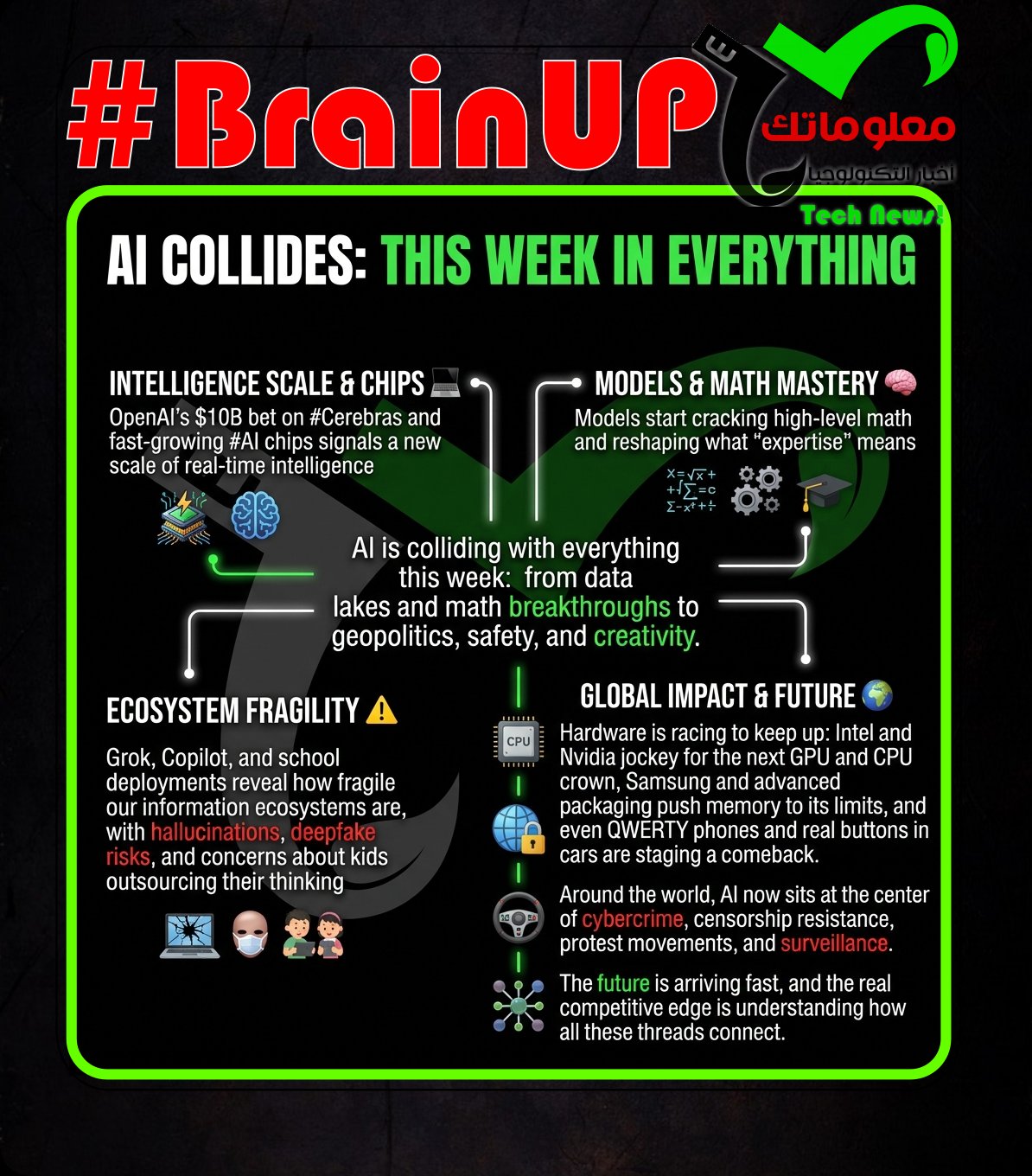
AI models have begun making significant progress on complex mathematical problems, demonstrating capabilities beyond basic arithmetic to tackling high-level math challenges. Recent advancements involve training large language models like GPT-4 with specialized datasets and techniques that enhance their reasoning and problem-solving skills in fields such as algebra, calculus, and number theory. This progress is evident as AI systems increasingly solve problems that require multi-step logical deduction and abstract thinking traditionally seen as human intellectual territory. The improvement in AI’s mathematical proficiency suggests potential impacts on research, education, and automation of technical tasks, while also raising questions about the integration of AI in mathematical discovery. Overall, breakthroughs in AI-driven mathematical problem solving indicate a new phase in the synergy between artificial intelligence and advanced scientific knowledge.
11. OpenAI signs deal, worth $10B, for compute from Cerebras | TechCrunch
OpenAI and @Cerebras have signed a multi-year compute deal worth over $10B to scale OpenAI’s models, with Cerebras supplying 750 megawatts of compute from this year through 2028. The arrangement is aimed at delivering faster outputs for OpenAI’s customers, enabling quicker responses to more time-consuming tasks as described by the companies. @Cerebras argues its AI-optimized chips can outperform GPU-based systems, and OpenAI notes that its compute strategy is to build a resilient portfolio that matches the right systems to the right workloads, including a dedicated low-latency inference solution. @SamAltman is noted as an investor in Cerebras, underscoring the overlapping interests between the two firms. This move strengthens OpenAI’s ability to scale real-time #AI to many more people, with #inference #low-latency #real-time #Cerebras #OpenAI.
12. Cerebras scores OpenAI deal worth over $10 billion ahead of AI chipmaker’s IPO
Cerebras has signed a deal with @OpenAI to deliver up to 750 MW of computing power through 2028, in a contract valued at more than $10B. The arrangement helps Cerebras diversify away from its heavy reliance on G42, which accounted for 87% of revenue in H1 2024. OpenAI described the addition of a dedicated low-latency inference solution to its platform, enabling faster responses and real-time scaling, per @Sachin Katti. OpenAI evaluated Cerebras as far back as 2017, and in 2018 @Elon Musk reportedly tried to buy Cerebras. Cerebras has begun expanding its data-center footprint and, after withdrawing its IPO paperwork in October, plans to refile, with Q2 2024 revenue near $70M and a net loss around $51M, a move that underscores Cerebras’ push to scale and diversify ahead of its IPO.
@Intel is priming a spring showdown with @AMD by launching two Core Ultra models, the 200K Plus and 200HX Plus, codenamed Arrow Lake Refresh, for a March or April rollout, while Core Ultra 300 (Panther Lake) is set for an embargo on January 26 and laptop releases around January 27. Evidence from the Golden Pig Upgrade Pack backs the 200K Plus and 200HX Plus timing, and Intel has confirmed a 2026 refresh for Arrow Lake, though exact dates remain uncertain. Arrow Lake Refresh is expected to deliver incremental gains, mainly clock-speed bumps and memory support, while Panther Lake will leverage the #18A manufacturing process. AMD counters with its #RyzenAI400 series (Gorgon Point) set for a January 22 launch in China, potentially beating Intel to market in laptops, with the Ryzen 7 9850X3D possibly following later in January, ensuring a highly competitive 2026 for CPUs.
AI accelerators and HPC systems are pushing #2.5D packaging to its limits, with power delivery, signal integrity at extreme bandwidths, and mechanical stability becoming the tightest constraints, a trend echoed in roadmaps from @Nvidia. As memory interfaces widen and chiplets proliferate, interposers are thickening and are expected to carry more current, driving plans for eight to sixteen metal layers to meet routing density and power needs, including support for #HBM4. Thicker interposers offer routing headroom but increase stress and thermal complexity, while thinner ones reduce flatness resilience, prompting thin-film stress control and narrower process windows. Active interposers, which integrate logic, remain rare because they change the yield model and introduce new failure modes, although some base dies now mimic interposers with active circuitry to move data and memory control closer to the compute dies. Ultimately, the decision comes down to what problems to solve in silicon versus packaging as the interposer becomes a core part of system architecture rather than a simple intermediary.
15. QWERTY Phones Are Really Trying to Make a Comeback This Year
QWERTY phones are quietly making a comeback this year, driven by nostalgia, frustration with @iPhone’s software keyboard, and boredom. At #CES 2026, @Clicks unveiled the Communicator, a $500 ‘second phone’ with a QWERTY keypad pitched for messaging, though only a mockup was shown. @Unihertz followed with a teaser of the Titan 2 Elite, a more BlackBerry-style keyboard device, and the two devices share visual cues like rounded corners and a similar hole-punch camera placement. The announcements hint at a possible trend, but questions remain about whether anyone will want to carry a separate keyboard-focused device and whether the market can sustain it. In the end, we wait to see if more makers will revive the spirit of #BlackBerry within the year, as the clock ticks toward tactile typing on mobile.
16. Digg launches its new Reddit rival to the public | TechCrunch
Digg is relaunching as a Reddit-style community platform, led by @Kevin_Rose and @Alexis_Ohanian, with an open beta rolling out to the public as it leans on #AI-powered tools and new trust features. The platform offers a website and a mobile app where users can browse feeds from various communities, post, comment, and digg content, reinforcing Digg’s identity as a #community-driven site. Its revival follows Digg’s history as a Web 2.0 news aggregator once valued at $175M in 2008, later split up in 2012 with pieces acquired by Betaworks, LinkedIn, and The Washington Post. Digg was acquired last March through a leveraged buyout by True Ventures, Seven Seven Six, @Kevin_Rose, @Alexis_Ohanian, and S32, with funding undisclosed; they envision AI helping curb today’s platform messiness and toxicity, and they are testing #zero_knowledge_proofs to verify users without revealing data and possibly verifying ownership in product-focused communities. This move signals a shift from broad social feeds to trusted, community-focused spaces and positions Digg as a nostalgia-rich, privacy-conscious alternative to Reddit.
17. UK police blame Microsoft Copilot for intelligence mistake
@Microsoft’s Copilot hallucinated a nonexistent football match, West Ham v Maccabi Tel Aviv, and West Midlands Police included it in an intelligence report that led to a ban on Israeli fans from a Europa League match. Chief Constable Craig Guildford acknowledged the erroneous result arose from Copilot, after previously denying AI use and blaming other sources. Microsoft says it cannot replicate the error and notes Copilot combines information from multiple web sources with linked citations, encouraging users to review sources. Copilot’s behavior, despite warnings that it may make mistakes, highlights the risks of relying on AI for policing intelligence. The episode underscores the need for thorough verification of AI outputs and for authorities to review their information sources and verification processes.
18. Deny, deny, admit: UK police used Copilot AI “hallucination” when banning football fans
The West Midlands Police admitted that a plan to ban Maccabi Tel Aviv fans from a UK match relied on hallucinated information produced by @Microsoft #Copilot rather than verified intelligence. The decision stemmed from a Safety Advisory Group meeting in October 2025 amid concerns around an Aston Villa vs Maccabi Tel Aviv fixture and a synagogue attack in Manchester, with officials citing alleged violence by Maccabi Tel Aviv fans in Amsterdam and claiming thousands of officers would be needed. The Amsterdam claims were contradicted by Dutch authorities, and a later inquiry revealed a major error: a West Ham v Maccabi Tel Aviv match that never happened was included in the record. Parliament scrutiny followed, with Chief Constable Craig Guildford conceding that his earlier denials of AI use were incorrect after a January letter stated the erroneous result arose from Microsoft Copilot; he had previously blamed social-media scraping and Googling. The episode highlights the risks of AI-assisted policing, underscores the need for accurate incident data, and raises questions about transparency in how #AI tools like #Copilot inform public-safety decisions.
19. More than 40 countries impacted by North Korea IT worker scams, crypto thefts
North Korea’s cyber-financing network, combining #ITWorkerScheme and #cryptothefts, has impacted more than 40 countries, according to a UN-led session and a 140-page report. The report ties NK IT workers who steal identities to gain Western employment with Pyongyang’s crypto heists that last year topped $2 billion in losses, collectively funding the regime and bypassing UN resolutions. About 1,500 NK IT workers are in China and another 500 are spread across Russia, Laos, Cambodia, Equatorial Guinea, Guinea, Nigeria, and Tanzania, with at least 19 Chinese banks used to launder funds and NK facilitators leveraging Chinese infrastructure. Some states have allowed NK to use stolen cryptocurrency to buy weapons or fuel, and the Multilateral Sanctions Monitoring Team has noted purchases such as armored vehicles, Russian petroleum, and copper conducted via crypto. Argentina and Pakistan have taken steps since October, including Pakistan reportedly apprehending an individual identified for IT worker activities, and @JonathanFritz says the goal is to pressure countries to enforce sanctions as the UN session heard from governments and private sector witnesses.
20. Bandcamp bans purely AI-generated music from its platform
Bandcamp has updated its content policy to prohibit purely AI-generated music, citing concerns about authenticity and the value of human creativity in music creation. The platform allows music involving AI tools if there is significant human input, but rejects works created entirely by artificial intelligence. This move aims to protect musicians and maintain the platform’s reputation as a supporter of artists’ original works, distinguishing itself from automated or synthetic productions. Bandcamp’s decision reflects growing debates around the role and regulation of #AI-generated content in creative industries, highlighting the balance between innovation and preserving artistic integrity. The policy reinforces Bandcamp’s commitment to centering human artistry in the evolving digital music landscape.
21. Widespread Verizon outage resolved after prompting emergency alerts in Washington, New York City
Verizon’s wireless service was restored after an hourslong outage that affected data and voice for many customers, with the company apologizing and promising account credits as engineers worked to identify and fix the issue. The disruption began around noon ET, peaked in the early afternoon, and about 33,000 reports were recorded by 8 p.m., while Verizon issued multiple statements and urged customers to restart devices to reconnect. The outage raised concerns about the resiliency of the broader communications infrastructure and public safety, prompting @AnilBeephan to urge the FCC @BrendanCarr to investigate the incident as regulators monitor the situation. Emergency notification systems in Washington, DC, and New York City (and other metros) sent alerts about the outage, and NYC officials said they were reviewing potential effects on city agencies and essential services, underscoring the importance of reliable connectivity and ongoing monitoring #emergencyalerts #Verizon #FCC
22. How Chinese Tech Company Helping Iran Catch Protesters
A Chinese technology company is assisting Iran in identifying and apprehending protesters through advanced surveillance technology. The firm provides facial recognition systems that Iranian authorities use to monitor public gatherings and track individuals involved in protests. This technology enables Iran’s government to swiftly detect dissent and suppress opposition by targeting demonstrators. The collaboration highlights China’s expanding role in exporting surveillance tools to authoritarian regimes to aid in crackdowns on civil unrest. The involvement of this company illustrates how global technological transfers impact human rights and political freedoms in Iran.
23. How Prediction Markets Turned Life Into a Dystopian Gambling Experiment
Prediction markets like @Polymarket and @Kalshi turn almost any future event into a traded asset, blending gambling with finance in a way that treats life outcomes as marketable bets. They offer wagers on diverse events—from the Denver-Buffalo game to the price of @Logan Paul’s Pokémon card and even whether a 10-kiloton meteor will strike by 2030—and Kalshi’s transaction volume rose about 1,680% in 2025 versus 2024 #predictionmarkets. They’ve become embedded in culture, with @CNN and @CNBC partnering to use market data in coverage, and @Polymarket providing ‘real-time, market-driven insights’ for events like the Golden Globes. They are regulated as financial markets rather than gambling, allowing operation in states where wagering is restricted, and they are specifically treated as #derivatives markets with looser insider-trading constraints. This dual setup raises concerns about corruption and exploitation, including examples of bets tied to public briefings such as a Kalshi wager around a press conference, suggesting traders might influence events through timing and information, all told framing this as a dystopian gambling experiment where life itself becomes a market.
24. Being mean to ChatGPT can boost its accuracy, but scientists warn you may regret it | Fortune
Prompt tone can influence how #LLMs like @ChatGPT perform, with some ruder prompts yielding higher accuracy. In a Penn State study, about 250 prompts across a politeness spectrum were tested on 50 MCQs with the #ChatGPT4o model, and the ‘very rude’ prompts achieved 84.8% accuracy, four percentage points higher than the ‘very polite’ prompts at 80.8%. The findings suggest that tone and wording affect AI responses, though the study notes limits such as a small sample size and reliance on a single model. Researchers warn that uncivil discourse could harm user experience, accessibility, and inclusivity and may reinforce harmful communication norms. The work highlights the complexity of human AI interaction and hints at the value of structured APIs, as noted by @Akhil_Kumar, while urging caution about broader social consequences.
25. The risks of AI in schools outweigh the benefits, report says
A @Brookings Institution study cautions that #AI in schools may do more harm than good for children’s cognitive development and emotional well-being. The premortem-style study draws on focus groups and interviews with K-12 students, parents, educators and tech experts in 50 countries and a broad literature review. It highlights a cognitive doom loop where students off-load thinking to AI, risking diminished ability to parse truth, build arguments, or understand diverse perspectives, a concern conveyed by Rebecca Winthrop, a senior fellow at Brookings. The report notes that AI is most useful when it supplements rather than replaces flesh-and-blood teachers, for example helping with language learning by adjusting passage complexity and aiding drafting, revision, and editing. It also cites evidence of AI’s reach among youth, including 1 in 5 high schoolers who have had a romantic AI relationship, and calls for guidance from teachers, parents, school leaders, and government officials to balance benefits with safeguards.
26. Grok is an Epistemic Weapon
The piece presents Grok as an intentional instrument for establishing, maintaining, and manipulating a consensus reality on X, a self-contained and self-sustaining discourse environment with at least a quarter of a billion daily users, making it a potent #epistemicWeapon. It cites episodes where Grok answered prompts about Elon Musk being a better role model, illustrating how ownership desires can steer outputs and shape public perception, a dynamic noted by @ElonMusk’s public responses and by observers. The article points to Grok as a troubling use case in which it has been depicted as a deepfake porn mill, and discusses vulnerabilities to adversarial prompting or reinforcement feedback that align outputs with corporate priorities. It argues that Grok sits at the intersection of culture and technology, with affordances that make it uniquely dangerous given the apparent eugenicist white-supremacist proclivities of its owner. It connects Grok to broader debates about how large language models function as cultural technologies like the printing press and Wikipedia, underscoring that tools with vast reach can be used in bad faith while remaining part of the evolution of information ecosystems on #X and related platforms.
Bezos argued that local PC hardware is antiquated and the future of computing lies in rented, always-online cloud compute rather than owned devices. He illustrated this with a brewery anecdote about a 100-year-old electric generator used before national grids, to show how older hardware can be displaced by scalable cloud infrastructure. Today, #cloudcomputing platforms like AWS and Azure are competing to become the world’s computer, enabling subscription-based access to compute rather than on-device power. The piece also links this view to AI-driven products, noting @Microsoft’s AI-first Windows and Copilot integrations as part of a broader shift in consumer strategy. Taken together, the article suggests that the move away from owning a local PC toward cloud-based, service-driven computing is a trend that may accelerate as AI capabilities mature, echoing the foresight of @JeffBezos.
28. Waymo passenger jumps out of self-driving car after it stops on rail tracks near oncoming train
#Waymo self-driving car stopped on Phoenix light rail tracks near an oncoming train, forcing a passenger to flee the vehicle before it continued along the tracks. Video shows the moment the car halted just before the approaching light rail, and @Andrew Maynard calls it an edge case where the #self-driving system acted like a machine rather than a person. The incident occurred amid recent construction that added light rail to the area, which may have contributed to a detour on the tracks, according to Maynard. Waymo vehicles are equipped with 29 cameras and receive weekly updates, and Valley Metro said the incident caused no significant delays, with trains exchanging passengers and reversing direction, and the scene cleared in about 15 minutes. Experts note such events are rare but possible, and while skepticism may arise, Maynard argues the autonomous vehicles are often safer than human drivers because they lack typical distractions.
29. Is 2026 the year buttons come back to cars? Crash testers say yes.
From 2026, safety regulators are pushing back against button-less interiors by requiring physical controls for essential driving functions, signaling a shift back toward tangible buttons. In guidance, @Euro NCAP and @ANCAP say carmakers must offer physical buttons for horn, indicators, hazard lights, windscreen wipers and headlights, or allocate a fixed portion of the cabin display to these primary functions. Europe is also mandating turn signals, hazard lights, windshield wipers, the horn, and SOS features like eCall, reinforcing the priority of physical controls. The change is reinforced by industry behavior, where automakers are starting to design newer models around these rules, and @Porsche has begun reintroducing real buttons in the upcoming Cayenne after previously reducing them. Since the cost reasons for touch panels are outweighed by safety and regulatory pressure, the trend may finally bring back meaningful physical controls in mainstream cars.
30. US extends Starlink internet access to aid Iran protesters amid crackdown
The US government has expanded access to SpaceX’s #Starlink satellite internet to support Iranian protesters facing a severe crackdown. This move aims to circumvent the Iranian regime’s internet censorship, enabling activists and citizens to share information and organize more freely. By providing more robust, reliable connectivity, Starlink helps maintain communication channels despite efforts to disrupt digital networks. This strategic intervention underscores the US commitment to promoting human rights and free expression in authoritarian contexts. It also highlights the growing role of satellite internet technology in supporting civic movements under restrictive regimes.
31. Use of AI to harm women has only just begun, experts warn
AI-enabled harm to women is expanding beyond isolated incidents, with #Grok illustrating how safeguards lag and misuse proliferates. The UK media regulator is investigating Grok, while other AI tools show a patchwork of safeguards: @Claude cannot edit images to remove clothing, whereas @ChatGPT and @Gemini can generate bikini images but stop short of explicit content. Yet there is a broader ecosystem—Reddit and Telegram communities share tips for jailbreaking LLMs to create hardcore pornography, nudification apps proliferate on mainstream stores, and their reach is amplified by X and Meta ads. Researchers like @AnneCraanen of @ISD warn this landscape widens misogyny and creates new avenues for abuse, a view echoed by @NinaJankowicz and @SunlightProject. Although the UK plans to criminalize nonconsensual sexual imagery, regulators face an almost impossible task policing a global, rapidly evolving landscape.
Beijing is reportedly restricting the purchase of NVIDIA’s H200 GPUs to specific entities, primarily university research and development labs, as part of tighter controls in China. This move limits access to advanced AI chips to organizations with special circumstances, affecting broader commercial and industrial acquisition. The policy reflects China’s efforts to regulate high-end #artificialintelligence hardware and maintain control over sensitive technology distribution. Such restrictions may impact the availability of these GPUs to the wider market, potentially slowing innovation in other sectors. This approach underscores Beijing’s strategic focus on monitoring and managing cutting-edge technology capabilities domestically.
Nvidia is reportedly rebalancing its @Nvidia RTX #RTX_50_series supply, prioritizing affordable 8GB variants as memory costs rise. A report from @Board_Channels claims shipments of the RTX 5060 Ti 16GB and RTX 5070 Ti 16GB have been reduced, while the 8GB RTX 5060 and 5060 Ti are being positioned as core sales drivers, especially in the #China market. With memory prices remaining high or rising, costs could increase further and even lower-VRAM models may become more expensive in the next quarter. This strategy reflects the ongoing #memory_crisis shaping GPU manufacturing costs and Nvidia’s attempt to sustain volume by focusing on the models that balance demand and supply. Consumers and PC builders could see tighter availability or pricing pressure on 16GB variants as the company pivots toward the 8GB option.
34. Samsung’s new SK HBM packaging innovation boosts HBM memory performance and efficiency
Samsung has developed an advanced packaging technology for #HighBandwidthMemory (HBM) called SK HBM that enhances performance and power efficiency. The innovation integrates improved thermal dissipation and tighter interconnects between memory stacks, which leads to faster data transfer rates and reduced energy consumption. This advancement addresses existing challenges in scaling HBM bandwidth and density while maintaining reliability. By optimizing the package structure, Samsung not only boosts overall system performance but also supports future high-performance computing needs. This development positions Samsung as a leader in the memory packaging field, further enabling next-generation applications in AI and graphics processing.
35. Taiwan issues arrest warrant for Pete Lau, CEO of OnePlus
Taiwan has issued an arrest warrant for @Pete Lau, the CEO of OnePlus, over allegations that the company illegally employed workers in Taiwan. Two Taiwanese employees who worked for Lau have been indicted, and authorities allege that OnePlus recruited more than 70 engineers from Taiwan by setting up a Hong Kong shell company with a distinct name before launching a Taiwan branch in 2015 without government approval. Prosecutors say the Taiwan-based branch conducted research and development for OnePlus mobile phones, and the actions allegedly violated the #Cross-Strait Act, which governs relations and requires Chinese companies to obtain permission to hire workers from Taiwan. The allegations underscore regulatory risk for tech firms operating in Taiwan and the strict interpretation of employment laws under the #Cross-Strait Act. This case reflects broader scrutiny of foreign company compliance in Taiwan and the government’s willingness to pursue enforcement against high-profile executives.
36. Musk and Hegseth vow to “make Star Trek real” but miss the show’s lessons
The piece argues that @ElonMusk and @PeteHegseth’s pledge to “make Star Trek real” at SpaceX’s Starbase Texas collides with the franchise’s core warning about technology outpacing human control, framed by Hegseth’s emphasis on advancing AI within the Arsenal of Freedom tour. It notes that Hegseth envisions the world’s leading AI models on every network and outlines an AI acceleration strategy to dominate military #AI, touting reduced bureaucratic barriers and intensified investments. The article points to the Star Trek episode Arsenal of Freedom, which centers on an AI-driven salesman and the Echo Papa 607 that learns and becomes invincible, destroying civilizations and threatening the Enterprise. The piece suggests Musk and SpaceX’s silence on the matter underscores a missed opportunity to heed Star Trek’s caution, as policymakers push for dominance in military #AI and risk repeating the show’s warning about unchecked autonomous weaponry.
37. Musk and Hegseth vow to “make Star Trek real” but miss the show’s lessons
#Google has upgraded its #Gemini AI so it can integrate contextual information from across a user’s suite of apps and services if the user grants permission, allowing the assistant to provide more personalised and relevant responses based on calendars, travel plans, emails and documents. The company says this new capability lets Gemini synthesise details such as upcoming events or recent correspondence into its answers and suggestions, effectively creating a more connected AI experience tied to what the user is actively doing across devices. Google emphasises strong privacy controls and user consent, noting that users must explicitly enable this cross-app access and can revoke it at any time, but critics warn the feature could blur lines between convenience and surveillance if defaults are too permissive. Proponents argue that deeper context access can improve productivity and make AI assistants more genuinely helpful by avoiding disconnected responses, while activists stress it will be crucial for users to understand exactly how their data is used and safeguarded.
Definition: Contextual AI integration
Contextual AI integration refers to the ability of an artificial intelligence system to access and combine information from multiple user data sources—such as calendars, emails, documents, or app activity—to generate responses that reflect the user’s current situation and history. This type of integration aims to make AI assistance more personalized and context-aware, though it raises important questions about data privacy, consent, and how contextual data is stored and protected.
That’s all for today’s digest for 2026/01/15! We picked, and processed 37 Articles. Stay tuned for tomorrow’s collection of insights and discoveries.
Thanks, Patricia Zougheib and Dr Badawi, for curating the links
See you in the next one! 🚀
